Tourism

Even with $5 gas, people are still driving RVs to Alaska

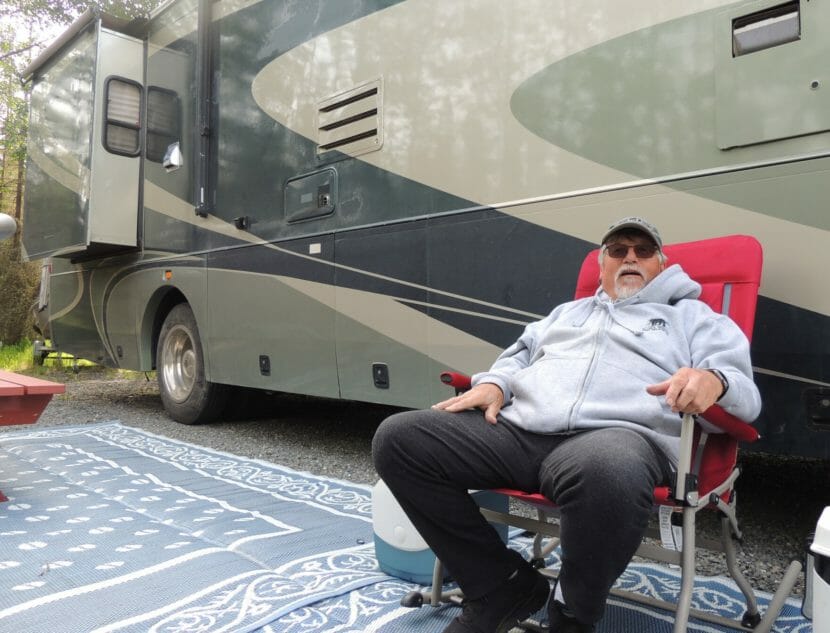
A man sitting on a camp chair beside an RV
Randy Ferguson of California said he wasn’t going to let high gas prices get in the way of his Alaskan vacation. (Photo by Sabine Poux/KDLL)

One gallon of unleaded gas costs, on average, about $5 in the U.S. today.

Those prices could be enough to give even the most zealous road-trippers pause. But vacationers hellbent on getting their dream Alaskan vacations say they aren’t going to let anything stop them — not this time.

“It’s been on my bucket list for 40 years,” said Randy Ferguson of Anaheim, Calif. from his camp chair in Soldotna.

Ferguson drove up from Anaheim in his RV for his first ever Alaska trip. And he said it’s living up to his expectations.

“It is. And I said, I don’t care how much the price of fuel is,” he said. “I’m going.”

Ferguson’s already hit Seward and Homer, and he plans to go up to Denali and Fairbanks, too.

That’s even though it costs as much as $500 to fill up his tank every week or so. He’s spent more on gas in this last month than he did on a 23-state road trip last year.

But it’s a price he’s willing to pay.

“Here’s the credit card, fill it up — bingo, bango, boingo, I’m as happy as can be,” he said.

John Saranzak is in a similar boat.

Saranzak is newly retried from Dayton, Ohio. And he has the same logic for making the trek now.

“I’m getting older, and I thought, better do it while I can,” he said. “That’s why we’re spending a lot of time here, too, to get to know the area, not just do the tour stuff.”

Still, he’s paying twice as much for gas as he had planned to when he was first budgeting three years ago. That includes the higher-than-normal gas prices in Canada, where he said he paid close to $8 a gallon on the way up.

“For the month of April, just driving was $2,300,” he said. “And for the month of May was $2,200 so far.”

Gas prices are up — and hitting records — across the U.S. It’s a spike that experts in large part attribute to Russia’s invasion of Ukraine, and one that does not seem to be letting up any time soon.

That’s something all drivers are noticing at the pump. But for vacationers driving RVs, which require a lot of fuel, those costs are particularly notable.

Klondike RV Park Owner Al Belknap said he’s seen a mixed bag of reactions from would-be campers.

“We had a lot of reservations already set up,” he said. “We take reservations real early, in January and February. And now we’re starting to see some cancellations. But I think a lot of people are trying to stick to their plan, no matter the cost.”

His campground was still packed in mid-June, with RVs sporting a wide array of license plates.

It’s a shift from the last two years, when COVID-19 restrictions made it hard for out-of-staters to get through Canada. Instead, Alaskans were driving RVs around their own state.

“That was pretty different for a couple years,” he said. “But now it’s back to normal, now we’re kind of battling the gas prices and getting knocked backwards a little from that. But I think a lot of people are trying to come. The last couple years have been rough. A lot of them have canceled a couple years in a row. And they want to come, bad.”

He said he hopes the bulk of the cancellations have already happened.

John Anderson with Heritage RV Park in Homer is seeing much of the same. He said most of his 100-plus RV sites on the Homer Spit are full of out-of-staters every night this summer, and he doesn’t anticipate a lot of guests will change course.

His and Belknap’s clients are mostly from the Lower 48. Alaskans coming down for the weekend might have different considerations to weigh.

Soldotna Parks and Recreation Director Andrew Carmichael said it’s too early to tell what will happen at Soldotna campgrounds, where the vast majority of visitors are coming from around Alaska.

He said last year was the biggest revenue year the city campsites had seen in many years.

“Last summer, we were up 22% from the prior year, but the fuel prices weren’t through the roof, either,” he said.

But that was mostly based on other factors. Carmichael said the state of the salmon runs in the Kenai River often play a big role in determining who comes and when.

“I mean, if people are going to come down, they’re going to come down for that purpose, to a large degree,” he said. “But then again, if you could say there was a silver lining to the COVID pandemic stuff is that it got people out and starting to recreate outdoors. So they are recreating outdoors more than they used to. So it’s just hard to say.”

There’s no sure way to tell if campers will cancel their plans for the city-owned sites yet. Sites are first-come, first-serve and the city doesn’t take reservations.

Over at the Klondike, Frances Williams, of Gooding, Idaho, is on the tail end of her trip. She planned the vacation last year, when gas prices weren’t as high.

She and her son flew to Alaska and drove a camper down. Still — it was expensive.

“I mean, it stressed our budget,” she said. “But we were already committed, so it was something — you just gotta do it.”

And they say the RV might be worth the splurge.

“It’s been fun. We’re outdoorsy people anyway,” Williams said. “So seeing Alaska that way, not being stuck to a hotel or anything, it’s been cool, just being flexible and being like, ‘Oh, let’s stop here.’”

When it comes to the prices, she said, it kind of is what it is.

Ferguson, of California, agreed. He didn’t mince words.

“Hell no. No. I am not changing my trip,” he said. “I’m going.”

In his eyes, the trip of a lifetime is worth every expense.
A Southeast Alaska village wants to build a tourism industry from scratch as logging fades

""
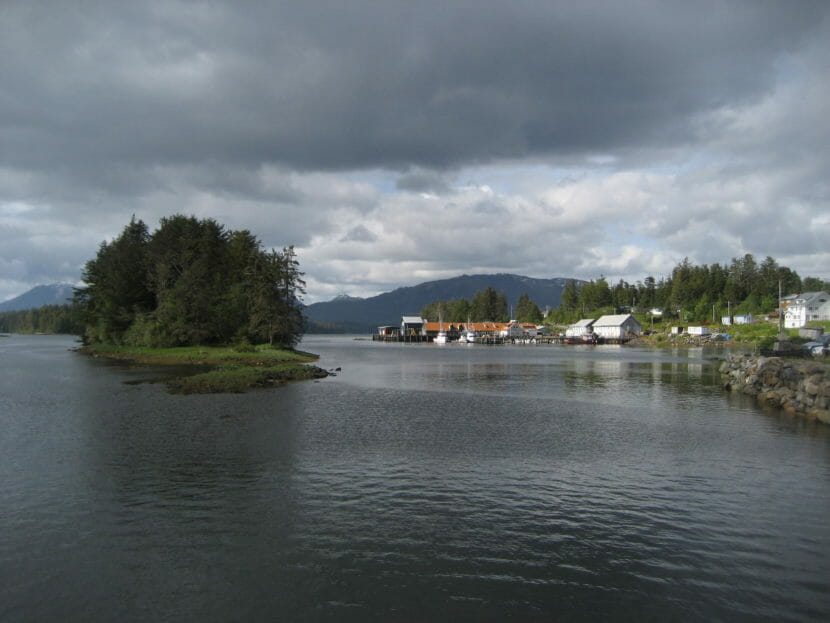
Klawock Harbor in 2012. (Photo from Alaska Division of Community and Regional Affairs)

A Lingít village in Southeast Alaska plans to transform itself into a cruise ship destination to create a new economic opportunity as logging fades in the area.

The Alaska Native village corporation in Klawock is working with other Native corporations to install a relatively low-cost floating dock and make other upgrades to receive cruise ships in the village starting a year from now, project officials said.

Klawock is on Prince of Wales Island, about 700 miles southeast of Anchorage. Alaska’s first cannery was built there more than a century ago and logging of old-growth trees continues, though much less than it once did.

Project officials are modeling the proposal after one in Hoonah, another Southeast village that turned itself into a cruise destination.

It plans to start with basic facilities like the floating dock, said Mary Edenshaw, chief operations officer for Klawock Heenya, the Native village corporation. Klawock is home to about 700 people, she said.

The ships will create opportunities for small business owners, wood carvers and other artisans, she said. Tour guides can shuttle guests to see wildlife and the village’s historic totem-pole park, or visit other landmarks on the island’s road system.

“This will create jobs, when jobs are potentially going away,” Edenshaw said.

The plans come after Sealaska, the region’s Alaska Native corporation, announced last year that it was ending its decades-old logging operations that had centered on Prince of Wales Island. The large Native corporation wanted to pursue more sustainable activities, it said last year.

Matt Carle, a spokesman with Sealaska, said Klawock’s plans can promote economic development not just in Klawock but in other villages on Prince Wales of Island.

The island is so remote many people never stop there, he said.

“Any time you travel in Alaska, it takes a day or two to get off the beaten path to really experience the rich and vibrant Alaska Native culture,” Carle said. “But in this case people can literally step off the ship and see this, and that’s really unique.”

The increasing emphasis on tourism in Klawock is happening two years after the COVID-19 pandemic halted most cruise sailings to the state.

In Southcentral Alaska, efforts are underway in Seward and Whittier to build new docks that will add to the flood of visitors to those towns.

Tiny Klawock plans to host relatively small cruise ships that bring about 600 people, Edenshaw said. Oceania Cruises plans to make the inaugural stop next May, she said.

Klawock’s mayor, Don Nickerson, said most residents support the village corporation’s idea. He’s heard concerns that Klawock will be overrun with people, but he believes Klawock Heenya will manage guests so that won’t be a problem, he said.

Nickerson said the village needs this opportunity. Logging opportunities have diminished and salmon fishing is struggling too, he said.

“I definitely think this will boost our economy,” he said. “This was a log-booming community in the ‘80s and ‘90s and part of the 2000s, and that has all gone away.”

The town’s weavers and carvers, including youth learning from elders, will be able to sell their work and share their talents, he said. It will be an authentic cultural experience compared to larger ports like in Juneau, he said.

“There is a lot of talent and history on our island,” he said. “Nothing will be manufactured, and everything will be man-made.”

Klawock Heenya is working on the project with Na-Dena`, an Alaska Native company focused on providing cultural-based tourism in Alaska.

Na-Dena` said in a statement last week that the Port of Klawock can accept cruise ships traveling from the north and south.

“With two separate fjord entrances, sailing in and out of the port treats cruisers to scenic views of the wildlife-rich archipelagos, dramatic mountains and lush islands,” the statement said.

Na-Dena` consists of Huna Totem and Doyon. Huna Totem is the village corporation for Hoonah that built Icy Strait Point into a cruise destination recognized for its ecological and cultural values. After starting with a small float dock in 2004, Icy Strait Point can now handle two massive cruise ships at a time, each bringing thousands of guests, with amenities that include a giant zip line ride and high-speed gondolas that replace buses.

Doyon is the Alaska Native regional corporation for the Interior that provides bus tours of Denali National Park and Preserve where it owns a nearby lodge.

Na-Dena` will work with Klawock to emphasize its traditions and values, said Russell Dick, president of Huna Totem, in a statement about the project.

Officials with the Klawock project declined to provide cost estimates.

The floating dock will be anchored to an old timber loading dock that today sees only a handful of ships a year through a private logging company, project officials said.

The village will build the dock and other facilities soon, Edenshaw said. Drinking water and bathrooms will be a construction priority.

“We’ll have to start with plumbing,” Edenshaw said. “There’s electricity to the dock, but we’ve never had to worry about that many people coming to this area.”

This story was originally published by the Anchorage Daily News and is republished here with permission.

Experienced travelers say staff shortages and COVID-19 outbreaks are spoiling their Alaska cruises

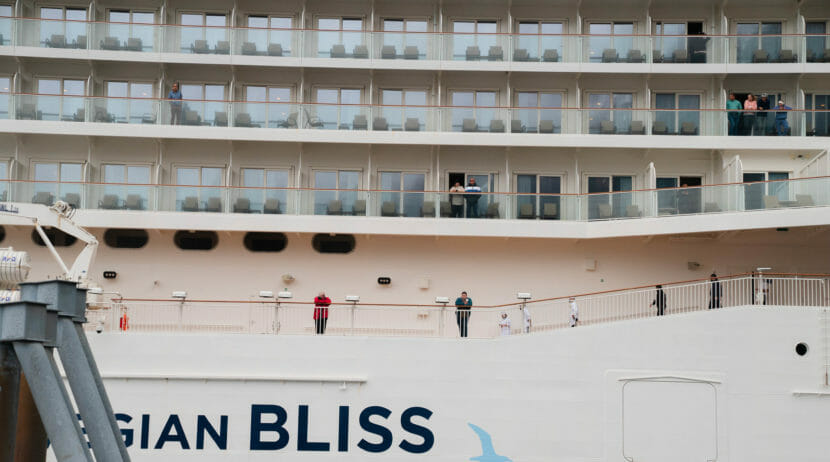
The side of a large cruise ship, with passengers visible on walkways
The first large cruise ship of the season arrived in Juneau on April 25, 2022. (Photo by Paige Sparks/KTOO)

Mohammad Palwala went on his first cruise last year. The cyber security engineer from Dallas sailed through Southeast Alaska aboard Royal Caribbean’s Ovation of the Seas.

“And I told my family, ‘It’s like, the best thing ever. You get a full-on vacation on the cruise,’” he said.

There was lots of entertainment on board and amazing experiences in Southeast Alaska communities. And, as far as COVID-19, it felt safe. Everyone had to test negative before boarding, just about everyone was vaccinated, and the ship was only at 30% capacity. That was in September.

Palwala wanted to share the experience with his extended family of 12. He booked another Alaska cruise on the same ship with almost the same itinerary. They sailed in May. This time, the ship was closer to full, with about 4,000 passengers. It wasn’t like before.

“Very understaffed,” he said. “We did not have shows on — we only had like, two shows on the whole of the cruise. Lack of entertainment, lack of entertainment for kids.”

There were long lines to disembark, facilities on board that were shuttered — even eating became disappointing. His whole family is vegetarian, and he was told the kitchen was too short staffed to cook up proper meals for them.

Day after day, “the SAME thing. I mean, yeah, not even a few things, the same things. So whatever we ate in lunch, we ate in dinner,” he said.

His family ate a lot of lentil soup with rice.

Immediately after the cruise, 10 out of 12 people in his party tested positive for COVID. They were far from alone.

Experienced cruisers say staff shortages mean they’re having less fun. But they were also surprised by how widely COVID-19 seemed to spread. They want the public to know that lots of passengers are getting infected, and that on board, they’re left in the dark as the risk level changes.

Palwala said there was a Facebook group with hundreds of passengers from that same sailing. At first, it was a fun space where people posted what to do in port and shared photos. After the cruise, it turned into an informal COVID tracking site with tips for dealing with Royal Caribbean customer service.

Lorna Bradley from Monterey, California, was on that same cruise, and in that same Facebook group.

“Somebody finally just posted a poll because so many people were reporting COVID,” Bradley said. “So, of the 400 passengers who happened to see the poll, 25% of those, 100 people, came in and said, ‘I’ve got COVID.’ … I would have had no idea if I weren’t in that Facebook group since I didn’t get sick. I would’ve had no idea there was that much COVID on board.”

She later learned through the group that she’d been in close contact with a cabin steward who had gotten COVID. She was never formally notified of it. Even general information about the ship’s COVID status was noticeably absent.

“And it would have been so easy for the captain’s morning announcements to just remind us, you know, ‘Oh, we have 20 passengers on board, you know, currently having COVID symptoms and you know, just a reminder, you might want to wear a mask,’” she said. “I mean, none of that happened at all, which I found surprising.”

Bradley is extra COVID-conscious because she has a medical condition that puts her at higher risk of complications. She also takes care of an elderly parent who’s at even higher risk.

“When there are COVID cases (on) board, on your floor, down the hall, with your cabin steward, passengers need to know so that they can make better choices for themselves,” she said.

Palwala said he wouldn’t have taken his family if he’d known more in advance.

“Definitely not, because of my wife mostly, because she is pregnant. … If I had known, I would have not gone,” he said.

Conditions vary from ship to ship, and from sailing to sailing.

For example, the Carnival Spirit made headlines for a badly managed outbreak when it was coming to Seattle to begin its season in Alaska this year.

Bruce Hogarth had booked the Spirit’s second Alaska sailing this season. He almost canceled his cruise when he heard about the outbreak. He had travel insurance, but it wouldn’t cover a cancellation for fear of COVID. He rolled the dice.

“And for the first four days, it was a wonderful time,” Hogarth said. “We enjoyed it. The service was good. The food was good. It was up to par in my mind. And then I came down with COVID, then three days later my wife came down with COVID.”

He thinks the cruise line could have done more to avoid people getting sick. His isolation went better than passengers’ on the earlier Spirit sailing.

“It was the opposite,” he said. “I had lost my appetite and I wasn’t eating a lot. They would check in and say, ‘Did you want to order anything? You haven’t ordered in awhile.’ So they were very gracious that way.”

Hogarth lives near Victoria, British Columbia, one of the stops on the cruise. He was able to arrange to disembark there and finish his isolation period at home, instead of at a hotel in Seattle. He said a Canadian government official who walked him through his isolation obligations told him 127 customers and 42 crew from the cruise were infected.

Passengers are relying on second hand information like this or Facebook polls because the cruise lines and public health authorities aren’t sharing the information they already have about COVID on cruise ships.

The Centers for Disease Control and Prevention did not respond to questions about its COVID-19 Program for Cruise Ships and data reporting.

The government of Canada addresses the risk with direct language on its cruise ship travel page: “The virus can spread easily between people in close quarters, such as on cruise ships. The chance of being infected with COVID-19 on cruise ships is very high, even if you’re fully vaccinated.”

Resident describes narrow escape from fire that destroyed Whale Pass cabins

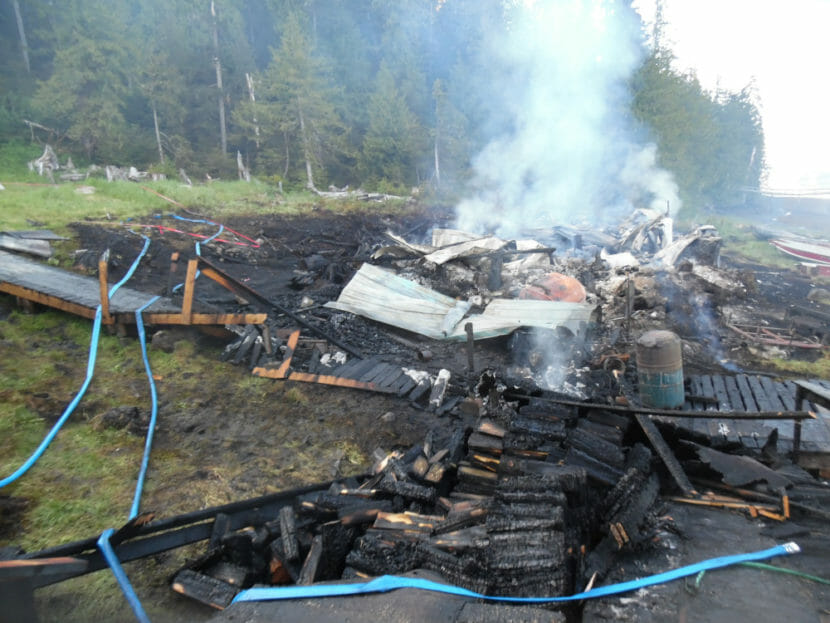
Smoke rising from what's left of a row of cabins
The aftermath of a fire at the Ruff It cabins in Whale Pass (Photo courtesy of Jenny Vasser)

A fishing and hunting business on eastern Prince of Wales Island in Southeast Alaska is cleaning up after a fire destroyed most of its buildings right at the start of the busy season.

The fire burned early on May 31 at the Ruff It Resort, a group of cabins and general store in Whale Pass, a community of around 84 full time residents and many seasonal visitors.

Douglas Browand, who works and lives there, described a narrow escape.

“I woke up at 2 in the morning — my little dog woke me up and my whole cabin was on fire,” Browand said. “I picked up my dog and I ran out of my cabin and put my dog down. And I tried to turn back around to come in to at least grab my wallet, and the whole place was just on fire. It just — one cabin went off after another until all of them were lit up.”

The fire burned five cabins and two boat houses and caused newly filled propane tanks to explode. The main house also sustained major damage.

Browand said the four people and their pets living in the buildings were able to escape the fire. The community’s volunteer fire department and neighbors helped battle the fire.

Browand does not think the business will be able to operate this summer and will have to cancel bookings.

“We’re kind of coming to grips with that. You know, at this point, we’ve got a hell of a mess to clean up,” he said. “There’s just no way. We’re going to just try and keep a roof over our own head at this point.”

There’s no word yet on the cause of the fire.

Denali’s historic, lingering snow season is affecting the park’s wildlife

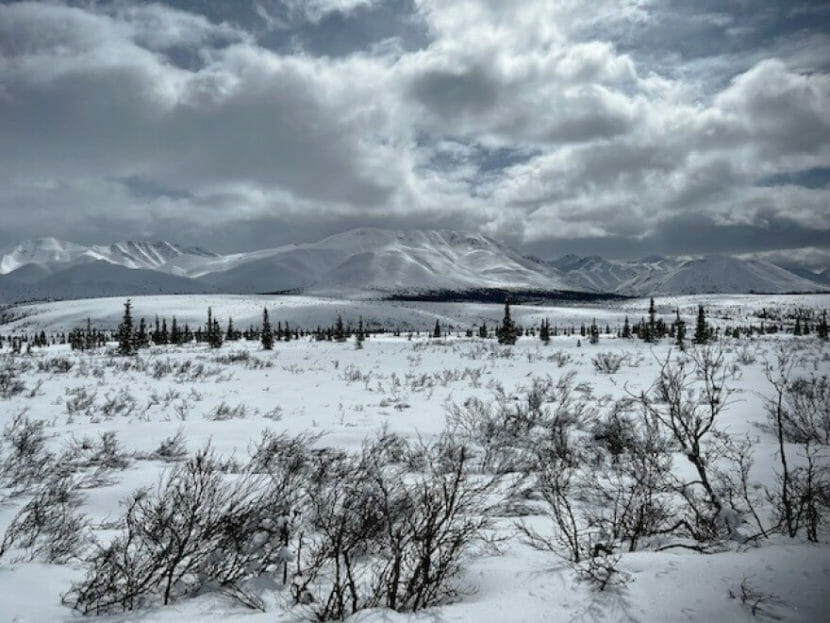
A snowy landscape with mountains in the background
Heavy snow cover is lingering late into May along the road into Denali National Park. (Photo courtesy of Sharon Stiteler/National Park Service)

Denali National Park is still melting out from its snowiest winter season in 99 years of record keeping. The unusually heavy, lingering snow is affecting park wildlife.

Summer operations resumed on May 20, but park public affairs officer Sharon Stiteler says conditions along the Park Road are lagging behind the calendar.

“It definitely looks like winter when you’re out at about mile 10 and you’re looking into the tundra. I mean, it’s still very snow-covered,” she said.

The Park Service headquarters got 176 inches of snow this winter, besting the 1970-71 record of nearly 174 inches. As of May 15, there were still 33 inches of snow on the ground at Park headquarters — by far the most on record so late in the season.

But Stiteler says the onset of warmer temperatures this week has accelerated melting.

“There are more areas to be able to walk along the sides of the road, but we still have places where drifts are quite high or where we’ve had snow plowed. I’m 5 foot tall, and some of those drifts are higher than me,” she said.

Stiteler says the heavy snowpack dented some agency truck cabs and damaged a pedestrian bridge at Savage River. More important, it’s stressed wildlife, resulting in more animals on the Park Road this spring.

“Bears are using the road, as are moose,” she said. “Last week we did have a moose on the Park Road who gave birth to twins.”

Stiteler says the two calves have since died, noting that moose are generally very weak from the deep snow. But with so much still on the ground, it’s not clear how many moose have been dying.

“We’re anticipating more carcasses coming through as the snow melts, and we’re keeping a close eye on it — especially if some of those carcasses are along the Park Road or in areas we know visitors are going to frequent,” she said.

Meanwhile, a portion of the park road in the Sable Pass area has been closed to cyclists due to bear traffic.

“We’re having more and more bears show up along that stretch of roadway because that’s one of the spots where they can go to dig up roots right now and get food,” Stiteler said. “We don’t want to habituate the bears to bicycles, and we definitely don’t want anyone encountering a curious bear while they’re out bike riding.”

Park shuttle and tour bus operations resumed this weekend, but they’ll only be traveling as far as mile 43, where the road is closed due to the Pretty Rocks landslide. The park’s visitor’s center will be open to the public for the first time since 2019, and sled dog kennel tours are resuming for what is the kennel’s one hundredth anniversary year.

Larger cruise ships will start visiting Klawock in 2023

""
Klawock Harbor. (Creative Commons photo by Mack_L)

The Klawock Heenya Corp. is partnering with Huna Totem Corp. to bring larger cruise ships to the community of Klawock on the west side of Prince of Wales Island.

Mary Edenshaw is chief operations officer for Klawock Heenya, the village Native corporation for Klawock. She says small cruise ships have docked at the city float before. The larger ships will tie up at an existing dock on Klawock Island owned by Klawock Heenya.

“It was used in the past for exporting logs and the huge log ships that would come in,” Edenshaw said. “So we’re going to convert that into a cruise dock port.”

She says Huna Totem Corp. reached out to Klawock Heenya wanting to add the community as a destination along the lines of Icy Strait Point in Hoonah, which Huna Totem also owns. Edenshaw says the plan is to start out small, with ships that carry between 500 and 700 passengers.

“This is going to be a process to include larger vessels down the road, but we will build a float that will attach to the existing structure that we have right now,” she said.

She says some cruise lines have already agreed to add Klawock to future itineraries. Edenshaw declined to give additional details, other than that the first ships will arrive in Klawock in summer 2023.

Site notifications
Update notification options
Subscribe to notifications