Politics

Obama’s Alaska visit yields little regarding Arctic Ocean drilling

President Barack Obama meets with Kotzebue residents during his three-day tour of Alaska. (Photo by Eric Keto/Alaska Public Media)

Throughout President Obama’s tour of Alaska last week, he spoke at length about efforts to reduce the nation’s greenhouse gas emissions. He spoke very little about his support for Arctic Ocean drilling.

The drilling policy could affect the global climate much more than any of Obama’s climate-friendly initiatives.

The president wrapped up his climate-change tour of Alaska in Kotzebue, just above the Arctic Circle.

“One of the reasons I came up here is to really focus on what is probably the biggest challenge our planet faces,” President Obama said. “If there’s one thing that threatens opportunity and prosperity for everybody, wherever we live, it’s the threat of a changing climate.”

In Kotzebue, Obama spoke of climate-friendly initiatives big and small around the state.

“And I know you guys have started putting up solar panels and wind turbines around Kotzebue,” President Obama said.

And he highlighted his government’s biggest initiative of all aimed at helping the climate: the national Clean Power Plan.

“Last month, I announced the first set of nationwide standards to end the limitless carbon emissions from our power plants, and that’s the most important step we’ve ever taken on climate change,” President Obama said.

Alaska is exempt from that plan. The president did not mention one of his policies that has direct relevance in Kotzebue and the rest of Alaska.

Kotzebue is one of the Western Alaska port towns getting business from the quest for oil in the Chukchi Sea. Shell’s Arctic Challenger oil-spill barge and other support vessels are based in Kotzebue Sound.

The Obama administration gave Shell the green light in August to drill into oil-bearing rocks beneath the Chukchi Sea.

The U.S. Geological Survey says more than 20 billion barrels of oil can be recovered from beneath the Chukchi and Beaufort seas. If that oil is burned in engines and homes and businesses, it would pump many times more carbon dioxide into the sky than the president’s big clean power plan would keep out of the sky.

“Approximately 15-times greater,” says Lois Epstein, an engineer with The Wilderness Society in Anchorage. Her group has been opposed to drilling in the Arctic Ocean mainly for non-climate reasons.

She says Obama’s approval of Arctic drilling is inconsistent with his big push to fight climate change.

“The administration should be at least trying to be consistent in their decision making,” Epstein said. “They have chosen not to be consistent, and that will have climate consequences.”

Other environmentalists have been less diplomatic, calling Obama hypocritical or even schizophrenic when it comes to climate change.

Shell Alaska spokesperson Meg Baldino declined to comment on the climate impacts of Arctic Ocean oil.

But earlier this year, the head of Royal Dutch Shell, Ben Van Beurden, said he agrees the world can’t burn all of its fossil fuels and avoid dangerous climate change.

“I accept the fact that having the climate change beyond 2 degrees C is probably highly undesirable, and we should do everything to prevent that from happening,” he said.

Van Beurden spoke with the left-leaning Guardian newspaper in England.

Even though this year’s plummeting oil prices reflect a world awash in oil, the Shell CEO said his company can’t stop looking for new sources, in the Arctic or elsewhere.

“I think to just say we can do without hydrocarbons, and we don’t need them anymore, stop exploring for them because they are coming out of our ears already—that is not quite an accurate reflection for a company like us,” Van Beurden said.

Van Beurden put responsibility for opening the Arctic Ocean to drilling on the U.S. government.

“The opening up of the Arctic is not our decision. It’s the decision of an Arctic nation, in this case, the United States,” he said. “And it’s our task to figure out: Can we do this responsibly? Can we do this profitably? Can it be done at all? If the answer to all that is yes, then we should consider it as an investment opportunity.”

Shell officials say it could be 10 to 20 years before any oil from the Chukchi Sea would be available as fuel. That would mean Arctic drilling could remain controversial for a long time.

During the president’s three-day tour, White House handlers didn’t let journalists ask him any questions, with the exception of an exclusive interview and photo shoot with Rolling Stone magazine.

Colorado’s Long-Lasting Birth Control Program For Teens May Not Last Long

The shelf of long-lasting birth control at Children's Hospital outside Denver. The clinic's director said having the devices on hand is crucial, so young women don't have to make a second visit. But that costs money. Scott Horsley/NPR
The shelf of long-lasting birth control at Children’s Hospital outside Denver. The clinic’s director said having the devices on hand is crucial, so young women don’t have to make a second visit. But that costs money.
Scott Horsley/NPR

When President Obama spoke to the Democratic National Convention in Colorado seven years ago, he tried to call a truce in one of the nation’s long-running social debates.

“We may not agree on abortion. But surely we can agree on reducing the number of unwanted pregnancies in this country,” he said to applause.

Not long after that, Colorado launched an experiment aimed at doing just that. The results have been dramatic — but efforts to expand the program using taxpayer money have hit a political roadblock.

Six years ago, Children’s Hospital outside Denver and dozens of clinics around the state began focusing on long-acting forms of contraception, such as IUDs and hormonal implants.

Research shows they’re much more reliable at preventing pregnancy than the pill or condoms. Liz Romer, who runs the clinic at Children’s, where teenagers and young women can get free and confidential birth control, said that’s in part because they’re less subject to human error.

“It gives them something that is a very effective method that doesn’t require a daily decision not to get pregnant and gives them the freedom then to think about other things,” she said.

Despite their effectiveness, less than 5 percent of teenagers on birth control nationwide use the long-acting forms. Implants and IUDs require a health care provider to put them in place. And the up-front cost can be high: hundreds of dollars apiece. At the Children’s Hospital clinic, supplies are kept behind a locked door.

Romer unlocks the door and points out her clinic’s “device shelf.”

“We’ve got to be able to come in, grab this, and be able to deliver to a patient at that moment,” she said.

Romer said having the devices on hand is crucial, so young women don’t have to make a second visit. But that costs money. And so does training the health care providers.

Colorado’s experiment was funded with a $23 million grant from the Susan Thompson Buffett Foundation, named for the late wife of billionaire Warren Buffett. And the results are striking:. By 2013, teen births in Colorado had dropped 40 percent — compared to a 30-percent decline nationwide. The steep drop continued last year. Abortions among teenagers in Colorado were also down. Democratic Gov. John Hickenlooper said the savings in Medicaid and government assistance far outweigh the up-front costs.

“What greater gift can you give to a teenaged potential mother than the opportunity to plan her family so when she has children, it’s when they’re wanted, when she can afford to care for them … And to do it in such a cost-effective way in terms of government spending. It dramatically reduces government spending,” he said.

When seed money from the Buffett foundation ran out this summer, Hickenlooper asked for state funding to continue the program. But Republican state lawmakers like Kathleen Conti said no. Conti complains the long-acting birth control is too expensive and sends the wrong message to teenagers who should instead be taught to refrain from sex.

“Don’t get me wrong. I don’t think the doctors encouraged the kids: ‘Now that you’ve got this, feel free to have sex with everybody.’ But I think it by default, takes away one more intimidating problem.”

Conti also worries about an increase in sexually transmitted diseases, though there’s been no evidence of that in Colorado. Other critics complain the program doesn’t require enough parental involvement.

“There’s a history of politics as it relates to anything family-planning related,” said pediatrician Larry Wolk, who directs the public health department in Colorado . The fight for state funding is not over, he added. Wolk wore an IUD as a lapel pin all during this year’s legislative debate.

“I was just amazed at how many people said, ‘What is that?’ I’d say, ‘It’s an IUD.’ And they’re like, really? It’s so small, it’s so lightweight … It’s like the Buick commercials that are out there. It’s not your mother’s IUD, for sure,” he said, chuckling.

For now, Colorado is relying on a patchwork of private grants to continue its family planning initiative. At the Children’s Hospital clinic, Romer said it’s gratifying to see young women who got their first long-acting birth control three years ago and are now coming back for more.

“Just to watch their eyes beam. And say, ‘I graduated. And I’m one of the only people in my circle of friends who doesn’t have a child. And now I’m managing this or I’m in this job.’ And to see that they’re still dreaming big,” she said.

Romer said she can’t imagine turning those young women away for lack of funding. “The numbers speak so clearly,” she said. “It’s time to listen.”

Copyright 2015 NPR. To see more, visit http://www.npr.org/.
Read Original Article – Published SEPTEMBER 03, 2015 5:05 PM ET


In historic visit, Obama sidesteps Alaska press

President Obama picked up a silver on the beach in Dillingham. (Photo by Hannah Colton/KDLG)

In the wake President Barack Obama’s visit, Alaskans are still sorting out the significance of new climate initiatives, cultural recognition, and more. But there’s lingering frustration among one particularly vocal group, who found that all the president’s messages came from the same place — his staff.

Obama was in Alaska for two-and-a-half days. In that time he made an important speech on the imminent threats of climate change, announced new programs on Arctic research and community relocation, and sped up the timeline for a new icebreaker. During that same stretch of time, he did not take a single question from the press.

“There were no opportunities to ask questions, whatsoever,” said Hannah Colton, who covered the president’s visit to Dillingham for KDLG.

“There was not a single opportunity to ask the president questions,” KNOM News Director Matthew Smith said from Kotzebue.

“He did not take any questions,” APRN’s Liz Ruskin told News Director Lori Townsend during Obama’s trip to Exit Glacier near Seward. Asked why the press was on a separate boat from the president in a tour of Resurrection Bay, Ruskin replied, “I think that helps us take better pictures of him.”

The president’s message in Alaska was on the immediate effects of climate change across the state. That story was told visually. Each day of the visit there were poignant press photos of the President standing before a shrinking glacier, holding a glistening salmon, or inspecting fish racks.

“No one would be drying their fish on Kanakanak Beach, in the rain, in September,” Colton said. It was especially hard covering Wednesday’s rainy photo ops for radio, Colton added because the press was kept too far away for microphones to reach.

Veteran print reporter Lisa Demer with the Alaska Dispatch News was bothered for different reasons during the Dillingham stop.

“I made my best pitch for an opportunity to get in one question. They said ‘that’s just not happening,’” Demer said. “It was terribly frustrating.”

In the last week, headlines and nightly news coverage of the president’s visit have stayed mostly positive. But on Twitter, over email lists, and in wry internal reports, journalists complained about a lack of legitimate opportunities to question the administration’s policies. And that was especially true for reporters inside of what’s called “the pool.”

“The pool gives you access, but it’s very much designed to keep it as limited and controlled as possible,” said KNOM’s Smith. Like most Alaska-based reporters contacted for this story, it was Smith’s first time covering such a high-level visit, and he was put off by the fleet of White House staffers who choreographed the movements and tempo of about 30 members of the press in Kotzebue–all the way down to chiding when someone in the pool asked after the name of a puppy in John Baker’s dog lot.

“Which was Feather, by the way,” said Smith, adding, “You’re not allowed to ask the president that.”

While it is fun, telegenic, and symbolically important to cover the president dancing with kids, or buying a bunch of cinnamon rolls, or getting milted on by a fish, there are a lot of legitimate questions that went unanswered because they could not even be asked.

“There’s this gigantic oil rig drilling not far from here,” Smith said of Royal Dutch Shell’s exploratory efforts in the nearby Chukchi Sea, which started this summer after gaining final approval from the Obama Administration. “I couldn’t think of a better example of how bizarre and broken the system is — we’re in Kotzebue, Shell’s staging their stuff in Kotzebue, nobody said a word about Shell.”

That is not out of the ordinary for Obama, or for most presidents.

“I hate to disappoint you, but it is very, very normal,” said Professor Elizabeth Arnold, who covered four White House administrations, and does not think Alaskan reporters were uniquely mistreated; this is par for the presidential course.

“It’s depressing, I know,” Arnold said, “but presidents are very controlled by their handlers.”

Arnold explained that the reason media with experience in the pool don’t simply yell out questions or break past the pageantry is long-term access. The White House regularly sends information to journalists ahead of any public release in order to prepare better coverage when news drops and that relationship looks a lot more reciprocal with a longer view.

“If you break that embargo and you jump out and say ‘Hey, I’ve got the scoop, he’s gonna give us a new ice-breaker,’ you know what?” Arnold asked, “You’re not gonna be granted that courtesy again.”

And it’s not as if Obama didn’t have any unscripted interactions while in Alaska. He spent an hour hearing from Alaska Native leaders how to improve Federal relations with tribes. He also disappeared onto Exit Glacier with entertainer Bear Grylls, conducted a photo shoot and interview with Rolling Stone magazine and ate dinner at the home of Alaska Dispatch News publisher Alice Rogoff.

For Matt Buxton, a reporter with the Fairbanks Daily Newsminer, covering the Kotzebue visit from outside the pool made his stories less about the president and more about the community’s response to the momentous occasion.

“It was actually fun to be running along the streets, running through back allies, running around security, kinda getting yelled at by security every once in a while as we were trying to get a glimpse of the president like everyone else,” Buxton said. “I don’t know if we would have seen the same kind of thing if we were traveling in the motorcade.”

Buxton says the president’s trip was a huge deal for the folks he spoke with in Kotzebue – a delight and an honor, compared favorably to a 2002 visit from the band The Goo Goo Dolls.

The White House would not comment on the record for this story. But they did release an essay through the web platform Medium reflecting on the trip, along with pictures and videos from the White House’s social media accounts.

Alaska Rep. Don Young skips president’s visit

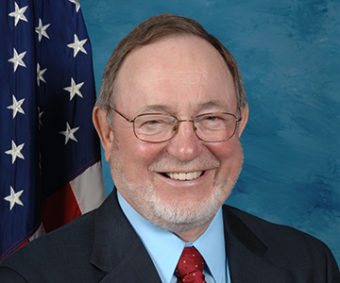
Don Young. (Official photo)

Alaskans of all stripes came out this week for a chance to shake hands with President Barack Obama, or at least glimpse his motorcade, but one person not on hand for the big visit was Don Young, Alaska’s only member of the U.S. House of representatives.

“Congressman Young traditionally spends the end of August in his hometown of Fort Yukon, and that’s what he did this year,” said Young spokesman Matt Shuckerow.

Young is still in Fort Yukon and, according to his spokesman, not easily reached by phone. But Young did follow what the president said while he was here, and Shuckerow says he wasn’t entirely disappointed.

“There were some things that Congressman Young was encouraged to see, that was focused on a wider range of Arctic issues. Arctic infrastructure, icebreakers, deepwater ports — these are things that Congressman Young and others in the delegation have been fighting for for years. It certainly is important to bring attention to them.”

Many Alaskans seemed charmed that the president embraced Alaskan symbols — from sled dog puppies to salmon to Native dancing. Young, a Republican in office since Obama was in elementary school, retains his pre-trip skepticism. Shuckerow says his boss was dismayed the president used the state as the backdrop for his climate agenda.

“The big thing that Congressman Young said was that the president just fundamentally doesn’t understand one of Alaska’s major, most basic barriers, and that is the federal government and some of its out-of-touch federal policies coming from our agencies,” Shuckerow said.

Alaska’s two U.S. senators are taking family time and were not available for interviews today. Sen. Dan Sullivan was the first person to greet Obama when he first arrived at Joint Base Elmendorf-Richardson. It was a prolonged handshake. Sullivan’s spokesman says he was urging Obama to review the Army’s plan to cut troops from the base. Sullivan was also spotted at the GLACIER conference when Obama spoke.

Sen. Lisa Murkowski participated in an hour-long meeting with the president, a roundtable with Native leaders, but she said Monday she was worried he wasn’t hearing enough from Alaskans.

Both senators issued statements thanking Obama for the Denali name change.

Murkowski thanks Obama for restoring Denali; Obama directs his gaze on climate change

Down the valley towards Denali on with the park road wending its way. (Creative Commons photo by Nic McPhee)

President Barack Obama touched down in Alaska Monday for a three-day tour to the state, and beyond focusing on climate change in visits to Anchorage, Dillingham, and Kotzebue, the president began his trip by restoring the Koyukon Athabascan name to North America’s highest mountain.

Senator Lisa Murkowski, in a video posted on YouTube Sunday, thanked the president for the long-sought change.

“For generations Alaskans have known this majestic mountain as The Great One,” Murkowski’s video message begins. “Today we’re honored to be able to officially recognize the mountain as Denali. I’d like to thank the president for working with us to achieve this significant change to show honor, respect, and gratitude to the Athabascan people of Alaska.”

Beyond Denali, Obama’s Alaska itinerary focuses on climate change. It’s a topic he’ll discuss at the GLACIER conference in Anchorage, an acronym for the international meeting on global leadership in the Arctic. He also plans to discuss an initiative assessing relocation needs of more than 30 Alaska Native communities due to the changing climate and rising sea levels. The effort will be led by the Denali Commission, an independent federal agency, with Senator Murkowski at the helm.

In a video released by the White House Friday, Obama turned the national spotlight on those Alaska communities.

“A lot of these conversations begin with climate change,” the president said, “and that’s because Alaskans are already living with its effects: some of the swiftest shoreline erosion in the world—in some places more than 3 feet a year. This is happening to our fellow Americans right now. In fact, Alaska’s governor recently told me four villages are in imminent danger and have to be relocated. Already rising sea levels are beginning to swallow one island community. Think about that. If another country threatened to wipe out an American town, we’d do everything in our power to protect ourselves. Climate change poses the same threat, right now. Because what’s happening in Alaska is happening to us, it’s our wake-up call.”

On Wednesday, Obama will head to Western Alaska, spending the morning in Dillingham and finishing his trip in Kotzebue. Many in Western Alaska have wondered about the impacts the president’s visit will have on the vital air transportation and freight so many rural residents rely on.

Like Anchorage, the Federal Aviation Administration is implementing Temporary Flight Restrictions in both Kotzebue and Dillingham. In each case, the TFR will consist of an inner 10-mile ring of heavily restricted airspace, and an outer ring of less restricted but still limited flying to 30 miles out. Airmen are urged to check the TFRs for updates and specific information.

The FAA notes all aircraft within 10 miles of Kotzebue will be prohibited to only law enforcement and military flights Wednesday between 4:30 p.m. and 9 p.m., but those times are expected to fluctuate.

As all eyes move to Kotzebue for Obama’s trip—the first time a sitting U.S. president will travel above the Arctic Circle—the president’s schedule has him on the ground for just a few hours, delivering remarks at the community school.

But the trip has left many in Nome—which the U.S. Army Corps of Engineers picked as the leading candidate for a deep-draft Arctic port—wondering why the potentially strategic harbor isn’t seeing a presidential visit.

White House senior adviser Brian Deese told a conference call of reporters last week that the president’s agenda is simply too full.

“If we had more time and more space the president would love to visit more of the state,” Deese said. “Lots of things [are] going on in Nome, including the Army Corps’ exploratory work that’s ongoing. This is a packed trip, he is using every minute of his time to try see as much as he can, but we can only get in so much.”

The White House says Air Force One will take off from Kotzebue Wednesday evening—ushering President Obama out of Alaska.


Alaska greens: Obama’s words, actions conflict on climate change

President Barack Obama will address climate change during his visit to Alaska. (Whitehouse.gov video screenshot)


President Barack Obama’s visit to Alaska this week, aimed at highlighting his push to fight climate change, comes just two weeks after his administration approved drilling for oil in the Arctic Ocean. Some Alaskan environmentalists see a disconnect between the president’s rhetoric and his actions on climate change.

The Obama administration hopes the Alaska trip—Obama arrives in Anchorage Monday afternoon—will help sell the president’s proposals to rein in America’s greenhouse gas emissions.

“What’s happening in Alaska isn’t just a preview of what will happen to the rest of us if we don’t take action. It’s our wake-up call,” Obama says in a White House video filled with images of dripping glaciers and raging wildfires. “The alarm bells are ringing. And as long as I’m president, America will lead the world to meet this threat—before it’s too late.”

The president’s Alaska agenda includes seeing the rapidly retreating Exit Glacier near Seward and meeting some of the rural Alaskans hit hardest by climate change in Dillingham and Kotzebue.

“The changes that we have been seeing over time seem to have accelerated,” Northwest Arctic Borough mayor and former Democratic state legislator Reggie Joule said Thursday in Kotzebue. Obama is scheduled to fly there Wednesday.

The Native village of Kivalina—at the western edge of a borough bigger than Indiana—has been seeking funding for more than a decade to relocate before it gets washed into the Arctic Ocean.

“But not just at the coast. It’s in-river, as well,” Joule said. “Every single one of our communities in our borough has some level of impact of climate change.”

Hazards, Benefits Both Great

Even where the hazards from fossil fuel use are stark, Joule said the economic benefits are great. State government in Alaska runs mostly on oil taxes.

“It is a conundrum for us because we are feeling the effects of a global activity,” Joule said.

With Alaska’s icy landscapes melting and villages eroding into the sea, few Alaskans deny that the climate is changing any more. They do question how big a priority fighting it should be.

“Climate change is a reality. The shipping lanes coming over the northern sea route [crossing the Arctic Ocean] are already open,” Port of Dutch Harbor director Peggy McLaughlin said.

The closest deep-water port to the U.S. Arctic, Dutch Harbor is a staging area for Shell Oil’s 31-boat Arctic fleet this summer. McLaughlin said the United States is not the only nation drilling in the Arctic Ocean.

“The Arctic is so much bigger than drilling and the climate change issues are so much bigger than drilling,” she said. “It’s so much bigger than the U.S. exercising its leases on various drilling sites in the Chukchi and Beaufort Seas.”

The state’s entire Congressional delegation has been urging President Obama to learn about Alaskan issues other than climate change while he’s in the far North.

Republican Sen. Lisa Murkowski said she’s looking forward to welcoming the Democratic president on his first official trip to Alaska.

“I think it is somewhat disappointing, though that he apparently intends to use this as nothing more than a backdrop for climate change,” Murkowski said.

Republican Rep. Don Young issued a statement suggesting Obama “give that stump speech from somewhere else” if he was simply coming to Alaska to promote his environmental platform.

‘Absolute Contradiction’

You might think Alaskan environmental groups would be cheering the president’s climate-themed visit. Instead, the groups most focused on climate change are organizing a protest rally. They argue President Obama can’t claim to be a climate leader after his administration gave the green light to Shell Oil to drill in the Arctic Ocean.

“We know that offshore drilling in the Arctic is not compatible with a stable climate future,” Danielle Redmond with the Alaska Climate Action Network in Juneau said. “And yet the Obama administration approved Shell’s final permits just days before coming up here to host a conference highlighting climate change in the Arctic. It’s really just an absolute contradiction.”

Global diplomats including Secretary of State John Kerry are meeting in Anchorage to discuss the rapidly changing Arctic, and Obama is scheduled to join them Monday.

Negotiators have been trying to put the brakes on global warming for years, with little success. While emissions reductions have been elusive, they have settled on a goal of allowing no more than 2 degrees Celsius of warming this century.

A study by energy researchers this year in the journal Nature found that goal requires leaving most fossil fuels in the ground.

“The results indicate that all of the Arctic resources should be classified as unburnable,” lead author and energy modeler Christophe McGlade from University College London said.

In theory, according to McGlade, you could burn Arctic Ocean oil and avoid dangerous levels of climate pollution, but that would require the rest of the world not to burn any of its oil. That scenario is extremely unlikely, not least because conventional oil is cheaper to produce than drilling beneath the remote and icy Arctic Ocean.

McGlade said if the world wants to stave off dangerous levels of climate change, world leaders “need to accept the fact that some of your fossil fuel resources and reserves will have to stay in the ground. And the sooner you accept that fact, the better for tackling climate change.”

White House Pushback

If geologists’ forecasts are correct, there’s enough oil and gas under the Arctic Ocean to give a big boost to global energy supplies—and to global concentrations of carbon dioxide in the atmosphere.

The White House has pushed back against environmental groups’ accusations of climate hypocrisy. In the president’s weekly address Saturday, Obama defended his support for Arctic offshore drilling. He said the United States was leading the world’s transition away from dirty energy sources.

“Even as we accelerate this transition, our economy still has to rely on oil and gas,” Obama said. “As long as that’s the case, I believe we should rely more on domestic production than on foreign imports, and we should demand the highest safety standards in the industry.”

On Aug. 3, the White House unveiled its Clean Power Plan, with Obama calling it “taken to combat climate change.” The administration estimates its plan will reduce CO2 emissions from power plants by 870 million metric tons.

Yet the administration’s approval of Arctic drilling could wipe out any savings in pollution from that plan many times over, according to Lois Epstein with the Wilderness Society in Anchorage. Using Obama administration figures for the amount of technically recoverable conventional oil in the Chukchi and Beaufort seas, Epstein has calculated that using all that oil would generate 10 billion metric tons of CO2—15 times more than the clean power plan would save.

She said that much pollution would be enough to increase the CO2in the global atmosphere by another 1.3 parts per million.

Concentrations of COin the earth’s atmosphere are currently at 401 parts per million, their highest in at least 800,000 years. Burning of fossil fuels and deforestation drive COconcentrations up another 2 parts per million each year, according to the National Oceanic and Atmospheric Administration.


Site notifications
Update notification options
Subscribe to notifications