Family

Juneau author writes guide to supporting transgender youth in schools

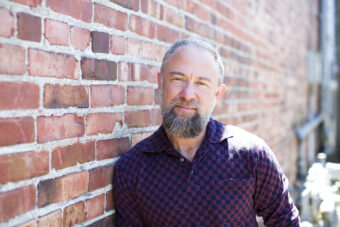
(Photo courtesy of Aidan Key)

Juneau author Aidan Key’s new book, “Trans Children in Today’s Schools,” gives a comprehensive look at what transgender kids are experiencing, and what parents and educators can do to support them through their transitions.

KTOO’s Yvonne Krumrey sat down with Key to talk about the book and what led him to write it. He says his path to writing the book and working as a gender diversity consultant started more than two decades ago.

Aidan Key: I stepped in over 25 years ago. It’s been quite a journey. I’d say the first 10 years were really stepping in and having conversations with medical and mental health practitioners, speaking at universities, things like that. And then probably a good decade into that was when I discovered the families who were wanting to support their gender diverse children. 

And they’re asking me for help and guidance, and I’m busy looking at them thinking that the fact that you are stepping in to support your kid — and first of all, that your younger child could speak up and articulate gender identity differences — is pretty amazing. And, “Oh, wow, I don’t know what to tell you. Let’s see if we can figure that out together.” So that was a real game changer for me to then think about, how might I be able to help support those families and their kids? And quite a learning journey since then.

Yvonne Krumrey: I’m curious — how has educating youth parents, teachers about gender diversity evolved over time in the last 25 years?

Aidan Key: As time progresses, what has happened is that there’s more understanding, there’s more information at people’s fingertips. That principal who calls knows that the other principals in their school district have navigated this also. So I can make that call — “How’d that go for you? What are the things you did? What did you encounter?” So there is a progression that is continuing. And, frankly, building steam in a way that makes it difficult for the rest of us to keep up.

So also, I will say that it has become more politically divisive. People are bringing faith values into the question. There is unfortunate and misrepresentative connotations of sexuality coming into the conversations. Those are not the discussions that are happening in schools with kids. But that’s, again, the misconceptions that adults have.

Yvonne Krumrey: And you address the ways that youth and families belonging to different communities, religions, racial groups have different experiences with trans identity. Can you tell me why it was important that you address these differences?

Aidan Key:  Because these kids are in every family. So whether they’re Muslim, Christian, Mormon, agnostic — whatever the family’s relationship to faith, gender diverse kids are in those families. They’re in those schools. I have heard many, many times from different school administrators, that their community is different, perhaps, than what I’m used to. And you know, of course. Communities are distinct from each other in these different ways. 

But when I get there, I see a group of adults who are looking after kids, not knowing what to do. That’s where things are consistent. 

Yvonne Krumrey: There’s a quote that you included in the book that stuck out to me. It’s Adrienne Rich.

“When someone with the authority of a teacher describes the world around you and you are not in it, there’s a moment of psychic disequilibrium, as if you looked into a mirror and saw nothing.”

That stuck out to me a lot. Is that something that you’ve seen in a lot of young people that you’ve encountered, who just don’t see themselves in the curriculum or in the classroom? And do you think that’s changing?

Aidan Key: It is absolutely what any trans person, child or adult has experienced significantly at some point in their lives. So yes, we don’t exist if we don’t see ourselves. We don’t have language to describe those experiences. Yeah, there’s psychic … disequilibrium. 

And yes, it’s changing. It is changing. We have access at our fingertips to the lives and stories of so many people, so many ages, via social media, YouTube personalities, just kids in the schools today. 

I think about my time at Juneau Douglas High School, and my years before that, and I didn’t see gay or lesbian kids. And I certainly did not see trans kids. So they don’t exist. I discover later in life that they do exist. These people do exist. And I meet them when I’m older, as an adult. Did they not exist until some magic moment of reaching adulthood? No. So we just didn’t bring in those representations. We didn’t make room for them. We didn’t talk about those things. 

We are doing something quite different today. And I have been really impressed with the Juneau School District and many other districts across the U.S. who are saying, “Gosh, we need to look after all of our kids.” That includes those who are transgender or nonbinary.

Yvonne Krumrey: That is one thing that really stands out to me too, is you’ve been doing this work for so long. And yet, I would say that the book, “Trans Children in Today’s Schools,” is full of patience and compassion for everyone who is just starting this journey of awareness. 

Aidan Key: It’s the way forward. If I’m not compassionate and respectful of the people, of any person’s experience in this time, how are they going to get past that? What would I want? If I was feeling challenged? Or having ideas or thoughts that I wanted to put on the table? Do I want somebody to shut me down? Do I want them to pass judgment? No, I don’t. So that is, that’s the real work. 

And I don’t know — I think we can do that work. I’m busy experiencing that on a daily basis. When we do create that environment, then we have some good conversations that are practical and comprehensive. If we just pull back and decide I’m on one side of an issue and you’re on the other side, then we’re stuck.

Almost half of Alaska’s Head Start programs could lose millions in federal funding due to underenrollment

The RurAL CAP Child Development Center in Anchorage. RurAL CAP is one of eight Alaska Head Start grantees that is underenrolled, and at risk for loss of federal funding. (Wesley Early/Alaska Public Media)

Almost half of Alaska’s Head Start early learning programs are in danger of losing millions of dollars in federal funding due to underenrollment.

The potential loss of Head Start funding comes as the state faces a child care crunch, with lengthy waitlists and rising costs putting a burden on Alaska families.

Head Start is a federal program that provides early childhood education for free, primarily to low-income families, as well as foster kids and children with disabilities.

“We work with not just the kids but the families, and that’s what makes Head Start different,” said Anne Shade, director for child development with Bristol Bay Native Association. “Head Start tries to help the family get on track, learn how to advocate for their kid, navigate the special-ed system if they need it, set family goals.”

Bristol Bay Native Association is one of 17 Head Start grantees in Alaska. The program is funded for 80 children total, from the hub community of Dillingham to the villages of Togiak, New Stuyahok and Manakotak.

But — right now — it only has staffing to fill 53 of the spots. And its federal grant is at risk. In a letter that BBNA received at the end of May, officials with the federal Office of Head Start gave the program a year to increase enrollment numbers, or else it could lose $594,502 in federal funding.

“It would severely cripple it,” Shade said. “We’ve got a $1.6 million Head Start grant. But you know, it’s not like you can drop five kids or 10 kids because you have to drop a whole classroom to save any money. And each classroom runs at about 100 grand a year.”

In total, officials with the Alaska Head Start Association say, federal officials have told eight Head Start programs that they could lose as much as $12.5 million in funding due to underenrollment.

Shade said BBNA’s biggest issue is staffing. Until it has more employees, it can’t enroll more children, since there’s a ratio requirement.

“Each of our classrooms has three people in it and 16 kids,” Shade said. “So if I don’t have people in the classroom, I can’t serve kids.”

She said it’s been difficult to compete with wages in other industries.

“Somebody lost somebody to Bailey’s Furniture. We’ve lost people to Starbucks,” Shade said. “They’re all paying more hourly than we do. And the work is hard, Head Start is hard.”

Additionally, some say there are barriers to entry that make hiring for Head Start programs difficult.

Francine Cachucha is director of Early Childhood Education with the Fairbanks Native Association, another Head Start grantee that is currently underenrolled by about 53%. The program serves families in Fairbanks as well as North Pole, Ester and Salcha.

She said while the program’s wages are fairly competitive, it has had issues with applicants not passing drug tests. Additionally, she said, there’s a backlog of background checks at the state and federal levels, holding up the hiring process.

“When I called in to check, they said, ‘Yeah, we’re short staffed just like you guys,’” Cachucha said.

A spokeswoman for the state Department of Health said there are no currently pending background check applications for Head Start.

Cachucha said her Head Start program has a waitlist of students ready to enroll, once they hire more people.

It was alerted in January that it could lose more than $3 million in federal funding due to underenrollment. Cachucha said that funding loss could impact paying for the building and salaries and could result in the closure of classrooms. She also worries that a permanent decrease in Head Start spaces would force parents to send their kids to pricier alternatives.

“It’s very expensive. It’s $700 or more a month for families per child,” Cachucha said. “So families simply can’t afford child care.”

The other Head Start programs that are in danger of losing federal funding due to underenrollment are CCS Early Learning Center in Wasilla, ThrivAlaska in Fairbanks, Aleutian Pribilof Islands Association, Metlakatla, Kawerak, RurAL CAP, Tanana Chiefs Conference and Tlingit & Haida.

Head Start program managers said they’d hoped to get an increase in state funding this year so they could raise salaries to help with hiring, and then open more child care spots for children once they had more staff.

This year, legislators had allocated an additional $5 million to Head Start, but Gov. Mike Dunleavy vetoed some of the funding, reducing it to $1.5 million. The federal government notified Head Start programs about the underenrollment before the governor’s veto.

Shade with BBNA said the federal government requires a 20% match in funding from a non-federal source, and the state of Alaska had covered that cost for years.

“Over the years, as the funding has remained flat funded, that percentage has dropped to somewhere around 12% right now,” Shade said. And so if we would have been given the extra $5 million, that would have covered everybody’s non-federal share.”

For now, Shade said she’s hopeful that Dunleavy’s child care task force will help address concerns. Its next meeting is July 26.

A year after victory in Dobbs decision, anti-abortion activists still in fight mode

Anti-abortion activists rallied outside the U.S. Supreme Court during the 49th annual March for Life rally on January 21, 2022 in Washington, DC. The rally activists called on the U.S. Supreme Court to overturn the Roe v. Wade decision, which it did a few months later on June 24, 2022. (Drew Angerer / Getty Images)

National Right to Life is one of the nation’s oldest and most prominent anti-abortion organizations, and every summer its annual convention is held in a different U.S. city.

Last year, members were gathered in Atlanta on the very day when the news broke that the Supreme Court had overturned Roe v. Wade with the historic Dobbs ruling.

The room erupted with “a lot of tears of joy, cries of excitement,” recalled Carol Tobias, president of the National Right to Life Committee. “And then it was kind of impressive. Everybody sat back down, kept on going with the general sessions and the workshops because we knew we had work to do.”

That buckle-down and keep-at-it approach also pervaded this summer’s convention, held in Pittsburgh at an airport hotel. There were few overt victory laps. Attendees acknowledged the gains they had made in the year since the Dobbs ruling. But they were more focused on states where abortion remains legal or the societal forces that they believe contribute to women ending pregnancies that they might otherwise keep.

“We know we have a lot of challenges ahead, but our hands are untied,” Tobias told conference attendees. “This is a great day.”

Abortion opponents don’t think they’re winning

The workshops and talks at the gathering June 23-24 reflected the changed political landscape, with titles such as “Political Messaging in Post-Dobbs America” and “Pro-Life Success in the States: Strategies for the Post-Roe Era.”

There was a sense of excitement at this year’s conference due to the new legal reality, said attendee Frank Pavon: “The battle is really engaged. We no longer have that feeling of being, like, constricted, tied up.”

Buttons at Rehumanize International’s table at the National Right to Life conference in June. The group seeks to end “aggressive violence against humans” and espouses a mix of right- and left-leaning positions. (Sarah Boden / WESA)

Dobbs demolished a federal right to abortion, and its legality currently rests with each state. This has created a patchwork of laws that have made legislation designed to stop abortions less effective in some parts of the country.

To put a stop to this, Pavon — a controversial figure who leads the Florida-based Priests for Life — wants Congress to pass a federal ban. But he’s concerned that even the anti-abortion lawmakers in Congress appear reluctant to act. He suspects they are afraid of such a polarizing issue, so they are letting states take the lead in implementing bans. A recent NPR/Marist poll found that six in 10 Americans support abortion rights.

“Let’s look at the makeup of the next Congress,” said Pavon. “We have to see who we have and how far are they willing to go.”

Sarah Slater (left) and Herb Geraghty are members of Rehumanize International. It’s a Pittsburgh-based secular organization that opposes abortion, as well as police brutality, capital punishment and embryonic stem cell research. (Sarah Boden / WESA)

The gathering’s keynote address was delivered by James Bopp Jr., general counsel for the National Right to Life Committee. He expressed frustration by the lack of progress in preventing actual abortions, in the year since Dobbs v. Jackson Women’s Health. Since that decision, abortions — with narrow exceptions — have been banned in 14 states. An estimated 25,000 fewer terminations occurred in the nine months following the ruling. That’s meager progress, according to Bopp, when one considers that before Dobbs, by some estimates the number of abortions was more than 900,000 a year.

“What went wrong? And how can we do something about that?” Bopp asked while speaking to a pensive crowd of anti-abortion activists in the hotel ballroom.

Bopp complained that some Democratic prosecutors refuse to enforce laws designed to curtail abortion access, while health care providers continue to stand up clinics in places like eastern Oregon and southern Illinois, just across the border from states where the procedure is illegal or more restricted.

“We have to face the reality that the world has changed, and it is strange and dramatic,” said Bopp.

Looking for new strategies in a post-Roe landscape

Abortion care has changed in the half-century since Roe first conferred a federal right to abortion up until the point of viability. Now, slightly more than half of abortions are achieved through oral medications that induce a miscarriage — usually through a two-pill regimen, which people can receive through the mail, or travel to neighboring states to pick up before returning home to terminate a pregnancy.

Bopp is infuriated by the websites, volunteers, and travel networks that have sprung up to disperse the medications to states that now ban abortion, or to help patients get to appointments at out-of-state clinics: “[There is] this incredible network of people and organizations, both financial, ideologically, who are supporting illegal abortions in your state, trafficking your women and girls,” he said.

As Bopp describes it, the anti-abortion movement is still embattled. And while Dobbs is a useful tool, it has fragmented the cause across 50 states, creating multiple fronts.

Retired art teacher Catherine Jacobs runs an anti-abortion group called Teachers Saving Children. During the conference, she created drawings of fetuses that then became raffle prizes for people who donated to her organization. (Sarah Boden / WESA)

Many of the attendees in Pittsburgh pointed out that abortion remains legal in 36 states and D.C., though gestational limits on how late in a pregnancy that an abortion can be performed vary drastically from state to state.

And legality does not equate accessibility: A researcher at Middlebury College recently found that the average American must travel 86 miles to the nearest abortion provider.

Abortion opponents also feel they have lost ground in states that strengthened abortion rights and added protections for doctors or nurses who provide abortions.

For example, New York passed legislation in June to prohibit law enforcement from cooperating with any cases that might seek to prosecute New York-based doctors who use telehealth services to deliver abortion care to patients who reside in states where the procedure is less accessible.

Those changes have been especially frustrating for anti-abortion activists living in those states.

“I don’t like to tell people I’m from New York when I’m in a pro-life venue, but I am,” said Catherine Jacobs. She lives in New York’s Chemung County, just north of the Pennsylvania border.

In the hallway outside the conference rooms, Jacobs had set up a table for her group Teachers Saving Children, a network of anti-abortion educators.

In between chatting with other attendees, Jacobs, a retired art teacher, sketched fetuses in an oversized notebook propped on an easel. These drawings then became raffle prizes for people who donate to her organization. The images were large and vivid, colored in pink and blue — Jacobs depicts some of the fetuses smiling or sucking on their thumbs.

Anti-abortion activist and artist Catherine Jacobs displays some of the fetal models she makes, which are made of resin and based on figures she sculpted with polymer clay. (Sarah Boden / WESA)

Her table also exhibited fetal models at various stages of development; each wore a diaper paired with a blue or pink top. The pieces, poured from resin, are based on figures she sculpted using oven-baked clay.

Jacobs told NPR she started the project after a high-risk twin pregnancy. She also had a miscarriage before that. “I lost a baby that size. I held it in my hand,” said Jacobs, gesturing at the models. “I grieve for that child.”

Jacobs appeared heartbroken that, in her view, babies are still being killed in the U.S., despite Roe’s toppling. Through her art, she tries to show the individuality of each fetus, and maybe even convince others that abortion is a sin. There’s little else she can do in upstate New York, she said, where physicians will continue to provide abortion care for the foreseeable future.

Is a stronger safety net is key to ending abortion in the U.S.?

While a total and national prohibition of abortion is a goal for many at the conference, attendees like Destiny Herndon-De La Rosa, are focused on other strategies.

The founder and CEO of New Wave Feminists, Herndon-De LA Rosa stood out from the conference crowd in her all black outfit and straight black hair. She remembers that when the Dobbs decision was released last year, she didn’t join in with the hugging and high-fiving. Instead, she went to her hotel room and cried; she was overwhelmed by the change, she said, and also felt empathy for her friends who support abortion rights, because they felt hurt and scared by the ruling.

Herndon-De La Rosa is from Houston and describes herself as a “pro-life feminist.” In keeping with the standard anti-abortion view, she believes life starts at conception and that abortion is violence against unborn children. But she is most focused on the fact that people will continue to terminate unwanted pregnancies as long as systemic injustices — such as lack of affordable housing or health care disparities — persist in the U.S.

“Right now, fertility is absolutely a liability for females. Still. Nothing has changed other than the law,” she said.

Herndon-De La Rosa supports condom use and access to hormonal birth control, though she would like to see the development of more male birth control options, so that the burden doesn’t completely fall on women.

Herndon-De La Rosa also believes that new state laws must make room for instances when abortion is medically necessary. She’s upset with what she calls “sloppy” legislation that has been enacted without consulting physicians.

“Women will die from that,” she said.

Many other attendees also brought up the need for a stronger social safety net. One speaker, who operates a chain of state-funded anti-abortion pregnancy centers in Pennsylvania and Indiana, said the goal is to remove the “crisis” from an unplanned or so-called “crisis pregnancy,” by giving a person the support and resources they need to have the child.

In addition to more taxpayer-funding for these pregnancy centers, Maria Gallagher, the legislative director for the Pennsylvania Pro-Life Federation, said people also need to be able to earn a living wage, and have access to educational opportunities and health care.

“We need to have those conversations now because we’re in the post-Roe era,” said Gallagher. “If we don’t have them now, when are we going to have them?”

Copyright 2023 90.5 WESA. To see more, visit 90.5 WESA.

Would-be child care providers in remote Alaska say it’s all but impossible to get a state license

The setting sun over Kotzebue Sound is seen on an evening in 2010. (Photo provided by Alaska Division of Community and Regional Affairs)

Kotzebue’s child care center closed more than a decade ago, and the community hasn’t had one since. Tracey Schaeffer and her daughter Bailey are trying to change that. They are tribally exempt child care providers through the Maniilaq Association of northwestern tribes, which would allow them to watch four children. But they’ve been working to get a state license, which would increase their capacity to 12 kids, since November and still haven’t gotten the certification they need to open their doors.

“If we have 12 kids, 12 parents get to go to work,” Schaeffer said. “So I know that doesn’t seem like an enormous amount. But it’s a start, you know?”

Schaeffer has worked in the Northwest Arctic School District and in early learning for decades and estimates there are at least 150 children in Kotzebue who could be enrolled in child care. But she said the state’s licensing process is hard to navigate, with requirements that are all but impossible to meet in remote parts of the state.

For example, her internet connection was a barrier to getting her background check approved. She estimated she spent 40 hours on top of her job with the school district to navigate that process alone.

“You have to fight to do this job,” she said. “This job that you are not necessarily financially rewarded for. You know, I’m not fighting to be a lawyer, right?”

Schaeffer is among the would-be child care providers in remote parts of Alaska who say they can’t get licensed because the state’s requirements, some based on federal rules, aren’t responsive to the realities of where they live. That means there’s either no child care or not enough child care to meet the demand, which keeps parents out of the workforce and disenfranchises remote communities and their predominantly Alaska Native populations.

“The stress of it is something that ripples through the whole community, and it affects everyone,” Shaeffer said. “Everyone is impacted by a lack of child care, everyone is impacted by a lack of early childhood opportunities for kids in the community. Everyone.”

Fingerprints and fire extinguishers

Roughly 600 miles south of Kotzebue, near Dillingham, villages face similar barriers. Anne Shade, Bristol Bay Native Association’s child development department director, has worked in child care in the region for decades. “It’s a disaster up here,” she said. “Child care desert, as they say.”

While even urban areas can have a shortage of child care providers, the problem is more severe in remote areas. A 2021 study from the U.S. Chamber of Commerce Foundation found that more than 60% of Alaskans live in a child care desert, which is a community that doesn’t have ready access to child care within a reasonable distance.

Bristol Bay Native Association serves 31 villages in Southwest Alaska. Four of them have Head Start school readiness programs: New Stuyahok, Manokotak, Togiak and Dillingham. But only the hub community of Dillingham has a licensed child care center. The region covers more than 46,000 square miles.

“It’s brutal, and the villages can’t meet the requirements of a licensed child care program. So it’s not even a possibility out there,” Shade said.

She said the region could use “dozens” more child care centers or home child care operators, but — in addition to the cost challenges even urban providers face — they’re stymied by licensing requirements.

To be a state licensed home child care provider, Shade said everyone in the home needs to have fingerprints on file. But there aren’t a lot of fingerprinting machines in bush Alaska, so would-be providers from villages need to buy costly plane tickets to get to Dillingham. Shade has fingerprinting equipment and a solid internet connection, something the Schaeffers struggled with in Kotzebue, but she said the cost of travel is still a huge barrier.

“Some of those communities are, you know, a $1,500 plane ride,” she said. “So either we send somebody down to roll everybody’s prints in the whole house, or we bring everybody up, which doesn’t make a lot of sense either.”

And she said if someone over the age of 16 moves into the house — say an older child returning from college for the summer or family members coming to stay for fish camp — they all need their fingerprints on file, too.

She said it’s easier in remote Alaska to get a tribal license than a state one, but state licenses allow caregivers to watch more kids.

“The feds have been really open to working with us as far as doing name checks instead of fingerprints — because we just can’t comply,” she said. “But the state is stuck because they’re not able to give that leeway that the feds are. And so there’s just no way to get state licensed in remote at all.”

Another barrier is fire extinguishers. To get a tribal or state license, providers need them. But they can’t be shipped normally, because they are considered a hazardous material. Usually, fire extinguishers must be shipped by ground, but that’s not an option for roadless communities. That means they need to be on a charter flight without other passengers.

“So suddenly you’re paying for a $3,000 charter to get a fire extinguisher down to Chignik, and it’s going to have to be serviced in a year,” Shade said. She said Bristol Bay Native Association is working with school districts to try and coordinate fire extinguisher inspections to save on costs.

“Everything is hard out here,” she said. “Everything.”

One size doesn’t fit all

Bridie Trainor, the child care program director for Kawerak Inc., a regional nonprofit tribal consortium based in Nome, said the state’s one-size-fits-all requirements don’t fit the Bering Strait region, either.

There’s access to child care in Nome, but Trainor said none of the surrounding villages have it — and the barriers to licensure, combined with the fiscal challenges of operating in the region, keep people from trying to open child care centers at all.

The region covers more than 20,000 miles and 20 communities, but only Nome has  state-licensed child care options. There are Head Start classrooms in 11 of the communities.

She said there’s the opportunity to be licensed, but it isn’t accessible or affordable for people who live there. The state’s requirements for plumbing and heating aren’t reasonable in the region, she said.

“The state needs to create new regulations to defer to tribal standards and maintain access to state funding. Tribes need the option to license in a way that makes sense for each community,” she said.

Trainor said the cost of living in the region means that once a child care center is open, state reimbursements don’t reflect the true cost of care, and that needs to change. “If we want child care to be an option for providers to afford, then the reimbursement amounts need to reflect that,” she said.

She said that issue affects families, too, because their income may exceed the threshold to qualify for state assistance, but the dollars don’t go as far in the Bering Strait region, where costs are significantly higher than in urban areas. She said state income requirements need to reflect the cost of living.

Trainor is on the child care task force that met for the first time this week and said she’s hopeful those concerns are things the state can address.

“We have to solve this”

The state’s Department of Health didn’t agree to an interview about the challenges to licensing, or ways it helps remote areas navigate them, but sent a response via email.

It acknowledged that the fingerprint and fire extinguisher requirements are an issue, but said the state doesn’t have the authority to waive them because those are federal requirements.

The department also said state licensing professionals can point communities towards resources or solutions that have worked elsewhere, and that they are working on meeting with communities to “help provide information regarding licensing, answer questions, and collect feedback.”

Staci Collier, a child care licensing specialist for the state, wrote that “Helping people understand and complete the technical requirements goes a long way to help people through the application process.”

Some legislators are concerned about limited access to licensing. Rep. Jennie Armstrong, D-Anchorage, and Rep. Julie Coulombe, R-Anchorage, have both identified child care as legislative priorities. Coulombe is the liaison of the Legislature on the governor’s child care task force that Dunleavy announced in early April and which had its first meeting Wednesday.

In May, Armstrong said the two legislators met with Department of Health Commissioner Heidi Hedberg to talk about barriers to licensing, especially for remote areas, and to urge the department to “think creatively” about solutions.

“We have to solve this,” Armstrong said then. “One of the big issues is that all the departments are spread so thin. So child care is in crisis, so are 10 other things that the department is dealing with.”

“This is becoming a public health crisis,” she said, citing the importance of the first thousand days of brain development as a crucial time for good early education opportunities.

“Everything starts with child care and that’s why this one random thing — licensing — feels so important,” she said.

Not just an economic issue

The state loses an estimated $165 million in direct employer costs and taxes every year because there isn’t sufficient child care in most areas, according to the U.S. Chamber of Commerce Foundation. But, in Kotzebue, there are additional concerns. Tracey Shaeffer said lack of child care also limits which children can stay in the community, which is why she’s working so hard to open a center.

“It’s our hope that it also allows some foster families here to have younger children,” she said. “And that’s a big hope — for those kids to stay in the region closer to their siblings.”

It took Schaffer seven months, but a state inspector visited her daughter’s home this week. If all goes well, they’ll be the first state-licensed child care center to open in Kotzebue in more than a decade.

This story originally appeared in the Alaska Beacon and is republished here with permission.

New state child care task force faces bleak reality of Alaska’s system

The Alaska State Capitol in Juneau is seen on Monday, June 19, 2023. (Photo by James Brooks/Alaska Beacon)

Alaskans are having a harder time accessing child care now than they were five years ago, an expert told a new task force charged by Gov. Mike Dunleavy with developing a plan to make child care in the state more available and affordable.

The task force, which Dunleavy formed in April, had its first public meeting on Wednesday via Zoom with about 60 people, including the dozen task force members, in attendance. The group has until the end of December to deliver an initial plan to address the state’s child care challenges. At stake is the welfare of the state’s families — and its economy.

Stephanie Berglund, the CEO of thread, a resource and referral network for child care in the state, painted a bleak picture of the state’s child care landscape in her presentation to the other members of the task force.

Berglund described the challenges Alaskans face, adding that the difficulty accessing child care is even more pronounced in rural areas than urban ones. Most Alaskans live in a child care desert, an area without reasonable access to care, and more than 88,000 children in the state need child care or early education.

Berglund also highlighted that Alaska families shoulder the burden of child care and early education costs, which can be 17% to 34% of family income — more even than housing costs.

“Child care in Alaska costs more than college tuition,” Berglund said. “And this is of course at a time when parents are at the beginning of their careers and earning potential.”

According to her data, Alaska families spend about $223 million a year on early child care and learning. The state contributes about $36 million.

Berglund said that wages for child care providers are low, on average around $26,000 a year, and turnover in Alaska is nearly 50%.

As of this month, Berglund’s data shows that there are just over 400 licensed child care programs in the state. In the last three years, more than 100 have closed.

The state isn’t reopening child care centers as fast as they are closing. Before the COVID-19 pandemic, roughly 25 to 30 new programs would open a year. In the last six months only eight new programs have opened, but 36 have closed their doors, she said.

Berglund said that most parents report missing work hours due to child care issues and 7% of parents have left jobs because of them.

Kati Capozzi, leader of the Alaska Chamber, the state’s chamber of commerce, said that child care was among the top three concerns of her members. She said some chamber members “left the workforce during COVID and attempted to come back and it just didn’t work out because of lack of accessibility and lack of affordability, too.” She said many members have left the workforce because the cost of childcare has increased so dramatically, even in the last several months.

Task force co-chair Heidi Hedberg, the Alaska Department of Health commissioner, called the presentation “humbling” and “sobering.”

Lt. Gov. Nancy Dahlstrom, the other co-chair, strongly encouraged public participation through the group’s yearlong project. The task force’s next meeting is July 12. Members of the public can register to attend online.

This story originally appeared in the Alaska Beacon and is republished here with permission.

Alaska Native people celebrate US Supreme Court’s decision to uphold the Indian Child Welfare Act

Alaska Federation of Natives President Julie Kitka, Tanana Chiefs Conference board Chairman Brian Ridley and Central Council of the Tlingit and Haida Indian Tribes of Alaska President Richard Peterson all hailed the Supreme Court’s ruling upholding the Indian Child Welfare Act. (File/KNBA)

Tribes throughout the nation and all across Alaska are celebrating the U.S. Supreme Court’s decision to uphold the Indian Child Welfare Act. In a 7-2 vote, the court rejected claims that ICWA is racist and unconstitutional.

And with the court’s decision to back the right of tribes to oversee child custody cases came a collective sigh of relief among Alaska Native leaders.

“This is something we care deeply about,” said Julie Kitka, president of the Alaska Federation of Natives.

Kitka says AFN has been involved in this fight for many years, because a lot more was a stake beyond protecting Native children.

“A lot of threads of Federal Indian law, the authority for the Congress to deal with Alaska Natives, Native Americans, derives from that,” she said.

Had efforts to overturn ICWA succeeded, Kitka says tribal sovereignty could have seen widespread erosion. It also could have undermined AFN’s progress in working with the state to build a better partnership with tribes in child custody matters.

ICWA, a law that was passed in 1975, puts tribes in the driver’s seat in child custody cases. It requires that American Indian and Alaska Native children be placed within their extended family, tribe or other Native people, whenever possible, so they can maintain cultural ties.

“Today’s decision represents a huge win for tribes throughout the nation and reaffirms tribal sovereignty,” said Brian Ridley, chairman of the Tanana Chiefs Conference executive board.

Ridley says TCC’s programs to support tribal adoptions and foster care placements have been a huge success story.

Ridley said it’s taken many years of work to reach a point where the tribe has been able to fully realize the mission of ICWA — protect Native kids and keep them in Native families.

The Association of Village Council Presidents (AVCP), which represents tribes in Southwest Alaska, concurred – and in a statement said ICWA has been the gold standard of child welfare.

But during a Supreme Court hearing last year, Matthew McGill, an attorney representing the Brackeens, a white family fighting to adopt a Native child, argued that ICWA had discriminated against them – and put the interests of the tribe over the needs of the child.

“That means each year hundreds, if not thousands of Indian children are placed in non-Indian foster homes. And sometimes there, they bond with those families,” McGill said in his oral arguments, which he talked about the harm to the child when the tribe intervenes to enforce ICWA.

Along with the Brackeens, several states and white families seeking to adopt Native children also joined the fight to overturn ICWA. They claimed ICWA was unconstitutional and racist, because it gave tribes preference.

Tribes have argued that they have a longstanding political relationship with the government, and are not a racial classification, which the court affirmed. Had ICWA been overturned, the status of this relationship might have changed and potentially weakened tribal sovereignty in other areas.

Justice Amy Coney Barrett wrote the majority opinion, which leaves the federal law intact. She cited more than a century of precedent and the plaintiff’s lack of standing on the issues.

In his dissenting opinion, Justice Clarence Thomas wrote that the court had allowed the federal government to overstep its powers by displacing state authority, to regulate child custody proceedings.

The State of Alaska stayed neutral on ICWA and did not support the lawsuit, nor the tribes. Attorney General Treg Taylor said it was a difficult decision not to join tribes – but says the state believed other entities would give the court all the information it needed to make a decision.

In a statement, Taylor said, “It does not appear that anything has been changed, and the decision underscores our commitment to partnering with Tribes to improve outcomes for tribal children and families.”

\

Chalyee Éesh Richard Peterson is president of the Central Council of the Tlingit and Haida Indian Tribes of Alaska, which represents Southeast Alaska and is the largest tribal group in the state. He says he’s still disappointed that the state did not join more than 500 tribes to fight for ICWA.

“I applaud that statement. I agree with that statement, but their actions really don’t back that up,” Peterson said in response to the Taylor’s statement. “If that’s how they felt, they would have signed on and supported tribes in this ICWA battle.”

Despite the state’s lack of support, Peterson says the tribes prevailed.

“Our sovereignty continues on and on again in these court cases, to be reaffirmed in court,” Peterson said. “It’s always scary when you go to court, but we keep winning, because we’re on the right side.”

Peterson said the timing of the decision couldn’t be better. It came as a group of Polynesian seafarers prepared to depart Juneau on a global voyage. He says both Polynesian and Alaska Native cultures have struggled to maintain their sovereignty.

“I’m just full of excitement and love. This couldn’t have happened on a better day,” Peterson said.

Peterson says the Polynesian voyagers are on a mission to spread the word about the strength and beauty of Indigenous cultures, which ICWA was created to protect.

Site notifications
Update notification options
Subscribe to notifications