Health

Alaska judge strikes down requirement that only licensed physicians provide abortions

Protesters rally for abortion rights in front of the Alaska Capitol in Juneau on May 21, 2019. (Photo by David Purdy/KTOO)

An Alaska law prohibiting anyone other than a licensed physician from performing abortions violates the state constitution’s equal protection and privacy guarantees, a state Superior Court judge ruled on Wednesday.

There is “no medical reason” why abortions cannot be provided by advanced practice clinicians, or APCs, such as nurse practitioners and physician assistants, said the ruling issued by Superior Court Judge Josie Garton.

Limiting abortion services to state-licensed physicians violates the equal protection guarantee because other pregnancy-related services may be provided by advanced clinicians, Garton said in her ruling. And the restriction “imposes a substantial burden on patients’ fundamental privacy rights to make reproductive decisions and access abortion care,” she said.

Her ruling bars the state from preventing “otherwise qualified medical clinicians” from providing abortions.

The decision came in a lawsuit filed on Dec. 12, 2019, by Planned Parenthood Great Northwest, Hawai’i, Alaska, Indiana, Kentucky.

The lawsuit targeted the physician-only provision, which is identified as Alaska Statutes 18.16.010(a)(1). It dates to Alaska’s 1970 law that legalized abortion. It also targeted an Alaska Board of Nursing rule, based on the legal provision, that barred nurse practitioners from prescribing abortion medication.

In the decades since that law was passed, medical technology and services have changed, with more treatment provided by advanced practitioners. In its 2019 lawsuit, Planned Parenthood argued that the restriction of abortion services to physicians has become obsolete and results in unfair obstacles in a state facing a shortage of doctors and increasingly reliant on non-physicians such as nurse practitioners and physician assistants.

Garton, in her ruling, agreed with that argument.

“When APCs are barred from providing abortion, there are fewer available providers, fewer appointments, and potential for greater delay. Given the time-sensitivity of accessing abortion care and the way the service is delivered state-wide through three health centers many patients must travel significant distances to reach a health center,” she said in her ruling.

Shortly after the lawsuit was filed, the COVID-19 pandemic started, slowing legal procedures statewide. In 2021, Garton issued a preliminary injunction that barred enforcement of part of the restriction. Her injunction allowed clinical providers to provide medication abortions. After some delays, there was a nonjury trial last November in Anchorage.

The Alaska Department of Law is considering its next steps, said Chief Assistant Attorney General Chris Robinson. He cited a lack of information about how many patients were affected by the prohibition.

“Although we are still reviewing the decision, the court’s ruling contains several notable findings, including: ‘The number of patients who experience significant adverse impacts as a result of AS 18.16.010(a)(1) is low, likely very low, compared to the overall number of abortion patients who receive care at Planned Parenthood,’” he said by email. “It also found: ‘The evidence was not sufficient for the court to quantify, even roughly, the number of patients who, as a result of AS 18.16.010(a)(1), were delayed in accessing care, were unable to obtain a medication abortion or aspiration abortion due to gestational age as a result of the physician requirement, had to leave the state, or were unable to access care at all.’”

Given the findings, it is unclear how the prohibition “substantially burdens a fundamental right,” he said. “The statute was enacted to ensure medical safety, and those types of judgments are more appropriately made by the Legislative or Executive branches of government. The Department will continue to evaluate the court’s decision and take steps it deems appropriate at a future date.”
Expanded access to food stamps, health care becomes law in Alaska

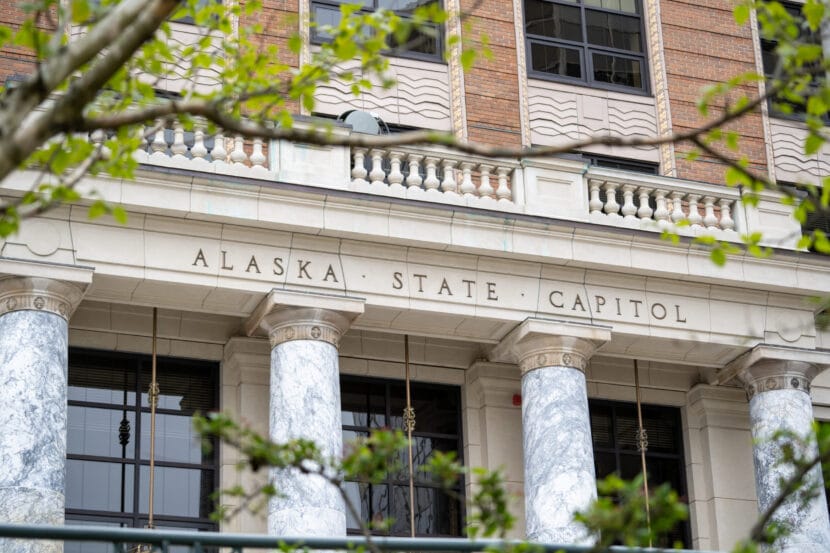
The facade of the Alaska State Capitol in Juneau on May 22, 2024. (Eric Stone/Alaska Public Media)

More Alaskans will be eligible for food stamps and access to health care for school-age children and young adults will increase under a bill that became law without Gov. Mike Dunleavy’s signature on Aug. 30.

Dunleavy sponsored the original bill, whose goal was to expand the services covered by Medicaid to include things like workforce development and food security. The bill takes advantage of a a federal waiver that allows states to consider the underlying causes of ill health. It was amended to include a proposal from Rep. Genevieve Mina, D-Anchorage, and Sen. Cathy Giessel, R-Anchorage, aimed at increasing SNAP access after the state’s Department of Health failed to process thousands of applications within the legal timeline in a backlog that left thousands of Alaskans without food aid for months at a time. Over the last two years, Dunleavy’s administration has added more than $70 million to state budgets to fight the crisis.

The state Senate passed the final version of House Bill 344 by a unanimous vote and the bill passed the Alaska House of Representatives by a vote of 26-14 on the final day of the 2024 legislative session.

“This bill is such a good deal for the thousands of Alaskans that have been trying to tread the uncertainty of food security,” Mina said on Tuesday. “We’ve been dealing with this issue for the past three years in terms of the inefficiencies of the SNAP program. And it’s just so exciting to think that moving ahead, we’re putting this path for a better-staffed program where working families can get the food that they need and also that they have a better path to sustainability.”

With the law’s passage, Alaska became the 43rd state to expand access to federal food assistance. The law will increase the income threshold for food stamp applicants and allow them to have savings while using the program when it takes effect on July 1, 2025. Currently, SNAP participants may have only limited savings and may be no more than 30% above the federal poverty level. Next summer, there will be no cut off for the amount of savings or assets SNAP participants have and the income threshold will be twice the federal poverty level.

“The SNAP program is a crucial tool for low-income households, but the income threshold was too low. As a result, people in need were going hungry, or, in some cases, people were forced to turn down a better paying job because the pay difference was not enough to make up for the lost food benefits. This is a good bill that strengthens the food and healthcare safety net in Alaska and I’m excited to see it become law,” said Giessel in a news release.

Mina said this adjustment means that Alaskans on the edge of those limits will not automatically lose SNAP benefits when they get a pay increase or save their money, which is called a “benefits cliff.”

“The problem is that, for folks who are stuck in a cycle of poverty, if you can’t save up money or if you can’t save up for an emergency fund, then you’re stuck in a financially stressful and precarious foundation,” Mina said.

The new law doesn’t eliminate the benefits cliff entirely, Mina said, but it does reduce its severity with a graduated, step-down program as beneficiaries’ incomes increase — more of a hill than a cliff.

She said Alaskans continue to call her office because they have waited too long for food stamps, but that the number is going down. She said it is evidence that policy changes are working.

The new law also allows the state to be reimbursed by the federal government for health care services for students who are eligible for Medicaid. Sen. Löki Tobin, D-Anchorage made an amendment to the bill that increased Medicaid eligibility.

“Providing healthcare to more people is a good thing, which is exactly what this bill does. The students that will be helped are already eligible for Medicaid. HB 344 simply allows healthcare services to be given to students in a more convenient location, which is often their school,” said Tobin in her newsletter on Tuesday.

The law goes into effect on Oct. 28, but the availability of the Medicaid coverage is likely to depend on how quickly districts can adapt their billing, Tobin said.

Here’s where money from Alaska’s opioid settlement is going

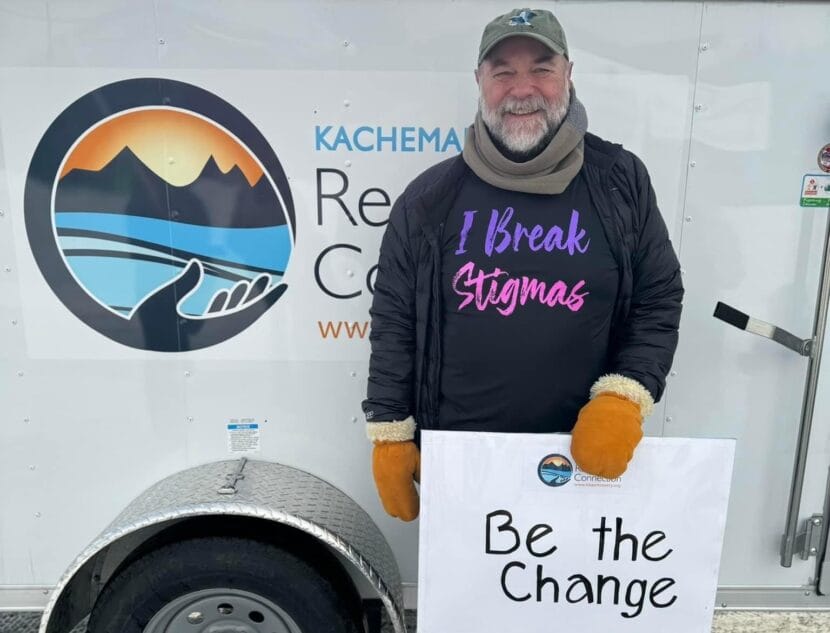
Willy Dunne, vice president of Kachemak Bay Recovery Connection, stands in front of their mobile recovery unit. The organization will use funds from the state’s opioid settlement to open a center in downtown Homer and staff it. (Photo courtesy of Kachemak Bay Recovery Connection)

Alaska’s Division of Public Health announced 18 organizations in the state that will get grants as part of the National Opioid Settlement. The grants will fund programs to help communities address the state’s increasingly-deadly opioid epidemic.

Kachemak Bay Recovery Connection, an organization based in Homer that provides resources for people in recovery, is one of the grant recipients. Willy Dunne, the organization’s vice president, who is in long-term recovery himself, said the $142,742 grant will fund peer support specialists, people with lived experience trained in support.

“They can relate to people in early recovery in ways that other clinicians might not be able to relate,” Dunne said. “So, that lived experience has been shown to be a very valuable tool in helping people expand and strengthen the recovery from substance use disorders.”

Dunne said the grant will also allow the organization to open a physical space in downtown Homer and to expand the reach of their mobile unit to communities further from Homer like Seldovia and Port Graham.

Set Free Alaska, another organization receiving $285,714 from the settlement funds, is a Christian organization that serves Alaskans in recovery, regardless of religion. They have outpatient centers in Wasilla and Homer.

Jason Manalli, their development director, said the grant will help expand their telehealth capabilities to reach more people in the Mat-Su borough, Kenai and Soldotna.

“Over the last couple of years, we’ve actually refined our practice and our service line to be able to provide quality service through telehealth, and it’s provided us a great opportunity to be able to reach people that we wouldn’t be able to reach in person,” Manalli said.

The funds came from settlements with Johnson & Johnson and three major pharmaceutical distributors, companies that contributed to the opioid epidemic nationally and in Alaska. According to the division of public health, the grants represent just under $3 million annually for three years, totaling about $8.5 million.

The money Alaska has from settlements is tiny compared to the real cost of the opioid epidemic in the state. In a recent report, the Alaska Mental Health Trust Authority estimated that the opioid crisis cost Alaska about $400 million in just one year. That estimate factors in loss of productivity due to addiction and loss of life for the hundreds of Alaskans who die every year from opioid overdose.

The organizations funded are the Alaska Behavioral Health Association, the Bethel Family Clinic, the Camai Community Health Center, the Aleutian Pribilof Islands Association, Southeast’s Kin Support Program – Haa Yatix’u Saiani, Petersburg Medical Center, Prince of Wales Health Network, Norton Sound Health Corporation, Maniilaq Association, Mat-Su Youth Housing, Set Free, Sunshine Community Health Center, Interior AIDS Association, Central Peninsula General Hospital, Kachemak Bay Recovery Connections, Akeela, Alaska’s Children’s Trust, and Volunteers of America Alaska.

Alleged victims of former volunteer at Juneau’s Echo Ranch Bible Camp are suing

Echo Ranch Bible Camp. April, 2024. (Photo by Clarise Larson/KTOO).

A warning: this story contains references to child sex abuse. 

Juneau’s Echo Ranch Bible Camp is among the places where a California man allegedly abused boys over the span of decades. Now, the people who say they were victims of Bradley Earl Reger are trying to hold the institutions where the abuse took place accountable. 

Reger was affiliated with Juneau’s Echo Ranch Bible camp for about 30 years. In the 1970s, the California resident volunteered as a nurse there. He also brought minors on trips to the camp from his home in California as recently as the early 2000s. Multiple men have accused Reger of abuse at the camp, under the guise of medical care.

Reger was already criminally indicted on federal sexual abuse charges last year. But a recent lawsuit, which names Echo Ranch’s owner, Avant Ministries, aims to hold the organizations Reger was involved with accountable, too. 

California resident Zack Winfrey, the lead plaintiff in the recent suit, attended Reger’s home church in California as a kid. He said Reger abused him for years in California and on trips to Alaska. Winfrey said the people around Reger at his church – and organizations like Echo Ranch – allowed it to happen.

“Brad could have been stopped decades ago,” he said. “I mean, some of them not even just reporting to — some of them were in the positions of power to completely cut them off from this, and didn’t do it.”

Winfrey reached out to lawyers about taking legal action against organizations Reger worked and volunteered for. Now, 18 of Reger’s alleged victims are involved in the lawsuit. 

“But there’s even more victims signing on now,” he said.

Morgan Stewart is one of Winfrey’s lawyers. He’s a partner at the law firm Manly, Stewart, and Finaldi. They specialize in representing victims in widespread child sexual abuse cases at churches and schools. 

“It’s essentially taking back their power over a perpetrator and those who allowed the perpetrator to abuse them,” Stewart said.

He said lawsuits like this one target the people who turned a blind eye and enabled abusers.

“The intent is to hold those entities accountable for it, their endorsement, approval and participation in his sexual abuse of these young men,” he said.

Stewart said the total number of Reger’s victims could be in the hundreds. 

His firm has won hundreds of millions of dollars in settlements in famous child abuse cases. For instance, those involving the Roman Catholic Church and Larry Nassar, the U.S. Olympics Gymnastics physician who assaulted hundreds of athletes. 

When asked for comment, a lawyer representing Avant Ministries wrote in an email that they will be “aggressively defending” the claims against the organization. 

As news of the lawsuit spreads, Winfrey, the lead plaintiff in the case, hopes more victims of Reger will come forward. 

The FBI has an online form for anyone who wants to report that they — or their minor dependent — may have been victimized by Bradley Reger. 

Survivors of sexual abuse in Juneau can call AWARE at 907-586-1090 to find resources for support. There is also a national 24-hour phone and online chat hotline that offers counseling and support.

As climate change alters berry production in Alaska, communities find ways to adapt

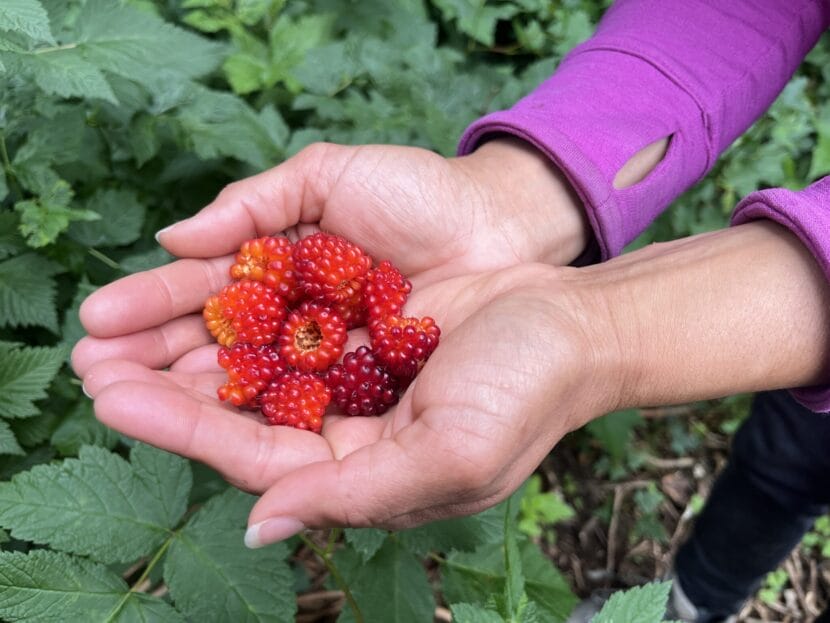
Elizabeth Lakshmi Kanter holds freshly-picked salmonberries on her land in Homer. (Rachel Cassandra/Alaska Public Media)

About 10 years ago, Genelle Winter noticed that berries in Metlakatla were much smaller than normal. So did a lot of other people in the community. Some berries were completely dried up and some bushes produced a second or even third set of flowers to try to reproduce. She said it was one of the early warning signs of what was officially deemed a regional drought in 2018.

“And then all of a sudden, all of those indicators that we had been taking note of made sense,” Winter said. “It all kind of fell into place.”

Winter, who works for the Metlakatla Indian Community in Southeast Alaska, said she’s also noticed other changes in berries since moving to Metlakatla three decades ago. She said service berries or saskatoon are thriving.

“We’re seeing more and more and more of it,” Winter said. “And I’m purely speculating that it’s because it prefers the drier conditions… It also likes more sunlight. So it’s moving into the developed areas.”

Wild Alaska berries are one of the most nutritious and antioxidant-rich foods available. But Metlakatla is just one of many Alaska communities noticing dramatic changes in berry production. In the past few years, people have reported late salmonberries in Seldovia, insects on cloudberries in Trapper Creek, oddly shaped low-bush cranberries in Anchorage and early blueberries in Fairbanks.

The changes impact berry harvests that Alaskans rely on for nutrition, culture and connection to their environment. Berries are expensive to import, so many Alaskans can’t replace them in their diet if they have a low harvest year. And any changes in berries also impact the animals that eat them, like ptarmigan, voles and bears.

Climate change is altering many different aspects of where, when and how berries grow. For the past two decades, researchers at the University of Alaska Fairbanks, or UAF, have been studying berries in Alaska.

Katie Spellman, an expert on Alaska’s wild berries and a researcher at UAF, said she hears reports on changes in berries from communities throughout the state.

“In some places it’s changing abundance or timing of the berries,” Spellman said. “And in some places, it’s increasing insect pests on their plants, or flowers frying up due to wind or drought conditions.”

Spellman and her colleagues have been collecting reports from Alaskans about berry growth and harvest. They’re also collecting data on berry size and quality, life cycle timing and impacts of snow pack to help Alaska better understand and respond to the impacts of climate change. Some of their data for blueberries dates back to 100 years ago. Their aim is to make sure Alaskans can pick both wild and cultivated berries in the decades to come.

The good news, Spellman said, is that Alaska berries are not going to disappear.

“None of them are going extinct,” Spellman said. “They might shift their regions so that we have to start using other berries as substitutes for the ones that we’ve traditionally picked.”

But she said because of climate change, Alaska now experiences more variation year-to-year in temperature, rainfall and snowfall. All of those factors impact berries in a wide variety of ways. One of the more sensitive berries, she said, is cloudberry.

“[It] used to be way more common when I was little growing up here and now, you dare not tell anybody where you found your cloudberry,” Spellman said.

Because climate change impacts are unpredictable, Spellman said the best way communities can adapt is to have a diversity of berry plants. UAF works with interested communities to gather data about how berries are growing near them and to come up with plans about how to adapt as climate change shifts berry habitats.

She said communities are getting creative to make sure they have access to berries long-term. One solution she said she loves is for blueberries in Hoonah.

“They’re actively managing the canopy in certain patches on the north side and south side of slopes,” Spellman said. “So that in hot years, the north side is more productive, and in cold years, the south side is more productive, so that they always have some sort of berry patch for their community to go to.”

In Metlakatla, Genelle Winter is part of a team working to increase community resilience and food security.

Because the community has noticed serviceberries are thriving, they’re including the species in their unfolding food forest plan. Winter said they’re planting as many fruiting and edible plants as they can throughout the community, swapping them out when ornamentals need replacing.

“We’re all really working hard to try to make sure that we’re preserving these species for future use, as well as trying to document the knowledge associated with how to use and how to preserve the various berries,” Winter said.

She and her colleagues are working with kids to plant, harvest, and gather data about berries and other fruit in Metlakatla. They hope that means people in Metlakatla can harvest berries for many generations to come.

UAF is holding a free online class on Aug. 28, from noon-1 p.m, for Alaskans who want to learn more about climate change impacts on berries and how their communities can adapt.

Whooping cough is surging in Southeast

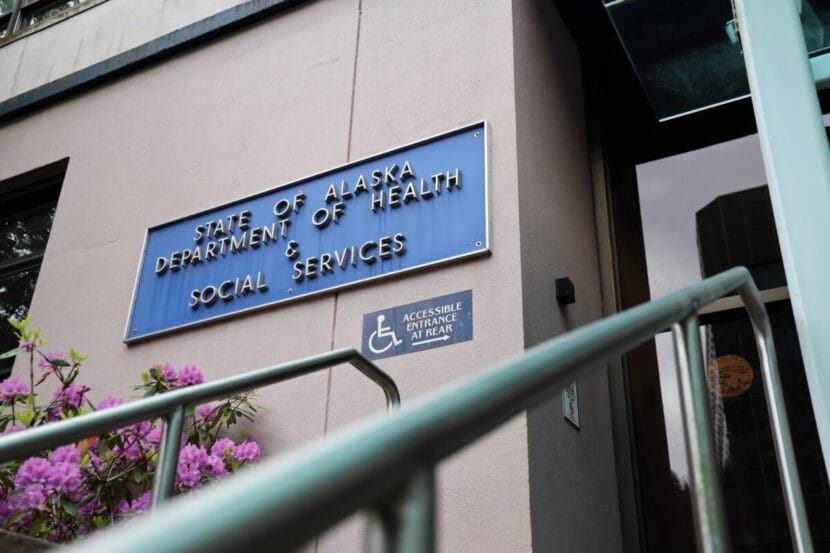
The Alaska Department of Health building in downtown Juneau in June, 2023. (Clarise Larson/ for the Juneau Empire)

Southeast Alaska health officials say cases of pertussis, commonly called whooping cough, are up in Juneau. 

Last week, the City and Borough of Juneau and the Juneau School District sent out press releases to residents and students about the reported uptick in cases.

Southeast Regional Nurse Manager for the Division of Public Health Sarah Hargrave said the region has had 14 reported cases of the highly contagious respiratory illness since July. And cases continue to grow. 

“We are just seeing an increase in pertussis, which is known as whooping cough, across the state,” Hargrave said. “That’s been going on since the summer, mostly up in other parts of the state, but about mid-summer, we started to see a few trickle into Southeast and they’re just continuing to have cases pop up.”

Cases have also been on the rise across the state and country, according to the state and the Centers for Disease Control and Prevention. Since January, there have been over 165 cases reported in Alaska, compared to less than 30 in 2023. 

Symptoms of the disease start out similarly to a common cold but are paired with a long-lasting cough. It can spread easily from person to person through the air. 

Bartlett Regional Hospital Infection Preventionist Charlee Gribbon said that’s why it’s important to make sure you’re vaccinated and taking precautions when you’re experiencing symptoms.

“Vaccinations are just a key part of keeping yourself overall healthy, like getting good sleep, good nutrition, good hydration,” Gribbon said. “It helps keep your immune system ready, so it’s all part of that.”

The bacterial infection is most dangerous for young children and babies under the age of one. It can also be more dangerous for people with pre-existing health conditions such as asthma. If caught early, it can be treated with antibiotics.

Site notifications
Update notification options
Subscribe to notifications