• Skip to primary navigation
  • Skip to main content
  • Skip to primary sidebar
  • Skip to footer
KTOO

KTOO

  • News
    • General news
      • State Government
      • Education
      • Weather
      • Elections
      • Economy
        • Business
        • Fisheries
        • Energy & Mining
      • Public Safety
        • Glacial Outburst Flooding
        • Crime & Courts
        • Search & Rescue
      • Filipinos in Alaska
      • Arts & Culture
        • Lingít Word of the Week
        • Tongass Voices
      • Outdoors
      • Alaska’s Energy Desk
    • Across Alaska
      • Juneau
        • Local Government
        • CBJ Assembly Meetings
      • Southeast
      • Southcentral
      • Western
      • Aleutians
      • Arctic
      • Interior
      • North Slope
    • The Signal
      A weekly Alaska news email from KTOO.
  • Shows & Podcasts
    • Podcasts
      • Outburst
      • KTOO News Update
      • Curious Juneau
      • Gardentalk
      • Culture Rich Conversations
      • Mga Kuwento
      • Cruise Town
      • All podcasts
    • Juneau Afternoon
      • Juneau Afternoon
      • Songwriters on Songwriters
      • Lingít Aaní Káa Kei Nas.áx̱ Haa Yoo X̱’atángi
    • Gavel Alaska
      • Archives
      • Schedule
      • Alaska Supreme Court
      • About Gavel Alaska
    • Public Affairs
      • Capitol Views
      • Alaska Statehood Pioneers
      • Juneau World Affairs Council
      • More public affairs >
    • Music & Arts
      • Radio Theater Festival 2025
      • Radio Theater Festival 2023
      • Red Carpet Concerts
      • Alaska Originals
      • At the APK
      • Special Arts Programs
      • More music & arts >
    • Documentaries
      • ReVision Alaska Documentary Series
      • ANCSA@50: The Journey Continues
      • Lineage: Tlingit Art Across Generations
      • Inside Out: Leaving Prison Behind
      • More documentaries >
    • All shows
  • Radio
    • KTOO News
      104.3 & 91.7 in Juneau
      • Listen Live
      • Schedule
      • Now Playing
    • KRNN
      102.7 & 103.1 in Juneau
      • Listen Live
      • KRNN Home
      • Schedule
      • Now Playing
    • KXLL
      100.7 & 101.7 in Juneau
      • Listen Live
      • KXLL Home
      • Schedule
      • Now Playing
  • TV
    • KTOO 360TV
      • Watch On Demand
      • Schedule
      • Where to watch
      • About KTOO 360TV
    • Gavel Alaska
  • About
    • Our Story
    • Our News Team
    • Contact Us
    • Inside KTOO
    • Staff
    • Jobs
    • Volunteer
    • Board of Directors
    • Community Advisory Board
    • Where to Tune
    • Federal Funding
  • Support
    • Ways to Support KTOO
    • Donate
    • Donor Lounge & FAQ
    • Membership Update Form
    • Sustaining Membership
    • Summit Circle
    • Legacy Fund & Planned Gifts
    • Business Support & Community Sponsorship
    • Volunteer
    • Buy KTOO merch
  • Search
  • Donate

Impaired reception of KAUK (91.7), KRNN(102.7), and KXLL(100.7)

Health

Health | Juneau | Mental Health

Juneau’s hospital closes its crisis care unit less than a year after opening it

July 25, 2024 by Clarise Larson, KTOO

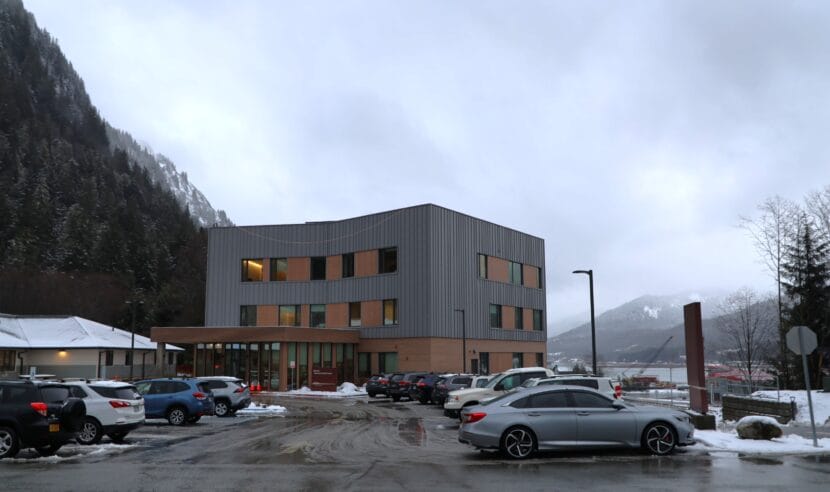
Bartlett Regional Hospital’s Aurora Behavioral Health Center opened its doors to adolescent crisis care patients on Dec. 18, 2023. (Katie Anastas/KTOO)

A program designed to offer immediate care to adolescents in crisis at Juneau’s city-owned hospital closed last week after opening eight months ago.

In an interview, Bartlett Regional Hospital spokesperson Erin Hardin said the closure is due to a lack of funding and staff. 

“There is no dedicated subsidy funding available, and we don’t have the staff to keep the unit open,” she said. “So knowing both of those factors, the decision was made to close that particular program.”

This comes as the hospital faces a major budget crisis. Its board of directors is seeking financial help for a handful of services it says are draining money. The crisis stabilization service was one of those programs and was expected to lose $1.2 million next year. 

The hospital only started offering the service last December after the new Aurora Behavioral Health Center was completed. It was built specifically to house the program and the hospital’s psychiatric services program. 

At the time of its opening, the crisis stabilization unit was seen as a groundbreaking service to help youth in Juneau — and across Southeast Alaska — get the mental health and substance use care they need. 

According to data from the state, suicide was the leading cause of death for Alaska Native youth aged 10 to 19 and all youth aged 10 to 14 in 2020. It was the second leading cause of death that year for Alaskans aged 15 to 34.

Aaron Surma, the executive director of the National Alliance on Mental Illness Juneau, said that the demand for crisis services in Juneau is high, and the closure will be devastating for the people who need it the most. 

“People aren’t going to get what they need — and that has all kinds of negative reverberations. And I think you can draw some easy parallels to some other tragedies that have happened in our community,” he said. “So people are going to struggle more, and it’s very hard to live in crisis and be successful.”

Surma said that, in the absence of adequate crisis care services in Juneau, it’s vital that people learn how to support one another’s mental health. 

“I want and hope to help people become more comfortable supporting one another’s mental health because I think individuals can be more reliable than systems and services,” he said. 

Hardin said people in crisis can still receive care at Bartlett. But they will get it from the hospital’s emergency department rather than the crisis center. She said the hospital’s board continues to look for other more financially sustainable ways to offer crisis care in the future. 

The Aurora building will continue to remain open and house outpatient psychiatric services. Hardin said the portion of the building that housed the crisis program will likely be repurposed for other hospital programs.
Federal Government | Health

CDC amends new rules for dogs entering U.S.

July 25, 2024 by Alain d'Epremesnil, KHNS - Haines

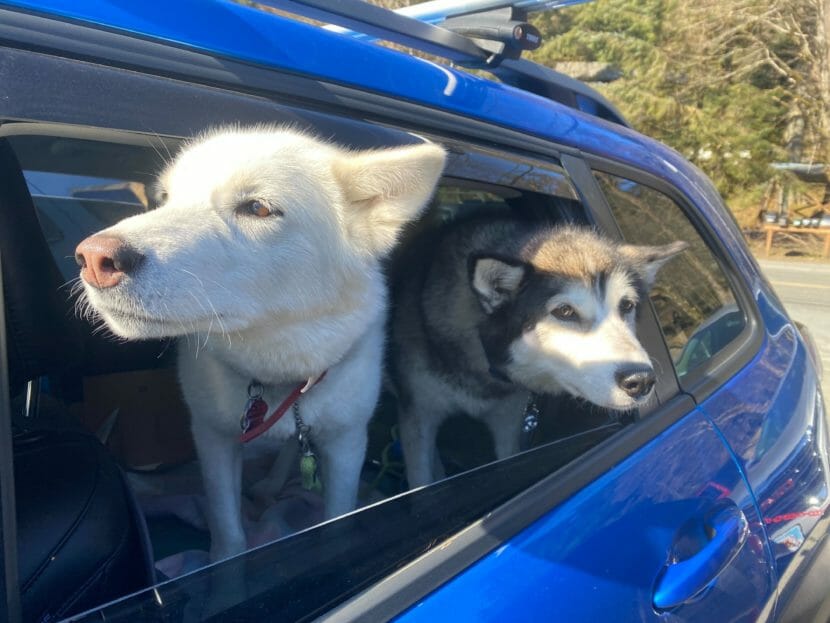
Osprey and Chinook, retired sled dogs, wait in the Juneau Animal Rescue parking lot for shots. (Photo by Claire Stremple/KTOO)

The U.S. Centers for Disease Control recently announced some new rules meant to keep rabies out of the U.S.

Beginning Aug. 1, the rules will make it more complicated for dogs to come into the country. Among other things, the agency required all U.S. bound dogs be vaccinated, and come with a form signed by a vet within the last six months.

After receiving what it described as “valued feedback”, the agency amended the rules this week. It now exempts dogs traveling from low risk countries from some of the measures. Starting next week, customs will require a one page dog import form for dogs who have been “only in dog rabies -free or low risk countries in the 6 months before U.S. entry”. Dogs traveling from high risk countries will still be subject to the full extent of the new rules. Luckily for local dogs and their people,  Canada is considered a rabies free country. So is Mexico.

However, the new rules will still introduce some novel requirements. All dogs crossing into the U.S. will have to have a microchip ID that can be detected with a universal scanner.

The animal will also have to appear healthy, and be at least six months old when crossing into the U.S. These requirements will prevent people from traveling with their puppy, and could introduce uncertainty when taking a dog to a vet appointment  in Canada.

CaSandra Nash is the director of the Haines Animal Rescue Kennel. She says her organization can implant microchips. But, with about 25 chips left, she has a limited stock, and she says the chips are on backorder. Nash says the new rules could really complicate some situations.

“As far as emergency situations, needing to get through the border, most folks tend to go to Alpine of All Paws, in Whitehorse,” Nash said. “And if they are barred (re)entry, the only other option would be to go to Juneau, and most of the time, getting an appointment in Juneau or flying or ferrying is very restricted, so it would narrow down the options for folks in town drastically.”

A customs employee who was not allowed to speak for the agency said the requirement for the dog to appear healthy would likely apply only to signs of rabies, and not, for example, to injuries. Still the new rules, as written, would prevent people taking a puppy to Whitehorse for an emergency vet appointment from coming home with their companion until the dog reaches six months of age.

A representative for U.S. Customs and Border Protection in Alaska said he is still waiting to hear from the CDC for details on how the rules will be applied.

Alaska’s congressional delegation is also concerned about the changes. U.S. Senators Lisa Murkowski and Dan Sullivan and U.S. Rep. Mary Peltola sent a letter to the CDC asking for more consideration for people transporting their dogs over the border, including mushers transporting sled dogs from the Lower 48.

“This rule does not work for Alaskans who travel with their pets,” Murkowski says in the release. “Many Alaskans go through Canada to get to the Lower 48 with their pups in tow, and this rule will add unnecessary expense and complication for travelers. We are working directly with the CDC to fix this.”

This story has been updated with comment from the Alaska congressional delegation. 

Public Safety | Sexual Abuse & Domestic Violence | Southeast

An expert on abuse is visiting Southeast communities to train providers and first responders

July 23, 2024 by Yvonne Krumrey, KTOO

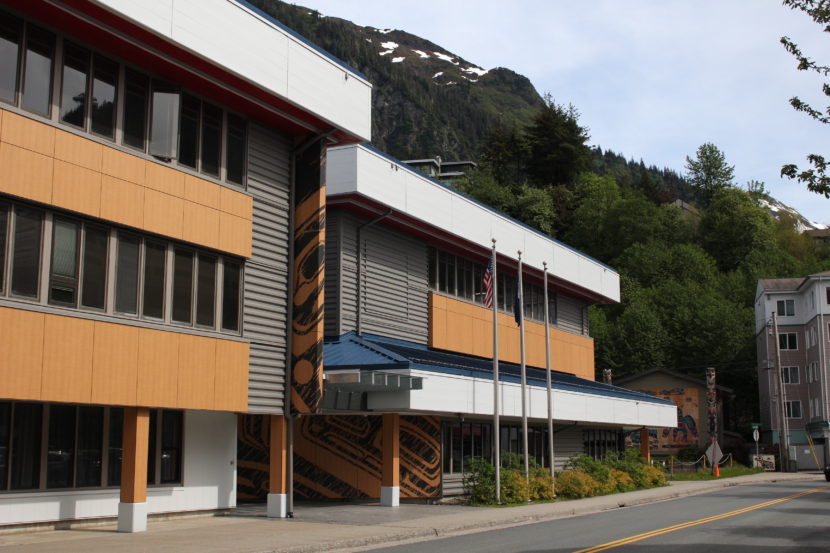
Andrew Hope Building/ Elizabeth Peratrovich Hall (Photo by Elizabeth Jenkins/KTOO)

An expert is visiting Southeast Alaska communities this week to talk to medical workers and first responders on documenting and reporting abuse. 

And she wants to hear from community members, too.

Angela Trujillo is a professor of nursing at the University of Alaska Anchorage. She’s worked with victims of abuse for years, and she helped design a training program with the Alaska Comprehensive Forensic Training Academy. 

The training is meant to help providers ask patients the right questions about abuse at the right time.

“They might not be ready to go to law enforcement at the time that they’re willing to talk to the health care provider,” she said. “But if the health care provider can get them to talk to them and can get that documented, then that’s something that can be helpful and useful to them long term.”

Trujillo said some practices to check for abuse are becoming more common, but there’s still work to be done — especially in a place like Alaska, which has one of the highest rates of domestic violence in the nation. 

“We often hear when you go to the doctor, you know, you’ll be asked, ‘Are you safe at home?’ Trauma-informed care takes it beyond that,” she said. “It really helps the provider to be able to ask those questions in a much more supportive manner.”

These visits will help her understand how to meet the specific needs of Southeast Alaska, whether in Juneau or in much smaller communities like Kake.

“We’re asking and seeking community feedback on how that is appropriate for their communities if they feel like there’s anything missing,” she said. “We’re seeking feedback from communities to make sure that the training is appropriate for everyone.”

She the meetings will be a brief look into the 50-hour training on documenting and reporting abuse she helped develop. Half of that program can be completed remotely. The rest of the training will be held in Anchorage, with dates in either August or December of this year. 

Trujillo will be in Juneau at Elizabeth Peratrovich Hall Wednesday from 9:30 to 10:30 a.m. She’ll be in Hoonah on Thursday at 8:30 at City Hall and in Kake on Friday at 10 a.m. at the Nest. 

Juneau | Mental Health | Public Safety

‘Devastated and angry’: Protestors call for change in the wake of deadly Juneau police shooting

July 22, 2024 by Yvonne Krumrey, KTOO

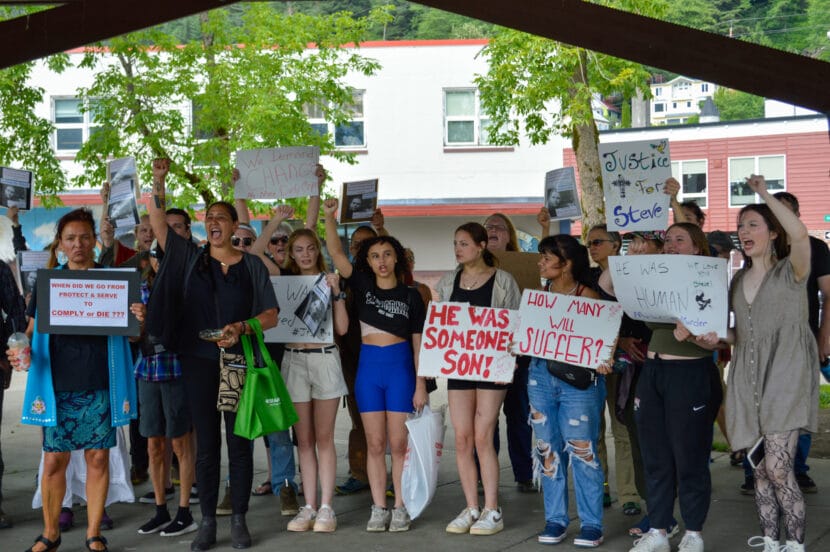
Left to right: Rowena Brockway, Jamiann S’eiltin Hasselquist, Eulaysia Bostrack, Savannah Brohard, Marley Webster, and Ariilana Shodda-Lee at a protest against the death of Steven Kissack in Juneau. July 21, 2024. (Photo by Yvonne Krumrey/KTOO)
https://ktoo.s3.us-west-2.amazonaws.com/wp-content/uploads/2024/07/22protest.mp3

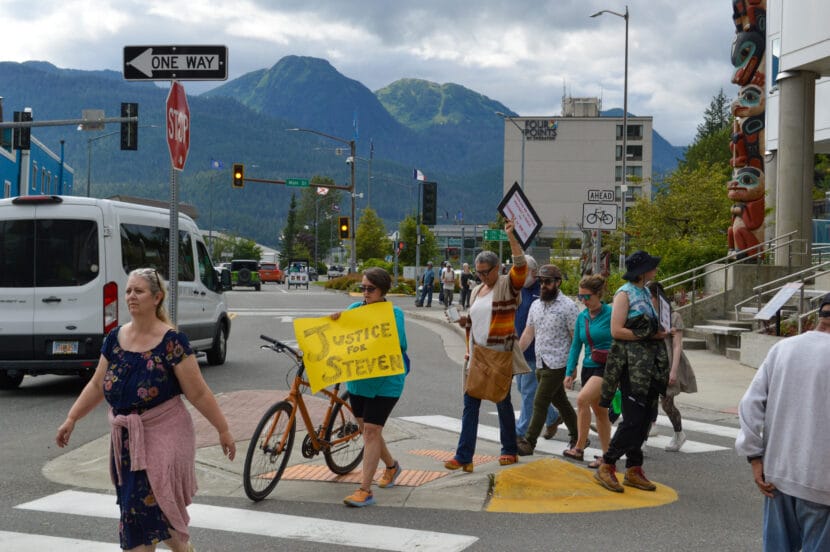
Sunday afternoon, a couple dozen people gathered across from the state Capitol building in downtown Juneau. Some held signs with messages like like “Justice for Steven” and “Until we meet again.”

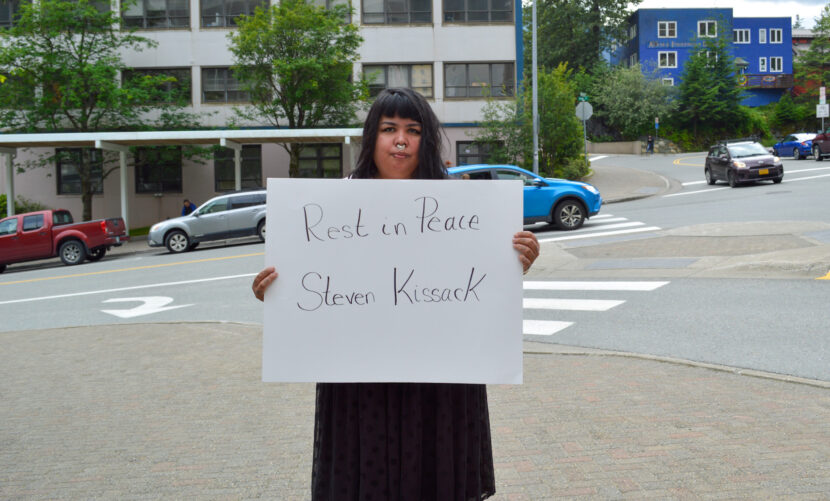
Genevieve McFadden’s sign read, “Rest in Peace Steven Kissack.” She said she was there because she saw videos of Steven Kissack’s shooting, and she doesn’t want to see anything like that happen in Juneau again. 

“Seeing people gunned down in the street is awful, and it makes me feel unsafe,” McFadden said. “And makes me worry about my kid, you know? I don’t want anything like that to happen to her or anybody else.”

Genevieve McFadden at a protest for Steven Kissack in Juneau. July 21, 2024. (Photo by Yvonne Krumrey/KTOO)

The protesters gathered to express their anger over the death of Steven Kissack last week. Kissack had been living on the streets downtown with his dog, Juno, for years when law enforcement shot and killed him during a confrontation on July 15. 

Bonilyn Parker came to the protest with a letter she wrote with help from some other downtown business owners. She said she plans to read it at the next Assembly meeting, on July 29.

Update: She said the letter is at Alaska Robotics if people want to sign it this week. 

She said she hopes the letter will help the city to realize the impact Kissack’s shooting has had on everyone in Juneau. 

“I think this is a really ripe moment for some change,” she said.

Nearby, Salomé Starbuck read aloud from the letter as it got passed around for people to sign. 

“As a result of this tragedy, members of our downtown community and visitors to our community are experiencing anger, fear and a loss of a loss of trust,” she read. “We must work to resolve that trust and make Juneau a place where people can live safely and without fear.”

Starbuck signed the letter.

“Every single person I’ve talked to since this has happened is devastated and angry about this happening,” she said.

There were actually two protests on Sunday: the gathering at the Capitol was advertised on a small piece of paper at a downtown memorial site for Kissack. But when demonstrators showed up, no one claimed to have planned it.

After half an hour, the group headed down to the library, where four young women had planned a second protest.

Savannah Brohard said she and her friends first made signs and took to the streets two days after the shooting. Later, they decided to plan a larger protest.  

“Our voices matter given the fact that we’re in control of the future,” Brohard said.

Her friend Eulaysia Bostrack said she wanted to take action to make it known that young people are already tired of seeing violence like this. 

“And it needs to stop, because we see this on the news every day, and it’s getting tiring, it’s painful,” Bostrack said. “This is not normal. This should not be normalized.” 

And for Ariilana Shodda-Lee, Kissack’s death hit close to home.

Protesters march through downtown Juneau in the wake of a police shooting that left an unhoused man dead. July 21, 2024. (Photo by Yvonne Krumrey/KTOO)

“I’m personally continuing to push because I’ve been homeless, and who’s to say I’m not the next to get shot if I fall to homelessness,” Shodda-Lee said. “We need to be protecting our people and not just killing them.”

So far, the name of only one of the officers involved in the shooting — an Alaska Wildlife Trooper — has been released. Juneau police say the names of JPD officers involved will be released this week. 

The Alaska Bureau of Investigations is investigating the shooting to determine if lethal force was necessary. The Alaska Office of Special Prosecutions will then independently review the findings.

Housing | Juneau | Mental Health | Public Safety

NAMI Juneau offers mental health resources to witnesses of downtown shooting

July 19, 2024 by Yvonne Krumrey, KTOO

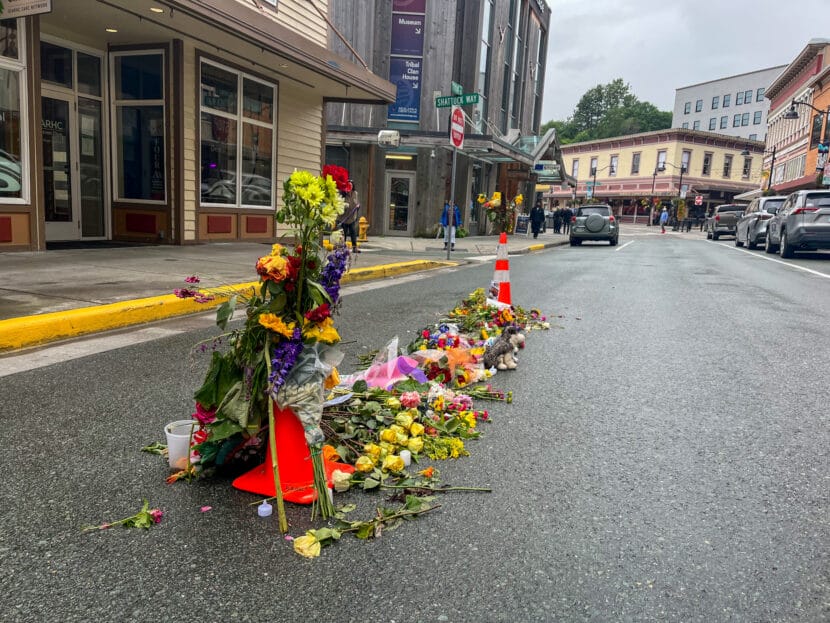
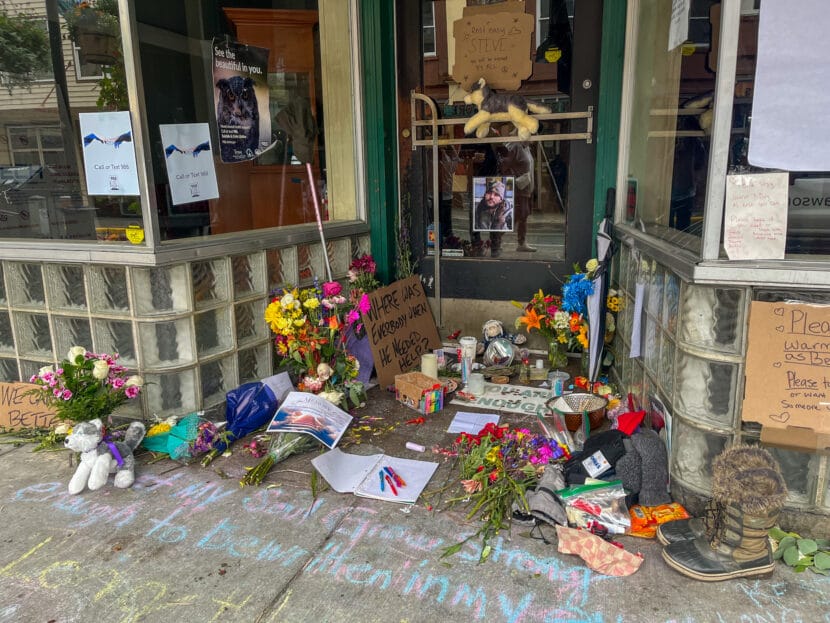
Flowers lay in the street at a memorial for Steven Kissack in downtown Juneau on July 19, 2024. (Photo by Yvonne Krumrey/KTOO)
https://ktoo.s3.us-west-2.amazonaws.com/wp-content/uploads/2024/07/19trauma.mp3

People who witnessed Monday’s deadly police shooting in downtown Juneau are carrying a lot of emotions — anger, confusion and grief, to name a few. A local mental health care provider has compiled resources to help residents deal with the trauma.

William Sanders said he’s been struggling with his anger since Steven Kissack was shot and killed during a standoff with police officers.

“I’m trying to keep my mind occupied,” he said. “Sometimes that’s the only way I can sleep. I keep busy till I collapse.”

Sanders said he and Kissack were friends. He said Kissack was someone who helped people navigate being on the streets and always shared his food.

Sanders doesn’t have stable housing, and he said witnessing a violent death like this makes living on the streets even harder. In the chaos of the shooting, he said he and another witness feared for their own safety.

“We all checked ourselves. We didn’t know if we were hit,” he said.

Matthew Mulhern was working at Devil’s Club Brewery when police confronted Kissack. He was standing in a window that looks out on Front St. when the shooting started.

“I didn’t ever expect it to turn into what it did,” he said. “That was not a possibility in my mind, that I was going to watch someone be shot.”

He said he’s also been feeling a lot of anger. And it wasn’t until the next day that he realized how close he was to being hurt himself. He found a bullet hole in the wall where he had been standing, right before the gunfire. 

“The thing that is terrifying to me is that I cannot be safe at work, that I cannot be safe inside my building,” Mulhern said. “In what realm is that okay?” 

Mulhern was able to get an appointment with his therapist only a few hours after the shooting. And, he said, the community of people who witnessed the shooting while working downtown have been supporting each other through the fallout. 

“I am really lucky that I have a bit of a support network, and I still don’t feel like it’s enough to be perfectly honest,” he said.

Meryl Connelly-Chew is a program coordinator for the local chapter of the National Alliance on Mental Illness, or NAMI.

They said anger like Sander’s and Mulhern’s is normal when people witness traumatic events. And so are feelings of sadness, guilt and fear. 

“Really just by witnessing — even for many of us, watching the videos — or everyone in town is kind of talking about this right now. Talking about something so traumatic and violent can have an effect on us,” Connelly-Chew said. 

Connelly-Chew said NAMI has put together resources on their website for people who have witnessed a traumatic event. People can also use support hotlines like 9-8-8 or reach out to NAMI to seek therapists who specialize in trauma.

They said spaces like the vigil for Kissack earlier this week, or memorials that have been set up downtown, are important for people to be able to grieve together. 

A downtown Juneau memorial for Steven Kissack. July 19, 2024. (Photo by Yvonne Krumrey/KTOO).

“I think it’s really important to know that there is not one person in my personal or professional life in the past week that hasn’t been affected by this in some way,” they said. “I think the entire community is experiencing the effects of this.” 

Connelly-Chew said people should give each other as much compassion and kindness in the wake of Kissack’s death as they can. And that’s especially true when people interact with people who are living outside in Juneau. 

“These are folks who are grieving someone they loved very much, someone who felt like their family. They are wanting to share stories, they are wanting to take care of each other, share food, do all of the things that any of us do when we’re experiencing loss,” they said. 

And people living outside have a harder time accessing mental health care. But community support goes a long way.

“Stop in, say hello to people at the memorial site,” Connelly-Chew said. “Share a hug or a story and just show up in that grief the way that you would for someone in your neighborhood.”

Health | State Government

U.S. District judge hears food stamp backlog case against Alaska’s health department

July 19, 2024 by Claire Stremple, Alaska Beacon

Food in Food Bank of Alaska’s Anchorage warehouse on April 21, 2023. (Photo by Claire Stremple/Alaska Beacon)

U.S. District Court Judge Sharon Gleason is considering a case that asks the court to make sure the state issues food stamps on time after years of chronic delays. She heard oral arguments Thursday in Anchorage.

Ten Alaskans sued the state in January of last year because they said the Department of Health failed to provide food stamps, also known as Supplemental Nutrition Assistance Program benefits, within the time frames required by federal law.

Thousands of Alaskans waited months for federal food aid last year because the state’s Division of Assistance had accumulated a backlog of crisis proportions.

The case was delayed for a year and a half because the court granted the state a series of stays to allow it to work on its problems. Gleason ceased granting stays in February after the state stopped making progress and relapsed into another backlog of food stamp applications.

Lately, state officials say, they have worked through their backlog in applications and are issuing timely benefits. The plaintiff’s latest filing says some people still experience delays.

Nick Feronti of the Northern Justice Project represented the plaintiff and asked the court to grant a preliminary injunction and compel the state to process food stamp applications within the time limits established by federal law and to provide written notice to any household whose food stamps will be late, giving them an opportunity for a hearing.

“We’re here about a preliminary injunction that could stop Alaskans from going hungry,” he said.

Feronti said Alaskans who seek food stamps would continue to experience irreparable harm if the court does not act.

“If we are depriving poor folks, if we are depriving the indigent of their chance to simply get a bite to eat, well, that’s a harm that we cannot repair in the future, even with back benefits,” he said.

Lael Harrison, representing the Alaska Department of Health, argued that a court order telling the state to hurry up would be too vague to be useful. She cited the Federal Rules of Civil Procedure, which say that a preliminary injunction must describe what it asks for in reasonable detail.

“This proposed order … is not sufficiently specific in terms that the director of the Division of Public Assistance could then know how to apply it and know how to avoid risking contempt through her actions going forward,” she said.

Harrison also said that a preliminary injunction would not solve the issue of delays in application processing that the state is already working to solve.

“The Division of Public Assistance isn’t saying ‘Somebody else has to figure out what we got to do.’ They figured out what they got to do. They’re doing it. You can see the results from it already,” she said.

“And so what more is this adding? What does this tell them that they need to do that they’re not already doing?”

Farronti rebutted that logic.

“If we were in a state where the timeliness percentage was 20% or 10% and the state got up and said, ‘We’re doing everything we could do,’ there’s no way a federal judge would say, ‘Okay, it’s all good,’” he said.

“A federal judge’s power does not stop just because the state runs out of ideas.”

Gleason said she would take the matter under advisement and did not give a timeline for her decision.

Correction: This article was updated to correct the spelling of Nick Feronti’s name and a misspelling of Lael Harrison’s name.
  • « Go to Previous Page
  • Page 1
  • Interim pages omitted …
  • Page 30
  • Page 31
  • Page 32
  • Page 33
  • Page 34
  • Interim pages omitted …
  • Page 925
  • Go to Next Page »

Primary Sidebar

KTOO thanks our sponsorsBecome a sponsor
Close

Footer

KTOO Links

About
Contact Us
Where to Tune
Report Reception Problems
Community Calendar
KTOO Board of Directors
Community Advisory Board
Staff
Careers

Social media

Facebook
Bluesky
YouTube
Instagram


Resources

Reports and Financial Statements
FCC Applications
KTOO FCC Public Files
KAUK FCC Public Files
KRNN FCC Public Files
KXLL FCC Public Files
KTOO-TV FCC Public Files
Privacy Policy
Copyright Policy

Public Media

Public Radio
KTOO
KRNN
KXLL

Public Television
KTOO 360TV
Gavel Alaska
  • Gavel Alaska Media Use Policy
Alaska Public Media/PBS

Copyright © 2026 KTOO Public Media

Site notifications
Update notification options
Subscribe to notifications

Subscribe

Get notifications about news related to the topics you care about. You can unsubscribe anytime.
CancelSubscribe
 Share This
 Facebook
 Copy

Share on Mastodon