Health

Alaska foster families get another year of fully funded child care

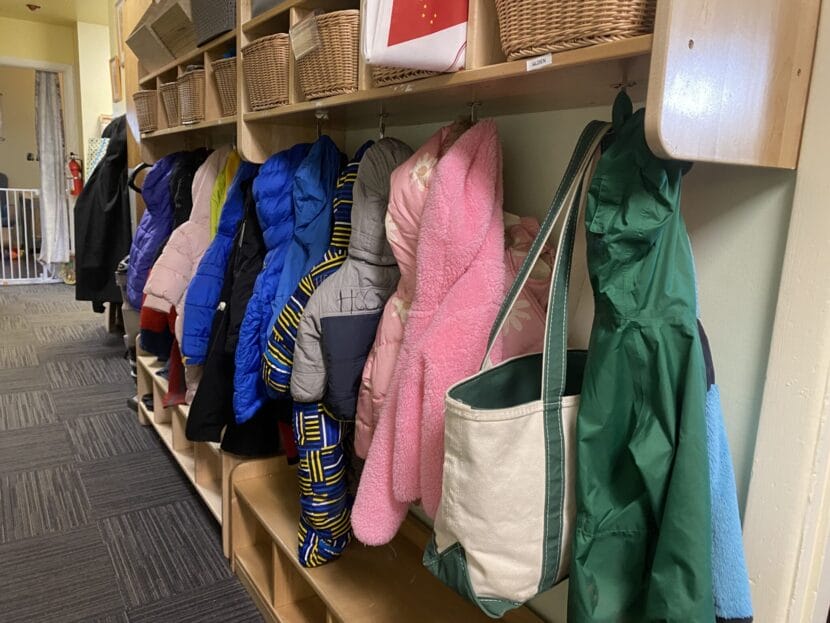
Children’s coats hang in a hallway at Hillcrest Childcare Center in Anchorage on April 18, 2024. (Photo by Claire Stremple/Alaska Beacon)

State officials have alerted foster parents that Alaska health and community services agencies will take over the costs of a federal program that fully funds their child care after the pandemic-era money ends in July.

The news is a boon to the foster system, which foster families and child care providers say has struggled to find families that can afford to foster because child care costs are so high in the state.

Ashli Mackey is one of those foster parents, who currently cares for two foster children in addition to her five adopted and biological children. Without child care covered, she said, she would not be able to afford being a foster parent.

“I would no longer be able to continue fostering kiddos in need or supporting reunification. For long-term planning, it would also impact my ability to adopt kids,” she said.

Four of Mackey’s children need child care, two of whom are her foster children. She is a teacher for the Anchorage School District and said that child care costs for the other two is 35% of her paycheck.

“Doubling that would be impossible. So if there’s a lapse in full childcare subsidies for foster parents, I would anticipate that homes such as mine would need to close their licenses,” she said.

Mackey said the change means her foster children will continue to get an early education. If the money had run out at the end of this month as it was set to do, she would have had to hire a nanny — depriving her kids of the socialization with other children that teaches basic skills that they need to be successful as future students and community members.

The state has long subsidized child care for foster families, but during the pandemic it used federal relief dollars to pay the entire cost of care. A spokesperson for the Department of Family and Community Services said the state will dedicate $350,000 to the effort over the next fiscal year, which equates to full funding for about 530 families.

Advocates say the change means that more families will be able to take care of the state’s most vulnerable children, which improves health outcomes and keeps siblings together. And they are applauding the coverage of the full cost of care, rather than the “market rate,” which is typically lower and often doesn’t pay the full bill, leaving parents paying the difference.

Christina Eubanks, the director of Hillcrest Child Care Center in Anchorage, was one of the providers who brought the issue to public attention. Hillcrest serves several families with foster children, including Mackey’s, and Eubanks had to warn parents that they would be responsible for part of the $1,850 a month it costs to enroll a child at her care center.

“The cost was way more than what the reimbursement rate was,” she said. “If it goes back to how it was before, you’re going to start looking at paying five to $600 a month in child care costs.”

She said she was worried fewer people would foster, leaving more children in state custody, if the state did not act.

Rabbi Abram Goodstein of the Beth Sholom congregation is an advocate who amplified her message. “A lot of us kind of got together and realized we should really push the state to support what I would say is the most vulnerable Alaskans in our state,” he said. “These are children that are under six who don’t necessarily have stable child care, who don’t necessarily have a stable home, who could really benefit from a quality early education — and if it were free for them, that would be an incredible boost to their success in life.”

Advocates rallied around the issue when it was raised at a listening session sponsored by the Alaska Children’s Trust. ACT Director Trevor Storrs said state officials took ownership of the issue once advocates pointed it out.

“This really happened because of the leadership of our commissioners, and we thank them for their continued support of children and families, because they really made it happen,” he said.

Storrs added that the solution underlines how important it is to invest in families.

“This is just a small step towards really universal child care, which is the ultimate solution to dealing with their child care crisis,” he said.

The letter to foster parents said the state agencies would seek to continue the funding further into the future.

Correction: This article has been updated to correctly state the name of the Department of Family and Community Services.

This story originally appeared in the Alaska Beacon and is republished here with permission.
As they enter their 60s, Gen Xers projected to see higher cancer rates than Boomers

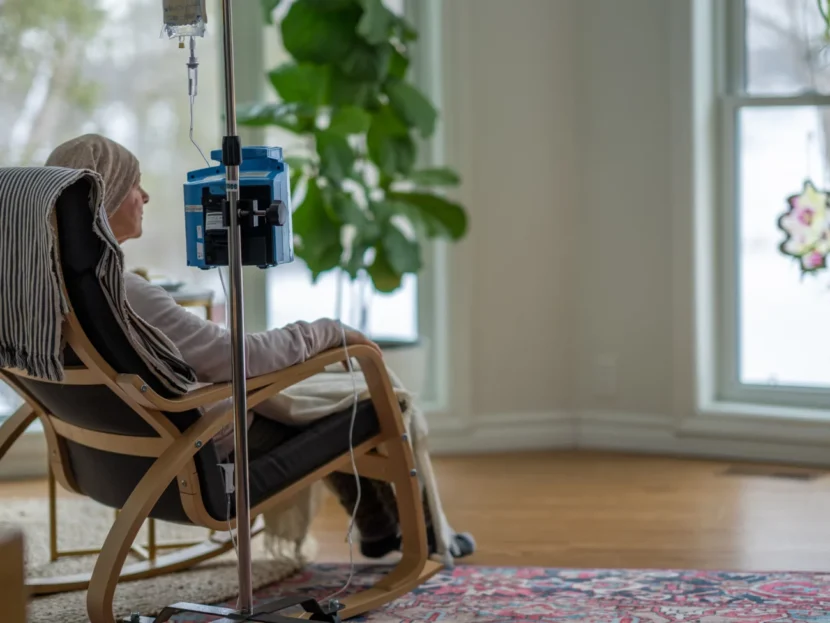
New research projects higher cancer rates for Gen X when they hit age 60 compared to Baby Boomers.
(FatCamera/Getty Images/E+)

As they head into their golden years, Gen-Xers are more likely to be diagnosed with cancer than the generation born before them, the Baby Boomers, a new National Cancer Institute study finds.

If current cancer trends continue, the paper published this month in JAMA Network Open concludes, “cancer incidence in the U.S. could remain unacceptably high for decades to come.”

What’s driving the projected rise in rates of invasive cancer remains an open question.

“Our study can’t speak to any particular cause,” said lead author Philip S. Rosenberg, senior investigator in the institute’s biostatistics branch. “It gives you boots-on-the-ground intelligence about what is happening. That’s where you go and look for clues about causes.”

Researchers believe early detection, obesity and sedentary lifestyles might explain some of the rise in cancer rates. Some research also points to pollutants, including a class of manmade chemicals known as PFAS, as possible culprits.

Rosenberg and his team used data from 3.8 million people diagnosed with malignant cancer in the U.S. from 1992 until 2018 to compare cancer rates for members of Generation X (born between 1965 and 1980) and Baby Boomers (born between 1946 and 1964). He then ran modeling that shows that when Gen-Xers turn 60 years old (starting in 2025), they are more likely to be diagnosed with invasive cancer than Boomers were at age 60.

In fact, cancer is more likely to hit Gen-Xers than any prior generation born from 1908 through 1964, the study’s projections found.

For decades, the news about cancer had largely been encouraging. Lung cancer rates were dropping as a result of educational efforts about the harms of tobacco. In women, incidences of cervical cancer, and in men, incidences of liver, gallbladder and non-Hodgkin lymphoma also were dropping.

But the declines have been overshadowed by an alarming uptick in colorectal and other cancers in Gen-Xers and younger people.

The new study’s models found increases in thyroid, kidney, rectal, colon cancers and leukemia in both men and women. In women, it also found increases in uterine, pancreatic and ovarian cancers and in non-Hodgkin lymphoma. In men, the study also projected increases in prostate cancer.

Rosenberg was surprised about how many different types of cancer appeared to be rising at higher rates in members of Generation X compared to Baby Boomers, he said in an interview. He also was surprised that projected increases in cancer rates would offset what he described as prior “very important and impressive declines” in cancers.

The increases for Generation X over Baby Boomers appeared in all racial and ethnic groups except Asian or Pacific Islander men, who were less likely to be diagnosed with cancer at age 60 if they were Gen-Xers than Baby Boomers.

Douglas Corley, chief research officer for the Permanente Medical Group and a Kaiser gastroenterologist in San Francisco, sees generational divisions for cancer trends as “somewhat artificial,” he said in an email.

Over the past century, for example, the incidence of kidney cancer has increased steadily in young Americans. “So it is not that being part of a particular more recent generation puts you at risk,” he said. “It is not that one generation was necessarily exposed to something that others born one generation earlier were not. It is a year-by-year change.”

He believes the environment likely plays a role in the rising cancer rates.

Previous epidemiological studies point to pesticides, toxic chemicals and air pollutants as possible culprits, said Olga Naidenko, vice president of science investigations at the Environmental Working Group, who was not involved in the research. She said in an email that the U.S. should do more reduce exposure to pollutants like PFAS, or “forever chemicals,” and pesticides.

“It is absolutely essential to invest in cancer-prevention research,” she said.

Corley also pointed to obesity, increasingly sedentary lifestyles and early cancer detection as part of the picture too.

He also said it’s worth noting that the new study does not examine cancer death rates. For most cancers, earlier detection and better treatment have improved survival, Corley said.

Study author Rosenberg agrees. “We’re in a situation where America’s made great progress, but there’s also great challenges in terms of preventing cancer,” Rosenberg said.

His data promised no reprieve for Millennials, the generation born after Gen-X.

“Is there anything that gives us hope that things are going to turn a corner for the Millennials?” he asked. “What we found is, no.”

Ronnie Cohen is a San Francisco Bay Area journalist focused on health and social justice issues.

Copyright 2024 NPR

New Alaska water quality rules are coming. Here’s what that could mean for wastewater systems.

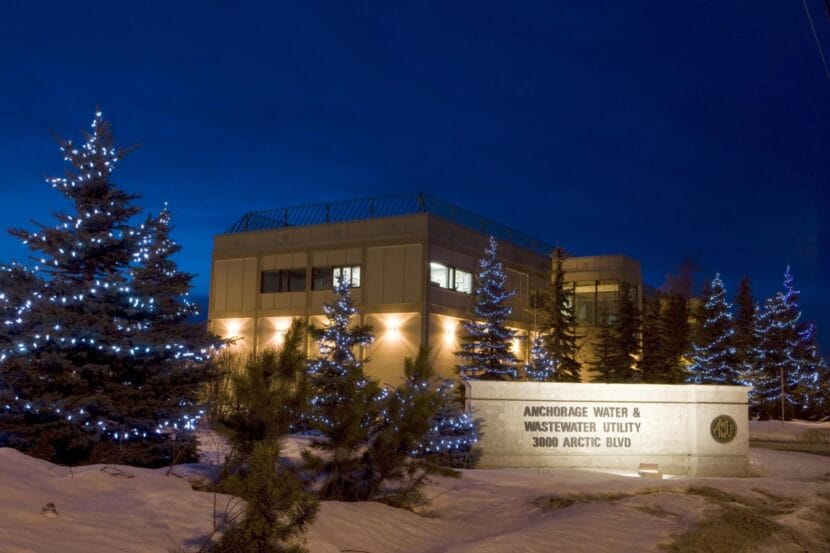
The Anchorage Water and Wastewater Utility building (AWWU)

New rules for wastewater are on the horizon for Alaska. The EPA has given the state’s Department of Environmental Conservation six to 12 months to update the state’s water quality standards, and the state’s largest wastewater system says new rules could present challenges.

The updated standards will provide a more accurate estimate of how much fish Alaskans eat, said Gene McCabe, the water division director at the Alaska Department of Environmental Conservation.

“So the basic premise here is, is that you know, the fish live in the water, and if there are certain pollutants in that water, they will, over their lifetime, absorb those pollutants into their bodies,” McCabe said in a phone interview. “And then when humans eat them, of course, then we absorb those pollutants that are in the fish into our bodies.”

Some pollutants might sound familiar, like mercury and arsenic. Others are a bit more exotic, like tetrachloroethylene and dimethyl phthalate. Some come from industrial processes. Tetrachloroethylene, for instance, is used in dry cleaning and in some automotive brake cleaners.

But some others — like dimethyl phthalate and other phthalate chemicals — show up all over the place, including many people’s homes, said Mark Corsentino, the general manager for the Anchorage Water and Wastewater Utility.

“It can be in cosmetics. It’s in laundry detergent. It’s in plastics,” Corsentino said in a phone interview.

Not to mention food and even some bottled water, plus some flexible PVC pipes.

Corsentino is in charge of the largest wastewater system in Alaska. He’s responsible for making sure the wastewater discharged from the city’s water system into Cook Inlet complies with the rules. And he’s concerned that the new rules could require screening wastewater for phthalates, which require expensive advanced treatment to remove from the water.

States all over the country are working on updating their water quality standards. Washington State recently went through a similar process also driven by an upward revision to the fish consumption rate. And certain pollutants are causing headaches as the state implements stricter standards laid out by the EPA in 2022.

“PCBs was probably the most vexing chemical for us,” said Melissa Gildersleeve, who oversees water quality standards for the Washington Department of Ecology.

PCBs are polychlorinated biphenyls. They’re now severely restricted in new products, but they show up in a ton of older products like pigments and coolant for electrical transformers. They’ve posed a particular problem in the Spokane area, Gildersleeve said, and while water treatment plants can remove a lot of PCBs, they’re not really designed to do so.

“So, you know, a lot of our work has been about trying to find the ultimate source of the PCBs,” she said.

And once they find it, they go after the source. For example: earlier this year, Washington state officials petitioned the EPA to tighten limits on PCBs in consumer products.

Gildersleeve said it’s a similar story with phthalates, the chemicals that the folks in Anchorage are worried about. Even plastic cups and tubing used to take samples can contribute phthlates to the water, she said.

“That’s where a lot of our implementation is oriented, is it just really tracking down where those sources are,” she said.

And Corsentino, with Anchorage Water and Wastewater, said source control should be the focus in any effort to reduce how much the chemicals show up in wastewater.

For his part, McCabe, the water division director at the Alaska DEC, said he’s less concerned that stricter limits will pose a problem for wastewater operators. He said he’s been in touch with wastewater authorities around the state, and when they brought up chemicals that can leach from pipes, the department took a closer look at how they’re regulated across the country. Just a handful of wastewater facilities face specific limits for those pollutants as a condition of their wastewater permits, he said.

“And the only facilities we found were from very, very large cities, multimillion-population cities, so we weren’t really seeing them from the same type of population that we see here in Alaska,” McCabe said.

But for now, McCabe and fellow officials at the Alaska DEC are still working on what the state’s new water quality standards should look like. He says he’s hopeful the department will be able to release draft standards for public comment later this summer.

Justice Department says Alaska is discriminating against voters with disabilities

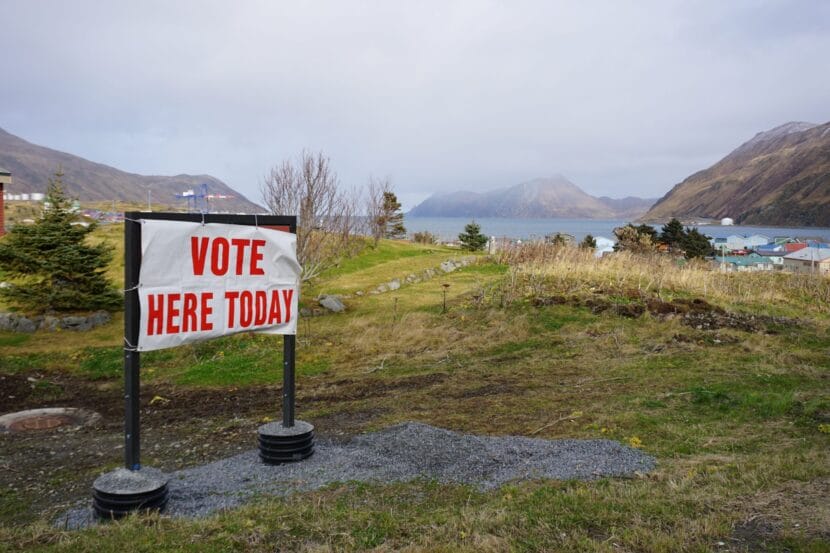
A sign directs voters to a polling location in Unalaska in 2020. (Hope McKenney/KUCB)

The U.S. Department of Justice says the Alaska Division of Elections is discriminating against voters with disabilities.

The federal agency sent the state a letter alleging multiple violations of the Americans with Disabilities Act over the past four years, at polling places and on the elections website.

“We must advise you that, if we cannot reach a resolution, the Attorney General may initiate a lawsuit under the ADA,” the letter, from the Civil Rights Division of the Justice Department, says.

It reports that voters have complained about muddy parking lots, ramps that have a 2-inch step to reach and other features that hamper people using wheelchairs. Once in the polling place, the letter says voters found that voting machines meant to be accessible were often not working, or not assembled. Voters with impaired vision said audio components were unintelligible. That left some with no choice but to vote a paper ballot with the help of a poll worker, compromising the voter’s privacy and independence.

The Justice Department included a 32-page spreadsheet listing specifics, such as parking lots that lack designated accessible spots, paths and corridors that are too steep and doors that require too much force to open. The polling locations in the spreadsheet are primarily urban and along the road system, from Fairbanks to Homer. Federal investigators found nine alleged violations at the Anchorage headquarters of the Division of Elections, mostly in the parking lot.

Elections Division Director Carol Beecher said her agency strives to find polling places in every precinct that meet ADA requirements.

“We follow the ADA checklist for polling places as closely as possible,” she said in an email. “Election supervisors personally check locations when feasible, and for more remote areas, city and tribal clerks assist by filling out a survey of a location.”

Beecher said the division will review the findings and work with the Justice Department on a resolution.

The federal letter warns that the U.S. attorney general may file a lawsuit if the issues aren’t addressed.

Juneau’s hospital set aside $8.1M to buy property. The deal fell through, but that won’t solve Bartlett’s budget issues.

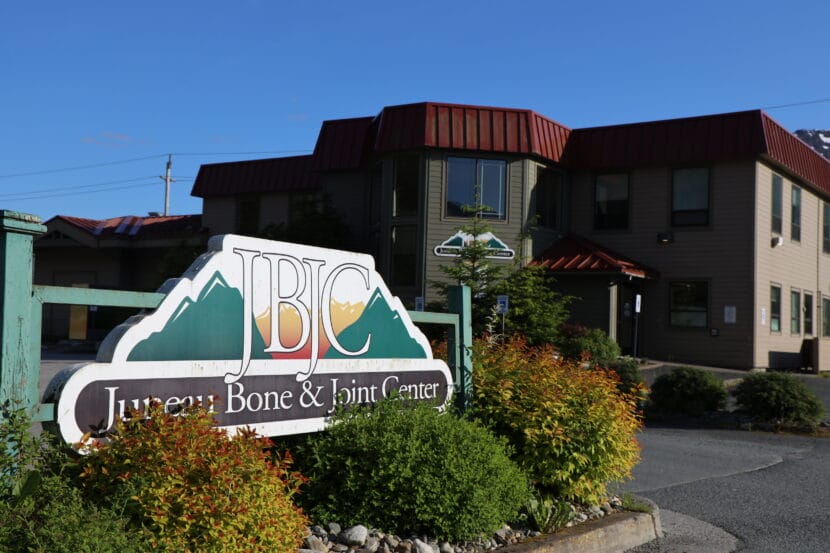
Juneau Bone & Joint Center on Monday, June 17, 2024. (Clarise Larson/KTOO)

Bartlett Regional Hospital isn’t taking over the Juneau Bone & Joint property after all. 

On Monday, the Juneau Assembly authorized the hospital to put $8.1 million back into its savings. That money was originally supposed to buy the property that houses the business.

The decision comes as the board for Juneau’s city-owned hospital contemplates cutting or reducing some services to address a major budget crisis. But Bartlett CFO Joe Wanner said the money won’t solve the hospital’s looming problems.

“It doesn’t do nothing for our operating struggles right now,” he said. “Each of these programs are continuing to lose money on a day-to-day basis. So we still have work to do on those. This doesn’t affect that.”

Last July, the hospital put aside that $8.1 million from its operating funds to purchase the property, which includes two commercial buildings near the hospital campus. 

The idea was that the Bone & Joint Center and other private businesses that lease there would pay rent to the hospital. At the time, hospital leaders said it would give the hospital “immediate access to positive cash flow.” They anticipated making upwards of $700,000 per year in rent. 

But Wanner said the property owners pulled back from the sale in January. He said they did not give a reason. 

Wanner said because the hospital knew the deal fell through back in January, they had already included that money in its three-year timeline for how much the hospital has left before it runs in the red. 

“As we go through the struggles, the ability to have this cash back in the operating fund, it does buy us basically the three years if we don’t change anything today. This doesn’t go very far,” he said. 

As for the hospital’s current budget crisis, the board is still collecting feedback from the public on which services should be cut or reduced. The board is expected to give a final recommendation on June 25 on how to move forward.

Murkowski votes with Democrats on IVF bill, as Sullivan joins most GOP senators to block it

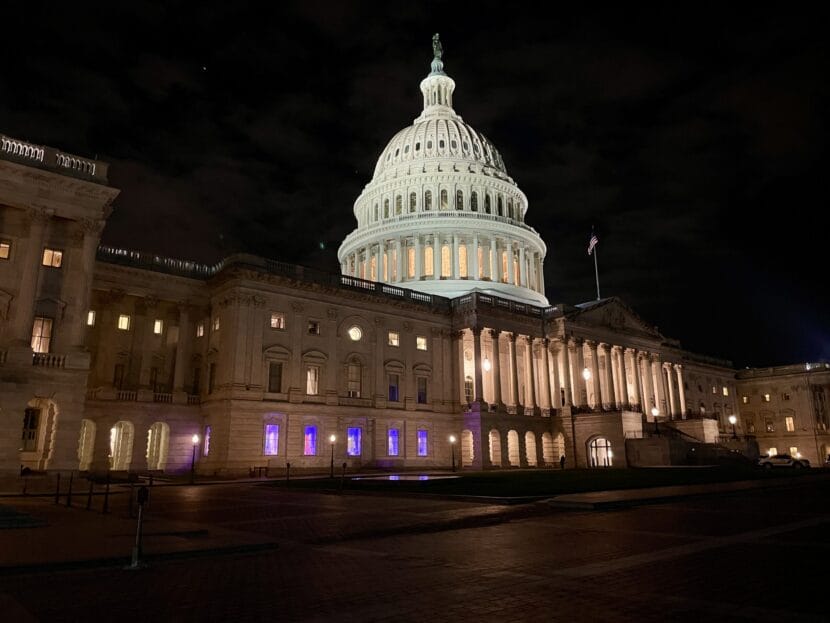
The U.S. Capitol, as seen from the East Plaza. (Liz Ruskin/Alaska Public Media)

Alaska’s U.S. senators split their votes earlier today over a bill to protect in vitro fertilization. Sens. Lisa Murkowski and Susan Collins of Maine were the only Republicans to vote in favor of advancing the Democratic bill.

Sen. Dan Sullivan joined all other Republicans in voting to block the bill. He signed onto a Republican letter accusing Democrats of “false fear-mongering” about reproductive issues. A Sullivan staff member says Sullivan supports IVF treatment. She did not provide a reason why he voted to stop the IVF bill. It fell a dozen votes short of the 60 needed to advance.

The Senate dynamics echoed a vote last week on contraceptive rights. Murkowski voted for that one, too, while Sullivan didn’t vote. He hasn’t said why he was absent for it.

In vitro fertilization has been drawn into the abortion debate because it often produces more embryos than parents choose to implant. Typically, embryos are frozen for possible future use or destroyed.

The Southern Baptist Convention passed a resolution Wednesday opposing the destruction of “frozen embryonic human beings.”

Senate Democrats are highlighting their support for abortion and other reproductive rights, drawing a contrast with Republicans in an election year. Senate Democratic Leader Chuck Schumer said the IVF bill wasn’t a mere show vote but a “show us who you are” vote.

Site notifications
Update notification options
Subscribe to notifications