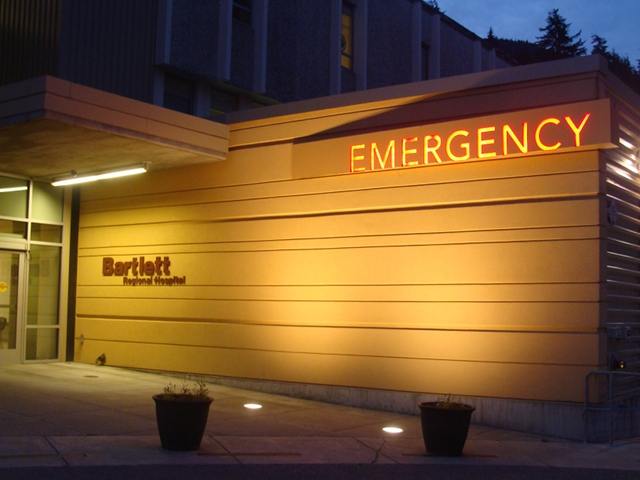
Bartlett Regional Hospital’s board of directors has a timeline for hiring a new Chief Executive Officer.
Hospital Spokesman Jim Strader says the board hopes to hire an interim CEO by the end of October. He says the goal is to make a permanent hire by June 30, 2014, following a nationwide search.
Current CEO Chris Harff last week announced she would be stepping down after just thirteen months on the job, saying her skills and expertise are not a good fit for the hospital. She was the first permanent CEO hired after the hospital board cut ties with Bartlett’s longtime management company, Quorum Health Resources.
The board held a special meeting Monday night to discuss the timeline for replacing Harff. Strader says a three-member search committee will meet with Juneau Human Resources Director Mila Cosgrove as soon as today (Tuesday) to put together a position description. Cosgrove is taking over personnel duties for the community-owned hospital, following the recent resignation of Bartlett’s HR Director Norma Adams.
Strader says the search committee will be led by board member Dr. Alex Malter.
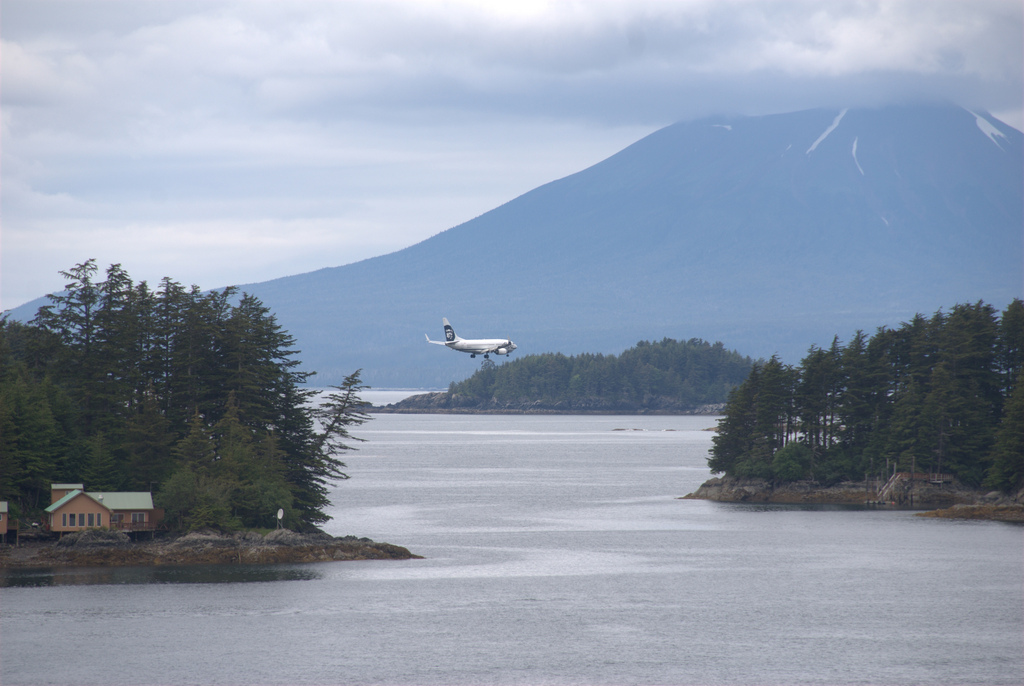
An Alaska 737-800 on approach to the Sitka Airport. (Photo by Jonathan Caves/Flickr Creative Commons)
Alaska occasionally gets caught in federal rules that may work in Ohio, but not in Ozinkie. One such national policy that has been confounding airport managers and pilots may be close to at least a temporary fix for Alaska.
The Federal Aviation Administration has begun enforcing a 37-year-old policy that defines the clearance area for airport approaches. Obstacles in that glide path entering or leaving an airport must be dealt with, or the FAA says those airports will be closed to night or instrument flying.
Alaska Air Carriers Association executive director Joy Journay says that’s a big problem for Alaska:
“So you can come in when the weather is good, when it’s clear. You cannot fly with instruments which automatically means for these closures, they’re all down at night. That’s a very grave concern when you talk about medical evacuations because effectively, the closure at Haines, the closure for two weeks at Sitka, it basically meant if you needed to be airlifted out of there at night, an operator couldn’t come in.”
The obstacles may be trees, a new building, cell tower or in the case of one of Homer’s approaches, a dirt pile.
Journay says Association members have been frustrated by a lack of clarity as to which airports have problems and what the fix will be.
FAA Alaska region head Bob Lewis says about five of the more than 100 that originally had obstacle concerns are still being worked on, but he didn’t have a list.
Steve Hatter is the Deputy commissioner of aviation for the state department of Transportation. Hatter would only say the list is a moving target that changes daily.
“We’ve got a bunch of rural airports up in our Northern region and so that’s, we’re concentrating there right now,” he said.
Hatter says the state operates more than 250 airports and all have come up for review by the FAA. Hatter says they have whittled down the list of concern to a “hand full.”
“That said, they’re still going to continue reviewing approaches out into the future and that’s where we’re trying to get some help from them on when they schedule those reviews. So we’d like to push as many as we can out toward the spring time frame so that if we do discover that there is an obstruction problem, we’ve got reaction time and we can go address it in the spring and in the summer months,” Hatter said.
Hatter says the one size fits all national policy doesn’t work well in a state where 82 percent of the airports are not accessible by road. He says DOT is aggressively working on the issue with FAA.
“We simply can’t shut off access to our rural villages over the application of a safety standard that just doesn’t make sense and we need to make sure we can do medivac 24-7. We need to make sure people have the right ability to get in and out of those villages for whatever function they need.”
The Air Carriers Association’s Journay says Alaska’s congressional delegation has gotten involved and she’s hopeful there will be more clarity in coming days.
Chris Harff. Photo courtesy Bartlett Regional Hospital.
Chris Harff is stepping down as Chief Executive Officer of Juneau’s Bartlett Regional Hospital after thirteen months on the job.
Bartlett Spokesman Jim Strader said in a statement that Harff announced her resignation in an executive session with the hospital’s board of directors Tuesday night. Her last day is anticipated to be Friday October 18th.
“Harff expressed deep admiration and respect for the hospital employees and medical staff, but feels her professional expertise and the needs of the Juneau community are not a good fit,” Strader said.
In a statement to hospital employees, BRH board President Linda Thomas said the board is disappointed, but hopes to build upon the work accomplished while Harff was CEO.
The board plans to announce an interim CEO within the next month, before embarking on a search for a long-term replacement for Harff.
Thomas called this “a very challenging year” for the hospital. In August, the board directed Harff to address allegations of a hostile work environment created by senior management officials. Harff also came under scrutiny for a plan to reduce the hospital’s staff by 15 positions this year.
Harff is the second member of Bartlett’s leadership team to announce plans to step down in recent weeks. Human Resources Director Norma Adams’ resignation was announced September 16th. Her last day will be Monday September 30th. Adams joined the Bartlett leadership team in May 2012.
Harff came to Bartlett in August 2012 from a medical center in Thief River Falls, Minnesota. She was the first permanent CEO hired after the Bartlett board of directors decision to sever ties with the hospital’s longtime management company, Quorum Health Resources. At the time board members said the move would give the hospital greater local control.
BRH is owned by the City and Borough of Juneau and operates largely on patient fees.
Harff and Thomas did not respond to requests for comment on Wednesday.
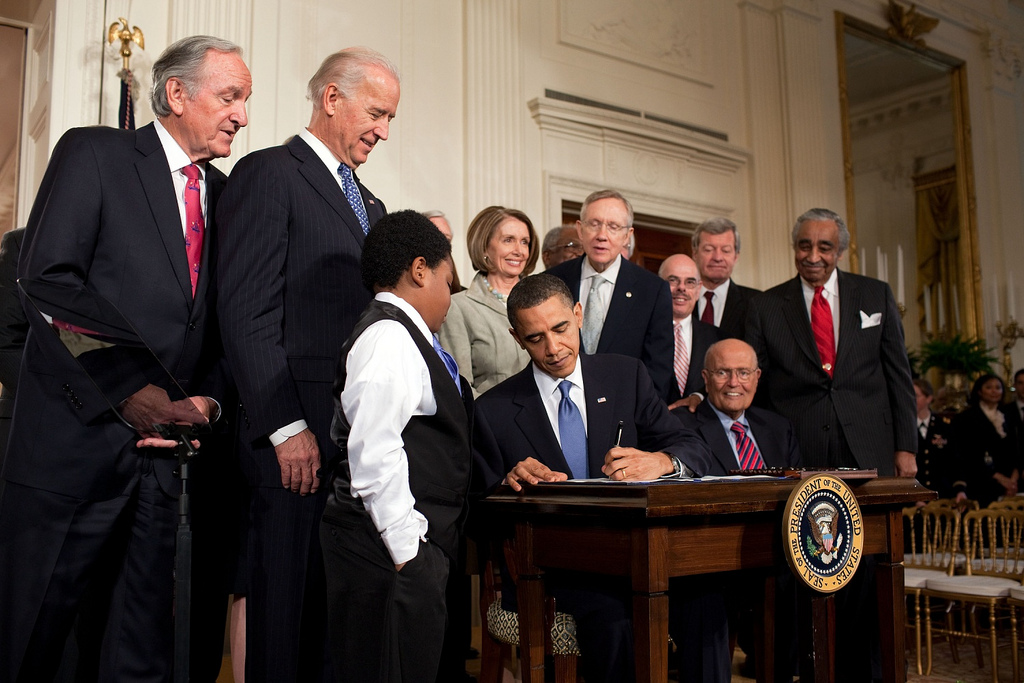
President Barack Obama signed the Patient Protection and Affordable Care Act into law at the White House on March 23, 2010. (Photo by Pete Souza)
Alaskans will be paying some of the highest premiums in the country for health insurance under the Affordable Care Act.
Wednesday, the federal government released the first glimpse of rates on the state’s federally run health insurance marketplace, which launches next week.
The average monthly premium in Alaska for a mid-level health insurance plan will cost $474 a month. That’s according to a new report from the federal government that gives examples of rates for 47 states.
Wyoming is the only state where rates will be higher than Alaska.
Joshua Weinstein is a consultant at Northrim Benefits Group in Anchorage.
“It’s going to be a shock to the consumer who’s paying for their own health insurance right now, they’re going to be in for it,” Weinstein said.
For example, Weinstein says a 35-year-old male, who’s paying $180 a month for a plan today, will pay nearly $300 for a similar plan starting in 2014. But under the Affordable Care Act the new plans will offer more comprehensive coverage, including no lifetime maximum benefit limits and no exclusions for pre-existing conditions.
Weinstein’s company is hoping to help thousands of Alaskans sign up for coverage. But he says it won’t be easy to convince everyone who’s eligible to make the leap, even though, if they don’t, they’ll have to pay a small tax penalty.
“If someone’s not subsidy eligible and they’re a healthy 35-year-old, I think it’s a tough argument, and I think that would be a very challenging sell. However, if that 35-year-old has medical issues and has a pre-existing condition and needs things done, that changes the conversation.”
“They would be able to access health care for the first time.”
And Weinstein says many 35-year-olds will be eligible for a subsidy to help pay for insurance, which will make it much more enticing.
In Alaska, a person who earns less than $57,000 dollars a year will qualify for a subsidy. And in some cases, the subsidy will be so generous, the insurance will be free. That’s true for a family of four in Alaska with an income of $50,000, if they choose the most basic coverage.
“The subsidies are really the cutting edge to whether or not someone buys health care,” Weinstein said.
Two companies, Moda Health and Premera Blue Cross Blue Shield of Alaska, will offer plans on Alaska’s health insurance marketplace.
Weinstein says, based on his review of rates from both carriers, it looks like Premera’s plans will cost about 15 percent more than Moda’s, but Weinstein says Premera has better name recognition in the state and offers other incentives, like a much wider network of out of state providers.
Alaskans should be able to do their own comparison shopping starting Oct. 1 at healthcare.gov.
This story is part of a reporting partnership between APRN, NPR and Kaiser Health News.
No termination dust has been seen yet in Juneau, but once fall rains hit, winter seems close.
In recognition of the end of summer, Eaglecrest will celebrate the annual Discover Eaglecrest Day on Saturday.
The ski area is owned and operated by the City and Borough of Juneau. Surveys indicate about a third of Juneau households have a skier or snowboarder that use Eaglecrest annually.
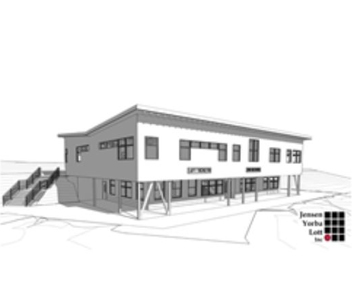
Architect’s rendering of the proposed Eaglecrest Learning Center.
Unlike ski areas on a road system that get most of their revenue from daily ticket sales, the small Juneau area receives about 50 percent of winter revenue from season passes. Eaglecrest Day is a time to buy passes, rent lockers, see plans for the new Eaglecrest Learning Center, enjoy fall mountain colors, ride a chairlift, hike or bike the trails. This is the fifth year for the event.
For those who seldom visit the mountain, fall is a good time to come up.
“There’s no snow on the road.”
Jeffra Clough is director of Sales, Marketing and the Snowsports School.
“If somebody is feeling a little bit intimidated by our road, they may be little less intimidated if they’re able to drive up it during the fall,” she says.
Never ridden a chairlift? Take a free ride up the Porcupine Chair.
“For some people that may be their first experience riding a chair lift and that might instill a desire to come back in the winter and learn how to ski or snowboard,” Clough says.
Mountain biking
Juneau Freewheelers’ Mountain Bike Tour of Eaglecrest begins Friday with a time trial. The start time is 6 p.m. at the Fish Creek bridge crossing by Treadwell Ditch. The two-mile version ends at the top of Porcupine Chair Lift.
The Hill Climb begins Saturday at 10:30 a.m., at the base of the mountain.
“They’ll start at the bottom of Hooter and the riders that want to do a one-mile hill climb will ride to the bottom of the Black Bear chair,” Clough says. “Those that are really tough that want to do the two-mile hill climb will ride to the top of the Ptarmigan chair.”
Hooter to Black Bear is an elevation gain of about 460 feet. The elevation gain to the top of Ptarmigan is about 1,400 feet.
The Mountain Bike Tour of Eaglecrest ends with the Criterium – a one or two-mile loop of the Eaglecrest parking lot.
The Zip Line is running for Eaglecrest Day, Discovery Southeast is holding the Decomposition Decathlon (you’ll want to enter the Fungus Cap Fling), and there’s a beer garden and BBQ.
Wishing for snow
At the top of every hour, between 11 a.m. and 3 p.m., Juneau Public Library’s Beth Wiegel will be reading winter stories to kids.
Beth Weigel, of the Juneau Public Library, will be reading stories about winter during Discover Eaglecrest Day. Children who bring their library card will be able to check out books.
Wiegel is also a ski instructor, who like this reporter and Anna in the story “Anna’s Wish,” is wishing for a snowy winter in Juneau’s mountains.
“‘Oh little snow horse, thought Anna, ‘I wish, I wish, I wish.’ Harder than she had ever wished for anything, Anna wished for snow. Like tiny stars her wishes floated up into the sky and froze, then slowly they began to fall back down to earth.” (From “Anna’s Wish” by Bruno Hachler, illustrated by Friederike Rave.)
Discover Eaglecrest Day is Saturday, from 10:30 a.m. to 3 p.m.
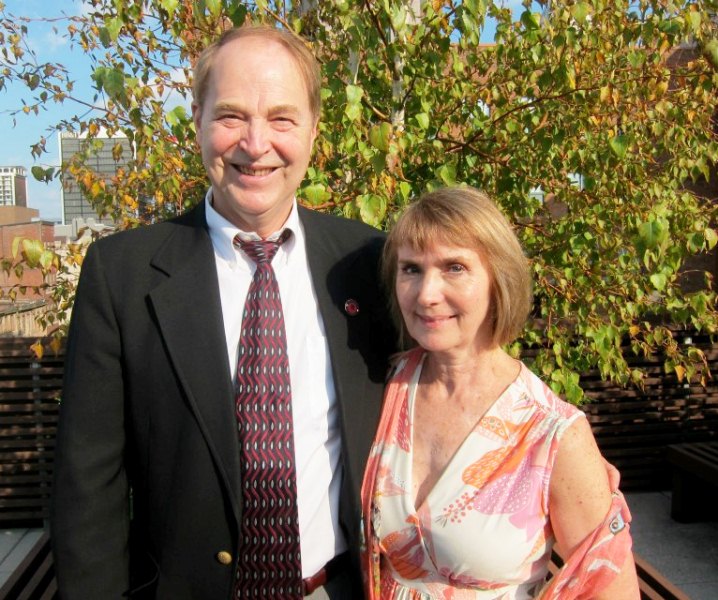
Larry and Carola Spencer. Photo courtesy Facebook.
Well-known Juneau businessman Larry Spencer has died. He was 63.
A former president of the Downtown Business Association, Spencer is described as totally committed to the capital city.
He came to Juneau from Minnesota in the late 1970s and quickly became active in his adopted community.
Business partner Bruce Denton says the two first worked together on a townhouse project in West Juneau. At that time Denton was looking for a business partner who could run his construction business while he was training and running the Iditarod Sled Dog Race.
They formed Senate Properties and their first project was the renovation of the old Senate Building in downtown Juneau. They’d taken a big gamble on the building purchase, closing on it the day before a statewide 1982 capital move vote, which failed, sparing the capital city.
Denton says renovating the historical building was Spencer’s idea.
“It was his vision and I think it was really the beginning of the refurbishing or the gentrification of the historic district downtown,” he says.
Spencer also owned Spencer Realty, a real estate and property management company.
Over the years, Spencer and Denton collaborated on a number of projects in the Juneau area, from condominium developments to the first SEARHC Clinic buildings on Hospital Drive to several mini-storage projects.
“He was the developer and I was the builder,” Denton says.
A lifelong Democrat, Spencer never ran for public office but was recruited in recent years by opposite political camps. Denton says it was a testament to his ability to balance development and preservation.
“The preservationists and the developers were both recruiting him at the same time to run for the Assembly. And he would have been an incredibly good Assembly person because he just had a brilliant mind and could think really fast on his feet.”
He didn’t have to be in office to be active in his community. Spencer worked on a number of major Juneau issues, including tourism management and legislative housing.
He loved the arts and was a founder of Perseverance Theatre, serving on the Board of Directors for years.
Spencer died late Thursday at his home in Juneau, surrounded by his family. He was diagnosed with brain cancer about five years ago. After he underwent surgery in 2008, Juneau Rotary clubs and local businesses collected baseball caps to send to him as he went through therapy.
He is survived by his wife Carola, daughter Sophie and son Logan.
Close
Update notification options
Subscribe to notifications
Subscribe
Get notifications about news related to the topics you care about. You can unsubscribe anytime.