Health

Juneau Youth Football League tackles player safety head on

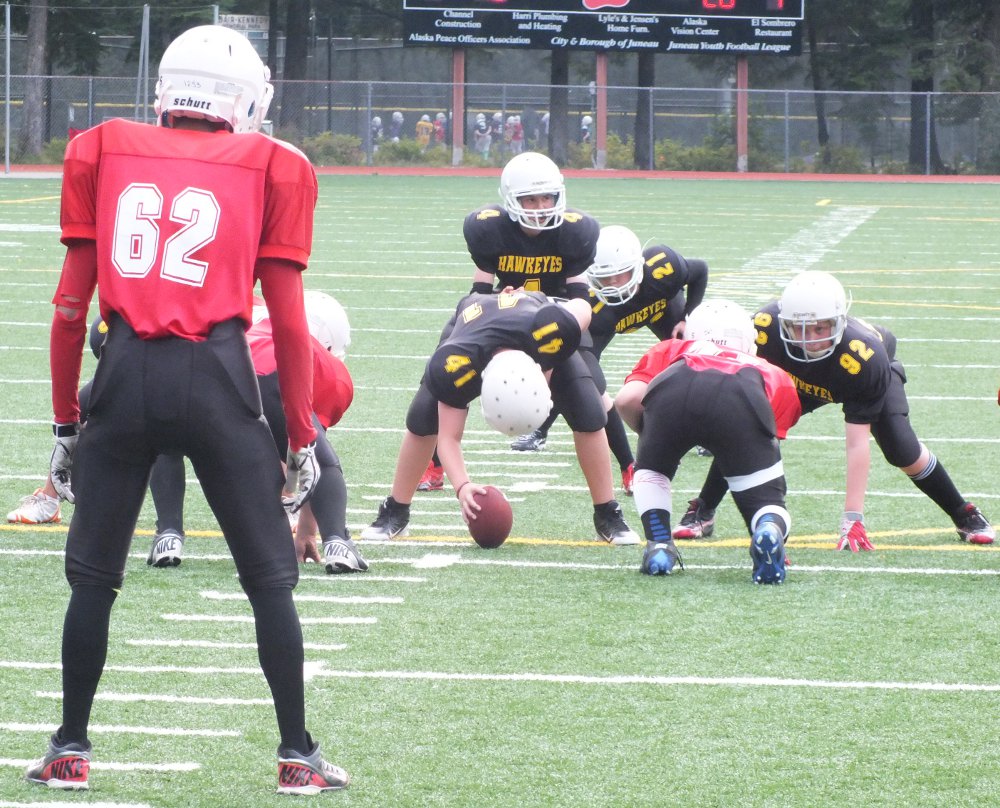
JYFL Hawkeyes vs Red Raiders
Football continues to gain popularity in Alaska, where the first state high school championship game was played in 1990. Photo by Casey Kelly/KTOO.

It’s football season in Alaska.

The sport continues to gain popularity in the 49th state, where the first official high school football championship game was played less than 25 years ago.

But in Alaska and nationally concerns over football’s safety have grown, and more and more parents are refusing to let their children play youth football because of the risk of injury. Football officials at all levels have responded by trying to make the game safer.

KTOO’s Casey Kelly recently talked to coaches and players with the Juneau Youth Football League to find out how they are approaching the problem.

Juneau’s Dimond Park Field House is swarming with nearly 150 six- to 14-year-old football players wearing their brightly colored team jerseys. They run around on the turf, tossing footballs, and, of course, trying to tackle each other. That is, until a coach summons them to the middle of the field, where he introduces former NFL Quarterback Jake “The Snake” Plummer.

“You guys like to play football, right?” Plummer asks.

“Yes!” the kids yell back.

Plummer: “You want to play for a long time?”

Kids: “Yes.”

“All right,” says Plummer. “Then the key tonight is to listen up and to pay attention when your coaches go through these drills.”

At 6’2″ and 215 pounds, Plummer still looks fit enough to play, even though he took his last snap for the Denver Broncos in 2006. After he became a coach, he says he realized young players today are not being taught proper techniques. Specifically, too many players are learning the wrong way to tackle.

“Don’t use that helmet as a weapon,” Plummer says. “That thing is there to protect you. That’s like a shield, that’s not your sword. That’s a shield that will protect your head from getting injured.”

Plummer is now an ambassador for USA Football, the official youth development organization of the NFL and its players association. Juneau Youth Football League Director of Coaching Brandon Mahle says JYFL became a full-fledged member of USA Football this year to take advantage of its certified training programs.

“You get online, usafootball.com, and they have certifications from tackling to flag football,” Mahle says. “They complete their certifications, give them to me, and then they’re eligible to coach for the season.”
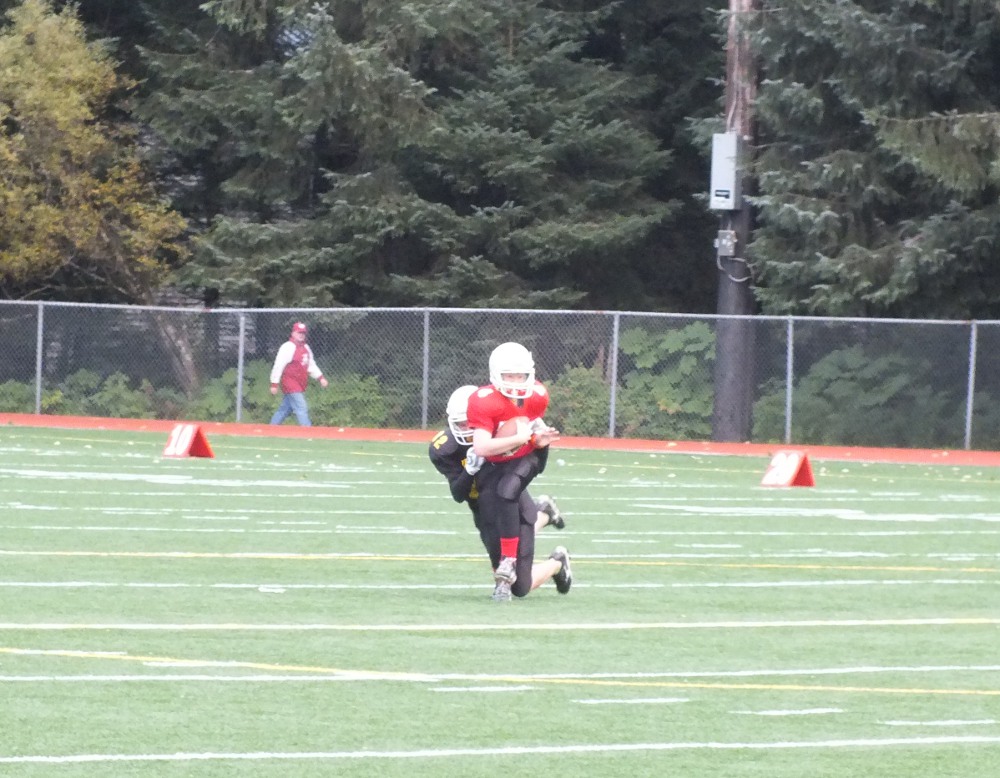
JYFL Red Raiders vs Hawkeyes
Heads Up tackling was on full display at a recent game between the JYFL Senior Division Red Raiders and Hawkeyes. Photo by Casey Kelly/KTOO.

During his visit to Juneau, Plummer led a clinic on Heads Up tackling, which teaches players to keep the crown of the helmet up and their eyes on the player they’re trying to take down. The idea is to limit injuries, like concussions or stingers, which is basically a pinched nerve in the neck.

Mahle says JYFL coaches have also gone to a limited tackling policy in practices. He says many NFL and college teams have similar policies.

“They have found that you can go what’s called ‘thud level,’ which is hit to contact without taking kids to the ground,” Mahle says. “That you can achieve the same level at practice as you could hitting to take kids to the ground. And you have much less injuries in the process.”

Juneau youth football coach Krag Campbell says some parents are skeptical of limited or Heads Up tackling practices. But overall he thinks it’s a positive step.

“You see some people going against it, because they were always taught hit low, hit low, this diving tackle,” says Campbell. “So, it’s trying to change that perception. And it just takes time. And I really see the biggest benefit we’re going to see is the younger kids growing up.”

Mike Carriker’s son Noah plays for the Seahawks of the Cubs Division. As a parent, he applauds the new emphasis on safety.

“I was really hesitant – didn’t want him involved, worried about injuries,” Carriker says. “But he was persistent. And that last month it was every day: ‘Daddy can I play? Daddy can I play?’ So we gave in. But knowing that they were doing a lot to prepare kids and have them do things right to try and prevent injury was kind of one of the things that helped us make a decision.”
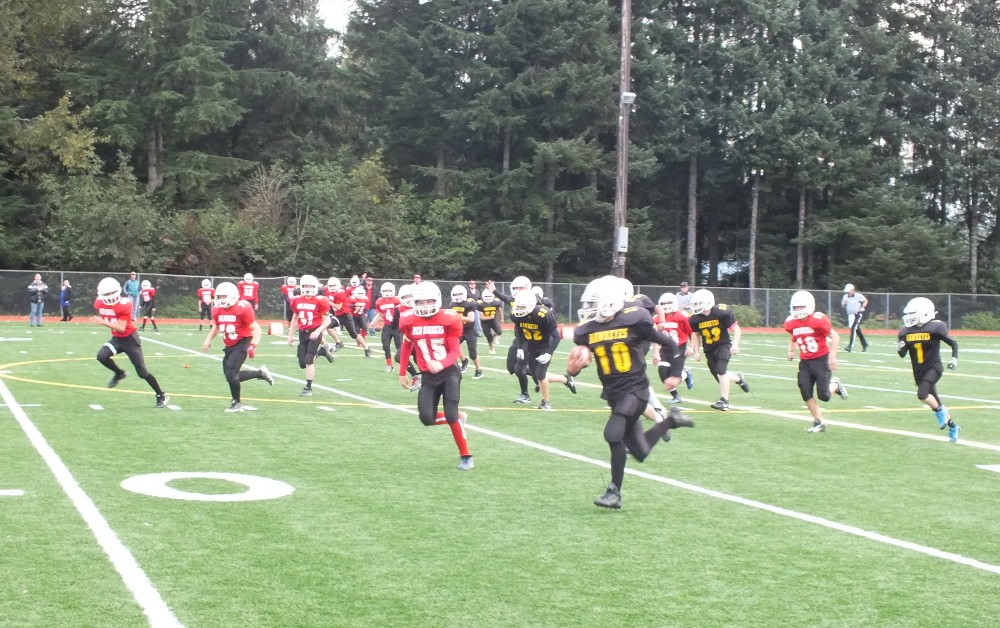
JYFL Liam Van Sickle
Hawkeyes player Liam Van Sickle catches the corner on his way to a touchdown in the first quarter of a game between the JYFL Senior Division Hawkeyes and Red Raiders. Photo by Casey Kelly/KTOO.

Heads Up tackling is on full display at a recent game between the Senior Division Hawkeyes and Red Raiders. Hawkeyes quarterback/running back Liam Van Sickle says he’s never had a concussion, and he hopes Heads Up tackling means he never will.

“I think it’s just as effective and it’s a lot safer,” Van Sickle says. “I’ve had people on my team get like stingers and stuff. I think this is a good way to help prevent that.”

Most importantly, Van Sickle says the new focus on safety won’t change the way he plays:

“I like to lower my shoulder and stuff and this way I won’t lower it into their helmet. It will be a nice clean hit.”

Jeremy Hsieh contributed to this report.
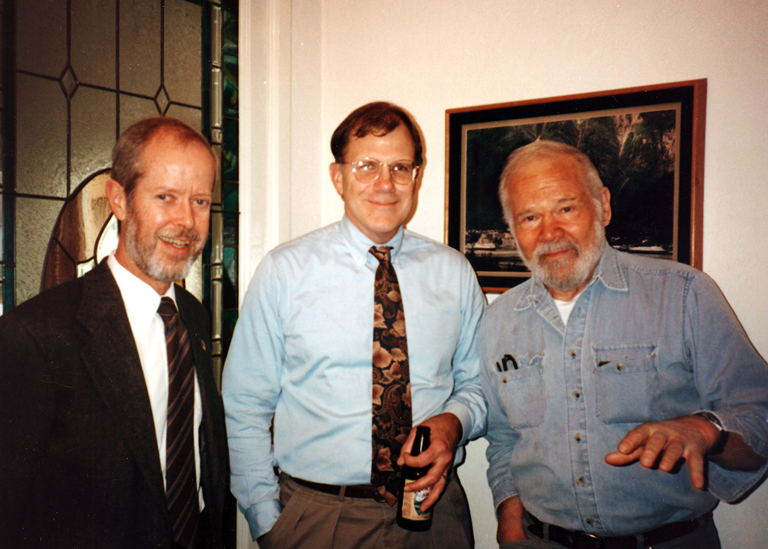
Update: Bill Council – a “lawyer’s lawyer”

Bill Council, flanked by Art Peterson (left) and former Gov. Jay Hammond (right), at a fundraiser for Alaska Legal Services in the mid-1990s. Photo courtesy Vance Sanders.

Former Juneau resident and attorney Bill Council has died.

Council passed away Sunday in Anchorage at the age of 69.  He had been struggling with Parkinson’s disease.

He is survived by his wife Fran Ulmer and two children, Amy and Louis.

Council was born and raised in North Carolina and got his law degree from University of North Carolina Law School at Chapel Hill in 1969.  He practiced law in New York City before taking a job as an assistant district attorney for the state of Alaska in 1971.

He was a public defender in Ketchikan then moved to Juneau in 1975 to work in the civil litigation section of the Alaska Attorney General’s office. He was the state’s chief civil litigator  during the Hammond Administration.

In 1980, Council started his own law firm and for the next 25 years practiced with other Juneau lawyers, including Walter “Bud” Carpeneti, Vance Sanders, David Crosby and others.

Sanders says Bill Council’s brief writing and analytical ability were “absolutely amazing.”

Sanders describes Council as a “lawyer’s lawyer” and a mentor to many in Alaska’s legal community.

“Young lawyers would call him and ask him how to put together a case; if they were getting ready for trial (they’d ask) how to do this, that, or the other.  He was just incredibly approachable, and loved the law and loved to share his knowledge. That’s what I mean by lawyer’s lawyer.  He was just an amazingly gifted lawyer.”

Council was on the Alaska Judicial Council as well as local boards.  He was an avid tennis player and boater.

Council and Ulmer moved to Anchorage when she was named director of the Institute of Social and Economic Research in 2004. Ulmer also served as Juneau mayor, represented the capital city in the Alaska Legislature, was lieutenant governor in the Knowles’ administration, and is currently chair of the U.S. Arctic Research Commission.


Juneau remembers 9/11/01

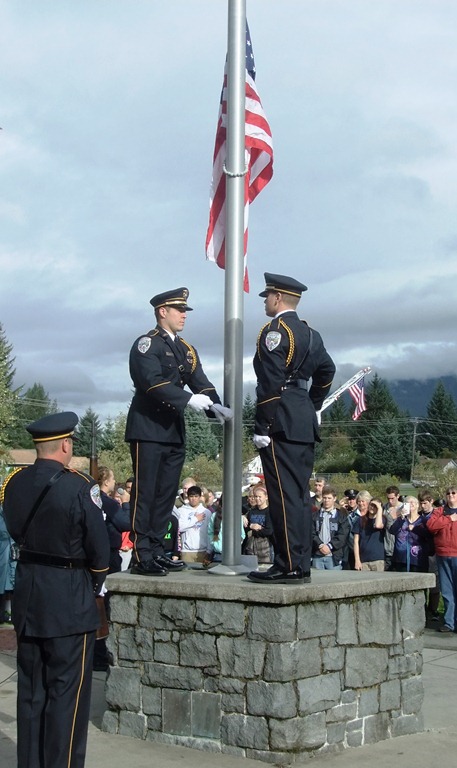
JPD Color Guard raises a U.S. flag to half staff during Wednesday’s 9-11 commemoration.

Juneau paused with the rest of America Wednesday to remember those who died or were forever changed from the September 11, 2001 terrorist attacks on the U.S.

The commemoration is now called Patriots Day.  Juneau’s memorial is hosted by local Rotary clubs at the park they built in the Mendenhall Valley.

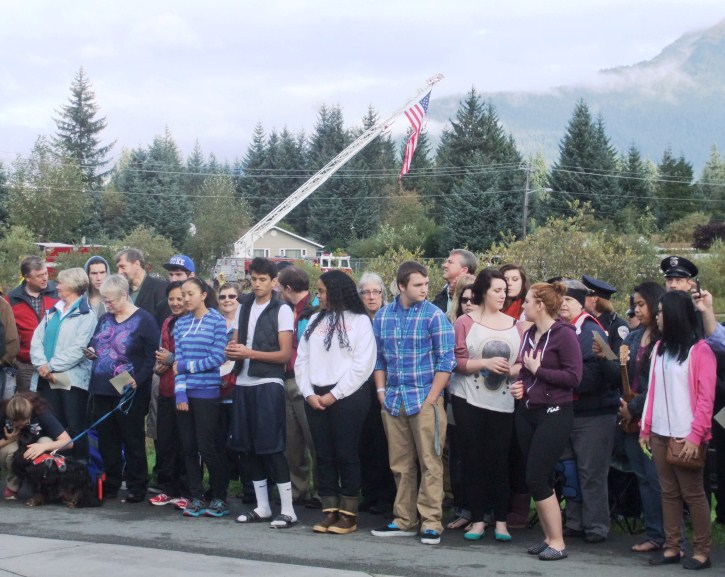
Police officers, firefighters and paramedics, National Guardsmen, U.S. Coast Guard and other first responders were greeted by a crowd that included a number of Thunder Mountain High School students.  They were toddlers 12 years ago and know little about the events of that day.

It was the first time sophomores Shane Mielke and Jamie Yaletchko  have attended the memorial.

Mielke said 9/11 meant “help” to him, referring to  first responders. Yaletcho had seen a movie about 9/11.

“I watched the movie and thought it was really cool and then I thought it’d be cool to come and see and hear them talk about it,” she said.

A number of TMHS students attended the ceremony for the first time. They were toddlers in 2012.

But most at the ceremony remembered the day well and the impact it had.

Ed Quinto is an assistant chief for Capital City Fire and Rescue. He told the crowd that 9/11 will always be etched in America’s heart.

“We must never forget the 343 firefighters and 60 fallen law enforcement officers. Never forget the sacrifices that were made that day, the courage of the firefighters and law enforcement offers who rushed into the burning buildings to save thousands of others.”

After the ceremony a large group of Juneau police officers lined up for a photo.  A number of them were on the force 12 years ago, including Lt. Dave Campbell.  His first stop that day was Juneau International Airport, which had been shut down like all U.S. airports.

“We didn’t know what the scope of the attacks were on the morning of 911, so when I started at 6:30 (a.m.)  the airport got shutdown, and we made sure we had a presence at the schools just to kind of reassure people and make sure we had a presence at places that might be considered targets,” Campbell said. 

Twelve years later, Campbell said he finds encouragement from the day as he reflects on the way America and its communities like Juneau came together.

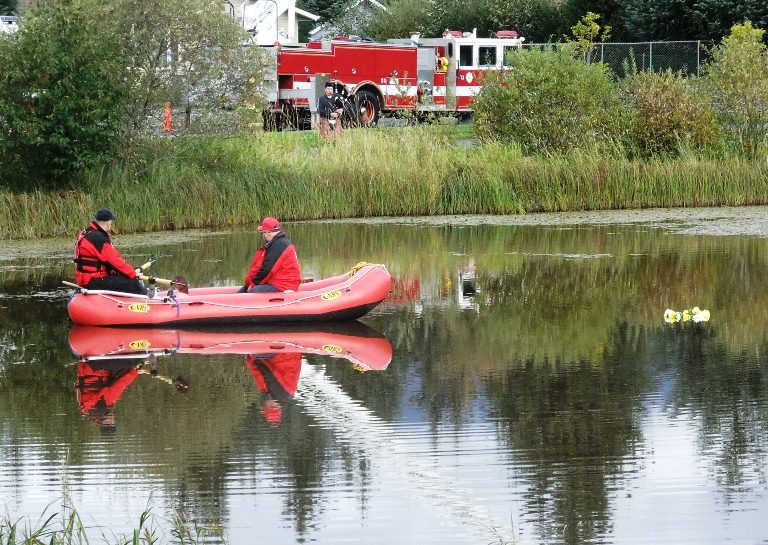
At the end of Juneau’s ceremony, Mayor Merrill Sanford, a retired CCFR chief, placed a wreath in the lake at Rotary Park.

The September 11th memorial at Rotary Park is constructed of concrete and Pennsylvania marble in the shape of a broken pentagon. Each side is four feet in length to represent the four high-jacked airplanes that crashed into the Pentagon, the New York City World Trade Center and a field near Shanksville, Pennsylvania.  Nearly 3-thousand people died that day.


Community raises $100,000 in one week to keep clinic open

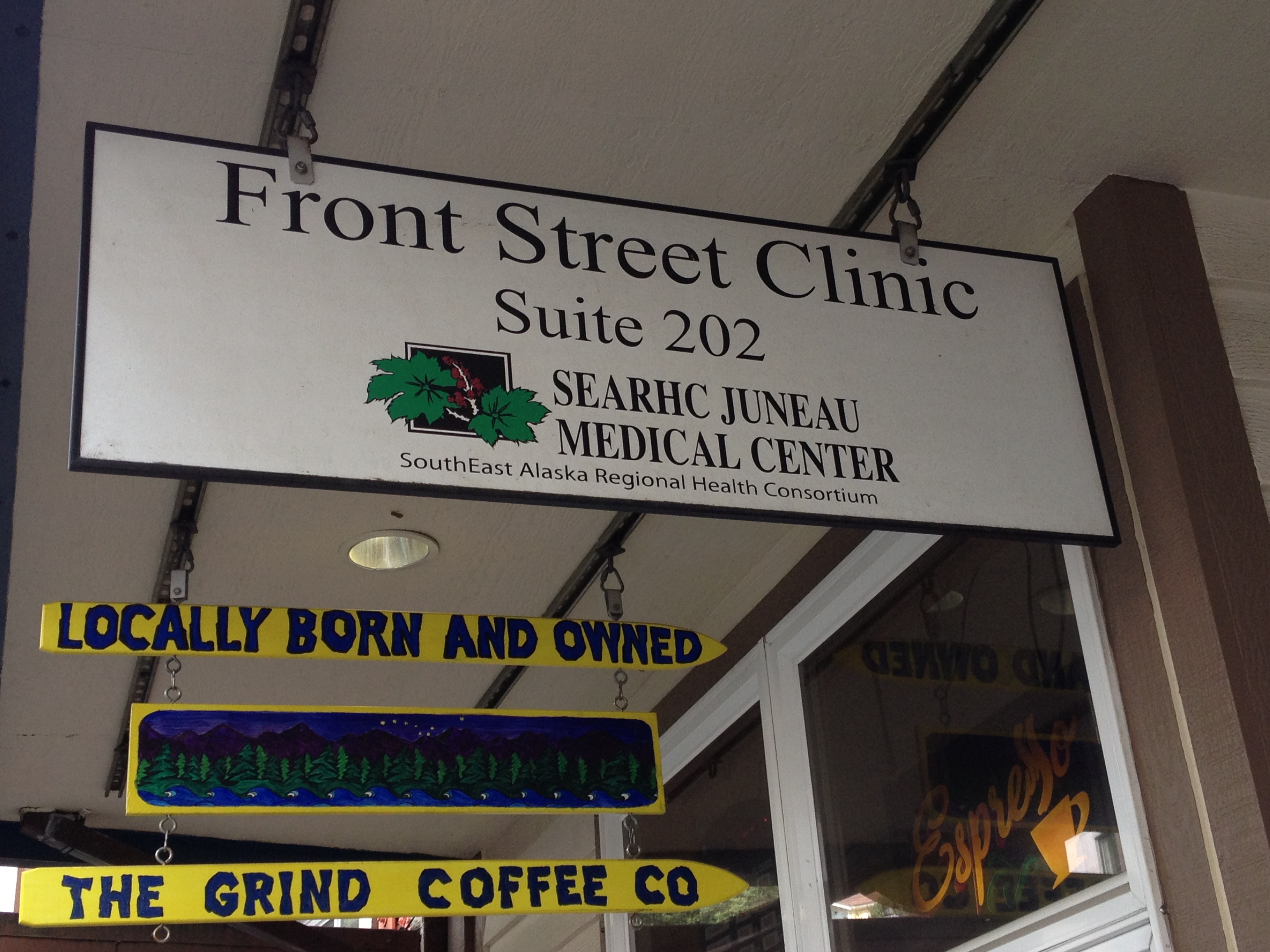
For many homeless people, Front Street Clinic is the most visible form of help. It connects them to other health and social services. (Photo by Lisa Phu/KTOO)

The clinic for Juneau’s homeless and low-income residents will stay open at least through April 30th thanks to the fundraising efforts of local community members and organizations.

The Southeast Alaska Regional Health Consortium recently announced plans to close Front Street Clinic October 1 due to budgetary constraints.

More than $100,000 has been raised in the past week. Mariya Lovishchuk is executive director of Glory Hole, Juneau’s soup kitchen and shelter:

“It was kind of like one of the most clear things I’ve ever had to do in my life. You have to call everyone you know and you have to ask them all for money and you have to just very honestly explain what you’re asking for and because what I was asking for is just so rudimentary, people gave money. We just absolutely have to keep them going.”

COO Dan Neumeister says SEARHC will use $90,000 from a U.S. Health Resources and Services Administration grant to run the clinic. Total costs to keep Front Street open an additional six months are about $250,000. Neumeister says the shortfall will be covered by community fundraising.

The Juneau Coalition on Housing and Homelessness led the effort to keep the clinic open. It was supported by Representatives Munoz and Kerttula, the city and borough of Juneau, Bartlett Regional Hospital, SEARHC, and other local organizations.

But clinic supporters still need to raise $46,000 by September 30.

Juneau Community Foundation executive director Amy Skilbred says that’s possible to do in this community. The Foundation is launching a campaign to raise the needed additional funds.

“The Front Street Clinic has been really important for providing medical services for homeless people and other underserved populations and we just want to show there’s a community-wide effort to support the Front Street Clinic and keep it going not only through this six month period, but keep the doors open forever.”

Lovishchuk says the long term goal is to turn Front Street Clinic into a community health center.

To donate to Front Street Clinic, go to juneaucf.org.


Previous Stories:

Front Street Clinic on the chopping block

Decision on Front Street Clinic could come today

Front Street Clinic could close Oct. 1

Jewell considers human safety, wildlife trade-off for Izembek Road

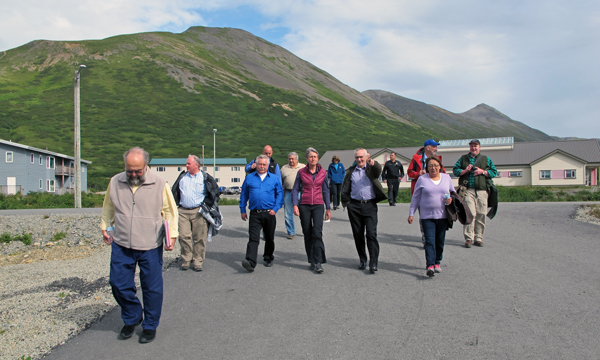
Interior Secretary Sally Jewell
Photo by Annie Feidt, APRN – Anchorage.

Interior Secretary Sally Jewell has a difficult decision ahead of her.

She was in King Cove Friday to visit with residents about a road they want to build through the heart of Izembek National Wildlife Refuge.

Residents say the road is necessary to access emergency medical treatment, but a road has never been built through a wilderness area and environmental groups say it would set a bad precedent.

When an emergency call wakes up Bonita Babcock in the middle of the night, one of the first things she does is check the weather:

“How bad is it blowing?,” she asks.

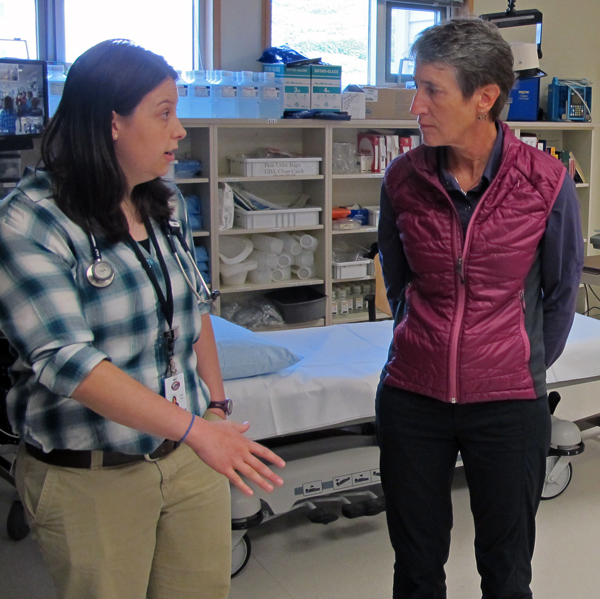
Secretary Sally Jewell visits the King Cove clinic
Photo by Annie Feidt, APRN – Anchorage.

Babcock is a lifelong resident of King Cove and a community health aide. It’s her job to help stabilize patients with traumatic injuries, heart attacks or other emergencies and get them ready to fly to the nearest hospital in Anchorage, 600 miles away.

“We’re looking and it’s like, most of the time, it’s going to have to be a medevac and we’re wondering what are we looking at here, what are we looking at?,” Babcock said. “Are they going to be able to get them out?”

About 30 percent of the time, the answer is no. High winds frequently shut down King Cove’s small gravel airstrip.

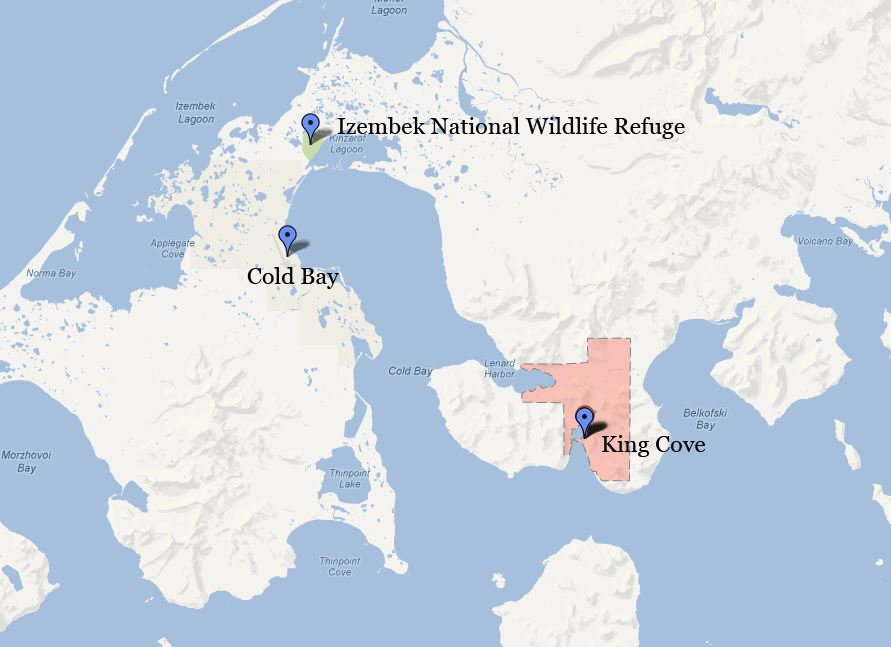
Cold Bay, 30 miles away, has an all-weather airport, but with no road between the communities, King Cove residents have to take a two-hour boat ride in choppy seas to reach Cold Bay when flying isn’t an option.

King Cove has been asking for a road for more than two decades, but Friday was their first chance to make their case directly to an Interior Secretary.

Babcock toured Sally Jewell around the King Cove Clinic. Jewell heard stories of medical close calls – like a baby who couldn’t breathe and had to be rescued by a Coast Guard helicopter. And she heard about the daily hardship of unreliable transportation out of or into the community.

Babcock told Jewell the clinic sometimes has to make do without essential medication.

Babcock: “Last week, six days it sat in Cold Bay you know, one of our patients meds.”

Jewell: “And there’s no boat running back and forth?”

Babcock: “The postmaster would have to go over by boat.”

Jewell: “I see.”

Babcock: “And she won’t. They’ve only done that maybe once and it was a mess.”

But the 11 mile one-lane gravel road that could make life safer in King Cove would also slice through the center of Izembek National Wildlife Refuge.

Environmental groups say that would set a precedent that could make it easier to build roads through other wilderness areas.

Nicole Whittington-Evans, with The Wilderness Society says it’s an important sanctuary for bird species like the black brant and tundra swan.

“When you are in Izembek and you look around at the breathtaking coastal mountains and this incredibly vibrant and ecology rich area, you know this is a global resources we should be protecting,” Whittington-Evans said.

Whittington-Evans says the road would take more than two hours to drive and she’s skeptical it would be the fastest way to evacuate people with medical emergencies. And King Cove residents acknowledge the road isn’t just about health and safety; it would make it cheaper to fly to Anchorage, for instance, and high school sports teams could more reliably compete against other villages.

Secretary Jewell says she wants to find a solution that works both for the wildlife and the people of King Cove.

“I think that there have been efforts to talk about a tradeoff between human safety and wildlife and the reality is I think we want both so I understand the interests on both sides, it’s difficult and I don’t think that’s a reasonable tradeoff,” Jewell said. “I think we need to look for solutions that address both.”

Jewell hasn’t set a time line for making a decision. If she comes out in favor of the road, she’ll be going against the recommendation of the U.S. Fish and Wildlife Service. But Etta Kuzakin, who is president of the Agdaadux Tribal Council in King Cove, is hopeful that’s what she’ll do.

“It’s easy to say no when you see it on writing on paper, but it’s not easy to say no when you see and you know and you look at the eyes of the people who have been through these tragic situations,” Kuzakin said.

Five months ago, Kuzakin went into premature labor in King Cove when the winds were howling. She made it out of the community later that day on a Coast Guard helicopter. She has a healthy daughter now named Sunny Ray but she worries about future emergencies that may not have a similarly happy ending.

Juneau wildlife guide, advocate Greg Brown passes away

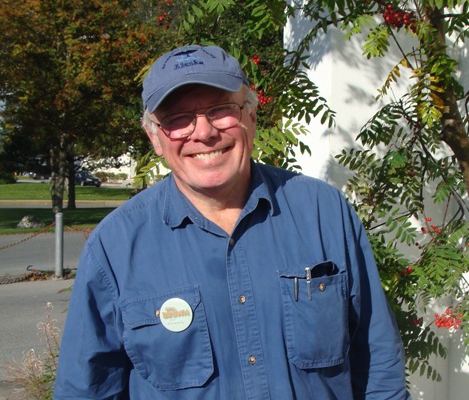
Greg Brown
Juneau wildlife guide and advocate Greg Brown passed away over the weekend. Photo by Casey Kelly/KTOO.

Juneau resident and well-known wildlife guide Greg Brown has died. He was 63.

Brown passed away over the weekend, according to his wife Tina, who says he’d recently been diagnosed with angiosarcoma, a rare and aggressive form of cancer.

The couple realized a longtime dream when they moved to Juneau almost a decade ago.

“Our first trip here it was rainy, and it was cold, and we looked up at the waterfall, and that evening we said, ‘Well, when we retire, we’re going to move to Juneau,'” Brown recalled in a 2010 interview when he was running for Juneau Assembly.

“And when the time came, literally it was a three minute conversation about when are we going to get a flight to Juneau?” he said. “It’s a great spot to live, it has some of the nicest people I’ve ever seen anywhere in the world, and I would stack Juneau up against any city in the world.”

Brown was born in Evanston, Illinois, but grew up in Virginia. He attended Virginia Tech University, where he double majored in mechanical engineering and nuclear engineering.

He was an executive for major international electric companies, including Siemens and Schneider Electric.

In a 2008 Evening at Egan lecture at the University of Alaska Southeast, Brown described himself as “an environmental capitalist.”

“I build things, I’ve done that most of my life – plants all over the world in China, Latin America, Europe. But I always try to do it with the most friendly environmental look at how to build it,” he said.

Greg and Tina Brown
Greg and Tina Brown enjoy a walk with their dog, Oscar. Photo courtesy Kerry Howard.

After moving to Juneau, the Browns started a guiding business, Weather Permitting Alaska. But Tina says Greg never considered it a job.

“He loved taking people out to see the whales, because he wanted to teach them about the whales,” Tina Brown said. “He never wanted just to run out there, show them a whale, and run back. He was known to stay up to an hour at no extra charge if the whales were cooperative and the people were enjoying it. Being out on the water and showing people the beauty here and the wildlife was just dear to his heart.”

Tina Brown says she’s not planning a public memorial for her husband. She says Greg didn’t like people making a fuss over him, and never even wanted a birthday cake. But she encourages friends to remember him in their own way.

Site notifications
Update notification options
Subscribe to notifications