Sexual Abuse & Domestic Violence

Former Johnson Youth Center superintendent sentenced for child porn

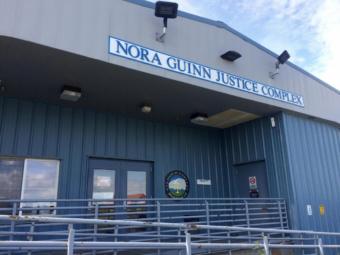
The Johnson Youth Center is a state juvenile detention facility in Juneau.
The Johnson Youth Center is a state juvenile detention facility in Juneau. (Photo by Heather Bryant/KTOO)

A former state worker who oversaw a youth correctional center has been sentenced to four years in federal prison after pleading guilty to possession of child pornography.

According to the U.S. Justice Department, Dennis Weston of Anchorage responded to a Craigslist ad in 2017 and began a year-long series of communications related to child sexual exploitation. The person he was exchanging messages with, however, was an undercover FBI agent. Eventually, officials searched Weston’s property and found a computer with graphic images of child pornography.

At the time he began texting with the undercover agent posing as a 10-year-old girl, Weston was a deputy director for the state’s Division of Juvenile Justice. In that job, he supervised the McLaughlin Youth Center in Anchorage, although prosecutors do not allege that he acted inappropriately or illegally at the facility.

U.S. District Judge Sharon Gleason sentenced Weston to four years in federal prison, followed by 10 years of supervised release.

Correction: A previous version of this story misidentified the name of the correctional facility where Dennis Weston worked while he was in Juneau. It is the Johnson Youth Center. 


A former KDLG reporter shares her experience after finding a camera in her room

(Photo by Sage Smiley)

Former KDLG reporter Sage Smiley is speaking out about indecent and illegal behavior by a host she was staying with over the summer to cover the Bristol Bay fishery.

Smiley was staying with John and Maureen Knutsen at their home in Naknek. Maureen Knutsen was the chairperson of the station’s program community advisory board, Friends of KDLG. She invited Smiley to stay at their home.

In June, Smiley found a camera in the room she was staying in.

“It was incredibly traumatic to have my privacy violated in such an intimate and sickening way,” she said. “Privacy or a feeling of safety isn’t something I feel I can assume anymore. I check every single room I’m in — for cameras.”

The camera belonged to John Knutsen.

John Knutsen was found guilty for a felony charge of indecent viewing in 2004. In recent years, KDLG reporters have stayed with the Knutsens in Naknek. Board members were aware of John Knutsen’s past but did not inform the station of his previous conviction.

“While talking to some of the (Friends of KDLG) board this summer in Dillingham, I wrote down in my notes app quotes like, ‘I thought he had redeemed himself in the eyes of the community,’ and, ‘I was aware of it being (John Knutsen’s) history with cameras but thought things had smoothed over,’” Smiley said. “Turns out, they hadn’t.”

Maureen Knutsen resigned from her position on the advisory board in July after the incident. KDLG reached out to both Maureen and John Knutsen by email. Maureen Knutsen responded, but chose not to comment.

Board Chair Dan Dunaway, in a written statement, spoke on behalf of the advisory board.

“As a program advisory board, our authority is limited but we strongly support the KDLG staff and want to protect them and do whatever we are able to ensure they are protected by the law and avoid this in the future,” Dunaway wrote.

Smiley is hoping more people speak up about sexual misconduct and assault in Bristol Bay.

“There were so many points along this ordeal where someone could have said or done something,” she said. ”Things might have turned out entirely different. That’s why I want to speak out, because I don’t want anyone else to have to go through something I did.”

John Knutsen pleaded guilty to a class B misdemeanor for indecent view and photo without consent of an adult in July. Knutsen was in jail for 10 days. Five of those days were suspended. He paid $150 in fees and is on probation until July 2020.

If you need help, that help is available. The SAFE phone number is 907-842-2320. You can also email SAFE at outreach@safebristolbay.org. SAFE is in Dillingham and is Bristol Bay’s shelter, prevention and advocacy agency for domestic violence and sexual assault victims.

The National Sexual Assault Hotline number is 800-656-HOPE (4673) to be connected with a trained staff member from a sexual assault service provider in your area.


Correction: An earlier version of this story incorrectly stated that former KDLG reporter Sage Smiley found the camera in the room in which she was staying in July. She found the camera in June.

‘Savanna’s Act’ advances in US Senate; aimed at mending police response to violence against Native women

Sen. Lisa Murkowski is a member of the Senate Indian Affairs Committee. (Photo by Liz Ruskin/Alaska Public Media)

The Senate Indian Affairs Committee passed a bill Nov. 20, 2019 aimed at improving how law enforcement agencies deal with cases of murdered and missing indigenous women.

Savanna’s Act would require better data collection. It would provide training and technical assistance to tribes and local police and it would foster cooperation among agencies.

The sponsor, Sen. Lisa Murkowski, says equally important to any provision within the bill’s 14 pages is the message it sends to Native communities.

“Because for far too long the message has been sent that you don’t matter,” Murkowski said later. “That you’re invisible. That a loved one — a daughter, a sister, a friend — can go missing and it’s just, ‘Well, she’ll show up later.’”

Statistics are limited, but U.S. Justice Department research found more than 80% of American Indian and Alaska Native women have been victims of violence and more than half have been subjected to sexual violence. Murkowski says collecting data is key.

“First you have to identify the problem,” she said.

Research has already shown that violence against Native women is not a problem that’s limited to villages and reservations. Murkowski says many rural women become victims of crime or trafficking within 24 hours of arriving in a city. And too often, she says, police don’t respond quickly enough when a Native woman is reported missing.

“When we take that attitude, we find out that awful things have happened,” the senator said. “And if we could have intervened earlier, maybe that trail would not have gone cold. Maybe we could’ve gotten to her before others got to her.”

The bill is named for Savanna Greywind, a North Dakota woman who was killed in 2017.

The Senate passed Savanna’s Act last year, but the bill was blocked in the House by a committee chairman. It was one of his last acts before retiring from Congress.

Alaska’s senators want Congress to renew Violence Against Women Act, but bill has become partisan football

The East Plaza of the U.S. Capitol. (Photo by Liz Ruskin/Alaska Public Media)

Domestic violence isn’t a Republican problem or Democratic problem, but passing a bill to combat the epidemic has become a partisan battlefield in the U.S. Senate.

Sen. Dan Sullivan says reauthorizing the Violence Against Women Act is especially important for Alaska.

“My state, unfortunately, has the highest rates of domestic violence and sexual assault of any state in America,” he said on the Senate floor. “It is horrendous. The numbers. The victims. The carnage that this leaves.”

The law, known by the acronym VAWA, is an array of programs and policies that Congress first passed in 1994 and has renewed about every five years. The law supports victim services, beefs up law enforcement and empowers tribal courts. The most recent version has expired. The programs it created remain in place, but neither party likes the message it sends that Congress can’t even agree to alleviate violence.

The Democratic-led House passed a VAWA renewal bill in April. It closes the “boyfriend loophole,” with a restriction on gun purchases for convicted stalkers and domestic abusers.

That doesn’t fly with many Senate Republicans. They introduced their bill this week, with no Democratic support. Sen. Joni Ernst, R- Iowa, says it wasn’t supposed to be this way.

“We thought that we were coming together on a bipartisan bill,” she told reporters Tuesday. “Unfortunately, the Senate Democrats decided to turn their back and walk away.”

Ernst, like Sullivan, is a first-term senator who will be on the ballot in 2020. She’s considered one of the most vulnerable Republicans. She claims Democrats are playing politics on VAWA to make her look bad.

Not so, says Senate Democratic Minority Leader Chuck Schumer, D-N.Y.

“Sen. Ernst is simply afraid of the NRA,” Schumer said.

He says Ernst should push to bring the House bill to the Senate floor.

“And we’ll debate it,” Schumer said. “And we can debate her amendment, which the gun lobby wants, but almost no other American wants.”

Sen. Sullivan is a co-sponsor of Ernst’s bill. In its 243 pages is a section he wrote that would nationalize elements of Alaska’s “Choose Respect” initiative, which he worked on when he was the state’s attorney general.  The section would, among other things:

  • designate Oct. 1 as National “Choose Respect” day
  • create a media campaign aimed at preventing domestic violence
  • expand a legal assistance program for victims
  • require a study to consider serving restraining orders by email, text or even social media

Sen. Lisa Murkowski says she wants to see VAWA pass, including a strong tribal powers provision.

“There is nothing, there is nothing partisan about making sure that Native women are protected,” she said at the Senate Indian Affairs Committee, just before the panel voted to advance a separate bill, Savanna’s Act, to address the high rates of Native American women that are murdered or go missing.

Senate Democrats, meanwhile, have introduced a VAWA bill that’s similar to the version the House passed.

Yukon-Kuskokwim Delta to get new domestic violence shelter in Hooper Bay

Hooper Bay
This slough is the access point to the ocean for many people of Hooper Bay. (Creative Commons photo by Travis)

The community of Hooper Bay has never had a domestic violence shelter before, but that is expected to change in January 2020, when shelter staff said they hope to be operating a new 24/7 shelter to serve women and their children.

Emma Smith, the victims’ services coordinator for the Hooper Bay Victims Services Project, grew up in Hooper Bay. She said the shelter will also serve the surrounding region: including Chevak and Scammon Bay.

The project is a partnership between the Rural Alaska Community Action Program, RurAL CAP, and the Native Village of Hooper Bay. That partnership between a nonprofit and tribe allows them to use nearly $500,000  of funds set aside for tribal entities from the Office for Victims of Crimes. This is a small portion of the $42 million in federal grant funding for rural public safety announced by U.S. Attorney General William Barr last month.

RurAL CAP Chief Executive Officer Patrick Anderson said plans for the shelter have been in the works for about a year, after Hooper Bay listed a domestic violence shelter as their biggest tribal justice need. He expects the shelter to house 12 women and their children.

“The children suffer substantially when they witness domestic violence in the home and usually there are other adverse experiences that they’ve had already so our goal is to figure out how we can provide full wrap-around services and bring the family back to a non-violent state,” Anderson said.

Some of those services include hiring people skilled in trauma-informed care and victim advocates. Ideally, the shelter would be able to give financial advice too, as separation from an abuser can also result in a loss of income. While exact job descriptions are still being drafted, Anderson said RurAL CAP is looking to hire up to 10 people to work at the shelter.

“We expect some to have experience or be trained in how a shelter operates and make sure that only the appropriate people are there and that the safety and security of the residents are assured,” he said.

Construction began in September, renovating a three-bedroom apartment donated by the Sea Lion Corporation. Cathie Clements with RurAL CAP said the shelter is part of the Sea Lion Corporation building and will have two four-person bedrooms, one three-person room and a common area.

In Hooper Bay, Smith is planning out culturally relevant programming to help future shelter residents heal.

For example, she’s looking for elders willing to share knowledge on grass-weaving or sewing. Smith envisions them going out on the tundra for food-gathering or just fresh-air.

“They say the tundra is healing, spiritually healing for someone that is turmoiling inside,” she said.

Many details are still being worked out, Smith said, but hopefully the shelter will accommodate long-term and short-term guests. Specialists and advocates will work out of the shelter, transferring survivors to the Emmonak Women’s shelter or elsewhere if necessary.

For now, Smith is focused on getting the word out to Hooper Bay and surrounding communities about the new domestic violence shelter coming to the Yukon-Kuskokwim Delta.

If you are experiencing domestic violence, or the threat of domestic violence, you can reach out to the National Domestic Violence Hotline at 1-800-799-7233.

Senate passes bill with funds to address missing and murdered indigenous women

U.S. Sen. Lisa Murkowski, R-Alaska, speaks to Abigail Echo-Hawk and Annita Lucchesi, two researchers who tried to quantify the epidemic of missing and murdered indigenous women, in 2018. (Photo by Liz Ruskin/Alaska Public Media)

The U.S. Senate last week agreed to spend $6.5 million to tackle the epidemic of missing and murdered indigenous women.

It’s a small line-item within a massive spending package, but it’s one Sen. Lisa Murkowski, R-Alaska, is proud to have included.

“That opens up funding to go … to investigate cold cases and just really put some energy behind this issue,” Murkowski said.

Spotty data makes it hard for researchers to quantify the killings and disappearances of Native women. The spending bill directs the Bureau of Indian Affairs to coordinate with law enforcement agencies and develop guidelines for data collection.

Michelle Demmert is chief justice for the Supreme Court of the Central Council Tlingit and Haida Indian Tribes of Alaska. She said she’s grateful for the funds Murkowski is pursuing, and also for the congressional recognition of how devastating the problem is for many rural Alaska communities.

“She’s listening to us. She understands that these issues are close to home and they impact our lives on a daily basis,” Demmert said. “You know, there’s one less sister. There’s one less auntie.”

Demmert spoke Monday from her hometown of Klawock, with a population of roughly 800, where she’s participating in a summit about violence against women.

“Just in the last five years, we’ve had three women in Klawock who’ve either died at the hands of someone violently or have had unexplained, suspicious deaths,” Demmert said. “Only one of those cases has been actually prosecuted.”

The funding is part of a $332 billion Senate spending package. It passed the Senate overwhelmingly but must be reconciled with the House of Representatives version and pass both chambers again by Nov. 21 to avoid a government shutdown.

Murkowski chairs the appropriations subcommittee that writes the budget for the BIA, the Interior Department and other environmental resource agencies. Among the Alaska priorities in the bill is $29 million in Environmental Protection Agency grants for Alaska village water systems. President Donald Trump’s administration proposed slashing the village program to $3 million. Instead, Murkowski boosted the program with an extra $4.6 million over last year’s level.

Site notifications
Update notification options
Subscribe to notifications