Sexual Abuse & Domestic Violence

Lawless: One in three Alaska villages have no local police

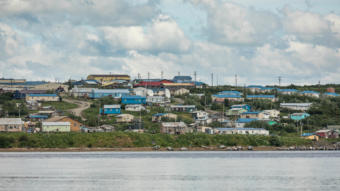
Kiana Village Police Officer Annie Reed, 49, is a grandmother and often the only cop in the Northwest Alaska village of 421 people.
Kiana Village Police Officer Annie Reed, 49, is a grandmother and often the only cop in the Northwest Alaska village of 421 people. (Photo by Loren Holmes/Anchorage Daily News)

KIANA, Alaska — Village Police Officer Annie Reed heard her VHF radio crackle to life in the spring of 2018 with the familiar voice of an elder. I need help at my house, the woman said.

Reed, who doesn’t wear a uniform because everyone in this Arctic Circle village of 421 can spot her ambling gait and bell of salt-and-pepper hair at a distance, steered her four-wheeler across town. There had been a home invasion, she learned. One of the local sex offenders, who outnumber Reed 7-to-1, had pried open a window and crawled inside, she said. The man then tore the clothes from the elder’s daughter, who had been sleeping, gripped her throat and raped her, according to the charges filed against him in state court.

Reed, a 49-year-old grandmother, was the only cop in the village. She carried no gun and, after five years on the job, had received a total of three weeks of law enforcement training. She had no backup. Even when the fitful weather allows, the Alaska State Troopers, the statewide police force that travels to villages to make felony arrests, are a half-hour flight away.

It’s moments like these when Reed thinks about quitting. If she does, Kiana could become the latest Alaska village asked to survive with no local police protection of any kind.

An investigation by the Anchorage Daily News and ProPublica has found one in three communities in Alaska has no local law enforcement. No state troopers to stop an active shooter, no village police officers to break up family fights, not even untrained city or tribal cops to patrol the streets. Almost all of the communities are primarily Alaska Native.

Seventy of these unprotected villages are large enough to have both a school and a post office. Many are in regions with some of the highest rates of poverty, sexual assault and suicide in the United States. Most can be reached only by plane, boat, all-terrain vehicle or snowmobile. That means, unlike most anywhere else in the United States, emergency help is hours or even days away.

When a village police officer helps in a sex crime investigation by documenting evidence, securing the crime scene and conducting interviews, the case is more likely to be prosecuted, the University of Alaska Anchorage Justice Center concluded in 2018. Yet communities with no first responders of any kind can be found along the salmon-filled rivers of Western Alaska, the pancake tundra of the northwest Arctic and the icy rainforests in the southeast panhandle.

The state recognizes that most villages can’t afford their own police force and has a special class of law enforcement, called village public safety officers, to help. But it’s not working. In the 60 years since Alaska became a state, some Alaska Native leaders say, a string of governors and Legislatures have failed to protect indigenous communities by creating an unconstitutional, two-tiered criminal justice system that leaves villagers unprotected compared with their mostly white counterparts in the cities and suburbs.

ProPublica and the Daily News asked more than 560 traditional councils, tribal corporations and city governments representing 233 communities if they employ peace officers of any sort. It is the most comprehensive investigation of its kind in Alaska.

Here is what we learned:

  • Tribal and city leaders in several villages said they lack jail space and police stations. At least five villages reported housing shortages that prevent them from providing potential police hires with a place to live, a practical necessity in some regions for obtaining state-funded VPSOs. In other villages, burnout and low pay, with some village police earning as little as $10 an hour, lead to constant turnover among law enforcement.
  • In villages that do have police, more than 20 have hired officers with criminal records that violate state standards for village police officers over the past two years. They say that’s better than no police at all. Our review identified at least two registered sex offenders working this year as Alaska policemen.
  • Alaska communities that have no cops and cannot be reached by road have nearly four times as many sex offenders, per capita, than the national average.

The lack of local police and public safety infrastructure routinely leaves residents to fend for themselves. The mayor of the Yukon River village of Russian Mission said that within the past couple years, residents duct-taped a man who had been firing a gun within the village and waited for troopers to arrive. In nearby Marshall, villagers locked their doors last year until a man who was threatening to shoot people had fallen asleep, then grabbed him and tied him up. In Kivalina, a February burglary closed the post office for a week because the village had no police officer to investigate. Elsewhere, tribes mete out banishment for serious crimes from meth dealing to arson.

Kiana in March. Four-wheelers and snowmachines are the most common form of motorized transportation in the village.
Kiana in March. Four-wheelers and snowmachines are the most common form of motorized transportation in the village. (Photo by Loren Holmes/Anchorage Daily News)

“There’s no one you can call and go, ‘Oh hey, my neighbor is going crazy right now,’” said Kristen George, tribal administrator for the Bristol Bay town of Clark’s Point, which balloons from 55 people to several hundred during the commercial fishing season.

If someone started shooting, George said, “they could probably wipe us out before troopers came.”

Many of the unprotected villages are in western Alaska, where sex crime rates are double the statewide average. (Alaska’s statewide rate, in turn, is nearly three times the U.S. average.) Rape survivors, as in the Kiana home invasion case, are told not to shower and must fly to hub cities or even hundreds of miles to Anchorage to undergo a sexual assault examination.

The problem is getting worse. Our investigation found the number of police provided through the state Village Public Safety Officer Program is at or near an all-time low; the few who remain are often unhappy and overextended.

When the lone VPSO in the northwest Arctic village of Ambler investigated a domestic violence call in April, for example, he said he was attacked by two people in the home who each grabbed one of his arms. In a subsequent report, he described it as one of the scariest moments of his life as he struggled to break free and grab a can of pepper spray.

“I was unable to get any assistance as I am the only law enforcement officer in this village within about a 100 square mile radius,” he wrote.

Rather than raise pay or boost recruitment, Gov. Mike Dunleavy this year proposed a state budget that would cut $3 million in funding for vacant village-based police officer jobs. The reductions are a small part of a proposed $1.8 billion reduction in state spending as cash-strapped Alaska struggles to live within its means while avoiding an income tax and continuing to pay annual Permanent Fund dividend checks to all eligible residents.

Dunleavy, a Republican, campaigned on promoting public safety, but he also promised Alaskans that they wouldn’t have to give up the annual oil wealth checks, and that those checks might increase. Under his proposed budget, each Alaskan would receive a more than $4,000 payment in October, the largest ever. (State lawmakers are working on a competing spending plan with fewer cuts, which would maintain VPSO funding at current levels and provide potentially smaller dividends.) Dunleavy has said growth in state spending is the problem, not annual checks to residents.

Whether each Alaskan also receives basic public safety protection — the ability to dial 911 and have a police officer or trooper show up at the door — depends largely on whether they live in cities like Anchorage and Fairbanks, or off the road system.

Martha Whitman-Kassock, who oversees self-governance programs for the Bethel-based Association of Village Council Presidents, grew up in rural Alaska and said the state appears to have no strategy for adding cops in villages.

“Public safety infrastructure and service in our region is a crisis,” she said.

The Kobuk River west of Kiana in March. The river is an important transportation route for five villages in Northwest Alaska.
The Kobuk River west of Kiana in March. The river is an important transportation route for five villages in Northwest Alaska. (Photo by Loren Holmes/Anchorage Daily News)

A Fight Over Public Safety Funding

Alaska is the size of Texas plus California plus both Carolinas, Florida and Maine. Purchased from Russia in 1867, the frontier attracted a flood of gold miners and church missionaries. The newcomers brought Western diseases — diphtheria and influenza, smallpox and tuberculosis — killing thousands of Alaska Natives. The missionaries built churches and, soon, boarding schools. So many village children were sexually abused by priests that a class-action lawsuit bankrupted the Fairbanks Diocese.

Lost in the talk of how best to spend Alaska’s dwindling revenue is an unanswered question: Did the state ever meet its public safety obligations to villagers?

Alaska’s state government settled a 1997 lawsuit demanding equitable funding for village schools after a judge called the state spending system “arbitrary, inadequate and racially discriminatory.” Alaska Native rights advocates contend that funding of public safety remains unfair.

In 1999, the Native American Rights Fund sued the state on behalf of 10 Alaska Native villages, including Kiana and Clark’s Point, calling the absence of police in remote communities racist and unconstitutional. The villages claimed that the state had violated Alaska Natives’ equal protection under the 14th Amendment of the U.S. Constitution by both opposing tribal courts’ authority to oversee criminal justice through traditional means while at the same time failing to provide armed police.

The Alaska Supreme Court upheld rulings against the villages in 2005, saying the lack of certified village cops could be explained by “financial and geographical constraints” rather than racial bias or purposeful neglect.

Early Alaska legislatures and state police saw the crisis coming.

In 1979, the state created the Village Public Safety Officer Program to place lifesaving peacekeepers in remote communities. The commander of the Alaska State Troopers at the time, Col. Tom Anderson, said the program was intended to “address some of the most serious, life-threatening problems of rural villages,” where accidental death rates are highest, by training officers to be firefighters and emergency medics as well as cops.

The number of these VPSOs, unarmed peace officers paid for with state funds but employed by regional nonprofits and boroughs, has plummeted from more than 100 in 2012 to 42 today. In some cases, promising VPSO recruits accept higher-paying offers in urban police departments or private security, leaving villages without their local officer.

Troopers’ ranks, too, have dwindled. Citing “critically low staffing levels,” the Alaska Department of Public Safety closed eight trooper posts between 2015 and 2018. Five years ago, the state employed 333 troopers statewide. At the end of last year, that number had shrunk to 293.

Law Enforcement on the Cheap

Outside Kiana City Hall, ravens pinwheeled above the trees on a weekday afternoon in March. A breeze carried snowmobile exhaust and wood smoke above newly built homes on stilts in the upper village down to old-town log cabins.

Inside the city building, council members in Carhartts and snow pants held their monthly meeting. For 90 minutes they shared powdered doughnuts and talked about utility rates, until it was time for Annie Reed to give a public safety report.

There had been several assaults over the past two weeks, said Reed, the village police officer who investigated the home invasion rape. “I was sick, so I didn’t do so much rounds. About 300 calls.”

When a village has no VPSO and no trooper, the only remaining option is an officer like Reed, hired by the local city government or tribe. Called village police officers or tribal police officers, they receive no benefits and are the lowest-paid and least-trained form of law enforcement in Alaska.

Reed makes about $20 an hour in a village where groceries cost twice Anchorage prices. These kinds of officers often find themselves performing tasks intended for armed, fully trained police. Reed thought she was going to be enforcing city ordinances like curfew and stopping underage drivers, not refereeing armed fights.

Katelynn Reed, 22, with her son Abram Reed-Jordan, then 7 months, in her family's home. Behind is her father, Jack Reed. Katelynn's mother, Annie Reed, is often the town's only cop.
Katelynn Reed, 22, with her son Abram Reed-Jordan, then 7 months, in her family’s home. Behind is her father, Jack Reed. Katelynn’s mother, Annie Reed, is often the town’s only cop. (Photo by Loren Holmes/Anchorage Daily News)

When people in Kiana need help they don’t dial 911, which would ring through to the Kotzebue Police Department nearly 60 miles away. They call Reed’s cellphone directly. The problems range from barking dogs to suicides to domestic brawls. She is never off duty.

“I have to drop my cooking and go. Or if my [grandkids] are getting ready to go to bed, I’m not there to say good night to them,” Reed said.

Suicides are worst. Calls involving domestic violence are common.

In Kiana, a series of trails and unpaved roads connect the neighborhoods, spilling onto the frozen rivers below. On one corner, a man with a mop of wild hair sat in his living room talking about the time he called Reed for help when his adult son began kicking him in the ribs. The man’s wife, left eye bruised, sat crying, saying she wished the local liquor store would close for the sake of Kiana’s children. The parents snapped at each other. As they argued, their daughter became angry. Why was everyone sharing family business, she asked?

The father leaped to his feet and pushed her across the living room. The young woman silently caught herself and slumped on the couch, her eyes returning to the TV.

“I don’t do meth,” her father said, although no one had asked.

A current VPSO, who asked not to be named and is not based in Kiana, said opening the door on one of these family fights is the most frightening task facing any solo Alaska peace officer.

Annie Reed at the Kiana city office building in March.
Reed at the Kiana city office building in March. (Photo by Loren Holmes/Anchorage Daily News)

“The No. 1 most dangerous call you could ever go to is a domestic violence call. Hands down,” the VPSO said. “So we are doing the most dangerous call that there is on a consistent basis, by ourselves with no backup [and] no communication with dispatch other than a cellphone and no way to defend yourself.”

While state law allows for communities to arm VPSOs and even city-hired village police officers like Reed, the director of the Alaska Police Standards Council said he is not aware of any employers that do so, partly because it could make insurance liability rates skyrocket for small communities.

In Savoonga, a Bering Sea island community closer to Russia than to mainland Alaska, the police chief, Michael Wongittilin, said that the first time he put on his uniform, a man aimed a shotgun at him. “About 92% of this community have high-powered rifles,” he said. “We don’t even have [bulletproof] vests. We don’t even have Tasers.”

Reed said she’s never been shot at and tries to talk her way out of any scary encounters. She began working as a cop about five years ago when a family member said the job would suit her. “She said I was a strong and outgoing person.”

Reed’s home is a warm cocoon in the upper village, where an ebony finger of baleen, the broom-length filtration system from the mouth of a bowhead whale, hangs on the wall above a tornado of small children and small dogs. The whale hunt souvenir is one of the only signs that Kiana, an upriver village, is Reed’s adopted hometown. She is originally from Utqiagvik, the northernmost city in the United States, where whaling is a seasonal rite.

From left, Amber Reed, Pauline Gooden and Clara Stein smoke outside the city office building in Kiana. Stein was taking a break from her job working at the city office.
From left, Amber Reed, Pauline Gooden and Clara Stein smoke outside the city office building in Kiana. Stein was taking a break from her job working at the city office. (Photo by Loren Holmes/Anchorage Daily News)

Family ties between police, crime victims and offenders are impossible to avoid in villages of a few hundred people. Many officers said those inherent conflicts make the job less appealing to potential applicants.

A quick walk from Reed’s house, Franswa Henry, 40, stepped into the blowing snow with his hands in his pockets. His breath steamed in the cold, his teeth clenched. Two bounding white puppies circled his feet.

Henry said he’s on probation and recently got out of jail in Nome, where someone broke his jaw. He was there serving time on an assault charge that Reed had investigated.

“I had a shotgun pulled on me. You know, I grabbed an ax,” Henry said. It was a messy family dispute between stepbrothers in January, with kids inside the home. Hours before a state trooper was able to get to the village, Reed arrived and took statements. Kotzebue prosecutors filed charges and Henry turned himself in a few days later, pleading guilty to fourth-degree assault. But he said Reed can’t possibly be impartial — the kids in the house were her grandchildren.

She said arresting neighbors is never easy.

“I still have a few friends out there and a few families that still talk to me,” she said. “It’s pretty hard when you have to arrest somebody and they’ll start hating you for a while.”

Henry noted that Reed, like many village police officers, has a rap sheet of her own. She pleaded guilty to a harassment charge in 2016 and to misdemeanor assault in 2012. Both cases involved fights with family members, a record that would prevent her from working as a police officer in Anchorage or other large departments. (Reed described the cases as minor events that do not interfere with her work. She otherwise declined to comment on them. “It’s the past,” she said.)

Under state law, village police officers are not supposed to have felony records but misdemeanors can be considered on a case-by-case basis. Alaska Police Standards Council Executive Director Bob Griffiths said domestic violence convictions of any kind usually disqualify someone from receiving state approval to be a village officer.

But village police officers with criminal records are routinely hired without a background check because village leaders do not inform the state of new hires, and the regulation requiring them to do so has no teeth, Griffiths said.

“There’s Not Anybody There Looking”

Not everyone wants more big-city style, badge-and-gun policing in Alaska villages. Often, city and tribal leaders seek a mix of traditional peacekeeping and modern law enforcement.

The lakeside fishing community of Igiugig has requested a VPSO for years, said AlexAnna Salmon, village council president, but it has not received one. “The tribe just takes matters into our own hands when there are issues.”

“Severe troublemakers are banished. We usually purchase them a ticket out of Igiugig and then ask airlines to put them on a no-fly list,” she said of the Alaska Peninsula community.

About 140 miles to the east, in the Alutiiq village of Nanwalek, the chief of the traditional council has kicked a meth dealer out of town for good, a form of banishment known in Alaska as a “blue ticket.” “Basically the council has been able to handle a lot on their own without support from law enforcement,” tribal administrator Gwen Kvasnikoff said.

In the meantime, Alaska’s congressional delegation has attempted to hand more federal money, and more authority, to tribal courts. A pilot program proposed by Rep. Don Young, a Republican, would give special criminal jurisdiction to five Alaska tribal governments under the Violence Against Women Act.

Franswa Henry recently got out of jail in Nome. He’d been arrested on, and later pleaded guilty to, a domestic violence assault charge. Reed investigated the incident, but Henry said she can’t be impartial — the kids in the house were her grandchildren.
Franswa Henry recently got out of jail in Nome. He’d been arrested on, and later pleaded guilty to, a domestic violence assault charge. Reed investigated the incident, but Henry said she can’t be impartial — the kids in the house were her grandchildren. (Photo by Loren Holmes/Anchorage Daily News)

Sen. Lisa Murkowski, a Republican who has pursued federal funding for village tribal courts, recently called on U.S. Attorney General William Barr to visit Alaska villages to see the public safety problems firsthand.

But there’s a big difference between the court system and on-the-ground police, Murkowski said when informed by the Anchorage Daily News of how many Alaska communities have no police whatsoever.

“If we don’t have the law enforcement in the first place, it’s really hard,” Murkowski said. “People know that there’s not anybody there looking. It makes it easier to be the perpetrator.”

Research suggests that factors such as self determination, the presence of prominent traditional elders and employment opportunities — rather than more police — are the key to reducing suicide, alcohol abuse and other problems that have troubled many Alaska villages. But dozens of village and tribal leaders told the Anchorage Daily News and ProPublica they want and need police protection.

“When I’m here by myself and somebody comes pounding on my door and wants to beat the living daylights out of me, it would have been nice to have a VPSO in that next office,” said Mary Willis, tribal president for the Kuskokwim River village of Stony River.

In Wales, where a judge recently ordered the school district to pay $12.6 million after an employee sexually abused multiple girls, City Clerk Gerald Oxereok said the village hasn’t had any law enforcement for 20 years. On the shores of the Bering Strait, the whaling town is the westernmost city in mainland North America.

“Nobody has been applying for it,” Oxereok said of the vacant VPSO job. Some locals who might want the work don’t meet minimum requirements such as a high school diploma. Or they smoke pot or have a felony record, both of which are disqualifying.

When a screaming man broke the door to the tribal office in Kokhanok, a village on the shores of Iliamna Lake with 168 people and no police, tribe employee Lysa Lacson said she was forced to evacuate the building.

Alaska struggles to provide a consistent local law enforcement presence in Kiana, which sits along the Kobuk River, left.
Alaska struggles to provide a consistent local law enforcement presence in Kiana, which sits along the Kobuk River, left. (Photo by Loren Holmes/Anchorage Daily News)

Troopers arrived three days later.

That was in December, Lacson said. The tribe told local airlines that the man was forbidden from flying back to Kokhanok. But that doesn’t always work. Sometimes the banished fly in to a different village and boat home, she said.

“We’re not trained in responding to those things,” Lacson said.

On the same day that Annie Reed investigated the home invasion rape case, a man attacked three people with a butcher knife in the Yup’ik fishing village of Kotlik some 280 miles to the south. Troopers say the suspect appeared at a schoolhouse vowing to kill the principal, who in turn warned villagers of the attack over VHF radios. The custodian locked the school doors and teachers herded students into the gymnasium and lunchroom, where adults stood guard at entrances.

Kotlik tribal administrator Pauline Okitkun said the town sometimes has village police officers, depending on funding. There was a young woman employed as one at the time, she said, but the call was too dangerous for her to handle unarmed and alone.

The man stabbed three people, including one who struck his arm with a piece of rebar to try and knock free the 8-inch knife, according to charges filed against him. The suspect also stabbed his sister in the stomach, but she was able to snatch the weapon away, according to the charges. Villagers held him in a cell until troopers arrived by plane more than two hours after the attack and school lockdown began. A Bethel judge ordered a competency evaluation for the suspect, who is awaiting trial and, according to the court clerk, has not entered a plea.

Airplanes at the Kiana airport in March. Only about 14% of Alaska villages and cities can be reached by road, leaving many Alaskans reliant on boats or single-engine planes, which are often grounded when the weather is bad.
Airplanes at the Kiana airport in March. Only about 14% of Alaska villages and cities can be reached by road, leaving many Alaskans reliant on boats or single-engine planes, which are often grounded when the weather is bad. (Photo by Loren Holmes/Anchorage Daily News)

Kotlik, near the mouth of the Yukon River, is in Western Alaska, an area with the highest rate of reported sex crimes in the state. Leaders from 56 tribes in the region have listed public safety as their top concern in each of the past two years, according to the regional nonprofit, the Association of Village Council Presidents.

The council visited 45 communities in Western Alaska in 2018 to photograph dilapidated public safety buildings and count police officers. The resulting report found that eight villages had no jail cells of any kind. In others, if there were local police, the officers worked in headquarters with boarded doors, broken windows or no indoor plumbing. In one of those buildings, two inmates burned to death on April 28 while locked in their cells. The council researchers had flagged problems with the window, door lock and stairs months earlier.

“The idea that there are places in the United States, a first-world country, that do not have public safety … a basic human right, was horrifying to me,” said Azara Mohammadi, a council employee who worked on the survey.

In one of the larger surveyed communities, Mountain Village, population 804, the nonprofit found only one village police officer remains after another officer had been charged with stealing from the scene of a homicide. The Yukon River village’s public safety problems continued on a Friday afternoon in March, when the Mountain Village officer arrested a man accused of raping two people and took him to a jail cell housed within the steepled city office.

When an Alaska state trooper arrived the next afternoon, he discovered the jail empty and no guard on duty. The 19-year-old suspect had escaped overnight. By the time the trooper found and arrested him, he’d been missing for 16 hours. He has pleaded not guilty on charges of sexual assault, giving alcohol to a minor and felony escape.

A building in Kiana's old town. Inupiat people have occupied the site at the confluence of the Kobuk and Squirrel rivers since at least the late 1700s, according to archaeological investigations conducted by Brown University.
A building in Kiana’s old town. Inupiat people have occupied the site at the confluence of the Kobuk and Squirrel rivers since at least the late 1700s, according to archaeological investigations conducted by Brown University. (Photo by Loren Holmes/Anchorage Daily News)

Two Classes of Alaskans

Oil taxes, and savings accounts that were built upon oil taxes, pay the bills in Alaska. But even in times of plenty, when 2 million barrels were flowing through the trans-Alaska oil pipeline every day or when North Slope crude prices skyrocketed, the state has struggled to provide core services to villages.

Today, thousands of rural homes in 29 villages still lack running water and flush toilets, according to the state Village Safe Water Program. The road system reaches only about one out of every five communities.

Unapologetic in directing billions in federal spending to Alaska, the late Sen. Ted Stevens argued the young state’s isolation and the unique needs of Alaska villages demanded heavy government investment. At the height of his funding powers as chair of the Senate Appropriations Committee, Stevens backfilled the VPSO program with $1.5 million in federal funding when the state cut spending on those officers in 2003.

Dunleavy, who was elected governor last year and subsequently declared a “war on criminals,” has proposed a spending plan that includes defunding vacant village police officer jobs while funding trooper recruitment. But troopers don’t just serve villages, they respond to crimes in highly populated areas on the road system — including much of the fast-growing Matanuska-Susitna Borough that Dunleavy and former Alaska Gov. Sarah Palin call home.

Dunleavy said the cuts to the VPSO program reflect the decreasing number of village officers. (Saying the program is now “plagued with high turnover and poor retention,” the Alaska Legislature this month announced the creation of a working group that will attempt to rebuild it.)

“The drop in VPSOs employed occurred despite pay increases, retention bonuses and approved funding for equipment and office improvements,” Dunleavy spokesman Matt Shuckerow said. “As a result, Gov. Dunleavy’s budget proposal aligns funding and historic expenditures within the VPSO program.”

Shuckerow said that starting pay for VPSOs has increased from $16.55 an hour in 2008 to $26.79 today. That amounts to about $56,000 a year, wages that VPSOs say is still woefully low given they receive nearly identical training to Kotzebue-based troopers who make three times as much.

Sen. Lyman Hoffman, D-Bethel, warned that the spending plan creates two classes of Alaskans when it comes to public safety protection.

“If you were living in that community for a year and we had someone going out and shooting up the place and you did not have an officer to go to talk to, I think you would feel as unsafe as they do,” Hoffman told the state budget director in January.

As rural Alaskans learned of the proposed cuts, Kiana city manager Ely Cyrus received an email from the head of the VPSO program in his region.

“Ely, just an FYI at this point in time we will not be hiring a new VPSO for Kiana,” it read, referring to the state-funded police officer job that offers higher pay and requires more training than Annie Reed’s role as a city cop. “The state is withdrawing funding for three positions in order to help provide the money to give the Alaska state troopers a 7.5 percent raise.”

Cyrus, who sometimes moonlights as a snowplow operator, gave a tour of the village public safety building with its two jail cells and a stack of paperbacks for the guards. Next door sat a mud-flecked home, housing for the VPSO, for the sporadic times there is one. Plywood covered the shattered living room windows.

“I’m Overwhelmed”

When a home invasion rape occurs in Alaska’s largest city, the Anchorage Police Department sends patrol cars with sirens blaring, Deputy Chief Ken McCoy said. One uniformed officer makes sure the victim is safe while others search for the suspect. Paramedics appear. A detective from one of two special sex crime units joins a victim’s advocate and a nurse to begin the investigation and rape kit exam. Back at the crime scene, an officer stands guard to preserve evidence.

Two plane rides and several hours away, above the Arctic Circle, all the village of Kiana had on the night of the home invasion rape was Annie Reed.

When she arrived at the scene, she said, it was too late to find an overnight safe house for the victim. The suspect, 42-year-old Edmond Morris, had a history of rape, pleading guilty to sexual assault in 2016. While in Kotzebue in 2017, he broke into the home of a legally blind woman who lives alone, according to charges filed against him. The woman hid in the bathroom to call police. Morris had spent the past 15 years in and out of jail before returning to Kiana.

Children play musical chairs during a celebration of life event at the Kiana school. The event was organized in response to two recent suicides in the region. Officials were worried that deaths might ignite one of the “clusters” of suicides that sometimes plague this part of the state.
Children play musical chairs during a celebration of life event at the Kiana school. The event was organized in response to two recent suicides in the region. Officials were worried that deaths might ignite one of the “clusters” of suicides that sometimes plague this part of the state. (Photo by Loren Holmes/Anchorage Daily News)

“Holy crap,” Trooper Anne Sears said she thought. Sears looked up Morris’ criminal record after learning of the alleged attack from Reed and investigated the case. “Everything he’s done. He’s done it before. Even his other cases were leading up to something similar.”

Reed said that when she asked the man to leave, he lingered around the home. With nowhere else to go and the midnight sun about to set, Reed took the woman to spend the night in her own home. (“Annie is freaking awesome,” said Sears, a longtime state trooper. “Kiana is lucky to have her.”)

One of Reed’s daughters fixed the woman a cot to sleep on in the living room, beneath the baleen and dreamcatchers. Another daughter traveled with the victim the next day to Kotzebue, but because there was no nurse available that day to begin a sexual assault exam, the victim flew another 550 miles to speak with city detectives in Anchorage. Her neck and wrists bruised, the young woman carried the gym shorts and ripped tank top she was wearing during the attack as evidence in a plastic bag.

A boarded-up window at a home in Kiana. Last year, according to charges filed in state court, a man broke through this window and raped a woman. The victim had to fly to Anchorage for testing, and it took three weeks before the suspect was arrested. During that time, he returned to the house multiple times asking if the family planned on pressing charges, according to troopers.
A boarded-up window at a home in Kiana. Last year, according to charges filed in state court, a man broke through this window and raped a woman. The victim had to fly to Anchorage for testing, and it took three weeks before the suspect was arrested. During that time, he returned to the house multiple times asking if the family planned on pressing charges, according to troopers. (Photo by Loren Holmes/Anchorage Daily News)

It took three weeks for troopers to complete an investigation and arrive in Kiana to arrest Morris. During that time, he returned to the home where the attack occurred several times to ask if the family planned to press charges, prosecutors allege. He faces charges of sexual assault, assault and criminal trespassing.

In a phone interview from the Nome jail, Morris said he did not attack the victim and said she let him in the window. When the victim’s mother told him to get out of the house, he did, he said.

Morris is awaiting trial with a hearing scheduled for July. The window that Morris is accused of breaking open in order to commit the sexual assault is now covered with plywood, adorned with smiling hunting photos torn from a calendar. Dents still tattoo the front door, but that happened later.

The young woman, after returning to Kiana, took an ax to the doorknob. She’d been drinking and tried to break down the door after an argument with her mom. When that didn’t work, she climbed through the same window that, according to troopers, her rapist had pried open. She was later found sitting in the living room, sobbing.

Her mother doesn’t know exactly where she is now. Probably Anchorage. They talk on the phone sometimes, but never about that night, the mother said. “She just keep it inside her.”

Reed, in the meantime, has a decision to make. A troopers sergeant in Kotzebue said she is among the most reliable of the village police officers in the region. But after fielding hundreds of calls in a recent month, and deaths in the family, she has started looking for a job with days off. Or at least benefits.

“I’m tired,” she said.

A long sigh.

“I’m overwhelmed.”

As the anniversary of the home invasion rape approached, something unexpected happened. The VPSO who said he was attacked during a domestic violence call in the village of Ambler, 70 miles upriver, was reassigned by the borough. On April 30, he showed up in Kiana, the city manager said. Backup for Annie Reed.

But the move had a downside: It made Ambler, population 287, the 70th village in Alaska to have no police of any kind at some point this year.

ProPublica and the Anchorage Daily News are spending the year investigating sexual violence in urban and rural Alaska. Here’s how you can stay in touch with us:

Alaska House passes sweeping crime bill

Rep. Tammie Wilson, R-North Pole, and Rep. Matt Claman, D-Anchorage, attend a House majority press availability, May 8, 2019. Wilson and Claman were among 24 House members who voted to pass House Bill 49, shortly before the availability. (Photo by Andrew Kitchenman/KTOO and Alaska Public Media)
Rep. Tammie Wilson, R-North Pole, and Rep. Matt Claman, D-Anchorage, attend a House majority press availability on Wednesday, May 8. Wilson and Claman were among 24 House members who voted to pass House Bill 49, shortly before the press availability. (Photo by Andrew Kitchenman/KTOO and Alaska Public Media)

The Alaska House of Representatives passed a wide-ranging revision to the state’s criminal justice laws on Wednesday.

House Bill 49 would mark the third time the Legislature changed major provisions of the controversial law known as Senate Bill 91.

Rep. Tammie Wilson, a North Pole Republican, supported the bill.

“What you have before you is a bill that repeals and replaces the harmful provisions of SB 91,” she said. “We’ve heard from Alaskans, from our constituents, that they’ve had enough.”

The bill would increase sentences for some sex and drug offenses. It also would ensure more rape kits are tested. And it would require that people who move to Alaska be registered as sex offenders if they’re registered in other states.

All but one minority-caucus Republican opposed the bill: Minority leader Rep. Lance Pruitt voted against it. He said it wouldn’t go far enough to repeal SB 91.

“The people did not ask us to come back here and to try to give them the image that we cared and we had heard,” he said. “They asked us to come back here and fix the problem.”

But overall, the legislation had support from the majority caucus, which has 15 Democrats, seven Republicans and two independents.

Anchorage Democratic Rep. Matt Claman said the bill is balanced, by increasing penalties but leaving funding for drug offenders to get treatment.

“This bill, I believe, strikes the very kind of balance that the public has asked us to do when we come down here — to find a balance between getting tougher on sentences, but not getting so tough that we take out the potential resources to help people who really need treatment for their addictions,” Claman said.

The House passed the bill by a 24-14 vote. One majority caucus member, Fairbanks Democrat Grier Hopkins, voted against it. One minority caucus member, Nikiski Republican Ben Carpenter, voted for it. Anchorage Republican Gabrielle LeDoux, who recently left the House majority, also voted for it. Big Lake Republican Mark Neuman and Anchorage Democrat Chris Tuck were absent.

Dunleavy said Monday the bill points the state in the right direction. He expressed concern that amendments would “water this bill down.”

The House amended the bill to reduce some of the increased penalties in the bill. But amendment sponsors said Dunleavy’s administration cooperated on the changes.

The bill now heads to the Senate.


Watch the latest legislative coverage from Gavel Alaska:

Women in Alaska’s fishing industry hope to curb sexual harassment

Robin McAllistar and two of her crew members on the deck of FV Valiant Maid during the late-1980s.
Robin McAllistar and two of her crew members on the deck of FV Valiant Maid during the late ’80s. (Photo courtesy Robin McAllistar)

Many women in the commercial fishing industry say sexual harassment is part of the job. But being on a boat for weeks or months at a time can make harassment hard to escape, and seeking help especially difficult.

Now there’s a push to make the seas safer for women.

Robin McAllistar was sitting on her couch when her younger friend Jude Huerta walked through the door. Huerta is 19 years old and wants to commercial fish for the first time this year. McAllistar fished commercially years ago, and recently the friends have been talking about how Huerta can remain safe as a woman new to the industry.

“It’s really sad that that has to be said, but it’s important to know,” Huerta said.

“It’s better to say it ahead of time than regret it later,” McAllistar replied.

McAllistar is speaking from experience. When she was fishing in the ‘70s and ‘80s, at times she was the only woman on the boat. Her advice for young fishers like Hureta: Find a way to get off the vessel if they feel unsafe.

“You can hop a tender when you’re done delivering fish,” she said. “If things have gotten bad, don’t negotiate with them that you’ll be dropped later. Get off the boat.”

McAllistar has experienced her fair share of bad situations. She said she once was stuck on a boat with a captain who was constantly drinking. She said he assaulted her in her room, and she had to fight him off.

“I mean physically grappling and trying to get through and get out and get away,” she said. “I wasn’t raped, but that was only because I got out.”

The next day, she hopped onto another boat. While the experience didn’t drive her to quit fishing altogether, that was her last season, and now she works as a therapist.

It’s hard to say just how common McAllistar’s experience was during her time fishing, and if things have changed in the decades since. Statistics on sexual harassment in the industry aren’t readily available. The Alaska State Commission for Human Rights does take complaints about sexual harassment and discrimination, but it doesn’t receive a large number from the fishing industry specifically.

Still, others say it’s a problem they want changed.

Elma Burnham is the founder of Strength of the Tides. It’s a grassroots movement that aims to support and empower women who work on the water. The organization hosts events, profiles women in the maritime industry on social media and fosters community.

But the main part of the movement is asking fishers, boat captains and others in the industry to sign a pledge demanding zero tolerance for sexual harassment and assault. Burnham publishes the list of those who have made the pledge online.

“Basically, another way to look at it is as an anti-harassment policy for this group of people,” she said.

Burnham is a commercial fisher, and she hopes the list will be used as a road map that will help women who are seeking work in the industry to stay safe. Eventually, she would like to push for boats and organizations to implement written policies on sexual harassment. But for some, a verbal agreement is enough.

Malcolm Milne owns the FV Captain Cook and manages a crew of four. He’s also president of the North Pacific Fisheries Association, a commercial stakeholder group.

“The one thing I don’t approve of is more paperwork, necessarily,” Milne said. “I have plenty to do as it is.”

He said he’s supportive of what Burnham is doing. He already talks to his crew about sexual harassment but doesn’t have a formal policy, because he said he’s not that official about things.

He added that it has been a topic of discussion in his industry group, most of whom are small boats employing a handful of people.

“People recognize that it does happen in circumstances,” he said. “But in the smaller family boats that I’m associated with, I think people don’t have any tolerance for it. So there’s not really an issue I would say.”

He said that his industry is already good at vetting people to make sure they are safe to work with.

Back at McAllistar’s house, she said more needs to be done to tackle the issue.

“The truth is, I really like the Wild West of the ocean just the way it is, and the fleets just the way they are,” she said. “But people should be sexually safe.”

McAllistar said she’s seen more women enter the industry over the years, which she said is the most promising sign of change.

House committees take different approach on crime bills

Rep. Chuck Kopp, R-Anchorage, speaks during a House floor session in Juneau on April 11, 2019.
Rep. Chuck Kopp, R-Anchorage, speaks during a House floor session in Juneau on April 11. Kopp said Saturday that the House Judiciary Committee’s version of House Bill 49 is a good starting point for making changes to criminal sentencing. (Photo by Skip Gray/360 North)

Competing crime bills are advancing in the Alaska Legislature.

Four major bills proposed by Gov. Mike Dunleavy have advanced to the Senate Finance Committee. Senate Bill 35 would increase penalties for sex offenses. Senate Bill 32 would reverse reductions to sentences from the 2016 law known as Senate Bill 91, and introduce a new category of crime called terroristic threatening.  Senate Bill 33 would increase bail and give judges more discretion in how people charged with crimes are released before trials. And Senate Bill 34 would reduce the use of parole, so that prisoners will spend more time in jail.

But House members have brought different ideas on addressing crime to the House Judiciary and House Finance committees.

The House Judiciary Committee moved House Bill 49 and House Bill 145, both of which include some elements of the different crime bills that have advanced in the Senate.

Anchorage Republican Rep. Chuck Kopp said Saturday that the Judiciary Committee’s version of HB 49 is a good starting point for making changes to criminal sentencing.

“This has incorporated numerous specific requests from the law enforcement community over — I think a dozen different sections came directly from (the Alaska Department of) Public Safety,” said Kopp, the House Rules Committee chairman. “And more than that came directly from the governor’s bill. It gives us a working document. There will be more amendments. We know we need a vehicle to improve crime, and this gives us a good starting point.”

Rep. David Eastman, R-Wasilla, speaks during a House floor session, March 11, 2019. (Photo by Skip Gray/360 North)

But Wasilla Republican Rep. David Eastman said the bills moved by the Judiciary Committee are too complex.

“I had thought we had learned a lesson from what happened with SB 91 and all of the subsequent fallout,” he said. “Even those who supported it had to support continual bills of revision because it was just so big.”

The House Finance Committee has taken yet another approach. It has amended House Bill 20, which was originally intended to improve the reporting and timeliness of rape kit testing.

The committee added provisions that are closer to Dunleavy’s proposals to reverse the SB 91 sentencing reductions than the bills moved by the Judiciary Committee.

Members of the House majority caucus planned to meet late Tuesday to discuss what crime legislation will advance to the House floor.


Watch the latest legislative coverage from Gavel Alaska:

Ketchikan pastor, teacher sentenced for sexually abusing minor

Doug Edwards is handcuffed following his sentencing hearing on April 18, 2019, in Ketchikan Superior Court.
Doug Edwards is handcuffed following his sentencing hearing on April 18, 2019, in Ketchikan Superior Court. (Photo by Leila Kheiry/KRBD)

Former Ketchikan High School teacher and local pastor Doug Edwards was sentenced Thursday to serve six years in jail for sexually abusing a 14-year-old girl who was a student and member of his congregation.

Edwards was charged last spring with sexual abuse of a minor for abusing a 14-year-old girl at Ketchikan High School, at his home and at the church where he was a pastor. He pleaded guilty in early February to one consolidated charge of second-degree sexual abuse of a minor through a plea agreement.

During the sentencing hearing, Superior Court Judge William Carey accepted the plea agreement and sentenced Edwards to 18 years with 12 years suspended. Edwards will be eligible for good time, which could cut his time in jail by up to a third.

Once released, Edwards will face 10 years’ probation and will have to register as a sex offender.

The victim and her family had an opportunity to speak during the sentencing hearing. The victim participated by phone and declined to comment. But her mother and grandmother both spoke.

Her mother read from her daughter’s written statement, then later addressed Edwards directly.

“The trust that you broke is perhaps the most sickening thing in all of this,” she said. “We trusted you with our most valuable possessions: our children. You are a shepherd, supposedly watching out for your flock. But instead you are the wolf, devouring many.”

The victim’s grandmother said her granddaughter is a hero for speaking out about Edwards.

“She showed Christlike love when she thought of his family before she thought of reporting him,” she said. “He claimed to be a Christian, which meant he should have been Christlike, and yet he didn’t even think of his own family above himself.”

The family does not agree with the terms of the plea agreement. They asked the judge to consider a longer sentence.

Edwards also spoke, saying he’s deeply sorry for the pain and distress his actions caused the victim and her family, as well as his own family, his church, the school district and the community.

“To have been in such a prominent position and to have been so trusted makes my crime that much greater. There is no justification for my sin,” he said. “Anything called repentance requires tangible evidence to prove that it’s real. I am committed to live out the rest of my life showing the change in my heart and the regret for my actions.”

Carey agreed with the victim’s grandmother that her granddaughter is a hero for coming forward. Carey called Edwards’ actions appalling and said they will have long-term effects, especially on the victim and her family.

“And my heart goes out to them for that,” he said. “She is never going to be the same, Mr. Edwards. This is going to stay with her (for) her entire life. This is going to stay with her family and those who are closest to her.”

Carey added that there have been collateral effects throughout the community.

Carey said the plea agreement is reasonable for this case. The judge said 10 years of probation and 12 years suspended jail time should provide a significant incentive for the 60-year-old Edwards to behave once released.

Maine governor approves extradition of accused UAF cold case killer to Alaska

Sophie Sergie (Photo courtesy of Alaska State Troopers)

The governor of Maine has signed a warrant allowing the extradition of a man accused of a rape and murder 26 years ago in Fairbanks. Forty-four-year-old Steven Harris Downs is charged with the April 1993 sexual assault and killing of Sophie Sergie of Pitka’s Point, at the University of Alaska Fairbanks. Downs’ attorney James Howaniec says it’s never been in question that his client will have go to Alaska to face the charges.

”The only question was if it was going to happen on a more expedited basis, like it usually is, or if it was going to happen a little further down the road,” Howaniec said.

At the time of Sergie’s murder, Downs was an 18-year-old UAF student who lived at the Bartlett Hall dormitory, where the 20-year-old Sergie was found stabbed and shot to death in a bathroom. The case had been cold until investigators last year cross referenced genetic evidence from the crime with a genealogical database and identified Downs as a suspect. Howaniec says Downs, who’s been jailed in Maine since being indicted in February, challenged extradition to buy time to settle his affairs and consider the charges.

”He’s flabbergasted at this charge, and we’re stepping back a little bit to try to assess at least what some of the evidence involved is,” Howaniec said.

Howaniec says Downs can challenge the Maine governor’s warrant, but that even if he does, extradition proceedings will likely conclude next month, with his client being sent to Alaska. The genetic genealogy science used to identify Downs has been employed to ID other murder suspects across the country, including the Golden State Killer in California.

Site notifications
Update notification options
Subscribe to notifications