Spirit

Family, friends celebrate first annual Walter Soboleff Day

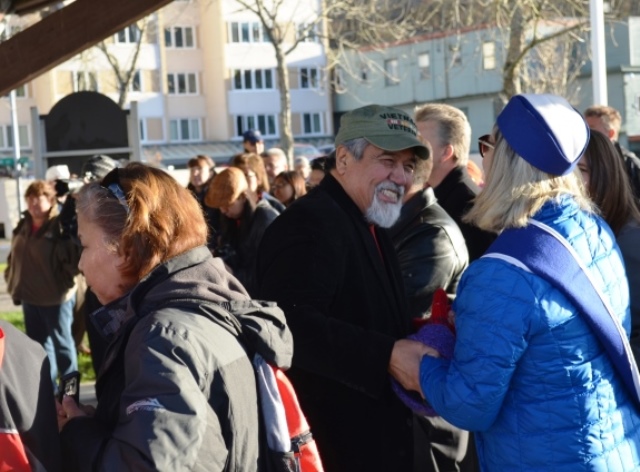
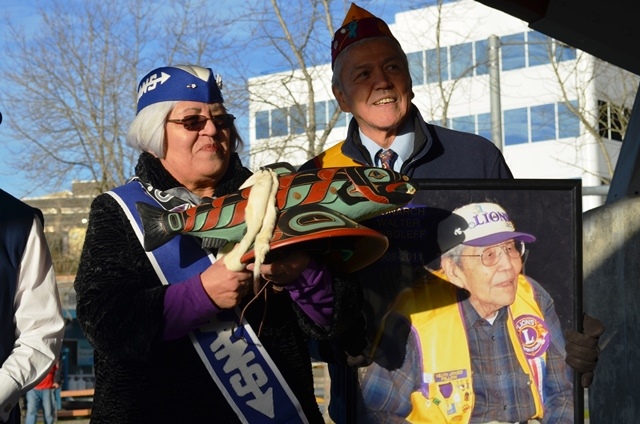
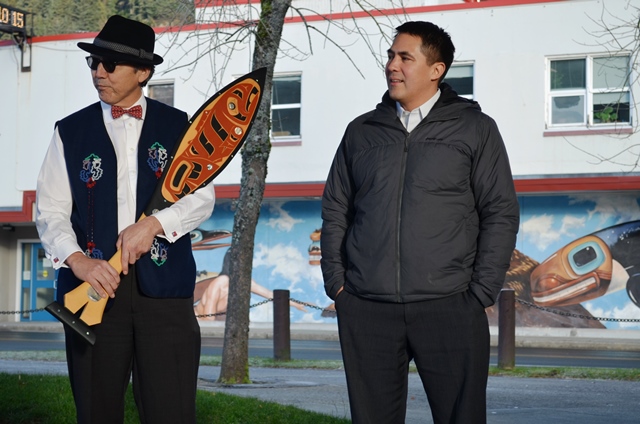
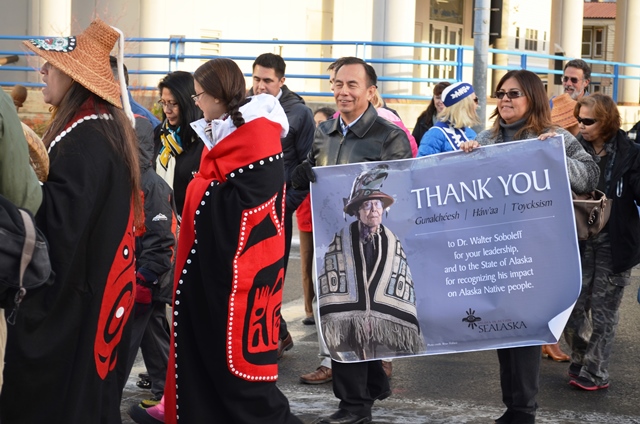
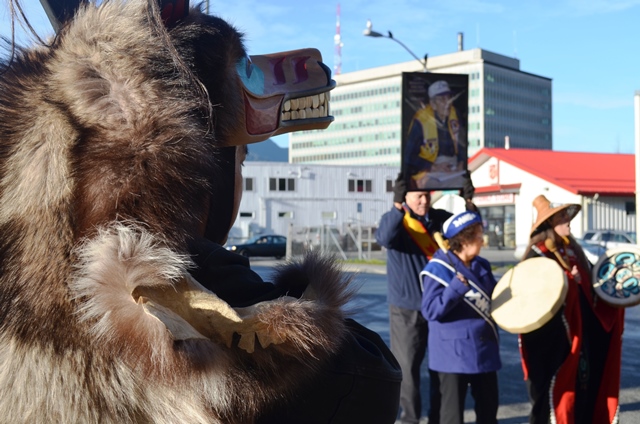
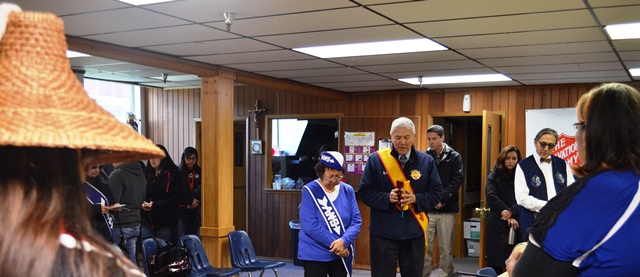
Today was the first annual Dr. Walter Soboleff Day in Alaska, and dozens of the late Tlingit elder’s friends and relatives marked the occasion with a parade through downtown Juneau.

Soboleff’s oldest son, Sasha, says humility and inclusiveness are his dad’s lasting legacy. The Presbyterian minister opened his church to people of all races at a time when Juneau was segregated.

“This man worked well over a hundred years to do things for not only the people of Alaska, but for those who strove to better themselves to do what they need to do,” Sasha Soboleff says. “And what was key to his heart and key to his spirit was the service to his God and Jesus Christ.”

Former state Rep. Bill Thomas remembers hearing Soboleff’s sermons on the radio as a kid growing up in Haines.

“If we didn’t go to Sunday school and we missed church, we had to sit in front of the radio and listen to Rev. Soboleff on the radio,” he says.

Soboleff would’ve been 106 years old today. He died in 2011 at the age of 102.

He was involved with the Alaska Native Brotherhood throughout his life, including during the Native civil rights movement of the 1940s. Later in life he helped launch efforts to revitalize Native languages, as well as traditional art and spiritual practices.

Earlier this year, the Alaska Legislature made 20 indigenous languages official state languages. Soboleff’s daughter, Janet Burke, says that would have made her father proud.

“When we were children we never got to do things like this,” Burke says. “It wasn’t that we weren’t taught how to do this. But we didn’t do things publicly like we’re able to do now.”

Today’s informal parade included about 70 people making their way from Marine Park, through Juneau’s Willoughby District, and to the Salvation Army church.

Ed Thomas is the former president of the Tlingit & Haida Central Council. He says he got to know Soboleff through the Alaska Native Brotherhood.

“He is one of those that started off by writing down Tlingit values,” Thomas says. “So that people can have a starting point on what it meant, what our values meant.”

Thomas says those values include honoring your elders and having a sense of humor.

State lawmakers unanimously approved the bill making Nov. 14 Dr. Walter Soboleff Day. He joins other notable Alaskans like Elizabeth Peratrovich, Jay Hammond and Ted Stevens in having a day named for him.
Juneau marks 13th anniversary of 9/11

Juneau residents marked the 13th anniversary of the 9/11 attacks on Thursday with a ceremony at Riverside Rotary Park in the Mendenhall Valley.

About 100 people gathered around the park’s Sept. 11 monument to honor those who died and those who were called to serve as a result of the worst act of terrorism ever on American soil.

Speakers included Charity MacKinnon, president of the Juneau-Glacier Valley Rotary Club, Capital City Fire/Rescue Chaplain Dan Wiese, Eagle Scout candidate Konnor Mueller and volunteer firefighter Carl Bottorf. Alyssa Fischer sang the national anthem, while the Juneau Police Department Color Guard raised the United States flag to half-staff. Retired JPD Captain and Juneau Assembly member Jerry Nankervis laid a wreath on the 9/11 memorial.

Many of those who attended the ceremony were veterans or Juneau’s first responders.

Celebrating recovery from drug and alcohol addiction

Recovery Fest
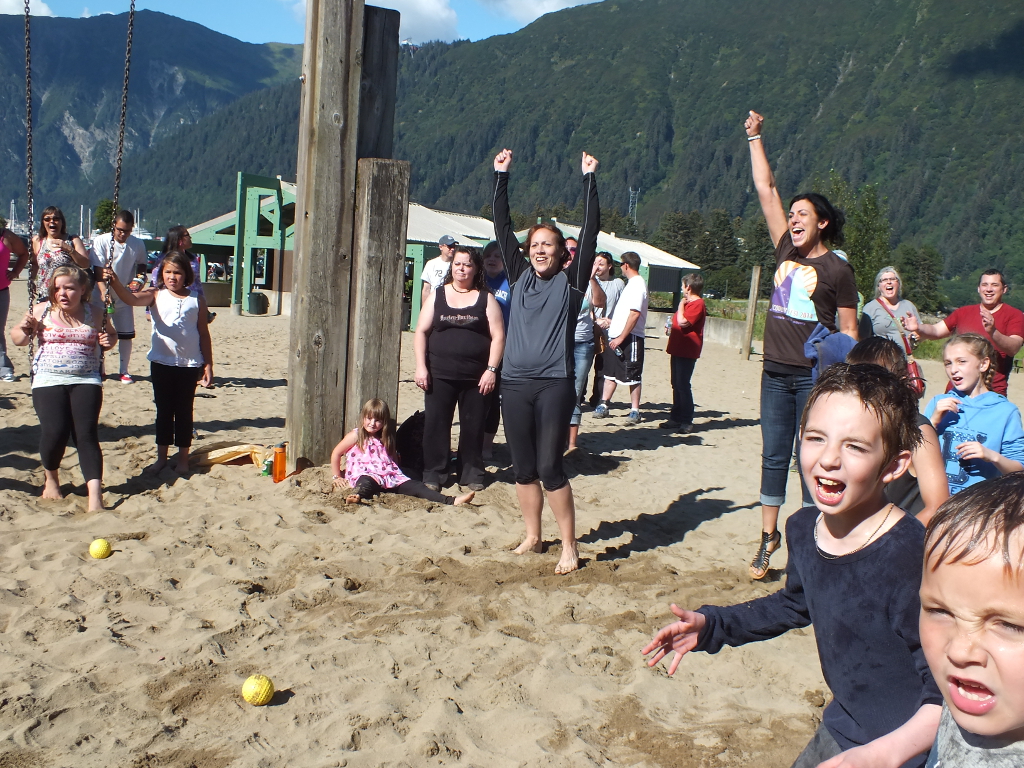
Dusty Dumont and Kara Nelson jump to celebrate a dunk tank bull’s-eye at a recent Juneau Recovery Fest event. (Photo by Casey Kelly/KTOO)

Alcohol and drug abuse cost Alaska’s economy more than $1 billion every year. That includes millions in lost productivity and millions more spent on health care, social services and the criminal justice system, according to a 2012 McDowell Group report.

Shame and stigma can make it difficult to get help for substance abuse. But a group of Juneau residents is out to change that. They organized last weekend’s Recovery Fest to celebrate those seeking to overcome addiction.

It’s a sunny afternoon at Sandy Beach in downtown Douglas, and a crowd is gathering around a dunk tank filled with several gallons of cold water. Dusty Dumont, a parole officer for the state Department of Corrections, sits on a platform above the water, dry for now. Then someone throws a ball that’s right on target and Dumont splashes into the water as the crowd lets out a cheer.

Carol McDaid
Carol McDaid was a guest speaker at Juneau’s Recovery Fest. The Washington, D.C. lobbyist for addiction services is a recovering drug and alcohol addict herself. (Photo by Casey Kelly/KTOO)

“I did get dunked quite a few times,” Dumont says later, wrapped in a towel and standing next to a picnic shelter.

“For a good cause,” she adds with a laugh.

The cause she’s talking about is addiction recovery. Programs like 12 step, Alcoholics and Narcotics Anonymous, professional counseling and peer-to-peer treatment.

“The majority of the people on my case load are struggling with addiction, and I would love to see more of this so that people feel like they belong and are part of a strong community that’s sober,” Dumont says.

Kara Nelson is one of the people on Dumont’s case load. The 40-year-old mother of three spent more than half her life abusing drugs and alcohol before sobering up in 2011.

“I never really had a drug of choice,” Nelson says. “Whatever you had I’ll take, whatever’s going to get me out of my right mind right now.”

Like a lot of addicts at Recovery Fest, Nelson says no one event led to her getting clean. Rather, it was a series of what she calls “bottoms.” She says her family, friends and members of her church help her stay sober. She also credits peer-to-peer therapy, where former users support each other.

“If you’re like me, I don’t like to feel like anyone is trying to tell me what to do,” she says. “I mean, I already have so much shame on me. So when I’m with someone who’s already been through that, I definitely can identify, and work through things a little better and get to that humbled spot that we need to get to to move forward.”

Carol McDaid pushed to get addiction services included in the Affordable Care Act as a Washington, D.C. lobbyist for treatment organizations. She’s also been in recovery for drug and alcohol abuse for 16 years.

“The thing that was my biggest mark of shame is now my biggest asset,” McDaid says.

A frequent guest speaker at events around the country, she talks about putting a face on addiction recovery.

“That’s why we’re out here today. So that people don’t have to think we’re these people under bridges swigging out of brown bags,” McDaid says. “We are tax paying, loving members of our family, and members of our community that add rather than detract. And I think if we do that enough, we will show that there’s a benefit to doing it.”

Katie Chapman
Katie Chapman, executive director of the National Council on Alcoholism and Drug Dependence Juneau Chapter. (Photo by Casey Kelly/KTOO)

Katie Chapman, executive director of the National Council on Alcoholism and Drug Dependence Juneau Chapter, is celebrating four and a half years sober. NCADD helps organize the weekly Juneau Recovery Community meetings, where the idea for Recovery Fest first took shape. Chapman says the group hopes to hold more public events that shine a light on recovery and reduce the stigma for those struggling to overcome addictions.

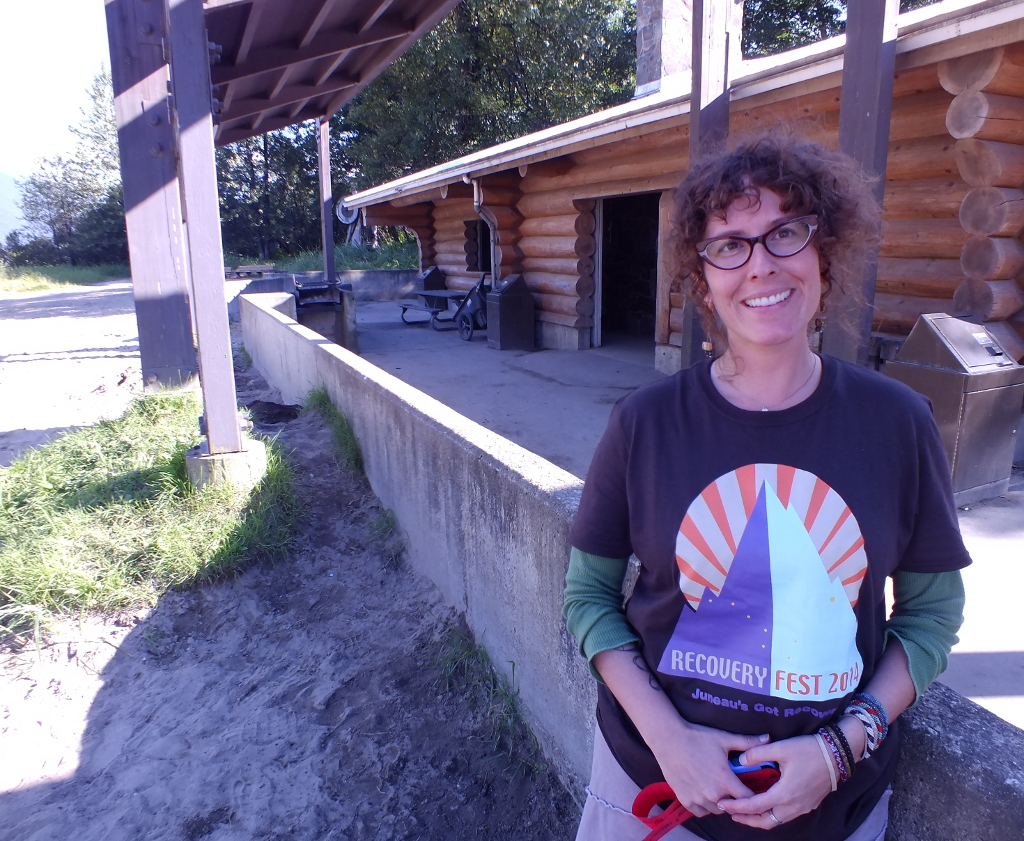
“I’m happy to do that here today,” Chapman says. “I’m proudly wearing a shirt that says ‘I got recovery’ on the back of it, because I do and I’m proud of it. It’s something to be proud of.”

Dr. Walter Soboleff Day bill signed into law

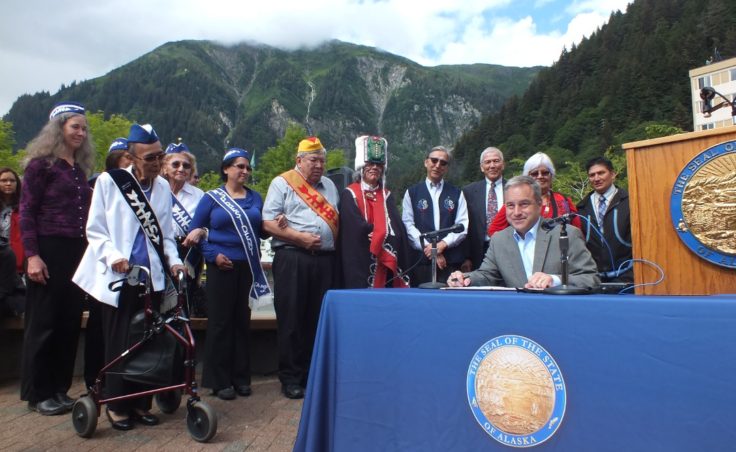
Gov. Sean Parnell has signed legislation making Nov. 14 Dr. Walter Soboleff Day in Alaska.

About 100 of the late Tlingit elder’s family and friends gathered at Juneau’s Marine Park for the bill signing ceremony on Wednesday, where Soboleff was remembered as a man who spread love and good will to all Alaskans.

The idea for a day honoring Soboleff first took off at the 2012 Alaska Native Brotherhood and Sisterhood Grand Camp convention.

“We were in Sitka at our 100th anniversary,” said Peter Naoroz, ANB’s 2nd Grand Vice President.

At the time, Naoroz was ANB grand secretary. He recalled that there were two competing resolutions calling on the legislature to make Soboleff’s birthday a day of remembrance in Alaska. His job was to combine them.

“It was quite an undertaking to try to get all of his accomplishments in a couple of pages,” he said.

Soboleff was born in 1908 in the now abandoned village of Killisnoo, near Angoon.

He was the first Alaska Native pastor in Juneau at a time when the town was segregated. He fought for civil rights alongside Alaska Native Brotherhood and Sisterhood leaders Roy and Elizabeth Peratrovich.

Later in life, Soboleff became the cultural and spiritual standard bearer of the Tlingit people, helping launch efforts to revitalize the language, as well as traditional art and dance.

He passed away in 2011 at the age of 102.

Naoroz said the thing he found most remarkable about Soboleff was his ability to make his fellow Alaska Natives take pride in themselves and their culture.

“He made people who were from this world, from this countryside right here, feel so special about their ability to tell stories, remember stories,” Naoroz said. “The power of the oral tradition and how he made people stand up and feel good about who they were.”

Wednesday’s bill signing ceremony included many similar sentiments. Gov. Parnell said Soboleff was known for his love of all Alaskans.

“And this day will help us remember the love that he had for each of us, as well as for this place,” Parnell said.

One of Soboleff’s four children, Walter junior, said his father would have been humbled by the recognition. He said the family hopes Alaskans will mark the day of remembrance by thinking about Soboleff’s teachings.

“Respect for others, caring, loving, compassion,” Soboleff said.

Walter Soboleff joins Elizabeth Peratrovich, Ted Stevens and Jay Hammond as prominent Alaskans to have a day named for them. Sealaska Heritage Institute’s new cultural center under construction in downtown Juneau will be named for him as well.

CBJ Planning Commission considers neighborhood appeal opposing Haven House

Haven House
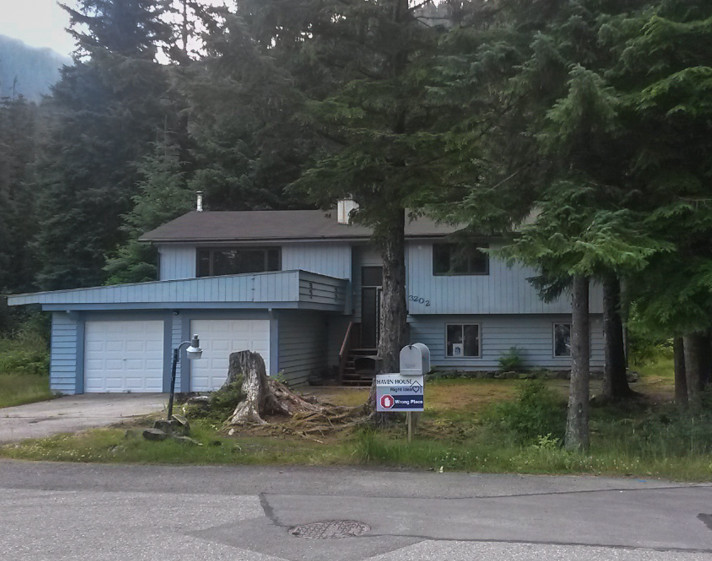
Haven House at 3202 Malissa Drive. (Photo by Greg Culley)

The City and Borough of Juneau’s Planning Commission may have decided the first neighborhood appeal related to a group home for women leaving prison.

The result of Tuesday evening’s hearing won’t be announced until later, and it likely will not be the end of the process.

Haven House plans to use a home on Malissa Drive for as many as nine women, but neighbors have objected to possible traffic and safety issues associated with establishing a group home in a residential area.

In January, CBJ Community Development Director Hal Hart issued an opinion saying that Haven House would likely fit under the definition of a halfway house and could not operate in the neighborhood’s residential zoning.

Haven House representatives initiated an appeal of that decision. Then in March, Hart decided the facility would likely fit under the definition of “use-not-listed” compatible with the neighborhood’s D5 residential zoning as a rooming house or boarding house, instead of as a halfway house. That could allow the organization to pursue a possible conditional use permit.

The issue before the Planning Commission was simply whether Tall Timbers Neighborhood Association could appeal Hart’s latest decision. Was the neighborhood association an aggrieved party that was adversely affected by the decision? And did the group have standing, or a right to appeal?

CBJ attorney Robert Palmer says no. Tall Timbers was premature because no permit has been issued and no one has been injured yet. In addition, the association filed its appeal before their corporate bylaws were adopted.

“Right now, Haven House cannot operate as intended,” Palmer said. “They can only operate if they were given a permit by this body for a use-not-listed or a conditional use permit. At that time, that is when the neighborhood – if a permit was issued – would meet the aggrieved party or the adversity standard to then have standing to appeal.”

Attorney Mary Alice McKeen, representing Haven House, said they welcomed all public comment at the proper stage in the proceedings, such as during the Planning Commission’s consideration of a conditional use permit. McKeen suggested that the neighborhood association’s proposed appeal of the development director’s decision was a delaying tactic that could effectively kill the project. She called for a public hearing on the use-not-listed determination as soon as possible.

“We really want to start this project because we believe that there are women coming out of prison who need this type of housing,” McKeen said.

“There is no disagreement that nine women coming out of prison could rent this home and live in it because the definition of a family is people – one or more persons – living together.”

Attorney Robert Spitzfaden, representing the Tall Timbers Neighborhood Association, repeatedly said during his main arguments earlier in the meeting that the public should just have a chance to provide input.  He had a more forceful and focused rebuttal after McKeen’s comments.

“This is all after-the-fact rationalization when they realize what they’ve done,” Spitzfaden said. “They prevented the public’s input in this particular decision: The decision that says ‘Yes, you have an ability to get a permit.’ That is a final decision. It changed the nature of this whole proceeding.

“Haven House was finished in January. They had absolutely no way to get a permit. And now they do, according to the director’s decision.”

After an hour of arguments, Planning Commission Chairman Mike Satre asked those observing the arguments in the Assembly chambers to leave the room so that commissioners could deliberate in private in executive session. A decision will be issued publicly at some undetermined, later date. Commissioner Nicole Grewe acted as hearing officer in the case.


Alaska Native leader Don Wright passes away

Alaska Native leader Don Wright has died. He was 84 when he passed away at home on July 5.

Wright was instrumental in developing the tribal lands compensation legislation, Alaska Native Claims Settlement Act, signed by President Richard Nixon in 1971. Wright was leader of the Alaska Federation of Natives that year.

Wright helped organize AFN during the 1960s, and fought to get the best settlement possible for Alaska Natives. Wright and other Native leaders traveled to Washington, DC to lobby for the law, even though funds were scarce. Wright often used his own money for airfare and expenses, since AFN in its early days had no funds at all. Despite the odds, Wright was successful in getting Nixon administration backing for the settlement.

ANCSA compensated Alaska Natives for loss of lands and established regional and village Native corporations with the right to select 44 million acres of land and appropriated $962.5 million to them.

Wright was born in Nenana in 1929. He became a pilot and established his own air service. He later formed a construction company, and helped build airstrips and roads in the Interior. He also helped build the first oil field camp at Prudhoe Bay.

Wright’s family says he was a champion for Alaska. His funeral will take place July 26th in Nenana.

Site notifications
Update notification options
Subscribe to notifications