Spirit

Vigils planned to mourn 13-year-old Kake girl’s death

Mackenzie Howard
Mackenzie Howard’s family provided this photo of her taken hours before her death Tuesday. She had attended a community memorial service for Kake elder Clarence Jackson and helped gather flowers in this skiff.

As the investigation into her death continues, candlelight vigils are planned across Alaska tonight (Friday) in memory of Mackenzie Howard. The 13-year-old Kake girl is believed to be a victim of murder in the small, Southeast village on Kupreanof Island.

The vigils begin at 6 p.m. in most places. In Kake, mourners will gather at the Old Grade School. In Juneau, they’ll gather at Sealaska Plaza. The Sitka event is planned at the Salvation Army, on Sawmill Creek Road near the roundabout.

Family members, meanwhile, remember Mackenzie as an energetic young girl, with a bright smile and a love for basketball.

Her mother, Marla Howard, plays the game, and her father, Kip Howard, is a veteran of Southeast Alaska’s annual Gold Medal tournament. He says his daughter wanted to follow in those footsteps.

“She says, ‘Mom, you’re a baller, and my Dad’s a baller. So that must mean I’m going to be a super baller,” Kip Howard said. “That was a joy to hear from her.”

At 13 years old, Mackenzie was looking forward to the day she’d be able to play on the JV or varsity squads for Kake High School. And her dad says she took an interest in college basketball, too. Mackenzie’s inspiration was Brittney Griner, a 6-foot-8 senior who plays for Baylor.

“She enjoyed when she got to watch her play,” he said. “And then she would run downstairs and make a pose, and say ‘Brittney Griner!’ She was dreaming of going to Baylor University to be the next Brittney Griner.”

For her dad, the fun was in watching her play. On a road trip to Klawock, Mackenzie played on a team of all boys, against another team of all boys. He told her that it would make her better, and he says she bought into it. Not that it was always easy to watch her take that advice.

“I was sitting on the bench, and she was playing defense, I think, and the kid ran her over, and then stepped on her and trampled on her,” he recalled. “My first reaction was, I jumped off the bench, and I took two steps toward the court, and then I stopped. I looked back at my wife, and I told her, ‘These bleachers need seatbelts.'”

But everything turned out all right.

“My baby got right up off the floor and continued playing as hard as she was,” Howard said.

Those good memories – of a young girl who liked her big pink glasses as much as dribbling a basketball – are what Kip Howard says he and his family will hold onto. But they also have a lot of questions.

The night she didn’t come home, Kip Howard says he got a handheld floodlight and went searching.

“That was the most terrible feeling I’ve had,” he said. “And then I got the call.”

The Howard family is well-known in Kake, a city of about 600 people about 40 miles northwest of Petersburg. Kip Howard is the fire chief and captain of the city’s search-and-rescue boat. He says because Kake is a close-knit community, the tragedy of Mackenzie’s death reverberates throughout the city.

“My mom is still alive down south, and I have several sisters,” he said. “But since I’ve been here in Kake, the folks here have been my mother, my grandmothers, my sisters, my brothers, my uncles, my nephews. This is my family.”

Mackenzie had several siblings – three brothers and five sisters. Many family members traveled back to Kake upon hearing the news. Condolences have also poured in from throughout the community, the Alaskan panhandle, and friends across the country.

“Too many to respond to,” Howard said. “All I could think of was ‘Thank you. Thank you.'”

Tlingit elder, Sealaska board member Clarence Jackson dies

Clarence Jackson
Clarence Jackson. Photo courtesy Sealaska Corporation.

Tlingit elder and original Sealaska Native Corporation board member Clarence Jackson passed away Thursday at the age of 78.

He’s being remembered for his contributions to the Native land claims movement, and for being an ambassador for Tlingit culture in both the business world and his personal life.

Sealaska Heritage Institute President Rosita Worl says Jackson relished comforting people in times of need. He served as master of ceremonies at the memorial service for the late Reverend Dr. Walter Soboleff in 2011.

“He became like our ambassador from Sealaska, where he would attend all of the funerals, all the memorials,” Worl said. “He was there to comfort clans and the family of those who had lost someone.”

Jackson was born in Kake in 1934. He lived there most of his life, attending Sheldon Jackson High School in Sitka, before moving back to the village, where he was a fisherman and operated a small store.

Worl says he was a great fisherman, who loved boats.

“We always say, it is as if the spirits of the animals know him and they give themselves to those kind of people who have those good spirits,” she said. “So, yes, he was a great fisherman.”

In the 1960s, Jackson was involved in the Alaska Native claims movement as a delegate to the Central Council of Tlingit and Haida Indians. He served as Central Council president from 1972 through 1976.

Also in 1972, Jackson signed the articles of incorporation for Sealaska, the regional Native Corporation for Southeast, created under the Alaska Native Claims Settlement Act. He was the only board member to serve continuously from the time Sealaska was founded.

Current board chair Albert Kookesh first met Jackson when he joined the board in 1975. He says they quickly became friends.

“We’re both from villages right next to each other. He’s from Kake and I’m from Angoon,” said Kookesh. “He knew my father and he knew Walter Soboleff, my uncle. So I got immediately scooped up into his little circle.”

Kookesh says Jackson was a champion of village life and traditional culture on the board, something he attributed to being raised by his Tlingit speaking grandparents.

Kookesh says his ability to speak both Tlingit and English fluently made Jackson a valuable asset to the company.

“His Tlingit background, and his Tlingit stories, and his Tlingit upbringing gave him a really good sense of oration,” Kookesh said. “Very, very articulate. Not somebody who went to college, not somebody who went to law school, not somebody who went to graduate school. But somebody who went to the upper learnings of the Tlingit culture.”

When the corporation established the nonprofit Sealaska Heritage Institute in 1980, Jackson became one of its trustees and served as chair of the Council of Traditional Scholars.

Worl says the council was instrumental in identifying the core cultural values that guide the institute to this day.

“Clarence would remind us always, this is what makes us Native people, it’s our cultural values,” Worl said.

Jackson talked about the importance of preserving those values at Celebration 2012, the biennial cultural and educational event sponsored by the Heritage Institute.

“We’re strengthening our culture,” Jackson said. “We might hear a new song here and there this Celebration. But it’s a shoring up time to not be doing anything just for show. But to show the young people, this is the way it is.”

Jackson spent much of the past two months in Seattle receiving cancer treatment. He recently returned to Alaska, and died surrounded by friends and family on Thursday.

A service will be held at the Elizabeth Peratrovich Hall (former ANB Hall) in Juneau on Saturday at 5 p.m.

A video of Clarence Jackson from Celebration 2012:

Clarence Jackson’s last address at Celebration. from Kathy Dye on Vimeo.

Original post:

Tlingit elder and original Sealaska Corporation board member Clarence Jackson died Thursday after a battle with cancer. He was 78.
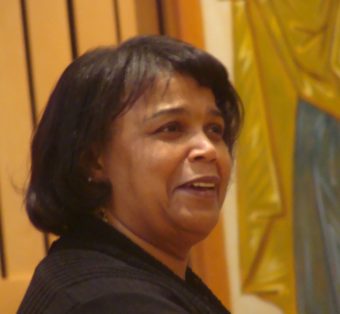
Jackson was born in 1934 in Kake, where he lived most of his life. He attended Sheldon Jackson High School in Sitka, and was involved in the Alaska Native claims movement in the 1960s with the Tlingit and Haida Central Council.

He served as Central Council president from 1972 through 1976. Also in 1972, he signed the articles of incorporation for Sealaska, the regional Native Corporation for Southeast, created under the Alaska Native Claims Settlement Act.

Jackson had been the only board member to serve continuously since Sealaska was founded. He also served as a trustee for the Sealaska Heritage Institute from the time it was created in 1980.

SHI President Rosita Worl says Jackson was an ambassador of Tlingit culture in the board room and his personal life.

“He lived in the village and he said that it is our responsibility to make sure that our people can continue to live in their homeland,” Worl said. “So, even with all of our businesses and investments, even if they were doing well outside of Alaska, he was always reminding us that we had a responsibility to our people in the villages.”

After the Heritage Institute was created, Jackson not only served as a trustee, but also as chairman of the Council of Traditional Scholars.

Worl says the council was instrument in identifying the core cultural values that guide the institute to this day.

“I remember some of the almost philosophical discussions they would have about how much change is acceptable, how much change can we allow in our society before we become not Tlingit,” Worl said. “And Clarence would remind us always that this is what makes us as Native people. It’s our cultural values.”

Jackson was a lifelong commercial and subsistence fisherman, who also ran a store in Kake and served as a director of Kake Tribal Corporation.

Worl says Jackson enjoyed telling stories and making people laugh. He was often the person who helped organize memorial services for elders who died, including his longtime friend the Reverend Dr. Walter Soboleff, who passed away in 2011.

Worl says Jackson spent much of the past two months in Seattle getting cancer treatment. But he was able to make it back to Alaska, where he died surrounded by friends and family on Thursday.

Services are pending.

Living King’s dream

About a hundred people gathered at St. Paul’s Catholic Church in Juneau Monday for the annual Martin Luther King, Jr. Day celebration.

All of the speakers talked about the strides our society has taken in terms of race relations since King’s death 45 years ago. They also spoke of the need to keep fighting for equality.

Speakers and performers included:

  • Shirley Workman, Mistress of Ceremonies
  • Alaska Youth Choir, Missouri Smyth – Director
  • Juneau Senator Dennis Egan
  • Sally Smith, Office U.S. Senator Mark Begich
  • Mike Tagaban, Thunderbird House, Auke Village
  • Geny Evangelista-Del Rosario, Filipino Community Advocate
  • Glenn Mitchell, “I Have a Dream” reading
  • Salissa Thole, “My Country Tis of Thee”
  • Daymond Geary, Breakthrough Church
  • Lt. Mickey Sanders, USCG
  • Richard Green, Glacier Valley Church of God
  • Sherry Patterson, President Juneau Black Awareness Association

KTOO’s Casey Kelly produced this audio postcard.

Dean Williams dies at age 95

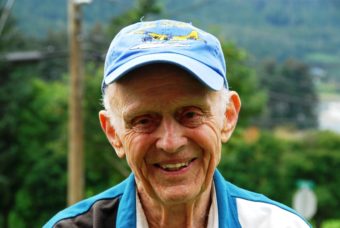
Juneau’s Dean Williams always had a ready smile. He passed away on Dec. 18, 2012 at age 95.

Lifelong Juneau resident Dean Williams has died.  He was 95.

Williams passed away Tuesday in a Reno, Nevada hospital.  He had been in Nevada visiting his daughter for the Christmas holidays.

Most days, Williams could be seen in downtown Juneau on his daily walk.  He worked out at the gym several times a week and when the weather was too bad to be outdoors, he walked laps, lifted weights, and did sit-ups in his living room, says his son, Gordy Williams.

Williams’ father, Jay, was in the U.S. Forest Service, and Dean grew up in the outdoors and the backcountry, hiking, hunting, fishing, mountain climbing and skiing in Southeast Alaska.

So Dad had that ethic and he certainly passed that on to us, both my sister and I were on skis before we knew how to walk. You know, he had pictures of us and him out holding us up on the skis, and getting out,” Gordy Williams says.

He attributes his father’s long life and good health to his love of the outdoors and physical activity.

Williams graduated from Juneau High School in 1936. He went to radio operator school in Seattle then enlisted in the U.S. Army Signal Corp.   He served with the Signal Corps in World War Two in Nome and the Aleutians.

During a World War Two symposium at the Alaska State Museum in October, Williams talked briefly about the war years.

On Pearl Harbor Day, December 7, 1941, he was teaching skiing.  He recalled heading back to Juneau from Douglas Island with three students, including a young Japanese-American woman, who not long after that day, was sent to an internment camp.

“We loaded the skis and we  started across the Douglas Bridge, and there was an Empire boy  there, yelling at the top of his voice , ‘Japanese bombing Pearl Harbor,’ and he didn’t have to say much more than than to know our lives were going to be changed completely,”  Williams recalled.

Williams’ skiing ability was put to good use when he was inducted into the Army in Haines then posted out at Adak and Attu as part of the original military Alaska Communications System.

“The general of the infantry heard that I was a ski instructor, and he said, ‘Sergeant, we’re going to need you to come out to the ski area and give instruction every chance you get.’ So they’d send a command car to get me.  I was riding out there first class,” Williams said.

He said many of  soldiers from the Deep South he taught turned out to be good skiers, but they were initially baffled by the snow, which they had never seen before.

In 1943, Williams married Edna Almquist.  They were together for 72 years, before she died last year at the age of 90.

For most of his professional life, he worked in aviation, first with Pan American World Airways then other airlines, until he started his own to serve smaller Southeast Alaska communities, which “sort of  morfed” into Wings of Alaska, says Gordy Williams.

“When Alaska Coastal got bought by Alaska Airlines and stopped service in Southeast, then he and two partners started Southeast Skyways out of the downtown Seadrome,” he says.

Dean Williams also started the first flight seeing tours over the Juneau Ice field.

Beating the odds, serving the community

In 1954, Williams was struck by polio and told he would never walk again.  But he beat the odds against the disease and returned to all the things he loved to do, adding tennis. He had more time for the sport in his senior years and earned a national ranking for each age group between 60 and 90.  He was inducted into the U.S. Tennis Association’s Pacific Northwest Tennis Hall of Fame in 2003, at the age of 86.  The tennis court at Cope Park is named after Dean Williams.

Over the years, he was a member of Juneau Parks and Recreation, and Docks and Harbors committees, the Juneau Chamber of Commerce and Juneau Rotary, even once named Rotary Man of the Year.

Dean and Edna Williams were Grand Marshals in 2006 for the Juneau Fourth of July parade.  In 2008, the University of Alaska Southeast gave the couple a Meritorious Service award for their years of service to Juneau.

Gordy Williams says his father’s love and respect for Southeast Alaska and its people were most important to him, and he advocated a healthy balance between development and small town values and lifestyle.

Williams Mountain, near Taku Inlet, is named for Dean’s father, Jay, who spent his life out and about in the forests and mountains of Southeast Alaska.

“He wanted to see if he could get a mountain named after his dad, and it was especially nice because they could see it from their home,” Gordy Williams says. 

Gordy and his dad have climbed Williams Mountain.

“We’re going to spread some of his ashes on that mountain this spring or summer,” he says. “We’re going to go up and put him up on his family mountain.”

A celebration of Dean Williams’ life will be held at a later date.

Alaska capitol and church bells toll on behalf of Sandy Hook

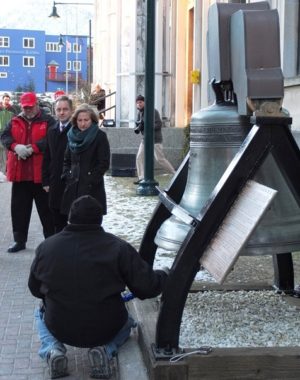
Paul Duran rings the Liberty Bell replica at the Alaska State Capitol in memory of the 26 children and adults who died Dec. 14 in a Connecticut school shooting. Gov. Sean Parnell, First Lady Sandy Parnell, and Juneau Mayor Merrill Sanford look on. Photo by Randy Burton.

Bells across Alaska rang at 9:30 Friday morning in memory of the 26 victims who were shot to death one week ago at an elementary school in Connecticut.

The state capitol building bell was struck 26 times, and as it faded church bells throughout Juneau could be heard.

Gov.  Sean Parnell ordered the bell to be rung, as part of a  “Day of Mourning” declared by Connecticut Gov. Dan Malloy, who called upon all Americans to observe a moment of silence at 9:30 local time while bells tolled.

Twenty children, all six and seven years old, and six faculty members died at the hands of a gunman on December 14 at Sandy Hook Elementary School in Newtown, Connecticut. The gunman also took his mother’s life.  Her body was found at home.

State capitol custodial supervisor Paul David Duran rang the capitol building bell. It was a cold job, with temperatures in the low teens and howling winds.

“Very proud to do it. I have a two, a four and a six year old.  I can only hope nothing like that would ever happen,” Duran said.

Gov. Parnell and First Lady Sandy Parnell were among the few dozen people who congregated for the capitol ceremony.

Alaska’s capitol building bell is a full-scale replica of the original Liberty Bell and was given to the Alaska territory by the U.S. Treasury Department in 1950. It is rung at the governor’s discretion.


Community vigil for hope and healing

A Night of Hope and Healing

“A Night of Hope and Healing”  is scheduled Wednesday evening in Juneau.

The community gathering is sponsored by the National Alliance on Mental Illness. Community services coordinator Lindsay Kato says a recent boating tragedy that claimed the life of two brothers, the accidental death of the survivor, and other incidents in Juneau prompted discussion of a community gathering even before the Sandy Hook Elementary School shooting in Connecticut.

“We had talked about it a little before the shooting, but after the shooting it was really apparent that people want and need some place to come together and support each other in hope and healing,” she says.

She stresses community connectedness, and says towns generally come together – but in different ways – after tragedy.  She calls the event a safe and healthy way to connect with others.

“I guess in my head it’s hug your neighbor.”

Kato says it is not a religious event, though various church and Alaska Native leaders will participate.

“The fact that we’ve got all of these people from different sides of the community coming together is the message of support we’re wanting to send,” she says. 

Kato says parents should bring their children, who often portray hopefulness in times of tragedy and grief.

“A lot of times with children around they bring this sense of innocence and hopefulness that’s really encouraging. And to have them there I think it would be very important,” she says. “And I wouldn’t expect people to come without their families, because family support is a big deal in you hope and healing.” 

A Night of Hope and Healing is from 6 to 8 p.m. at Northern Light United Church, at 400 West 11th Street.

Site notifications
Update notification options
Subscribe to notifications