Nation & World

Misinformation is derailing renewable energy projects across the United States

""
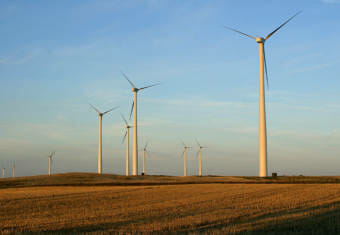
A windfarm near Velva, N.D. The 213-foot wind towers are owned by Global Renewable Energy Partners and Acciona Energia and purchased by Xcel Energy, which distributes the wind-generated electric power to its North Dakota customers. (Photo by Karen Bleier/AFP via Getty Images)

On a winter night in early 2016, Jeremy Kitson gathered in his buddy’s large shed with some neighbors to plan their fight against a proposed wind farm in rural Van Wert County, Ohio. The project would be about a mile from his home.

From the beginning, Kitson — who teaches physics and chemistry at the local high school — knew he didn’t want the turbines anywhere near him. He had heard from folks who lived near another wind project about 10 miles away that the turbines were noisy and that they couldn’t sleep.

“There were so many people saying that it’s horrible, you do not want to live under these things,'” Kitson says.

He and his neighbors went on the offensive. “I was just like, there’s got to be a way to beat ’em,” he says of the developer, Apex Clean Energy. “You got to outsmart them. You got to figure out the science. You got to figure out the economic arguments. You got to figure out what they’re going to say and figure out how to counter it.”

At the shed, according to Kitson, they agreed that part of their outreach would involve posting information on a Facebook community page called “Citizens for Clear Skies,” which ultimately grew to more than 770 followers.

In between posts selling anti-wind yard signs and posts about public meetings opposing local wind projects, there were posts that spread false, misleading and questionable information about wind energy. Links to stories about wind turbine noise causing birth defects in Portuguese horses. Posts about the health effects of low frequency infrasound, also called wind turbine syndrome. Posts about wind energy not actually reducing carbon dioxide emissions. Photos of wind turbines breaking, burning and falling — some in nearby counties and states, but some in Germany and New Zealand. According to 2014 data from the Department of Energy, the most recent available, out of the then-40,000 turbines in the U.S., there had been fewer than 40 incidents.

Kitson, the administrator of the Facebook page, says he knows that these accidents aren’t typical. “Those events are not likely. We know that,” Kitson says. But Kitson has seen a broken piece of a fallen turbine blade himself, which got him worrying about how the fiberglass might affect the integrity of the soil and the crops. So he posts the photos and articles, many of which he receives from an anti-wind email list. “I do that just to try to show people what’s possible.”

Kitson’s group is one of dozens in the United States and abroad that oppose utility-scale wind and solar projects. Researchers say that in many groups, misinformation is raising doubts about renewable energy and slowing or derailing projects.
The opposition comes at a time when climate scientists say the world must shift quickly away from fossil fuels to avoid the worst impacts of climate change. But 60% of U.S. electricity still comes from carbon-based fuels.

For the Biden administration to hit its target of an electricity sector free of fossil fuels by 2035, the country has to double or triple the wind and solar power capacity it installs over the next few years and maintain that higher level of deployments for about a decade, says Kelly Speakes-Backman, who leads the Energy Department’s Office of Energy Efficiency and Renewable Energy.

Yet every single rural utility-scale wind and solar project needs local or state approval to get built, says Sarah Mills, who researches rural renewable energy at the University of Michigan. And she says it’s in those often-fractious discussions about approval that misinformation is sometimes halting and stalling the installation of the renewables the climate needs. “At the end of the day, if local governments are not setting rules that allow for the infrastructure to be sited, those policies cannot be achieved,” Mills says.

Misinformation gets mixed up in decisions over renewable projects

Last year, a Department of Energy study found that setback regulations now represent the single-greatest barrier to securing locations for wind projects in the U.S. Setbacks limit how close wind projects can be to buildings, and Mills says they often make sense to reduce things such as noise and “shadow flicker,” the moving shadows and strobing sunlight that turbines can cast onto buildings. But she says misinformation can fuel setbacks that are more stringent than needed and sometimes act as outright bans on renewable energy.

In Ohio, setbacks and other rules associated with renewable projects have historically been set at the state level. But in October, a new law, SB 52, went into effect giving counties the ability to make exclusion zones with no utility-scale wind and solar projects.

Kitson, the science teacher, testified in support of the zones, arguing that turbines negatively affect property values. He pointed to his group’s analysis comparing the lower property values in the one local township that has wind turbines to the higher average property values in the greater county.

But Ben Hoen, a researcher at the Lawrence Berkeley National Laboratory, says his more than 15 years of research has shown that wind turbines have little to no impact on nearby property values. Hoen says, “We have not found evidence of property value impacts despite studying it over multiple periods of time.”

Hoen does say that studies in the Netherlands and United Kingdom have found some effects on property values, but they were far smaller than Kitson’s reference to studies showing a 20%-40% depreciation.

In about half of states, regulations around how and whether to build rural utility-scale solar and wind are determined on the local level, Mills says. “These local officials are not necessarily experts in energy,” she says. “And so when you have people coming and stating things as facts, especially if there’s nobody fact-checking everything, right, it’s difficult. They’re certainly making decisions based on what they’re hearing.”

Facebook groups spread misleading content

In recent years, some of the misinformation about renewable energy has come from former President Donald Trump, who frequently makes misleading and false anti-wind claims at his rallies and media appearances, including the untrue idea that wind turbine noise causes cancer. Earlier this month, when asked about the unfolding Ukraine crisis on a podcast, Trump immediately responded by listing untrue ideas about wind energy.

Other misleading ideas about renewable energy come from groups with ties to the fossil fuel industry, like the Texas Public Policy Foundation. The foundation recently released a film trailer for an anti-offshore wind group in Massachusetts that features multiple falsehoods, including the untrue statement that the proposed project didn’t do any environmental impact assessments and the incorrect idea that offshore wind projects “haven’t worked anywhere in the world.” The Texas Public Policy Foundation did not respond to a request for comment.

But Facebook is one of the biggest drivers of misleading content about renewable energy, says Josh Fergen, a researcher at the University of Minnesota Duluth. Last fall, Fergen and his colleagues published a paper looking at the Facebook posts of Kitson’s group and another large wind opposition group, about 90 kilometers east, fighting the Republic Wind Farm.

Fergen’s paper concluded that posts in the two Facebook pages were “increasing perceptions of human health and public safety risks related to wind by sharing news of disasters and misinformation over health assessment risks.” In June, the Ohio Power Siting Board, whose approval was needed for the site, rejected the Republic Wind Farm proposal citing geological concerns and the local opposition.

NPR reviewed dozens of posts from anti-wind and anti-solar groups. While some posts about climate change denial, lithium mining, and a quote misattributed to Winston Churchill were marked as inaccurate, there were dozens of posts with misleading information about renewable energy that were not tagged.

NPR sent Facebook a sampling of the posts from anti-renewable community pages. Facebook spokesman Kevin McAlister said in an emailed statement, “We take action against content that our fact-checking partners rate false as part of our comprehensive strategy to keep viral, provably false claims from spreading on our apps. The examples shared with us don’t appear to meet that threshold as they have only even been shared a handful of times over a period of several years.”

But Fergen says that these same types of misleading and false posts about wind and solar energy pop up in a network of Facebook groups around the country, feeding a conflict between rural communities and energy developers.

Leah Stokes, an associate professor of political science at the University of California, Santa Barbara, says as resistance to wind and solar projects spreads on social media, the dangers of misinformation from these anti-renewable Facebook groups is growing.

It can really slow down the clean energy transition, and that has just as dire life and death consequences, not just in terms of climate change, but also in terms of air pollution, which overwhelmingly hits communities of color.”

‘It’s about who you trust’

Speakes-Backman says the Department of Energy is trying to do more outreach to local communities about inaccurate ideas surrounding utility-scale solar and wind, especially around land use and environmental effects. “We want to make sure that we are counteracting the misinformation that may be out there,” she says.

But Dahvi Wilson, vice president of public affairs for Apex Clean Energy, says her company is finding that across the country, local engagement is becoming increasingly difficult given community suspicions of renewable energy.

“I think for a long time, and maybe still in some places, developers thought, ‘Well, we just need to give better information. We just need to give more information.’ And it’s like, ‘it’s so not about that at all!'” Wilson says. “It’s about who you trust and if anybody’s going to believe you if you’re a company.”

Hoen of the Lawrence Berkeley National Laboratory says the perception of the community engagement process regarding renewables has real implications — even on human health. He gives the example of shadow flicker, the moving shadows from turbines, which opposition groups often cite when critiquing wind. A few states and several counties have regulations limiting shadow flicker on habited structures, commonly to about 30 hours per year, but most do not, and wind opposition groups argue that the strobing shadows can cause agitation, headaches, or even seizures in some individuals.

Hoen says to date they have not found any evidence of shadow flicker causing seizures, but they have found its relation to annoyance and stress. So Hoen’s group did a study asking: “As the number of shadow flicker hours decrease, is there less annoyance? Are people less bothered by it?”

“What we found, interestingly, is that the individuals that were annoyed by shadow flicker did not necessarily have a higher level of shadow flicker at their home than those that weren’t annoyed,” Hoen says. “And, in fact, what led to that annoyance, it appears, is their perception of the planning process, how they felt like that development got rolled out in their community.”

Given the importance of community engagement in the process of locating wind and solar, Mills says renewable proponents need to be careful that they aren’t romanticizing the projects or providing misleading information themselves, for example, by saying that a wind or solar plant will bring lots of jobs to an area.

“There are a lot of jobs in renewable energy. Many, many of the jobs in renewable energy are in construction trades. And so once the project is built, there’s not tons of jobs associated with the project,” Mills says. “I think in all of this, it’s important to not sugarcoat.”

Anti-renewable groups have internal disputes over use of misinformation

In the last few months, more states — Washington, Iowa and Kansas — have proposed bills to restrict rural utility-scale wind and solar. In Kansas, these bills were proposed by state Sen. Mike Thompson, who also introduced a bill to shut down existing renewable projects.

Thompson, a former meteorologist, is a longtime critic of renewable energy. One of his anti-wind videos even popped up on Kitson’s anti-wind Facebook group.

In one video on the anti-solar group’s YouTube channel, Thompson calls climate change “one of the biggest scams out there” and says “carbon dioxide has no correlation with the temperature on this planet whatsoever.” That statement is false: The vast majority of scientists agree that the climate crisis stems from greenhouse gas emissions generated by human activity. Thompson did not respond to requests for comment.

YouTube spokesperson Elena Hernandez said in an emailed statement, “In general, we don’t recommend or prominently surface content that includes climate change misinformation. Our systems are trained to raise videos from authoritative sources, like news outlets and experts, in search results for certain queries related to climate change and renewable energy.”

Barbara Kerr is a professor of psychology at the University of Kansas and she’s a founding member of that anti-solar group in Kansas, which opposes NextEra Energy’s proposed utility-scale solar plant in Douglas and Johnson counties. Kerr says she knows the videos that have been featured by the group she co-founded have misinformation.

“Just horrible,” Kerr says of the videos. “They are just counterfactual and not something we should have on the website.”

But despite Kerr’s objections, her group decided in January to keep the videos online. “It is important to not judge, and censor utility-scale solar content/opinions contributed by citizens. If we become judge and jury, we are headed down the wrong path,” the group said in an emailed statement.

Kerr says that while she disagrees with the misinformation used by some in her group, she says the anti-solar coalition makes for “strange bedfellows.” “Sometimes you have to compromise,” she says. “I don’t want to alienate these people. They go to the meetings in Douglas County and Johnson County.”

But Dan Reuman, professor of ecology and evolutionary biology at the University of Kansas, says he worries about the role misinformation could play in the decision-making over the solar project, which he supports. He says that while he is sympathetic to those in his county who don’t want to live near a large-scale solar plant, he also thinks their concerns need to be weighed against the need to mitigate climate change.

“I just find it upsetting,” Reuman says. “I hope that the government doesn’t make a compromise between a scientifically based position and a misinformation-based position. Because if you’re compromising with misinformation, then there’s sort of no limit to that, right?”

Editor’s note: Facebook’s parent company, Meta, pays NPR to license NPR content.

Copyright 2022 NPR. To see more, visit https://www.npr.org.

The FDA is expected to authorize 2nd boosters for people 50 and up

""
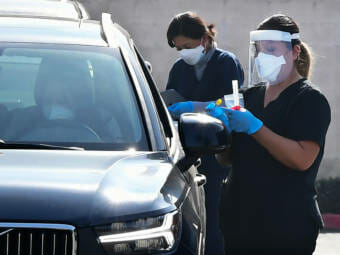
The Biden administration wants people 50 and over to have the option of getting an additional booster shot. (Photo by Frederic J. Brown/AFP via Getty Images)

Anyone 50 years and older could soon be eligible for a second booster dose of the Moderna or Pfizer-BioNtech COVID-19 vaccine. The Food and Drug Administration is expected to authorize the additional booster shots without holding a meeting of its independent vaccine advisors.
The plan comes as evidence increases that protection from three shots is fading and a fourth shot would help boost immunity back up. And as BA.2, an even more contagious version of the omicron variant, continues to spread in the U.S., concern is mounting it could fuel another surge.

“We have a large number of people who are at least four to six months past their third shot,” says Dr. Eric Topol, founder and director of the Scripps Research Translational Institute, who supports the move.

“Without protection against the omicron variant, particularly now we’re confronting BA.2, there’s a very high risk of hospitalization and death,” he says.

But others question the plan. The vaccines are still doing a good job of protecting people from getting seriously ill. Critics say there just isn’t enough evidence yet that another shot is needed and that it would provide stronger protection that would last.

“From a scientific perspective, we still don’t have definitive evidence that giving a second booster dose is the right way to go in older people,” says Dr. Celine Gounder, an infectious disease specialist and a senior fellow and editor at Kaiser Health News.

She says data out of Israel shows an additional booster dose does reduce the risk of severe disease, hospitalization and death for people over the age of 60. But she points out it’s unclear how long that extra protection actually lasts.

“I don’t think it hurts,” Dr. Carlos del Rio, an infectious disease researcher at Emory University told NPR. “But the reality is the benefit against infection will be short lived and thus likely of little benefit for most people over 50.” He also cites the Israeli data showing benefits for those 60 and older.

Administration officials say it’s important to give people the option of a second booster as quickly as possible. The plan to offer it to people younger than 60 was made to ensure that more vulnerable people, particularly people of color who are more likely to suffer other health problems that put them at risk, also have the option of an additional booster.

But other infectious disease specialists say the administration should be focusing on getting people their primary doses and first boosters.

“What concerns me is that we are not investing in increasing the coverage of booster doses and even the primary doses,” says Dr. Saad Omer, the director of the Yale Institute for Global Health. “These are the things that are not receiving enough attention.”

Unlike previous authorizations, the FDA is not expected to make the 2nd booster a recommendation for everyone, but rather an option for those who want it.

Copyright 2022 NPR. To see more, visit https://www.npr.org.

US airline CEOs call on President Biden to end the federal mask mandate on planes

Masked people in an airport terminal
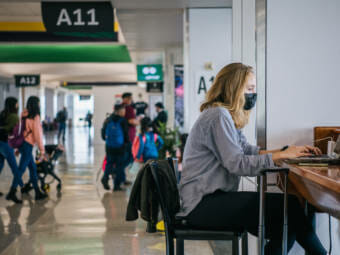
The CEOs of the major U.S. airlines have called on President Biden to end the federal mask mandate for public transportation. Here, a traveler works on a laptop computer at George Bush Intercontinental Airport in Houston on Dec. 3. (Photo by Brandon Bell/Getty Images)

A group of CEOs from all major airlines in the U.S. is calling on President Biden to drop the federal transportation mask mandate along with the international pre-departure COVID-19 testing requirement.

In an open letter released by the travel-industry lobbying group Airlines for America, the group is calling on the Biden administration to “sunset federal transportation travel restrictions.” The group argues that the restrictions no longer reflect the “realities of the current epidemiological environment.”

The letter was signed by the leaders of 10 U.S. companies, including six of the largest airlines in the country: Alaska Airlines, American, Delta, JetBlue, Southwest and United.
“It makes no sense that people are still required to wear masks on airplanes, yet are allowed to congregate in crowded restaurants, schools and at sporting events without masks, despite none of these venues having the protective air filtration system that aircraft do,” the letter said.

The group argues that the increase in vaccinations nationwide and the lifting of restrictions in other countries are reasons the Biden administration should reconsider its COVID policies for travelers.

“We are encouraged by the current data and the lifting of COVID-19 restrictions from coast to coast, which indicate it is past time to eliminate COVID-era transportation policies,” the group said.

The CEOs emphasized that, while they’ve supported and cooperated with the federal government’s COVID policies, including masking and pre-departure testing, enforcing those rules has fallen to airline employees for the past two years.

“This is not a function they are trained to perform and subjects them to daily challenges by frustrated customers. This, in turn, takes a toll on their own well-being,” according to Airlines for America.

So far, the White House has not yet commented on the group’s request.

The mandate for mask use on public transportation and in transportation hubs had been set to expire on March 18, but earlier this month the Transportation Security Administration extended the policy through April 18.

Copyright 2022 NPR. To see more, visit https://www.npr.org.

Evidence grows that vaccines lower the risk of getting long COVID

""
Reseach is showing that people who are vaccinated, even with just one dose, tend to have lower rates of long COVID after catching the virus than those who are unvaccinated. (Photo by Justin Sullivan/Getty Images)

The chance of even a mild case of COVID-19 turning into a long-term, debilitating medical condition is one of the greatest fears of Americans trying to navigate the pandemic, which is again taking a turn as new data show the BA.2 subvariant is taking hold in the U.S.

Unfortunately, the only sure way to avoid long COVID is not to catch the virus in the first place.

But there is now a growing body of research that’s offering at least some reassurance for those who do end up getting infected — being fully vaccinated seems to substantially cut the risk of later developing the persistent symptoms that characterize long COVID.

While many of the findings are still preliminary, the handful of studies that have emerged in the past half year are telling a relatively consistent story.
“It may not eradicate the symptoms of long COVID, but the protective effect seems to be very strong,” says epidemiology professor Michael Edelstein, of Bar-Ilan University in Israel, who’s studying long COVID.

Edelstein’s study was one of those included in a recent analysis of the evidence on long COVID and vaccination done by the UK Health Security Agency. That review found vaccinated people tend to have lower rates of long COVID after an infection than those who are unvaccinated.

There’s a running list of theories about why people get long COVID. Permanent tissue damage from the infection, injury to blood vessels and the development of microclots, a lingering viral reservoir in parts of the body, or an autoimmune condition are some of the ideas being explored in the research.

But even without a clear sense of what’s exactly driving long COVID, there’s good reason to believe that vaccines would help guard against the condition, says Dr. Steven Deeks, a professor of medicine at the University of California, San Francisco.

There’s overwhelming evidence that someone who’s vaccinated has less virus in their body during an infection, he says, “so it would make great sense that the amount of virus-related complications over time would also be lower.”

Looks good… but how good?

One of the ongoing challenges with long COVID research is simply defining the condition — with each study taking slightly different approaches as to what symptoms count and how long they need to last after the initial infection.

This inconsistency makes it hard to pull together a single estimate for how much vaccines limit long COVID.

Generally, though, Deeks says vaccinated people seem to have a 50% lower average risk of developing long COVID than unvaccinated people. This is in the range of what multiple studies in the U.K., Israel and the U.S. have found.

Ideally, long COVID should not be measured only a few months after the initial infection, he says. “A lot of people are still slowly getting better, so you have to wait at least four months to sort of figure out whether or not these symptoms will persist.”

The Israeli study, conducted by Edelstein and his colleagues, followed several thousand people who were unvaccinated, partially vaccinated and fully vaccinated. Those who tested positive were asked to self-report their symptoms between four and eight months after their initial infection.

Participants who had two or three doses of the vaccines were about 50% to 80% less likely to report seven of the 10 most common symptoms, which include shortness of breath, headache, weakness and muscle pain.

Edelstein says these results are not necessarily surprising, because they’re compatible with other recent studies. “It gives us a little bit of reassurance that if you’re vaccinated, you reduce your chances of long COVID quite substantially.”

Indeed, some researchers have found similar results by combing through electronic records from health care providers in the U.S. That massive study concluded that patients who had at least one vaccine dose were seven to 10 times less likely to report two or more long COVID symptoms compared to unvaccinated people between 12 and 20 weeks after their infection.

However, the evidence isn’t entirely conclusive. Some studies have not found as big a reduction. For example, the preliminary findings of a major study of electronic health records of U.S. veterans analyzed the medical problems affecting different organ systems at six months following coronavirus infection.

Being fully vaccinated did not appear to make a very meaningful difference for many of the post-infection complications, except in two particular areas, says the study’s author Dr. Ziyad Al-Aly, director of clinical epidemiology at the Veterans Affairs St. Louis Health Care System.

People are having less lingering manifestations in the lungs and also less blood clotting,” he says.

The study also found that those who were hospitalized for COVID-19 had a higher risk of long COVID symptoms compared with those who had a mild illness, but that vaccines continued to make a big difference in reducing the risk of long COVID.

“The vaccines are supposed to protect you from being hospitalized,” says Al-Aly. “But even if they fail and you get breakthrough COVID and now you’re hospitalized, you still do better than someone who got COVID and was never vaccinated.”

Conflicting results in the studies may, in part, be due to how they’re conducted, such as differences in the methods of measuring long COVID, how symptoms are reported and the patient population being studied.

A good shield — but not perfect

Despite the promising evidence, long COVID researchers caution that vaccines can only do so much, and that invariably some people will still suffer symptoms even if they are vaccinated.

In fact, a recent study from the U.K. found that vaccines led to a significantly lower risk of long COVID compared with those who are unvaccinated, but that still close to 10% of the fully vaccinated participants showed symptoms of long COVID three months later.

David Putrino cares for long COVID patients who fit this very profile at the Mount Sinai Health System in New York City.

“I don’t think in good faith I would be able to distinguish between someone who has a breakthrough case of long COVID versus a pre-vaccine case of long COVID,” says Putrino, director of rehabilitation innovation at Mount Sinai. “The symptoms are very consistent.”

And there’s now another unresolved question facing researchers: How well do vaccines hold up against long COVID after an omicron infection?

Because omicron only emerged at the end of last year, there aren’t yet data on how many people have long COVID from the new variant, but Deeks says there are already some people who seem to be heading in that direction. “Without question, there are clearly people — I’m hoping not a lot — who got COVID a few months ago and are feeling ill today,” he says.

Based on what’s known about the variant, no one really knows for sure whether people who get omicron could be more, or less, prone to getting long COVID.

On the one hand, omicron is adept at evading the immune defenses put up by the vaccines, so it’s possible that “we might end up with more long COVID,” Deeks says.

Alternatively, the variant leads to a more localized infection and doesn’t spread throughout the body as much, which means there could actually be fewer instances of long COVID.

Deeks is leaning towards the more optimistic scenario. “That’s my prediction, but it’s just a prediction.”

Copyright 2022 NPR. To see more, visit https://www.npr.org.

This school wasn’t built for the new climate reality. Yours may not be either

A man stands in a large room with a water-damaged floor
On Sept. 1, 2021, 7 inches of rain from the remains of Hurricane Ida hammered down on Cresskill Middle/High School in Bergen County, N.J. Superintendent Michael Burke walks through what’s left of the media center. (Photo by Mohamed Sadek for NPR)

This story first appeared in NPR’s education newsletter. Sign up to get early access to exclusive stories like this.

No one was expecting more than a few flooded cars in the parking lot.

It was Sept. 1, 2021, the second-to-last day of summer band camp at Cresskill Middle/High School in Bergen County, N.J.

After a year and a half of remote and hybrid learning, the school’s 1,000-odd students were about to head triumphantly back to school in person.

To celebrate, band director Joe Verderese created a set list for the fall marching band with the theme of “overcoming,” with songs like “Don’t Stop (Thinking About Tomorrow),” “Lean On Me” and “I’m Still Standing.”

As practice was ending, Verderese heard a huge crack of thunder. “The custodian yelled to me down the hall, ‘Joe, did you hear that?’ And I was like, ‘We gotta get out of here.'”

Seven inches of rain from the remains of Hurricane Ida hammered down in just a couple of hours. The water poured through the school’s vents — vents set just a few inches above the ground. It turned the auditorium into “an aquarium,” says math teacher Michael Mirkovic. It flooded classrooms, the office, the boiler room.

A small stream running near a school
Tenakill Brook is one of the creeks that surround Cresskill on three sides. During the storm, the creeks overflowed, sending water in the school’s direction.
(Photo by Mohamed Sadek for NPR)

Giuseppe Martino, the custodian who had called out to Verderese, ended up trapped in the gym overnight by rising water.

Now, about seven months later, this school – a modest one-story rectangle built in 1962 – is still sitting unusable by students. Repairs have barely begun.

“What the inspectors have told me is, ‘Mike, you don’t have a school. This is now a building,'” says Superintendent Michael Burke.

Many schools weren’t built for our new climate reality

Almost 1 in 5 U.S. students attended schools in districts that were affected by federally declared natural disasters from 2017 through 2019. That’s according to the latest available analysis from the U.S. Government Accountability Office.

Hurricanes in Florida and Texas, wildfires in California and Colorado, floods in North Carolina and Arizona. Across the country, climate change has been driving more severe weather.

As a result, weather and climate disasters are becoming ever more common and more expensive, with 2021 setting a record that was beaten only by 2020, according to the National Oceanic and Atmospheric Administration.

The most common, and the most costly, of these disasters are floods. The cost to communities has increased by about $100 billion each decade since the 1980s, according to researcher Laura Lightbody, who authored a national report on flooding and schools for the Pew Charitable Trusts.

And that reality is slamming into another reality: aging school buildings that were designed and built in a time of less intense weather.

Cresskill is a notably affluent school district, where only 1% of the students receive free or reduced-price school meals. A district like this is struggling to fix a single, 60-year-old building — and lower-income communities are even worse off.

What it takes to rebuild one flooded school

After he learned the extent of the flood damage, Mirkovic, the math teacher, recalls the pang of realizing that all his supplies were ruined, including the new TI-86 graphing calculator he had left in his desk. “I’m like ‘Oh, man, my stash! Why did I leave it in the bottom drawer?’ ”

Inspectors estimated the projected cost to repair the school building and replace what was destroyed — from Bunsen burners to sousaphones — was $21.6 million. That’s more than two-thirds of the district’s entire annual budget, most of which was already committed to things like salaries, Burke says. The district had purchased private flood insurance five years before, but because the school was located in a flood zone, the insurer limited their potential payout to $2 million. That barely covered the initial cleanup and assessment.

Families move to Cresskill for the schools. It’s got a small-town feel. Many students used to walk to school; juniors and seniors would go to Ray’s Pizza off Piermont Road for lunch.

When the reality of the damage set in, Cresskill parents — an exceptionally educated, resourceful group — banded together to lobby everyone they could think of for help.

“We met in the basement of one of the parents’ homes,” recalls Stephanie Cropper, the mother of an eighth grader. “And we just started to say, ‘What can we do?…We can either kick and scream and cry, you know, ‘boo hoo,’ or we can really get our local politicians engaged and figure out what we need to do to help.”

The Board of Education hired a private recovery consultant. “We contacted everyone in the state of New Jersey, from the county, to state officials, the governor,” says Superintendent Michael Burke.

Of course, they weren’t the only people needing recovery help. Of the 91 people Ida killed across the country, 32 were in New Jersey, showing just how dangerous flooding can be. By January 2022, the Federal Emergency Management Agency, or FEMA, had provided more than $711.7 million to help the state recover from the storm. But none of it had gone to Cresskill.

Three people stand in a boiler room
Cresskill Superintendent Michael Burke (right) and administrator Dawn Delasandro (left) show FEMA specialist Paully Onyirimba around the damaged boiler room. (Photo by Mohamed Sadek for NPR)

To rebuild, Burke’s district would first have to pay for the repairs, and then be reimbursed up to 75% of costs by FEMA.

But his district was prohibited by a state statute from borrowing any money without approval by voters. They couldn’t even sign a purchasing order for new boilers to replace those damaged from the flood.

Ultimately, it came down to one problem: No one at any level of government was writing them a check.

“If you don’t have the money, you can’t spend it,” Burke says. “No one is going to do this kind of work without a guarantee for payment.”

The flood damage forced a return to remote learning

With no usable building, the fall 2021 school year started remotely. No one knew for how long, and students struggled with the indefinite return to Zoom.

Mirkovic works with special education students. He says they were supposed to keep their cameras on during class, but they would disengage by slowly tilting up their laptop screens, until all he could see was the ceiling fans – the digital-era version of slouching in your seat.

Starting In November, Cresskill was able to borrow space for classes at a local church, but it was small. Grades took turns; students could only go in person one or two days a week. Band practice was mostly on Zoom. Students played along to Verderese’s recordings. They stayed on mute, so he couldn’t hear how they sounded.

George Koprowski had been looking forward to coming back to Cresskill in person for ninth grade. As a member of the color guard, he was at band camp the day of the storm. The next day, he saw the photo everyone was sending around social media: water filling the auditorium, covering the seats.

“I just like, couldn’t believe it,” he says.

“Seeing that — that really left me in shock. I couldn’t believe that would happen to our school.”

“It was very disappointing,” adds Tiko Tvauri, a sophomore, who plays volleyball. Ida flooded her own basement.

“We were all eager to go back, and seeing everyone else around us go back to neighboring schools, it was disheartening.”

Some students transferred to nearby private schools, but those schools quickly grew waiting lists. Tvauri and Koprowski decided to stay, to be with their friends.

Parent Stephanie Cropper tears up when asked how her daughter’s been doing. “I think all of them have had a hard time with relationships.”

With no one else to turn to, Cropper and her fellow parents realized that their only help would have to come from the local community itself. On Jan. 25 the borough of Cresskill, population just over 9,000, voted in a referendum to approve a $21.6 million bond to rebuild the school and replace what was lost. It was the only way to get around the state statute and raise the money up front.

Once the money is spent on repairs, the district expects FEMA to reimburse 75% of the cost, and the state of New Jersey to cover another chunk. So the ultimate estimated price tag will be just $83 a year for the median homeowner in the borough of Cresskill. The intention is to have the school building ready for fall 2022.

What it looks like to plan for future disasters

Laura Lightbody, the Pew researcher, says nothing about Cresskill’s saga to rebuild is surprising to her. She says this is a national pattern: Schools often sit awaiting repairs for months or even years after disasters.

“I can think of West Virginia, for example, where schools are still working on rebuilding and repair following 2016 floods.”

Or take Louisiana, where Calcasieu Parish schools suffered an estimated $400 million in hurricane damage to its buildings from Hurricanes Laura and Delta in 2020. In contrast to affluent Cresskill, about half of Calcasieu’s students come from low-income families. A year after the storms, the district had received only $116,000 in FEMA relief; classes were being held in buildings with bare concrete floors and roof leaks.

And an even more pressing issue is that simply rebuilding and repair aren’t good enough. Because this is unlikely to be the last storm or flood in Northern New Jersey – and certainly not in the nation.

“Climate change being what it is, and the way the current weather patterns are, you know, this most likely will happen again,” says Cropper, who went door-to-door to lobby her neighbors to vote for the money to fix Cresskill.

She says a lot of the people who voted against the referendum cited, “the fact that they didn’t want to see, you know, money go into the school repairs for it to just flood again” without upgrades to make it more secure.

A FEMA spokesperson told NPR that preparing for the next disaster is part of their mission. One of their specialists will be working with Cresskill’s engineers “to determine the best feasible solutions to mitigate the source of the flooding, and not just repair back to pre-disaster conditions.”

An empty classroom with a damaged floor and all of the furniture removed
A Cresskill classroom sits awaiting repair. The day after the storm, Superintendent Burke surveyed the damage: The auditorium, classrooms, office and boiler room had all been flooded. The school’s custodian, Giuseppe Martino, was trapped in the gym overnight because it was the only room above water. (Photo by Mohamed Sadek for NPR)

In particular, FEMA mentioned elevating the boilers.

The U.S. Army Corps of Engineers also came out to take a look in December 2021, to see if they might help protect this school from the creeks that surround it on three sides. To keep water away from buildings, the Corps does things like build levees, restore wetlands to improve drainage, and dredge creeks to prevent backups.

A spokesperson told NPR they are still early in the process, “exploring” a “potential study” to reduce flood risk in the area.

But that’s all long term. Superintendent Burke wants to open his school next fall. He says the most obvious flood prevention move for the school building itself — raising the vents the water came in through — would both cost too much and take too long.

“That would add at least another eight months to a year to the project, as per architects. We can’t wait that long … If we weren’t coming off of COVID, it would be a different perspective. But we are. The kids have not been in this building on a regular basis since March of 2020. That’s a problem. That’s the issue.”

The front of a high school
School leaders are aiming to have Cresskill Middle/High School repaired and ready to open by fall 2022. (Photo by Mohamed Sadek for NPR)

The current solution they are eyeing? Getting flood guards — essentially caps for the vents. When heavy rain is in the forecast, Burke says, they’ll have to close school early to put the caps on. It’s a literal stopgap.

The show must go on

In February, just as the repair funds were starting to come through, Cresskill finally found a more suitable temporary home – the educational campus of nearby Chodae Community Church.

All the grades can now meet in person, at least three days a week.

It wasn’t perfect, but Joe Verderese was thrilled to have the band practicing all in person again. It was crunch time for the spring musical, Seussical. Tiko Tvauri played a bird. George Koprowski was the Grinch.

NPR is committed to reporting on issues that matter to you and your community. Sign up for the education newsletter to stay up to date and get early access.

Copyright 2022 NPR. To see more, visit https://www.npr.org.

The U.S. tried permanent daylight saving time in the 1970s — then quickly rejected it

A hand holding a smartphone
The U.S. Senate advanced a bill on March 15 that would bring an end to the twice-yearly changing of clocks in favor of a “new, permanent standard time” that would mean brighter winter evenings. (Photo by Chris Delmas/AFP via Getty Images)

The Senate gave itself a pat on the back earlier this week when senators voted without objection to make daylight saving time permanent.

“The good news is if we can get this passed, we don’t have to keep doing this stupidity anymore,” said Sen. Marco Rubio, R-Fla., of his legislation to end the need to annually change the clocks in March and November.

However, America tried this before — and the country hated it. In the early 1970s, America was facing an energy crisis so the government tried an experiment. Congress passed a law to make daylight saving time permanent year round, but just for two years. The thinking was more sunlight in the evening would reduce the nation’s energy consumption.

It didn’t work, said David Prerau, one of the nation’s foremost experts on the issue.

“It became very unpopular very quickly,” he told NPR.

Americans do not like changing their clocks, but they disliked even more going to work and school in the dark for months — the price the nation had to pay for more sunlight in winter evenings.

It also didn’t reduce energy consumption as intended. In 1974, Congress repealed the law — before the two-year experiment was even up. Nearly 50 years later, Congress is back at it.

“Today the Senate has finally delivered on something Americans all over the country want: to never have to change their clocks again,” enthused Sen. Patty Murray, D-Wash., on the Senate floor.

“We know that daylight saving time helps to turn the corners of people’s mouth upwards, into a smile!” said Sen. Edward Markey, D-Mass.

Advocates for permanent daylight saving time include Steve Calandrillo, a professor at the University of Washington law school. He testified before a recent House subcommittee that it would do everything from save lives to reduce crime, conserve energy, improve health and boost the economy. His motto: “Darkness kills, sunshine saves.”

Dr. Beth Malow, a neurologist at Vanderbilt University Medical Center, also testified. She agreed that it would be healthier for Americans to stop changing their clocks, but she thinks permanent standard time is a better choice.

“It’s called standard time because ST lines up with our natural, biological rhythms,” she said. Permanent standard time with sunnier mornings and darker evenings would be healthier, especially for front-line workers and school students with early waking hours.

The best answer, according to Prerau, is to do nothing at all. The current system that begin in 2007 of starting daylight saving time in March and ending it in November, is the product of decades of study and compromise.

“I personally think the current system that we have, with some flaws, is the best system we could have,” he said.

The House has no immediate plans to take up the Senate-passed bill, but there is bipartisan support for it. The Biden administration hasn’t taken a position on it yet. “I don’t have a specific position from the administration at this point in time,” White House spokeswoman Jen Psaki told reporters.

The history lesson here for Congress: Be careful what you vote for.

Copyright 2022 NPR. To see more, visit https://www.npr.org.

Site notifications
Update notification options
Subscribe to notifications