Science & Tech

UAS scientists unveil new data about Juneau’s glacial outburst flood

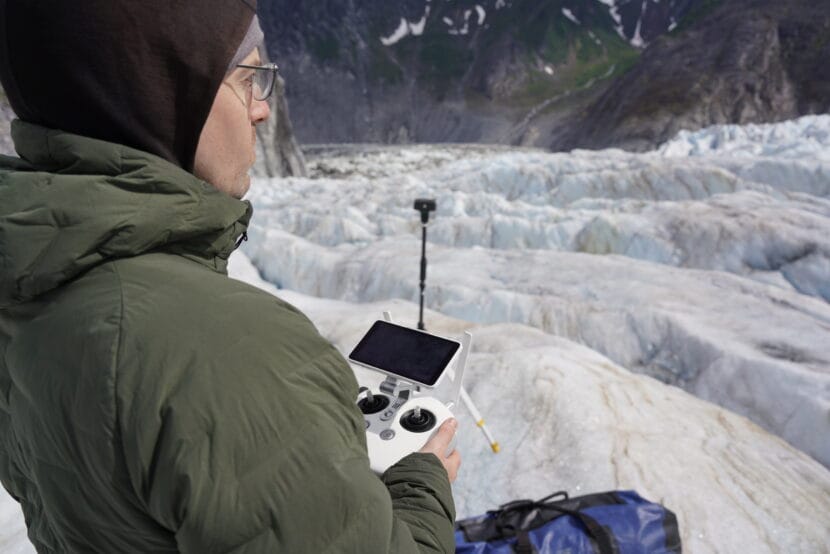
David Polashenski flies a drone over Suicide Basin on July 5, 2025. (Photo by Alix Soliman/KTOO)

Listen to this story:

Mendenhall Glacier is melting in ways that affect the size of glacial outburst floods in Juneau’s Mendenhall Valley. In a crowded lecture hall at Egan Library on Friday, scientists presented new preliminary data on how the ice contributed to this summer’s record-breaking flood, and shared their ideas about how that could change in the future. 

Juneau’s glacial outburst flood in August broke more than one record. Eran Hood is an environmental scientist at the University of Alaska Southeast. He said the Mendenhall River rose quicker than ever this year. 

“It was a fast release — the fastest release we’ve seen in terms of just the rate at which the amount of water in the river was increasing hour over hour,” Hood said. 

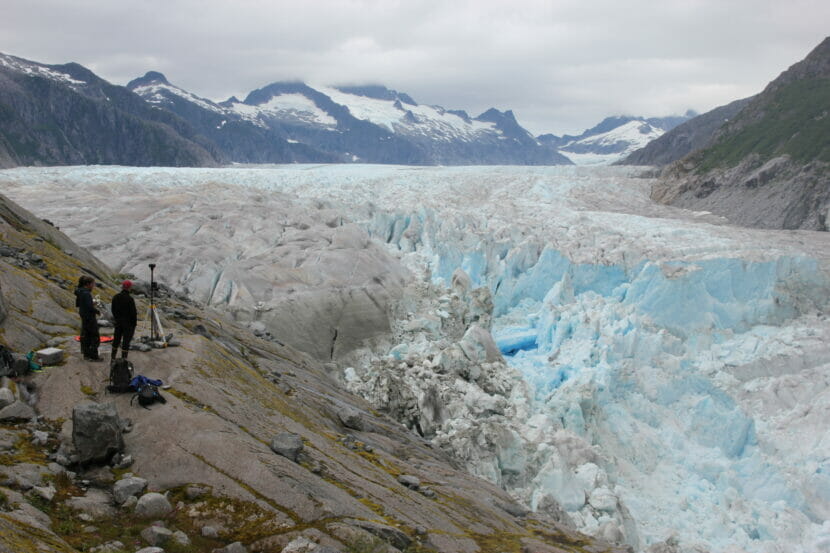
There was also more water than in years past, both from heavy rain in the days leading up to the flood and because the capacity of Suicide Basin — the source of Juneau’s outburst flood — has grown. The basin is an immense pool that formed when Suicide Glacier receded. Steep rock faces make up all but one of its walls. Billions of gallons of water are held back by one wall that’s an ever-changing ice dam formed by Mendenhall Glacier.

The outburst flood happens when rain and meltwater rise to the top of the ice dam and pressure builds up enough for the water to tunnel through the glacier and drain out of the basin all at once, sending a torrent through Mendenhall Valley.

The flood has been growing, but the researchers say it will reach a peak one day and then start getting smaller. Hood said they aren’t sure when exactly the basin will deliver its largest flood. 

“Hopefully we’re up near the top of the curve,” he said. “We don’t know yet.”

Jason Amundson, a glaciologist at UAS, said calculating the shifting volume of Suicide Basin is key to understanding how the melting glacier influences the size of the flood.

“I would say at this point, we have a really good grasp of the basin volume and how it’s changing over time,” he said.

The researchers flew drones over the basin that captured thousands of high-resolution photos. Stitched together, the images help the team measure how much water it can hold. 
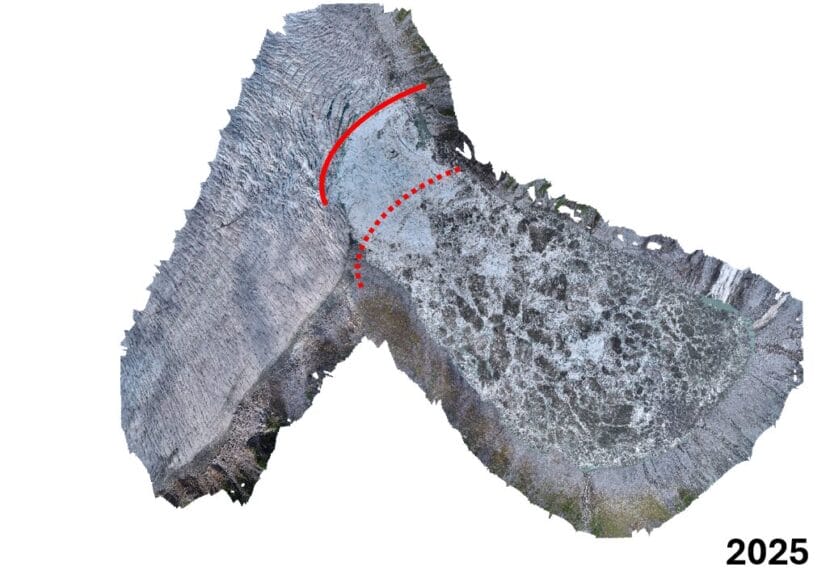
An image of Suicide Basin created by about 2,300 drone photos stitched together. The dotted red line is an estimate of where the ice dam was in 2018 and the solid red line shows where it is in 2025. (Image courtesy of UAS)

In the presentation on Friday, Amundson broke down the math he did to calculate the change in water capacity over the past five years. He presented the volume in acre-feet — for reference, one acre-foot is equal to a football field covered in a foot of water. 

First, Suicide Basin is expanding into the side of the glacier. That means it’s getting wider. Amundson said the basin cut into the glacier by roughly 100 meters, adding about 6,400 acre-feet of storage capacity. But he said this is the hardest variable to follow because the ice is constantly moving. It calves and stretches, repeatedly pressing into the basin and retreating. 

Second, the researchers reported that Mendenhall Glacier has thinned somewhere between 15 and 20 meters due to climate change. That means the basin’s ice dam is getting shorter. Amundson said this has reduced water capacity by roughly 8,500 acre-feet. 

Third, icebergs in Suicide Basin are melting rapidly. That adds water capacity, because floating ice displaces water. Amundson said iceberg loss has added about 12,000 acre-feet of storage to the basin. 

Altogether, Suicide Basin can now hold about 9,900 acre-feet or 3.2 billion gallons more water than it could in 2020. The numbers presented are still rough estimates based on preliminary data that hasn’t been finalized yet.

“In the last five years, the storage capacity has increased by something like 20% — little bit scary to think about it continuing to increase … 10,000 acre feet every five years,” Amundson said. “But I think the thing that should give you at least a little bit of comfort is that there’s not a lot of floating ice left in the basin.”

He said melting icebergs added the most water capacity, but now there’s only about 6,000 acre-feet left to melt. 
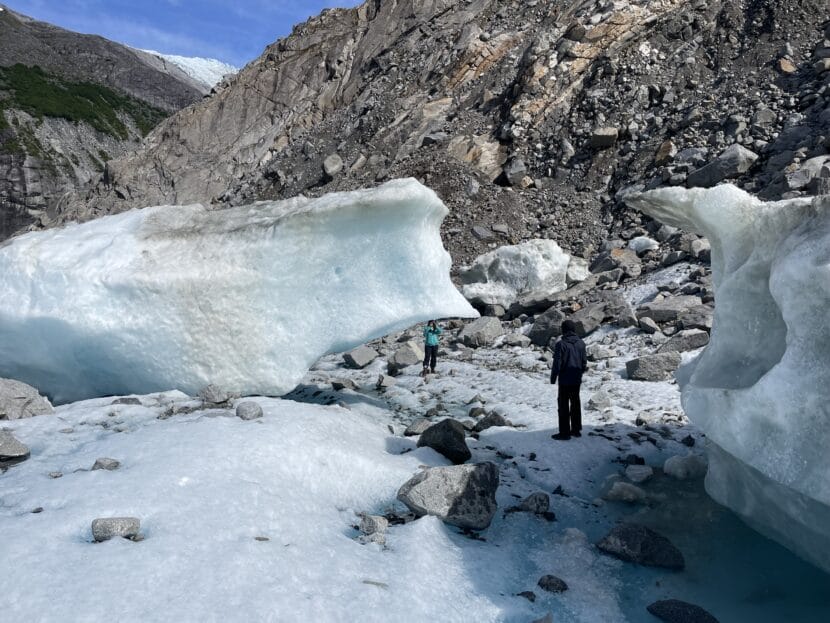
Floodwater carried icebergs and dropped them in the spillway next to Suicide Basin after the water drained out on August 13, 2025. (Photo courtesy of Eran Hood)

The theory is that the largest outburst flood should happen when there are no icebergs left in the basin. So Hood said this could be good news.  

“Theoretically, that’s kind of a good sign that we could be nearing the peak,” Hood said.

But he said reality is never as clean as theory. The changing ice dam, high tide or an atmospheric river could make the Valley’s largest flood come sometime before or after all of the icebergs melt. 

The research team is also using ice-penetrating radar that hangs from a helicopter, pings down to the bedrock and produces maps of the glacier’s underside. Those maps will help them measure how thick the ice is, predict the lifespan of the floods from Suicide Basin and investigate other potential basins that might release floods down the line. 

Amundson said that at first glance, the next potential basin further up the glacier, which is still covered in ice, doesn’t seem deep enough to create a big outburst flood.

“I’m a little bit skeptical that it could be a big basin,” he said. “We’re not sure yet, because we haven’t fully processed the data.”

He said more potential basins will be analyzed over the next few months.

Learn more about Juneau’s glacial outburst flood by visiting our ktoo.org/flood and listening to the Outburst podcast.
Alaska education department publishes guidelines on developing AI policies in schools

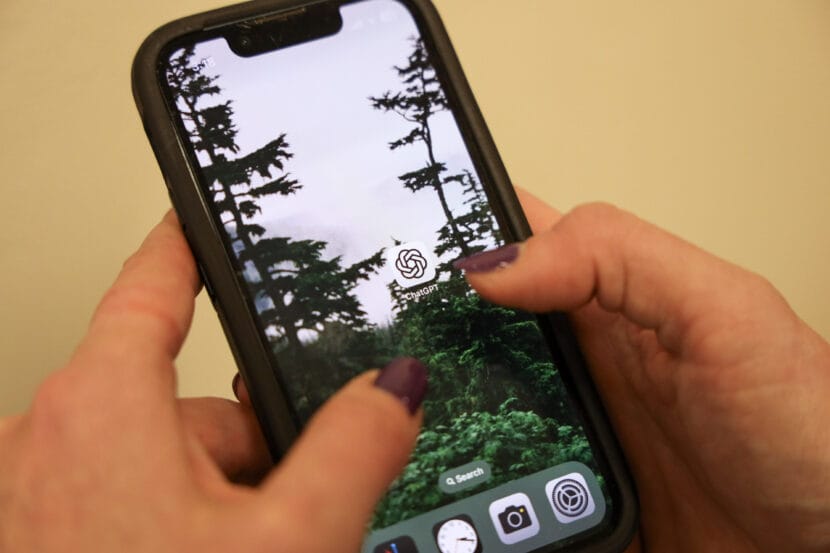
Two hands with dark purple nail polish hover over the app icon for ChatGPT on an iPhone.
Alaska Department of Education and Early Development guidelines suggest developing ways to responsibly use generative artificial intelligence, which includes software like ChatGPT. (Photo by Clarise Larson/KTOO)

Alaska has joined more than half of the country in creating artificial intelligence guidance for education as it becomes a larger part of the school day.

The Alaska Department of Education and Early Development presented a set of guidelines on using AI in school districts last week. It includes recommendations and considerations on topics like cultural responsiveness and security when making AI policies.

DEED Computer Science Content Specialist Anthony White was part of an advisory group that drafted the state’s guidelines. He said at a State Board of Education meeting last Thursday the guidelines do more than just advise school districts on AI policy.

“It positions Alaska to be highly competitive for federal AI education grants and other funding opportunities by demonstrating a clear, unified-level strategy,” White said.

He said the guidelines will prepare students and teachers for a world increasingly driven by AI. A nationwide survey of teachers and sixth to twelfth graders from the Center for Democracy and Technology found that a majority of them used AI during last school year.

The guidelines recommend moving beyond bans. Instead, they suggest developing ways to responsibly use generative AI, which includes software like ChatGPT that relies on large language models to create content. A disclaimer in the document states it was written with help from generative AI to “model responsible and ethical engagement with AI technologies.” 

Board Member Kim Bergey said she is concerned about risks to data security. She wants to make sure more people know how to be safe when using AI.

I think we need to take a really in depth look at the personally identifiable information aspect of AI, and not just from the aspect of students, but also from that of parents and for staff that work within districts,” she said.

Bergey said young students may not know how to avoid giving out personal information when using AI. The new guidelines recommend teaching users not to share personal information in order to protect data security.

Districts in Alaska currently have guidelines that range from school level rules that mention AI to a district-wide policy in Fairbanks. The Juneau School District has no district-wide AI policy, but the Juneau-Douglas High School: Yadaa.at Kalé student handbook includes AI in its academic dishonesty policy.

The document is currently available on DEED’s computer science webpage.

Alaska’s Climate Adaptation Science Center will stay open amid closures elsewhere

The Mendenhall Glacier dams water in Suicide Basin. As the glacier calves, it could be creating more storage space for water. That could cause bigger glacial outburst floods in the future. (Photo by Anna Canny/KTOO)

The Alaska Climate Adaptation Science Center, or AK CASC, is so far spared from closures coming to a third of such climate science centers across the country, as first reported by The Washington Post

In other regions of the U.S., some centers are expected to run out of money soon because the federal government has stalled funding and essential agreements with universities that the U.S. Geological Survey needs to manage the centers.

But Alaska’s center is safe for now.

Kristin Timm, AK CASC’s university co-director at the University of Alaska Fairbanks, said the center’s funding through next summer has already been disbursed. 

“But of course, we’re worried about how long our funding will continue to last,” she said.

The center’s budget is roughly $2.2 million dollars per year. AK CASC signed an agreement with the University of Alaska in 2023 that maintains their partnership through July of 2028, which should ensure the center’s existence until then.

Timm said that about 25 university employees receive a significant portion of their salary through the CASC.

But she said that two grants through the USGS are on hold. One would have funded communications interns and the other would have funded a study on how climate change could affect a caribou herd that’s important to subsistence hunters. 

She said the center does projects that Alaskan communities and decision makers have asked for. 

“If we don’t get funded, you know, one of the major projects that would really affect Alaskans is the work around the glacier outburst flood and Suicide Basin,” Timm said.

The center funded the interactive website that helped inform Juneau’s Mendenhall Valley residents about the threat to their homes during August’s flood. The center has also funded research around improving wildfire forecasts and how climate change is affecting salmon in the Yukon River Basin.

Study at Juneau’s only oyster farm lays out challenges and opportunities for growing oysters in Southeast

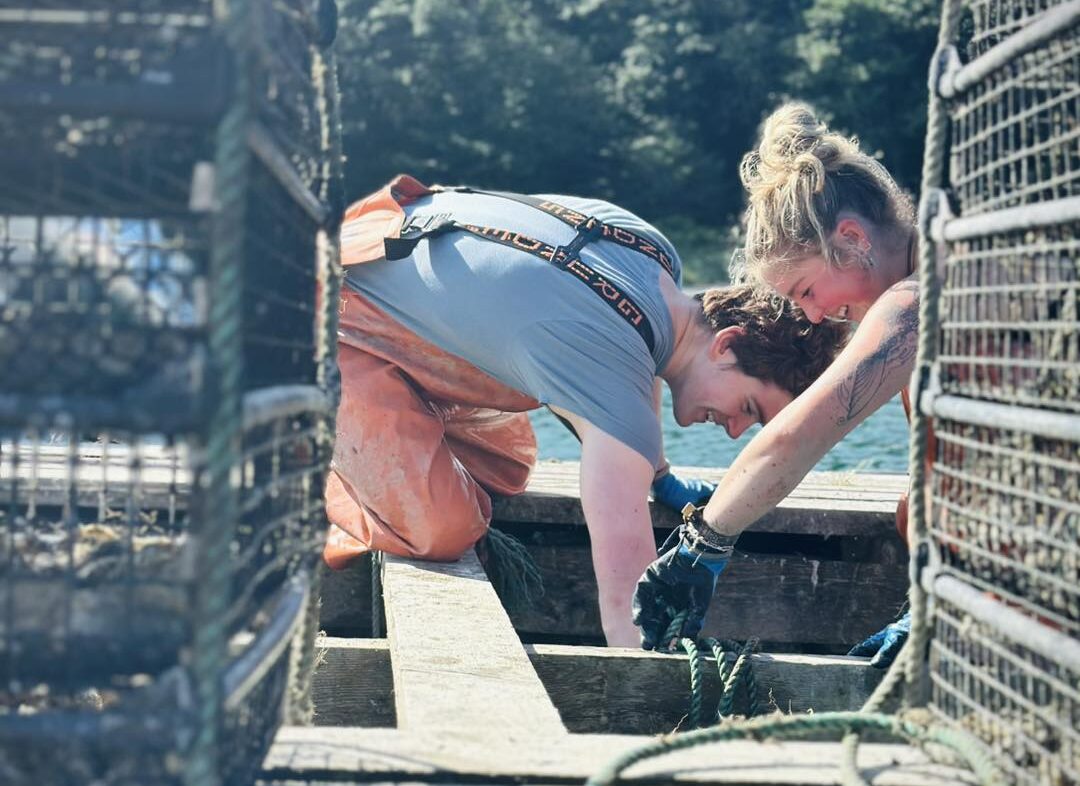
Salty Lady Seafood Co. staff pull up oysters in Bridget Cove. (Photo courtesy of Meta Mesdag)

Listen to this story:

In Bridget Cove, Meta Mesdag grows thousands of oysters arranged in rows of floating mesh bags. She owns Salty Lady Seafood Co., the only Pacific oyster farm in Juneau.

Some years, naturally occurring toxic algal blooms have shut down her farm for weeks at a time. That motivated Mesdag to ask researchers: Can she predict when it will happen? 

“It’s such a mystery,” she said. 

On Mondays, Mesdag takes samples of her oysters and sends them to the state lab in Anchorage to test for toxic algae called Alexandrium catenella. The algae produce a neurotoxin that builds up in shellfish when they eat it. Just one milligram can kill a person. Testing is federally regulated

If the test comes back clean, she harvests. But if the oysters test over the FDA limit for the toxin, the farm shuts down.

In 2023, Mesdag said she had to shut down for half of her 20-week harvest season. 

“When you’re not making any money, but you’re spending money on labor, that can be really expensive and hard,” she said.

Since the farm couldn’t sell oysters at the time, she said she lost clients and had to lay people off. Once a closure is in place, the farm has to pass a series of tests to reopen. 

“We just have to wait, and we don’t know how long it takes,” she said. 

That loss of sales isn’t great for business.

The federal government is invested in boosting mariculture in Alaska’s waters, and there are still questions about how the environment here affects the health and quality of oysters. The state is invested in those questions too – about a decade ago it set a goal to grow Alaska’s mariculture into a $100 million industry by 2040, with 40% of that revenue coming from oysters. 

Researchers studied Mesdag’s oyster farm between 2021 and 2023 to understand the environmental conditions there and what it might say about the challenges and opportunities for growing shellfish in Southeast Alaska. So far, 20 oyster farms have permits in the region.

The study had a humble start. Mesdag’s question about harmful algal blooms landed on Courtney Hart’s desk when she was studying paralytic shellfish poisoning as a graduate student at the University of Alaska Southeast. Now she’s a crustacean shellfish program manager with the Port Gamble S’Klallam Tribe in Washington. 

“The first year, I was just trying to figure out if there was an easy way to monitor for Alexandrium or harmful algal blooms on her farm so I could help warn her essentially when a bloom was coming,” Hart said. 

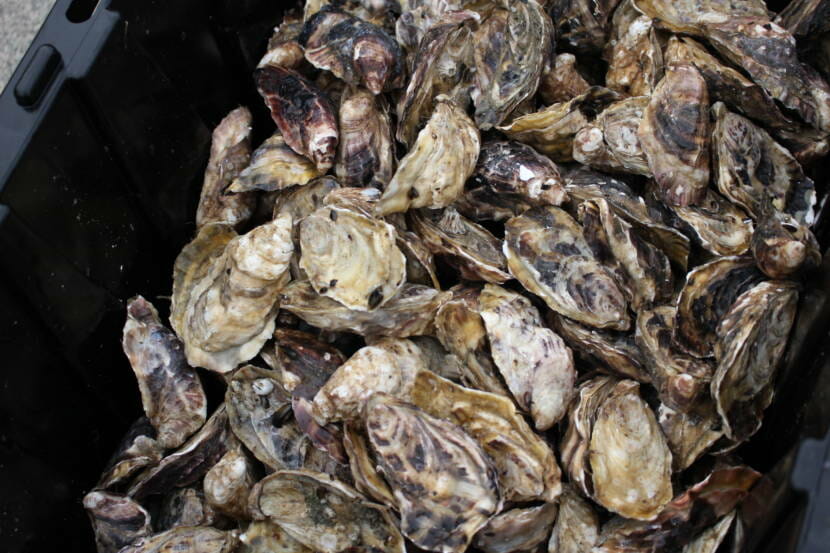
Salty Lady Seafood Company oysters. (Photo by Elizabeth Jenkins/Alaska’s Energy Desk)

But she hit a dead end.

“We didn’t really solve that problem,” she said. 

Sometimes the researchers would detect the toxic algae in the water and not see it in the oysters. Other times they’d see it in the oysters but not the water. Hart said the problem is not unique to Alaska — harmful algal blooms are notoriously unpredictable.

“Whether that bloom becomes toxic for shellfish really depends on so many factors that scientists have been studying for a long time and haven’t quite pinned down,” she said. 

But Hart said the study morphed when NOAA researchers joined. They wanted to answer a bigger question: What environmental conditions impact the overall health and quality of oysters in Southeast Alaska?

The scientists found that the spring phytoplankton bloom provides oysters a feast for only a short period, and they practically starve over the winter. 

“Often it may mean that it takes three years for your oysters to reach the right size, versus just two years, which is more typical down here in Washington,” Hart said.

The research team also looked at salinity. In the summer, during the primary harvest season, freshwater flows into the cove from melting snow and ice, making Mesdag’s farm less salty. Calm seas can prevent the freshwater from mixing into the saltwater below. 

When that happens, Mesdag said she can taste the difference — sometimes her oysters aren’t briny at all. 

But there are benefits too. The consistently cold water prevents oysters from spawning, so they retain high levels of lipids — healthy fats that make for a high-quality oyster. 

“As far as health of an oyster for humans, it’s good,” Hart said. 

While environmental conditions play an important role in how the industry develops, Bobbi Hudson said reaching the market is key. 

Hudson is the executive director of the Pacific Shellfish Institute. She splits her time between Washington state and Gustavus and is working with Southeast Conference, the region’s economic development agency, on an upcoming report about investments in the mariculture industry. 

“Alaska can have tremendous goals, but at the end of the day, if there’s not a market for those products, or a really strong market for those products, they’re not going to be able to reach those goals,” she said. 

She said that scaling up production, setting up cold chain distribution networks and making paralytic shellfish toxin testing more efficient could help Alaska’s shellfish farms grow. 

Anchorage police adopt AI to analyze investigative data

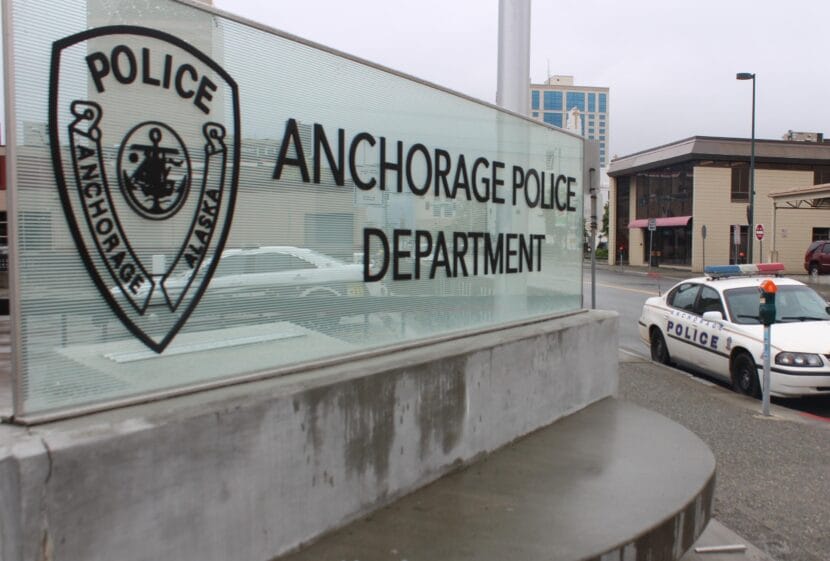
Anchorage Police Department downtown headquarters on June 9, 2020 (Lex Treinen/Alaska Public Media)

The Anchorage Police Department is now using artificial intelligence software to better review investigative data. It’s the first time APD has adopted AI for department use.

Police Chief Sean Case told Assembly members Tuesday night that the department has been testing a software called Closure for four months. He said the program is able to analyze large amounts of data.

“There’s some cases where you have detectives listening to over 1,000 hours of jail call data to try to find a word, a phrase, a name, a threat, things like that,” Case said. “And so when we tested the software, one of the things that we primarily used it for was throwing in jail call data.”

Case said the department had previously tested a different AI software for writing reports, but officials decided not to adopt it.

Case said the city’s municipal attorney and prosecutors have reviewed the software, and determined it would not negatively impact the prosecution of cases.

The Assembly unanimously approved a five-year contract with Closure for $375,000 at its meeting Tuesday.

14 Alaska state lawmakers ask Congress to oppose cuts to science agencies

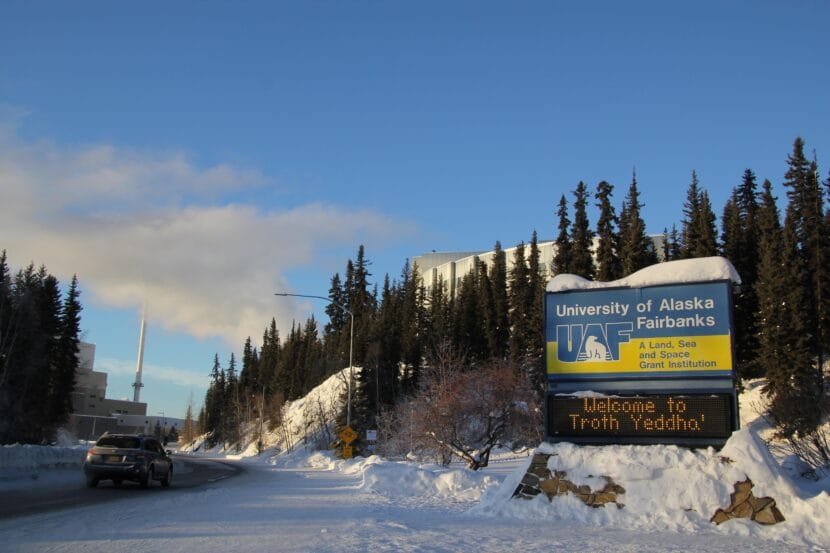
A winding road leading up to a large building with a large smokestack. A sign that says "University of alaska Fairbanks" is in the foreground with "Welcome to Troth Teddha'" on a light-up sign. The scene is snowy with spruce trees on a hillside
The entrance to UAF in Feb. 2022. (Lex Treinen/Alaska Public Media)

Democrats and independents in the Alaska State Legislature are urging Congress to preserve federal funding for science and research. In a letter sent Friday, 14 lawmakers urged the state’s all-Republican congressional delegation to oppose cuts that President Donald Trump proposed in his 2026 budget.

“The University of Alaska – and especially the University of Alaska Fairbanks – conducts world-class arctic research that helps to lead the world in solving practical challenges that face the Arctic and beyond,” the lawmakers wrote.

Fairbanks Democratic Rep. Ashley Carrick wrote the letter asking the delegation to resist cuts to NASA, the National Science Foundation and the National Oceanic and Atmospheric Administration. Her district includes the main campus of the University of Alaska Fairbanks, and she said in an interview that cuts to federal funding would undermine research on everything from Arctic health to drones.

“These research dollars don’t just impact the studies that are currently ongoing, but they also impact all of the real-life applications of research that’s happening in Alaska, across the Arctic and around the country,” Carrick said.

Trump’s budget would slash funding for basic scientific research by roughly a third, according to the American Association for the Advancement of Science, an advocacy group. Wide-ranging layoffs and grant cancellations have already caused chaos for researchers who rely on federal support.

But a president’s budget is just a proposal. Congress decides what to spend money on when it passes appropriations bills.

The House and Senate have yet to agree on a spending bill that would fund agencies like NASA and NOAA for the next year, but the appropriations committees have shown little appetite for the deep cuts to scientific agencies Trump has proposed.

A spokesperson for one appropriations committee member, Sen. Lisa Murkowski, said she has long supported the University of Alaska’s partnerships with federal agencies.

“Senator Murkowski has long championed the partnership between the University of Alaska and federal agencies that bring jobs, students, and breakthrough research to our state. As a senior appropriator, she voted to advance the FY26 CJS Appropriations Bill — which funds NASA, NOAA, and NSF — through full committee,” spokesperson Joe Plesha said via email. “She hopes the bill will be considered by the full Senate promptly so the University can be assured that the world-class work it does will continue in Alaska.”

A spokesperson said Sen. Dan Sullivan was not available. Rep. Nick Begich III’s office did not respond to a request for comment.

For now, Republicans and Democrats in Congress are at loggerheads over a short-term spending bill to avert an impending government shutdown.

Site notifications
Update notification options
Subscribe to notifications