Alaska Public Media

Alaska Public Media is one of our partner stations in Anchorage. KTOO collaborates with partners across the state to cover important news and to share stories with our audiences.

Parents learning as they go after 4-year-old declares ‘I’m a girl’

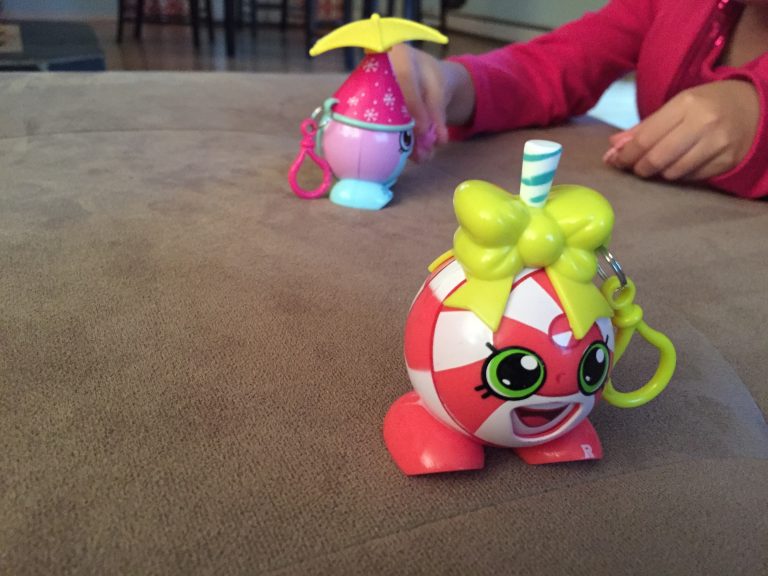
Rusty plays with her Shopkins toys. (Photo by Anne Hillman/Alaska Public Media)

The American Academy of Pediatrics says most kids have a stable sense of gender identity by the time they are 4 years old. Rusty is one of them.

Rusty may have been born a boy, but she knows she is definitely a girl.

The 4-year-old is really focused.

“This is Shopkin,” she says, pulling out tiny, cartoonish plastic models of food and household items that are plastered with giant eyes and goofy smiles. “Shopkin. Shopkin poster, Shopkin oven… .”

She excitedly runs into her room and pulls open a drawer filled with them, extracting one of her newest.

“It’s a bone, and her name is Bone-a,” she says, explaining the small piece of yellow plastic shaped like a dog bone.

Even the pink walls of her bedroom are plastered with Shopkins stickers, though she has Princess stickers up, too. She doesn’t only like Shopkins.

Rusty’s older sister, Lola, 7, says this is a new look for Rusty’s room.

“It’s a pinkalicious! I’ll tell you what it used to be like. His bed used to be like a pirate bed. The curtains used to be blue. And this used to be like a town carpet.”

Rusty says she didn’t like the old room – it didn’t fit who she was. “I didn’t feel comfortable in my bed. That’s how it happened.”
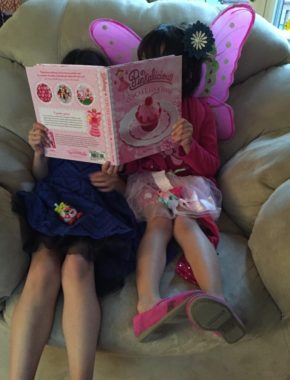
Rusty and Lola read a cupcake cookbook together. (Photo by Anne Hillman/Alaska Public Media.)

Rusty didn’t feel comfortable in boy’s clothes, either.

She started stealing things out of Lola’s closet.

Lola says she was not happy about that because they were her dresses.

As soon as their parents started letting Rusty shop in the girls’ department, and Rusty left Lola’s clothes alone, Lola didn’t care.

“As long as he’s happy, I’ll be happy,” she says as she rifles through his clothes, pointing out which ones used to be her dresses.

That’s Jennifer’s theory, too. She’s the kids’ mom. Jennifer says the first time Rusty told her she was a girl was about a year ago.

“He corrects us if we call him a boy. If I say, ‘You’re my big boy,’ he’s like, ‘Ah, I’m a girl. Thanks.’”

At first Rusty just wanted to play with girls’ toys and dress up for fun. Rusty picked a princess cake and Hello Kitty decorations for her third birthday.

Jennifer says they didn’t think anything of it.

Then Rusty started fighting about clothes in the morning – she only wanted to wear dresses and was stealing from Lola. Eventually Jennifer bought Rusty girl clothing, and the fights stopped. Rusty declared that she is a girl. Jennifer says she and her husband are just going with what seems to be working.

“I don’t know that there should be a handbook, but there should at least be something easier to navigate through all this,” she says, laughing.

Jennifer says she’s learning as she goes. Last week, the day before the interview, Rusty’s pediatrician asked if Rusty preferred “he” or “she”. Rusty picked “she.” Jennifer is still trying to remember to change pronouns. She says it makes her realize she has so many more questions about what to do next.

“Do I have to tell people? Do I have to announce it to people? Do I want to hear what people have to say about that? I just want to be in my bubble. Like I’m not sure what to do with that. I told some of my close friends and they’re just like, ‘OK!’ but then it’s like do I tell the school? Do I tell the daycare? What do you do? I don’t know.”

When she first started posting photos of Rusty dressed as a girl on her Facebook page, she got mixed reactions. She pulls up an image on her phone, Rusty smiling with boyish short hair, a pink t-shirt, and pants plastered with pictures of puppies.

“I put this one on Facebook and I got a lot of feedback like why am I letting him do that and dadada.”

Despite that, Jennifer says she feels like her family is mostly in a safe, protected space. Only one close relative has rejected Rusty for identifying as a girl. But Jennifer worries that it won’t always be this easy. That’s why we’re only using their first names—she knows it’s important to talk about this because other people are experiencing it too, but she wants to protect her children. She thinks Rusty might have the same fears.

“Just before I told you that you could ask him whatever you want, I said, ‘Can Anne ask you about being a girl?’ And he was like, ‘No.’ And I said ‘why?’ And he said, ‘If I tell her, will she leave?’”

Rusty never explained why she said that.

Jennifer wonders what’s next for her child. What will Rusty’s school say when she starts kindergarten? Which bathroom will she use? But ultimately it comes down to just one thing:

“As long as he’s happy – she’s happy. Rusty’s happy. That’s all that matters. And to me Rusty appears to be very happy.”

Rusty runs past her mom, dressed entirely in pink with a tutu and sparkly wings, radiating confidence, and grabs the microphone to continue our first conversation.

“So I have a Shopkins stuffy, and it’s beautiful.”
Doyon’s $2B discount: Fair play or rip off?

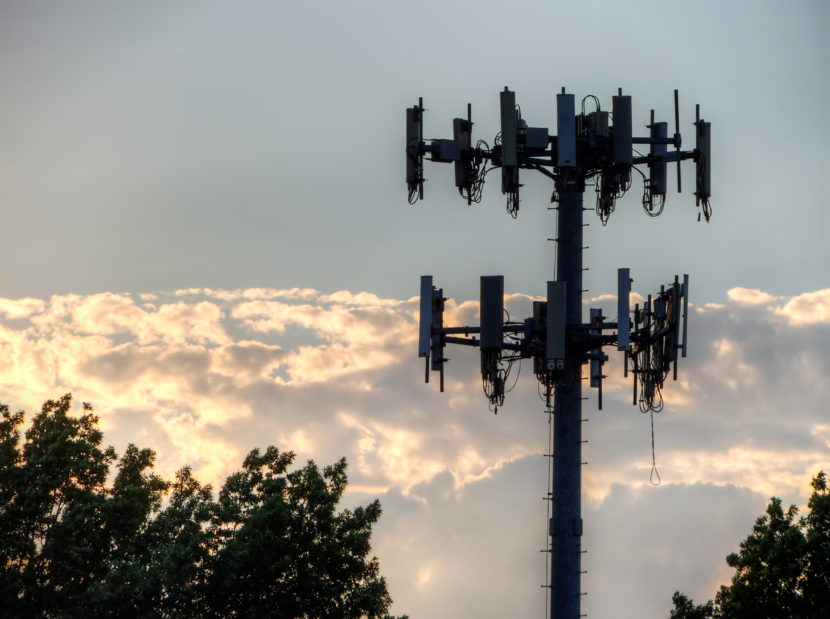
cell phone tower
(Creative Commons photo by Razor512)

Doyon, the Fairbanks and interior Alaska Native regional corporation, was in federal court in Washington, D.C., on Monday trying to keep the discount it was to get almost two years ago, when it bid billions of dollars on a portion of the public airwaves reserved for wireless broadband. The discount is worth nearly $2 billion.

But after the auction concluded in January 2015, the Federal Communications Commission ruled that Doyon’s company, Northstar, wasn’t entitled to the 25 percent discount intended for very small businesses.

“They changed the rules after the fact, and that’s what we were arguing against today,” said Sarah Obed, Doyon’s vice president of external affairs, outside the courthouse.

Doyon, Alaska’s largest private landowner, wouldn’t seem to be a “very small business” but the late Sen. Ted Stevens helped create the airwaves spectrum auction, and thanks to him there’s an exception that allows Alaska Native corporations to qualify as small. But the FCC takes issue with Doyon’s heavyweight partner: Dish Network. Dish owns an 85 percent stake in Northstar. Doyon owns a portion of the remaining 15 percent, but Sarah Obed says Doyon is running the show.

“Dish Network does not manage Northstar Wireless. We do. And so that’s something we’re really proud of,” she said.

The FCC, though, says Dish is more than a passive partner because, among other things, it loaned Northstar most of the nearly $6 billion it bid in the auction. Dish has contracts to build and operate the network. And, according to their business agreement, Northstar and Doyon can’t transfer their rights or raise capital elsewhere without Dish’s consent.

“To be frank, I’m appalled that a corporate giant has attempted to use small business discounts to rip off American taxpayers,” FCC commissioner Ajit Pai said of the Dish-Doyon deal at a Senate hearing last year.

Today’s case was heard by a three-judge panel of the U.S. Court of Appeals for the D.C. Circuit.

Obama: Annual Tribal Nations Conference is permanent institution

Obama at 2016 White House Tribal Conference
President Barack Obama greets audience members after he delivers remarks during the 2016 White House Tribal Nations Conference at the Andrew W. Mellon Auditorium in Washington, D.C., Sept. 26, 2016. (Photo by Pete Souza/The White House)

President Barack Obama addressed his final White House Tribal Nations Conference today. The most famous Yup’ik singer on Facebook, Byron Nicholai of Toksook Bay, welcomed Obama to the stage.

Obama said it was a privilege over his eight years in the White House to spend time with Native people. He said he visited more tribal communities than any other president. He cited a few Alaska examples.

“My staff still talks about all the wonderful people in Kotzebue, Alaska. … They tried to teach them Iñupiaq, and tried to stuff them full of meat at Cariboufest,” he said, tripping over the unfamiliar words.

The crowd didn’t seem to mind.

The Tribal Nations Conference, now in its eighth year, was something Obama started and it set the tone for his White House. The conference brings hundreds of Native leaders to Washington and gives them a chance to meet top officials in federal government. Another way Obama elevated Native issues was by creating the White House Council of Native American Affairs. He describes it as a permanent institution with cabinet-level focus. No matter who wins the White House next, Obama said the young people he’s met give him confidence there’s more progress ahead.

He mentioned the students at a middle school in Dillingham who taught him a traditional Yup’ik dance.

“Show us!” someone shouted.

“Well, I can only do it when they’re around, because I’m basically just watching them,” Obama said. “They were very patient with me.”

The Obama White House also launched an annual conference for Native youth, which begins Tuesday.

Lance Mackey withdraws from 2017 Iditarod

The Iditarod Trail Committee announced Monday that former champion Lance Mackey has withdrawn from the race, citing health reasons.

The committee shared the news through its Facebook page, writing Mackey is on a “journey to improving his health.”

Mackey is a cancer survivor, and has had difficult time in the last two Iditarods, scratching in 2016 midway through the race.

The musher’s four back-to-back wins in both the Iditarod and Yukon Quest make him one of the most elite long distance mushers in the sport’s history.

There are currently 54 mushers signed up for the 2017 Iditarod.

Anchorage expects $24M budget shortfall after drop in state funds

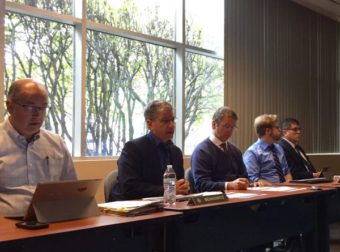
Members of the Berkowitz administration discuss budget shortfalls with members of the Anchorage Assembly at City Hall. (Photo: Zachariah Hughes, Alaska Public Media – Anchorage)

The Municipality of Anchorage is anticipating a budget gap of more than $24 million because of diminishing state funding for programs and services.

The bleak financial outlook for Alaska’s largest city is likely to be replicated in communities all across the state in the months ahead.

Mayor Ethan Berkowitz shared the gloomy forecast with members of the Assembly during a work session on the budget Friday.

He and members of the administration detailed the loss of state dollars leading to an anticipated drop of $24.22 million from last year’s budget.

Berkowitz said the figure represents a shifting of costs off of state government and onto local municipalities.

According to the administration’s figures, the decline is the result of several major changes rooted in state government decisions:

A $5 million dip in the state’s community revenue sharing program; a drop of $2 million in PFD garnishments owing to the governor’s veto of paying the dividend’s full value; $14 million less from the board’s halting of a dividend from the electric utility ML&P; and around $4 million in changes to public safety operations and miscellaneous programs, which covers things like snow removal, the cost of housing prisoners, and paying for law enforcement officers.

As a result of delivering on promises to expand the police department and improve IT systems, the administration is likely facing more budget expenses beyond the figure announced.

However, officials won’t share additional details until the mayor gives a formal budget presentation to the assembly next week.

Berkowitz said after the meeting that his administration is discussing possible revenue sources to close the multi-million dollar budget gap, but declined to provide specific proposals, saying simply that his job is to bring forward a balanced budget, which he plans to do.

APD: Signs of mental decline preceded suspect’s violent standoff

Ginami Street Home police standoff
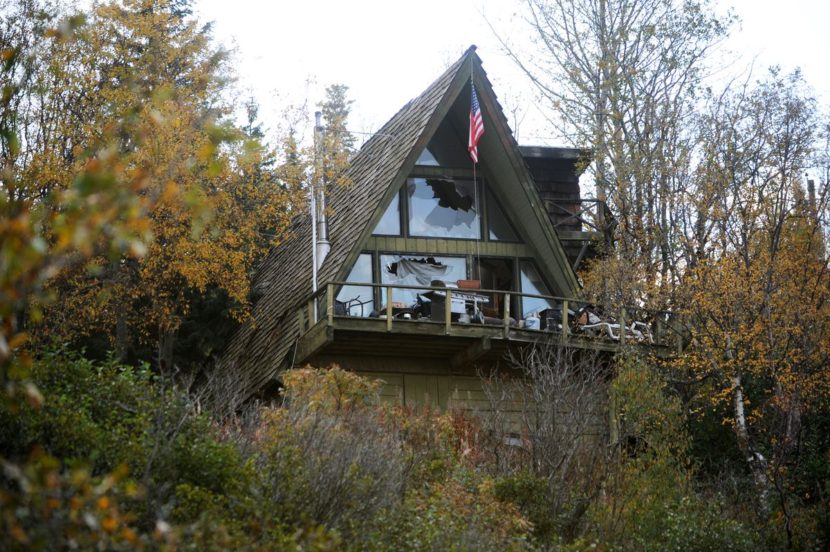
Windows are broken at the home of Robert Musser on Friday morning off Upper Huffman Road on the Anchorage Hillside. Musser was found dead early Friday after keeping police at bay since Wednesday morning. (Photo by Erik Hill/Alaska Dispatch News)

A standoff between a SWAT team and 69-year-old veteran Robert Musser ended with Musser’s death early Friday morning after 42 hours.

Anchorage Police Department Chief Chris Tolley says around 3 a.m. responders discovered Musser’s body in his home. It was almost 15 hours after an exchange of gunfire that left two officers injured.

“It was unknown at the time whether or not Musser was injured in the shooting,” Tolley said.

Throughout Thursday afternoon and into the night, Tolley says there was no sign of Musser from inside his remote Hillside home. But Tolley declined to say whether he was killed by a bullet, saying the body has been sent to a state examiner to officially determine a cause of death.

Details from police suggest Musser was in a state of mental decline. In the last few months, Tolley says APD had made four welfare checks to the residence on the advice of concerned neighbors.

“Each time officers attempted to contact Musser he would yell through his window that he was fine, alive, and would demand our officers to leave,” Tolley said. “In one of the cases, the neighbors told officers that it appeared Musser was potentially experiencing some mental health issues.”

One of the reasons the standoff lasted so long was the difficulty officers faced accessing the house. Tolley described both the yard and the residence as crowded with “many, many items.” A team eventually entered the house by using armored heavy equipment, finally locating Musser’s body.

“It is not how we wanted this response to go. It’s absolutely heartbreaking when these events result in a loss of life,” Tolley said.

Because six officers discharged their weapons, the case is considered an officer-involved shooting and will be examined by the Office of Special Prosecutions. All six officers are on administrative leave. Tolley says the length and intensity of the event has left many in the department strained.

“This was a long ordeal, as well as a long week,” he said.

The standoff on the Hillside was one of just three in the municipality since Monday. One played out simultaneously for much of Thursday, finally ending in a surrender. Officials say they don’t have an explanation for the cluster of events.

Site notifications
Update notification options
Subscribe to notifications