Anchorage Daily News

Anchorage Daily News is our partner in Anchorage. KTOO collaborates with partners across the state to cover important news and to share stories with our audiences.
Polar bear fatally mauls woman and boy in Northwest Alaska village

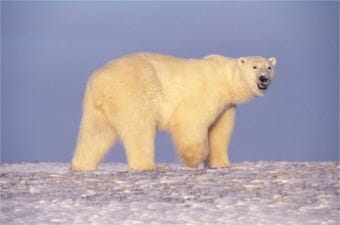
A polar bear in Arctic Alaska. (Photo Credit: Terry Debruyne/USFWS)

A polar bear killed a woman and boy Tuesday afternoon in the Northwest Alaska community of Wales, according to Alaska State Troopers.

Troopers received a report of a polar bear attack around 2:30 p.m., troopers said in an online report. According to initial accounts, a polar bear came to the village and chased several residents, troopers said.

The bear killed a woman and a boy, troopers said. Another Wales resident shot and killed the bear “as it attacked the pair,” troopers said.

The two people who were killed in the mauling weren’t identified in the report, and troopers said officials are working to notify their next of kin.

Austin McDaniel, a spokesman for the Alaska Department of Public Safety, said troopers are coordinating with the Alaska Department of Fish and Game as they try to send personnel to Wales as soon as the weather allows.

Wales — a predominantly Inupiaq village of fewer than 150 people — is located on the far western edge of the Seward Peninsula bordering the Bering Strait, just over 100 miles northwest of Nome.

In winter, polar bears can be found as far south as St. Lawrence Island, occasionally traveling even farther south, according to the Alaska Department of Fish and Game. Subsisting primarily on a diet of marine mammals, males can grow to be up to 1,200 pounds, females up to 700 pounds, with no natural predators beyond humans.

Fatal polar bear attacks are extremely rare in Alaska. In 1990, a polar bear killed a man in the North Slope village of Point Lay. Biologists later said the animal showed signs of starvation. In 1993, a polar bear burst through a window of an Air Force radar station on the North Slope, seriously mauling a 55-year-old mechanic. He survived the attack.

Sea ice floats in the Bering Strait off Cape Prince of Wales. (UAF photo by Gay Sheffield)

With the loss of sea ice and the ocean staying open later in the year, polar bears have been spending more time on land, which increases the chance of human encounters, said Joseph Jessup McDermott. He’s the executive director of the Alaska Nannut Co-Management Council, a tribally authorized organization consisting of the 15 Alaska tribes, including Wales, that have traditionally harvested polar bears for subsistence.

“Over the past few decades, it’s been very, very rare for those types of attacks to occur,” McDermott said. “It’s incredibly tragic it happened.”

While McDermott said the Chukchi Sea polar bear population is healthy, there were accounts of polar bears in Northwest Alaska seeking alternative food sources such as trash. About 10 years ago, residents as far inland as Noatak reported spotting animals, he said.

“While rare instances like a bear showing up in Noatak have occurred in recent years,” McDermott said, “the presence of bears around communities like Wales is a normal and regular occurrence.”

Some communities in Alaska — for example, several on the North Slope — have had polar bear patrols to keep residents safe. That’s not currently the case in Wales.

“Wales does not currently have an active Polar Bear Patrol Program due to lack of government funding, unlike the North Slope,” McDermott said, “but this is something that ANCC has sought to pursue with other (nongovernmental organizations).”

This story originally appeared in the Anchorage Daily News and is republished here with permission.

A wilderness guide stumbled upon Alaska’s northernmost glacier — one not marked on any map

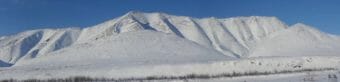
The Shublik Mountains stretch parallel to the Arctic coast in March of 2022, about 6 miles from the northernmost glacier in the U.S. (Photo by Matthew Sturm)

The Shublik Mountains stretch parallel to Alaska’s Arctic coast, with rocky ridges surrendering to miles and miles of North Slope tundra. Talus and boulder fields, as well as occasional short willows, cover the stark landscape, but tucked in between slopes is a glacier — one that, as it turns out, is not marked on a map and is the northernmost in the country.

“Here, in 2022, when it feels like everything has already been discovered, there’s a glacier that doesn’t show up anywhere,” said Zachary Sheldon, who owns Alaska Guide Co. based in Valdez. He was the first person to identify that the glacier wasn’t recorded on a map. “I’m a bit of a glacier nut so it excites me,” he said.

Located at 69.50912, -145.51683, the glacier is 30 miles from the coast and 10 miles northwest of the Brooks Range. According to a USGS publication, glaciers in Alaska haven’t been found north of Brooks Range.

“It is the northernmost glacier in the U.S.,” said U.S. Geological Survey glaciologist Louis Sass. “It isn’t registered or recorded.”

The glacier is around 1/10 of a square mile — or between 50 and 60 acres, said Matthew Sturm, a geophysics professor with the University of Alaska Fairbanks’ Geophysical Institute and the leader of its Snow-Ice-Permafrost Group. Being so small, the glacier is at high risk of disappearing.

“Throughout the world, the smallest glaciers are disappearing due to climate change,” Sturm said. “And here’s this little glacier way up north. … When they were counting the kids in the classroom they forgot to count this little guy.

“It’s just nice to know it hasn’t melted away.”

Discovery

When Sheldon moved to Alaska 15 years ago, he came across the Dictionary of Alaska Place Names, which lists features of the state’s landscape. About 13 years ago, Sheldon started putting all locations from the book into a digital database to catalog the geography of Alaska. Today, the 40-year-old wilderness guide is still working on the same database. He also built a map showing the names of slope runs, the ratings of ice climbs and other details useful to outdoor enthusiasts who want to quickly get a sense of the area.

Last month, Sheldon was tracing the outlines of glaciers so he could have an accurate glacier layer on his map. He was looking at the glacier database and the satellite images from far out. Then he would take a closer look — and that’s how he found the glacier up north.

A screenshot from Caltopo shows the northernmost glacier, which is in the Shublik Mountains and not registered in glacier databases. (Photo courtesy of Caltopo)

Sheldon checked the GLIMS Glacier Database, or the Global Land Ice Measurements from Space, as well as the USGS database and topographic maps but found no record of the glacier.

“This glacier doesn’t exist anywhere, which is what caught me,” Sheldon said.

In the early 2000s, glaciers in this area of the Shublik Mountains were added to the Randolph Glacier Inventory, a global database of glacier outlines, said Sass with USGS. The process relied on fairly coarse satellite imagery, and small features the size of the glacier found by Sheldon show up as 15 by 30 pixels.

“We don’t have the ability to manually verify that the inventory is correct or complete,” Sass said. “This means that the existing inventory is likely missing hundreds or even thousands of glaciers, and likewise, it may be including many features that are not actual glaciers or that are no longer glaciers.”

An effort is underway to improve the global database of glaciers using the higher-resolution satellite images available now, Sass said. However, with such a high volume of data, it isn’t really possible to add a single outline to the existing inventories.

‘We know it’s a glacier’

Located this far north, the glacier is probably covered with snow most of the year, so it could have been easy to confuse it with a snowfield, Sheldon said. But the satellite image clearly shows the formation’s glacial features.

The main difference between a glacier and a snowfield is that a glacier is made of solid ice and has internal movement, while a snowfield is made of porous snow and stays in place, said Sturm with the Geophysical Institute.

“The snowfield doesn’t move,” he said. “It changes size, year to year, but it’s just there — there’s no internal flow — whereas glaciers are flowing.”

A satellite image, most likely taken in late summer, shows the lines in the ice of the glacier, indicative of flow, Sturm said.

“The metamorphism of the ice creates foliation like the pages of a book, so we know it’s a glacier,” Sturm said. “If you walked up that thing, you can be walking on what felt like rock most of the way, then you’d walk on glacier ice, then you get to the seedy upper end of it and it’d be snow.”

Most of the glacier is shaded by the mountains, which helps slow the melt. The tongue of the glacier is covered with debris that can also shield the glacier from melting.

The northernmost glacier in the U.S.

What makes the glacier discovery even more exciting to Sheldon is that it’s so far north. While glaciers are not uncommon at much higher latitudes — for example, in Greenland or in Canada — those northern formations are typically surrounded by water that helps them get new snow, Sheldon said.

Sturm said that besides the availability of water sources, better storm tracks also nurture glaciers.

“This is an interesting glacier because it’s neither high nor in a place where there’s a lot of snow,” Sturm said.

But glaciers in the Brooks Range — and north of it — are different from the glaciers farther south in Alaska, Sass said. None of them get much precipitation in the winter, but in summer, the conditions can be fairly wet. And the Saddlerochit and Shublik ranges stick farther north and get slightly more precipitation than ranges farther east, Sass said.

“In the late summer, once the sea ice is out, the north slope of the Brooks Range can be very wet,” he said. “The determining factor for glacier existence up there is whether or not that late summer precipitation falls as snow or rain. That is mostly determined by elevation. That particular feature is only at 4,500 feet, but that is high enough when you are that far north.”

After his finding, Sheldon added the glacier to his map, labeling it as “Northernmost.” He contacted GLIMS, suggesting adding it to their database, but he shared a sense of urgency to do more — for example, to photograph the glacier this summer and take a core sample from it to get it dated.

“Glaciers, 99% of them aren’t growing,” Sheldon said. “Its time is limited.”

This story originally appeared in the Anchorage Daily News and is republished here with permission.

Alaskans insured through certain providers may soon be unable to send their prescriptions to Fred Meyer

""
The pharmacy department at an Anchorage Fred Meyer store on Dec. 17, 2022. (Marc Lester/ADN)

Beginning in January, many Alaskans may no longer be able to go to Fred Meyer pharmacies to pick up their prescriptions.

That’s due to the announced termination of a pharmacy agreement set to end at the end of 2022 between Express Scripts and Kroger, Fred Meyer’s parent company. Express Scripts is a pharmacy benefits manager, a company that acts as an intermediary between many local pharmacies and major health insurance companies to handle reimbursements.

The split will impact thousands of Alaskans who have health insurance through companies that work with Express Scripts, such as TRICARE, Cigna and Premera Blue Cross Blue Shield of Alaska, among others.

Those affected include most Alaskans who signed up for health insurance through the Affordable Care Act marketplace, all military members and their families, employees with federal contracts, all Anchorage municipality employees and many more.

Experts say it will be hard to predict the full impact of the terminated agreement in Alaska, and that it’s possible the two companies could still come to some kind of last-minute agreement before the end of the year.

“It is not unusual for there to be posturing between the two parties as they negotiate,” Lori Wing-Heier, director of the Alaska Division of Insurance, said in an email. She said no contract termination had yet been registered with the state.

But pharmacists interviewed for this story worry that if no agreement is reached, the impact could be significant in Alaska, especially in smaller communities where pharmacy options are already limited and understaffed, leading to long waits and patients being turned away in some cases.

The pharmacists say they anticipate confused customers and long wait times as thousands of prescriptions are transferred away from Fred Meyer to other local pharmacies that will need to step in to fill the gaps.

“This is definitely going to have ripple effects throughout the community,” said Dan Nelson, a pharmacy manager with Tanana Chiefs Conference.

Nelson and other pharmacists reached for this story also say that an announced merger between Kroger and Albertsons, the company that owns Safeway and Carrs, could further exacerbate the problem — the potential loss of access to Carrs and Safeway pharmacies as well could mean a dearth in pharmacy options for many Alaskans.

Questions of access

Kroger Family Medicine owns 13 Fred Meyer pharmacies around Alaska, or just about 8% of all pharmacies around the state.

A spokesperson with Express Scripts said she couldn’t disclose how many Alaskans were serviced by the company.

“With this change, the vast majority of our customers in Alaska will be able to continue to fill their prescriptions at their pharmacy,” Justine Sessions, a spokeswoman with Express Scripts, said in an email.

Alaskans in the military are covered by TRICARE, the health care provider for uniformed service members, which uses Express Scripts for prescriptions.

“We believe there will be minimal impact other than the inconvenience of transferring the prescription to another pharmacy. While Kroger is opting to no longer be a part of the Tricare Network, beneficiaries have other options within the area,” Brandy Ostanik-Thornton, public affairs officer with U.S. Army Alaska, said in an email.

She included a link where military members and their families could use to find a nearby pharmacy.

Premera Blue Cross Blue Shield of Alaska, one of the state’s largest health insurers, also sent a letter out to members this month about the split, informing them what steps to take next.

Premera spokeswoman Amanda Lansford said that while the company is not involved in the negotiations, it is “committed to ensuring our members have access to in-network pharmacies.”

Fred Meyer represents only 8% of pharmacies in Alaska, Lansford said, and every city with a Fred Meyer pharmacy also has one other in-network pharmacy Premera members can use.

While it’s true that Alaskans will have many other options for pharmacies besides Fred Meyer after the termination — Sessions said there were at least 135 others — smaller communities would still likely be affected by the split.

Navigating the changes

A reduction in the number of pharmacy options for patients has the potential to exacerbate staffing challenges and long waits for prescription caused by an existing pharmacist shortage in Alaska.

In Fairbanks, the two Fred Meyers in town are often the busiest and most-staffed pharmacies in the city, according to Nelson, who helps coordinate the delivery of medications to the tribal consortium of the 42 Interior Alaska villages that make up Tanana Chiefs Conference.

He estimated that around a quarter of all Fairbanks residents were enrolled in a health insurance company that contracted with Express Scripts and relied on Fred Meyer to fulfill their prescriptions.

Nelson laid out what might happen to those Alaskans picking up a prescription at Fred Meyer after Jan. 1: First, they would be quoted the cash price for their medication instead of the price that their insurance typically covers.

“Then they’re going to have a heart attack, and need to pay that full cost up front,” he said. Then they would have to manually submit a reimbursement to their insurance company, which would probably be less than what they were expecting.

Meanwhile, the workload for non-Kroger pharmacies in Fairbanks will likely increase by about 25%, Nelson predicted, causing backlogs in prescription transfers that translate to delayed wait times for patients.

The best way for Alaskans to switch pharmacies is to call the pharmacy they are switching to, and say they have a prescription at Fred Meyer that they want to transfer, Nelson said.

His advice to avoid lengthy delays for prescriptions: “Don’t wait until January to change pharmacies: be proactive, change it now.”

Affected Alaskans have likely already received a letter from their health insurance company announcing the change. But Brandy Seignemartin, executive director of the Alaska Pharmacists Association, encouraged those who were unsure to call the number on the back of their health insurance card and ask questions.

She said her biggest priority over the coming weeks will be helping Alaskans figure out how to quickly navigate the potential changes to where they can access care.

“When patients lose their pharmacies, it has an impact on patient health outcomes,” Seignemartin said. “So making sure we can get patients support around where they can get their medications as quickly as possible is going to be incredibly important to make sure that there’s continuity of care.”

Long-brewing problems, imperfect solutions

In letters from Express Scripts and the affected insurance companies, many Alaskans have been offered an option to switch to an online pharmacy managed by Express Scripts at a slightly reduced cost, as a way to offset the loss of access.

Alaska pharmacists reached for this story said they worried that online orders won’t work as well in Alaska as they do in other states due to lengthy distances, extreme temperatures and other challenges related to the state’s remoteness and large swaths of communities not connected to the road system.

“My biggest concern is access,” said Justin Ruffridge, a Soldotna-based pharmacist.

“It’s not good health care for people to lose access to their pharmacies,” Ruffridge said. “It’s not good health care for people to have to question whether or not their prescription is coming in the mail, whether it’s going to be OK sitting outside in a freezing mailbox for the next four hours.”

According to Ruffridge and others, the business practices of pharmacy benefits managers like Express Scripts — especially dismally low reimbursement rates — have led to the closures of many independent pharmacies.

“There’s only so little reimbursement you can accept until you can’t afford to safely staff your pharmacies anymore, which creates so many workforce problems and other issues as well,” Seignemartin said.

Ruffridge views Kroger’s decision as another example of the harm caused by pharmacy benefit managers.

“The more that these practices go on, the more difficult it is for pharmacies to operate in local communities. And you’ll end up with essentially a pharmacy by mail,” he said.

Nelson, the Tanana Chiefs Conference pharmacy manager, said he’s seen firsthand how difficult it can be for medications to be delivered by groups without experience shipping to rural Alaska from warehouses in the Lower 48.

He hears weekly from people whose medication didn’t arrive on time, or is frozen or expired.

“I think there’s a lack of understanding, of, you know, there’s not a road out to all these locations, and it’s going to be put on a plane and a caravan and it’s going to be 50 below,” he said.

This story originally appeared in the Anchorage Daily News and is republished here with permission.

‘I watched it rapidly turn into absolute chaos’: Inside the deepening dysfunction at North Star psychiatric hospital

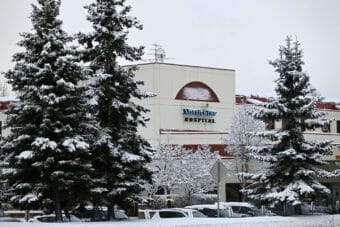
The entrance to North Star Hospital on a snowy day.
North Star Hospital on Thursday, Nov. 3, 2022. (Photo by Bill Roth/ADN)

Nick Petito saw a lot in the six months he worked at North Star hospital in Anchorage.

Petito wasn’t a therapist. He wasn’t a social worker. He was the maintenance manager, charged with fixing what was physically broken at Alaska’s only psychiatric hospital for children.

It was a job that put him in all parts of North Star’s campus in East Anchorage, sometimes working 10-hour days fixing holes in drywall, resetting pulled fire alarms and rekeying doors.

As the days stretched into months, Petito said, “I watched it rapidly turn to absolute chaos.”

“It got to the point where we were having multiple riots every week,” he said of escalating destruction during his time at the hospital. “And I mean riots, all out. We did the maintenance: They would rip the walls apart and then tear apart the rooms.”

Petito is one of several former employees who describe long-standing issues at North Star that seemed to worsen in recent months, as understaffing and decisions by management pushed the hospital to the brink of disaster.

Public records illustrate the rising chaos: In the six months Petito worked at North Star, from April to September 2022, Anchorage police were called to the hospital campus 71 different times, responding to reports that included assaults and escapes. During the same period the year earlier, police were called only about half that often, 34 times in total.

Three different layers of regulators — federal, state and the organization that accredits hospitals for quality and safety — have all warned North Star of unacceptable conditions this year. Most recently, in early November, the powerful Joint Commission handed down a “preliminary denial of accreditation” to the hospital, pointing to an unnamed “condition which … poses a threat to patients.” Hospitals that lose such accreditation face serious repercussions, including eventually not being able to accept Medicare and Medicaid. Hospitals can appeal. North Star is working to resolve the issues, said North Star’s CEO Anne Marie Lynch in an email.

[Federal inspectors fault assaults, escapes, improper use of locked seclusion at North Star youth psychiatric hospital]

Three former employees — a psychiatric aide who worked directly with patients, a therapist, and Petito, the former maintenance manager — were willing to speak with the Daily News about their experiences working at North Star. Two other former employees corroborated details but were not willing to be identified publicly by name because they were worried about professional repercussions.

All of them said the same thing: The hospital failed to hire, train and retain staff to safely manage a volatile group of patients. One worker said Anchorage School District teachers who were supposed to deliver lessons to patients refused to enter the hospital because of dangerous conditions. Another said faulty fire alarm protocols combined with understaffing led to regular escapes by at-risk kids.

North Star disputed some, but not all, of the assertions of the former employees, saying patient privacy rules bar them from discussing specific cases and patients. The hospital is staffed “to regulations as well as for safety needs” and is actively recruiting new workers, wrote Lynch. The idea that there are multiple riots every week is “simply false,” Lynch wrote in response to the former employee’s assertions.

Lynch also shared a statement taken almost word-for-word from marketing materials on an “About North Star Behavioral Health” page on the company’s website.

""
North Star Hospital after a recent snowfall in Anchorage on Wednesday, Oct. 26, 2022. (Photo by Bill Roth/ADN)

“Our dedication is demonstrated every day as we help young people and families deal with difficult problems,” the statement read. “Our commitment shows in the professional guidance, counseling and support for children, and caring responsiveness that we offer to parents and families.”

Lynch also pointed to patient satisfaction data published by North Star that shows patients agreed with statements such as “I knew my treatment plan goals,” “I understand the importance of following my discharge plan” and “I feel better now than when I was admitted.”

North Star’s patients — some as young as 4 years old — are among the most vulnerable children in Alaska, sent to live in a locked facility away from family, with the promise that hospitalization will relieve acute psychiatric and behavioral problems.

Trouble with regulators

Three regulators — the federal Centers for Medicare and Medicaid, the state Alaska Division of Behavioral Health, and the nonprofit safety and quality accrediting organization The Joint Commission have all documented urgent problems at North Star this year.

First, during inspections in April and June, federal investigators with the Centers for Medicare and Medicaid Services documented problems at the hospital, including “immediate jeopardy” situations at the time that put the health and safety of patients at risk. Hospitals that don’t fix such problems risk losing the ability to bill federal insurance. The hospital resolved the issues and was no longer under a “plan of correction” from the agency by September, Lynch said.

[Alaska families say their children were sexually abused at North Star psychiatric hospital]

The Alaska State Division of Behavioral Health, too, found trouble during an on-site review of the hospital system’s program for adolescent girls in August. Clinicians at the hospital told state regulators understaffing “was an area of ethical and professional concern” for them. The state reviewers also uncovered incomplete and conflicting medical notes for patients that contradicted themselves, suggesting that crucial 15-minute safety checks weren’t being done.

The state reviewers implored North Star to “hire additional staff to ensure services are being rendered safely and with quality of care.” It would be “of the utmost importance” for the hospital to hire, train and retain more workers, the state regulator wrote.

The hospital is cooperating with the state and is implementing a “plan of correction,” said Lynch.

Then, on Nov. 2, the Joint Commission handed down a “preliminary denial of accreditation” to North Star, a serious consequence. North Star had previously earned accreditation in every survey for at least the past seven years, according to Joint Commission data.

The Joint Commission cited conditions that posed a “threat to patients” and named 11 different areas where inspectors found “performance issues” at North Star. Among them: “the patient has the right to be free from neglect; exploitation; and verbal, mental, physical, and sexual abuse” and “the hospital provides care, treatment, services, and an environment that pose no risk of an ‘Immediate Threat to Health or Safety.’”

Lynch, the CEO, said the hospital was providing “full cooperation during all compliance surveys by regulatory entities.”

“When an opportunity for improvement in facility operations is identified, we promptly implement appropriate plans to address,” she wrote.

The only game in town

North Star is owned by Universal Health Services, a publicly traded, for-profit corporation that owns 335 inpatient behavioral health facilities globally. Universal Health Services reported annual revenues of about $11 billion in 2020. The public funds much of the treatment kids are supposed to get at North Star: Over the past five years, the State of Alaska paid $122 million in Denali KidCare reimbursements to North Star, according to data provided by the Alaska Department of Health.

North Star has been around since the early 1980s, when it was called Charter North and served adults as well as children. Around 2000, the State of Alaska considered buying the DeBarr Road building and relocating the Alaska Psychiatric Institute there, but the plan fell through. Universal Health Services purchased the hospital in a deal that was finalized in 2003. When the hospital expanded with a new, 60-bed facility in 2006, it was seen as an opportunity to bring kids sent Outside for psychiatric treatment home, the Daily News reported at the time.

Even then, advocates questioned the way North Star operated.

“Advocates also have raised concerns about staffing, medication and restraint practices at North Star’s existing treatment centers and psychiatric hospital,” the Daily News reported in 2006.

At the time, the hospital was the only place children under the age of 13 could be hospitalized for psychiatric conditions in the state. Twenty years later, that’s still true.

Kids find many paths to North Star, but a typical one is a child who has a combination of a mood disorder such as depression and a behavioral disorder and does something alarming — such as threatening suicide or to hurt someone else, said Dr. Curt Wengel, a child psychiatrist in private practice in Anchorage and the medical director of Alaska Behavioral Health, an Anchorage nonprofit that used to be called Anchorage Community Mental Health Services.

Family — or legal guardians if the child is in foster care — might take the child to an emergency room where an assessment would be done to determine whether they should be hospitalized or not, Wengel said.

If a child’s parents are so worried about safety that they are staying awake in shifts, that probably calls for a hospitalization, Wengel said.

The idea is to use time in a hospital to de-escalate the situation to “not an emergency,” he said. But that treatment doesn’t necessarily solve the deeper, long-term problems. In some situations, that work would be done through outpatient therapy, where a child would meet with a clinician once a week or more. In other parts of the United States, children spend relatively brief stays in psychiatric hospitals — maybe a week to 10 days at most, Wengel said. Not at North Star.

“When I first came here to Alaska, and they said the average length of stay at North Star was right around 30 days, my jaw hit the floor,” Wengel said.

Part of the justification: Alaska historically has only been able to offer children extremes — a full-on locked psychiatric ward or a therapist that might see a kid once or twice a month, Wengel said. And there are lots of kids who don’t need the full hospitalization but need more than the occasional hour with a clinician.

“There is limited availability and sometimes no infrastructure below inpatient and above outpatient,” Wengel said. In an effort to begin filling that gap, his organization recently launched a “partial hospitalization” program for kids and adolescents, where kids spend 9 a.m.-3 p.m. in a therapeutic environment but go home to their families at night.

That lack of options for kids to leave the hospital but still get support frequently is used as a justification to keep them hospitalized for months. Psychiatric medicine is a risk-averse business, Wengel said: Hospitals are reluctant to discharge a child if there’s still considerable risk.

“In medical practice, it’s common for someone to say if the level of care that’s required doesn’t exist, then the next higher level of care is the most appropriate level,” he said.

Lynch, the CEO of North Star, agreed.

“If the patient no longer meets the criteria for our program they may stay longer than necessary due to lack of access to other programming within our system or in the Alaskan behavioral healthcare system,” she wrote.

When kids do leave, unless they are ready for the outpatient therapist-appointment scenario, “residential treatment” — also long term, usually a minimum of six months — is the usual recommendation, Wengel said.

About a quarter of the Outside residential treatment placements Alaska state Medicaid will pay for are owned by Universal Health Services.

Fixing broken things

A man in a Carhartt vest and a plaid shirt stands in the woods.
Former North Star Hospital maintenance manager Nick Petito photographed on Thursday, Oct. 27, 2022. (Photo by Bill Roth/ADN)

Nick Petito was hired as North Star’s maintenance manager in April 2022. The job entailed repairs around the hospital’s three buildings, two on DeBarr Road and one in Palmer. When things got out of control, he and his crew were called in to clean up the mess.

Part of Petito’s job was to make keys for new employees. He said the sky-high employee turnover rate, especially for lower-level workers, could be measured in new keys: He’d make 10 or 15 new sets of keys and within a few shifts get 8 or 10 back — the new employees had quit, he said.

“People would work for two days and be like, ‘Nope, I’m not doing that,’” he said.

Lynch, the North Star CEO, says that’s not true and that Petito wasn’t in charge of key cards.

“We dispute the statement, as it is inaccurate,” she wrote. Petito maintains key cards were part of his job.

Petito said there was a bright spot: Sometimes he’d be sent to North Star’s Palmer facility on Clark-Wolverine Road. The facility had a completely different feel from the Anchorage campuses, which are larger.

“An amazing setup,” Petito said. “I mean, it’s impressive. (The manager) has those kids out playing all day. They’re doing yoga. They’re doing art. I’ve gone out and they’re all playing instruments.”

It struck Petito as markedly different from North Star, where he says patients on the units where he worked seemed to have little structure to their days, and nowhere to go.

“I’ve worked 10-hour days where you’re just watching the kids pace up and down the hallway,” Petito said. “That’s all they do. They just pace up and down the hallway.”

Petito felt that the lack of structure was directly feeding the destructive outbursts he would end up repairing. Once, he said, patients completely ripped a door “clean out of its frame.”

“With the kids sitting inside all day — kids stew. They get bored,” he said.

In the state’s review of the girls’ adolescent program, a parent reported a similar concern about boredom: “They used to play games, puzzles and crochet,” the parent said. “They only watch TV every day and watch the same movie.”

Petito also became concerned about the way fire drills were handled. Because of high turnover, workers weren’t getting trained on the proper way to manage a fire alarm in the hospital, he said.

And so, repeatedly, he said, patients would figure out a vulnerability in the system that unlocked the doors whenever an alarm was pulled. That led to multiple instances in which kids — in theory, hospitalized because they were a danger to themselves or others — would escape to the streets of Anchorage, he said.

“They were all directly on the fire drills,” he said.

Lynch, the North Star CEO, said the facility has “made modifications to our fire pulls.”

‘Obviously you get to start feeling depressed’

A photo portrait of a man in a black hoodie.
Anthony Irvin is a former employees at North Star Hospital. Photographed on Wednesday, Oct. 26, 2022. (Photo by Bill Roth/ADN)

Anthony Irvin was one of those employees that Petito came across whose keycard didn’t get much use at the hospital: He only worked there about six weeks.

Irvin, who says he’s also studying for a master’s degree in social work, was hired as a “Mental Health Specialist II” in mid-August.

Mental health specialists are charged with doing much of the hands-on, nonmedical care for patients — things like making sure patients got up, brushed their teeth, and got breakfast. Entry level mental health specialists were paid about $16 an hour to start, with a bonus of up to $10,000 if they stay on for two years, another former worker in the role said.

Irvin was placed in a unit housing adolescent girls. The girls were on “unit restriction” — meaning they weren’t allowed to even take the elevator down to the cafeteria to eat, with trays of food delivered instead. Irvin says he asked managers why the girls couldn’t leave the unit.

“But I knew what the answer was: There’s really no staff to watch them,” he said.

North Star didn’t respond directly to Irvin’s assertion, but said its rules are for safety.

“To ensure patient and staff safety, we rigorously and continuously review and update protocols,” Lynch, the CEO, wrote.

To him, the unit restriction seemed to be making the moods and behavior of the girls worse.

“If you’re just stuck on one hallway, at one level, obviously you start feeling depressed,” Irvin said.

The Alaska Division of Behavioral Health’s August review of the hospital found some of the same issues.

Soon after Irvin started, four of his coworkers quit. That left him doing a job meant for five people, and it wasn’t enough, Irvin said. The bare-bones staffing meant that kids, who were supposed to get instruction from Anchorage School District teachers who come into the hospital to deliver lessons, at times didn’t receive it, according to Irvin.

The school district says it served 350 students at North Star during the 2021-2022 school year, from preschool to 12th grade, according to the district. The district has a “memorandum of agreement” with the hospital but no financial contract.

The memorandum requires North Star to supply at least one “designated behavioral health associate” to stay in the classroom while a teacher is instructing. “Such associates will be provided at sufficient adult to student ratio to ensure the safety of all students and ASD personnel,” the agreement says.

Some days there were so few staff on hand that teachers wouldn’t come for safety reasons, according to Irvin. It happened once a week or so, he said.

“If there’s not enough support and help there, they (ASD teachers) don’t come,” he said. “That’s going to be an indicator right there (of inadequate staffing).”

The Anchorage School District did not answer a question about whether teachers would not enter North Star due to safety concerns. “Our main focus is the safety of staff and students,” district spokesperson Lisa Miller said.

The lack of workers also led to escapes because there were simply not enough people to supervise kids, Irvin said.

A few weeks into his employment, Irvin says he was moving some laundry when a girl rushed by him, letting a group into an area that was off-limits. He said he didn’t want to put hands on the patient, who was being aggressive, so he walked away.

Irvin said he was later fired because of how he handled the incident.

Admissions

Photo portrait of a man with short hair and a full beard.
Former North Star Hospital counselor Jason Fedeli on Thursday, Oct. 27, 2022. (Photo by Bill Roth/ADN)

Jason Fedeli worked as an intake coordinator at North Star starting in 2016, and later as a counselor. He left North Star in 2020 and is now in private practice in Anchorage.

As an intake coordinator, he was responsible for interviewing potential patients to see if they met the requirements to be admitted to the hospital. At times, it seemed to come down to what kind of insurance they had, he said: Accepting patients on private insurance meant the hospital could expect reimbursements of up to three times more, per night, than the hospital would receive to fill beds with kids on public Denali KidCare insurance.

For Denali KidCare, those nightly reimbursement rates hovered somewhere around $900, and private insurers would pay closer to $2,500-$2,800 range.

Sometimes, Fedeli said, that meant kids who really did need a bed didn’t get one.

“There was one kid … from the villages who actually tried (violently attempting suicide) and had been in the emergency room for several weeks,” Fedeli said. “(Intake) got another young man, who had double private insurance, got called back to his administrator’s office and (the administrator) said well, we need to bring in the kid with double private insurance.”

In some circumstances, based on how many beds were filled, admissions seemed to go the other direction, he said, offered to kids who arguably didn’t require full hospitalization and shouldn’t have been there.

Particularly when kids were in state Office of Children’s Services custody: “A lot of times, (OCS) had no other place,” Fedeli said.

North Star said its admissions are strictly based on medical judgment.

“All patients are assessed by clinical professionals and admitted by the psychiatrist,” Lynch wrote. If the patient does not meet medical necessity for the level of care, they are referred to the appropriate level of care,” Lynch wrote.

Understaffing was a chronic problem, Fedeli said, even in the pre-pandemic years he worked at the hospital. Some kids were supposed to be on “one-to-one,” meaning they were supervised constantly by a staff member but that didn’t always happen, he said. Once, when staff members were distracted watching a basketball game on TV, a patient who was supposed to be on one-to-one broke open a battery and ingested some of the contents, causing internal chemical burns, Fedeli said.

Lost in the conversation about the hospital’s problems, Fedeli said, is that North Star does have dedicated, longtime staff members.

“They really love those kids. They try to stand up to the administration. They spend their own money (on things for patients), they really try to help these kids.”

And some children do find the help they need at North Star, and leave better for their time hospitalized. “This is not because of the administration, but because of the staff and some doctors there that also really care,” he said.

Still, when in his practice, Fedeli sees kids who spent time in North Star, many say the same thing: “They’re pretty adamant about the fact that it was probably one of the worst things they could have done,” he said. “More harm than good.”

This story originally appeared in the Anchorage Daily News and is republished here with permission.

Move over, pumpkin! This Thanksgiving, try ube pie

A purple pie, seen from above, with a circle of cream covering most of it
For Thanksgiving this year, consider trying an ube pie. Ube is a tuber similar to a sweet potato. (Photo by Julia O’Malley)

I have deep affection for ube, the mild, sweet purple yam that colors pandesal, Filipino breakfast bread, and shows up in the pastry section in Hawaiian grocery stores and lends its hue to the outrageous pastries at Benji’s Bakery. This Thanksgiving, I wanted to bring it to my family in pie form. This recipe is a rich, vibrant “move-over pumpkin pie” for the holiday dessert lineup. Every person I served it to was eating it for the first time. Every one of them said it was delicious. If you like pumpkin or sweet potato pie, this pie is for you.
A few notes. You can use any unbaked pie crust. I used my own salted butter crust but I changed up the method a little to get way more flake. Using the same ingredients, I pulsed the food processor instead of letting it run, and I left the chunks of butter bigger than a pea, some of them even as big as two peas. I added the liquid to the crust, pulsed once, and then dumped it on parchment paper when it was still crumbly. Then, I pressed it together and rolled it out into a rectangle about the size of a novel, then I folded it in half and rolled it back into the same-size rectangle. I folded it again, rounded out the edges so it made a disc, and tossed it in the fridge for a couple minutes. This method kind of laminates the dough, a little like a croissant, and you’ll notice the difference.

This recipe calls for butter and cream. If you’re trying to lighten it up a little, you can use milk with no problem. If you’re going dairy-free, you might try oat milk and vegan butter. You can also reduce the sweetener by a quarter cup. There’s also the treasure hunt for ube, which is a purple yam. You can sometimes find it at New Sagaya Midtown or other Asian markets in the produce section or grated, in the freezer section. You can also use purple sweet potato or Okinawan sweet potato for this recipe, which are both pretty frequently at Fred Meyer and sometimes at Safeway in the sweet potato bin. If you use frozen grated ube, cook by covering it with water in a microwave-safe bowl and then cooking on high for 3 to 4 minutes, so it becomes soft. Don’t forget to drain. About 1 1/2 cups cream, whipped with three tablespoons of powdered sugar and a little vanilla, will give you enough for a healthy dollop of cream on each piece.

Ube pie

Serves 10

Ingredients:

1 pound, skin-on ube/purple yam or purple sweet potato

1 stick salted butter, softened

1/2 cup white sugar

1/2 cup maple syrup

1/2 cup cream

2 eggs

1 teaspoon pumpkin pie spice

1 teaspoon vanilla

1/4 teaspoon sea salt

1 unbaked 9-inch pie crust

Whipped cream and freshly grated nutmeg to serve.

Method: Put sweet potatoes/ube in a pot and cover with water, boil over medium heat for about 45-50 minutes, until very tender. Preheat the oven to 350 degrees.

Remove from the potatoes heat, drain, allow to cool enough to be handled. Peel them or scoop out soft meat. You should have roughly 2 cups of potato/yam.

In a blender or with a mixer, combine potato/yam, soft butter, sweeteners, cream, egg, spice, vanilla and salt. Mix until smooth. Pour into an unbaked pie crust. Bake for 55 minutes, or until set in the middle. It will rise and then fall a bit. Allow to cool completely before dressing with whipped cream. Sprinkle it with freshly grated nutmeg.

This story originally appeared in the Anchorage Daily News and is republished here with permission.

Banishment of Kipnuk principal followed allegations of disrespect, poor communication and COVID safety fears

""
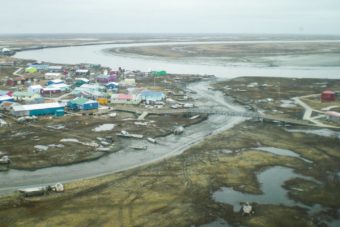
Kipnuk in 2012. (ADN archive)

Leaders in the Western Alaska community of Kipnuk say the principal of nearly a decade there bullied Native school staff members, put residents in jeopardy by ignoring COVID-19 restrictions and oversaw a decline in education quality. That’s why in October, according to documents obtained through a public records request, they voted to banish her.

School officials and tribal leaders involved in the banishment order and subsequent search by tribal police officers at the Chief Paul Memorial School at the end of last month have largely declined to comment on what happened beyond brief written statements. But in documents submitted to the Alaska Department of Public Safety and obtained by the Anchorage Daily News, new details emerged about longstanding tensions between community members and principal LaDorothy Lightfoot, who began work in Kipnuk in 2013.

Lightfoot did not responded to multiple emails and phone messages seeking comment.

“We are kindly encouraging you to leave your position as Kipnuk Site-Administrator at Chief Paul Memorial School. We, the Native Village of Kipnuk, have received many calls from the local Kipnuk Tribal members about you,” said the banishment order, signed in early October. “You have neglected important parts of being a leader in Kipnuk. The relationship with (a) variety of people was not positive.”

According to the document, tribal leaders voted 6-0 on Oct. 4 to permanently expel Lightfoot from the community of around 700 mostly Yup’ik residents near the mouth of the Kuskokwim River on the Bering Sea coast.

[Earlier coverage: Alaska village school shut down after principal banished and teachers flown out]

After the vote, the problems escalated, with a formal resolution to keep kids out of school. It came to a head in the weekend before Halloween, when tribal officials signed a document authorizing a search of school buildings and homes. By Saturday, Alaska State Troopers were on the ground in Kipnuk, and the principal, along with more school employees, were flown to Bethel on planes chartered by the Lower Kuskokwim School District.

Now, instruction for the school’s roughly 200 students is happening online for the foreseeable future, with teachers staying temporarily in Bethel while conducting lessons online for students almost a hundred miles away back in Kipnuk.

Banishment has long been a way for Alaska Native communities to protect collective well-being in places where state and federal law enforcement barely exist, sending away tribal members and outsiders whom local leaders deem to pose significant threat.

On Friday, Tribal Administrator Nick Slim said the Kipnuk Traditional Council was not ready to comment on the situation.

Along with its banishment order, the traditional council included a list of problems during Lightfoot’s tenure. Many of the complaints relate to how the school was run, including claims that in her leadership role she neglected traditional language instruction and values, communicated poorly with local leaders, violated COVID-19 health measures, showed disrespect toward indigenous school staff, and mishandled extracurricular programming.

“More of the Kipnuk language is being lost since she arrived here,” the council wrote.

According to the complaint, more local students were opting to leave the community for better educational opportunities elsewhere.

“The school and leadership is not promoting and supporting student performance and school effectiveness,” according to the Kipnuk Traditional Council.

“Communication between KTC and LaDorothy is nil. For close to 10 years, LaDorothy (has) refused to meet with Kipnuk Traditional Council,” the council wrote. “School administration does not truly listen. Kipnuk Traditional Council in the past shaped the school vision and mission together.”

The banishment order mentions disrespectful treatment of residents, including those working at the school, though does not go into detail on specific instances.

“Treatment of Native faculty and staff by LaDorothy is very poor. She loves to humiliate Native staff,” according to the complaint.

“She is known to bully people in the past,” said another document from the council included along with the banishment order.

Tribal leaders also faulted Lightfoot for a decline in educational outcomes and fewer options for extracurricular programs like Native Youth Olympics, academic competitions, shop and music classes.

Another major flashpoint related to COVID. The Kipnuk Elders Committee sent a letter to legislators, state education officials and the Yukon-Kuskokwim Health Corp. in September 2021, angry that students were brought back to school in-person to take standardized tests at a time when lockdown measures and firm prohibitions on gathering were in place to prevent illness.

“The duty of safety and health of all students was ignored,” the elders wrote, noting that the local lockdown order barred gatherings at school, church or stores.

The letter notes that Kipnuk, like many communities across Alaska that fall, was seeing a surge in COVID cases driven by the Delta variant. Households do not have piped water or adequate sewage infrastructure, and already “families are having (a) hard time with it.”

“In total we lost seven local members since January 2021,” the elders wrote of the coronavirus. “The school authorities should know that COVID-19 spreads easily, and guidelines shouldn’t be ignored, especially for a village that doesn’t have running water and disinfectants available in their homes. The welfare of Kipnuk is more important than taking a test.”

“There is clearly (an) imbalance between the school and local authorities,” the letter said.

A week after the banishment order was signed, the traditional council held a public meeting on Oct. 12 with parents of students that culminated in a resolution ordering pupils “not to attend school until further notice,” with the exception of participating in athletic programs. According to a copy of Resolution 22-52, 32 parents supported the measure, none opposed.

“Despite this resolution, approximately 80% of students continued to attend school at CPMS,” said the Lower Kuskokwim School District in a press release issued last week. “Unfortunately, on October 28, 2022, a large group of people purportedly representing KTC entered and occupied the school building and refused to leave, greatly disrupting the educational environment in the school. Thereafter, tribal police attempted to enter LKSD teacher housing units.”

The next day, state law enforcement officers arrived in Kipnuk to find the boardwalk from the airport into town blocked.

“Alaska State Troopers were able to deescalate the situation and travel to the school,” the Department of Public Safety wrote in a dispatch on Halloween. “Troopers met with the principal and school staff to determine what was happening. Troopers were able to determine that no crimes had been committed and worked with the school district to facilitate assisting those that wanted to leave the village in doing so. The principal along with other school staff chose to leave and were flown out of the village on two aircraft chartered by the school district. No threats were made towards Troopers or school district staff.”

The Lower Kuskokwim School District did not respond to detailed questions regarding the incident, allegations against Lightfoot, or when educators might go back to Kipnuk. Instead, Superintendent Kimberly Hankins pointed to the previously issued press release and offered a brief statement.

“The safety, health, and wellbeing of our students and staff is and always will be our primary priority. LKSD takes seriously and investigates specific community member complaints as thoroughly and expeditiously as possible. We have done so in all circumstances related to this school and staff, and all prior allegations have been reviewed and addressed,” Hankins wrote. “We are committed to maintaining an open line of communication with KTC to work together and towards a resolution.”

Hankins could not comment on whether Lightfoot would be returning to her position in Kipnuk, as the district is “not able to provide additional information about confidential personnel matters.”

No charges have been filed against anyone in connection with last weekend’s incident.

This story originally appeared in the Anchorage Daily News and is republished here with permission.

Site notifications
Update notification options
Subscribe to notifications