Anchorage Daily News

Anchorage Daily News is our partner in Anchorage. KTOO collaborates with partners across the state to cover important news and to share stories with our audiences.
‘Some of them just disappeared’: Essential pieces of life in Nome were lost in the storm

Plywood, lumber, and other debris strewn along a treeless coast, with a single small house in the background
The storm left trash and debris along the coast in places where the ocean surged and rivers topped banks. Some people were looking for possessions that washed away, including cabins and outbuildings that were moved or shifted. This debris is by the mouth of the Nome River along the Nome-Council Road. (Photo by Zachariah Hughes/ADN)

NOME — The storm that slammed Western Alaska over the weekend has reorganized the land.

There was no loss of life, but the landscape of Nome is physically altered for the foreseeable future, with raw material scattered wildly, the coastline reconfigured, the camps and shore-side compounds anchoring generations of subsistence either flattened or gone.

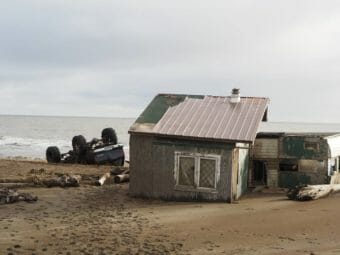
All up and down the Nome-Council Road heading east out of town, cabins used for fishing, foraging and seasonal family life are in ruin.

“Some of them just disappeared,” said Bryant Hammond, the incident commander for Nome’s emergency operation center.

Nome, a city of about 3,700 people that functions as the commercial and logistical hub for 15 smaller communities in the Bering Strait region, weathered the worst storm in decades relatively well. By Monday, business owners were unboarding windows along Front Street and shoveling muck out of gutters as heavy equipment rumbled around side streets and the seawall. Utilities are fine. Many car and truck owners are gradually discovering their vehicles were effectively totaled by partial submersion in the salty, silty floodwaters.

But the worst damage is out of town, with an as-yet-uncounted number of subsistence cabins in shambles.

To those unfamiliar with Western Alaska, the word “cabin” might conjure a hut of neatly notched logs nestled in the woods, or a euphemism for a lavish weekend home overlooking Nancy Lake. These are not those. The fish camps peppering the river mouths and shores of the southern Seward Peninsula are more like cozy shacks, neither electrified nor plumbed, buttressed by meat racks, smokehouses, saunas, cutting tables, woodpiles and utilitarian bric-a-brac for making use of the land and sea’s seasonal offerings.

A tilted, badly damaged camp with an upside-down truck lying next to it
Family camps and subsistence cabins lie in ruins, shifted off their pads, floated away, and buried in sand along the Nome-Council Road. (Photo by Zachariah Hughes/ADN)

They are essential to the region’s economy: family-scale food production and processing plants, summertime child care and education centers, a release valve for overcrowded homes and apartments in a region with an endemic housing shortage.

“My daughter’s smokehouse is gone. The outhouses, gone,” said Sterling Gologergen, standing at her second-story living room window, from where she watched the storm drown Nome’s small-boat harbor Saturday.

Even though the main cabin at her daughter’s camp remained intact, bedding and other material inside was soaked, ruined, costly to eventually replace, Gologergen said. Though she’s lived in Nome for a decade, the 67-year-old spent most of her life on St. Lawrence Island, where the communities of Gambell and her hometown of Savoonga were largely spared substantial destruction, but caches of fish and meat stored or hung from racks by the shore were trashed or gone.

“Already a lot of people are out beachcombing for edible stuff,” Gologergen said. “And to see what’s left of everyone’s camps.”

“They work faster than internet,” she said with a laugh about damage assessment and repair work. “The network of people out in the villages. And they already had it done yesterday.”

Camps are less built than accumulated over years and generations, rarely insured or registered in the formal banking system, which makes financing reconstruction or repair all the more difficult.

A woman sits at a table by a window overlooking Nome
Sterling Gologergen watched the storm pummel Nome’s small boat harbor and Front Street from the second floor of her home. “This was my third storm,” said the 67-year-old, who spent most of her life in Savoonga. “It ages you.” She worries about camps and caches of food that were lost in the storm, and what the salty ocean spray along the coastal tundra means for the berries. (Photo by Zachariah Hughes/ADN)

Gologergen said she worries about the storm’s lasting impact on vegetation. Tufts of sea foam “the size of baseballs” blanketed the street below her window. She fears the ocean salt could wither next summer’s berry crop along the miles and miles of shore.

Ruined, too, is the Nome-Council Road itself. For the first two dozen miles or so, it’s passable, especially since the state Department of Transportation has had graders and heavy equipment removing stones plucked loose from the seawall, fixing washouts, pushing driftwood to the sides and leveling drifted sand.

But then around Mile 24, there’s a massive new hole where the creek-fed Safety Sound punctured the barrier islands that supported the road.

“That lagoon became one with the ocean, where our camps are,” Gologergen said.

Camps on the far side of the new quarter-mile-wide gash are now cut off, except by plane.

“I don’t think if you had a canoe you could get across it,” Hammond said.

Tire tracks through a field of loose, recently deposited mud with small buildings in the background
The long road east out of Nome remains in states of disarray, including sections totally washed out or buried in sand. Farther down, a bridge by Safety Sound was almost impassable just two miles before a new channel broke through the barrier island, obliterating the roadway. (Photo by Zachariah Hughes/ADN)

Families with seasonal camps past Safety Sound, along with a few dozen old-timers who live most of the year out around Council, will have to find new ways of getting into town.

“We’re gonna have to build a new bridge, looks like,” Hammond said.

The storm was major: high seas, ferocious wind, powerful waves, all of it lasting for well over a day. The massive seawall that helped blunt the damage to town was reordered elsewhere along the coastline. Boulders and rocks are scattered everywhere. Swaths of beach are gone, eroded, as if erased or dropped 6 feet lower than they should be, the sand swept away and sprinkled all over the tundra on the lee side of the road.

A cluster of camps, one badly damaged, and debris all around
Family camps and subsistence cabins lie in ruins, shifted off their pads, floated away and buried in sand along the Nome-Council Road. (Photo by Zachariah Hughes/ADN)

There will be major repairs and challenges ahead, not just for Nome but across the region, all the way to the mouth of the Kuskokwim River hundreds of miles south. Even communities that fared relatively well — that didn’t lose whole houses or see major infrastructure fail — will be grappling with considerable costs that are not easily or quickly tallied in the accounting of a cataclysm: family camps, familiar harvesting grounds, small boats and subsistence equipment, rebuilding pummeled weather mitigation infrastructure.

“The system reorganized. It does it normally in nature. But we humans, it kinda screws us,” Hammond said.

A pickup truck backed up to the water with a piece of mining equipment next to it
The storm churned up so much sand and beach material that shortly after the storm subsided, gold miners were dredging and panning for gold along the Nome-Council Road. (Photo by Zachariah Hughes/ADN)

In a reordering of the land, for some, there is opportunity. Along the scoured beaches heading east out of Nome, there are newly churned up plumes of red-tinged dirt, the kind known to be fertile hunting grounds for gold. As public employees smoothed the road, volunteers picked up driftwood or detritus, distant figures surveyed cockeyed cabins and a few gold miners with small dredging rigs attached to their pickup trucks panned the freshly pulped beach for treasure.

This story was originally published by the Anchorage Daily News and is republished here with permission.

Interior Department renames 26 places in Alaska to remove a derogatory word for Native women

""
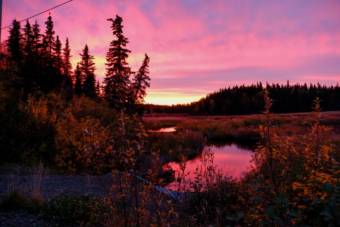
Sunset over a creek in Dillingham on Sept. 29, 2020. The creek has been renamed Amau Creek, which includes the Yugtan word for great-grandmother, to honor the community’s strong female ancestors. (Photo by Brian Venua/KDLG)

Twenty-six places in Alaska received a new name Thursday as part of the Interior Department’s initiative to remove a derogatory word for Indigenous women — a change that affects nearly 650 sites and geographic features across the country.

The official name change process has been almost a year in the making. In November 2021, Interior Secretary Deb Haaland unveiled an order to remove the word “sq—,” a slur for Native women, from federal lands. Many Indigenous organizations, including the Alaska Federation of Natives and the Native American Rights Fund, supported Haaland’s initiative.

“I feel a deep obligation to use my platform to ensure that our public lands and waters are accessible and welcoming. That starts with removing racist and derogatory names that have graced federal locations for far too long,” Haaland said in a prepared statement Thursday.

Some Alaska Native groups worked with the Interior Department to suggest replacement names for different places. For example, the Curyung Tribal Council in Dillingham met with Interior to recommend renaming a local creek Amau Creek, which includes the Yugtan word for great-grandmother, to honor the community’s strong female ancestors. Three local girls pushed to change the creek’s name, prompting debate in the community, months before Haaland’s order.

Curyung Tribal Council First Chief J.J. Larson applauded the department for implementing the council’s suggested name.

“It gives me hope that we’re moving in the right direction as a society, that our government is listening to us — it’s not just giving us a direction and saying, ‘This is what you have to do,’ ” Larson said.

In the Native Village of Eagle in eastern Interior Alaska, a local mountain has been renamed Jëjezhuu Tr’injàa Mountain at the Eagle Village Tribal Council’s request.

“I’m very happy. I think that’s such an amazing accomplishment for our village,” said Native Village of Eagle First Chief Karma Ulvi. “Our tribe is able to name a mountain that has been a derogatory name for so long and actually respect and honor Native women with the name that we chose.”

Other geographic features received new names suggested by the Interior Department, such as Crystal Creek in the Yukon-Koyukuk Census Area. The creek’s name was derived from the nearby Crystal Peak.

Similar renaming decisions had previously applied to two other derogatory terms, one for Black Americans and another for people of Japanese descent.

Haaland said in her November secretarial order mandating the name changes that the slur for Native women “is no less derogatory than others which have been identified and should also be erased from the National landscape and forever replaced.”

Though many Alaska Native people welcome the removal of the offensive word, some saw missed opportunities to prioritize Indigenous languages and engage tribal organizations proactively in the process.

“I’m definitely happy with the result,” Larson said. “I do think that the process could be better. I mean, that is usually always the case that the process could be better. I think taking a little bit more time and reaching out — sometimes a faster process is not always better.”

The Interior Department’s removal of derogatory place names reflects a broader local, statewide and national effort to restore place names to their Native roots.

In 2015, Interior restored the name of Denali, previously Mount McKinley, to reflect the Koyukon Athabascan word for the mountain. A year later, voters in the city of Barrow decided to change the community’s official name to Utqiaġvik, its Iñupiaq name.

To broaden the search for offensive place names on public lands, Interior launched an Advisory Committee on Reconciliation in Place Names in August to identify other place names to change.

Kiana Carlson, who is Ahtna and from the Native Village of Cantwell, is the lone Alaska Native on the 17-person committee.

Carlson applauded Interior’s initiative to remove the pejorative word for Native women from place names. She said she hopes to find other names “that aren’t as obvious, but that are just as derogatory and racist.”

“I think a lot of people don’t realize the words, or the derogatory nature of things until they’re made aware of the history,” Carlson said. “Once they’re made aware of the history, they’re super supportive of changing it.”

The advisory committee will convene two to four public meetings annually to review potential name changes. As the federal government seeks to change more place names, Carlson said she hopes the advisory committee members can do more targeted outreach with their home states.

“I think we’ll definitely streamline the process to have those people within the community itself making decisions, and not just a committee that doesn’t have any affiliation going to go talk to the tribes,” Carlson said of the advisory committee.

This story was originally published by the Anchorage Daily News and is republished here with permission.

New downtown Anchorage mural puts Alaska’s Indigenous cultures front and center

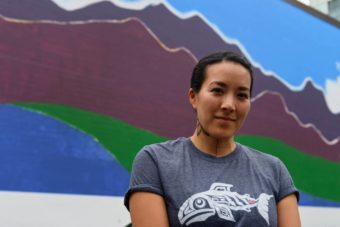
Crystal Worl is painting a 120-foot mural on a building at G Street and 7th Avenue in downtown Anchorage designed to reflect the diverse Alaska Native cultures in Anchorage. Photographed on August 11, 2022. (Photo by Marc Lester/ADN)

Growing up, Crystal Worl remembers looking up at the 120-foot-long mural on G Street that showed major events in Anchorage’s history: the Alaska Purchase, a Fur Rondy auction, a series of World War II planes.

For years, the wall of the RIM Architecture building behind City Hall featured the Anchorage History Mural, which was painted in 1995 by artist Bob Patterson.

But Worl said there wasn’t anyone in the painting who looked like her. She didn’t see many Alaska Native faces, or women.

“I felt that it was very lacking of being inclusive of Indigenous people, and I felt that the only acknowledgement it gave me was that I exist in the past and that my history is not present,” she said in a recent phone interview.

Nearly 30 years after the original mural was created, Worl is now taking a paintbrush to the same wall and designing her own. The art, she said, is a way to tell a different version of the city’s history — a story that celebrates the diverse Alaska Native people who make Anchorage their home.

‘It’s not like a marble sculpture’

A number of new murals have been installed downtown during recent years as part of the Alaska Mural Project, which was formed by the Anchorage Museum in 2020 to improve the community through public art.

The murals are an opportunity for Anchorage to update public art with new narratives and ideas about the city while giving the downtown area a makeover, said James Temte, Alaska Pacific University’s project manager.

Murals are not intended to last forever, said Temte, who’s also a muralist.

“It’s not like a marble sculpture or anything, and so I think murals, they come and they go, and this is just the next of a new series,” he said. “With street art, mural art, it’s very much a progress — it’s not stuck in time.”

A small print reflects Crystal Worl’s plans for a large mural in downtown Anchorage. Photographed on August 9, 2022. (Photo by Marc Lester/ADN)
John Osgood, of Oakland, works with Crystal Worl on a lift as they begin to paint a mural in downtown Anchorage on August 9, 2022. (Photo by Marc Lester/ADN)

Worl applied to be part of the mural project more than two years ago and was selected by a panel of community leaders from the Anchorage Museum, Alaska Pacific University, Anchorage Downtown Partnership and others.

Worl, who is Lingít, Athabaskan, Yup’ik and Filipino, said she was eager to bring Indigenous culture into everyday life for people in Anchorage. She recently finished a mural on civil rights activist Elizabeth Peratrovich in Juneau.

Museum officials reached out to the co-owners of the RIM Architecture building, Barbara and Larry Cash, about participating in the mural project.

The building has a large, exposed wall that is a perfect for a mural, Barbara Cash said.

“It’s about recognizing and celebrating the sense of place and the local identity. … We thought it was a refreshing, forward-thinking movement that they had put together and we were very excited to participate,” she said.

Murals and public art are an accessible way for visitors to learn about Anchorage on a deeper level, Cash said.

“I think the relevance of going back to recognize and celebrate the original owners and stewards of the land, it very much emphasizes our unique identity here,” she said. “When people come to visit Alaska, and when they live here, hopefully the visitors get to feel more and more the roots of the place rather than just what stores are open. I think that’s very meaningful.”

Making space for an overlooked history

Crews covered the prior mural with white paint last week, and Worl began working this week on the new mural. She said she expects to finish in a few weeks, weather permitting.

The sight of the old mural getting painted over was met with some criticism on social media.

Worl said she knows some are upset the former mural is being replaced, but she feels it’s the right time for change given the cultural shift in Anchorage and around the country to recognize people of color in historical accounts.

“When I started doing public art, I was in lockdown during COVID, almost three years ago, and the Black Lives Matter movement happened and George Floyd happened and it was a whole chain of events that led to the removal of colonial statues,” she said. “And I saw that as opportunity, as space being made for people of color to step up and make art in place of those old pieces. And so it’s scary, but it’s exciting.”

The mural to the west of the City Hall parking in downtown Anchorage, photographed on Oct. 13, 2021. (Photo by Emily Mesner/ADN)

In the old mural, the highlights of Anchorage history largely began after 1778, when Captain James Cook arrived. But Alaska Native people have been in the area for thousands of years and their history is often overlooked, Worl said.

Her mural depicts human figures, animals and nature in the Chugach Mountains. Worl said she plans to incorporate Alaska Native tribes within the small details of the mural, such as beading texture in much of the landscape, including depictions of dentalium jewelry, an important part of Dena’ina culture. And Worl is incorporating formline design, a type of art associated with Lingít, Haida and Tsimshian tribes.

Worl said she is painting with vibrant colors as an homage to how innovative her ancestors were.

“They adapted to change,” she said. “They took on new tools and new pigments and new items that helped them ever evolve and create new work, so I’m really embracing that mentality in this project by bringing in new color palettes, new textures, new tools and methods to achieve the piece.”

Crystal Worl cleans up as rain starts to fall on August 11, 2022. Worl is painting a 120-foot mural on a building at G Street and 7th Avenue in downtown Anchorage designed to reflect the diverse Alaska Native cultures in Anchorage. (Photo by Marc Lester/ADN)
Crystal Worl heads to a lift to begin the process of painting a mural in downtown Anchorage on August 9, 2022. (Photo by Marc Lester/ADN)

On Wednesday afternoon, Worl stood on a blue mechanical lift, high above the pavement, as she added swaths of purple to the mural just starting to take shape. Tourists milled about outside the Dena’ina Center across the street and locals stopped to pause at the new art.

Kat Barron and Oscar Avellaneda-Cruz specifically walked on G Street to see the mural after they took a break from work to buy ice cream on the sunny afternoon. Avellaneda-Cruz knows Worl, but said he is especially excited about the mural because he sees it as the community taking a step toward inclusivity.

“For a long time, a lot of the institutions that made or designed the city didn’t look at what the actual community or commons cared about,” he said. “And the board of the Anchorage Museum even listening is a good sign of the passing of the guard.”

Barron said the art made her feel hopeful. She wants a more inclusive community where everyone feels welcome.

That’s always been Worl’s goal.

“It’s a little bit rough and rugged when you can’t please everyone, but at the same time, this is who I am and this is what I’m doing,” she said. “There’s going to be some young person who looks up at that mural and is going to start growing up looking and connecting to that mural. And I want them to feel included.”

This story was originally published by the Anchorage Daily News and is republished here with permission.

Alaska election guide: Q&As with candidates for US House, US Senate and governor

Voters cast their ballots in Bethel. (Photo by Katie Basile/KYUK)

The Anchorage Daily News invited the candidates for statewide office — U.S. Senate, U.S. House and governor — to give their views on key issues and to discuss their priorities if elected ahead of the Aug. 16 primary and special U.S. House election and the Nov. 8 general election. Many of the questions came directly from readers or were based on readers’ suggestions.

Here’s how the candidates responded.

Candidates

D = Democrat; R = Republican; L = Libertarian; AIP = Alaskan Independence Party; NP = Nonpartisan; NA = Non-affiliated; U = Undeclared

* incumbent

U.S. House – Special Election

(Voters rank candidates in order of preference)

Nick Begich III (R)

Sarah Palin (R) – Did not respond

Mary Peltola (D)

Compare the candidates’ answers side-by-side

U.S. Senate – Primary

(Voters select one candidate; top four advance to November election)

Edgar Blatchford (D) – Did not respond

Patricia Chesbro (D)

David Darden (U)

Dustin Darden (AIP)

Shoshana Gungurstein (NP)

Sidney “Sid” Hill (NP) – Did not respond

Jeremy Keller (NP)

Buzz Kelley (R) – Did not respond

Huhnkie Lee (U)

Samuel A. “Al” Merrill (R)

Lisa Murkowski (R)*

Pat Nolin (R)

John Schiess (R) – Did not respond

Kendall Shorkey (R)

Karl Speights (R) – Did not respond

Joe Stephens (AIP)

Ivan Taylor (D) – Did not respond

Sean Thorne (L)

Kelly Tshibaka (R)

U.S. House – Primary

(Voters select one candidate; top four advance to November election)

Jay Armstrong (R)

Nick Begich III (R)

Gregg Brelsford (U)

Chris Bye (L)

Lady Donna Dutchess (NP)

Ted Heintz (NP) – Did not respond

David Hughes (U) – Did not respond

Davis LeBlanc (U) – Did not respond

Robert “Bob” Lyons (R) – Did not respond

Sherry Mettler (U) – Did not respond

J.R. Myers (L)

Robert Ornelas (American Indep. Party) – Did not respond

Sarah Palin (R) – Did not respond

Silvio Pellegrini (U) – Did not respond

Mary Peltola (D)

Andrew Phelps (NP) – Did not respond

Randy Purham (R)

Brad Snowden (R) – Did not respond

Sherry Strizak (U)

Tara Sweeney (R)

Denise Williams (R) – Did not respond

Tremayne Wilson (NP) – Did not respond

Governor – Primary

(Voters select one candidate)

Mike Dunleavy (R)* – Did not respond

Les Gara (D)

David Haeg (R) – Did not respond

John Wayne Howe (AIP)

Christopher Kurka (R)

William Nemec (U) – Did not respond

Charlie Pierce (R) – Did not respond

William “Billy” Toien (L) – Did not respond

Bruce Walden (R) – Did not respond

Bill Walker (NP)

Find additional candidate info at the Alaska Division of Elections.

Alaska hunting guide serving 6 months in prison for ‘multi-year wildlife crime spree’

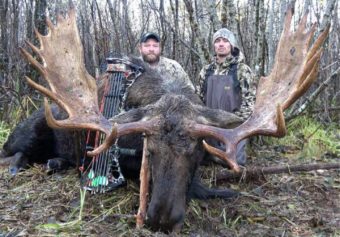
Two men pose behind the carcass of a large bull moose
Hunting guide Stephen Jeremy Hicks, left, with a moose that federal prosecutors say was killed during an illegal hunt in October 2017. (Photo provided by the U.S. Attorney’s Office, District of Alaska)

An Alaska hunting guide is spending six months in an Oregon prison for illegally selling big-game guiding services as well as multiple other violations over a five-year period.

Stephen Jeremy Hicks, a 45-year-old Anchorage resident, was sentenced in U.S. District Court last month.

The prison time was part of a plea deal in which Hicks admitted he guided hunters onto federal lands on a sheep hunt near Max Lake on the west side of Cook Inlet in 2018 without a permit. Along with prison time, he agreed to forfeit a Piper PA-18 Super Cub and pay $13,460 in restitution.

Hicks’ attorney, Kevin Fitzgerald, said his client started serving his prison sentence at the Federal Correctional Institution in Sheridan, Oregon, in late July.

It’s fairly unusual for an Alaskan guide to get a prison sentence for violating wildlife laws.
But in this case, federal prosecutors say, Hicks participated in a “multi-year wildlife crime spree” from 2015 until 2019 that triggered the need for a harsh penalty, prosecutors wrote in a sentencing memo earlier this year.

Many of the infractions he was accused of occurred while Hicks’ guiding license was on probation or revoked.

State officials put his license on probation in 2016 for failing to provide clients contracts before providing services and failing to maintain safe and satisfactory field conditions, according to the sentencing memo.

The license was permanently revoked in March 2019 by a state administrative law judge following complaints raised by a “thoroughly miserable” hunting trip in October 2017, as the judge wrote in that case.

Last month’s federal sentencing focused on the 2018 Max Lake incident, but prosecutors during the sentencing phase referenced numerous other state-level charges against Hicks.

The state’s accusations spanned a five-year period and included charges of wasting moose meat, not accompanying clients, killing bears using bait to lure them, and making use of a plane and electronic communications to spot big game.

State attorneys dismissed those charges this month after the federal sentence was handed down, according to Ron Dupois, an attorney with the Office of Special Prosecutions. That’s because the federal sentence made use of the state charges for what’s called relevant conduct, Dupois said.

Chief U.S. District Judge Sharon L. Gleason took the state charges into consideration in her sentencing decision and awarded half the restitution to the state.

The federal sentence satisfied the state’s sentencing goals, Dupois said. Hicks “had no plane, he had no guide’s license, he went to jail for six months.”

Gleason during last month’s sentencing hearing in federal court referenced the lack of investigative resources for wildlife protection, the fact that Hicks profited from his crimes, and the trust placed in big game guides by the state of Alaska, according to a statement from the U.S. Attorney’s Office in Anchorage.

The judge said “the need for prison is to make clear that blatant disregard for state and federal fish and wildlife rules will not be tolerated.”

The 2017 hunt that led to Hicks’ license revocation took place in the Cape Yakataga area between Cordova and Yakutat along the rugged northern Gulf of Alaska coast.

Several of the clients on that hunt told investigators they endured a rain-soaked trip involving a filthy cabin with a flooded woodstove, rotting food and rodent feces, and Hicks didn’t show up for several days, leaving them to fend for themselves and clean up the mess, according to a 36-page decision document.

A brown bear one client killed himself on the beach was the only animal successfully harvested on the trip, according to the decision document. Another man shot and injured a goat on a hunt with Hicks’ assistant guide. The guide, who led his client into difficult terrain for the hunt, said a steep ravine where the animal ended up was too dangerous to retrieve it and “shot the goat ‘to put it out of its misery.’”

Judge Cheryl Mandala in 2019 found Hicks “failed to provide clients with minimally adequate shelter, encouraged clients to engage in multiple violations of state hunting laws, and improperly engaged in same-day airborne hunting” — all while on probation, she wrote in the decision to revoke the license.

The practice of guiding others without a license can be legal under what are called “buddy hunts,” where people involved agree to share the costs but there’s no official guide.

Federal prosecutors, however, catalogued a number of instances where it appeared Hicks was paid for services, drew up contracts and accompanied hunters in the field after his license was revoked.

Once out of prison, Hicks will remain under supervised release for three years. During that time, he isn’t allowed to fly private aircraft or engage in any commercial hunting activity in any capacity.

This story was originally published by the Anchorage Daily News and is republished here with permission.

Landslides close dock, cause cruise stop cancellations in Skagway

""
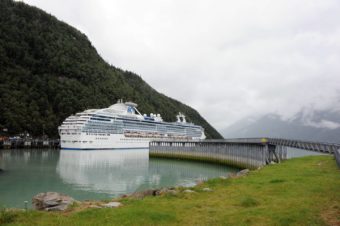
The Coral Princess cruise ship docked in Skagway on August 23, 2015. (Photo by Anne Raup/ADN archive)

Several landslides have closed the cruise ship dock in Skagway for the rest of the summer, causing what’s expected to be at least three dozen vessels to skip the tourism-dependent port by the end of summer.

The municipality issued an emergency declaration last week, citing the need to shore up the slide-damaged areas and the loss of more than 100,000 cruise passengers to cancellations and rescheduling.

A mid-July report from a geotechnical and environmental consulting firm showed “significant risk” of “catastrophic failure” of the mountainside above the dock that poses “significant risks to life and property.”

landslide in June damaged the deck and east side of the dock at the south end of the north berth, according to Tyler Rose, the executive director of the White Pass and Yukon Route Railroad, which owns the dock. Two additional landslides last week at the north chute damaged Conex containers and part of a security building, he said.

No one was injured in the slides that sent rock, dirt and vegetation down the mountainside above the dock.

The entire dock is closed to passengers and vehicles, Rose said. The south berth is accepting ships and tendering guests, but the north berth is closed, he said.

The closure means the port has only been able to accommodate three large cruise ships at the same time, said Jaime Bricker, Skagway’s municipal tourism director.

“Anytime we had something listed for four large cruise ships to port, the fourth has been rerouted,” Bricker said.

Twelve cruise ships skipped Skagway after the June landslide, according to Bricker. Another 24 sailings have been removed from the upcoming schedule, she said. Rose said there has been a large reduction in traffic, but the full effect won’t be known until the end of the season.

“It’s obviously impactful anytime we have a decrease in passengers,” Bricker said. “I think each business is going to feel an effect from that.”

Skagway’s economy is largely driven by tourism, and the cruise cancellations are “already negatively impacting the general economy of our community,” Skagway Mayor Andrew Cremata wrote in an emergency declaration issued Thursday.

Skagway was hit especially hard by the downturn in tourism during the last few years driven by the COVID-19 pandemic. Now, the diversion of cruise ships is again causing hardships for the town, Cremata wrote.

The area also saw two significant landslides in 2017 and has seen continued movement at the rockslide face away from the mountain a rate of 2 1/2 inches over the last year, an acceleration from the prior rate of 1 1/2 inches a year, according to the declaration.

The railroad is working with teams of engineers and the municipality to mitigate the landslides. It’s unclear how much that will cost, but Rose described it as substantial. In the emergency declaration, Cremata wrote that the work is expected to cost “tens of millions of dollars.”

The city is seeking assistance from federal and state agencies.

The goal is to reopen the dock for the 2023 cruise ship season, which begins in May.

This story was originally published by the Anchorage Daily News and is republished here with permission.

Site notifications
Update notification options
Subscribe to notifications