State Government Reporter, Alaska Public Media & KTOO
State government plays an outsized role in the life of Alaskans. As the state continues to go through the painful process of deciding what its priorities are, I bring Alaskans to the scene of a government in transition.
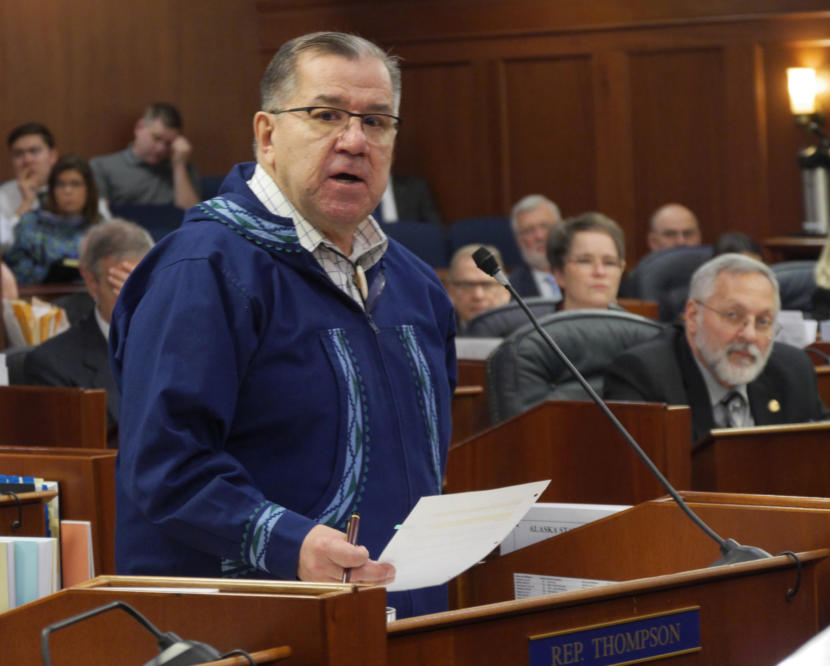
Sen. Lyman Hoffman, D- Bethel, speaks during a joint session of the Alaska Legislature in January 2020. Hoffman re-joined the otherwise Republican Senate majority caucus this week. The Senate announced its committee members on Wednesday. (Photo by Skip Gray/KTOO)
The Alaska Senate has announced who will serve on its committees for the next two years.
Bethel Democratic Sen. Lyman Hoffman has joined the Senate majority caucus and will retain his seat on the coveted Senate Finance Committee.
This ensures that the mostly Republican Senate majority will have at least one Democrat for the seventh straight year. Hoffman has been the only majority Democrat since 2017.
All of the other members of the Finance Committee are returning.
Hoffman will also serve as the only Senate Democrat on the Legislative Council and the Legislative Budget and Audit Committee, which are both places where members from both chambers serve. Senate Democratic minority caucus members objected to this, saying it leaves them without representation on two important committees.
The House again failed to organize a majority or pick a temporary or permanent speaker on Thursday. Its next scheduled floor session is on Monday.
The Senate committee chairs will be:
Sen. Shelley Hughes, R-Palmer, Community and Regional Affairs;
Sen. Roger Holland, R-Anchorage, Education;
Sen. Click Bishop, R-Fairbanks, capital budget Finance co-chair, and Sen. Bert Stedman, R-Sitka, operating budget Finance co-chair;
Sen. David Wilson, R-Wasilla, Health and Social Services;
Sen. Lora Reinbold, R-Eagle River, Judiciary;
Sen. Mia Costello, R-Anchorage, Labor and Commerce;
Sen. Josh Revak, R-Anchorage, Resources;
Sen. Gary Stevens, R-Kodiak, Rules;
Sen. Mike Shower, R-Wasilla, State Affairs;
Sen. Robert Myers, R-North Pole, Transportation; and
Sen. Natasha von Imhof, R-Anchorage, Legislative Budget and Audit.
The senators on all committees are listed on the Legislature’s website.
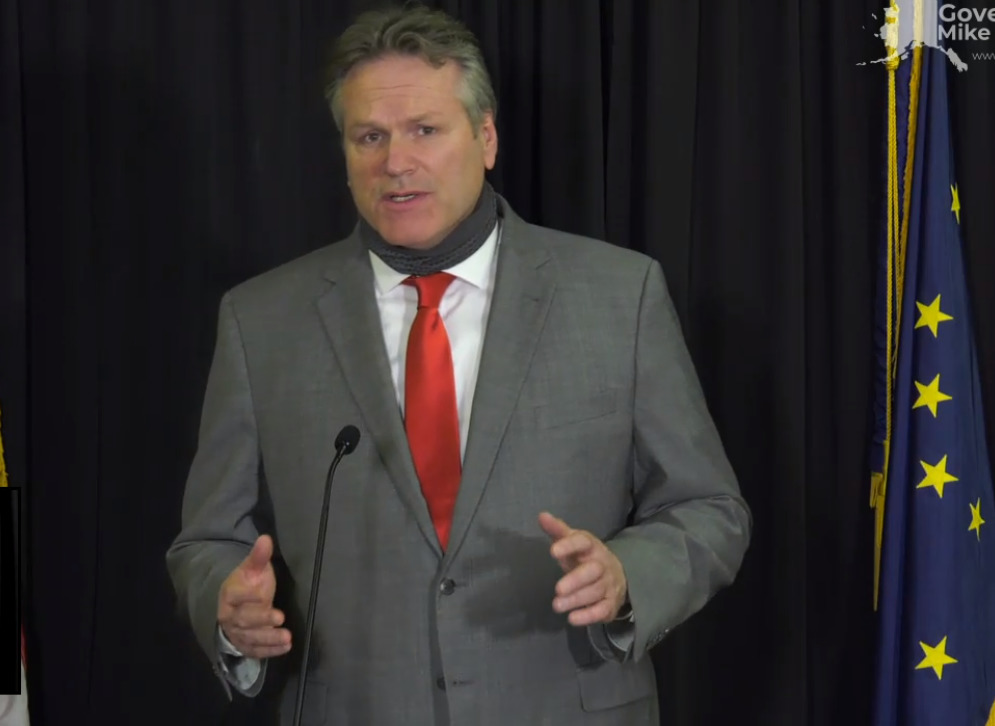
Gov. Mike Dunleavy speaks about his budget proposal, which would begin next July, during a news conference on Dec. 11, 2020. On Wednesday, Dunleavy said in an interview that he is open to working with new President Joe Biden, but that he would use “whatever tools are necessary” to oppose the new administration if Biden consistently opposes developing Alaska’s resources. (Screen capture of a video stream from the governor’s office)
Shortly after Joe Biden was sworn in as the nation’s 46th president, Alaska Gov. Mike Dunleavy said in an interview that he’s open to working with the new president. But he also said he’s prepared to oppose the new administration if it seeks to block developing Alaska’s natural resources.
That was one of the first things President Biden did on Wednesday when he announced he’d put a “temporary moratorium”on all oil and gas leasing activities in the Arctic National Wildlife Refuge immediately after taking office.
“I’ll work with anyone to come up with things we can agree on, and where there are some issues that I believe are harmful to the state of Alaska, I’ll oppose the administration,” Dunleavy said. “If I think they’re going to hurt opportunities in the state of Alaska for jobs, opportunities to keep our kids and grandkids here, opportunities for wealth, I’ll oppose them.”
Dunleavy said that he plans to have a dialog with Biden administration officials, but if he sees a consistent pattern of opposition, the governor will “use whatever tools are necessary” to fight back.
“Alaska’s viewed very differently by the rest of this country,” he said. “And they don’t necessarily see this as a sovereign state. But they see it as a vision of a larger park. In 1959, that was not the vision.”
And Dunleavy says that’s not his vision for the state, either.
Regarding the Alaska legislative session that convened this week, he said his top priorities are to:
settle how permanent fund dividends are set;
pass constitutional amendments that would limit state spending and require public approval for tax increases; and
pass a bond package to fund capital projects.
Dunleavy is proposing an amendment to the Alaska Constitution that would put protect an annual draw from the Alaska Permanent Fund, and set dividends at a certain share of the draw. Both the exact amount of the draw and the share that would go to dividends would be set in state law.
He said he only wants to make a bigger-than-planned draw from the permanent fund’s earnings reserve account one time.
“I don’t have any intention of drawing down the ERA,” he said. “As a matter of fact, if you look at the permanent fund approach that we’re taking, it would, again, settle the question with the input of the people. And it protects the earnings reserve within the fund. So, this is a one-time event from my perspective.”
Dunleavy acknowledged that once the changes to the PFD are in place, the state would have fewer options to balance the budget.
“Yes, it hems us in, but it gives us certainty and it gives us an opportunity if there’s going to be any changes, for example, with taxation, that the people of Alaska are part of that equation,” he said. “So … starting out with the PFD, I think allows us to have discussions on a whole host of other issues with regard to the fiscal approach.”
He pushed back against the idea that voters would reject any new or increased taxes, in defending his proposal to require that the public vote on taxes.
“If it’s explained in the manner that the people of Alaska understand, that a certain revenue measure would help pay for this service or this program, etc., etc., I think the case can be made,” he said. “And I would be confident that the people of Alaska — again if it’s explained well, would concur with that.”
Dunleavy added that he’s “inherently suspicious,” of adding revenue, pointing to a history of the state spending money when it’s available.
Finally, Dunleavy praised Alaska’s vaccination team for leading the country in vaccinating residents so far.
He hasn’t received his first shot.
“I am going to wait my turn and that’ll be determined by our health team,” he said, adding that he wants the most vulnerable Alaskans to be vaccinated first.
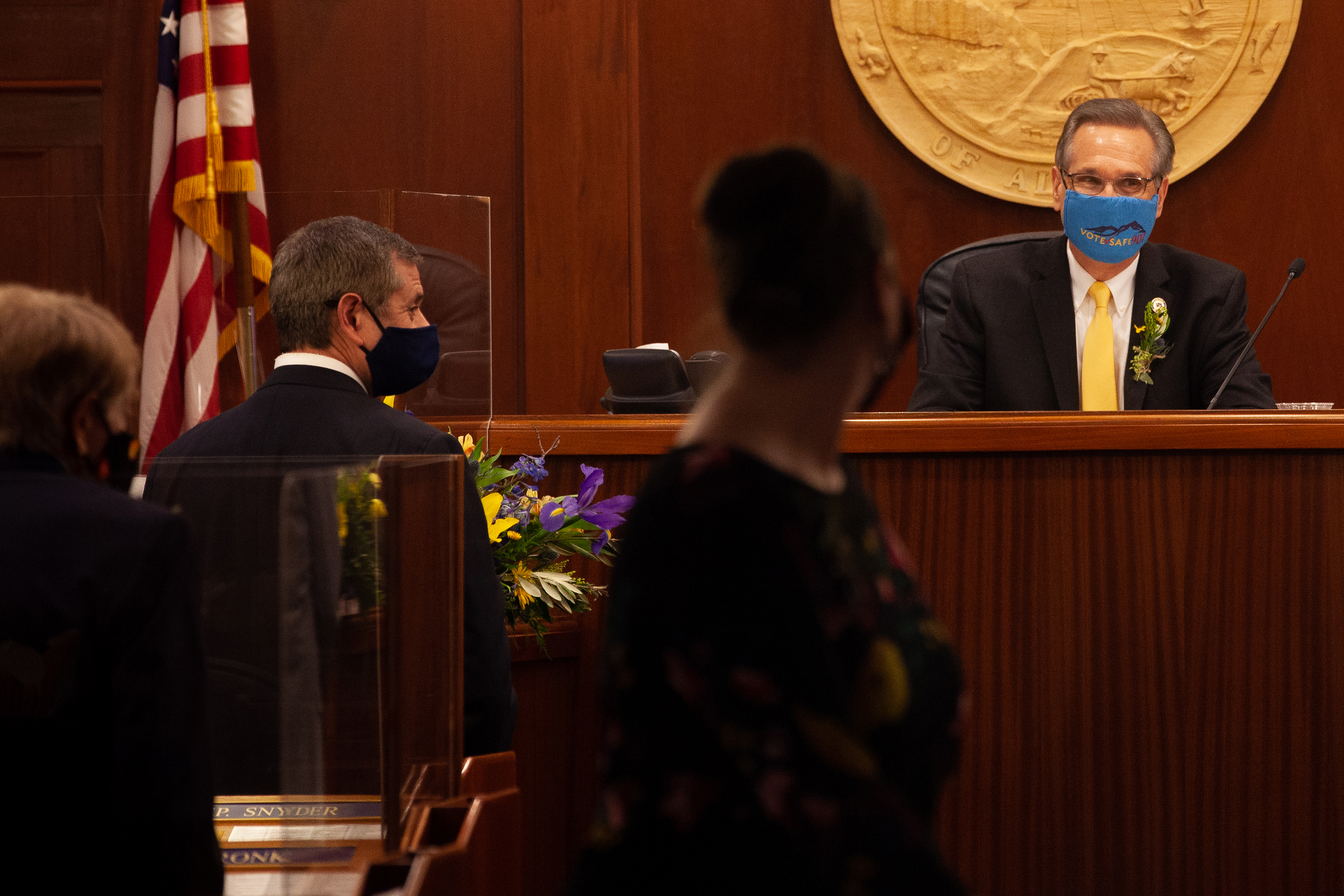
Lt. Gov. Kevin Meyer swears members of the state House in during the first day of the 32nd Legislative Session on Tuesday in Juneau. (Photo by Rashah McChesney/KTOO)
On the first day of the 32nd Alaska Legislature, the Senate organized and picked a leader but the House didn’t.
It was an unusual first day of the session. Girl Scouts didn’t visit to present the colors, and there was no singing of the Alaska flag song.
With the chambers complying with COVID-19 safety rules, plexiglass barriers were installed between lawmakers’ desks. And there were no visitors in the galleries.
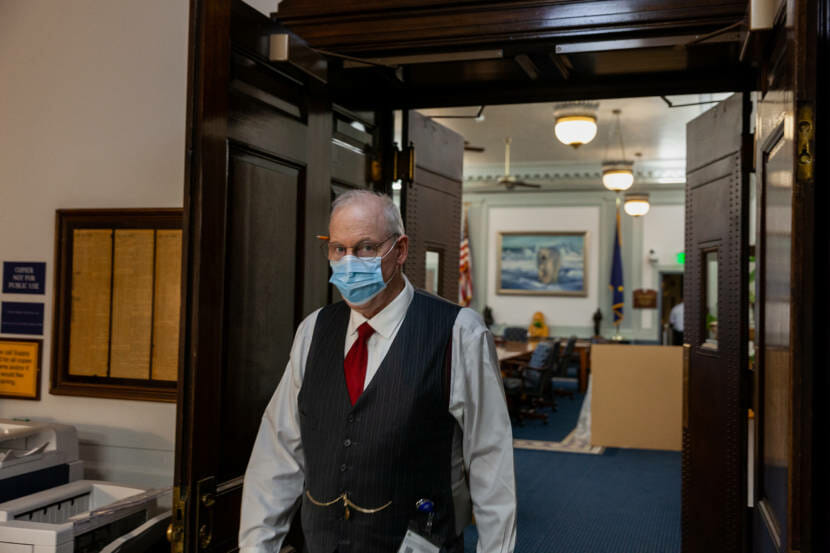
Signs encouraging masks and social distancing were spread throughout the building. The state’s capitol is closed to the public and anyone who wants to gain access must be tested for COVID-19 and screened for symptoms. (Photo by Rashah McChesney/KTOO)
The Senate Republicans formed a majority caucus during the last hour before the first floor session, leaving the party in control of the chamber for the ninth straight year.
Soldotna Republican Sen. Peter Micciche was chosen as the Senate president. In a prayer at the start of the session, Micciche noted that some senators are away from their families and asked God for aid.
“Bring us together as a body to respectfully serve Alaskans,” he said. “Allow us to ignore the letter next to our names, their gender, color, religion and district politics to allow us to see each other as fellow, equal servants here to guide the policies of our great state.”
Both chambers usually organize shortly after the November elections. But both the House and Senate failed to organize quickly this year, as differences among the Republicans delayed action and led Democratic senators to hope they could form a bipartisan majority with some Republicans. That failed to happen, as the Republicans announced a new leadership team.
Palmer Republican Sen. Shelley Hughes will be the majority leader and Anchorage Republican Sen. Mia Costello will be the majority whip. Fairbanks Republican Sen. Click Bishop and Sitka Republican Sen. Bert Stedman will be the co-chairs of the Senate Finance Committee, which focuses on the budget. Kodiak Republican Sen. Gary Stevens will help determine which bills are voted on as the chair of the Senate Rules Committee.
Sen. Bert Stedman, R-Sitka, walks out of the Senate Finance room at the State capitol building. The Senate organized in a Republican-led majority on Tuesday, announcing that Stedman and fellow Republican Senator Click Bishop will chair the powerful committee. (Photo by Rashah McChesney/KTOO)
Things did not go smoothly in the House. Just like two years ago, the House is evenly split and without a leader. Lt. Gov. Kevin Meyer will lead floor sessions for the time being.
Meyer, who served in both chambers as a lawmaker, addressed the House, recalling his own time as both a representative and a senator.
“You have officially received one of the greatest honors that I think a person can receive,” he said. “And the honor is the trust that Alaskans have bestowed on you to represent them to the best of your ability.”
Bethel Democratic Rep. Tiffany Zulkosky led the prayer in the House.
State Rep. Louise Stutes, R-Kodiak, leaves the House floor after being sworn in. (Photo by Rashah McChesney/KTOO)
“We thank you that, amidst differences in our home communities, families, life experiences and perspectives, we find commonality in a call to public service, and working on behalf of this place we love,” she said.
The House could not agree on a temporary speaker to preside over sessions until a permanent speaker is chosen. The chamber split 20-20 on the only nominee, Fairbanks Republican Rep. Bart LeBon. All but one Republican voted for him. Kodiak Republican Rep. Louise Stutes, 15 Democrats and four independents voted against him.
Both chambers are scheduled to hold floor sessions on Wednesday.
On Monday, Gov. Mike Dunleavy appointed Ed Sniffen as Alaska’s attorney general. Sniffen has been the acting attorney general since August, when former Attorney General Kevin Clarkson resigned.
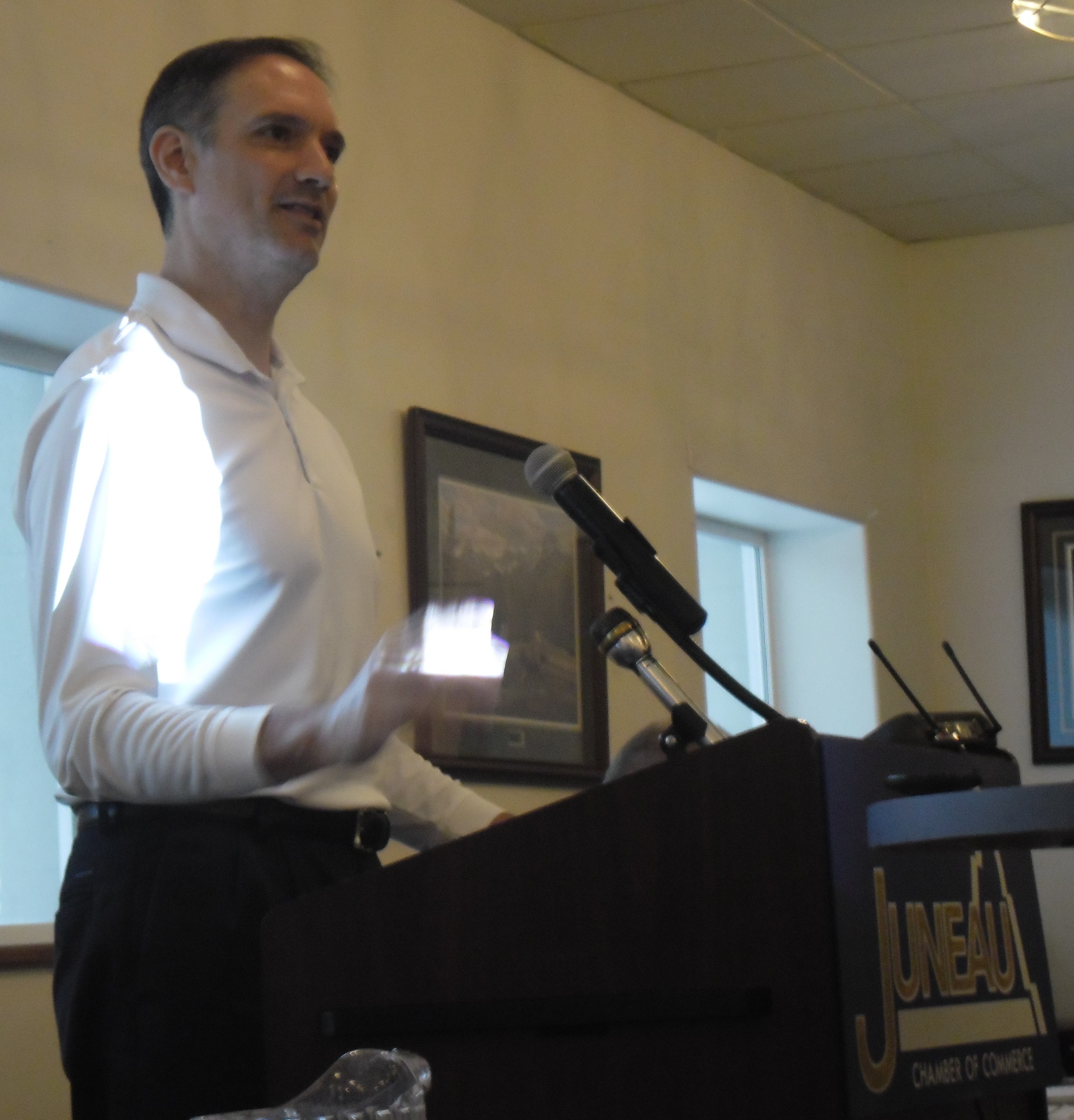
Then-Assistant Attorney General Ed Sniffen addresses the Juneau Chamber of Commerce on July 11, 2013. (Photo by Jeremy Hsieh/ KTOO)
Sniffen began working for the Department of Law in 2000 and has served as senior attorney general in the consumer protection unit as well as deputy attorney general and other senior positions.
In a statement, Dunleavy said Sniffen has a long and proven record of leadership within the department.
Sniffen graduated from law school in 1988. He then practiced law in Anchorage, focusing on natural resources, environmental, labor and maritime law.
Sniffen said in the announcement that he is honored and is looking forward to the work.
Clarkson resigned following reporting from the Anchorage Daily News and ProPublica that revealed he sent more than 500 texts to a junior state employee on her personal phone, including invitations to his house, kiss emojis and comments on her appearance.
The appointment is subject to approval from the Legislature, in a joint session.
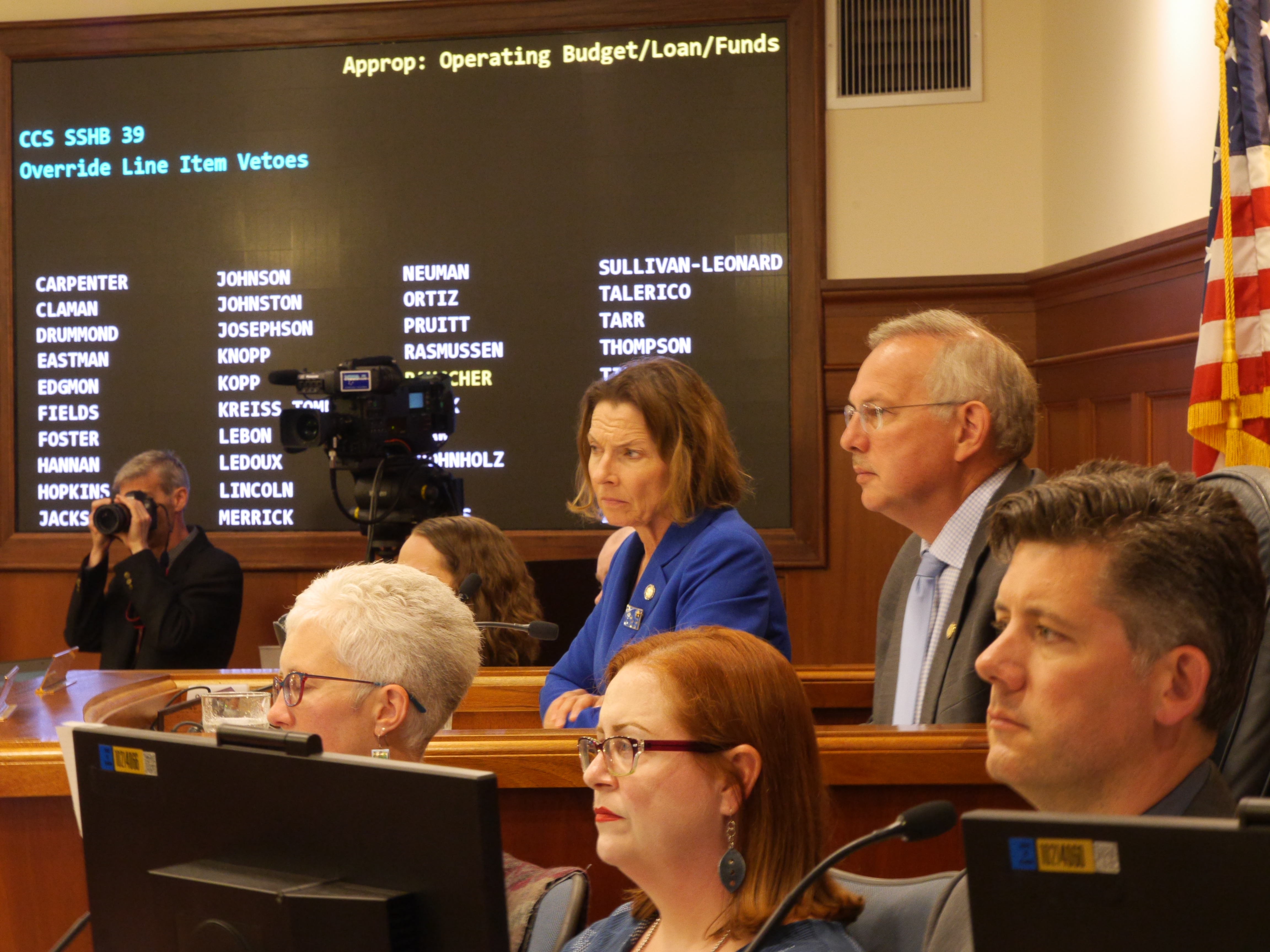
Alaska Senate President Cathy Giessel, R-Anchorage, and House Speaker Bryce Edgmon, I-Dillingham, preside over a failed vote in 2019 by the Legislature to override Gov. Mike Dunleavy’s line-item budget vetoes. (Photo by Aidan Ling / Gavel Alaska)
Alaska lawmakers adopted a proposal Monday that would allow legislators to vote remotely through the same digital voting board as those in the Capitol building. The Legislature’s current rules require that all lawmakers be present in each chamber to vote.
The Legislative Council, which oversees legislative business when the Legislature isn’t in session, approved up to $74,000 to implement a new emergency remote voting system — one day ahead of the new session.
The council’s action would pay for a new system. But for the system to be implemented, lawmakers would have to change the rules after they’re organized for this session.
The new system would allow lawmakers to vote from the regional legislative information offices, or from their homes if they are quarantined or isolated.
Legislative staff estimate it will take 30 days to build the new remote voting system. However, staff said it could take less time to prepare a temporary solution that would allow some legislators to vote from outside of the Capitol building.
In other business, the council amended the Legislature’s temporary safety rules to allow one news reporter to sit in a gallery during floor sessions. The council previously barred all news reporters. The safety rules could be changed again after the Senate and the House have chosen their presiding officers.
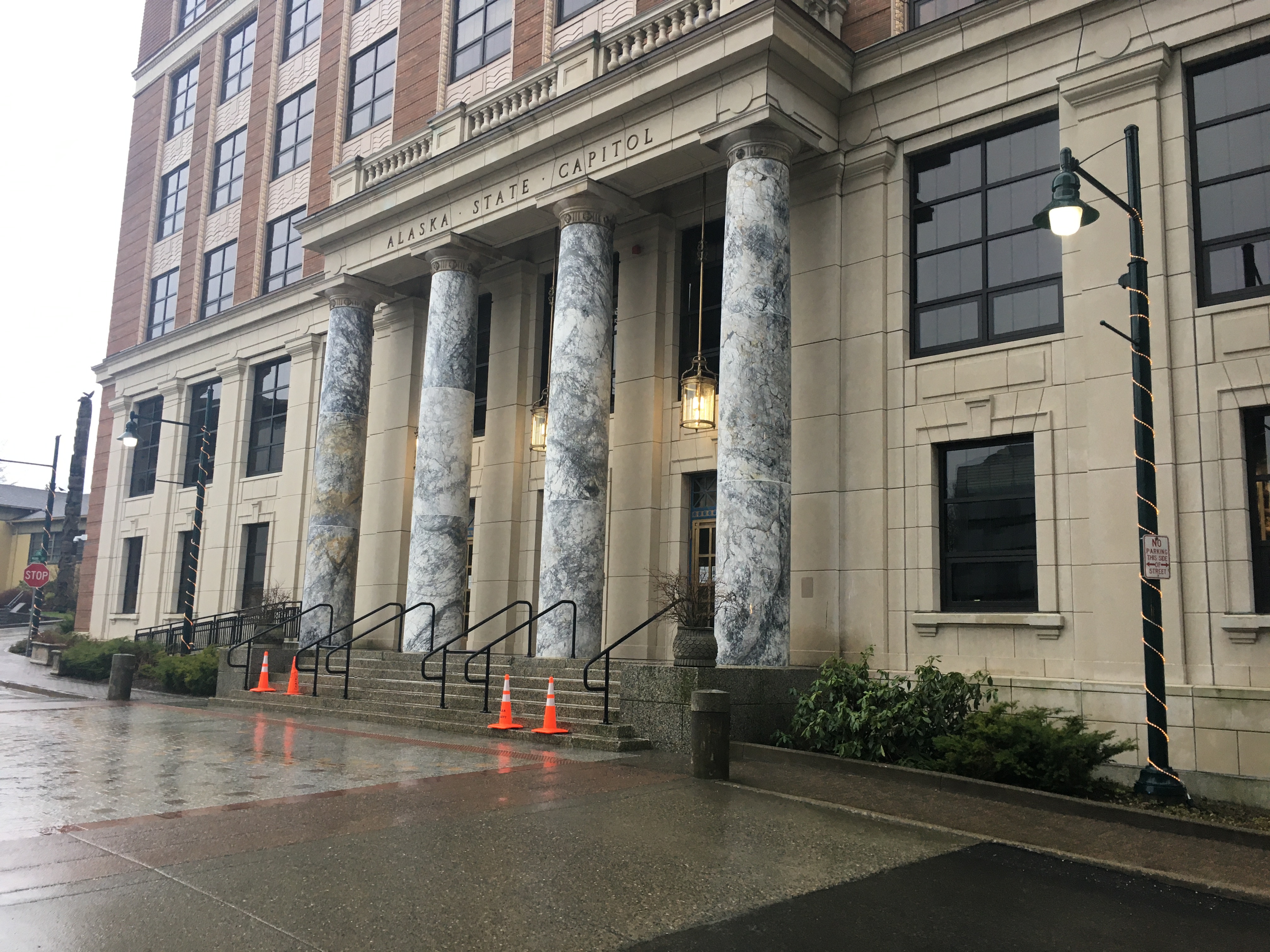
The FBI warned of potential protests at state capitols across the country on Jan. 17, 2021, There were no demonstrations, armed or otherwise, at the Alaska Capitol in Juneau. (Photo by Andrew Kitchenman/KTOO & Alaska Public Media)
Despite FBI warnings of potential protests at state capitols on Sunday, by late afternoon, there were no demonstrations, armed or otherwise, at the Alaska Capitol in Juneau.
Local law enforcement had prepared for the possibility of violence.
An online flyer mistakenly listed the Dimond Center mall in Anchorage as the location of Alaska’s protest, leading the mall’s owner to close the shopping center on Sunday. There were no reports of protests on Sunday at that location or anywhere else in Anchorage.
It was a quiet day outside of the Capitol, where it rained through most of the afternoon. It also was quiet inside the Capitol, where lawmakers were meeting in small groups as they attempted to form majority caucuses in both chambers.
Neither side of Alaska’s legislature was organized going into the long weekend. The legislative session starts on Tuesday, Jan. 19th.
Close
Update notification options
Subscribe to notifications
Subscribe
Get notifications about news related to the topics you care about. You can unsubscribe anytime.