State Government Reporter, Alaska Public Media & KTOO
State government plays an outsized role in the life of Alaskans. As the state continues to go through the painful process of deciding what its priorities are, I bring Alaskans to the scene of a government in transition.
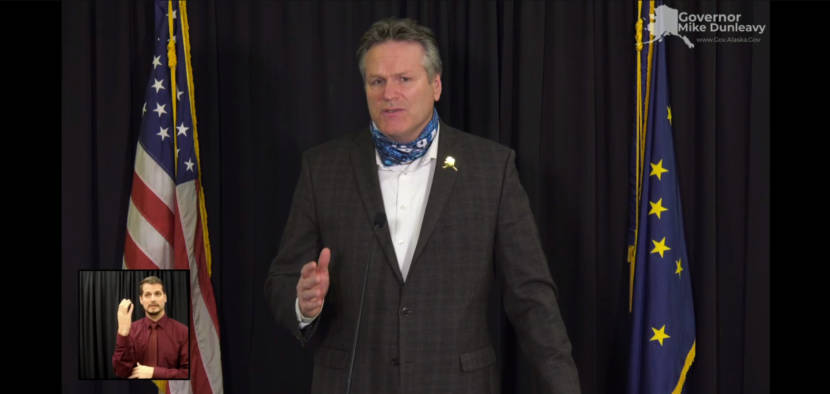
Alaska Gov. Mike Dunleavy appeals to Alaskans to support neighbors, businesses and charities affected by COVID-19 in December. On Thursday, Dunleavy issued the fourth emergency disaster declaration in response to the COVID-19 public health emergency. (Screen capture of news conference)
Gov. Mike Dunleavy issued another disaster declaration on Thursday in response to the COVID-19 public health emergency.
The declaration goes into effect at 12:00 a.m. on Friday and will last until Feb. 14.
It gives the state special powers to protect public health.
This is the fourth declaration in response to the pandemic. Dunleavy issued the first in March and the Legislature later passed a law that Dunleavy signed extending it until Nov. 15. He has issued two more 30-day declarations since then.
Under state law, disaster declarations expire after no more than 30 days unless the Legislature votes to extend them. While some lawmakers have expressed concern that the governor has issued multiple declarations without the Legislature meeting, no one has sued to try to block them.
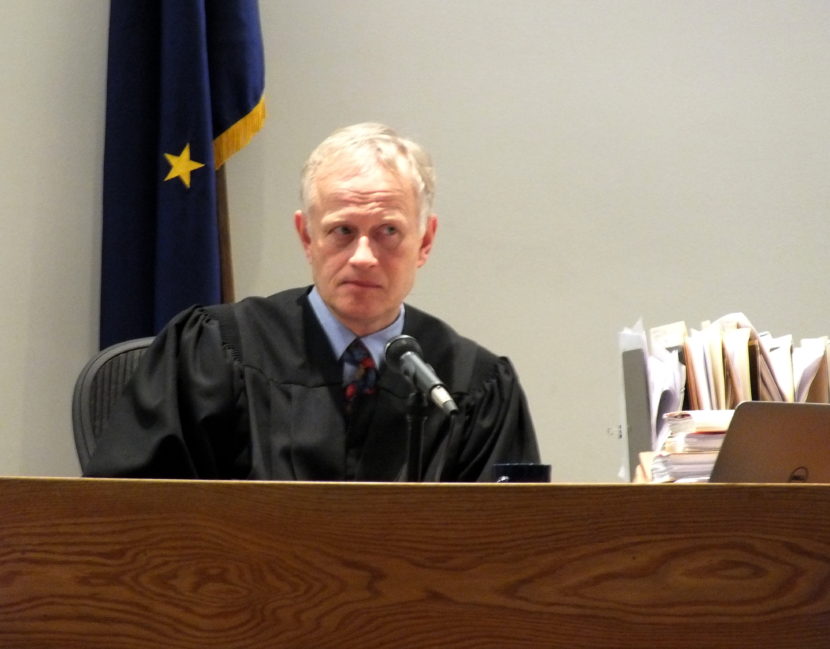
Superior Court Judge Philip Pallenberg closely watches during opening arguments in a civil trial. Pallenberg ruled on Friday against a motion that would have caused 94 of Gov. Dunleavy’s appointees to lose their positions. (Photo by Matt Miller/KTOO)
Gov. Mike Dunleavy’s appointees will be able to remain in place for now, after a Juneau Superior Court judge ruled against an effort by lawmakers to remove some of them.
Under the state constitution, the governor’s appointees are subject to confirmation by the majority of legislators. But due to the COVID-19 pandemic, that didn’t happen before the legislative session ended in May.
A law passed before the session ended said that that if the Legislature didn’t act to confirm the appointees within 30 days of the public health disaster ending, then it would amount to rejecting the appointees and the positions would become vacant.
The Legislative Council filed a lawsuit on Dec. 23 seeking to remove appointees made since April 2019 to positions that require the Legislature’s approval. The council wanted Juneau Superior Court Judge Philip Pallenberg to issue an injunction that would have made dozens of seats on boards and commissions immediately vacant.
It also would have removed Revenue Commissioner Lucinda Mahoney. Her department helps prepare the state budget, and oversees state finances, taxation and the distribution of permanent fund dividends.
The original disaster declaration expired on Nov. 15, so the Legislative Council argued that the positions became vacant 30 days later, on Dec. 15. Dunleavy’s administration argued that the constitution and other laws still required that the Legislature act on the appointments.
Pallenberg denied the Legislative Council’s request on Friday, so the appointees remain in place. He still must decide on the merits of the overall lawsuit.
The Alaska flag. (File photo by Skip Gray/Gavel Alaska)
Alaska’s population dropped by nearly 4,000 people — or 0.5%– last year, according to estimates released from the state on Thursday.
It’s the fourth straight year of declines and the biggest drop since 1988. The estimate covers the period between July 2019 and July 2020.
Even though 5,000 more Alaskans were born in the state than the number of those who died, the net decline came from people moving away. Nearly 9,000 more people left the state than moved in. Also, Alaska lost roughly 46,000 jobs during this time.
Alaska’s estimated population was 728,903 in July, down from 740,637 four years earlier.
One group that saw an increase was Alaskans 65 and older. That group grew by 4%.
Of Alaska’s 30 boroughs and unorganized census areas, 23 had population declines, led by Anchorage. The Fairbanks North Star and Matanuska-Susitna boroughs had the largest increases.
Juneau’s population is 31,773 — down 286 people from the year before. There were 118 more births than deaths in the capital city, but 404 more people moved away than moved to town.
The numbers are estimates, because the numbers from the 2020 census haven’t been released yet.
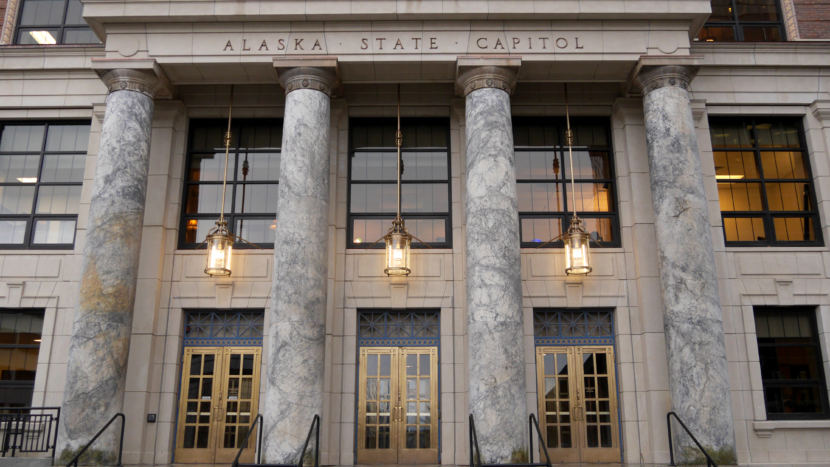
Alaska State Capitol Building, Juneau, Alaska, January 23, 2017. (Photo by Skip Gray/360 North)
Hearing the news of the violence in the U.S. Capitol reminded Kodiak Republican Sen. Gary Stevens, 79, of an experience he had as an army lieutenant in 1968 when his battalion was called into Washington, D.C., after the assassination of Martin Luther King, Jr.
“Watching TV today reminded me just exactly of those days,” Stevens said. “It took me right back to the concerns we had. You know, people were rioting and causing disturbances and burning buildings. I mean, I remember driving through the city and we had troops at every corner with rifles.”
But Stevens says there is an important contrast.
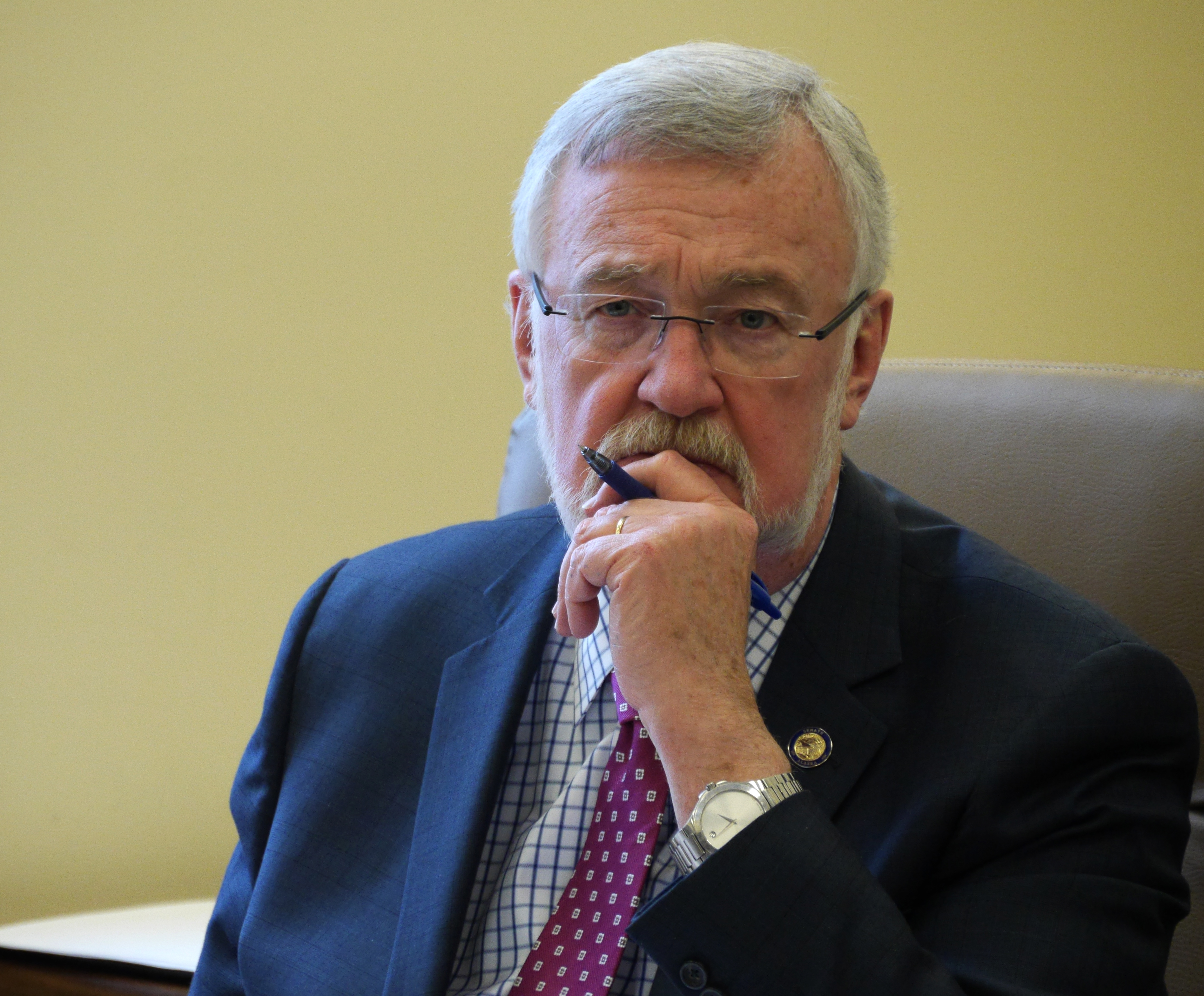
Sen. Gary Stevens (R-Kodiak) during a Senate Labor & Commerce Committee meeting on March 14, 2017. (Photo by Skip Gray/360 North)
“Simply, it was violence because of the way Black Americans had been treated, and Martin Luther King was, of course, a big spokesman, and so that death was taken personally by a lot of people. This is different,” he said. “This is sedition, I think, when there’s an attempt to overthrow the government.”
Stevens also was called into the Washington, D.C., area when anti-Vietnam War protesters marched on the Pentagon. He says there are lessons from that time that still apply.
“You don’t need to be violent. You don’t need to burn and destroy things. You can peacefully show your disobedience and cause things to change,” he said.
Stevens says he’s become more patriotic as he’s become older, but questioned what has gone wrong in the country that led to Wednesday’s events.
Stevens chairs the Legislative Council, which is preparing for the upcoming session. He says it’s worth discussing whether security should be added at the Alaska State Capitol. But he says he’s not personally concerned and that the Capitol in Juneau has not had major safety issues in his 20 years as a legislator.
It was quiet in the Capitol in Juneau through early Wednesday afternoon, with only a small, brief pro-Trump protest outside the building, according to a security officer. Larger rallies occurred in other state capitals.
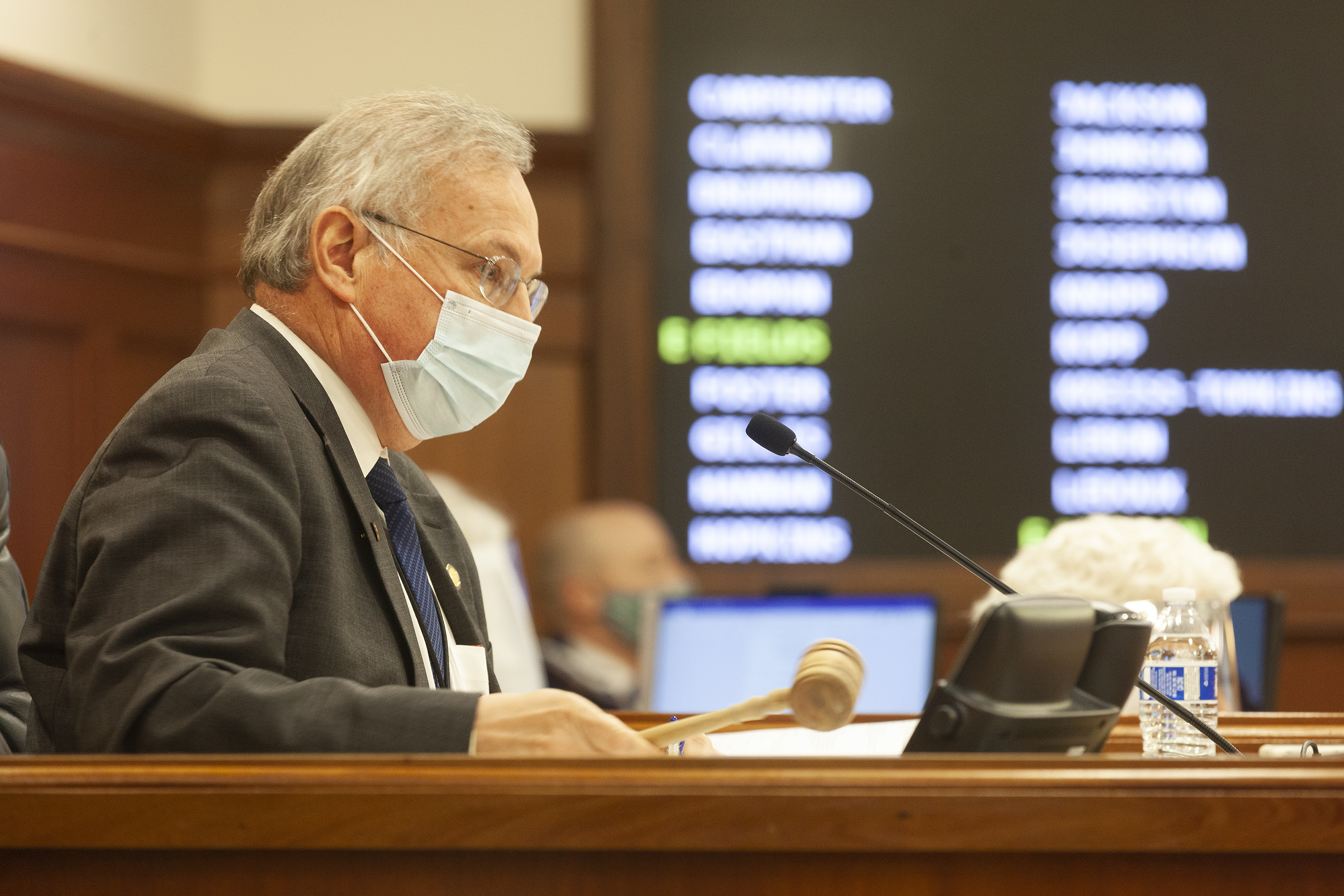
Speaker of the House Bryce Edgemon gavels out of a floor session on Monday, May 18, 2020, in Juneau, Alaska. Lawmakers gaveled in for the last few days of their regular session to pass a COVID-19 aid bill. (Photo by Rashah McChesney/KTOO)
House Speaker Bryce Edgmon, a Dillingham independent, also reacted to the news.
“Well, the whole spectacle was appalling on the one hand. It was bone-chillingly frightening on the other hand,” he said. “And then afterwards, to have a few hours to reflect on it, you know, I’m left to just sort of stand back and think, ‘Boy, I hope this is a wake up call for our country.'”
Republican Gov. Mike Dunleavy commented on the events on social media, writing that “Acts of violence have no place in our great country. Republicans are the party of law & order. These few extremists do not represent our values.”
I’m deeply saddened & appalled to see the violence at the U.S. Capitol today. Acts of violence have no place in our great country. Republicans are the party of law & order. These few extremists do not represent our values.
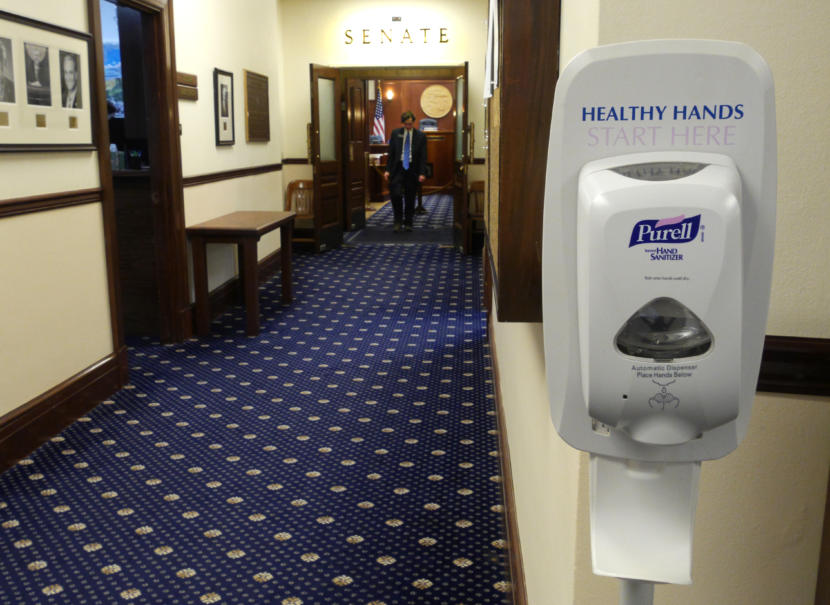
A hand sanitizer dispenser stands outside Senate Chambers in the Alaska State Capitol in Juneau on March 10. On Monday, the Legislative Council voted to require that lawmakers wear facemasks when the Legislature convenes in January. (Photo by Skip Gray/KTOO)
Alaska lawmakers will be required to wear facemasks during floor sessions when they convene in January, under rules that a committee of legislative leaders adopted on Monday.
The joint House-Senate Legislative Council passed a policy that outlines how lawmakers will enforce new rules in response to the COVID-19 pandemic.
The council also voted to bar news reporters from floor sessions and to require lawmakers to sit when they speak during floor sessions, to reduce the distance that virus particles could spread.
Kodiak Republican Sen. Gary Stevens, the council chair, said lawmakers have to protect the people who work for the Legislature.
“We know the fears that many of our employees have,” Stevens said, noting that employees may have health conditions that legislators aren’t aware of. “People are concerned about what may happen to them and are even considering maybe not working for us if they don’t feel safe.”
The policies could be changed once the newly elected Legislature convenes on Jan. 19. Neither the House nor the Senate have agreed on who will lead their chambers.
Palmer Republican Rep. DeLena Johnson was the only council member to vote against the policies, which passed 11-1. She said the constituents of legislators who break the rules would be disenfranchised.
“When we start making exclusions, we have to be very, very, very careful,” she said. “Especially … when we’re talking about this Legislature making rules for a Legislature that has not yet formed.”
Under the new policies, lawmakers who refuse to have their temperature checked or to answer health screening questions will be denied entry into the Capitol. Those who refuse to wear facemasks will be required to stay in their offices. And those who test positive for the coronavirus will have to quarantine outside of the Capitol.
Legislative leaders have asked that lawmakers be prioritized in vaccine distribution, but state Chief Medical Officer Dr. Anne Zink said lawmakers may not be in the groups receiving shots before March.
Alaska State Capitol Building, Juneau, Alaska, January 23, 2017. With just over a month before the next Legislature convenes, it’s still not clear who will be in the majorities in both chambers. (Photo by Skip Gray/360 North)
In many states, it’s already clear who will lead the legislature and what the agenda will be when they meet next year. But not in Alaska.
The next legislative session is only a month away. But major differences among Republicans mean Alaskans still don’t know who will be in the majorities in both the House and the Senate.
Soldotna Republican Sen. Peter Micciche said Thursday that all 13 Republican senators have met twice, most recently last week. But meetings between smaller groups are happening every day.
“I’m still hopeful that something is coming together,” that will lead to a Republican majority, he said. “And, frankly, I see anything else as being relatively unacceptable, considering the softening on positions that people have had, that should bring us together.”
Republicans have had differences over policy issues. Examples include whether to follow a law that limits how much the state can draw from permanent fund earnings, or a law that sets the traditional formula for permanent fund dividends.
Micciche said once Republicans have agreed on their objectives and formed a majority, it should be open to some Democrats who share those objectives.
“I’m not one that looks at ‘good people’ and ‘bad people.’ I mean, everyone that’s serving, is serving honorably in the Senate,” he said about partisan differences. “My point is, that Alaskans elected Republicans on a 2-to-1 basis in the Senate.”
Micciche said one advantage to Republicans sticking together is that they may be able to sit down with the governor and affect what he chooses to veto from the budget.
The seven Democratic senators can’t influence whether the Republicans can agree among themselves. But if the Republicans can’t agree on a majority, Anchorage Democratic Senator Bill Wielechowski said, the Democrats will help form a bipartisan majority.
Wielechowski was part of the Bipartisan Working Group that led the Senate from 2007 to 2012.
He said the group was successful in setting aside controversial issues and focusing on the state’s finances.
“In my experience, the best form of government that you get is when you have bipartisan government — when you have people across both sides of the aisle working together,” he said.
On the House side, the biggest news since the election was the decision by Kodiak Republican Rep. Louise Stutes to stay with the current majority, which also includes Democrats and independents. That means the House is divided 20-20. Stutes said being in the current majority has benefited her district.
“My coalition has been very supportive of the needs of my community, and that’s my priority,” he said.
She said it’s in the interest of her constituents, including supporting the fishing industry and the Alaska Marine Highway System.
She disagrees with Republicans who won’t vote for the state budget, once it’s gone through the budget process. She said all members of the majority can affect the budget, but they have to be willing to compromise.
“You have to have certain principles that you’re organizing around,” Stutes said. “And I was unable to detect what those principles were with the Republican majority, or the Republican caucus.”
Two years ago, eight Republicans joined the coalition. It’s unclear how many — if any — more Republicans beyond Stutes will join it this time.
Stutes declined to discuss the talks on forming a new majority. But she said she’s hopeful it will happen before the start of the session on Jan. 19.
Close
Update notification options
Subscribe to notifications
Subscribe
Get notifications about news related to the topics you care about. You can unsubscribe anytime.