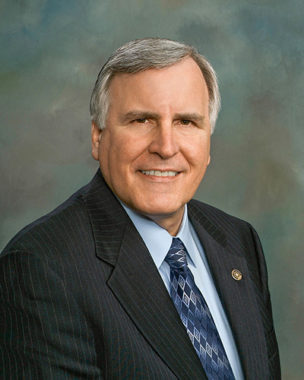
Craig Dahl is a longtime capital city resident and the former president and CEO of Alaska Pacific Bank.
Chamber president Lance Stevens introduced Dahl at Thursday’s luncheon.
In a statement, Dahl said he looks forward to helping the business community address “many challenges ahead,” including declines in state revenue, city budget issues and taxation.
Dahl replaces Cathie Roemmich, who resigned in November after 9 years as Juneau chamber executive director.
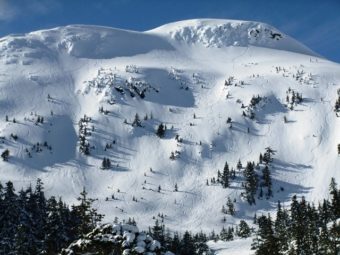
West bowl at Eaglecrest Ski Area. (Photo by Rosemarie Alexander/KTOO)
Eaglecrest Ski Area is closed today and tomorrow due to warm weather and rain.
For now, Juneau’s city-owned ski hill anticipates having the Porcupine chairlift in operation Saturday from 9 a.m. to 3 p.m.
“We went from having a lot of fun up on the upper mountain and Porcupine area last weekend to obviously a lot of rain,” Eaglecrest General Manager Matt Lillard said Wednesday on KTOO’s A Juneau Afternoon. “It’s certainly hurt the amount of snow that we have and the conditions. So we’ll be closed the next two days, and then on Saturday and Sunday we’ll be reopening.”
Lillard says the latest conditions can be found at skijuneau.com.
The National Weather Service calls for more rain in the Juneau area through most of the weekend, with a chance of snow by Sunday night and Monday.
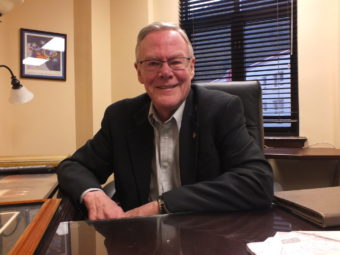
This will be the first legislative session in the Alaska Senate minority for Juneau Sen. Dennis Egan. (Photo by Casey Kelly/KTOO)
Like most state lawmakers, Juneau Sen. Dennis Egan expects Alaska’s multibillion dollar deficit to be the number one issue during the upcoming legislative session.

Egan says his focus will be protecting the interests of the capital city and the other Southeast communities he represents when the 29th Alaska Legislature gavels in next week.
Egan was Juneau’s mayor in the late 1990s when oil prices bottomed out at $9 a barrel, so he’s been through something like this before.
“We’re a government town, and our property valuations went in the toilet,” he recalls. “It was very hard trying to make budgets with severe declines in property tax revenue, and people were very concerned and skittish, moving out of town.”
The price of oil is under $50 a barrel this week. With the vast majority of Alaska’s unrestricted general fund revenue coming from oil taxes, the projected budget deficit has grown to more than $3 billion dollars. Egan says that’s going to be the biggest challenge for lawmakers during this year’s session.
“It’s going to be very difficult trying to figure out how we control spending and what projects we fund and take away from, and which departments we control spending on,” he says. “I mean, it’s back to the bad old days.”
New Gov. Bill Walker has already made some attempts to deal with the financial crisis – submitting a bare bones capital budget and putting a hold on new spending for six state megaprojects, including the Juneau Access road.
“I understand why the governor did it, but I just hate to see Pat Kemp go,” Egan says. “And it has nothing to do with Juneau Access. Pat was born and raised in Juneau, he’s a transportation engineer.”
Overall, Egan says he’s happy with the new administration. Walker hails from Valdez, the same town as Egan’s dad, Bill Egan, the state’s first governor.
“We haven’t had many governors, we’re a young state, and I think that’s cool,” he says, before adding with a laugh, “I used to be able to call him Billy. I can’t do that anymore, though.”
Egan says he’s glad Walker is a big supporter of Juneau as the capital city, something that might actually come into play this session. Sen.-elect Bill Stoltze of Chugiak has talked about introducing a bill to move the legislature to Anchorage. Egan says he’s already working his colleagues, trying to convince them it’s a bad idea.
“It’s a divisive issue. It pits regions of the state against each other,” he says. “And there are legislators that are just not, they don’t even want it brought up, especially in tight budget times.”
One person he hasn’t talked to is Stoltze.
“I’ll let him talk to me,” Egan says.
This will be Egan’s first session as a member of the Alaska Senate minority. He was appointed to his seat at the end of the 2009 session, and was a member of the bipartisan majority caucus that ruled the Senate from 2010 to 2012. He was one of two Democrats to join the Republican-led majority of the past two sessions. He wasn’t invited to join the new majority, but Egan thinks he can still be effective.
“The legislative move issue is a perfect example,” he says. “I’ve been meeting with majority members on that specific issue.”
Egan plans to introduce two pieces of legislation this year, both of which he’s offered previously. The Senate passed his bill in 2012 to allow public employees a choice of retirement plans, but it has never had a hearing in the House. He’ll also reintroduce a bill that would make Juneau’s House of Wickersham the official residence of the lieutenant governor. That measure passed the legislature last year as part of a larger package that was vetoed by former Gov. Sean Parnell due to a technical error.
Besides Juneau, Egan’s district includes Haines, Skagway, Gustavus, and Excursion Inlet.
*Editor’s Note:An earlier version of this story said Tenakee Springs is in Sen. Egan’s district. It’s actually in Sen. Bert Stedman’s district.
This concept drawing by MRV Architects shows the proposed Housing First project in Juneau. The facility would be built in Lemon Creek on land donated by Tlingit-Haida Regional Housing Authority.
The Juneau Assembly has officially committed $1.5 million to a Housing First project aimed at helping the chronically homeless.
The group behind the project hopes the Assembly’s pledge of support will increase its chances of getting a grant from the Alaska Housing Finance Corp. to pay for the bulk of construction costs.
The Assembly adopted a resolution with the commitment Monday without objection. The project also will get a small financial contribution from the theater company producing “A Lifetime to Master,” a play about understanding homelessness in Juneau.
Playwright Mary Ellefson, Generator Theater Company producer Flordelino Lagundino and director Shona Strauser at the Juneau Assembly meeting Monday. (Photo by Jeremy Hsieh/KTOO)
Generator Theater Company’s Flordelino Lagundino told the Assembly half the proceeds from Sunday’s show at McPhetres Hall will be donated to the Housing First project.
“And I really feel like it’s an important story, these stories are really important for all of us to hear,” Lagundino said.
Initially, the proposed facility would have 32 efficiency apartments, a commercial kitchen and clinic space. Another 22 apartments could be added at a later date, along with office space for social service nonprofits. Phase one is estimated to cost about $6.8 million. The whole thing would be about $9.1 million.
The Juneau Housing First Collaborative has been working on the project for the better part of two years. It’s based on a model that’s been used successfully in other communities, including Anchorage and Fairbanks. It says that if you give a homeless person a permanent, stable place to live it increases their chances of getting out of homelessness and improving their lives.
The Glory Hole Soup Kitchen and Emergency Homeless Shelter is the lead agency for the project. Tlingit-Haida Regional Housing Authority has donated land near its headquarters in Lemon Creek where the project can be built.
Potential sources of the city’s $1.5 million contribution include tobacco tax revenue, the city’s budget reserve and unspent cash that rolls over between fiscal years.
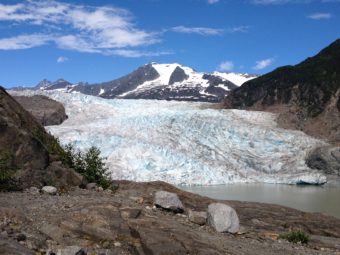
The U.S. Forest Service is holding a public meeting tonight to discuss a proposed fee increase at the Mendenhall Glacier Visitor Center starting with the 2016 tourist season.

Not only is the agency looking to raise the fee for the visitor center itself, but for the first time it wants to charge people for the use of some nearby trails.
Visitor center director John Neary says it would be the first cost increase at the facility since 1999, and would help offset federal budget cuts.
“What Congress allocates us is in rapid decline,” Neary says. “My budget – the Congressionally-allocated portion – has dropped 50 percent in just the last couple of years, not to mention previous drops.”
Under the proposal, the visitor center entry fee would go from $3 to $5, and a new $5 fee would be charged to use the Photo Point Trail, the Steep Creek Trail, the viewing pavilion, bus shelter and restrooms.
Other areas near the Mendenhall Glacier, including the Nugget Falls Trail, the Trail of Time and the East and West Glacier Trails would continue to be free. Seasonal passes would cost $10 and the fees would be waived during the tourism off season.
While reaction on some message boards has been largely negative since the proposal was announced last month, Neary says the written comments he’s received have been 2-to-1 in favor of the increase.
“I’m aware that there’s a significant amount of people that have concerns,” he says. “I’m not hearing from them by email. So that is the official way to comment is by email, by letter or by phone call directly to us.”
Or, he says, you can go to tonight’s meeting at the visitor center from 5 to 7 p.m.
The comment period lasts through Jan. 30. After that, the agency will consider all of the comments and make a final decision later this year.
Voters approved the legal the production, sale and use of marijuana for Alaskans over 21 years old in the November election. (Creative Commons photo by Brett Levin)
One of the reasons Giono Barrett moved to Alaska almost seven years ago was because the state already has pretty lax marijuana laws. The 1975 Ravin v. Alaska ruling by the state Supreme Court allows residents to possess a small amount of pot for personal use. Barrett, a 33-year-old Minnesota native, says he’s already growing marijuana with his brother in a house they share in Juneau.
“Right now, it’s six plants. I’m sticking to the guidelines Alaska has stated,” he says.
And he insists it’s all for personal use.
“I really don’t want to get in trouble,” he says.
But Barrett says he is looking forward to the day he can legally sell pot. In November, Alaska voters approved recreational marijuana for people 21 and older. The new law doesn’t take effect until next month, and after that it’ll take another nine months for the state to enact regulations governing commercial retail and grow operations. Still, Barrett and his brother have signed on to a reality TV show chronicling their operation.
Giono Barrett and his brother are already growing pot in Juneau. (Photo by Casey Kelly/KTOO)
He’s not currently working, and says they’re putting all their efforts into expanding what they grow now. Eventually, he says, they want an outdoor cannabis farm to supply retailers around the state. They’d offer tours to capitalize on Juneau’s visitor industry and help others grow marijuana, something he says they already do now.
“You can grow cannabis. It is a weed, it’ll grow,” Barrett says. “But it’s really hard to grow in a quality form.”
“Right now in Juneau you can have a greenhouse with a retail sales counter in any type of neighborhood in town,” says Juneau Assemblyman Jesse Kiehl.
“So, think about quiet little residential neighborhoods where we don’t allow bars and liquor stores,” Kiehl says. “You would be able to come in and get a permit to open up a marijuana greenhouse and retail sales counter there.”
The city’s law department tells the Assembly that any permits granted now would likely be grandfathered if restrictions were adopted later. Kiehl says the moratorium is intended to give the city time to figure out where and when pot-related businesses should be allowed to operate. It would expire before the state starts to issue business licenses for legal marijuana enterprises, and it’s not a blanket ban on sales like a proposal before the Anchorage Assembly last month.
Kiehl himself supported the ballot measure legalizing recreational marijuana.
“Voters in the state of Alaska passed this initiative,” he says. “Voters in Juneau voted for it by a very strong margin. And what the people voted to do, I think, the Assembly now needs to implement.”
He does think the 12-month moratorium might be longer than the city needs to figure out its zoning issues, and says if that’s the case he’d support a shorter timeline.
As for extending the city’s indoor smoking ban to include pot, Kiehl says he’s not interested in seeing Juneau overrun by hash bars. But mostly, he says, the measure is designed to protect the health of employees.
“Some people just need a job,” Kiehl says. “And your job shouldn’t come with a contact buzz.”
The Assembly will take public comment before voting on the measures. Even though he says he understands the desire to be cautious, Barrett plans to speak against the moratorium.
“We don’t want to send a message to other communities, and say ‘Hey, you can just stall this out,'” Barrett says. “The message here needs to be that we need to keep moving forward, and we can work through all this stuff.”
He says potential marijuana entrepreneurs want to work within the rules established by the city. But the longer it takes to set up those rules, the more uncertainty it creates.
Close
Update notification options
Subscribe to notifications
Subscribe
Get notifications about news related to the topics you care about. You can unsubscribe anytime.