Jacob Resneck is CoastAlaska's regional news director based in Juneau. CoastAlaska is our partner in Southeast Alaska. KTOO collaborates with partners across the state to cover important news and to share stories with our audiences.
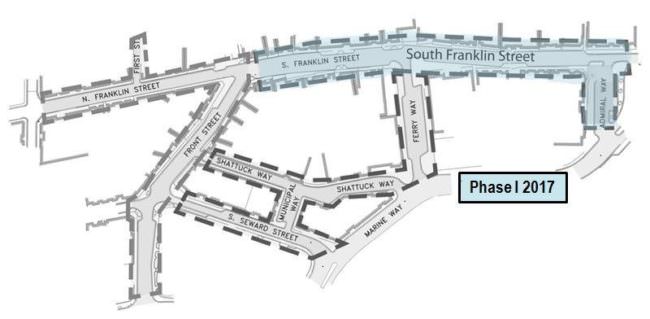
The first phase of downtown street improvements will be to South Franklin Street. (Courtesy City and Borough of Juneau)
After several weeks of delay due to snowy weather, the City and Borough of Juneau’s revamping of South Franklin Street resumed Monday with crews expected to continue work through June, the city said in a news release.
The project will progress a block at a time starting from Manila Square to Ferry Way. From mid-April the work is slated to move from Ferry Way to Front Street. There will be no on-street parking where crews are working and pedestrian access will be limited to one side of the street.
Crews are scheduled to work from 7 a.m. to 5 p.m. every day except Sunday. On some days work may be extended as late as 9 p.m., the news release said. This first phase is projected to cost $1.2 million and is funded by a combination of marine passenger vessel fees, sales tax and water utility funds.
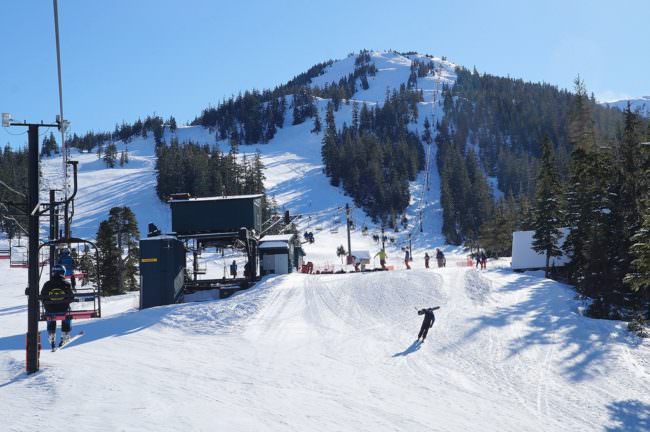
Attendance numbers have spiked at Eaglecrest Ski Area thanks to fresh snowfall. (Photo courtesy John Erben)
Record snowfall in Juneau has created some hazards and headaches but it’s also been a boon for the Eaglecrest Ski Area.
The National Weather Service reported more than 7 inches of snow at Juneau International Airport on Tuesday — breaking a record set in 1969.
North Douglas received 9 inches in 24 hours and fresh powder has been bringing people in droves to the mountain.
Record snowfall Tuesday in #Juneau. Another stat of interest: Snowfall Sunday-Tuesday added up to 20.8 inches at the Juneau Airport. #akwxpic.twitter.com/srKRs9rsCT
“It’s been a great season so far,” Eaglecrest’s marketing director Jeffra Clough said Thursday. “Today, we have over 2 feet of new snow since Monday and the parking lot looks more like a weekend than a Thursday.”
February’s cold and clear conditions had made it challenging to draw skiers, but this month the tide has turned.
“March over previous years has been great,” she said. “We’ve had great snow conditions. Right now our attendance up through March 6 has been approximately 4,500 people.”
That’s compared with just 2,400 skiers last March and a paltry 1,000 in 2015.
Two previous poor snow years had spooked many skiers and season pass sales suffered.
With this latest burst of snow, Eaglecrest’s fans are coming back — a day at a time.
“Day tickets definitely have been increasing and I think that’s where you are seeing people who used to be season pass holders,” interim General Manager Nate Abbott said. “Since they’re concerned about those previous seasons, they probably didn’t buy a season pass.”
Eaglecrest is owned by the City and Borough of Juneau, which subsidizes its operations.
This spike in ticket sales could keep the ski area on budget and and he hopes it’ll boost skiers’ confidence in the mountain, Abbott said.
“Hopefully with this snow, people keep coming up and skiing and it ends up being a great end of the season,” he said. “And everybody next year, when they think back, they’ll be like, ‘The 16-17 season was great!’ and they’ll have a little bit more confidence that winter’s back and we had a couple of bad seasons but those were flukes and it does snow at Eaglecrest.”
A total of 14 people spent the night in the Salvation Army shelter on Monday, which was originally slated to be the fourth and final night in the Salvation Army’s pilot program.
But the charity’s Lt. Lance Walters says extreme weather conditions and space shortages in Juneau’s downtown shelter caused them to extend the program.
“We decided to do one more day just to give people an opportunity to do more search for housing,” Walters said, “as well as some of those people that are unable to go into the Glory Hole to be able to get out of this weather that we’re experiencing.”
A shortage of volunteers has meant the warming center will likely not reopen this week until the Salvation Army finds people willing to help supervise the shelter overnight.
“We’re dependent on volunteers because my wife and I are currently finding that we just can’t not have sleep,” he said, “and we have to be there because we don’t have approved volunteers.”
The Salvation Army hopes to reopen the warming station soon from 11 p.m. to 6 a.m. on nights with dangerously low temperatures.
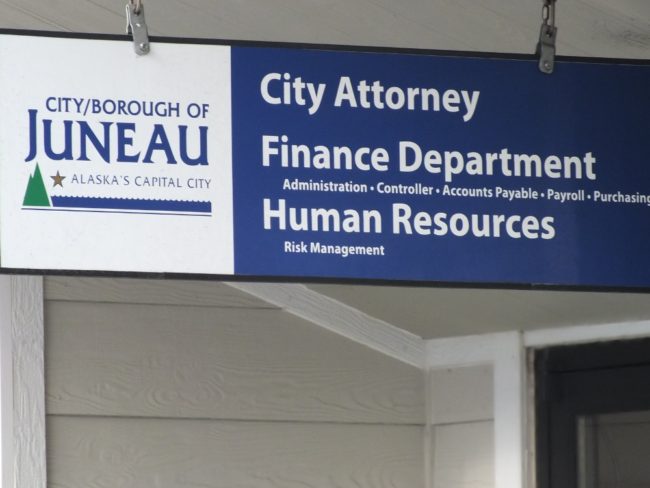
The CBJ Finance Department is headquartered in the Municipal Way Building behind City Hall. (Photo by Casey Kelly/KTOO)
The City and Borough of Juneau has released early numbers for next year’s $330 million budget and the outlook isn’t rosy.
Finance Director Bob Bartholomew said revenue hasn’t kept pace with spending.
“For the general government departments we’re projecting a $1.2 million shortfall where expenditures exceed sustainable revenues,” Bartholomew said.
School district funding also complicates the picture. A change in the state’s funding formula for schools and projected enrollment numbers means the overall funding gap will likely widen.
“When you combine the two, we’re looking at about a $2.2 million shortfall,” he said. “Those are the preliminary numbers and we hope to fine-tune it before we present the full budget April 5th.”
That’s something local governments are watching closely.
“If the hammer really falls from the state, we want to be organized for that,” City Manager Rorie Watt said. “If the state solves its fiscal plan — which I really hope they do and I think they can do — then I think we’ve got much more moderated touch on our budget.”
It will be up to the Juneau Assembly to decide what may have to be cut. That process will play out at Finance Committee meetings scheduled each Wednesday from April 5 until the budget is finalized.
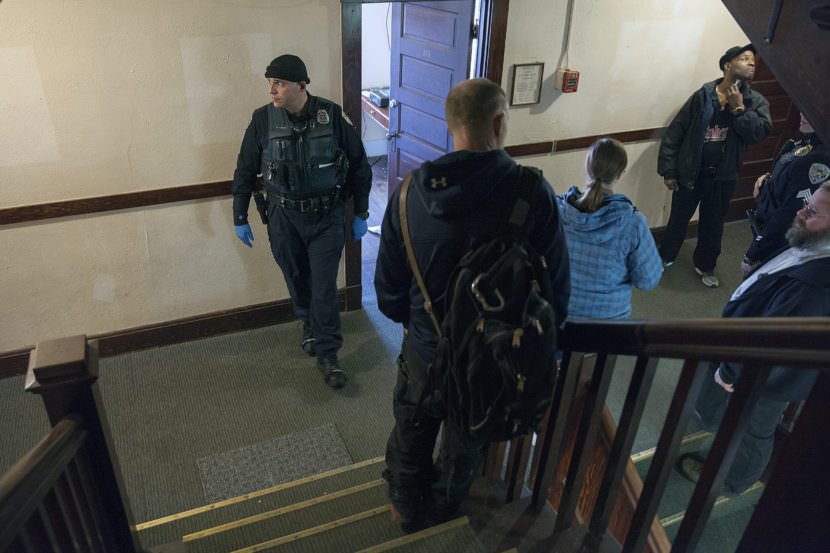
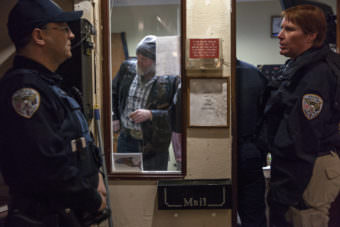
Juneau police and community members look on as residents of the Bergmann Hotel hurriedly packed their belongings and left their rooms Friday in Juneau. The building has been condemned and residents were given 24-hours to leave. (Photo by Rashah McChesney/Alaska’s Energy Desk)
The historic Bergmann Hotel used as a tenement has been condemned by the City and Borough of Juneau over health and safety hazards.
Tenants were coming to terms Friday with the city’s condemnation order.
Code violations have been ongoing for years, but few tenants realized this was really the end.
“I read that sign and walked right past it just like most every other tenants did, probably most of them didn’t even read it — a few of them can’t,” said Dave Lane, a carpenter who works as a handyman in exchange for lodging.
The city says the owners had been on notice since October.
“There’s significant health and safety issues at the Bergmann including an inoperable sprinkler system for fire, inconsistent heating, no hot water, sewage issues and improper roofing,” Deputy City Manager Mila Cosgrove said, “All of those issues pose significant risks to the people who are tenants there.”
About 50 people live in the building. Most pay about $600 a month. Tenants do much of the repair and upkeep themselves to keep the heat on and water flowing.
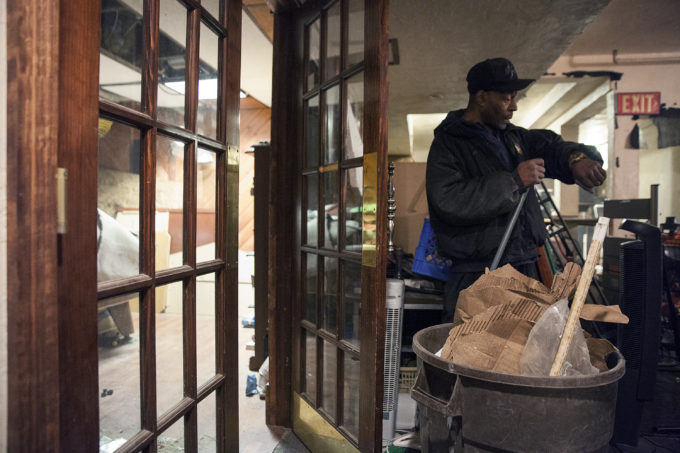
James Cole, 49, said he was caught off guard as he worked to clear out the basement.
“The whole point of it is I just gave them $600 yesterday for rent and the guy — he wouldn’t give me my money back,” Cole said. “I told him, ‘Dude. I just gave you $600 just yesterday.’ Now if I don’t get my $600 back — I’m going to take him to court. I want my money back if I can’t stay here.”
The city said it’s working with social service agencies to help displaced tenants with nowhere to go. As many as 30 spaces have been available at its downtown church.
“We’ll be open every night for them until Tuesday from 7 p.m. to 7 a.m. so they can sleep,” said Lt. Dana Walters of the Salvation Army. “We have cots, we have blankets. People are allowed to bring like one bag with them but then they have to take it. We unfortunately don’t have room for people to store things.”
The hotel property is controlled by Camilla Barrett who owns it through a limited liability corporation.
Juneau police officers confer as they take Chuck Cotten, property manager at the Bergmann Hotel, into custody. Cotten was responsible for removing residents from their rooms before Friday in Juneau. The building has been condemned. (Photo by Rashah McChesney/Alaska’s Energy Desk)
Barrett also is a defendant named in a lawsuit brought by the city in its attempt to recover the cost of demolishing the Gastineau Apartments, a fire-ravaged downtown property owned by a limited liability corporation controlled by the Barrett family.
Dave Lane said he’s worked for about three years to try to keep the building habitable.
But there’s been little investment from the Barretts, he said.
“Right now they don’t get a lot out of it so they don’t want to put a lot into it,” Lane said. “They’re not looking into the fact that, ‘Okay — if we put some money into this’ Because I mean, look at this place … it wouldn’t really take that much to put this into — have it a really nice building.”
Efforts to reach Camilla Barrett – whose legal name is listed as Kathleen Barrett — and her attorney that represented her in the city’s lawsuit over the Gastineau Apartments were unsuccessful.
“We do support safety and things like that. We don’t want to see our mental health consumers housed in a dilapidated situation,”said Gregory Fitch, executive director of the Mental Health Consumer Action Network in Juneau. “But considering the cold — I think we could’ve waited a week.”
The National Weather Service forecasts temperatures to dip into the 20s over the weekend.
Juneau struggles with homelessness and a lack of affordable housing. It remains unclear what options many of these tenants will have after the city boards up the Third Street property.
James Cole, 49, checks his watch to see how much time he has to pack his belongings on Friday, March 10, 2017, in Juneau. Cole was caught off guard by the news that he had to leave, he said he spent the prior evening clearing debris in the hopes that he’d be able to stay. (Photo by Rashah McChesney/Alaska's Energy Desk)
A tenant of the Bergmann Hotel in Juneau finds out that she has to leave in a few hours on Friday, March 10, 2017. Many residents said they were surprised by the suddenness of their eviction. The building has been condemned. (Photo by Rashah McChesney/Alaska's Energy Desk)
Juneau police officers moved through the Bergmann Hotel in Juneau, telling residents they had to leave on Friday, March 10, 2017. (Photo by Rashah McChesney/Alaska's Energy Desk)
James Cole talks about his surprise at having to leave the Bergmann Hotel in Juneau on Friday, March 10, 2017. Tenants were kicked out after the city condemned the building for ongoing health and safety issues. (Photo by Rashah McChesney/Alaska's Energy Desk)
Tenants moved their belongings, animals and children out of the Bergmann Hotel in Juneau on Friday, March 10, 2017. The building has been condemned. (Photo by Rashah McChesney/Alaska's Energy Desk)
Juneau police officer Ken Colon tells a resident that they have to leave immediately on Friday, March 10, 2017 at the Bergmann Hotel in Juneau. (Photo by Rashah McChesney/Alaska's Energy Desk)
Police, aid workers, journalists and tenants of the Bergmann Hotel in Juneau gather in the lobby as the building is cleared and boarded up on Friday, March 10, 2017. (Photo by Rashah McChesney/Alaska's Energy Desk)
A Bergmann Hotel resident in Juneau walks into the building and obscures what he was smoking as he speaks to police on Friday, March 10, 2017. Tenants were told to pack up their belongings and leave as the building is condemned. (Photo by Rashah McChesney/Alaska's Energy Desk)
Tenants of the Bergmann Hotel in Juneau were removed from their rooms on Friday, March 10, 2017. The building has been condemned. (Photo by Rashah McChesney/Alaska's Energy Desk)
Bergmann Hotel residents in Juneau hurriedly moved their belongings, children and pets on Friday, March 10, 2017. The building has been condemned. (Photo by Rashah McChesney/Alaska's Energy Desk)
Juneau police officer Ken Colon goes from room to room, removing tenants of the Bergmann Hotel in Juneau on Friday March 10, 2017. (Photo by Rashah McChesney/Alaska’s Energy Desk)
Tenants of the Bergmann Hotel in Juneau stack their belongings in a hallway on the first floor of the newly condemned building on Friday, March 10, 2017. (Photo by Rashah McChesney/Alaska's Energy Desk)
City inspectors and the Bergmann Hotel’s owner move through the building, checking off violations after it was condemned on Friday, March 10, 2017 in Juneau. Residents were forced to leave the building. (Photo by Rashah McChesney/Alaska's Energy Desk)
A resident moves her belongings out of the Bergmann Hotel in Juneau on Friday, March 10, 2017. (Photo by Rashah McChesney/Alaska's Energy Desk)
Chris Clark, an intoxicated tenant of the Bergmann Hotel in Juneau, gets help from Rainforest Recovery staff on Friday, March 10, 2017. Clark and about 50 other tenants were forced to leave after the building was condemned. (Photo by Rashah McChesney/Alaska's Energy Desk)
Residents of the Bergmann Hotel in Juneau talk about what they’re supposed to do before police showed up to remove them from the building on Friday, March 10, 2017. (Photo by Rashah McChesney/Alaska's Energy Desk)
Dave Lane tells another resident of the Bergmann Hotel in Juneau that she has just a few hours to pack her belongings and leave on Friday, March 10. (Photo by Rashah McChesney/Alaska's Energy Desk)
Dave Lane talks to a reporter on Friday, March 10, 2017, at the Bergmann Hotel in Juneau. (Photo by Rashah McChesney/Alaska's Energy Desk)
Several rooms in the Bergmann Hotel Juneau are in severe disrepair on Friday, March 10, 2017. The building has been condemned and residents forced to leave. (Photo by Rashah McChesney/Alaska's Energy Desk)
An extension cord runs along a hallway in the basement of the Bergmann Hotel in Juneau on Friday, March 10, 2017. (Photo by Rashah McChesney/Alaska's Energy Desk)
Dave Lane talks about one of the rooms he was repairing at the Bergmann Hotel in Juneau on Friday, March 10, 2017. (Photo by Rashah McChesney/Alaska's Energy Desk)
Dave Lane talks about his work to fix a hole in the ceiling of the Bergmann Hotel in Juneau on Friday, March 10, 2017. (Photo by Rashah McChesney/Alaska's Energy Desk)
A tenants’ belongings are seen packed up through a broken door at the Bergmann Hotel in Juneau on Friday, March 10, 2017. (Photo by Rashah McChesney/Alaska's Energy Desk)
Dave Lane talks about trading work for a place to live at the Bergmann Hotel in Juneau on Friday, March 10, 2017. (Photo by Rashah McChesney/Alaska's Energy Desk)
A Juneau police officer talks to Dave Lane about the number of residents in the Bergmann Hotel in Juneau on Friday, March 10, 2017. (Photo by Rashah McChesney/Alaska's Energy Desk)
Juneau police officers confer as they arrest Chuck Cotten, property manager at the Bergmann Hotel in Juneau on Friday, March 10, 2017. Cotten was responsible for removing residents from their rooms. The building has been condemned. (Photo by Rashah McChesney/Alaska's Energy Desk)
Juneau police and community members look on as residents of the Bergmann Hotel in Juneau hurriedly packed their belongings and leave their rooms on Friday March 10, 2017. The building has been condemned and residents were given 24 hours to leave. (Photo by Rashah McChesney/Alaska's Energy Desk)
James Cole carries his bicycle out of the Bergmann Hotel in Juneau on Friday, March 10, 2017. The building was condemned and residents were forced to leave. (Photo by Rashah McChesney/Alaska's Energy Desk)
James Barrett, son of the owner of the Bergmann Hotel in Juneau, talks to the Juneau Fire Chief Rich Etheridge about the things that need to be repaired in the newly condemned building on Friday, March 10, 2017. (Photo by Rashah McChesney/Alaska's Energy Desk)
A notice posted March 9, 2017, informs Bergmann Hotel residents in Juneau that they have 24 hours to leave. (Photo by Rashah McChesney/Alaska's Energy Desk)
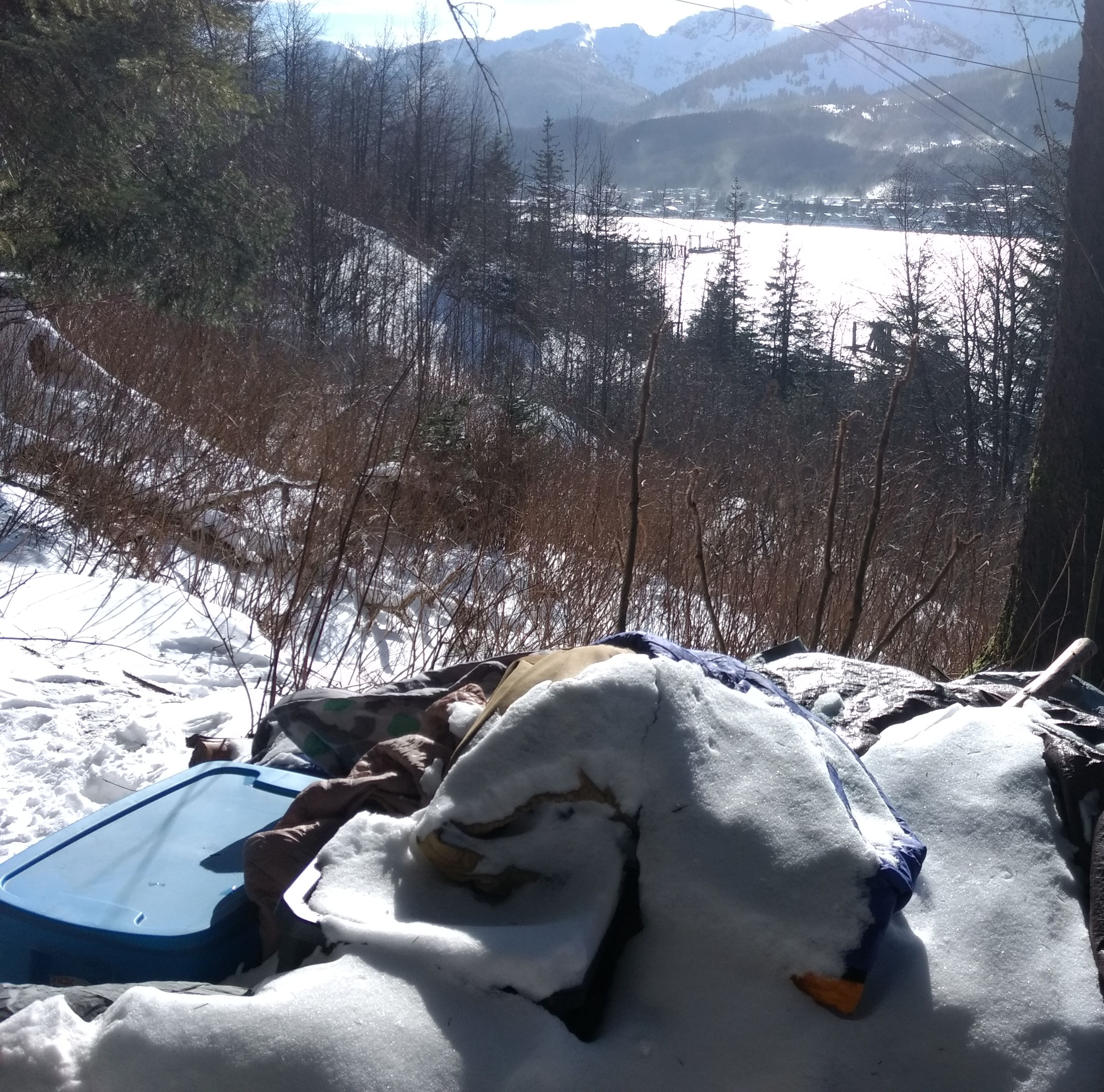
Snow collects on abandoned belongings at a campsite above downtown Juneau on March 3, 2017. AJT Mining Properties evicted its occupants in February. Homeless people have few legal camping options in the winter. (Photo by Jacob Resneck/KTOO)
Next month Juneau’s downtown camping ban goes into effect. Supporters of the ban said it would only be one part of the community’s homeless strategy. Much of the land above Juneau’s downtown is owned by Alaska Electric Light and Power’s sister company, AJT Mining Properties. And in all seasons homeless people erect makeshift camps in the woods on those lands.
Employees of AJT Mining Properties are constantly evicting the people it finds camping on these lands. People often ask where they are supposed to go?
“Many times it’s kind of hard — I personally don’t know what their other options are,” said Alec Mesdag, lands manager for AELP and its affiliated properties. “This campsite was tagged a number of weeks ago,” he said, pointing to a former campsite behind a thicket of elderberries. A mound of gear in totes, backpacks and a collapsed tent still remains.
“We offered a period of time for them to remove their campsite and move along, find somewhere else to go — not that I necessarily know where that other place to go really is.”
After April 15 they will be barred from camping downtown on private property. Mesdag said that AELP has offered the use of about an acre below the former AJ Mill to the city as a winter camping site.
“If we had this time of year a campground that we could direct people to, I think that would make it easier for us to say, ‘Well, you can’t camp here, but you can go over to this other managed campground,'” he reasoned.
The city already runs a summertime campground on AELP land off Thane Road. It’s used as a cheap housing alternative. But it’s also in an avalanche zone, so the city closes it down in the winter.
This proposed winter site isn’t perfect either. It’s an uphill walk from the end of Gastineau Avenue and there can be heavy snow in the winter. AELP is willing to turn it over to the city on a year-to-year arrangement. Mesdag says talks have been ongoing with city staff since December.
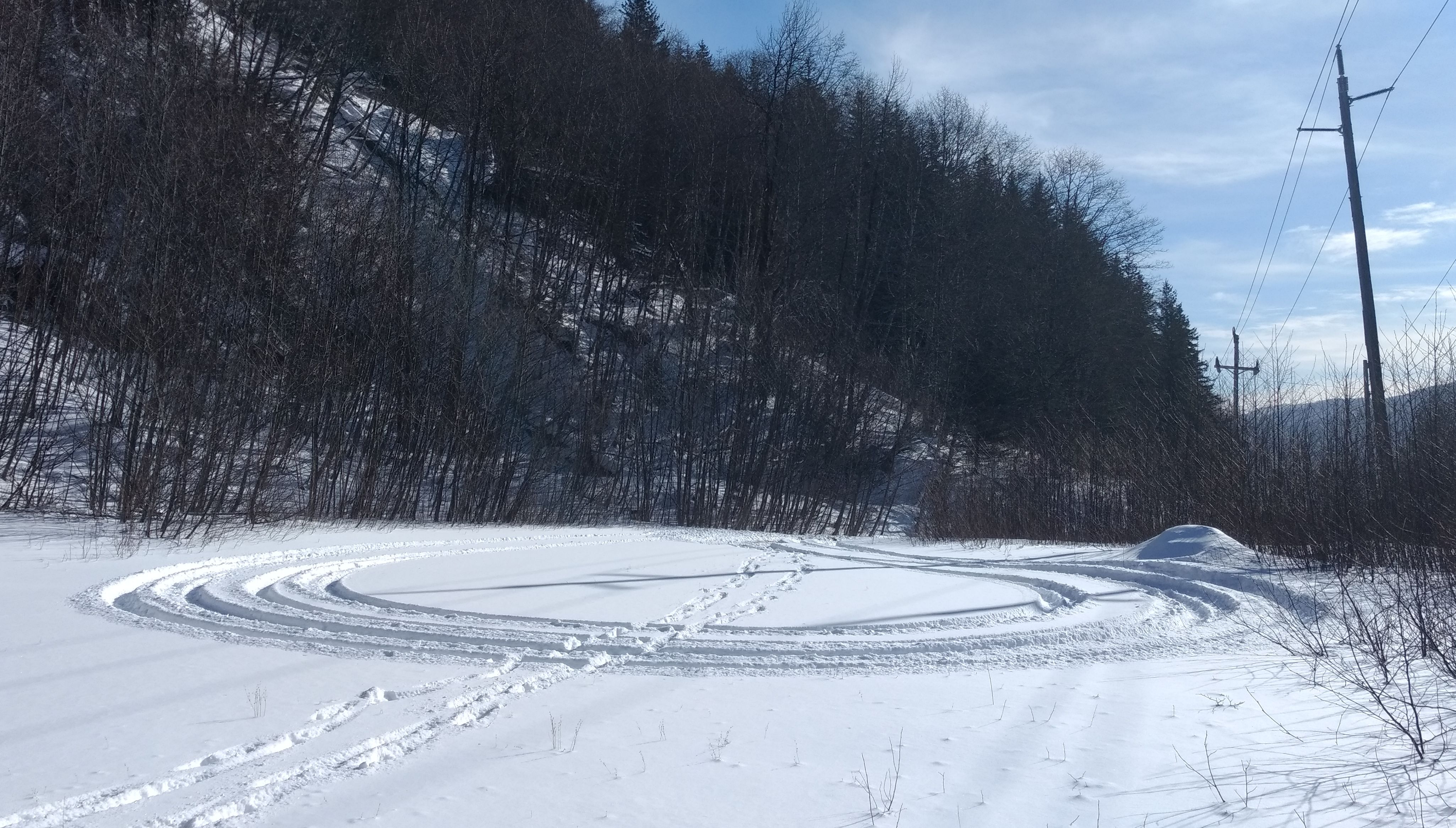
AJT Mining Properties, a sister company of Alaska Electric Light and Power, owns this clearing above downtown Juneau, photographed March 3, 2017. The utility has offered the land as a possible site for a winter campground. (Photo Jacob Resneck/KTOO)
“There’s actually an old fire ring sitting out here,” Mesdag said. “It’s been used as a campsite before and we’ve been up here with a number of folks from the city to look at how useful this would be, which parts of this area would be best for setting the actual tent sites, and what type of services we could bring up here.”
The city hasn’t decided whether it’s willing to manage a winter campground.
“The question of whether a winter campground is a good idea hasn’t been thoroughly vetted,” said City Manager Rorie Watt. “When I look around the country other places are actually trying to shut down homeless campgrounds.”
That discussion is slated for a Juneau Assembly committee meeting on March 20.
“There will be a cost to it and there will certainly be some philosophical decisions that have to be made in order to do that,” Watt said. “We’ve got other issues as well in terms of zoning and where you could legally put a campground and some other mechanical questions — but I think the big question for the Assembly is: What is the city’s role?”
Homeless advocates say just doing nothing isn’t an option.
“There will be people who pick up their blanket and move three streets over or to the Marine Park structure,” said Mandy Cole, co-chair of the Juneau Coalition on Housing and Homelessness. “And so it’s not ending homelessness in any way — it’s moving it away from that kind of one visible area.”
She notes that the new camping ordinance is not enforceable on public property. That means campers could move from downtown sidewalks and into city parks.
So if the city doesn’t want campers in parks it will need to create alternatives — a winter campground could be one of those options.
“There are people who live on the street who are looking for a kind of space of their own but not necessarily ready or willing to live in an apartment or participate in a program,” she said. “They want a space that’s theirs. Literally doorway-sized space that they can keep their belongings and themselves safe — for those individuals a campground seems totally reasonable.”
The Glory Hole downtown shelter continues to operate at about capacity. Not everyone can pass the required Breathalyzer test to sleep there overnight and some continue to shelter in alcoves.
On a recent morning 57-year-old Wolf Johnson was gathering up his bedding on South Franklin Street. He says he can’t understand how downtown buildings sit vacant while people like him sleep out in the cold. He says he’s looking forward to the 32-bed Housing First shelter that will open in May. But he complains the Assembly’s camping ordinance ultimately put private property rights over human welfare.
“They say April 15 is coming around,” Johnson said. “Well, we all as homeless, we look after each other. These business people are more worried about their property. Me? I’m homeless and all I worry about is where I’m going to sleep.”
There have also been talks between the city and Salvation Army over operating a warming station when temperatures dip dangerously low. That will also be up to the Juneau Assembly to consider later this month.
Close
Update notification options
Subscribe to notifications
Subscribe
Get notifications about news related to the topics you care about. You can unsubscribe anytime.