
KBBI - Homer

KBBI is our partner station in Homer. KTOO collaborates with partners across the state to cover important news and to share stories with our audiences.

Health care price transparency law may be helpful, but it’s unlikely to make care cheaper

Beginning next year, a new law will require all health care providers in Alaska to be more transparent about their prices. Some hope it will give consumers the tools to shop around, boosting competition and subsequently lowering prices. While it may help prevent sticker shock, experts said the move most likely won’t result in cheaper medical procedures.

Davon Smith is the clinical business operations director for SVT Health and Wellness in the Homer area. He said if health care prices catch patients off guard and they are unable to pay, it can impede their treatment.

“It actually compiles onto those social determinants that hinder them from actually getting better,” he said.

That’s partly why the clinic discusses prices and payment options with clients.

“We want to make sure you can afford that kind of treatment plan, that kind of health care costs, and it makes it easier for the patient to be informed and be a part of that decision-making.”

A new law will soon require SVT to go one step further. It will require all health care providers to post prices for the top health care services they provide, among other requirements. Patients will still pay different prices depending on their insurance and other factors.

Andrea Ducas is a senior program officer with the Robert Wood Johnson Foundation, and much like Smith, she said the primary reason to provide patients with more price transparency is to prevent sticker shock and help patients factor in the cost of procedures while creating a treatment plan. However, she also said it gives them more tools to shop around.

“When we are able to compare prices or able to see prices, we save money,” she said.

But she said comparing prices only goes so far.

“So if you had the choice between going to get an X-ray that cost $300 or getting an X-ray that costs $250, if the price of that X-ray really appropriately should only be $20, giving you the option and helping you shop, that’s not going to help bring the costs down to $20,” she said.

Historically, there haven’t been many incentives for patients to shop around, as insurance coverage has typically picked up the bulk of health care costs. Patients have also relied heavily on their doctors to refer them to other providers.

“Patients have not really gravitated toward this type of information in any kind of meaningful way,” said Dennis Scanlon, a professor of health policy and administration and the director of the Center for Health Care and Policy Research at Penn State.

Scanlon explains that laws requiring transparent health care prices in other states and cities, including Anchorage, have not exactly spurred competition.

“If your goal is to create health care transparency to either get people to go to the low-cost providers or to have the high-cost providers lower their prices, there are some selective examples of that happening, but it’s not widespread yet,” he said.

But he said markets with high health care costs such as Alaska, and changes in the health care market in general, have the potential to change that.

“As there has been more of a push for insurance plan designs with higher deductibles which require more first-dollar, out-of-pocket expenses by patients,” he said. “So I think that’s, for lack of a better term, woken some patients up to understand that, ‘Boy, this is costly, and it might be worth shopping around a little bit.’”

Proponents of the new law will have to wait and see if Alaskans are more prone to shop around when the health care transparency law goes into effect on Jan. 1.

However, shopping around only works if you have a choice in health care in the first place, and for many rural and roadless Alaskan communities, that’s just not a reality.

Organizations step up to address growing homeless and poverty needs around Homer

Stacked can goods at the Homer Community Food Pantry. (Photo by Shady Grove Oliver)

The needs of those experiencing homelessness and poverty in the Homer area are growing, and organizations are stepping up to help.

The Homelessness Action Group began recently as a way to address the lack of shelters in the area and the Homer Community Food Pantry is expanding, in part because the number of clients it serves is growing.
Kyla Dammann works with youth at the Recreation and Education Cooperative, better known as the R.E.C. Room. She said teenagers have come up to her with no place to sleep and helping them find a place to stay is complicated.

“Basically if you take in someone that age without parent permission, it’s considered harboring a minor, so there’s a lot of hoops to jump through with that and there’s not really a whole lot of places for them to go,” she said.

The Kenai Peninsula Borough School District said the number of homeless students is increasing. There are programs to help homeless students such as the district’s Students in Transition program, which helps students who lack stable or adequate housing.

There’s also the Safe Families for Children program, which give parents an option to put their kids in a safe place while facing a temporary crisis.

There are also some exceptions that allow caregivers to take minors in without parental permission. But there are no shelters in Homer open to teenagers.

“Most homeless youth have couches to sleep on so they can hop around from friends to friends and stay with different families and whatever…,” she said. “But there was one instance in particular where somebody was given a tent and went to go sleep in a park before the campground opened and then couldn’t sleep there.”

So Dammam and the head of the local Safe Families for Children chapter started the Homelessness Action Group in September. A similar organization existed in Homer in the past.

“My goal with being a part of a group or starting a group is that we can find a solution to giving people beds,” she said.

The group has held two meetings so far and it plans to continue to meet once a month. By the spring, Dammam hopes its plans for a teen shelter will become more concrete.

The group is also starting a fund to help homeless teens who come to the R.E.C. Room. It additionally plans to hold a resource event in January, which will offer items and services such as clothing, cab vouchers and medical care to homeless residents.

But the Homelessness Action Group isn’t the only one seeing an increase in need. David Nofziger is the board president of the Homer Community Food Pantry. He said the pantry has seen more people coming through its doors in recent years.

“In 2017 [there] was about 10 percent more households than were in 2016,” he said. “This year we have had essentially the same number of households come in the 10 months that have passed that we had all year last year. So we’re going to have more total households this year again.”

Nofziger said not everyone who utilizes the food pantry’s services comes regularly. He said there is a large number of area residents who just come in a handful of times per year.

But he said regulars are coming more often than in the past. He adds that clients often need more than just food. Sherry Stead, a board member of the pantry said that’s why the organization offers additional services.

“We provide needed emergency assistance including heating oil, wood, laundry and shower vouchers,” she said. “We have camping gear that we give out if people need camping gear.”

The nonprofit also gives financial assistance so people can afford prescription medication and partners with other organizations to help those coming through its doors find and pay for housing.

The pantry also recently started offering a number of kids a backpack of food weekly. But Stead said one of the biggest changes is the board hiring a staff member this summer. The pantry used to pay a few people to help clean but otherwise, it relied solely on volunteers.

“We do have the paid coordinator now for half-time and that has really allowed us to offer more to our clients,” she said.

The food pantry is holding its annual Empty Bowls Fundraising Luncheon on Nov. 9. The Homelessness Action Group is hosting an ecstatic dance fundraiser Friday at KBay Caffé.

After assembly prayer ruling, Kenai Peninsula Borough Assembly grapples with path forward

The Kenai Peninsula Borough Assembly is still grappling with a Superior Court judge’s ruling on its current invocation policy. The ruling deemed that the borough’s policy allowing prayer before assembly meetings excluded minority faiths, therefore violating the state Constitution’s Establishment Clause.

The invocation policy only allows leaders of recognized congregations that hold regular meetings in the borough to lead invocations. The assembly implemented the policy back in 2016 after a borough resident ended an invocation in the words “hail Satan.”

Borough Attorney Colette Thompson updated assembly members on their options for responding to the ruling during the Policies and Procedures Committee’s meeting Tuesday, most notably the question of whether to appeal the case.

“That’s up to the assembly to make that decision,” Thompson explained.

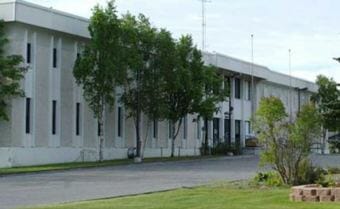
The Kenai Peninsula Borough assembly meets in the George A. Navarre Building (Creative Commons photo by Ajohns90 – cropped and lightened from original)

Thompson indicated that assembly member Dale Bagley intends to propose a change to the current policy and to pose the question of whether to appeal the case at a meeting in the near future.

It’s unclear when that may happen, and Bagley could not be reached for comment before deadline. Other assembly members could put forth their own proposals as well.

“I do intend to invite the attorney who represented us in this case here to give information to the assembly for that meeting,” Thompson said. “That may require executive session. I’m not sure, depends on where it goes.”

Assembly member Willy Dunne also questioned whether the borough needed to change the policy immediately.

“I guess I still have questions. It seems like we’re still in violation of the constitution by having this policy, that’s all,” Dunne added.

Thompson explained that the borough has stopped excepting invocation applications and she says the policy has been put on hold.

“The fact that it’s on the books and not being implemented to me is complying with the court order on an interim basis and not actively violating the constitution,” Thompson noted.

Assembly President Wayne Ogle also asked Thompson how much the current policy needs to change in order to comply with the judge’s order.

“One example would be to just delete the paragraph that requires people to be members of associations or chaplains and sign up in advance,” Thompson said. “It could basically be a first-come-first-serve invocation.”

Thompson also explained that the assembly could maintain the current application process, but open invocations to faiths that do not meet the current policy’s standards.

The assembly didn’t discuss either issue related to the invocation case during its regular meeting, but a handful of borough residents commented on the matter.

Alaska Christian College President Keith Hamilton asked the assembly to move forward with an appeal.

“Recently a judge has struck down our policy as it is in its current status,” Hamilton testified.  “Assembly leaders should not let others divert you from what is best for the borough in keeping this policy as is.”

However, others disagreed with the idea of the borough spending any more money on the case, and some like Ed Martin of Cooper Landing encouraged the assembly to accept the ruling.

“I believe that this assembly and many of us that are in this room need prayer,” he said. “Now, there are some in this room that may not welcome it. We as prayer givers should accept the fact that we have to have some tolerance.”

While it’s unclear exactly when the assembly will come to a consensus on how to change the current invocation policy, it will have to decide whether to appeal the case soon. The borough will have 30 days to decide once the judge in the case issues a final judgement, which finalizes the ruling.

The assembly’s next regular meeting is on Nov. 20.

Needle exchange hopes to install sharp disposal boxes in Homer bathrooms

(Creative Commons photo by Nathan Forget)

Homer’s local needle exchange wants to install sharp disposal boxes in bathrooms around town so residents can safely dispose of syringes. The volunteer-run organization provides free sterile syringes, lifesaving Narcan kits and on-site HIV and hepatitis C testing, among other services.

Dr. Sarah Spencer oversees the exchange, and she said volunteer staff have been discussing this project for a while.

“People will come to us with news or complaints about finding improperly disposed syringes, like finding syringes on trails or on the beach or in public places and that kind of thing,” she said. “We’ve been thinking that it might help to reduce those reports of inappropriately disposed syringes if people had more access to sharp disposal containers.”

She said it isn’t just people using illicit drugs who are in need of sharp disposal boxes. People who inject insulin and other medications also need safe locations to dispose syringes. Spencer said the Exchange will likely start with a pilot program consisting of roughly 10 boxes around Homer. She said the program will survey its clients to decide where to place the boxes.

“Where they think the hotspots are, especially folks who may be in transit or semi-homeless or here in the summer or don’t necessarily have access that they do of the Exchange,” she said. “Where would be places where they would be most likely to inject or to need to dispose of injection supplies.”

The Exchange would provide the boxes and would take responsibility for emptying them.

Spencer adds that the a recent Homer News story about 100 syringes found on the Homer Spit seemed to concern residents. However, she says that number is small compared to how many syringes are coming into the Exchange. Earlier this month, the program received roughly 4,000 syringes.

“Most people who are using drugs, they want to do the right thing,” she said. “They want to dispose of them correctly and they want to be safe. But you have to give them the opportunity to be able to do that. If they don’t have the opportunity or the choice, they’re just going to do whatever they have to do.”

Spencer said the Exchange will be able to lock the boxes so people won’t be able to reach into them.  She adds that the cost to purchase and maintain them is relatively low.

However, the money isn’t secured yet.

The demand for Exchange’s services has far outpaced its grant funding. Right now, volunteers are using their own money to purchase supplies. The organization hopes to secure more funds through grants and a Gofundme campaign.

If the Exchange raises additional money beyond what’s needed for supplies, Spencer said they hope to install the disposal boxes in January.

Some Board of Fish members express interest in limiting hatchery production

Net pens at Cook Inlet Aquaculture's Tutka Bay Lagoon Hatchery. (Photo by Aaron Bolton/KBBI)
Net pens at Cook Inlet Aquaculture’s Tutka Bay Lagoon Hatchery. (Photo by Aaron Bolton/KBBI)

The Alaska Board of Fisheries’ agenda was packed with hatchery issues Tuesday.

Board members considered putting some issues on future agendas, but they also held a public forum on the broader state of hatcheries following a lengthy report from Alaska Department of Fish and Game staff.

Some board members expressed interest in taking a wait-and-see approach when it comes to increasing hatchery production.

The board spent about four hours on hatcheries beginning with a long report from Fish and Game Chief Fisheries Scientist Bill Templin. Templin addressed a plethora of hatchery issues, namely hatchery straying and ocean carrying capacity.

The department is currently conducting an extensive study on hatchery strays in Prince William Sound and Southeast Alaska, but when it comes to the volume of salmon the North Pacific Ocean can support, Templin explained that the scientific community is far from providing a comprehensive answer.

“Because we’re not just talking about a larger area, but about the entire North Pacific,” Templin explained. “As has been mentioned, one of our Russian colleges likens it to catching a moon beam in a jar.”

The department’s hatchery-wild research project is due to release the first round of several genetic reports in the coming months, which will inform the board’s discussion on whether hatchery fish that spawn with wild stocks reduce their productivity.

Templin also noted that some hatchery programs could be brought more closely in line with department policies. He gave a few recommendations for Prince William Sound programs, which have drawn an increasing amount of scrutiny after hatchery fish from the region were found in lower Cook Inlet streams.

“Recommended actions that can be taken immediately include completing the identification of significant and unique stocks in wild stock sanctuaries, implementing an annual survey to index stray rates in wild streams, and completing the work that has already begun on population structure and productivity through the Alaska Hatchery Research Program,” Templin listed.

Board members also held a public hatchery forum, which turned into an hour-long listening session filled with comments from hatchery supporters, critics and those in between.

However, board members reserved most of their comments for when the board considered two agenda change requests related to hatchery production.

The first mirrors previous requests to prevent the Valdez Fisheries Development Association from increasing the egg-take at its Solomon Gulch Hatchery by 20 million. The hatchery operator has already taken and hatched those additional eggs.

The board shot down the request. Board member Israel Payton didn’t support the proposal, but he did question increases in production more broadly.

“Looking at that graph, it looks like slowly over the years, the relation of hatchery caught fish and wild stock fish and harvest rates are getting closer,” Payton said. “They’re both large, but when do we say hatchery fish should we stop? Is it when we’re catching 51 percent hatchery fish? So I think a lot of people are just concerned about that, taking breath and not introducing more.”

Member Orville Huntington echoed Payton. According to Fish and Game staff, the total permitted egg-take across the state has increased by nearly 1 billion eggs since 2000, and hatchery fish accounted for 21 percent of the total commercial catch in 2017.

Those numbers were called into question by another request calling for the board to reduce the total statewide egg-take to 1.2 billion.

Chairman Reed Morisky spoke in favor of considering the proposal.

“This ACR (agenda change request) is not talking about eliminating hatcheries,” Morisky said. “It’s talking about capping capacity. As the department indicated, there’s more science that needs to be done, and it’s uncertain when or how that might occur. And I think we should take a pause.”

Morisky and Huntington were the only board members to vote in favor of putting the proposal on a future agenda. The board’s discussion on hatchery issues is set to continue in March when the full board will meet as the hatchery committee for the first time.

The board is set to focus on more regional hatchery issues in the coming years.

Seldovia woman fends off bear inside her home with a broom

The view outside of the window Mahan pushed the bear out of with the screen lying on the ground below. (Photo courtesy of Karen Mahan)

A Seldovia woman fought off a black bear inside of her home with nothing more than a broom early Monday morning.

Karen Mahan said she was working on her computer shortly before 2 a.m. when she heard a noise coming from her living room and kitchen. Mahan assumed it was her two teenage boys when she went to check, but to her surprise, a black bear had broken through her front door and was in her entryway.

“It had to be over 200 pounds. He was looking at me. I run in bedroom to grab my gun. I get my gun. I don’t realize that my ammo is old,” Mahan recalled over the phone Tuesday. “As I’m walking out my bedroom door in a hurry, he’s already in the living room standing between my couch and my rifle cabinet. He starts peeling his lips back and growling at me. I pull my gun to shoot on him and it dry fires.”

Mahan said after her pistol failed to fire a second time, she grabbed a metal broom nearby and began hitting the bear, pushing it back towards the entryway.

“He was growling, spitting, clicking his teeth at me. I shoved him back up onto the porch. He jumped back up onto that window. He’s so fat, he could not fit through the window,” Mahan explained. “I hauled off and gave that broom everything I had, and I shoved him out that two-story window, he hit my son’s truck and dented the door – then making all sorts of noises and took off running.”

Mahan said the bear mostly just spread trash around her entryway and that there was minimal damage to her home.

Seldovia Police Chief Paul Cushman responded to the scene after Mahan called to report the incident. Cushman said he patrolled the area for the bear, but was unable to locate the animal. Cushman said if the bear is located, he plans to trap and relocate it. The incident follows several reports of a nuisance bear around town.

“Nothing to this measure where it’s gotten into anyone’s home or anything.  It’s gotten into some peoples’ trash, but nothing to this level,” Cushman added.

Cushman assumes it is the same bear, but said it’s possible there may be two bears in town causing issues. He encourages residents in the area to be aware of their surroundings and to keep trash out of reach.

Site notifications
Update notification options
Subscribe to notifications