KBBI is our partner station in Homer. KTOO collaborates with partners across the state to cover important news and to share stories with our audiences.
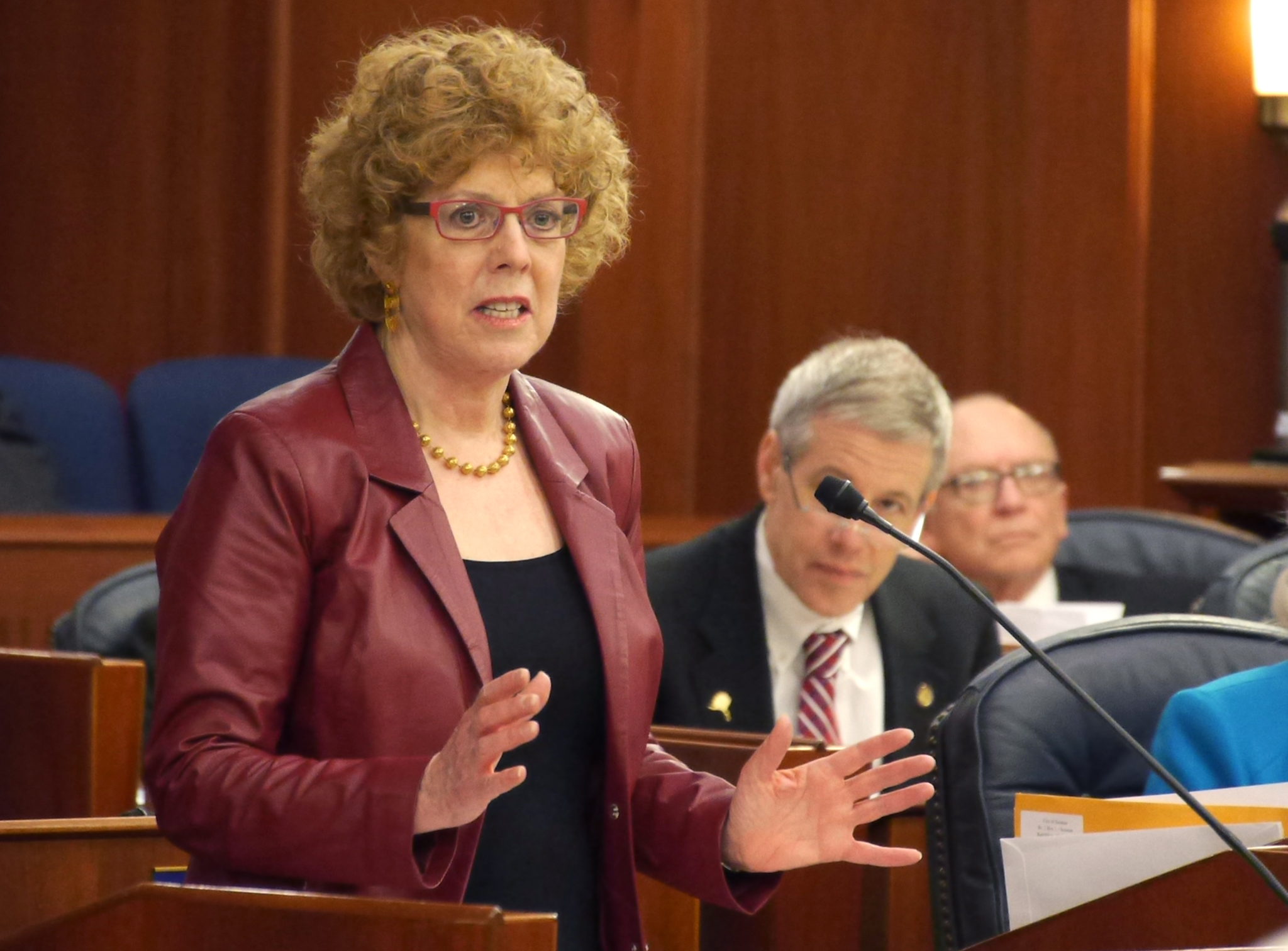
Rep. Gabrielle LeDoux, R-Anchorage, wraps up debate Feb. 3, 2016, on House Bill 126 relating to a code of military justice. LeDoux, Homer Rep. Paul Seaton, and Kodiak Rep. Louise Stutes would be free to run as Republicans, the state Division of Elections ruled, despite the party’s attempt to block the incumbent members from running in the party primaries in 2018. The three have not yet filed to run for re-election. (Photo by Skip Gray/360 North)
The party wrote a letter to the division on Dec. 4 asking that Homer Rep. Paul Seaton, Anchorage Rep. Gabrielle LeDoux and Rep. Louise Stutes of Kodiak be blocked from the primary ballot as a repercussion for violating a party rule against caucusing with other political parties when there’s a Republican majority.
All three representatives joined a bipartisan coalition in 2016, which took control of the House away from the Republican majority.
State Elections Director Josie Bahnke said the division responded Dec. 7 to the party’s request.
“We decided not to take any action at this time for a couple of reasons,” Bahnke said.
Bahnke said that the party missed the Sept. 1 deadline to make rule changes to its primary process and that its request also clashes with state law.
“The request clashes with the law allowing any registered Republican to run in the Republican primary,” Bahnke said. “Lastly, none of the three candidates targeted by the proposed rule change has yet filed for re-election in 2018. Any action by the division would be premature at this time.”
State Republican Party leaders voted to make the rule change earlier this month, arguing that an October court ruling in a case between the Alaska Democratic Party and the state allowed them to add the primary block as a repercussion for violating the existing party rule.
Alaska Republican Party Chairman Tuckerman Babcock disagrees with the division’s decision.
“But of course the judge’s decision recognizing the right to do it wasn’t until October. So, I don’t think that will hold up,” Babcock said. “The second thing was that it’s premature because none of the three Republicans who joined the Democrats have filed for re-election yet. That has nothing to do with enforcing our rule or not.”
Babcock said the party might join Democrats in their lawsuit.
The Democratic Party wants to allow independents to run in its primaries.
The state appealed the case to the Alaska Supreme Court and it will taken back up in March.
Babcock also noted the party might consider filing its own case in federal court.
Co-chair of House Finance Rep. Paul Seaton, R-Homer, questions Rep. Matt Clamon, D-Anchorage, about HB 146, Claman’s Education Tax bill, on April 4, 2017. (Photo by Skip Gray/360 North)
District party leaders on the southern Kenai Peninsula are actively recruiting candidates to run against House Rep. Paul Seaton of Homer next fall.
The move comes the state denied an attempt to block the District 31 representative and two other House representatives from next year’s Republican primaries.
Party officials say a recent court ruling gives the party a say in who is able to run on its ticket, but the Anchorage Daily News is reporting that the state Division of Elections has denied the party’s request.
It’s unclear how the party will move forward.
Party leaders argue the three representatives deceived voters when they joined a bipartisan coalition in 2016, which took control of the House away from the Republican majority.
“These three House reps jumped ship, abandoned their party, abandoned their team, decided to join the opposition,” said Jon Faulkner, former District 31 party chairman and current vice chairman of statewide party’s State Central Committee.
Faulkner said the local party disagrees with Seaton on more than just the House coalition.
He said Seaton has diverged from a number of key Republican issues ranging from using Alaska Permanent Fund earnings to pay for state government to taxes and government spending.
“He can’t just take from the Republican Party the cloak, or we’ll call it the label that is Republican, and call it his own,” Faulkner said. “It’s not his to identify or develop. It’s really a statewide party. It’s a statewide association.”
Faulkner recognizes that the local party’s view doesn’t necessarily represent all Republicans in the district, but notes that local precinct leaders and officers unanimously voted to oust Seaton from the primaries before taking the issue to a statewide vote Dec. 2.
He said the party is encouraging “party loyalists” to express interest in running in next year’s primaries.
Faulkner didn’t give a timeline on when the party will endorse a candidate, which he said could happen before or after the primary process, but he did say that he wants a candidate that will vote in line with the party’s platform.
District 31 Vice Chairman Jesse Clutts agrees. Clutts doesn’t expect candidates to take orders from the party if they’re elected, but he notes that whoever the party does support should align on key issues.
“I want somebody that’s going to protect the Permanent Fund, that’s going to protect a constitutional amendment to protect that permanent fund, so that the politicians can’t reach in there and grab it when they want,” Clutts said. “Someone that’s going to look at reducing state spending and look at other options other than just taxing people.”
Seaton has represented District 31 for eight consecutive terms.
He ran unopposed in 2016, but did garner 48 percent of the vote in the 2016 primaries when he ran against Anchor Point businessman John Cox and former Homer Mayor Beth Wythe.
Homer Council on the Arts will host the Nutcracker Faire at the Homer High School. (Photo by Aaron Bolton/KBBI)
Towns across Alaska have to grapple with what to do once a known sex offender returns to the community after serving their punishment.
Though there are clear limits in some areas, there are massive gray zones, as well.
Residents in Homer are struggling to balance fairness with safety ahead of one of the Kenai Peninsula’s biggest celebrations.
Every year, Homer hosts the Nutcracker Faire.
The family-affair draws people from all over the Kenai Peninsula for a pre-holiday craft fair and children’s performance of the nutcracker.
Abigail Kokai is an artist hoping to make a little extra cash by selling some of her stuffed whales made of repurposed materials.
“Particularly with the Nutcracker, I get to have face-to-face opportunities to meet the people that are actually buying my product,” Kokai said.
The Nutcracker is a big deal for local artists because it allows them to make a real-life connection with customers. Kokai was one of about a hundred vendors who applied to sell work at the festival.
As the Homer Council on the Arts, which puts on the event, was sifting through those applications earlier this fall, they noticed one from a convicted sex offender.
Erik Larson, a Homer man that was convicted of sexually abusing two teenage girls while he was a teacher in 2006, was applying to sell pottery.
Arts Council staff and board members were concerned, posing the question of whether or not Larson should be allowed to participate in the popular community event.
Kokai didn’t say whether or not she had a problem with Larson selling his work, but she thinks the choice comes down to faith in our current criminal justice system.
“I mean are they going to be punished for the rest of their life and never be able to live as a functional human being as a result of something that has happened, or do we assume or hope that our rehabilitation processes have allowed that person to successfully be a part of society again?” Kokai questioned.
Erik Larson didn’t want to comment for this story because he fears people in the community may lash out at his family.
He said only that he wants “to be treated like everyone else” and have the same opportunity as other artists.
The incident is prompting local non-profits to look for solutions that are as much about policy as politics.
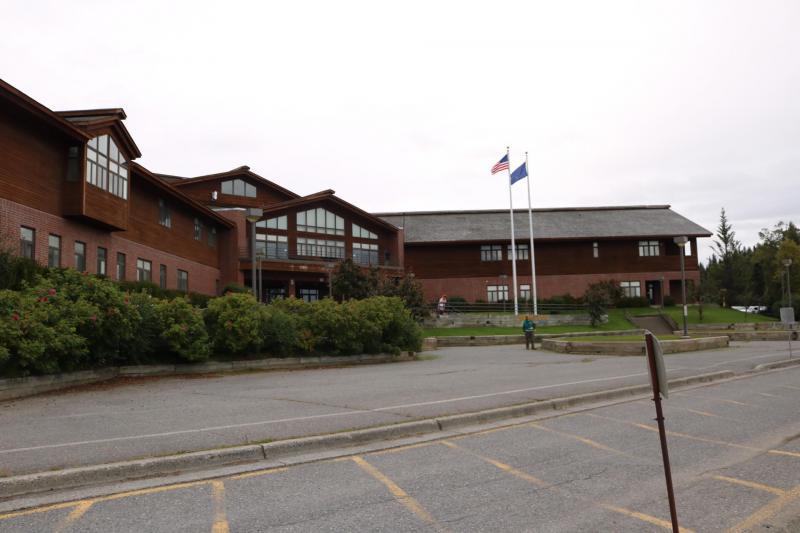
The Nutcracker Faire is held in the Homer High School.
So, at first the council looked to the Kenai Peninsula Borough School District for guidance. But the district said its policy on registered sex offenders doesn’t apply here.
That’s because the policy only restricts offenders from being on school property during the school day or during school-sponsored events, district spokesperson Peggy Erkeneff said.
“In this case, an outside entity rented the Homer High School building for their event,” Erkeneff said. “When they’re renting our space, there are no restrictions from a district perspective, if it’s outside of a school-sponsored event and outside of the school instructional day, as to who can be present.”
Since the Arts Council is just a tenant in the school building, it’s their own policy that guides rules.
But the organization realized it didn’t have clear guidance on the matter, which left Executive Director Peggy Paver and her board with a lot of questions about what the small non-profit should do.
“We did consult with legal, judicial and non-profit sources in order to get opinions because this is an area that we hadn’t really dealt with before,” Paver said.
The council offered a compromise allowing Larson to sell his pottery as long as someone else worked the booth. Larson told the council he would think about it, but never responded with a decision.
Larson also proposed having someone on hand to supervise him, but the council said it won’t have any staff and volunteers to spare.
Ultimately, the non-profit had no policy or legal grounds to deny Larson a spot at the fair.
Paver said that left the council with a choice: is it appropriate for Larson to participate or not?
“It doesn’t escape us that this event is an event where minors are often off on their own, and then there are the Nutcracker kids that are participating in the ballet running around in their break time,” Paver added.
The council also had to weigh Larson’s personal rights.
It’s been more than 10 years since his conviction, he’s served his sentence in prison and completed parole.
Paver and the council also worry they could be open to charges of discrimination if they reject Larson without a policy in place.
The situation has caught the attention of other non-profits, who are now asking themselves what they would do in the same situation.
“What considerations do we have, what protections need to be in place for our staff, for the people we serve in the community and what’s appropriate?” said Catriona Reynolds, executive director of Kachemak Bay Family Planning in Homer.
Both family planning and the Arts Council plan to revisit their policies and possibly craft new ones to handle this particular situation and others like it.
Paver didn’t directly say which way her organization would lean on the issue.
She said the board will likely address it in the spring, and at least for this year, the council will allow Larson to sell his work in person.
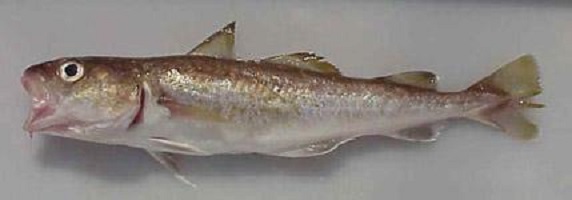
A small Pacific cod. (Courtesy of the National Ocean and Atmospheric Administration)
The North Pacific Fishery Management Council, which regulates groundfish in Alaska and other federal fisheries, received some shocking news last month.
Pacific cod stocks in the Gulf of Alaska may have declined as much as 70 percent over the past two years.
The estimate is a preliminary figure, but it leaves plenty of questions about the future of cod fishing in Gulf of Alaska.
The first question that comes to mind when you hear the number of Pacific cod in the Gulf dropped by about two-thirds is what happened?
National Oceanic and Atmospheric Administration fisheries division’s Steven Barbeaux has been trying to answer that question. Barbeaux said the issue likely started with warmer water moving into the Gulf in 2014 and sticking around for the next three years.
“We had what the oceanographers and the news media have been calling the blob, which is this warm water that was sitting in the Gulf for those three years,” Barbeaux said. “It was different from other years in that it went really deep, but it also lasted throughout the winter.”
Warmer water temperatures speed up a fish’s metabolism, leading them to eat more.
“What can happen is you can deplete the food source pretty rapidly when the entire ecosystem is ramped up in those warm temperatures,” Barbeaux added.
With less food around, the size of Pacific cod in the Gulf dropped.
NOAA surveys show that cod were the skinniest on record in 2015, but fish didn’t just get smaller. Natural mortality rates also skyrocketed for some important age classes of cod.
NOAA saw a large influx of cod larvae in 2012, 2013 and 2015, signaling good fishing seasons over the next six years or so.
But between warmer water temperatures and the subsequently shrinking food supply, those fish aren’t showing up, likely accounting for a large portion of the decline.
This isn’t the first time cod stocks have taken dive in the Gulf. The fishery saw a substantial decline in the mid-2000s, but Barbeaux said this time is different.
“The difference between then and now is we don’t see any recruitment coming in. We’re hoping 2017 will be good, but we don’t have any indication yet,” Barbeaux said. “So, our surveys for those smaller fish haven’t been conducted. They’ll be done next year.”
Because of that uncertainty, the North Pacific Fishery Management Council has some difficult decisions to make at its meeting in early December.
The regulatory body made an initial recommendation in October to reduce the total allowable catch in the Gulf by 30 percent, but council member Buck Laukitis said the final decision next month could be different.
“I think it’s just really important that the public understand that’s a preliminary number, but they should also understand that there is a fairly big change coming in the cod resource,” Laukitis said. “Fishermen, stakeholders, a lot of people will be affected, a lot of industry.”
Barbeaux’s analysis will be reviewed by two advisory bodies prior to the council setting 2018 harvest levels. State fishery harvest levels will also see a reduction.
Fishermen will have a chance to weigh in, but Laukitis said the council will base its decision on the final analysis.
“We don’t overrule the science. There won’t be any miracles as far as the council doing something other than what the science advisors recommend,” Laukitis said.
Between the Bering Sea and the Gulf, Pacific Cod account for Alaska’s second largest fishery by volume, bringing in $186 million in 2015.
Cod numbers in the Bering Sea are also trending down. It’s estimated abundance may have fallen nearly 40 percent, but the cause of that decline is not directly known.
As for the future of cod in the Gulf of Alaska, Barbeaux said that depends on recruitment over the next few years, but the Gulf is expected to see the return of La Nina, which could mean cooler waters and better conditions for young fish.
Wildwood Correctional Center in Kenai. (Courtesy of the Department of Corrections)
In the year since the major criminal justice reform bill, Senate Bill 91, was signed into law, there has been plenty of debate over whether it’s working to reduce Alaska’s prison population, and the Legislature is reconvening to consider changes to the bill.
But as lawmakers decide whether to tweak criminal justice reform, an organization is forming on the Kenai Peninsula that also hopes to reduce the number of Alaskans ending up back in jail.
When someone leaves the Kenai Peninsula’s two state correctional facilities, they may be re-entering the community without a support system.
They might not even know what the first step in rebuilding their life is.
“A lot of times people coming out of incarceration, you open the gates and it’s like opening the screen door for a two-year-old,” said Audrey Cucullu, the executive coordinator for the Kenai Reentry Coalition. “We don’t really know what to do, like, ‘Ok, what do I do now?’ Because a lot of times people just know how to survive.”
The coalition got its start a little over a year ago. With about $150,000 in funding and help from about 20 agencies and organizations, the group is setting up shop in a Peninsula Community Health Services building in Kenai.
The idea is for the coalition to be that first step outside of prison doors, a one-stop shop for anything someone might need to get a foothold in their community, from parenting classes to dental care.
The coalition won’t directly be providing these services, but it will streamline what’s available and potentially spark additional help.
Jodi Stewart is the probation liaison with the coalition and a Department of Corrections employee.
“Some people need help with employment. Others need help with getting just the basic things met like food, shelter. Others need just an extra person to call when they don’t know what to do next,” Stewart said.
Both Cucullu and Stewart say the need for these services is high on the peninsula and around the state.
About 70 percent of people leaving prison in Alaska will end up behind bars again, according to the Department of Corrections. Stewart added that the probability for children of incarcerated parents winding up in jail also sits about 70 percent.
Other communities around the state have been working to reduce that statistic. Juneau, the Mat-Su, Fairbanks and Anchorage all have re-entry coalitions, but are they working?
Devon Urquhart is the coalition coordinator in Anchorage, and she says they’re working on that answer.
All four groups receive some funding from the state to hire case managers that meet with prisoners three months before they get out in order to get them lined up with services.
“Each returning citizen has a plan that the case manager works with them on to make sure they have housing, to make sure they have employment and that their connected to the right treatment and wellness resources,” Urquhart said.
Case managers continue working with clients for another six months after their release and can handle about 40 cases at a time.
The coalitions started getting referrals from correctional facilities back in May.
The state is tracking those clients through a database to see how many return to prison, essentially measuring the recidivism within the program. That could mean measurable success for the coalitions to point to after the first round of clients complete the program in early 2018.
“If this works and we’re seeing the kind of results that we need to see and we want to see, it means everything to us,” Urquhart said. “Our communities are safer. People are connected to their families. We have healthy returning citizens.”
The Kenai Peninsula coalition plans to use that same system eventually, but they want to get some services off the ground first.
“It’s going to be a rollout. Right now, we’re working on peer support services because with peer support services, we can get people better connected with the services that actually already exist in all of the communities,” Cucullu said. “That might mean somebody needs a ride to get a driver’s license, or to get to treatment, or to get their assessment done.”
Coalition partner Peninsula Community Health Services is working to hire four peer support professionals by the end of October.
The coalition has also held community meetings on the central peninsula and in Homer to find out where there are gaps in services.
It has additional meetings planned in Seward and Ninilchik over the next two months.
The coalition hopes to open its doors officially in January.
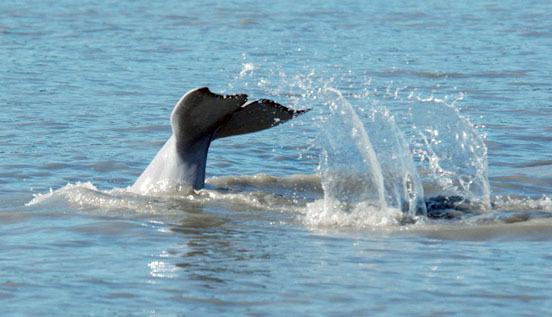
The population of beluga whales in Cook Inlet is a third of what it once was in 1970. (Photo courtesy of LGL Alaska Research Associates)
The beluga whale population in Cook Inlet has been steadily declining since the 1970s.
The number of whales in the area today is just a third of what it once was, and the Alaska Department of Fish Game wants to help belugas recover.
In order to do that, Fish and Game needs to answer other questions about mating and their habitat, and two new studies aim to do just that.
Back in the 1970s, beluga whales were common around Cook Inlet, with a count of about 1,300 in the area. Now that number is closer to 340.
Cook Inlet belugas were officially listed as endangered in 2008, and things have not gotten better.
Cook Inlet itself was listed as critical habitat in 2011.
Two new Fish and Game studies aim to find out more about where belugas feed and their social behaviors.
“Both of these studies have been based on samples and research that have been going on for ten years or more,” said Fish and Game wildlife physiologist Mandy Keough.
She samples teeth found in stranded belugas in order to get a better idea about their feeding habits.
“One of the reasons why both these proposals have been funded is that we are finally at a point where we have enough samples and enough collaborators with various expertise working together to be able to address these questions,” she said.
Fish and Game hopes both past data and new samples help find where Cook Inlet belugas have fed in the past and if feeding grounds have shifted.
Fish and Game anchored audio recording devices to track where whales are finding food.
“Looking for that acoustic signature, that whistle that they make. It’s actually a buzz that signifies that they have had a successful forage,” Keough said.
After they locate where these sounds are coming from, people can go to the sites and research further.
The second half of the project focuses on belugas in Bristol Bay.
Fish and Game thinks that population could give some insight into the mating habits for whales back in Cook Inlet.
Lori Quakenbush heads up that study and works for the Fish and Game Mammal Program.
Over in Bristol Bay, the beluga whale count is double Cook Inlet’s numbers.
More beluga whales means a larger dataset to pull information.
Using skin samples from Bristol Bay whales, researchers can see how the whales are related, giving them an idea of which whales are mating.
Quakenbush thinks belugas might have a pack mentality, almost like wolves.
“You might have 10 adult males and 10 adult females in any given years,” Quakenbush said. “It may only be one or two of them mating and reproducing as opposed to all of them.”
She wants to use the data to inform best practices for increasing the population in Cook Inlet.
While Quakenbush hopes to come up with a strong game plan, she notes the answer may be inconvenient.
“We will investigate that large genetic dataset that we have and see what we can learn about belugas overall,” Quakenbush said. “That might affect how quickly a population like Cook Inlet can expand. It might be very different than what we’re thinking,”
So, where are the Cook Inlet whales now? The belugas mostly stay in Upper Cook Inlet.
However, there is not substantial research as to why. Keough said that is another goal of the project.
“We don’t know if that’s just because there are fewer animals available, or if they are relying on more fresh water fish than they have historically,” Keough said.
After the study, Fish and Game hopes to have more answers than questions, and that those answers will lead to more belugas in Cook Inlet.
Close
Update notification options
Subscribe to notifications
Subscribe
Get notifications about news related to the topics you care about. You can unsubscribe anytime.