KBBI - Homer

KBBI is our partner station in Homer. KTOO collaborates with partners across the state to cover important news and to share stories with our audiences.

New ethics complaint filed over Homer recall election

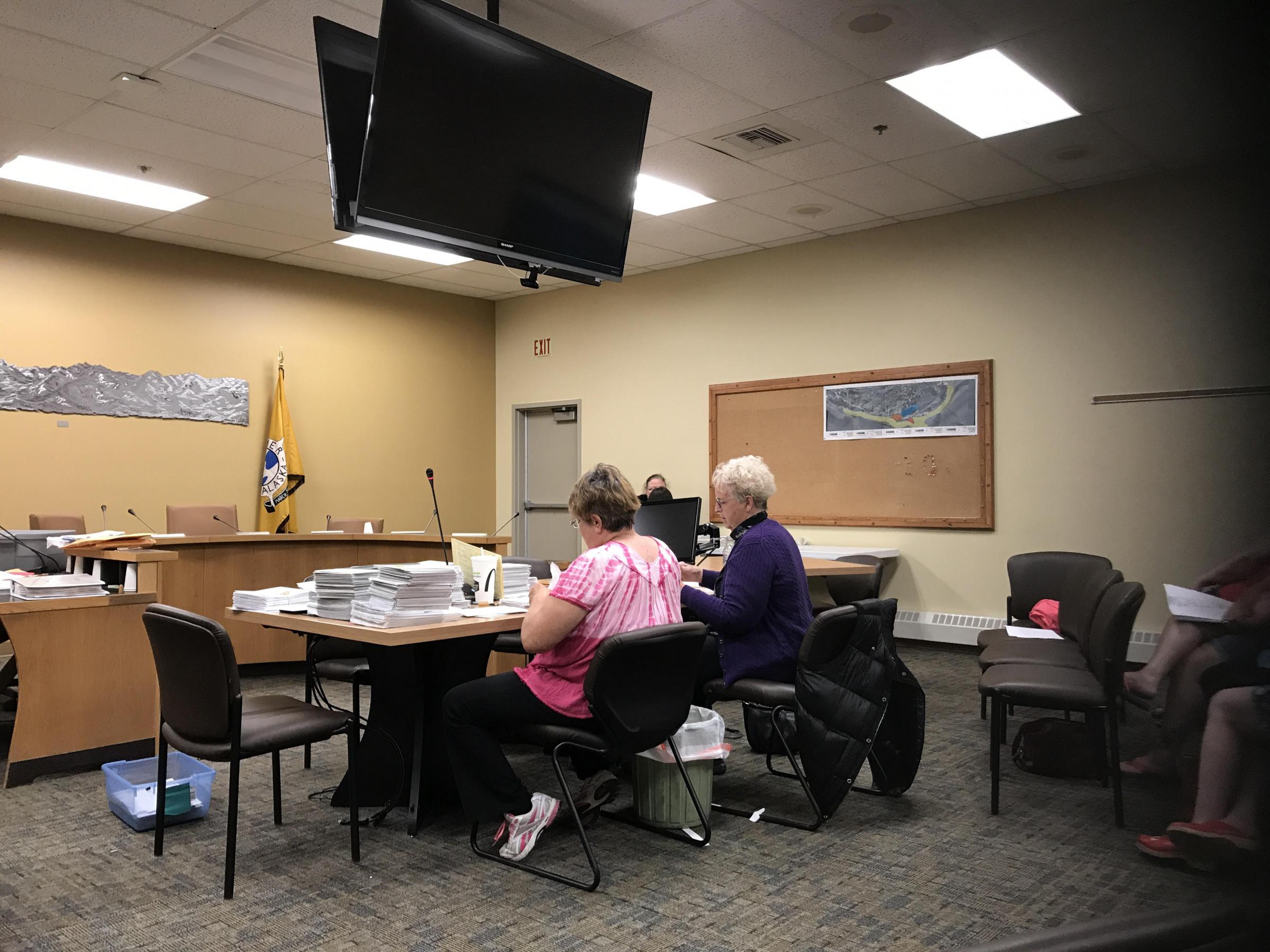
Homer’s canvas board counts absentee ballots in recall election. (Photo by Aaron Bolton/KBBI)

A new ethics complaint has been filed in relation to Homer’s recent recall election.

Three Homer City Council members were up for recall in June, but all three retained their seats. The complaint argues that the council members should have recused themselves from certifying the election results.

Larry Zuccaro, one of the original petitioners that sought the recall, filed the complaint on July 31 against council members Donna Aderhold, Catriona Reynolds and David Lewis.

Ethics complaints are required to remain confidential, but the council members waved their right to a private hearing, making the matter public.

The state Office of Administrative Hearings assigned an administrative law judge to be a hearing officer in the case, a process specific to cases involving city council and borough assembly members or mayors.

Council member Aderhold said she was made aware of the complaint in late August and that all three council members met Sept. 15 with the hearing officer.

“It was during that conference that we waved confidentiality,” she said. “We waved confidentiality because we believe this is an important issue to be able to clarify for council members moving forward and for the community to understand.”

Both parties are set to file briefs arguing their case on Oct. 2 and each will have an opportunity to respond to opposing briefs later that month.

Both sides will reconvene with the hearing officer Oct. 19, and an official decision is required by Oct. 29.

Elected officials found to have violated Homer city code can be subject to a range of consequences, from a private reprimand to vacating their seat.

When it comes to certifying elections, City Clerk Melissa Jacobsen said city code states that the council is required to certify election results given to them by the canvass board.

“It doesn’t differentiate between special elections, or recall election, or runoff elections,” Jacobsen explained. “The city council certifies all elections.”

The council also would have not had a quorum if all three council members recused themselves from certifying the results.

The case follows a previous identical complaint that was filed July 3 by Heartbeat of Homer, the pro-recall political action committee.

Heartbeat shared documents detailing the complaint with KBBI via email, but it could have been thrown out because the documents were shared, violating the confidentiality requirement.

KBBI filed an information request with the city clerk’s office in late August to check on that case’s status, but the request was denied.

Zucarro could not be reached for comment in time for this story.
Pink salmon found in odd places near Homer

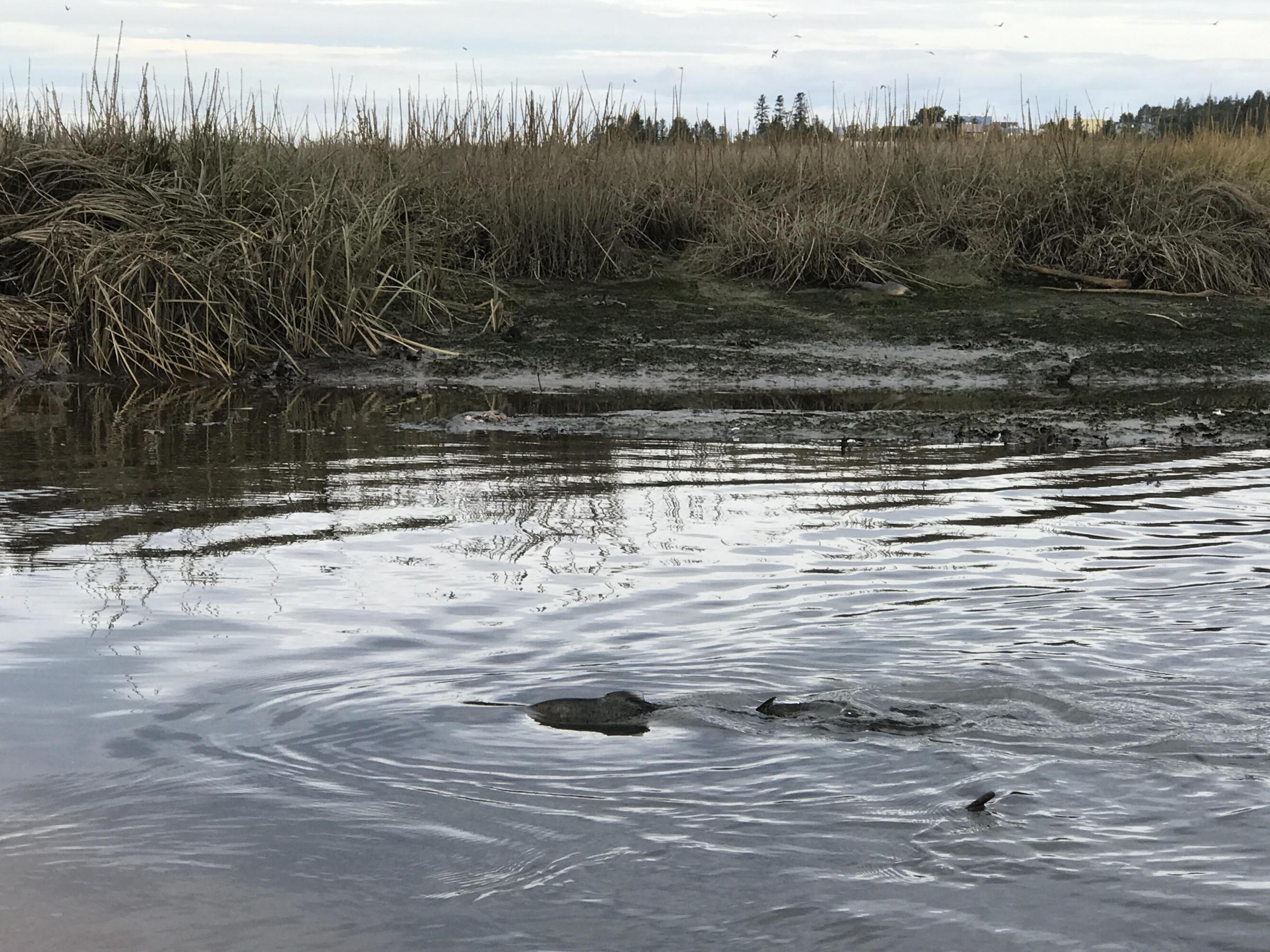
Pink salmon swim around in Beluga Slough. (Photo by Aaron Bolton/KBBI)
Pink salmon swim around in Beluga Slough. (Photo by Aaron Bolton/KBBI)

Pink salmon are showing up in odd places around the Homer area.

Fish can be seen swimming through Beluga Slough in the middle of town, a saltwater marsh with no historical salmon returns.

Dead pinks litter the slough’s muddy banks at low tide and several fish are still swimming around.

Alaska Department of Fish and Game Area Management Biologist Glenn Hollowell said there have also been reports of fish in other systems around Homer and along the outer coast of the Kenai Peninsula.

“We’re seeing very large numbers of fish in a variety of places around Kachemak Bay. Some of the creeks at the back of Little Tutka Bay have really unusual numbers of pink salmon associated with them, as does Diamond Creek,” Hollowell said. “Seldovia Slough also has a lot of pink salmon in it right now.”

Pinks are a two-year fish and Hollowell thinks the large numbers of pinks showing up in odd places is merely a reflection of 2015’s record-breaking return.

Several reports came in that year of fish straying into small water systems that typically can’t support salmon.

“A lot of the smaller systems had just the right number, and if you combine that with the warm winter, which was pretty wet, those little systems were perfect incubators for pink salmon, and that’s what we’re seeing right now,” Hollowell said.

He says the mild winter likely allowed eggs in Beluga Slough to hatch the following spring, creating a small run in the marsh.

People can be seen gathering near the slough to take a look for themselves.

Emily Springer, who studies the fishing industry and is married to a commercial fisherman, grew up around Homer. She’s never seen anything like it.

Springer took her kids and a friend’s family to Diamond Creek a few miles outside of town just to watch the fish.

“I just thought it was really interesting, and I thought she’s a fisherman and she might think it was interesting too to bring her own kids down there and go check it out and just see how far up the creek these salmon had gotten,” Springer said. “They got all the way up to where the waterfall is.”

For those asking whether we will see another return in 2019 to Beluga Slough and other systems, Hollowell said it depends on the weather this winter.

“We might continue to see pink salmon in Beluga Slough if we see wet, warm winters,” he said. “However, if we get some bitterly cold winters, like is more than norm for this area, some of those fry and eggs might have a really tough time, and we might see this return drop back to historical levels where it’s essentially undetectable.”

There were no official counts of how many fish made it up the slough, but Hollowell estimates that about 2,000 pinks may have spawned there.

Fish and Game is taking samples of ear bones to find out if the pinks may be hatchery fish, but Hollowell doesn’t expect that to be the case.

He says the 2015 return around Kachemak Bay was “overwhelmingly” comprised of wild fish.

Two boaters and three dogs rescued in Prince William Sound

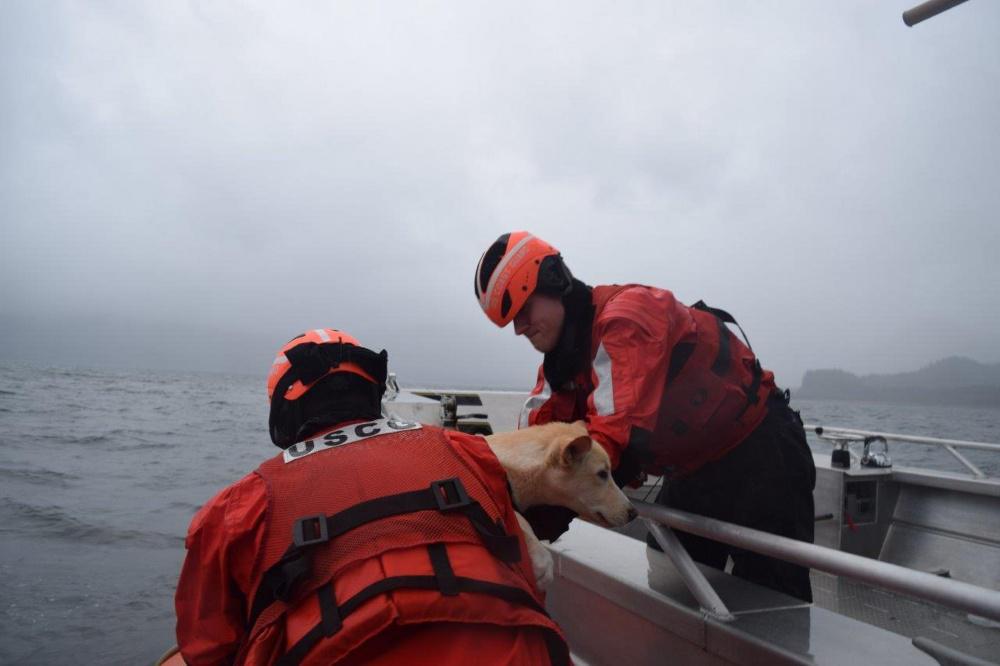
Crewmembers from the Coast Guard Cutter Chandeleur rescue a dog from a 34-foot vessel that was taking on water near Montague Island. (Photo courtesy Coast Guard)

Coast Guard helicopter and cutter crews rescued two people and three dogs Friday near Montague Island in Prince William Sound.

The Coast Guard dispatched a MH-60 Jayhawk helicopter and the Cutter Chandeleur after a mayday call came in over VHF radio.

Two boaters reported that their 34-foot vessel was taking on water before kayaking to Montague Island with one of three dogs.

The helicopter crew transported the two boaters and their pet back to safety after they signaled their location with a flare.

The Chandeleur inspected the vessel before it was towed to Whittier by a Cordova-based marine salvage vessel. The cutter crew transported the remaining two dogs on the boat to Valdez.

Petty Officer Brandon Curp said the boaters were “experienced Alaskans” and wore all the appropriate survival gear.

Winds near the scene were recorded at 17 mph and seas were at 3 feet.

Former Anchor Point resident works to help Texans after Hurricane Harvey

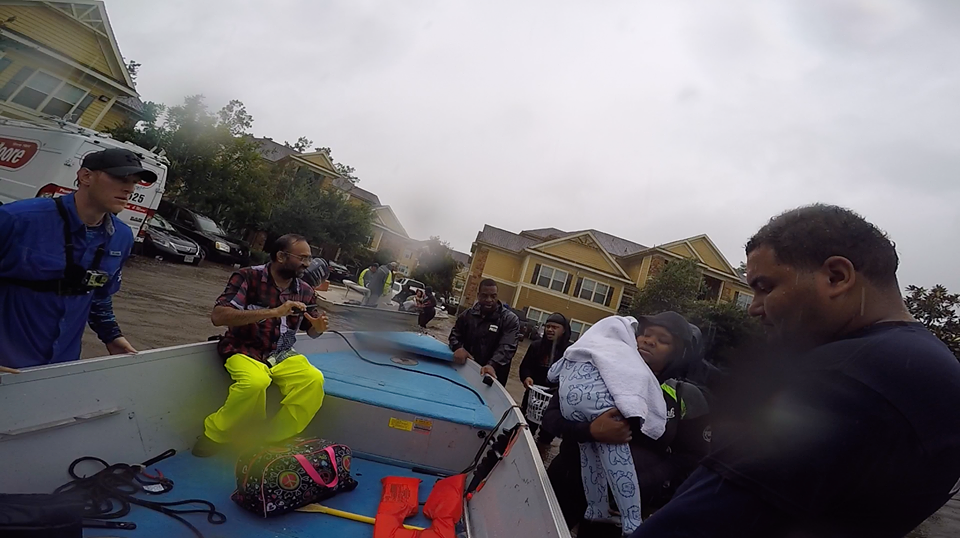
Chase McKinney and Israel Lopez rescue families in Houston after Hurricane Harvey. (Photo courtesy Chase McKinney)

As Hurricane Irma barrels through the Caribbean and onward to the Southeastern U.S., the relief effort still is underway in Texas after hurricane Harvey devastated Houston.

A former Anchor Point resident, who now lives on the southwest corner of the city, spent three days responding to the disaster.

Now that the waters have receded, he doesn’t want Alaskans and the rest of the country to forget about the mountain of work left to do.

Chase McKinney grew up in Anchor Point and graduated from Homer High School.

He left Alaska to go to college and eventually settled in Houston, where he also brought his love for the outdoors.

McKinney and his friend Israel Lopez recently started an outdoors enthusiast group called Madmen Xtreme, aimed at sharing their passion through videos online.

“We’ve been making these videos, we’ve been going outdoors, we’ve been fishing, we’ve been camping, really just to show people how easy it is,” McKinney said. “We never thought we were going to get out and save lives when we started it.”

When Harvey hit Houston little under two weeks ago, McKinney waited it out for about two days.

Israel Lopez, left, and Chase McKinney. (Photo courtesy Chase McKinney)

The Sunday morning after the storm hit, he said his home in a southwestern suburb got by mostly unscathed.

“I wasn’t affected by the flood at all. I’d already been paid forward. I just thought I needed to go out and help the people that were in a little more dire straits than I was,” McKinney said. “That’s when I called Israel and I said, ‘Hey, let’s get the boat, let’s get out.’”

After a few hours of driving, going up and down streets just trying to find which roads were passable, both Lopez and McKinney got to their boat and started motoring through neighborhoods.

McKinney said he was blown away by the community’s response.

“It was all organized by civilians. Civilians organized the boats, civilians organized the checkpoints, civilians organized the shuttles. Civilians organized where people were going to go in the shelters,” he said. “It was all done Monday and Tuesday by a gigantic civilian presence.”

Over three days, they pulled about 120 people from their homes all while filming their efforts on a GoPro camera.

McKinney uploaded those videos to his Facebook, and people back home in Alaska started asking how they could help.

Soon, a crowdsourcing account was set up for donations through GoFundMe.

After about a week of fundraising, they’re about $500 shy of their $3,000 goal.

McKinney said all of the funds raised have gone directly towards supplies.

“To the families that need goods or wares or whatever they need, cleaning supplies,” McKinney said of the supplies they’ve purchased with donations. “We’re going to the store and we’re buying those things, and we’re hand delivering that to the people who need it.”

Both McKinney and Lopez say they will continue delivering those supplies and helping Texans put their lives back together so long as the funds keep rolling in.

Central Peninsula Hospital adds detox to treatment services

Detox beds are not a dime a dozen in Alaska.

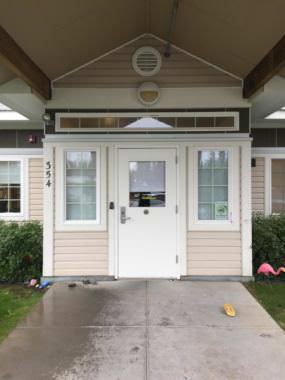
Care Transitions detox facility. (Photo courtesy Central Peninsula Hospital)

With just 30 beds statewide dedicated to those looking to get clean from opioids and other drug addictions, emergency rooms are taking the brunt of a growing opioid crisis, but the Central Peninsula Hospital in Soldotna is responding to the problem with a new six-bed detox facility.

Finding a safe place to detox from opioid addiction on the Kenai Peninsula and elsewhere in the state can be a huge barrier for those looking to start treatment. For many people, detoxing at home just isn’t an option. They may live with others who use or their withdrawals can be medically dangerous.

Those looking for a detox facility have to make your way to Anchorage or Fairbanks and most are placed on lengthy waitlists.

That leaves some with one option, the emergency room, but that can be incredibly inefficient.

“We looked at a quarter of records. If you multiply that out to be a whole year, it’s actually about $10 million worth of care that went into this population of folks that weren’t really getting better from it,” Dr. Kristie Sellers explained, referring to costly opioid-related emergency visits.

Sellers, a psychologist, is the director of behavioral health at Central Peninsula Hospital. In order to see how ineffective providing detox and other treatment services via the emergency room was, Sellers and her staff had to measure the problem.

They sifted through one year of medical records, pulling any opioid-related visits. She says fewer than 1 percent of those patients entered a long-term treatment program after leaving the emergency room, making a return visit more likely.

The hospital is trying to cut down on those costly visits by opening Care Transitions. It received a $1 million grant back in February to open the six-bed detox facility and it has already served about 20 patients since early August.

“It was a very complex process, figuring out who could staff the building and how to get them there and who could do this assessment and who could do that,” Sellers said, explaining the process of hiring a whole new medical team for the facility. ”We’re hoping to not get a waiting-list situation. We’re really hoping to prioritize Kenai Peninsula residents, but we would definitely help anybody that needs help.”

While the detox facility is a step towards filling a large gap in treatment services on the peninsula, the hospital isn’t stopping there.

Sellers says its existing treatment services are also grappling with a shifting landscape. The hospital’s residential facility, Serenity House, has seen the number of injection drug users jump significantly.

“We actually saw in a 10-year period of time that people that we admit to Serenity House go from 3 percent admissions that were injection drug users all the way to almost 70 (percent), like 68 percent injection drug users,” Sellers said.

Those users have also become younger. Most are in their 20s, and this new wave of chronic abusers also come with a whole new set of problems.

They can take longer to detox, they may have additional medical problems from prolonged use, and most lack any job skills.

Central Peninsula Hospital plans to open a new in-patient facility right next to Care Transitions. The program, aimed at building life skills, will have its patients work at both facilities cooking meals, cleaning and doing other daily jobs.

Sellers hopes that with both facilities working hand in hand, at least 15 percent of those leaving detox will enter the new in-patient program, Serenity House or participate in other treatment services around the state.

“So, that’s something we’ll track on this program. Are we more successful at getting people connected to a treatment program, and I think we’ve probably gotten more referrals in the first month that we’ve been open than the entire year we looked at,” Sellers explained.

The hospital is also planning to give its providers a treatment guide to make sure physicians are referring patients to available resources.

Care Transitions hasn’t had a full load of patients just yet, but Sellers has no doubt beds will fill up once things get rolling. She adds the facility also has its eyes towards the future with the capacity to add four additional beds.

Bradley Lake hydro expansion moves forward

Bradley Lake Dam
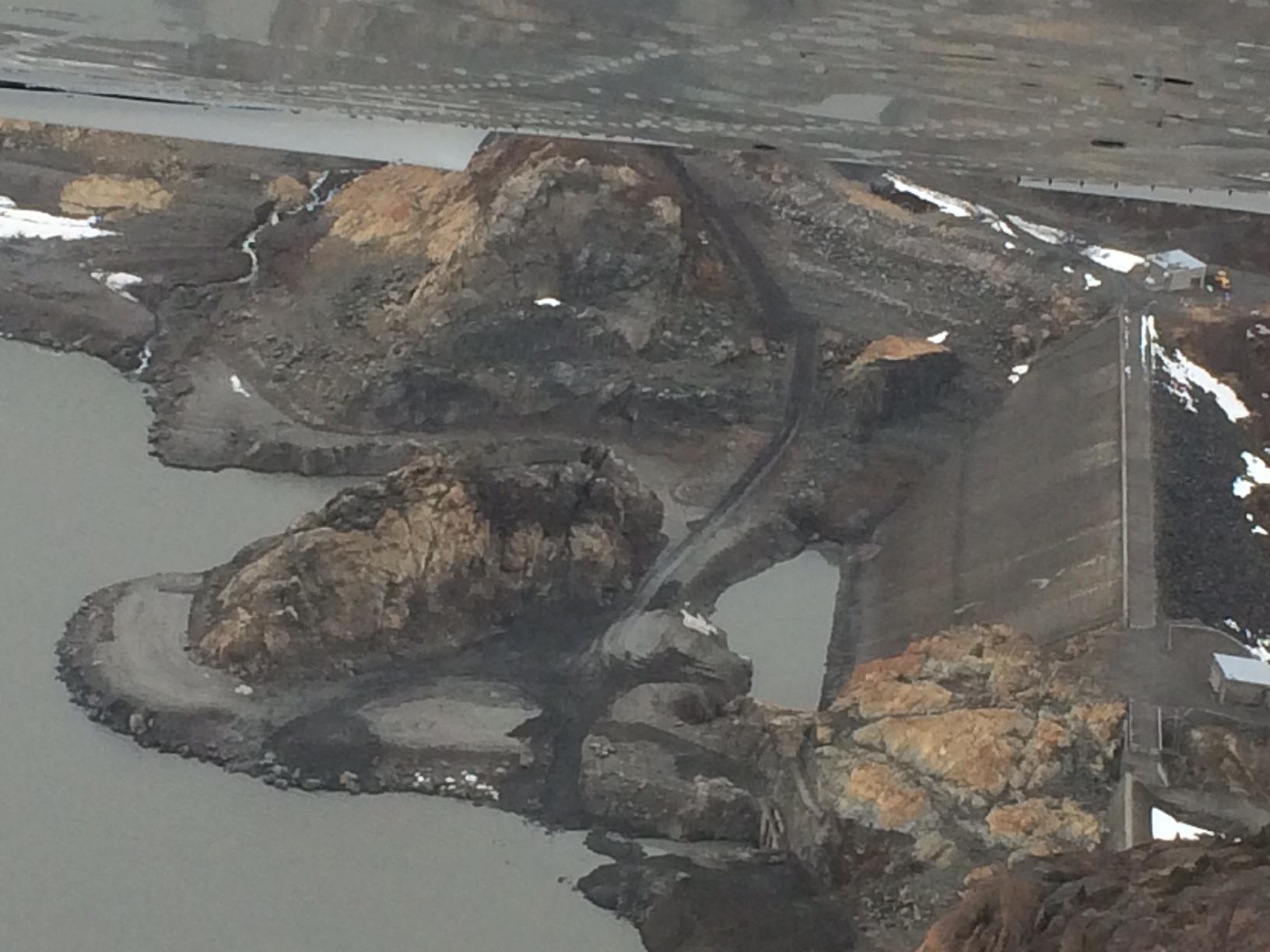
The Bradley Lake dam. (Photo by Quinton Chandler/KBBI)

An expansion of the state’s largest hydroelectric facility is one step closer to becoming a reality.

The Alaska Energy Authority’s Board of Directors approved a $46.6 million expansion of Bradley Lake at its meeting earlier this month.

The Battle Creek project, as it’s known, will divert runoff from the Battle Glacier via a 1.7-mile pipeline, just upstream of the Bradley Lake dam.

The state-owned facility serves about 70 percent of Alaska’s population through six electric utilities along the rail belt.

Each utility plays a role in operating Bradley Lake, and the nearly 370-megawatt it produces each year are divvied up between Golden Valley Electric, Chugach Electric, City of Seward, Matanuska Electric Association, Homer Electric Association and Municipal Light & Power.

Authority Chief Operating Officer Kirk Warren said the Battle Creek project will boost production at the site by 10 percent, but more importantly, it will help maintain water levels during the summer months.

“The utilities have to maintain a minimum water level, and when it gets down to that, they will have to decrease power coming from Bradley Lake,” Warren said. “This will allow situations where they can get more power during times where they historically haven’t been able to.”

There is still plenty to figure out before the project’s expected completion in 2020, and funding is the largest hurdle.

The AEA board examined five options at its meeting in early August.

The board intends to seek most of its funding through New Clean Energy Bonds, federal money set aside by the Obama administration for renewable energy projects.

Warren said the board is looking to secure funding this fall, and he notes that waiting any longer could lead to higher interest rates. Just a 1-percent increase could tack on $10 million to the project.

“That’s the impetus for us to make the decision as quickly as possible. There’s no reason we have to believe that interest rate would ever go down,” Warren said. “The quicker we make a decision regarding getting that RFP on the street and locking in that interest rate, the better.”

There has also been talk of the Chugach Electric Association financing the project.

The wholesale price of electricity from Bradley Lake is expected to increase slightly, but hydroelectric power is typically cheaper than other traditional power sources.

AEA expects that a more consistent supply from Bradley Lake will in-turn save electric utilities money.

Warren said the board has already approved brush clearing along the pipeline’s path, allowing potential contractors to make site visits next month.

Bidding on the project is expected to open to in October, and work is likely to begin next spring.

Site notifications
Update notification options
Subscribe to notifications