KCAW - Sitka

KCAW is our partner station in Sitka. KTOO collaborates with partners across the state to cover important news and to share stories with our audiences.

Juneau boundary expansion could threaten subsistence living in Angoon

Village of Angoon
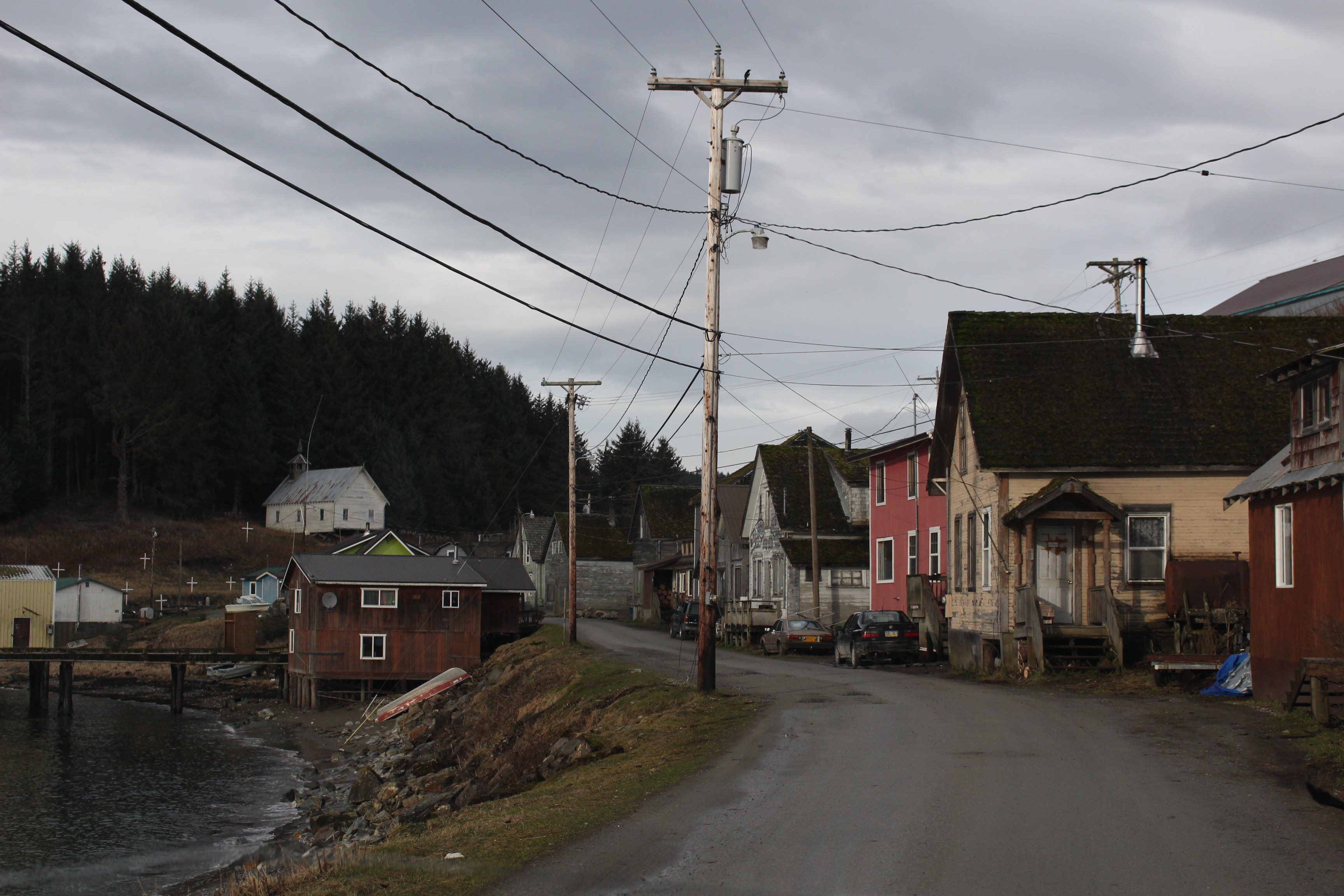
The village of Angoon is the home to about 400 people. (Photo by Elizabeth Jenkins/KTOO)

The City and Borough of Juneau is looking to expand its boundaries on Admiralty Island.

That island is home to Angoon, a community of about 500 people, some of whom fear a nearby land annexation would threaten their subsistence lifestyle.

A meeting between Angoon and the City and Borough of Juneau was supposed to take place this week, but was canceled at the last minute.

Albert Howard grew up in Angoon. He’s served two terms as mayor, is now a member of the Regional School Board and serves as vice president of the local tribe.

“I pretty much lived here my whole life,” he said. “I know one end of the island to the other because I’ve hunted it with my dad and now I’m hunting it with my son.”

Sometimes they don’t see much on those hunting trips, so Howard says he talks to his son about the land and their rights to it.

In the late 1970s Admiralty Island became a National Monument, in part because of its cultural significance. It’s been inhabited by Tlingit people for over 10,000 years.

“Anything that happens on Admiralty Island is for the protection of the indigenous people of the Island,” Howard said. “It’s in (National) Monument language and it’s stated that way. You can find it online. It doesn’t say anything about the City and Borough of Juneau. That’s pretty clear in the language.”

Howard and others in Angoon are worried specifically about a place called Pack Creek.

It’s on eastern Admiralty about halfway between Angoon and Juneau.

Pack Creek is a popular bear-viewing place for tourists and hunting spot for locals.

Howard worries if that part of Admiralty Island is annexed, it’s resources could be auctioned off.

“This island belonged to the elders,” Howard said. “The elders decided to keep it the way it is and Pack Creek wouldn’t be what is it if our elders decided to let everybody log it.”

“If land was annexed into the Juneau borough, that does not change land ownership,” Juneau City Manager Rorie Watt said. “So, with the example of Pack Creek, that would be in the Admiralty Island National Monument, managed by the Forest Service. So even if we annexed that, it would not become City of Juneau land. It would still be Forest Service (land) under that management style.”

And that Forest Service land in the Pack Creek area is protected from development since it’s inside a national monument.

So why would Juneau want to annex the land if it can’t be logged or mined or commercially developed?

“There’s a lot of reasons,” Watt said. “If you look at the state and the constitution, the idea behind it is sooner or later the entire state ends up in a borough.”

So, basically incorporating it before anyone else does.

Alaska’s constitution says the state must be divided into boroughs, either organized or unorganized.

A study completed in the 1990s laid out possible borough models.

Right now most of Admiralty Island is considered an unorganized borough and remote residents like it that way.

Property owners in Funter Bay on the north end of the island wrote to the Juneau Assembly is February.

They don’t want to pay additional taxes or adhere to zoning regulations.

Watt said there’s no way of knowing how– much in property taxes this would bring Juneau, since those properties have never been assessed.

He said there are benefits to being part of the borough. Watt says zoning makes sure the land is managed responsibly.

“What we would say to Angoon or anybody else who had property in the areas that we’re looking at is that we think there is an economic nexus or cultural nexus or recreation nexus between the areas we propose to annex,” Watt said.

Juneau representatives wanted to say that in person this week. Watt and other city officials had planned a trip to Angoon, but the mayor of Angoon, Harriet Silva who declined to comment for this story, canceled the visit.

Watt said it’s still early on in the process.

He hopes to reschedule a visit to Angoon and expects to host public meetings in Juneau in the coming months.

Tlingit and Haida students in Arkansas help archive Jeanie Greene videos

Heidi Davis, an undergraduate at University of Arkansas Little Rock, works Feb. 27, 2017, on digitizing photos of the Jeanie Greene collection on Alaska Natives at the Sequoyah National Research Center. Davis is Tlingit and Haida, and grew up in Southeast Alaska. (Photo courtesy of Erin Fehr)

It’s probably not the first place you’d imagine preserving Alaska Native history, but the Sequoyah National Research Center is doing just that.

A team of archivists with ties to the state are cataloging over a thousand video tapes that showcase Alaska Native life.

In Little Rock, Arkansas, on the corner of Archer and University avenues, sits one of the largest Native American archives in the world.

“Obviously people are thinking, ‘Why in the world is this collection of Alaska Native films and archives in Arkansas?’”

Erin Fehr is the archivist at Sequoyah National Research Center, which focuses on preserving contemporary material.

“As you can see we do have Alaska Natives in Arkansas, although we are small and few in number,” Fehr said.

Fehr grew up in Arkansas, but her grandmother is Yup’ik from Hooper Bay and for the past few years Fehr’s work has focused on her Alaska Native roots.

In 2014 the center received a $24,000 grant to digitize more than 1,200 films by the Inupiaq television producer Jeanie Greene.

Greene has a number of series under her belt like “This Generation” and “Northern Lives,” but she’s most known for Heartbeat Alaska.

One episode is like an hour-long Christmas card. People wish their families Merry Christmas from Sitka over to Seward and all the way out to the village of Tuluksak on the Kuskokwim River, where a woman sings “O Christmas Tree” in Yup’ik.

These videos are snapshots of Native life in Alaska.

They’re sometimes rough and often unrehearsed, but it’s real life, something a lot of people can relate to.

“Heartbeat Alaska– as many Alaskans are familiar with– I grew up watching.” said Heidi Davis is another of Arkansas’s Alaska Natives.

She’s Tlingit and Haida and grew up in Southeast.

“Mostly Kake and then my mom moved us back and forth between Juneau and Sitka– and I lived there for 22 years until my husband and I moved out.”

Her husband was working aboard the Coast Guard Cutter Maple when they met in Sitka.

Now the two are working toward undergraduate degrees from the University of Arkansas at Little Rock, where Davis has also been interning at Sequoyah National Research Center this semester.

She’s cataloging the Jeanie Greene videos.

“Because I was so excited about it, they started out with a lot of the Kake videos and a lot of the Sitka videos,” Davis said. “A lot of the names are really familiar – Tommy Joseph was in one of the videos I was watching a couple weeks back.”

Joseph is a Tlingit wood carver known for his totem poles. So, Davis tags that video with Joseph’s name and any other keywords.

The goal is to make the videos available on the Sequoyah National Research Center’s website.

With the help from the center’s other intern, Stephanie Rabaduex, who also has Tlingit and Haida roots, the two should finish cataloging this summer.

They’re getting college credit for their work and Davis has plans to go on to law school after she graduates next year.

Growing up in Kake, she said she never could have imagined her life today.

“Me being a Tlingit and Haida from Southeast Alaska,” Davis said. “I’ve come so far in Arkansas and working on something that ties me to my roots. I think it’s pretty amazing.”

She hopes to move back to Sitka with her family someday, but for now, her work is what’s keeping her connected to Alaska.

Kake resident remembers ’64 earthquake as state recognizes disaster saftety

(Photo by Annie Ropeik/KUCB)

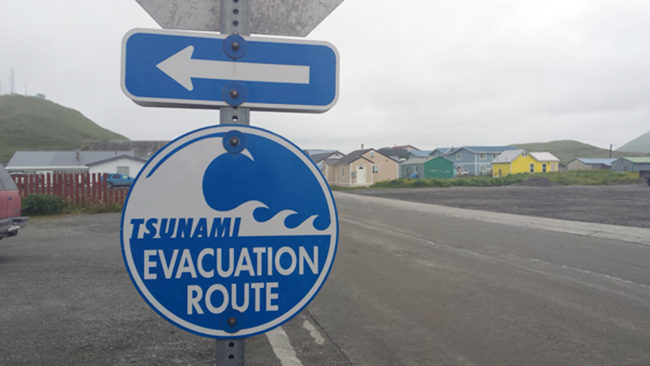
It’s Tsunami Preparedness Week in Alaska this week. On Wednesday morning (March 29) a tsunami warning test message was broadcasted over radios and TVs in at-risk communities across the state. The drill takes place once a year, and one village in Southeast has not forgotten the importance of being ready when disaster strikes.

Marvin Kadake remembers Mar. 27, 1964 like it was yesterday.

“I tell you, it was something,” Kadake said. “When you looked up at town here, you could see all the light poles shaking, just like they were rubber.”

A 9.2 magnitude earthquake shook the state that day. Kadake was in Kake, a small coastal village about 40 miles east of Sitka.

“It was a flat, calm day like today and you could actually see the tide going out,” Kadake said.

Kadake was in his car when the ‘64 earthquake hit.

“We couldn’t even get out of the vehicle it was shaking so much,” Kadake said. “And the people out on the dock were just holding onto the railings.”

If you’re at or near sea-level when an earthquake hits, there’s risk a tsunami will follow. That’s because the tectonic plates that shifted and caused the quake are probably below the ocean floor. So, that shift pushes a wall of water up, causing a tidal wave. The video says to get to higher ground or go farther inland. But that’s not what happened in Kake in 1964.

“As the tide is receding, some of the young guys were just hollering and screaming and running– following the tide going out,” Kadake said.

Kadake said that was an eye-opening experience for him.

“They survived, but they’ll never do it again,” Kadake said. “It was just some experience — to go through those motions.”

The 1964 earthquake, which devastated much of Southcentral, was also a wake-up call for Kake. Some of those light poles Kadake said were shaking like rubber– they toppled over and a section of the road crumbled away.

After that, the city moved the health clinic and fire hall to higher ground. That’s also where the senior center and high school are.

Kadake has been with the volunteer fire department for more than 60 years. The department now has a plan in place to make sure everyone is accounted for. He says the first time they did a headcount drill at the school it didn’t exactly go so well.

“Nobody knew about it– the teachers– nobody knew who we hid away,” Kadake said. “They had a head count, and you know what? They didn’t even know who was missing.”

The National Weather Service broadcasts tsunami warnings across Alaska at least once a year. That’s when the community of Kake runs their own drills. They make sure the clinic is stocked and all the school kids are accounted for. They also have tsunami sirens that blare across town.

“It’s just a big issue here in Kake and we take this drill very seriously,” Kadake said.

Like a lot of communities in Alaska, Kake wasn’t prepared for an earthquake like the one the one that hit in 1964. Now, Kadake said, they’ll be ready.

AK: Fishing for herring from the sky

The herring fishery is in a race against time, trying to catch the quota before the herring spawn. Last year, the spawn began before the quota was met. The Alaska Department of Fish & Game instructed the fleet to stand down. (Photo by Emily Kwong/KCAW)

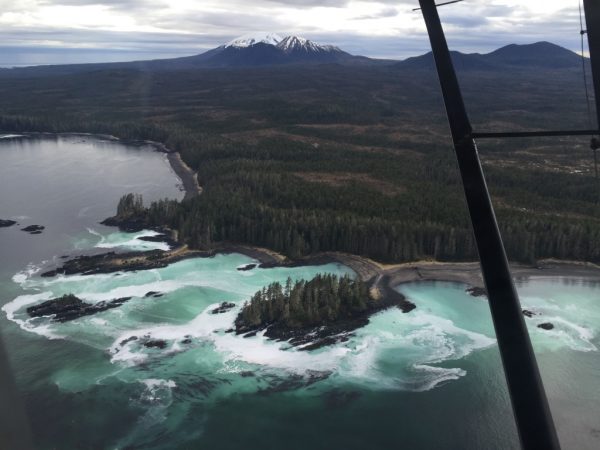
The Sitka Sound sac roe herring fishery is in full swing. In less than a week, the fleet has caught over half of its quota. And while most crew members work on the water, spotter pilots fish for herring from the sky.

I’m going to take you inside the herring fishery today. But rather than get onto a boat, we’re going to climb into the clouds.

“Sitka Radio, Piper 68270,” Frank Foode said.

Foode calmly rests his hands on the controls. Mine are wrapped white knuckle onto my seat. His plane is a 1970s-era Piper Super Cub, which he rebuilt ten years ago. He motions towards my life jacket and overhead to a waterproof case, where inside is a phone.

Turn it on up here and make a phone call in case we crash and I’m dead, or incapacitated.

Foode’s like a flight attendant, but with less flourish and blue jeans. Through his headset, he tracks a -stream of chatter – from air traffic control to herring captains to his observer. That’s me. My job is to monitor for other planes, so we don’t crash while he concentrates on catching fish. I’ve plugged my recorder into his audio outboard and totally blank on all my questions. The only thing I manage to say is, “Should I put my phone on airplane mode?”

Franke Foode has been a herring pilot since 1978. The son of a pilot, he got his start in Cordova and has worked for fisheries across the western seaboard. (Emily Kwong/KCAW photo)

“No,” Foode laughed. “I don’t think that phone could make this thing crash.”

Then there’s silence. Like that hiss of anticipation when a roller coaster is about to take off. Foode concentrates, as the Piper collects speed down the runway.

And then, the ground falls away. We’re up and climbing towards the sun, the water glassy down below.

“And we’re out over the water,” Foode said to air traffic.

To me, it’s all varying shades of turquoise. But to Frank, it’s the makings of the fishery.

“There’s fish right there,” Foode said.

“Is that the herring?” I asked.

“Yeah, can you see the flash in the water down below? Little sparkles,” Foode remarked.

And sure enough, there are the herring – a thin ribbon of black along the beach. Schools gather by the thousands every March to spawn. Sea lions, eagles, and other predators shortly follow. Foode spots a humpback down, trailing something brown.

“He just pooped,” Foode said. “He’s eating a lot!”

And a few minutes later, we spot four or five humpback whales bubble feeding.

“That’s awesome,” Foode exclaimed.

I should add, there’s no fishery taking place today. But if there were, it would be drama of horsepower and white water – with planes clustering overhead and seiners competing down below, everyone chasing the same mass of fish. What you’re hearing is some video footage from Wednesday’s fishery. As a spotter pilot, Foode would help his two boats set their net. He’s like a conductor – miles from the orchestra – and can easily get lost in the moment.

“We do this all day,” Foode said. “I’ve got like a million miles of this.”

The Sitka Sac roe herring fishery is over halfway towards meeting its annual quota. The second opening on Wednesday brought in 5,000 tons of fish. Here’s a bird’s eye view of the action. (Heather Bauscher/KCAW photo)

Foode has spent forty years spotting, mostly for herring fisheries in Bristol Bay, Cordova, and Sitka, but he’s also chased brine shrimp in Utah and sardines in Washington. He tried California, but hates night flying. He prefers fisheries like Sitka’s that are safer, less stressful. Back on the ground, he tells me he’s flown in places where there’s 100 planes in the air at a time.

“You can hear the the other airplane over your headset,” Foode said. “It will key your mic. It’s probably 5-10 feet away and it definitely gets your heart flying.”

But Foode says that close calls are part and parcel to the job. He’ll be in the plane for 12, sometimes 18 hours, at a time. When the winds get squirrelly or his observer alerts him to a plane overhead, he must respond quickly. One time, that he almost didn’t notice his plane flipping upside down.

“I was looking through the skylight trying to finish the set and had to bail out. I probably could have pulled it off, but I finally got smart and just pulled out and let them finish the set themselves,” he said.

There are moments like this, of adrenaline and adventure. But also hours of waiting in cramped quarters. After all these years, Foode feels himself wanting to wind down. The market is soft. The fish are small. The average pilot will gross $15,000 a fishery, but that’s nowhere near the payout of decades.

I’ve had enough flying around catching fish. Just don’t want to fly too much. 200 hours a year and 3-4 months of dealing with the airplane is nice.

Foode may be a pilot, but he’s a fisherman at heart. While airborne, he wanted to show me every every herring school, every spawn sight, every whale. His dad was a pilot too.

I could catch more fish than him normally because he was looking at his airplane, playing with the knobs, making sure the engine’s running right. I just looked outside to find the fish.

To me, this proves that not all fishermen wear waders. Some have wings.

After 30 years, Raven Shark pole back in Sitka

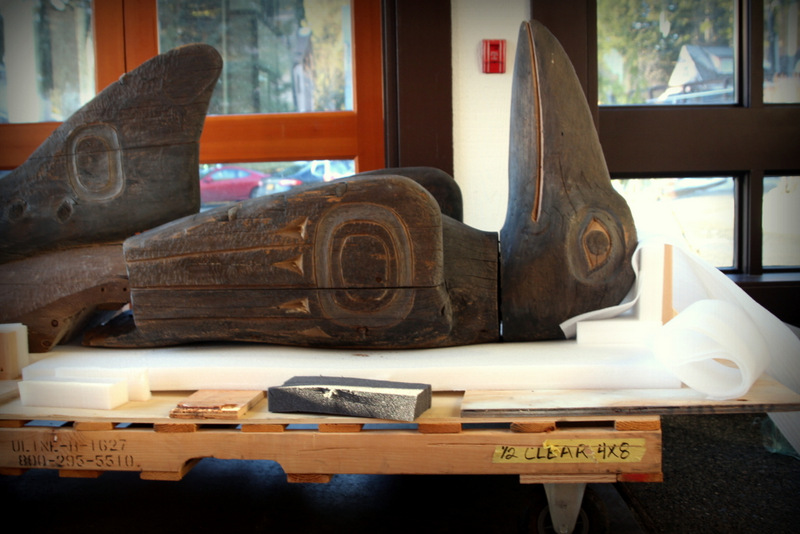
The top of the Raven Shark totem pole lies in Totem Hall at Sitka National Historical Park. (Photo by Emily Russell/KCAW)

The totem pole is an icon of the Pacific Northwest. The carved art form showcases clan stories and family crests in museums around the world.

After more than 30 years in the Anchorage Museum, a century-old pole from Southeast has made it back to Sitka, where curators are prepping a permanent home.

It’s a little echoey inside Totem Hall at Sitka National Historical Park, because the ceilings are about 30 feet high.

Sun is streaming through the windows today, but it’s pretty cold in there.

“The environment in here really mirrors the outside environment,” said Kelsey Lutz, Sitka National Historical Park’s museum curator. “We do not have any heat or humidification going on in this part of the facility.”

Lutz oversees the park’s collection of more than 30 totem poles.

Most of them are outside along the park’s trail system. The oldest ones, though, are stored inside Totem Hall.

“They are used to being outside in that wet, cool environment, so this is really perfect for the wood,” Lutz said.

Poles tower over us, so tall you have to crane your neck to see the tops of them. There is one, though, that you actually have to look down to see. Lutz invites me back to take a look.

“Feel free to come back here,” Lutz said.

A couple of bright orange traffic cones work as dividers between the pole and museum patrons. Behind them lies a totem pole separated into two sections.

“The Raven Shark that has come back is the original pole,” said Angie Richman, who is the chief of Interpretation at the park.

The Raven Shark pole at our feet was carved in Klawock over 100 years ago. Richman said it was donated to Alaska’s governor at the time.

“A year after it was donated it went to St. Louis for the 1904 Louisiana Purchase Exposition, also known as the World’s Fair,” Richman said.

It also was shown at the World’s Fair in Oregon in 1905, brought back to Sitka for a few decades and then went back out on the road for the New York World’s Fair in 1964.

“In 1978, due to the deterioration, that’s when it was taken off the trail and moved inside,” Richman said.

And it’s been inside ever since, most recently in the atrium of the Anchorage Museum, where the pole stood on display for 30 years.

Around the time the original was moved inside, a replica of the Raven Shark pole was carved and folded into the forest along Totem Trail.

The trail loops around the coastline and sometimes there’s a break in the trees, where the Raven Shark replica pole stands.

You can see out on the ocean and it’s just spectacular.

Wet snow is falling and forming puddles on the trail today.

“My first opportunity to work with a knife on a piece of wood was in the third grade — 8 years old,” said Tommy Joseph, a Tlingit wood carver originally from Ketchikan.

Since then, Joseph said he’s carved 40 or so full-size totem poles – he stopped counting after 30.

“Totem poles, well they’re a visual tool for telling a story — somebody’s story — about who they are, where they’re from, what they’re all about,” Joseph said. “Some are grave markers or mortuary memorial poles.”

Others are commemorative, like the centennial pole Joseph carved for Sitka National Historical Park’s 100th anniversary. But as Joseph says, they all tell stories. The Raven Shark’s is one of two Tlingit clans–the Raven and Shark clans.

Since its carving over a century ago, the pole has told that story to onlookers around the country, but Lutz says this will be it’s final home.

It could be a few months before the pole stands upright in Totem Hall. Until then, Lutz said, they’ll focus on the pole’s presentation.

“Well hopefully we’ll upgrade the traffic cones to something more museum-appropriate,” Lutz said.

Federal funds encourage Tribal emergency preparedness plans

Tribes in Southeast will soon have more say in their emergency preparedness plans. The Central Council of Tlingit and Haida Indian Tribes of Alaska is the recipient of a $240,000 grant from the Federal Emergency Management Agency, or FEMA.

The funding is part of FEMA’s Emergency Management Performance Grant, a national effort to encourage state, local, territorial, and tribal governments in planning for disasters. The Central Council will work alongside Alaska’s Division of Homeland Security and Emergency Management to implement plans throughout Southeast.

A press release from the Central Council announcing the grant also announced the promotion of Village Public Safety Officer Sergeant Corey Padron to Emergency Management Coordinator. The FEMA grant will be paid in salary reimbursements, with $80,000 available through July of this year and another $160,000 through July 2018.

Padron has served as a VPSO in Saxman through the Central Council for five years. He also teaches at the Village Police Officer Academy in Bethel and the Alaska Public Safety Training Academy in Sitka.

In a statement to the Central Council, Padron says he plans to work directly with other VPSOs and partner communities. He plans to review and update any existing emergency preparedness plans and then draw up new ones where necessary.

Padron says he’ll look for training opportunities and additional grants to increase the disaster resiliency of tribes and communities across Southeast.


Site notifications
Update notification options
Subscribe to notifications