KDLG - Dillingham

KDLG is our partner station in Dillingham. KTOO collaborates with partners across the state to cover important news and to share stories with our audiences.
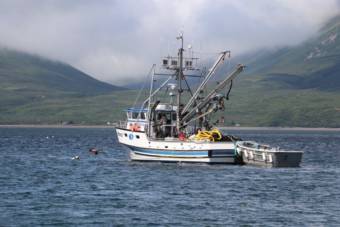
Basketball team travels 70 miles by snowmachine to its first competition since the pandemic began

People standing around a line of about 10 snowmachines on the open tundra
The Togiak basketball team on their way to Dillingham. Jan. 27, 2022. (Photo courtesy of Kevin Lund)

Basketball is a huge part of life in rural Alaska. But the COVID-19 pandemic means that in Bristol Bay, teams haven’t been able to play against each other since 2020.

That changed at the end of January, when Dillingham held the region’s first major high school basketball tournament. But one of the schools wasn’t able to fly to Dillingham, so the athletes took matters into their own hands.

The Sockeye Classic basketball tournament in Dillingham was the Togiak Huskies’ first competition since the pandemic began two years ago. And they really wanted to play.

“They were excited to come here and play. And I have two seniors. And it’s their last year,” said Ina Togiak, the coach for the girls team.

Togiak said the school shut down when the pandemic hit, so it was hard for the students to practice, let alone compete.

Now, games are back. But students still face obstacles when traveling to competitions.

Most Bristol Bay communities aren’t connected by roads, and students fly to other schools for sports competitions. The first day of the Sockeye tournament in January was cold and extremely windy, and no planes were flying to Togiak.

So the coaches and the school came up with a plan: Take 10 student athletes, coaches and chaperones across at least 70 to 80 miles of frozen tundra, streams and lakes to the tournament — on snowmachines.

Thomas Dock coaches the Togiak boys’ team. He said they had discussed traveling by snowmachine for games in the past, to no avail. But this time, parents and coaches met with school officials and agreed that the team should make the journey.

Once the superintendent approved the trip, it took the team just an hour to get ready. They had survival equipment and gear and help from guides, including members of Togiak’s search and rescue team.

A young man standing by a snowmachine parked next to a car
Koby Pauk examining a snowmachine on Jan. 29, 2022. (Photo by Izzy Ross/KDLG)

Senior Koby Pauk said the ride was tough.

“Long, backbreaking,” he laughed. “Never thought I’d get tired of riding a snowgo.”

“And scary,” said sophomore Lloyd Kritz.

They expected the route to take four hours. But the snow was rock hard, and the wind ripped across the tundra.

“It was awesome — in the beginning. We had 10 snowgos, but one broke down,” said Dock. “It was a beautiful trip, we were going in the rate that we were going, but some snowmachines — it’s glare ice — some snowmachines are liquid cooled. They had overheating problems.”

The trip took six hours instead of four.

Dock said the team arrived too late to compete on the first day of the tournament. They played their first game the next morning.

“It’s really nice to hear people say that everybody in the southwest region parts of Alaska knew Togiak was coming by snowmachine to Dillingham to play basketball,” he said. “That was awesome and we were greeted really well here.”

A group photo of students and chaperones standing outside
Togiak coaches and students in Dillingham. Jan. 29, 2022. (Photo by Izzy Ross/KDLG)

Senior Alyssa Coopchiak has played basketball for eight years. She said it was hard not to compete during the pandemic.

“It was kind of depressing, because we couldn’t travel anymore,” she said.

It was her first trip to Dillingham by snowmachine. She said it’s exciting to compete again. The team — and coaches — were excited for the rest of the tournament

“We’re going to win the whole thing,” Coach Dock joked. “We’re just shaking ourselves off, relaxing.”

Sophomore Shantae Kamkahpak and junior Natania Hyexikok were in the stands during one of the games the day after they arrived. They have both played basketball for years.

They said the ride to the tournament was tough, but fun. It was their first long trip on snowmachines.

Two young women smiling and posing for a photo
Shantae Kamkahpak and Natania Hyexikok at the Sockeye Classic tournament in Dillingham on Jan. 28, 2022. (Photo by Izzy Ross/KDLG)

“It was a lot of fun,” Kamkahpak said. “It was pretty warm. I dressed really warm. I had like two coats and two snow pants.”

“But when the sun was setting it got colder and windier,” said Hyexikok.

“I sat in the sled for part of it,” Hyexikok “My head was just bouncing, and it was just… not great.”

“The jumps on the snowgo. When you’re a passenger when you’re holding on it feels like you’re going to freaking tip, and crash,” Hyexikok said. “Our legs would get so sore we would have to stretch.”

“It was fun,” Kamkahpak said.

“Even if we’re sore,” Hyexikok said. “I really wanted to come here.”

Later on in the tournament, the team gathered outside the Dillingham boardinghouse where they were staying.

Alvaro Sutton is one of the parents who traveled with the team. He said when one of the machines broke down during the trip over, they figured it out.

“We lost a spring and it tore the track,” he said. “We had to make do with what we had — packed a couple of kids on some sleds and we just came on over.”

A basketball player falling while another player reaches out to steal the ball from him.
Togiak Huskies play the Tanalian Lynx at the Sockeye Classic tournament in Dillingham on Jan. 28, 2022. (Photo by Izzy Ross/KDLG)

Most of the players flew home. But a few had to help get the snowmachines back to Togiak.

“I’m probably going to take my daughter with me and we’re just going to go straight back home. She wants to follow me,” Sutton said on the last day of the tournament.

Neither the boys nor the girls placed in the finals. Togiak’s girls team won the tournament’s sportsmanship award. And, the athletes said, the long trip there was definitely worth it.

While Chignik fishermen wait on 2018 relief funds, some look beyond the fishery to survive

A fishing boat anchored offshore
A boat off of Chignik Lagoon. July 16, 2021. (Photo by Izzy Ross/KDLG)

Aloys Kopun sat in the small harbormaster’s office in Chignik Bay last July as a few boats gently bobbed in the harbor’s turquoise water.

“When we were fishing like we normally fished here, the whole harbor was always plump full,” he said. “As you can see, now, we had hardly nobody in here. And everybody’s gone tendering or went to other areas to fish, or some of them went broke.”

Kopun fished in Chignik, on the Alaska Peninsula, for decades before becoming the summer harbormaster.

He said the harbor used to be so full that it had a waiting list for boats to dock there. But last summer, it was almost empty. Significantly fewer boats have returned since the Chignik sockeye run failed in 2018. Fishermen who depend on the salmon closed out that season without making a paycheck.

Three and a half years later, Chignik fishermen are finally expecting federal relief funds to start coming in, making up for some of their lost income. But that assistance may be too late to keep those fishermen coming back to Chignik, or to help make the local economies whole again.

“It is a kind of a small BandAid on a bigger wound that was opened four years ago,” said George Anderson, the president of the Chignik Intertribal Coalition who has fished commercially his entire life. “For a lot of people, they’ve moved on to other fisheries, had to invest, move into tendering — you know, does a check four years later really recuperate your losses? For everybody, it’s going to be different.”

A small harbor with mountains in the background
Boats in Chignik Bay harbor. July 16, 2021. (Photo by Izzy Ross/KDLG)

Disaster funds that are years in the making

The lengthy disaster relief process has frustrated fishermen and communities.

The Chignik Intertribal Coalition sent a letter to U.S. Sen. Dan Sullivan last fall requesting an expedited process for administering federal funds.

Months later, the Pacific States Marine Fisheries Commission is now getting ready to distribute some of the $10.3 million in disaster funds to Chignik fishermen in the coming weeks. The rest will go to processors, communities and research.

Disaster funds are meant to help fishery participants harmed by the 2018 sockeye crash, improve information used for in-season assessments and to forecast future runs, according to the state. They’ll also go toward developing management approaches that mitigate the impacts of future fishery disasters.

The average payment to a permit holder will be about $73,000, according to the fishery advisor for the Lake and Peninsula Borough. Sixty-four permit holders applied. Those who caught fish outside of Chignik can receive $40,000 each.

Crew members have until March 8 to apply for 2018 funds through the Pacific States Marine Fisheries Commission. The deadline for permit holders to apply was in early January. All permit holders who intended to fish that season were eligible to apply for funds.

A man in the cabin of a fishing boat
George Anderson navigating his boat. July 16, 2021. (Photo by Izzy Ross/KDLG)

Without fishing ‘things just started going away’ 

Fishing in Chignik has been extremely tough since the 2018 disaster.

The price a fishing boat gets for its catch has been down across all salmon species. Last season, 31 fishermen participated in the fishery, and the value per permit was about $80,000, according to the Alaska Department of Fish and Game — both of which are around half of the 10-year average.

Last month, U.S. Secretary of Commerce Gina Raimondo announced 14 disaster declarations for Alaska fisheries, including one for the Chignik fishery for 2020. The Lake and Peninsula Borough is also asking the state to declare a disaster for the Chignik fishery for 2021.

The four years of low returns have made the fishery especially vulnerable. One of just two processors that buy Chignik fish is pulling out of the fishery. In early February, OBI Seafoods informed fishermen that it would not tender in Chignik this summer.

In a statement, CEO Mark Palmer said the decision was based on the low returns in recent years.

“This is a very difficult decision, but as our fleet moves to other areas to fish, [we] need to reallocate tenders to ensure we can serve those fishermen.”

That means Trident Seafoods will be the only processor for the fishery, and those who fished for OBI will have to find another market.

Anderson said that’s one more casualty of the collapsed run.

“Fish is everything for that region,” he said. “And without it, things just started going away.”

rocky islands seen from the deck of a fishing boat
Off the shore of the City of Chignik Bay. July 16, 2021. (Photo by Izzy Ross/KDLG)

Fewer services in the community

Gene Carlson, a fisherman from Chignik Bay, said certain parts of the community have been slowly shrinking for years. About 90 people live there now. And there’s just one store. It’s owned by Trident and operated seasonally.

“They’re only open from May 15 till August, I think,” Carlson said as he stopped his car in front of a large warehouse and walked up to the door one afternoon in mid-July. “Oh, we’re too late! They close at 4:00. Sorry!”

In the winter, there is no store, but the community hall orders groceries. People also have groceries flown in. Once a month, a barge delivers them as well.

Across town and up a steep hill, the July sun streamed through the large windows of Chignik Bay’s city office last summer. The only person there was Mayor Robert Carpenter, sitting at a desk. Carpenter came to Chignik in 1992 as a processor with Aleutian Dragon Fisheries and has witnessed the area’s fishing industry decline over the past four years.

A man sitting in an office
Chignik Bay Mayor Robert Carpenter at his desk. July 16, 2021. (Photo by Izzy Ross/KDLG)

Now, he said, the city is still struggling to pay its bills.

“This is not good, and we’re looking for answers of how we survive, because the town itself, we basically survive off fish revenue,” he said. “That’s $300,000–$400,000 a year.”

Revenue from the city’s fish tax has shrunk drastically, said Carpenter, and the Lake and Peninsula Borough has lost tax revenue from the fishery, too.

The population used to balloon in the summer to hundreds more people, as cannery workers and fishermen came to tap the sockeye run. But the past few years have been especially tough.

The school has just enough students to stay open, for now. There are six K-12 students, one preschooler and one teacher. The principal lives in Anchorage and also serves other schools in the borough.

“We can’t keep people employed. We’ve got reduced hours on just about everything. For everybody. I myself only claim like three hours a day working here in the office,” said Carpenter. “Mayor position’s unpaid so it’s just — like I said, I get a couple hours but I can’t survive off that. And the people that just fish — they can’t survive on not fishing.”

A view from above of a village on a bay
The City of Chignik Bay. July 16, 2021. (Photo by Izzy Ross/KDLG)

Low runs leave gaps in food security 

The lower runs have also changed subsistence fishing in Chignik’s communities.

Anderson, with the Intertribal Coalition, said it has created gaps in food security.

Now, the coalition is working with the Ivanof Bay Tribe to interview people in each community through a tribal resiliency grant from the Bureau of Indian Affairs.

“Finding out their needs, and their priorities,” Anderson said. “And see if there’s ways to diversify, maybe get into mariculture, or tap into the blue economy somehow. We have a lot of talented people, and we have a lot of gear in the area.”

Around 1.2 million sockeye are expected to return this summer — about half of the 20-year average. Anderson isn’t confident the fishery will open. He said as long as the runs are low, it is important for the communities to find a way for people to earn a living by investing in infrastructure and diversification.

“Bottom line is: People generally want to earn their own keep,” he said. “They don’t want to keep having fisheries disasters, and wait for it to show up in the government.”

Disaster funds will help in the short term, Anderson said, but the Chignik communities may have to look beyond the fishery to find a way forward.

How a Dillingham hairstylist turned her salon into a free store

Bristy Larsen opened a free shop in her hair salon in 2020. (Photo by Tyler Thompson/KDLG)

Bristy Larsen has been styling hair on Dillingham’s Main Street for three years. Her salon sits across from the AC Grocery Store.

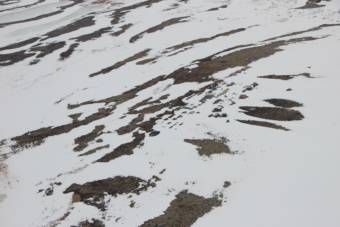
In 2020, she opened a free store in the salon. People can donate anything from clothes to furniture, to household appliances and other day-to-day necessities. The shop also serves as a place for anyone to get out of the cold and warm up.
Before there was a free store, Larsen hosted a women’s clothing exchange at her home. But as stuff began to pile up, she decided to consolidate and move it to a more accessible location.

“So I brought it to my shop which had an empty room,” she said. “And then from the empty room, it grew into almost the whole shop.”

The idea for the store comes from Lopez Island, Washington, a place Larsen frequently visits. In Lopez, garbage is shipped off the remote island. To save on that cost, Larsen said the community uses a warehouse for people to drop things off that may be reusable.

“The inspiration from that,” she said. “Where everything has a use and everyone has a need. So some things aren’t garbage but they might be garbage if you look at them that way.”

In the store’s entrance, there’s a pink sign that reads “All clothes, books, etc. are free. Generously donated by Dillinghamers.”

Clothing racks are filled with shirts, sweaters and coats. There’s a large number of jeans and snow pants, along with shoes and boots. Bookshelves have a variety of options for any age, and there are bins with an assortment of DVDs. Toiletries are also available.

“I’ve been trying to get mostly winter stuff because that’s what people need right now, is things they can use,” Larsen said. “Honestly last year, someone donated a bunch of adult diapers and pads, things that they were almost embarrassed to have. But those are the things that went fastest. People were like, ‘I need more of those,’ ‘Where do you get those? I need more.’ Anything you can imagine I have at least one of it.”


A sign in Dillingham’s free shop. November 2021. (Photo by Tyler Thompson/KDLG)

Community members are surveyed by Larsen before donating. She asks a series of questions to gauge the situation. She said people will donate for any number of reasons.

“Why do they need to donate stuff,” Larsen said. “Is it just out of kindness? Or if they are able to wash it. Some people are literally moving and they just need to get stuff out of their home as quickly as possible. That’s when I get 11 huge garbage bags from someone’s garage sale and figure out what’s winter, what’s to save what needs to get washed.”

The store space is also a way for Larsen to help those who are experiencing homelessness. Folks can go to the store to warm up or use the bathroom. In Dillingham, there are no dedicated services or public facilities for people that experience homelessness. A local coalition of community volunteers, the “homelessness task force,” meets on occasion to discuss short and long-term options for shelters.

“There have been so many people who have frozen to death, or just in a hopeless situation where a blanket or a sleeping bag might have made the difference,” Larsen said. “Gregg Marxmiller has actually brought a bunch of little camp stoves and bevy sacks so if someone did come in here and told me they were living outside, obviously I’m not gonna try to counsel them to not do it, I’m going to try and help them whatever way I can.”

In November 2020, a person living outside was found dead downtown by Dillingham police from hypothermia. In the past, the police department has provided temporary spaces at the police station. According to a safety report from Chief Dan Pasqueriello, an estimated 12-20 people in Dillingham are chronically or situationally homeless.

A shelf full of books for the borrowing or taking at the Dillingham free shop. (Photo by Tyler Thompson/KDLG)

Larsen’s free store is open Monday through Saturday in the afternoons or evenings, unless she closes. She can be reached at 907-843-1289 or by email. People can also contact her through Facebook.

EPA announces next step in veto process for Pebble; mine opponents say the agency is too slow

Buildings at the proposed Pebble Mine site. April 8, 2019. (Photo by Izzy Ross/KDLG)

The Environmental Protection Agency announced Thursday that it intends to revise a proposed determination under the Clean Water Act that could permanently block development of the Pebble deposit, upstream from Bristol Bay.

But mine opponents are frustrated at the slow pace.

Section 404-c of the Clean Water Act allows the EPA to restrict the disposal of dredged or fill material in an area — or deny it altogether. It’s referred to as EPA’s veto power over wetlands permits.

EPA Region 10 acting administrator Michelle Pirzadeh sent a letter to the Army Corps of Engineers, the chief executive of Pebble Limited Partnership, the state Department of Natural Resources, and Chuchuna Minerals Company announcing the plan to revise the proposed determination. She said the EPA still has reason to believe that the discharge of materials from the proposed mine could lead to “unacceptable adverse effects on important fishery areas.”
But Alannah Hurley, executive director of United Tribes of Bristol Bay, said this announcement is a disappointment, because it delays permanent protections for the region.

“Our Tribes put in a petition, literally 12 years ago in 2010,” she said. “And instead of progressing to the next step, we are taking a step backward.”

The EPA initially said it would issue a recommended determination by May 31, 2022. Revising the proposed determination prolongs that timeline. Hurley is also disappointed that the Biden administration hasn’t honored its commitment to consult with Tribes during this process.

“We have actually been requesting Tribal consultation since this fall, about how this process should move forward and what that should look like in terms of public engagement and Tribal consultation,” Hurley said. “Today’s announcement was made without the type of consultation, which contributes to our disappointment.”

Pebble spokesman Mike Heatwole said in an email, “We have received the letter from the EPA and are reviewing it to determine our next steps.”

Here’s how Section 404-C works. If the EPA regional administrator isn’t satisfied that a project won’t produce “unacceptable adverse effects” it publishes a proposed determination, which begins the process of exploring whether the project will result in unacceptable harm. Then, the regional administrator either recommends or withdraws the proposed determination. Once the administrator makes that recommendation, the EPA gives the Army Corps and project applicant 15 days to take corrective action. Lastly, the administrator takes final action on the recommendation and publishes the final determination in the federal register.

Pebble, the Army Corps, the Department of Natural Resources and others have until Feb. 11 to submit information demonstrating that the project won’t unduly harm the watershed, although EPA said it could provide more time if requested.

The EPA originally proposed a “preemptive veto” in 2014, before Pebble applied for a permit. The Trump administration’s EPA withdrew it in 2019. Then, last September, the EPA announced that it would re-start the proposed determination process, which could end with a veto of the mine permits.

The EPA has issued vetoes just 13 times in the 50 years of the Clean Water Act, when a major project would have “significant impacts on some of America’s most ecologically valuable waters.”

The EPA says it will issue its revised proposed determination by May 31.

High winds cause Alaska Airlines jet to slide on icy Dillingham runway

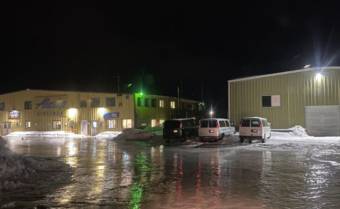
In airport parking lot at night, covered with thick ice
Rain and wind swept the Dillingham region on Jan. 23, 2022, and roads and parking lots were slick with ice. (Photo by Izzy Ross/KDLG)

On Sunday, a gust of wind unexpectedly hit an Alaska Airlines jet on the Dillingham runway as it was preparing to taxi from the terminal, causing it to slide on the icy tarmac. That’s according to an emailed statement from the airline on Monday.

The jet was carrying 74 passengers and four crew members. The airline said no one was injured, and no equipment was damaged.

Gorden Isaacs was one of the passengers on the plane. He and his wife were headed to a family wedding. They had been trying to fly out for days. On Sunday, they were hopeful because the jet from Anchorage made it to Dillingham that afternoon.

The rain started to pick up as they checked in and boarded the plane.

“As soon as it started moving, I believe, it started sliding and the wind turned it around about 45 degrees I think, so the jet blast was pointed right at the terminal,” Isaacs said.

Isaacs said it wasn’t obvious that they were sliding from inside the plane.

“But once I saw how the airplane turned around, the wind was coming straight across the runway. I’m a pilot, so I know that the wind will tend to weather vane the plane so the nose is pointed toward the wind, and that’s what happened — it pushed us around to where we were pointing straight toward the runway,” he said.

Isaacs said the ground crew came out to spread sand around the plane.

The airline canceled the flight because of the worsening weather. It then took passengers off the plane five at a time.

“They brought a lift truck and unloaded us off the back door of the airplane into this lift truck, five people at a time, and let us down on the ground and they had a nice trail sanded to walk in,” Isaacs said. “But it was so windy even on the sanded trail it was hard to stand up.”

Rona Halford was on the plane with her mother.

“It was just really icy,” she said. “The apron was icy, the walkway was. I thought they handled it professionally, and the ground crew worked really hard to get everybody off carefully. I thought it was handled well.”

The airline re-booked the passengers on the Monday flight, which did make it out. One passenger brought smoked fish to the pilots on behalf of the community as thanks for how they managed the situation.

Bristol Bay sings for slavii, but celebrations look different this year

A man spinning a tinsel star
The beginning of slavii in Dillingham on Jan. 7, 2022. (Photo by Izzy Ross, KDLG)

The horizon glows deep orange under a cloudless, dark sky along Nushagak Bay.

Several people sing inside St. Seraphim of Sarov Orthodox Church.

It’s Christmas morning in the Russian Orthodox tradition, the start of slavii. And it’s the second year the parishioners are celebrating in a pandemic. That means they will have to celebrate an important part of the holiday differently.

The outside of a church in the night with an orange glow on the horizon
St. Seraphim of Sarov before sunrise. Jan. 7, 2022. (Photo by Izzy Ross/KDLG)

As the service continues, more people arrive. Some take disposable masks available in the church entrance. Two men move to the front of the room holding tinsel stars with pictures of saints in the middle. They start to spin the stars, and slavii begins.

A man in a church spinning a tinsel star, which appears green in the middle
Starring at St. Seraphim of Sarov. Jan. 7, 2022. (Photo by Izzy Ross, KDLG/Dillingham)

“Starring” symbolizes the birth of Christ and ushers in the new year. Normally, carolers twirl bright tinsel stars in households around their communities. Some travel to other villages as well.

“Slaviing this year is a little different compared to last year. If we do go slaviing – people need to give us a call. Invite us to their house,” said Subdeacon John Casteel.

He stands at the front of the church during a break in the service, explaining how this year’s celebrations would be different.

A group of people standing inside a church
People celebrate Christmas service at St. Seraphim of Sarov in Dillingham. Jan. 7, 2022. (Photo by Izzy Ross/KDLG)

During slavii, people usually go from house to house to sing, visit, eat and rest. This year, the parish used social media to announce the changes, and ask people to call if they wanted slavii carolers to visit. If the carolers do slavii at somebody’s house, they’ll ask the host how many people can enter.

“We’re going to sing and then leave right away,” he explained. “We won’t hug anybody, we won’t kiss anybody. It’s alright for them to give us a donation, it’s alright for them to give us a goody bag if they want to.”

""
People at St. Seraphim of Sarov’s Christmas service on Jan. 7, 2022. (Photo by Izzy Ross/KDLG)

Slavii is a Russian Orthodox tradition in what’s now Ukraine. But it has a long history in communities around the state, including Bristol Bay. Carols here are sung in Yup’ik and English as well as Slavonic, an archaic Russian dialect used by the Orthodox Church.

Marilynn Casteel’s family has practiced slavii for generations.

“My grandpa was John Nelson. He was the chief of the church, and he ingrained a lot of Christmas spirit into us, that we should go sing and make grace that the Christ is born and to open our homes to all the slavii-ers,” Casteel said.

Three people dressed in winter clothes, singing inside a church
Singing during Christmas service. Jan. 7, 2022. (Photo by Izzy Ross/KDLG)

They didn’t slavii in person last year, and she said this year, local public health officials discouraged doing so. Those changes are difficult.

“After church we’re used to hugging and kissing and carrying on, but you know, over the past two years, none of that’s been happening,” Casteel said. “We lost a lot of our Elders over the last two years, and that’s what makes it emotional, too. We love our Elders. And, you know, at this point, I think all we could do is say prasdnikom from the St. Seraphim of Sarov in Dillingham, Alaska.”

""
Parishioners masked up for Christmas service. Jan. 7, 2022. (Photo by Izzy Ross/KDLG)

This year, Casteel said, they’re trying to find ways to celebrate safely: they’ll still bring the star to people who ask for it, but they’ll limit the number of carolers who enter each house. They are also hoping to stream carols on Facebook Live for people who can’t receive the start this year.

“I feel like it’s really hard. It’s pretty emotional, because it’s not normal,” said another parishioner, LahRae Angasan.

Angasan always enjoys this time of year, and she said gathering is important, even if it’s from a distance.

“I think when everybody gathers together, it feels like home,” she said. “It feels like family, and it’s really good to see a lot of faces, and just like I said, it’s pretty emotional to keep our distance from everybody.”

Angasan and others will slavii until Jan. 14, when they will celebrate New Years with a bonfire in Aleknagik.

People standing inside a dark church with the rising sun appearing in one window
Sunrise during service. Jan. 7, 2022. (Photo by Izzy Ross/KDLG)

Site notifications
Update notification options
Subscribe to notifications