KDLG - Dillingham

KDLG is our partner station in Dillingham. KTOO collaborates with partners across the state to cover important news and to share stories with our audiences.
New USDA program aims to support Indigenous meat processing

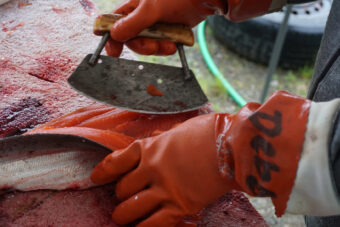
Debbie Coolidge of Aleknagik cuts sockeye salmon with an ulu in July 2021. (Stephanie Maltarich/KDLG)

A total of $50 million is now available to tribes across the country to support harvesting, processing and packaging Indigenous meats, like salmon, moose and caribou in Alaska. The new federal program is called the Indigenous Animals Harvesting and Meat Processing Grant. Applications are open until July 19.

The U.S. Department of Agriculture worked with tribes over the past two years to find ways to support Indigenous food gathering traditions, according to Julia Hnilicka, the Alaska director for the USDA’s Rural Development program.

“It was really out of this consultation, especially as we were moving out of the pandemic, and seeing the worries that a lot of tribes have for food security and food sovereignty, that informed this program,” she said.

The grant is part of the USDA’s Indigenous Food Sovereignty Initiative, which began in 2021. The initiative works with organizations that serve tribes to get Indigenous perspectives on how to improve federal food programs.

The grant doesn’t set limits on the amount of money tribes can apply for, but there are a few restrictions: Projects must involve Indigenous animals and meat processing activities and can’t be used to buy land, meat or animals.

Read the FAQ on the grant website

The Indigenous Animals Grant is the latest in a long line of community and government efforts to support Native food sovereignty across the country, including Alaska. In many areas, the issue became more urgent during the pandemic. For instance, leaders of the Organized Village of Kake worked to establish an emergency subsistence hunt to counter a food shortage in 2020. In other regions, like Western Alaska, families struggled with record-low salmon runs, and received donations from places like Bristol Bay.

Projects through the Indigenous Animals Grant can help expand a tribe’s capacities for working with animals. The list of examples includes building or upgrading facilities or buying and installing traditional or other equipment, like mixers, grinders, smokers or freezers.

“There is just so much flexibility within this money, it can be something from like a four wheeler to move animals, to an entire distribution center,” she said. “It really, really depends on what the tribe’s needs are.”

The program doesn’t award grants based on location or population. But Hnilicka said the USDA may prioritize projects that focus on certain goals — like strengthening tribal food access or using Indigenous-informed design principles rather than projects that focus on financial gain.

Grants are available for tribes across the country, and Hnilicka said there’s a good chance tribal nations in Alaska could tap into much of what’s available.

“I do know that they are really looking for networks that can reach across the nation, but also across tribes, as well,” she said. “So there is an opportunity with these monies for tribal governments to band together and to submit co-applications.”

The program’s application assistance can help tribes decide if they would like to submit a joint application across a region, Hnilicka said.

The mid-July deadline is in the middle of summer fishing and harvesting, already a busy time in Alaska.

“It’s unfortunate that the window falls during this time frame from now until July 19,” Hnilicka said. “But this could be the only time, so I really, really encourage everybody who can apply for this to do so.”

More information on the grant and how to apply can be found at the USDA’s website.

Army Corps to revisit parts of Pebble’s application, but opponents say mine can’t move forward

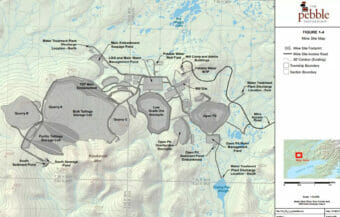
Pebble permit filing (Courtesy U.S. Army Corps of Engineers)

The U.S. Army Corps of Engineers will reconsider certain aspects of the Pebble company’s permit application to build a large gold and copper mine at the headwaters of Bristol Bay. The 81-page report comes just three months after the Environmental Protection Agency vetoed the mine in a separate process.

“It’s a bit surprising and a bit confusing,” said Dennis McLerran, who worked as the regional EPA administrator during the Obama administration.

The EPA in January determined that the mine would have “unacceptable adverse effects on salmon fishery areas.” Using its powers under the Clean Water Act, it essentially vetoed the mine plan, and any future plan that would have a similar impact on the same waterways. Many opponents of the project hailed that as the final blow.

McLerran said the EPA decision nullifies any permit the Army Corps could issue.

“EPA has now made a final determination, and so in any event, the Corps could not issue a 404 permit for the mine,” he said, referring to the applicable section of the Clean Water Act. “So it is a bit surprising and a bit confusing as to why the Corps entertained the appeal and issued a remand on it.”

At the heart of the Corps’ decision is whether its permit denial adequately assessed certain risks the mine would pose to the environment and its effects on communities in the region. In its April 25 announcement, the Corps’ Pacific Ocean Division Engineer Brig. Gen. Kirk Gibbs said he found specific portions of Pebble’s appeal warranted another look, although he noted that that doesn’t mean the Corps will reauthorize Pebble’s permit.

The report analyzes each of Pebble’s reasons for its appeal. It said that five of the company’s points didn’t need additional consideration, and portions of three did, including the Corps’ assessment of whether and how the project would benefit communities (pg. 47 – 56). The Corps will also revisit how it assessed the possibility of a catastrophic failure of a dam that would contain waste from the mining operation (pg. 62 – 65) and the potential damages to fisheries (pg. 67).

Pebble spokesperson Mike Heatwole said the announcement shows the company’s appeal holds water, and that they aim for the mine to meet environmental requirements for permitting.

“A mine in Alaska, and in the United States, has to coexist with that fishery,” he said. “We know that for the residents of Bristol Bay, it’s an important not only commercial but cultural resource. And all of that has to be factored into this project at the end of the day.”

The Bristol Bay Defense Fund, a coalition of mine opponents, called the Army Corps’ remand a refusal to overturn its permit denial, and said that it will merely “clarify” that decision.

Still, United Tribes of Bristol Bay Executive Director Alannah Hurley said, this is another reason why opponents are pursuing watershed-wide protections through federal legislation.

“Not only to address this project, with this company that is refusing to give up, but the many other active mining claims throughout the region,” she said.

The Army Corps’ Alaska District now has to review the decision to deny Pebble a federal permit — and take the EPA’s veto into consideration in the process.

Bristol Bay’s sockeye runs are expected to be strong, but nothing like last year’s

Boats in the Nushagak District. June 24, 2019. (Alex Hager/KDLG)

Bristol Bay should see relatively strong sockeye runs this summer, though they’re not expected to be near last year’s record-breaking run and harvest.

Around 50 million sockeye are forecasted to return to the bay, according to the state’s forecast for the 2023 fishing season. The total escapement is projected to reach 13 million with around 37 million fish available to harvest.

That’s a good deal lower than last year, and it’s also lower than the average over the last 10 years. But looking a little further back, this summer’s run is still expected to be 40% above the bay’s long-term average.

The University of Washington produced its own forecast for Bristol Bay’s 2023 season.

The strength of the salmon returns varies across river systems, and the Nushagak District, on the west side of the bay, has seen some of the biggest sockeye runs and highest harvests in recent years.

“I think the reason why we’re getting these big runs in the Nushagak is because the warmer winters allow for a longer growing season,” said Tim Sands, the Alaska Department of Fish and Game’s management biologist for the area, at a recent presentation in Dillingham. “So there’s just that extra growing period where there’s more food for them to eat. And they get a little bit bigger. And as they’re bigger going out to the ocean. They’re more competitive and they survive at a little higher rate.”

In the 2023 commercial fishing outlook, the department also raised concerns about fishermen under-reporting of king salmon harvests and said tenders should expect to be boarded and checked for undocumented king salmon.

Here’s a rundown of this summer’s forecasts and regulations by district.

Nushagak

The Nushagak District is forecast to see 16.3 million sockeye this season, with the run almost evenly split between fish that spend two and three years in the ocean. The Wood River’s forecast is 8 million sockeye, the Nushagak’s is 7 million and the Igushik is set to see almost 2 million.

Low king salmon runs up the Nushagak River pushed the Department of Fish and Game to designate them a stock of concern last fall.

In an effort to conserve king salmon, the Board of Fisheries adopted three triggers, only one of which the district needs to meet for the season to open.

The latest the district will open is June 28. But new, optimum escapement goals mean managers will likely manage the fishery more conservatively than in past seasons, because the regulations allow them to let more sockeye escape.

Sands said that the triggers tell the department when to start fishing, and the new escapement goals determine how hard they fish throughout the season and how many breaks they take in order to protect kings.

“My goal is going to be to try and keep the escapement on the Wood River below 3 million escaping on the Nushagak River below 2 million, and trying to get enough king and chum salmon up the Nushagak River so that we can start climbing out of this stock of concern hole we’re in,” he said.

The triggers to open fishing are as follows:

  • In the Nushagak River, once 420,000 sockeye, or 6% of the forecast, are projected past the sonar.
  • In the Wood River, once 800,000 sockeye, or 10% of the forecast, are projected past the counting tower.
  • If neither of these triggers are met, the season may open on June 28.

Asked during the presentation how the department would project those runs, Sands said they were going to use as many sources as possible.
“Aerial survey is certainly included,” he said. “We’re going to have test boats in the district – [Bristol Bay Science and Research Institute] is running that project – subsistence harvest. Whatever we can gather that will inform that decision, we’ll use.”

The district’s triggers delay commercial fishing in June. But the department said even after fishing is open managers will work to balance commercial fishing opportunity with escapement of kings, chum and sockeye throughout the season; set net fishermen should expect some closures into the second week of July, and drift openings will be timed to allow kings and chum to swim through the commercial district.

Chum runs up the Nushagak have also been extremely low; they haven’t met the escapement goal in the last three years. Sands said the department also considered recommending that species a stock of concern last fall but that ultimately they felt the chum didn’t qualify. However, Fish and Game is asking fishermen to avoid areas where they may catch higher numbers of kings and chum.

“If we don’t make chum salmon escapement goal for the next three years, we will be talking about chum salmon stock of concern plan and that will be much more restrictive than what we’re doing now for kings, because it’ll mean that what we’ve done for kings has not worked to protect chums,” Sands said.

Other regulatory changes include increasing the distance from set nets to the shore along Ekuk beach.

“We’re working on getting a map made with those new coordinates,” Sands said. “So the drifters will be able to find the coordinates into their plotters, and see where the furthest offshore the buoys can be. And then so that set netters can make adjustments as well.”

Once the coordinates are finalized they will be posted to the department website and on the district’s map.

Togiak

Togiak is expected to see 680,000 sockeye, which is below average in recent years, but slightly above average in the long term. The available harvest will be almost 500,000 fish.

The transfer date for Togiak permits changed at the recent Board of Fisheries meeting. It used to be July 17. Now, permit holders who have fished elsewhere in the bay can’t fish in the Togiak District until the mid-point of the escapement goal has been reached. Those who started out fishing in Togiak can’t fish in any other district of the bay until that midpoint goal has been reached.

While the Nushagak is the only river in Bristol Bay that still has a king salmon escapement goal, the state’s outlook says Togiak’s king runs are also expected to be poor, following a trend over the past several years, and that fishermen should expect reductions to their weekly fishing schedule in the last two weeks of June in the Togiak River section.

Naknek-Kvichak

The Naknek-Kvichak is expected to see 18 million sockeye this summer. The Kvichak River is forecasted to have a run of 8 million sockeye, the Naknek could see over 6 million and Alagnak forecast is set at 4 million.

It will have four day a week openers until June 23, after which the managers will schedule openers based on the sockeye run.

That district also faces new regulations this year. For one, people can now go online to get subsistence salmon permits for the Naknek River. Subsistence users can only fish with set gillnets in the special harvest areas of the Naknek, Alagnak and Wood Rivers.

The Board of Fisheries also approved a new subsection for the Naknek River special harvest area, which allows commercial fishing there when the Naknek River’s escapement has passed the midpoint of the escapement goal range and is projected to exceed the upper-end goal. A boundary line coordinate for Kvichak and Naknek sections has been changed to align with the district like at Johnson Hill.

Egegik

Egegik’s forecast is at 11 million sockeye, with over 9 million available to harvest. Almost half of the run is expected to be 1-3 fish, or salmon that spend one year in freshwater and three in the ocean.

Egegik’s season will start with fishing three days a week through June 16 to allow kings to escape, according to the outlook. After that the department will schedule additional fishing openers based on the strength of the sockeye run.

Ugashik

Ugashik District is expected to see around 3 million sockeye, bringing available harvest to 2.5 million. Almost half of that river’s run will be 1-2 fish. This summer, the late season schedule for Ugashik will be aligned with other districts on the fishery’s East Side.

KDLG’s Christina McDermott contributed reporting to this story. 

Russia volcano disrupts Alaska flights for third day in a row

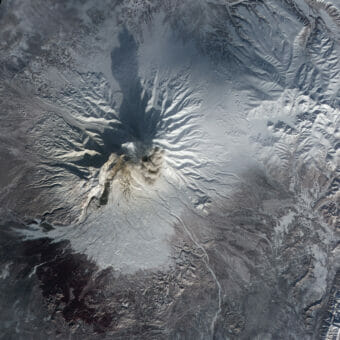
On February 17, 2008, the skies above Shiveluch Volcano in Russia’s Far East were clear and calm, allowing the ASTER instrument on NASAs Terra satellite to catch this view of a column of ash from a recent eruption seemingly frozen in the air over the mountain. The southern slopes of the snow-covered volcano were brown with ash. (NASA image)

UPDATE 5:10 p.m. Friday:

Alaska Airlines had canceled 82 flights as of 3 p.m. Friday, bringing total cancellations for the airline to over 130 since Thursday, according to an airline spokesperson.

ORIGINAL STORY:

An ash cloud that has drifted from a Russian volcano to Alaska is disrupting travel across the state for the third day in a row.

Alaska Airlines had canceled 37 flights as of 11 a.m. on Friday, bringing total cancellations for the airline to over 90 since Wednesday, according to an airline spokesperson, who said the destinations were “too numerous to list.” The cancellations have impacted flights to and from Alaska, and within the state.

The airline also warned that more cancellations are possible, and delays are likely throughout the day. They’re specifically monitoring the location and movement of the ash cloud over Southeast Alaska. The National Weather Service’s aviation warning includes parts of that region.

The Ted Stevens Anchorage International Airport on Friday encouraged travelers to check their flight status before coming to the airport.

The ash cloud is hanging over the Gulf of Alaska and the North Pacific ocean, said Nathan Eckstein, a science and operations officer at the Volcanic Ash Advisory Center in Anchorage.

“We have kind of a complicated system because this volcanic cloud is wrapped into a low that’s south of the Gulf of Alaska,” he said. “Some parts of it have gone into British Columbia and the Yukon and Western Canada.”

Tendrils of the volcanic cloud have even moved over Washington State. The cloud is made up of sulfur dioxide gas — and some ash. Eckstein says they’re analyzing images to see how the cloud is breaking up and where the pieces may move next.

“The ash is not going to fade suspended forever, it’s going to fall out, it’s going to get rained out if it’s underneath clouds that are precipitating,” he said.

He said that any ash in the cloud will likely disperse in the next few days.

Correction: The Alaska Air spokesperson said in an email the affected destinations were too numerous to list, not to count.

Juneau flights among growing list of cancellations across Alaska due to Kamchatka eruption

On February 17, 2008, the skies above Shiveluch Volcano in Russia’s Far East were clear and calm, allowing the ASTER instrument on NASAs Terra satellite to catch this view of a column of ash from a recent eruption seemingly frozen in the air over the mountain. The southern slopes of the snow-covered volcano were brown with ash. (NASA image)

The eruption of a volcano this week on Russia’s Kamchatka Peninsula has prompted Alaska flight cancellations, including some flights in and out of Juneau.

Monday saw Shiveluch Volcano’s largest eruption in nearly 60 years with ash exploding at least 50,000 feet into the air. While the bulk of that cloud is to the southwest of Alaska around the western Aleutians, a ribbon of volcanic gas and a little ash reached the mainland on Wednesday.

Airline spokesperson Tim Thompson said that on Wednesday, the airline had canceled eight flights between Western Alaska airports and Anchorage. Those flights were to Adak, Bethel, Dillingham and King Salmon.

Alaska Rep. Mary Peltola was among those affected by the eruption overnight Wednesday, after her flight from Honolulu to Anchorage was turned back due to the ash plume. On Thursday morning she and other passengers were on the ground again in Honolulu, waiting for a chance to return home.

U.S. Rep. Mary Peltola waits in the Honolulu Airport.
U.S. Rep. Mary Peltola waits in the Honolulu Airport on April 13, 2023. (Photo by Hope McKenney/KBBI)

Juneau flights affected

Cancellations spread across the state on Thursday, and a Twitter post from the airline Thursday morning recommending passengers check their flight status.

As of 7 a.m. Alaska time Thursday, Alaska Airlines reported canceling 23 flights due to ash from the volcano.

So far, cancellations include Thursday morning flights from Anchorage to Juneau, Juneau to Sitka, and Juneau to Yakutat. Flight 64’s departure from Anchorage to Juneau has been delayed by at least 4 hours. Juneau airport manager Patty Wahto said other afternoon and evening flights were also listed as delayed.
Andy Kline, marketing manager for Alaska Seaplanes, said the company canceled flights from Klawock and Sitka to Juneau, and from Juneau to Haines and Skagway.

“We had one flight that was going to Hoonah when we got the call to cancel flights, so it landed in Hoonah and it’s there,” he said late Thursday morning.

The Alaska Seaplanes flight from Juneau to Petersburg was delayed but did depart in the early afternoon.

A massive cloud

Dave Schneider, a research geophysicist with the Alaska Volcano Observatory in Anchorage, says lava from the Shiveluch volcano forms a dome, parts of which periodically collapse and create ash clouds.

“What happened a couple days ago was much more significant,” he said. “It’s still too early to really know exactly what went on, but I surmise that a large part of the lava dome that’s been growing for years collapsed and unleashed a pretty good sized eruption.”

The massive cloud was initially moving west, blanketing villages in Russia with a thick layer of ash. But as another weather system came in, it started moving east, toward Alaska. And parts of the cloud are peeling off. As of Wednesday, the ash was still out in the western Aleutians.

“But bits and pieces of it are sort of getting pulled off, sort of like you’re making toffee, and you can pull a branch off, and it’ll sort of go off in its own direction,” Schneider said.

Check out satellite imagery of the cloud here

One cloud actually passed over Dillingham on Wednesday, though Schneider said it was mainly sulfur dioxide gas and contained very little ash.

“Both of those are part of the volcanic cloud that was produced,” he said. “And with satellites, we’re able to track those and that helps the weather service issue forecasts and sort of see where the cloud is and where it’s moving.”

The volcano’s emissions decreased on Wednesday, and Schneider said that while there’s no guaranteeing exactly when the cloud will disperse, that’s a fair sign that travel could soon be back to normal.

This is a developing story. Check back for updates.

KTOO’s Katie Anastas and KBBI’s Hope McKenney contributed to this story.

With no commercial interest in Togiak herring, Alaska looks to the Atlantic for inspiration

The season’s only gillnet boat harvests Togiak herring in 2018. (Courtesy of Frank Woods)

The Togiak sac roe herring fishery used to draw hundreds of fishermen.

“It was like a gold rush,” said Frank Woods, who lives in Dillingham and started fishing for Togiak herring in the mid-1980s. “The whole bay would fill up with industry. It would be a buzz, everybody would gear up to go. And everybody had not only fun doing it but made money at it.”

Fast forward to 2018, and Woods was the only gillnetter in the fishery.

“Going from that huge industry to down to one boat, I never imagined that even possible,” he said, referring to the gillnet fleet. “Let alone like now, no fishing at all, to where there’s no market for it and nobody’s targeting and changing that for us.”

Togiak is Alaska’s largest herring fishery. But as the market for roe has shrunk, the remote fishery has become financially unfeasible. This spring, no commercial fishing will take place.

Processing companies in Alaska primarily sell herring to Japan, which used to have a big market for the roe. But as Japanese tastes shifted, that market shrank, and the price for herring dropped.

For years, the Alaska Seafood Marketing Institute has worked to increase demand for herring in the U.S. The state bought a herring fillet machine for processors to use. It’s also tried to promote the culinary delights of the fish, hosting Alaska Herring Week three years in a row and working with chefs to develop recipes. But the demand for Alaska herring hasn’t budged significantly, and this year, processors opted out of Togiak.

“You can only lose money for the fun of it for so long,” said Bruce Schactler, a longtime herring fisherman who now directs the institute’s food aid program. “We’ve continued, over time, to lose more and more buyers out of Togiak, and herring buyers in general across the state,” he said. “So what that really tells you is there isn’t very much money in it.”

That’s why last year, Schactler and others at the institute published a report, the Alaska Herring Market Recovery Project. It said the goal was to bring new perspectives to an industry “stuck in the 1980s.”

Examining European fisheries in the North Atlantic, Schactler found that fleets fish for herring throughout the year, so processors get a lot of different products based on when the fish are caught, unlike in Alaska, where most fisheries target runs during the spring spawning season. Among the key findings, it reported that some customers will pay more for specific products, like fish with a certain percentage of fat.

Herring from the North Atlantic are used to make fish meal and oil, but also for canning, pickling and smoking.

“They catch the fish in Norway, they ship it to Germany or Denmark. They smoke it, they can it, and next thing you know you’re buying it in Trader Joe’s in Seattle,” he said. “My question has always been, ‘Well, could we catch these big herring in Alaska? Can we catch ‘em in the wintertime in some of these other places when they have a different meat quality from the spawning phase, and then can we do something with them?’

Courtesy Of The Alaska Seafood Marketing Institute

Schactler said in order to market herring successfully, the American fishing industry needs to figure out a new way to sell it. But he said so far, they haven’t seen strong interest in doing so. And there are some key differences between herring fisheries in Alaska and in the Atlantic. For one, the European fisheries are closer to a big slice of their market than Alaska processors, which have to ship fish much further away. And he said herring fisheries in the North Atlantic are bigger.

“Some of the boats they’re fishing will bring in 10 million pounds aboard,” he said. “They’ll have a big week up there fishing and they catch 35,000 tons in just a week.”

The report highlights opportunities in the industry as well; some European herring stocks lost their sustainability certification from the Marine Stewardship Council in 2020, and the report says that creates openings for other fisheries to win new customers.

And even in Europe, the drive for herring has declined, as the customer base has aged. One expert said, “the challenge, which we are facing very soon, is that the herring eating population will die out.” So companies are trying to get younger people to be more enthusiastic about herring, like a Danish marketing campaign called “Vild med Sild,” or “Crazy about herring.”

Others say the demand is there in Eastern Europe, where Poland has successfully marketed herring as a snack food. But geopolitical factors like Russia’s war in Ukraine contribute to the “volatile” nature of the herring market, and it likely means those countries will turn to cheaper herring products.

“What’s happening in Ukraine will change the market totally for herring. I don’t think they will have the money to pay for it,” said one United Kingdom source in the report. “Poland is a big market, everybody wants it. The trouble is, herring is perceived as cheap. Everybody is trying to undercut everybody else.”

Courtesy Of The Alaska Seafood Marketing Institute

Back in Alaska, President and CEO of OBI Seafoods Mark Palmer said they couldn’t process herring this year because of plant renovations in Dillingham and Naknek ahead of the salmon season. And Japan’s floundering demand for herring is just one more reason not to pursue Togiak’s fishery more forcefully. Palmer said OBI has looked at alternative customer bases for herring before, but it’s hard to compete because unlike fisheries in other parts of the world, they mainly target roe-bearing herring. And he said they haven’t hit on the right product yet.

“I think once there’s a product out there, then it would be, you know, can we compete? Can we go out and produce and compete in the global marketplace?” Palmer said. “There’s been efforts to work on fillets, at one point we had equipment in our Kodiak plant, we were filleting herring, we’ve canned, we’ve made samples of canned.”

Schactler said that in order for things to change, management has to shift; Alaska’s herring fisheries are largely managed to harvest sac roe, but to get fish with higher oil content, for example, they would have to harvest them in the fall.

“If you don’t change — [the Alaska Department of] Fish and Game doesn’t change — management, then you don’t have access to those fish for those particular products that you’re going to try to address in some section of the market,” he said. “Management has to change if anything else is going to change in any significant manner.”

For this spring, Togiak’s herring run will return to spawn, unharvested by a commercial fleet.

Site notifications
Update notification options
Subscribe to notifications