KDLG - Dillingham

KDLG is our partner station in Dillingham. KTOO collaborates with partners across the state to cover important news and to share stories with our audiences.

Domestic Violence Awareness Month: How to recognize it and get help

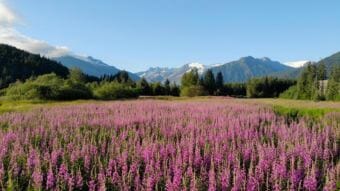
Fireweed blooms in a field near the Brotherhood Bridge in Juneau on July 19, 2018.
Fireweed blooms in a field near the Brotherhood Bridge in Juneau on July 19, 2018. (Photo by David Purdy/KTOO)

Find more resources at the end of this story.

Alaska has some of the country’s highest rates of domestic violence. Nearly 20% of women in the region are clients at SAFE Bristol Bay annually. That’s according to the organization, which is the regional advocacy center and shelter for domestic violence and sexual assault victims.

Christina Love, a senior specialist with the Alaska Network on Domestic Violence and Sexual Assault, shared some ways to recognize and address domestic violence.

Listen:

This interview has been lightly edited for length and clarity.

Christina Love: Quyana, Gunalchéesh, thank you so much for having me. My name is Christina Love. My pronouns are she and her. My family’s originally from Egegik village. My grandparents are the Kellys. I was raised in Chitina. And today I live on the Áak’w T’aaḵu Kwáan of the Tlingit Nation, also known as Lingit Aaní, also known as Juneau, Alaska. I work at the Alaska Network on Domestic Violence and Sexual Assault as a senior specialist on intersectionality and trauma.

Izzy Ross: Thank you so much for joining me. I’d like to provide people with some basic points for recognizing domestic violence and helping people who are in those situations and also preventing it.

Love: It’s important that we understand the root cause of violence and then also what prevents that, but first we’ll start with identifying it.

Domestic violence is a pattern of coercive control and manipulative behavior. That can be physical, but doesn’t have to be physical for every relationship. The main part of it is power and control. It’s rooted in power and control. And there’s lots of different ways that people can enact this: Through emotional abuse, through physical abuse, through psychological abuse, through economic, through other relationships, like children. Any part of your life and the intimate details of who you are can be used to harm you. So that’s why it’s deeply unique to each individual and can be really difficult to identify.

Abuse can take different forms

Love: Some of the most common types of abuse that we hear about are emotional escalating into physical. For emotional abuse, that looks like putting people down, that looks like embarrassing them in public. That also looks like needing to know where they are all the time and not having trust in them.

What I’ve noticed is that some of those behaviors can be perceived as, “this is how people care.” But it’s important to understand that jealousy and controlling is not necessarily a sign that somebody deeply cares about you. When it’s more escalated, then it absolutely can be really dangerous.

We see a lot more technology abuse; somebody needing to have access to your phone, to your email, to your social media accounts, having the password to everything, being able to control all of those things.

Domestic violence can progress

Love: The thing about domestic violence is is that it doesn’t happen right away. I never hear about a relationship [where] right from the beginning, they were incredibly violent. Usually, there are these phases that these relationships go through, and the one that is most recognizable is the honeymoon phase.

So when you meet somebody and you have feelings for them, there’s all of these chemicals that fill our body that makes us feel really good. And even that can be weaponized. Another term for that is called “love bombing.” So love bombing is where you are giving somebody a lot of attention, a lot of affection. Maybe you’re showering them in gifts, but it is this overwhelming way of somebody connecting with another person.

These are the red flags that we really like to teach people about what a healthy relationship looks like. And then also some things that can feel really good, but that we should really watch out for.

For most people who are perpetrating abuse, these become their own patterns in relationships. And like all violence, it’s a learned behavior. So the really beautiful thing about that is that we can unlearn these. We can heal. We can heal from the violence that we have experienced. We can also heal from violence that we have participated in, that we have perpetuated.

Signs of emotional violence

Love: Some of the things I think that I would tell people as far as emotional violence goes, is that just to be acutely aware of how you feel in people’s presence, does your partner make you feel free? Do you feel good? Do you feel lifted up? Do you feel supported? And to not ignore those.

When we try and communicate our needs, what we also see in domestic violence is a lot of gaslighting: “No, that’s not what happened. That isn’t my experience of it.” Or, “You made me do this. I wouldn’t do this if it wasn’t because of this or this or this.” And it’s important that we understand that violence is never our fault.

As those things start to escalate, a really important part of my job is helping people understand that alcohol and drug use does not cause domestic violence, that those core beliefs about our partners — that entitlement, that privilege — that comes from something else. Alcohol and drugs make those situations a lot worse. A lot of people think that it causes it because they are so closely connected. So everybody not being able to access resources leads to using substances to end their own suffering. But in the case of domestic violence, when we see those two things happening at the same time, we see increased lethality and increased injuries. So that’s the connection there.

It’s really important that we shift our perspective about why and how people come to this place when we stop asking questions about why they can’t leave and start asking questions about why people who are abusing other people are doing that, why, why are they harming them and placing the blame where it belongs, because the longer the time goes on, and the more abuse that happens It always escalates.

So it’s important that everyone is able to identify what healthy relationships are. And for people who are in unhealthy relationships, that that can’t leave that we ensure that they have access to safety – to safety planning and to other relationships that can save their life. When somebody tells us that these are the things that they’re experiencing, that we believe them and that all of us know what resources we can access.

Ross: There are a lot of different resources out there. Locally in Dillingham we have SAFE. There’s also the Alaska Network on Domestic Violence and Sexual Assault which has a lot of information. The National Domestic Violence Hotline is also available for folks to call. What can people expect when they access these resources? What does that process look like?

Love: Let’s say that you yourself are somebody who is experiencing this type of harm. First of all, I want you to know that there’s nothing that you could have ever done to deserve this, nothing, that it is not your fault at all. And whatever your life looks like, there is life on the other side of this. So however low you feel, however hopeless, or helpless, or powerless you feel, your sense of identity, all those things, they do come back. They come back.

It can be really difficult to imagine what it would look like to be free. Especially if you’ve tried to leave many times, or I think the what’s really difficult for people to understand is when you deeply love someone and your life is so interconnected with them, and they harm you, it’s not something that our brain can even fathom.

For myself and for a lot of survivors, it actually becomes compartmentalized that you have this life with them. And then there’s also this harm. Our brain cannot bring them together. Like it’s a really deeply confusing thing, especially if there’s mental abuse, anybody who has a mental health issue, or anybody who has survived trauma. So being physically harmed, being emotionally harmed is a type of trauma. And that leads to all kinds of really confusing ways that our brain and our bodies keep us alive. One of those is disassociating or being in denial. So if you if you are encountering somebody and it’s very clear to you that they’re in a place that they’re not safe but they’re not acknowledging it, just know that that’s the type of protection.

Where to get help

Love: If you are somebody who’s experiencing this, I want you to know that there are really incredible people who will work with you. And if you want to know what that help looks like, I want to walk you through that.

So you’re going to get on the phone with somebody through this hotline through your local SAFE with an advocate. And they’re going to listen and it’s completely confidential.

An advocate is a person who by law has very similar confidentiality as, as attorney client privileges. If I’m your advocate and you call me, I can’t be subpoenaed. I can’t tell anybody about anything that we’ve talked about. And this is really important for our rural communities where everybody knows everybody; we need to know that we’re going to be safe. We need to be able to build trust. Because our lives literally depend on it.

So let’s say you call me. I’m going to walk you through who I am and what my role is for you. I’m going to ask you if you’re safe in the moment. And I’m going to get an idea of your situation. I want to know really the chances of lethality, so I’m going to ask you a lot of different questions.

I’m using “he” because we see a lot more violence against women. And that’s a whole other conversation, we’ll see a lot more violence against Alaska Native people. And that’s a whole other conversation. For this purpose, I’m going to be using those pronouns.

I’m going to ask questions like, “Has he ever bit you? Has he ever strangled you?” I’m going to be asking if he’s ever harmed animals. All of those things lead to higher lethality lead to a higher chance of being murdered. So I’m going to ask you those kinds of questions and I’m gonna get an idea of how safe you are, what resources you have in your house, if he has access to your phone, if he has access to your email, if he has access to other relationships.

And also what you want to do. What are you wanting to do? Are you wanting to leave? We know that for people who are in these relationships, it takes about an average of nine times unless you have a disability, and that includes substance use and mental health, for people to try and leave.

That means that we say we are going to leave, and then they convince us to come back or they bring us back and it isn’t safe enough to leave. Or we’re still holding hope that they could make changes, that they are going to get help in one way or another, or they promised to do things differently. And that is a cycle that we see.

I might walk you through that cycle, I might go over the power and control wheel where I list off all the different ways that harm can be caused in a relationship. So I’ll name financial abuse and all the different ways to just you have control of your the bank account of the credit cards?

Emotional abuse, you know, we talked about that early on? Does he put you down? Does he embarrass you? Does he tell you that you’re fat, that you’re stupid, that you can’t do this or that, is there a lot of yelling? Is there a lot of manipulation?

I’ll go over coercion, I’ll talk about substance use, I need to know if substance use is a part of this, because it helps me understand. Also, maybe if you need Narcan, I want you to be safe in so many different ways, not just in this relationship, but also if that’s something that you’re struggling with, and we’re going to talk about that.

I want you to know that there’s no judgment here at all. My job is to keep you alive. My job is that you feel empowered, that you have somebody that you can talk to that you trust that is not ever going to tell anything about your situation.

Creating a plan

Love: Then we’ll get to creating a plan. So if there is violence and you can’t leave, then we want to know if there’s firearms in the house. I’ll talk to you about how to protect your head and your face, so curling up into a ball in the corner so that your limbs are protecting your head in your fac in the event that you can’t leave, in the event that things escalate.

How to protect your children and then also what the laws are. So if you can’t get out but there are children there, then you face the likelihood of protective services coming in and removing the children.

I have access to information and I want to make sure that you are well aware of everything, and that you know what your resources are. And together we’ll make a plan that fits you where you’re at. And it’s through those options and those resources that people really feel empowered. This is something that anybody can do at any time. So I’m trained, there’s lots of other advocates locally and nationally that are trained in this. This is something that all loved ones can do, that we really practice, listening to people and not being judgmental, and knowing that the first person that people tell is so important. That people stay in these relationships because of shame, because of isolation. And that’s how we break it. We break shame by being the kind of people that people can trust.

Resources:

SAFE Bristol Bay
https://www.safebristolbay.org/
SAFE’s listening line: 1-907-478-2316

SAFE offers confidential help through its Dillingham and village advocates.

SAFE is Bristol Bay’s shelter and advocacy agency for domestic violence and sexual assault victims. It’s based in Dillingham and also serves surrounding communities. The primary mission of SAFE is to provide immediate safety for victims of domestic violence and/or sexual assault, including safe shelter and emergency transportation.

StrongHearts Native Helpline
https://strongheartshelpline.org/
1-844-7NATIVE (762-8483)

StrongHearts Native Helpline is a 24/7 safe, confidential and anonymous domestic and sexual violence helpline for Native Americans and Alaska Natives, offering culturally-appropriate support and advocacy.

National Domestic Violence Hotline
https://www.thehotline.org/
1-800-799-SAFE (7233) and 1-800-787-3224.
The hotline provides essential tools and support to help survivors of domestic violence so they can live their lives free of abuse. Contacts to The Hotline can expect highly-trained, expert advocates to offer free, confidential, and compassionate support, crisis intervention information, education, and referral services in over 200 languages.

National Indigenous Women’s Resource Center
https://www.niwrc.org/

The National Indigenous Women’s Resource Center, Inc. (NIWRC) is a Native-led nonprofit organization dedicated to ending violence against Native women and children. The NIWRC provides national leadership in ending gender-based violence in tribal communities by lifting up the collective voices of grassroots advocates and offering culturally grounded resources, technical assistance and training, and policy development to strengthen tribal sovereignty.

Alaska Network on Domestic Violence and Sexual Assault
https://andvsa.org/
ANDVSA works to be a collective voice for victims and survivors and to support those agencies and communities working to prevent and eliminate domestic and sexual violence.

The Alaska Native Tribal Health Consortium’s website Iknowmine.org has resources for sexual health.

AWARE
https://awareak.org/
Local Crisis Line (907)586-1090 Toll Free Crisis Line 1(800)478-1090
AWARE provides comprehensive intervention services, as well as outreach, education, and primary prevention programs for domestic violence, sexual assault and child abuse. We invite you to learn more about our services and how we can support you, your friends, your loved ones, or your community.

Get in touch with the author at izzy@kdlg.org or 907-842-2200.

‘A fat bear year-er’: Juneau writer brings humor and depth to Katmai’s fat bears

A barrel-shaped brown bear stands in the middle of a foamy fast-moving stream
747, the 2022 Fat Bear Week champion. (Photo by L. Law/National Park Service)

The winner of Katmai National Park’s Fat Bear Week is 747 Bear Force One, who weighs in at 1,400 pounds. People around the world voted in the competition for the park’s biggest brown bear. The tournament has gotten so popular that the state’s largest newspaper hired a writer to cover it.

Juneau-based writer Christy NaMee Eriksen is a self-described superfan of the fat bears in Katmai National Park.

“You just look at two pictures of bears and you’re determining which one is chonkier, it’s just wonderful. It’s delightful,” she said during a recent interview over Zoom.

Eriksen started following Fat Bear Week during the pandemic in 2020. This month, she poured her knowledge into daily reports tracking the tournament’s big brown bears for the Anchorage Daily News. Watching the bears provides relief and comfort — not just in the pandemic, but in everyday life.
Eriksen is a poet, and she takes her inspiration from the natural world.

Christy NaMee Eriksen (Photo by Mary VanderJack)

“As I learned more about the bears I thought there were so many really wonderful stories that could be told about them. As a writer, I’m most interested in: How can that connect back to my own experience of what it’s like to be a person in this world?” she said.

“But Holly is more than a bear who is heavy; she is a bear who knows heavy. She has witnessed the traumatic loss of her child, and she sat with that loss for five years. Anyone who knows grief knows you don’t need a tree to feel stuck somewhere for hours. Anyone who knows grief knows what it’s like to cry someone’s name and never have them return. Why did 435 Holly adopt 503 Cubadult? Everyone asks; no one knows. They were not related. And yet, they could relate” – an excerpt from the Oct. 7 report.

Each bear has a story, and Eriksen examines some profound experiences. In one report, she traces how bear 435 Holly adopted an abandoned cub years after one of her own died.

“What values does Holly represent that other people might get behind?” Eriksen asked. She also has questions about other bears. “What lessons can I learn from Otis? Why don’t we like about 856? What does that say about us as humans in community with each other, that we don’t appreciate bears who pick on smaller bears? So I use them as a large metaphor to really talk about us, humans.”

Eriksen’s updates are like reading a long text from a friend. She said her writing is lighthearted because it’s influenced by the social media accounts of Katmai National Park, which has become some of her favorite American writing.

“It’s a masterclass, honestly, that I’m taking just by following their social media. I’ve seen alliterations up to like nine or 10 words in a sentence from them. It’s truly inspiring,” she said.

Even though the fattest bear has been crowned, Eriksen will still be scanning the bear-cams for months to come.

“I’m a year-round fat bear week-er. I’m a fat bear year-er. And I feel like I’ve gotten to know a lot more about the bears over the years,” she said.

Eriksen hopes writing about the bears will also help us discover a little more about ourselves.

Bristol Bay’s sockeye runs are breaking records, but the fishery’s growth has left many locals behind

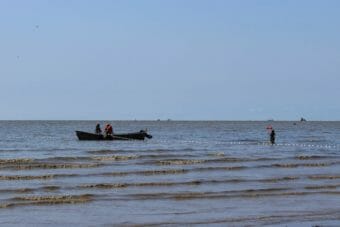
Set netters in Naknek. July 11, 2019. (Photo by Sage Smiley/KDLG)

This summer, 79 million sockeye returned to Bristol Bay. It was the largest run on record. But over the past half-century, there has been a dramatic shift in who fishes commercially in Bristol Bay. Local permit ownership has declined sharply, and research shows that’s due in part to a regulatory change to Alaska’s fishery management from the 1970s.

Propelled by years of low salmon returns and more people coming to the state to fish, Alaskans voted in 1972 to amend the state’s constitution and implement a limited entry system. This system restricted the number of commercial fishing permits in areas around the state, including Bristol Bay.

Its purpose was to reduce pressure on the state’s fisheries and help financially sustain fishermen who depended on them. The original permit applications were also meant to favor rural residents. But since limited entry began, local permit ownership in Bristol Bay has declined by 50%. Residents now own around one-fifth of drift permits.

William P. Johnson finished his sixty-second year captaining his own boat last summer. He grew up commercial fishing with his mother in Igushik. He worked on drift boats before he eventually bought his own. He said fishing in the 1960s and 70s was tough — the runs were low and there was steep competition. Limited entry was meant to address some of those problems, and supporters say it did. But it also fundamentally changed how local people were involved in the industry — and how the industry affected communities closest to the state’s fisheries.

“In the early years, there were many people who were participating in a fishery,” said Johnson, who lives in Dillingham and is a member of the Curyung Tribe. “They hired their local people from their village to participate with them. And with the out-migration, you can see the effect that it has on the monetary return to individual village people through their commercial fishermen.”

Fred Torrisi came to Dillingham as a lawyer with the state’s legal services in the 1970s. He said before limited entry, anyone could fish as long as they had a gear license.

“Limited entry was a major switch in that you got [the permit] once, based on your past performance and economic reliance on the fishery. And then it was sort of like a piece of property: You could transfer it to somebody else, or you could use it, but without one you couldn’t fish,” he said.

Naknek’s in-river opener. July 18 2019. (Photo by Sage Smiley/KDLG)

Decades of research shows that across the state, rural and Alaska Native fishermen face significant economic and cultural barriers to commercial fishing.

Rachel Donkersloot, an anthropologist who focuses on fisheries in Alaska, headed the latest study on the impacts of the state’s limited entry system. The 40-page report, called “Righting the Ship,” was commissioned by the Nature Conservancy and published last year.

“At the time of limited entry, they had increasing pressure on stocks, rising participation of non-residents, and a lot of concerns in the state,” she said. “They were somehow trying to address crises in our salmon fisheries. It was well understood that commercial and traditional harvest of fishing resources — that was the major source of economic livelihood in all of these Alaska Native communities in the bay.”

According to Donkersloot and other researchers, the permit application was supposed to favor rural fishermen, but it fell short. Torrisi said permit eligibility was determined by a point system. But it was confusing.

“It was meant to determine who really needed a permit, who really had been relying on it in the past,” Torrisi said. “So they had this point system, and it was based on — did you have a gear license in 1969 and 70, what percentage of your income came from fishing and those sorts of things.”

During the application period in the early 1970s, Torrisi said, there was poor public outreach to Bristol Bay communities, so some people weren’t aware of the change.

The state tried to address those problems, Torrisi said. It created the Commercial Fisheries Entry Commission as part of the new system, which held legal hearings in rural Alaska to address legal challenges. But limited entry meant that permits were freely transferable — so they could be bought, gifted, or inherited.

“The problem of course was that they couldn’t say [the permits would] stay there,” he said. “When they established the system, [the permits] became transferable. And if they weren’t transferable, they ran into constitutional problems. There was nothing to stop them from migrating, as any property does, towards those with more wealth.”

""
Water washes over fish in a subsistence net on Kanakanak Beach. (Photo by Brian Venua/KDLG)

Fishery growth left some locals behind

In the nearly 50 years since the change, the value of Bristol Bay’s fishery has grown exponentially. The fishery was valued at $2 billion dollars in 2019. But most of that revenue leaves the state.

“What matters most in terms of the benefits from fisheries is where the permit holder lives,” Donkersloot said, pointing to a study from the Institute of Social and Economic Research.

It has always cost a lot to run a commercial fishing operation. But many local fishermen face higher barriers to entering the industry than those coming from outside the region.

Donkersloot said the gap in access to the fishery between urban and non-resident fishermen and locals often boils down to financial circumstances — like access to capital and credit history. The average price of a Bristol Bay drift permit this year is more than $230,000, according to the Commercial Fisheries Entry Commission.

When limited entry was implemented, the report says, it didn’t include safeguards to help local operators continue to fish.

After limited entry was implemented, the makeup of permit ownership shifted rapidly. The report states that seven years into the program, Alaska Native permit holdings in Bristol Bay had declined by 21%. The communities of Pilot Point, Levelock, Egegik, Ekwok, Pedro Bay and Nondalton have lost over 75% of their permit holdings, and there has been a similar decline in the Southeast Alaska villages of Angoon, Kake, Metlakatla and Hydaburg.

Donkersloot said residents of Bristol Bay tend to earn the least even though they rely on that income more when compared to their urban and non resident counterparts. Local boats tend to be smaller and less efficient at harvesting than non-local vessels. Because other economic opportunities are limited, they also experience greater pressure to sell their permits.

A graph from ‘Righting the Ship’ that shows how permits have left the Bristol Bay region. (Reporter01/’Righting The Ship’ From The Nature Conservancy)

Johnson, who has fished in the area his whole life, said he was able to hold onto his permit because he worked all year round. But many local people in the fishery weren’t able to do so.

“There was a change because people, because of the poor runs, began selling their permits,” he said. “And, of course, that impacted mainly the local people. They couldn’t afford to make a living fishing, and so many of them ended up selling their permits just to get by for a couple years.”

As permits left the region, Johnson said, local involvement in the fishery has changed, which has changed the local economy, although he added that the success of some of the Native corporations following the Alaska Native Claims Settlement Act has helped to improve local economies in other ways.

“Many people that I know sold their permit because they didn’t have the resources to maintain a profitable operation,” he said. “I was able to keep in to the fishery because I worked during the off-season. And so I was able to raise a family and it became a limited entry permit.”

Dillingham resident William P. Johnson finished his sixty-second year captaining his own boat last summer. July 22, 2022. (Photo by Brian Venua/KDLG)

A “cultural disconnect”

The limited entry system also didn’t take into account cultural differences around fishing, Donkersloot said. She calls it a “cultural disconnect.”

“That refers to the cultural values and motivations that often inform fishing practices, particularly in smaller villages and Alaska Native villages. And these can be at odds with the highly competitive and the sometimes aggressive nature of the fishery today,” she said. “So it’s often the smaller scale livelihoods that tend to be eroded when you transform a fishery into a fishery under transferable access rights.”

The out-migration of fishing permits from rural Alaska is a controversial and complex topic. The decline in local permit ownership is intertwined with a broader movement of people from rural to urban areas; along with selling permits to nonresidents; permit owners have also moved away from the region. The report points out that legislators, Alaska Native community leaders, residents and economists have repeatedly tried to address these forces. For instance, the state has a loan program for permits. The Legislature has also attempted to reduce loan caps and promote workforce development.

Bristol Bay has seen especially robust efforts to try to stem the flow of permits leaving the region. The Bristol Bay Economic Development Corporation has a longstanding permit loan program, where residents can get loans to buy into the fishery. It also offers technical assistance and training for people who don’t qualify for financial programs. While that has helped to a certain extent, the report says it hasn’t stopped out-migration of permits — or the people who hold them.

A path forward

Donkersloot’s study on the system says the state should help to find a way to increase commercial fishing access for local fishermen. The report lays out a few paths forward that Donkersloot says have worked in other regions and countries that have dealt with similar problems. They include provisions for small-scale operations, apprenticeship permits, and creating locally designated permits.

“What those solutions share in common is that in one way or another, they all serve to anchor some form of access to a region in perpetuity. So it means that there’s access — opportunity that can’t migrate away, it can’t be sold away,” she said.

Donkersloot said that the solution isn’t to exclude others from the fishery. Instead, she said, the state needs to support opportunities for rural residents to work in fishing.

“We should also be thinking about how do we carefully and fairly ensure that family fishing livelihoods, community-based and small-scale fishing livelihoods in the bay are a part of the picture in the future,” she said. “This is about sustainable economic development and Bristol Bay, and you cannot have that conversation without thinking about fisheries.”

As the fishery celebrates another huge run, Donkersloot said it’s important to think about who is able to participate in the fishery, and why.

A sunset in the Nushagak District. (KDLG file photo)

Dillingham’s housing crisis has teachers sleeping in the school

A man stands holding a cat in a classroom, with a large stack of totes nearby
Science teacher Dan Bonser holds his cat, Nix, in the classroom he and his family have stayed in since they arrived in Dillingham in August. (Photo by Izzy Ross/KDLG)

One afternoon in early September, Dan Bonser walked up the stairs in Dillingham’s middle-high school to Room 200. It’s the middle school science room — where his family sleeps.

“Some of our bedding is over there. And then the first two totes over there — food,” he said pointing across the classroom.

There was a lot of turnover in the Dillingham City School District last spring. The district hired 22 new staff members for this year — a quarter of the entire staff. Unable to find homes in town, some are living at the school.

Bonser moved from Oklahoma to Dillingham last month with his wife, Lisa. Their daughter, CJ, also moved with them and is an instructional aide for the special education program. The family lives in Room 200 with their two cats, sleeping on air mattresses.

Bonser said the first few weeks have been tough.

“I’ve done a lot of different jobs in my life. And I’ve never been this exhausted,” he said. “It’s a lot.”

Dillingham’s housing shortage is acute, but it’s not unique. Across the country, people are struggling to find places they can afford to rent or buy. In Alaska, the average home sales price jumped almost 9% last year. And in rural communities, the problems are compounded by the costs of shipping in building materials and the lack of construction workers and contractors.

“The common thread is — tight housing market, rising sales prices and limited availability. And that’s home buying,” said Rob Kreiger, an economist with the Alaska Department of Labor. “On the rental side of things, broadly speaking, rent’s way up, vacancy rate’s way down, which suggests a tight rental market, as well as a tight home buying market. And that’s pretty much consistent throughout most of the areas that we have data for.”

Kreiger said the state doesn’t have a good handle on what the rental market is like in rural parts of Alaska. But in general, housing prices are high, and there are few homes for sale in rural areas.

“I think you have those two factors,” Kreiger said. “I think that would probably sum it up for most of the kind of larger rural hubs as well.”

Bonser said when they were offered the teaching jobs, the school district said it would help them navigate the search.

“We have a bead on one house, but it needs to be connected to the sewer, and there’s not enough plumbers to get that done and the homeowner’s been waiting a long time for that to happen anyways,” he said.

The school district’s new human resources director, Lindsay Henry, was able to find a place for herself and her dog. She said other new staff were able to find housing, too. But it’s tricky when newcomers aren’t familiar with the state.

“I think what is difficult for people who are coming who don’t have a familiarity with Alaska, is that they hear about people working in the bush. And in most of those bush communities, they do provide housing, and Dillingham is kind of unique in that it’s a Class A city and we don’t have to provide housing for teachers,” she said.

Henry said the district tells staff that housing is a challenge and tries to help them find something. Officials can send teachers phone numbers and the names of landlords in town.

“But we can’t take on that liability or responsibility of actually negotiating housing for them. So it’s a challenge in many ways,” she said.

It’s also competitive. Henry points out that a lot of organizations in Dillingham hire people from out of town and need housing for them. That includes the hospital, Fish and Game and the university.

The housing shortage in Dillingham is intertwined with a national shortage of teachers. Other schools have turned to teachers from other countries through the J-1 visa program. But that program also requires a plan for housing.
Dillingham’s new superintendent, Amy Brower, spent five weeks staying at the school before she found a place to live. At a recent school board work session, Brower said there were several candidates who turned down job offers because they couldn’t find anywhere to stay.

“We had some really good, high-quality candidates that wouldn’t come because of housing,” she said. “So we’re at a point where, with the number of teachers that are not out there — and I said not — and the quality of teacher that we’re looking for, we’re going to have to find some way to do something to help get them here.”

The administration is working with the fish processor OBI Seafoods to rent out crew quarters during the year. Brower said the school is working with the City of Dillingham to find long-term solutions as well. The district has discussed applying for grants to build new housing units or renovate existing ones. That could include an Alaska Housing Finance Corporation grant, which would allow a company to build housing teachers could then rent out.

Until then, some teachers will continue to search for a place to sleep — outside of the classroom.

Dillingham moose hunter survives bear mauling

A Coast Guard helicopter on tarmac at night
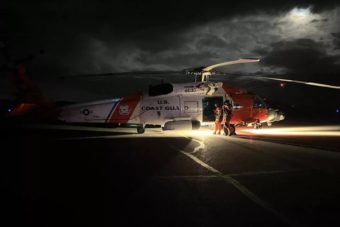
The U.S. Coast Guard helicopter that responded to the request for help from John Casteel’s hunting party after Casteel was injured by a bear near Dillingham on Sept. 10, 2022. (From Rodger Goddard/Dillingham Police Department)

A Dillingham hunter was mauled by a bear on Friday. Alaska State Troopers spokesperson Tim DeSpain said in an email that 40-year-old John Casteel was hunting up the Nushagak River, about 20 miles by air from Dillingham, when he was mauled.

Casteel’s aunt, Marjorie Nelson, said he came upon the bear while moose hunting. The bear attacked, and Casteel called out to his hunting partner, who shot and killed the bear. His partner sent a satellite message requesting help, saying that Casteel had injuries on his arm and leg. He was conscious but couldn’t move.

“They had a nurse with them and other hunting parties that helped stabilize him and control his wounds,” she said. “He stayed out in the wilderness for four hours, laying on the tundra. But you know, those people, the hunting party that he was with, they started a fire and they tried to keep him warm and keep him conscious and awake until the helicopter came and got him. It was a rough Friday night for us.”

It was dark by the time the helicopter arrived. Nelson said the group shot flares into the air to show their location. The helicopter took Casteel to Dillingham.

“The whole time, John was conscious. He was awake during this whole ordeal,” she said. “And after they got him stabilized, cleaned up, they got a medevac out of Dillingham and sent him to Anchorage.”

Casteel has deep wounds on his leg and arm and was in the Alaska Native Medical Center’s critical care unit in Anchorage over the weekend. Nelson says he went into surgery Saturday morning. It lasted for about eight hours.

“He’s still in a lot of pain, but they’re trying to manage that pain right now,” she said. “He’s pretty overwhelmed with what happened to him. And, you know, totally understandable. I can’t imagine. I can’t — it’s overwhelming to me.”

Nelson doesn’t expect recovery to be easy and said Casteel may have to undergo additional surgeries. She added that the family is grateful to his hunting partner and thanks everyone for their prayers.

A Bristol Bay principal bet his hair on his seniors’ success

Two high school boys pose with a man with a shaven head
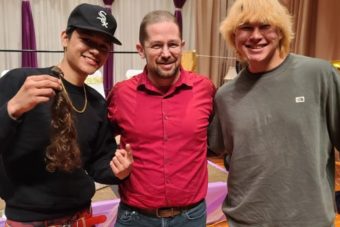
Junior Torino, Principal Shannon Harvilla, and Nathan Hansen in May 2022. Harvilla had agreed to let Torino shave his head if Torino and the rest of the senior class graduated. (Bristol Bay Borough School District)

Shannon Harvilla is the principal and assistant superintendent of the Bristol Bay Borough School District, which has around 100 students. He says he wants to help all of them as much as he can, but last year, his sense of duty was put to the test when he got a surprising request from one of the seniors.

“Junior Torino approached me at the beginning of the school year, semi-joking, because I had long hair, [asking] if he could shave it,” Harvilla said.

Harvilla agreed under one condition.

“I let him know that if the entire senior class graduated this year that he could have the honor of shaving my head,” he said.

Torino said he had had a rough start to the school year.

“I was pretty short on credits, and so I didn’t  think I was gonna graduate,” he said. “But midway through the year, I started cranking out some more classes that I needed.”

Torino said his bet with Harvilla motivated him to persevere through some tough parts of the 12th grade.

“Oh yeah, it pushed me a little bit more,” he said. “I really wanted to see him bald. It was really stressful. I had some doubts, but I didn’t let that stop me from anything. I knew that he would stick to his word. I didn’t expect a lot of the kids to come down and watch. But it was fun. I’m glad I got to do it in front of everybody and everyone got a chance to see.”

Torino graduated last spring along with 10 of his classmates. The students celebrated with the rest of the community; Harvilla said it was the first real in-person event the school hosted since the start of the pandemic two years earlier. Torino spoke at graduation. He said he was nervous.

“I was one of the class speakers, so I had to talk about my whole class in front of everybody at graduation, so I was kind of nervous. But once I got up there it was fun,” he said. “There’s definitely been some good times with them. And it’s going to be different, but everyone’s going to go their separate ways, and maybe we’ll stay connected somehow.”

Afterward, he made one last trip to school to shave Harvilla’s head in front of the student body. Harvilla said the haircut was worth it.

“I knew that [Torino] would have to put in extra work in order to graduate. And I knew that any bit of motivation we could provide as adults would help him get to his goal of graduating,” he said.

Now Torino is working at the borough dock. The Bristol Bay Borough’s 2022 school year starts this week — no word yet on what Harvilla plans to do if all the seniors graduate this spring.

Site notifications
Update notification options
Subscribe to notifications