KMXT - Kodiak

KMXT is our partner station in Kodiak. KTOO collaborates with partners across the state to cover important news and to share stories with our audiences.

Juneau’s Aurora Harbor among 6 Alaska coastal projects to split $104M from feds

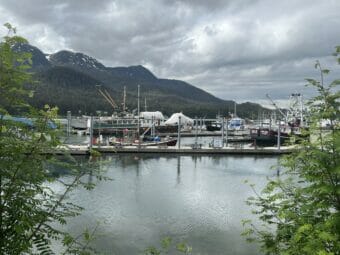
Downtown Juneau’s Aurora Harbor in June 2023. (Photo by Yvonne Krumrey/KTOO)

Alaska’s congressional delegation announced on Tuesday that $104 million will go towards port and maritime infrastructure projects around the state.

According to a joint press release from Sens. Lisa Murkowski and Dan Sullivan as well as Rep. Mary Peltola, the funding is spread across six coastal communities: Anchorage, Dillingham, Hoonah, Juneau, Kodiak and Saint Paul.

“With so many communities across the state inaccessible by road, ports are essential to our supply chain and distributing key resources that Alaskans need,” Murkowski said.

Anchorage will receive the largest cut by far, about $50 million for a new general cargo terminal at the Port of Alaska. Each of the others will receive about $11 million towards their respective projects.

In Juneau, that includes $11.1 million for a drive down float and vehicle bridge and two new 5-ton electric cranes at Aurora Harbor downtown. Those additions will support the commercial fishing fleet and improve freight transportation.

The money headed to Kodiak will go to the St. Herman Harbor on Near Island. While the project is expected to cost about $60 million, the new funds will make up about 18.3 percent of the total needed.

The funds are appropriated through the federal government’s Port Infrastructure Development Program. That’s part of the Bipartisan Infrastructure Law that was signed by President Joe Biden back in 2021.

At least 8 teens injured in an explosion at a Kodiak beach party

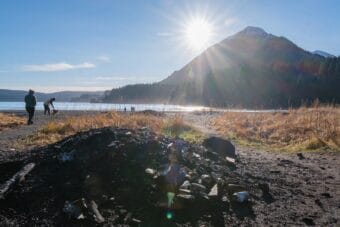
One of several ash piles near the entrance to White Sands Beach near Kodiak. The beach is a popular spot for bonfires, fishing, bear watching, walks, or letting dogs run around off-leash. (Brian Venua/KMXT)

At least eight teenagers were injured after an explosion at a drinking party and bonfire on Kodiak Island in the early morning on Sunday. Five of those children were medevaced to Anchorage with moderate injuries, according to a release from Alaska State Troopers. None of the injuries are life-threatening.

“Thankfully, at this point, nobody has died from this — this tragic incident. We hope that parents are using this as an example of ways to communicate again with their students,” said Trooper Spokesperson Austin McDaniel.

Dozens of teenagers attended the party Saturday night at White Sands Beach – about a 15-minute drive north of Kodiak.

The explosion happened after one partygoer allegedly placed a 55-gallon fuel drum onto a fire pit. The Bayside Fire Department was on the scene around 1 a.m. on Sunday. Troopers are asking anyone with additional information to contact the Kodiak Trooper Post.

“Anyone that was there and or anyone that has first hand knowledge of what occurred, is certainly asked to contact the Alaska State Troopers and Kodiak so that way we can speak with them and help understand more about what happened leading up to the teenager that placed the fuel drum in the fire,” McDaniel said.

Troopers said the individual who reportedly placed the drum on the fire was arrested and placed in the custody of the Division of Juvenile Justice.

Alaska Public Media’s Tim Rockey contributed to this reporting.

State ferry Tustumena’s replacement could face years of construction setbacks

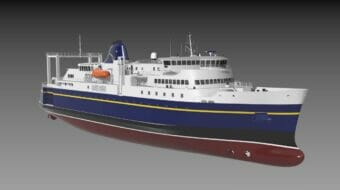
A computer-generated mockup of the new Tustumena replacement ferry is seen in an undated image published by the Alaska Department of Transportation and Public Facilities. (DOT image)

State ferry passengers will have to wait even longer to sail on the ferry Tustumena’s replacement vessel. The more than $300 million project is not expected to be completed until at least the end of 2028 – a year later than originally anticipated.

Earlier this year the Alaska Marine Highway System had been estimating the new mainliner ferry would be done in 2027. But during an AMHS operations board meeting on Oct. 23, Director Craig Tornga said a Federal Transit Authority funding audit and long checklist of requirements has slowed things down.

“We’re still working through the programmatic side with the FTA,” Tornga explained. “We’re getting close. The FTA has commented that we’d have pre-award authority for all of the Tustumena funding by the end of the year.”

Once AMHS is given pre-award authority, Tornga said that essentially means then the Tustumena replacement project will be authorized to start soliciting bids.

Glosten, an architecture firm which has an office in Seattle, completed the final design for the replacement vessel back in 2022, but the project has yet to go out to bid for construction. The project’s request for proposal was expected to go out much earlier this year, and construction could have begun by December. Now, Tornga said that won’t happen until later this year.

That means the new Tustumena won’t likely be in service until 2030, making the original vessel 66 years old by the time it is fully retired. Tornga said there are several shipyards that have expressed interest in building the new ferry. The new vessel would be one of potentially several hybrid-electric ferries the marine highway system plans to have constructed in the coming years as part of its long-range plan.

The replacement vessel is set to be bigger than the existing Tustumena, carrying 250 passengers and up to 58 vehicles. In conjunction with the project, the ferry system is also looking to upgrade some of its terminals and infrastructure at various coastal locations across the state.

Meanwhile the Tustumena is in the midst of its scheduled winter sailings. The ferry’s last trip to Kodiak of the season is scheduled to arrive from Homer on New Year’s Day and depart for the last time that same evening.

After that the vessel goes into its annual overhaul, where it will receive much needed maintenance from January until April of 2025.

Pollock trawl closure sends economic ripples across Kodiak as fishermen adapt

Cole Hockema captains the Pacific Storm, a 100-foot trawler based out of Kodiak, which his father owns. (Davis Hovey/KMXT)

Cole Hockema has been fishing since he was a teenager growing up in Oregon. For 12 years now he’s been trawling for pollock in the Gulf of Alaska, but today he’s sitting at home with his young daughters in Kodiak.

“We had lots of projects and stuff scheduled that we wanted to do at the end of the year and now we have a lot of time to do those, but we’re putting those on hold now until next year just because of a lack of money,” Hockema explained.

Hockema captains the Pacific Storm, a 100-foot trawler based out of Kodiak, which his father owns. The vast majority of the Central Gulf of Alaska trawl fleet is made up of local boats like his.

According to the trade group Alaska Groundfish Data Bank, 19 boats were fishing in the Central Gulf of Alaska when the pollock fishery closed on Sept. 25. 15 of those are homeported in Kodiak.

Normally, fishermen like Hockema would be out on the water until early November, when the Gulf of Alaska’s pollock B season typically closes. But this fall season ended just three weeks into fishing, when two vessels incidentally hauled in approximately 2,000 Chinook salmon, which exceeded the fishery’s annual bycatch limit. Hockema said the Pacific Storm was offloading its catch on Sunday, Sept. 22 when they first got the news about the bycatch and he knew the fleet would need to stop fishing immediately.

Bycatch from the trawl fleet has caught a lot of negative attention over the years, especially as king salmon runs decline across the state.

Since the closure, the Central Gulf of Alaska trawl fleet has separated out into a few camps – some are trying to switch into rockfish and or flatfish to make up lost revenue, others are doing a couple trips for Pacific cod, and a few like Hockema are done fishing for the year.

“Yeah we just can’t invest in nicer, better gear to go get this one [Pacific] cod trip,” Hockema said. “And then we just don’t want to take the risk of going backwards out there, messing up gear, ripping up gear, costing us more money.”

Hockema estimates his boat missed out on roughly $250,000 due to the fishery being closed so early. Hockema said the Pacific Storm does technically have a permit to fish for rockfish, which is a cooperative program, but they do not have any quota and would have to pay a lease fee which would not make sense economically for them to do so.

The ex-vessel price for rockfish in Kodiak right now is anywhere from 9 cents to 12 cents a pound. Chelsae Radell with Alaska Groundfish Data Bank told the City Council earlier in October, “We have approximately 16 million pounds of rockfish available, but at this time, I think, just based on who we have here and how much time, we’ll only probably harvest about eight to ten million pounds.”

Overall, there were still at least 100 million pounds of Central Gulf pollock left unharvested in the water when the season ended. The fleet is thought to have lost out on $9 million total in dockside revenue, based on current market prices of 9 cents per pound for pollock.

Local fishermen still have to cover loan payments on boats, insurance, which fishermen told KMXT has increased significantly this year, repairs, maintenance, and other expenses. And of course, paying wages to deckhands and crew.

Alaska Groundfish Data Bank estimates that up to 70 mostly Kodiak-based crew were employed by the local pollock trawl fleet. A third or 30% of that ex-vessel revenue was expected to go to crew if the fishery had gone on until November.

Another longtime Kodiak pollock trawl fisherman, Paddy O’Donnell, said he feels lucky to still have crew after the pollock fishery closure.

“We go through a lot of crew. We got two new crew for the fall season [B season] here that are different from the crew I had during the A season,” O’Donnell stated. “Guys move around, get into either herring in the spring, salmon in the summer. This year now, there is a crab fishery happening in the Bering Sea so I’m sure some of them are shifting towards that.”

O’Donnell, who is also the President of the Alaska Whitefish Trawlers board, told KMXT on Oct. 17 that his 85-foot boat, the Caravelle, was likely going to switch over to Pacific cod soon but the fishery is only open until November 1. The season opened on Oct. 4 in the Central Regulatory Area of the Gulf of Alaska, after the fleet agreed to a voluntary catch share plan. And so far, cod fishing is reportedly slow this year and may not be very economical for a variety of reasons, such as the fish being more spread out this time of year, boats having to burning more fuel which are at higher costs, and poor prices from processors.

The fishermen aren’t the only ones affected by the Central Gulf of Alaska pollock trawl fishery closure.

An initial, informal analysis from one Alaska-based fisheries economist, Garrett Evridge, pointed to at least 100 workers that would be let go from the four major Kodiak processors that handle pollock. The Kodiak Daily Mirror reported that OBI Seafoods laid off 50 of its employees at the local plant in response to the pollock fishery shutdown.

In an email to KMXT, OBI Seafoods CEO John Hanrahan wouldn’t call them layoffs. He said the processing season ended early for some employees and schedules were reduced for others.

Hanrahan said, “The unexpected closure of the Gulf of Alaska pollock fishery resulted in a significant decrease in the fish that we process in Kodiak at this time of year. Unfortunately, we had to end the season earlier than usual for some of our employees and have reduced schedules for some of our remaining employees as a result. The closure is also negatively affecting Kodiak fishermen and the community by reducing their revenue during very difficult times. OBI will continue to provide as much support as we can to our fishermen and employees during this unprecedented closure.”

The early closure also means many fishermen can’t afford to pay for boat work they’d typically have done in the shipyard this time of year.

Kodiak’s Highmark Marine Fabrication handles repairs on many of the local pollock trawl boats. Owner Cooper Curtis said a good portion of their winter work starts in November and lasts until January, while the trawlers are typically dry docked or not fishing.

“And with the recent closure, we’re probably looking at about, collectively, at least a $1 million impact to our business,” Curtis said.

That’s not to mention the impacts on the other local marine services like refrigeration, hydraulics, and the Kodiak shipyard, which Highmark operates.

Pollock is Kodiak’s largest fishery by volume, also known as the local bread and butter fishery. So state, borough and city tax revenue are also taking hits – Alaska Groundfish Data Bank estimates a projected loss of $500,000 in taxes to the municipalities of Kodiak as a whole. That includes Borough severance tax, state fisheries business, fishery landing tax, and City sales tax.

During a recent city council work session on Oct. 8, Radell with AGDB said it’s very unlikely the other fisheries will be able to cover the losses in revenue created by the pollock fishery closure.

“Combined rockfish, flatfish and cod landings since the time that the closure went into effect through November, would probably be about 17.5 million pounds of harvest with an ex-vessel value of approximately $2.5 million and we think that might be a little optimistic,” Radell told the council.

Despite limited options and a small chance of breaking even this year, Hockema, the sidelined fisherman, is holding out hope that pollock fishing will get better.

Curtis with Highmark shares a similar point of view. He said that all the small businesses in Kodiak that benefit from the pollock trawl fishery have to be flexible, just like the fishermen.

“At the end of the day we’re all in this together, this community. Every vessel, every service provider, we all need each other. So we’ll be flexible and we’ll all make it,” Curtis stated.

Meanwhile, Hockema will have to wait until next year, when the “A” pollock season opens in January.

NOAA economists report plunging revenues for Alaska commercial fisheries

The Star of Kodiak facility is right between the city’s downtown harbor and the ferry dock. Photo taken Dec. 11, 2023. (Brian Venua/KMXT)

The federal government published an “economic snapshot” in October that said Alaska’s commercial fishing industry in 2023 was about half as profitable as it was in 2021. Last year in particular marked one of the worst years for commercial fishermen in modern history.

Alaska Public Media’s Ava White talked with KMXT’s Brian Venua, who’s kept a close eye on commercial fishing, to break down the report.

This script has been lightly edited for clarity and length.

Ava White: So Brian, it’s not a secret that there has been a major crash in fisheries in the last few years. What’s new about this report in particular?

Brain Venua: National Oceanic and Atmospheric Administration economists estimated that industry-wide profits have plunged in the last few years. As a whole, commercial fisheries in Alaska were estimated to be worth $1.8 billion dollars less in 2023 than in 2022.

That’s split between wholesale values being down by about a quarter year over year – about $1.2 billion dollars. Vessel revenues were also down by over $600 million, according to the report.

NOAA is the government agency that manages a lot of Alaska’s fisheries. According to data linked in the report, people in the industry asked NOAA for a sort of independent snapshot.

I think the big thing is that it helps put numbers to things that a lot of people already know – that commercial fishing has had a really tough time.

Ava White: That’s huge for the industry, did the report point to any particular reasons why there was such a large drop?

Brian Venua: One of the biggest contributing factors for the reduced profits is that a lot of these businesses are facing higher costs.

For example, one issue the report outlined is that Alaska seafood processing workers wages increased substantially from 2022 to 2023, although it didn’t say by how much. While higher pay can be good for workers, that money has to come from somewhere.

Higher interest rates for loans played a role in lowering profitability according to the report. Several processors took on loans because they had a hard time selling inventory, like the huge sockeye harvests in Bristol Bay. There’s also higher energy prices.

Ava White: So what about on the demand side of things? A lot of the seafood harvested around Alaska is exported – what’s going on with markets?

Brian Venua: The state’s seafood products’ ability to compete on an international stage has been a huge problem for the industry.

Russia is a huge competitor against Alaska products. A lot of seafood harvested by Russia is also processed in China and while the report didn’t list exact numbers, workers in those nations are paid less than their American counterparts. That means they’re able to undercut the prices of Alaska products.

That’s on top of trade barriers, especially with Russia. That country banned American seafood over a decade ago, but was still importing fish to the U.S. until President Biden banned it in an executive order late last year. The ban is taking effect this year, but doesn’t do anything for other countries with large seafood markets – like Japan. That country’s traditionally been a bigger buyer, but their economy has been a bit shaky recently.

There’s been a lot of push from Alaska’s federal delegation to encourage foreign allies to establish similar bans, but it’s also unknown when, or if, that will happen.

Ava White: Speaking of the federal government, how have policies affected the situation?

Brian Venua: I’ve heard Sens. Murkowski and Sullivan, as well as Rep. Peltola all say fisheries need some sort of revenue insurance, similar to the crop insurance farmers have. And this report listed that could be a major factor in competing on the international stage as well.

Murkowski said she hopes to incorporate fisheries when the government renews the federal Farm Bill, but said at a meeting with reporters in August that she doesn’t see that happening this year.

Ava White: So obviously fishermen are feeling this market crunch here, but are there bigger ramifications for this? Is Alaska the only state feeling the pressure or are other areas struggling too?

Brian Venua: Alaska produces the most seafood in the country by far. The Alaska Fisheries Science Center’s director, Robert Foy, said in the report that the losses in Alaska have “reverberated down the West Coast and across the country.”

The report included that Alaska losses turned into a $4.3 billion loss nationally, with nearly over 38,000 people losing their jobs.

State and local taxes alone were down $269 million between West Coast states like Washington, Oregon and California, in addition to Alaska.

This species-wide crash and its effects could be compared to the salmon market crash of the early 2000s, when farmed salmon started being sold on the global seafood market.

Ava White: So what does all of this mean for fishermen and fishing communities then?

Brian Venua: Fishermen have been dealt blow after blow from low prices at the docks, to processors selling assets and closing facilities.

The NOAA report acknowledged that both the Bering Sea and the Gulf of Alaska have faced major challenges over the last decade. In that timeframe, the number of fishing vessels in the Bering Sea was reduced by nearly a third from what its fleet once was. The gulf saw a 20 percent reduction across fleets there too.

The October edition of Alaska Economic Trends, a state-sponsored magazine, projected fisheries will recover in the next 10 years, but it’s hard to say when or what that recovery will look like.

Philippine consulate visits Kodiak for the first time since before the pandemic

A cohort of nearly 20 people swearing in as dual citizens of the Philippines and the United States. (Brian Venua/KMXT)

The Philippine National Anthem, “Lupang Hinirang,” played for newly sworn in citizens at Kodiak’s Best Western Hotel this week. The hotel’s Harbor Room was packed with people looking to meet with the Southeast Asian country’s visiting consulate.

Daisy Briones is one of them. She lives in Kodiak and works at one of the schools and the library. She’s both a volunteer for, and a beneficiary of the consular outreach to Kodiak.

“This is much better, much faster, and more convenient – and you know everybody,” she said.

For the first time since before the pandemic, a Philippine diplomat visited Kodiak on Sept. 24. The consular team provided services that people would otherwise have to leave the island, or the state, to receive.

The Philippine consulate works as a sort of extension of the country’s embassy in Washington D.C. and serves people outside the Philippines.

Immigration can be complex, but the gist for many is that when some Philippine nationals become U.S. citizens, they end up renouncing their home country’s citizenship. But, they can regain legal ties as dual citizens later. That’s what Briones did.

If she wanted to go through the same process without the outreach to Alaska, she would have had to fly to the nearest consular office, which is in San Francisco.

The swearing in ceremony for dual citizenship lasts about 15 minutes, concluding with an oath in Filipino, the official language of the Philippines, which is largely based on Tagalog.

The Kodiak visit is important, in part because the borough has the second most people with Filipino heritage in the state, according to census data. Kodiak has about 3,253 Filipinos, while Anchorage has an estimated 18,033.

Philippine Consulate General Neil Frank Rivera Ferrer said he tries to serve Alaska at least once a year. Teams mostly have gone to cities like Anchorage and Juneau in recent years, but this is the first time anyone can remember consular outreach to Kodiak in nearly a decade.

“Since I assumed my post in 2021, I made it a priority to service our Kababayans in Alaska,” Ferrer said.

Kababayan roughly translates to countrymen in Filipino.

Ferrer is a career diplomat and works for the Government of the Philippines. (Brian Venua/KMXT)

Ferrer, his consulate staff, and volunteers helped 296 people file paperwork with the Philippine government during their day in Kodiak for a variety of administrative services. He said he’s glad to help people who might not be able to get these services otherwise. All they have to do is bring paperwork that shows previous Philippine citizenship.

While some people regained their citizenship, others registered for overseas voting and renewed their passports – or did all three – in a single day.

“It saves them a lot of money in terms of the cost for traveling, and also the time,” he said. “You’d have to take time off from work – one or two days just to travel and those things. So we try to do that as much as we can.”

A flight to San Francisco can cost over $1,000 – not including money for taxis or hotels.

Ferrer’s office is just one of eight in the U.S. including the embassy in Washington D.C. The others are in Chicago, Los Angeles, Honolulu, New York, Houston and Guam.

Ferrer serves Northern California, Northern Nevada, Colorado, Idaho, Montana, Oregon, Utah, Washington State, and Wyoming in addition to Alaska. The combined population he serves is around 1.3 million Filipino people.

Ferrer brought a team of 11 of his office staff as well as worked with several volunteers for the Kodiak outreach. (Brian Venua/KMXT)

Alaska’s honorary consul, Rebecca Carrillo, was also part of the visit. She can’t provide these services herself, but works as a sort of intermediary between Philippine nationals in Alaska and the consular offices in the Lower 48 and Hawaii. She said she loves meeting people and hearing their immigration stories.

“Their journey from the Philippines to here has transformed their lives, their families’ lives, (for) how many generations,” she said.

Carrillo said she’s heard that many Filipino people have faced discrimination, but retained their identity and love for their homeland despite that. Many of whom did so while building their lives here.

“They are thriving – they own their own homes, they’re able to send their kids to college,” Carillo said. “Those kids are doing well, and it’s the proverbial realization of the American Dream.”

And now many folks who’ve realized that dream want to go back to the Philippines. U.S. citizens can usually only stay in the Philippines for about a month depending on their visa, but dual citizenship allows them to stay longer, or even move back. With a Philippine passport, they can also have a faster process when going through customs and immigration.

Briones, the volunteer, still has siblings there. She said the consular team helped make the process to visit them easier for her.

“The consular team, they’re so accommodating,” she said. “We have plenty of senior citizens here who are applying for their dual (citizenship) or (a) passport. There’s a patience in helping out all these people and we truly appreciate all their efforts.”

The San Francisco consulate office plans to draft its schedule for the next Alaska outreach by the end of the year.

Site notifications
Update notification options
Subscribe to notifications