KNOM - Nome

KNOM is our partner station in Nome. KTOO collaborates with partners across the state to cover important news and to share stories with our audiences.
After mishandled investigations, advocates are cautious as Nome police try to rebuild trust

NPD Officer in Front of Public Safety Building in Nome (Jenna Kunze/KMOM)

Content warning: This story features sensitive subject matter.  If you need to talk with someone while reading this or need help, here are some resources.

  • Bering Sea Women’s Group: 907-443-5444; toll-free: 1-800-570-5444
  • Behavioral Health Services at the Norton Sound Health Corporation: 907-443-3344, emergency number: 907-443-3200.
  • STAR Alaska: 907-276-7273; toll-free 1-800-478-8999
  • Alaska Network on Domestic Violence and Sexual Assault: 907-586-3650

If you are outside of the Bering Strait region, visit the Alaska Network on Domestic Violence and Sexual Assault website for a list of resources.


Under new leadership, the Nome Police Department says it is changing practices in response to a call for reform from a local advocacy group after past mishandlings of sexual assault investigations.

Survivors, advocates, and community members say the department is headed the right direction but has a long way to go to repair broken trust, especially among Alaska Natives.
Cold Cases in Nome

Over two years ago, the Nome Police went through their records and found they had 460 “cold case” sexual assaults dating back to the year 2005. They re-opened those cases. As December of 2020 drew to a close, Nome police investigator Scott Weaver addressed the Nome City Council on his findings.

Nome Police Investigator Scott Weaver. (Emily Hofstaedter/KNOM)

“There were a good amount of cases that had been investigated by police officers that were here at the time and simply the case just needed to be put together and sent over to the district attorney’s office,” said Weaver.

That means that in some cases, NPD failed to finish the process of gathering and sending the evidence that would have allowed the district attorney to make a decision about whether to charge an assailant.

Weaver told the city that almost all 460 cases for audit have been reviewed.

“Some cases just needed to be classified appropriately. But there were many cases that needed work,” he said.

Some of that work has included additional interviews and DNA evidence.

In order to get closure and justice for some of those survivors, Weaver had to locate people who moved out of the state and in many instances, had to re-open wounds that were nearly a decade old.

“15 years ago, they may have had an injustice here, there may have been the police officer here or somebody that was working here that didn’t do what maybe they should have done or followed all the steps,” he said. “But did they want to start that over now? Because some [survivors] have [been] scarred from that or put a band-aid on it, and they don’t want to talk about it. And that’s understandable.”

As of December, Weaver, along with the Nome district attorney and others in the police department, have identified 29 cases from that audit that could move on for potential prosecution, pending DNA evidence, and more interviews.

That sexual assault case audit has been part of a big effort by the police and City of Nome to rebuild trust between law enforcement and the rest of the community over the last couple years.

But how did Nome get to the point where so many sexual assault cases needed to be potentially reinvestigated?

The answer goes back to before 2018.

Bringing the Problems to Light

Lisa Ellanna is a Nome community member whose kitchen table became a safe space for women, and sometimes men, to eat dinner and talk. The group soon came to realize that many of them had a shared experience: they were reporting their sexual assaults to the Nome Police and then they would hear nothing about the investigation.

Resident Lisa Ellanna gazing towards the distant mountains in Nome. (Brisa Alarcon/KNOM)

“It turned into a situation of ‘wait a second, if this is happening to all of our cases, it’s probably happening to everybody’s cases, and what do we do about it?’ You know, this is unacceptable; this won’t do,” said Ellana.

Over the years, Ellanna says they worked with other groups to create change for sexual assault survivors.

“Over the course of between 2015 and 2018, there was meeting after meeting after meeting, people coming together to support each other initially, and then turning into this advocacy kind of movement. We came to kind of an understanding of what would make things better. And through the process of working with the different agencies and trying to push for changes to procedure and policy, and not making any headway,” She said. “We decided to come forward in the form of a public complaint.”

In May of 2018, a group of mostly Alaska Native women, including Ellanna, introduced their own resolution on sexual assault to the Nome City Council. It alleged that the local police were not forwarding evidence for prosecution.

Ellanna told the council at the time that survivors would go to the police department and get no help; they would be turned away from the police with no answers about their sexual assault. Some didn’t know if an investigation was even taking place.

“That was really frustrating for us,” she said. “For crimes that are so violent and demeaning and dehumanizing — sexual assault pulls, just pulls at you.”

Over the next few months, the council heard more concerns about uninvestigated sexual assaults and then learned the department had re-hired a community service officer in the summer of 2018, one month after he pleaded guilty to assaulting an Alaska Native woman in his care.

Then, more women began to go public in statewide media outlets with stories of their own uninvestigated sexual assaults. One of those was a former NPD dispatcher, Clarice Bun Hardy, who says her own colleagues didn’t investigate her rape after she reported it. After she reported her rape, she began to notice patterns among some of the Nome officers, particularly Nick Harvey.

“The victims would call in and ask to speak to him. But he would avoid those kind of phone calls … avoid it, and he would tell me, ‘Just tell them, I’m still working on it.’ You know, and then after a few months of him doing that, I’m like, seeing it with my own eyes, you’re not doing anything to investigate these cases of these people who are faithfully calling every day,” said Hardy.

Nome residents and others came forward with their own allegations of policy violations and potentially criminal behavior from other officers.

Kawerak, the local tribal consortium, joined the City of Nome in asking the FBI and Department of Justice to investigate potential civil rights violations by the Nome Police.

“You should be seeking an audit of your own police force. If you’re being presented with information that your officers did not follow through on investigations, you should try to clean house here, hold yourselves accountable. Let’s jointly call for this investigation because whether you join in this request with us or not, it’s going out,” said Kawerak’s CEO and President, Melanie Bahnke.

As all of these issues came to a head, in September of 2018, Nome Police Chief John Papasodora quietly retired, and a new chief from Virginia took over.

Defense Against Mishandlings

When Chief Robert Estes arrived in Nome, public trust in the police department was fractured. Part of Estes’ goal was to audit hundreds of sexual assault cases and look at every call for a sexual assault that came in.

Estes declined to be interviewed for this report. But in 2019, he and Investigator Jerry Kennon spoke with the Associated Press and KNOM about their findings. Kennon explains that plenty of the sexual assault cases were handled appropriately but some had significant problems.

“So what I was finding in these is that there were just no narratives done to them at all, so much less than an investigation that was done … And some of these cases have really been bad, serious cases that just were never investigated,” said Kennon.

The Nome Police blame inefficient policies, a lack of staffing including not enough experienced investigators, and high turnover as the reasons why so many cases went uninvestigated.

“If an officer was working on a case, and he decided I’m leaving, I’m gone, I had enough. Well, if someone didn’t look into his assigned cases, that case just went cold,” said current chief Mike Heintzelman.

Chief Mike Heintzelman of Nome Police Department.(Emily Hofstaedter/KNOM)

For a region with some of the country’s highest rates of sexual assault, the Nome police didn’t have regular full-time investigators in their department. Heintzelman says the average sexual assault case can take 30 hours or more to complete. And those calls were done by regular patrol cops who weren’t specialized in investigations.

“They would have to be responding to calls doing their normal stuff that they would have to do, in addition to working on cases that were assigned to.”

But others say, the reason that so many sexual assault cases were not handled properly is due to racial bias.

The Nome Police were unable to provide KNOM with racial data on the survivors involved in the audited cases. But in June of 2019, the police chief wrote to the city manager in an email obtained by KNOM, “We have identified 51 historical cases with 100% native Alaskan women victims where there has been zero to poor follow-up at best.”

For the predominantly Alaska Native survivors and their loved ones, it was clear that something was wrong when they would never hear about their cases. Advocates, like Darlene Trigg of Nome, pushed to have a citizen’s oversight committee. After months of contentious city discussions and compromise, the Nome Public Safety Advisory Commission was finally formed and coded into city ordinance in 2019. It’s a step in the right direction for accountability, says Trigg.

Nome resident Darlene Trigg. (Brisa Alarcon/KNOM)

“And when something goes sideways, to look into it, and to check to see whether or not the police department acted within its own policies,” said Trigg.

Trigg, Ellanna and fellow community activists suggested several additional concrete policies for the police to consider, including a requirement for officers to undergo trauma informed sexual assault training and hiring an investigator to handle backlogged sexual assault cases.

Looking for Permanent Accountability

Some of those changes have already happened. The department hired Investigator Scott Weaver in the fall of 2020 to deal full-time with sexual assault cases. There’s also a domestic violence coordinator currently hired by NPD, Sharon Sparks, who helps survivors work through their cases but the department can’t always keep that role filled.

But as the survivors demanded change for policing in Nome, it became clear that many in city leadership didn’t know what had been brewing. And many of those leaders had been in charge of passing budgets and policies for years.

“I’m embarrassed that I wasn’t aware of it prior to three or four years ago. It just, for whatever reason, wasn’t on my radar,” said Jerald Brown a city councilmember

Brown has sat on the city council for about 15 years. Turnover is high in many aspects of Nome life from the police department, hospital, and the school — but city government is not one of those areas.

For example, current Mayor John Handeland has previously served as mayor, interim city manager, city manager, and the head of the Nome Joint Utilities System — sometimes holding two of those roles at once. He says he gets involved more in the local level to help serve his home community where he grew up and has lived for most of his life, but others say Handeland and others maintaining these leadership positions for so long is part of the problem.

And within NPD, current Chief Mike Heintzelman says there are more efficient systems in place.

“We recognize there’s a shortfall. Some of the things weren’t done the best. There were some procedures that weren’t in place like checks and balances, but we’re in the right direction right now. Everything that is called in is something that is investigated fully,” said Heintzelman.

But another call from activists has been a review of the department’s operations and procedures manual. That’s from 2012 and still largely redacted to the public, including the sections on sexual assault investigations. When Greg Russell, an outside auditor, conducted a review of the department, he found that most of the officers were not even familiar with the manual.

“It’s something that’s kind of like a ‘how-to’ so that an officer in the field would have a policy manual to reference that would say, ‘this is how my department wants it to be done.’ And since it is a ‘how- to’ manual, that’s why it’s so important to update it,” said Russell.

He found no indication that NPD was regularly updating or reviewing its policy manual.

Part of Russell’s job is to suggest improvements for police department management but also steer departments away from practices that could lead to lawsuits. He says that could be done through getting the department certified through a national policing accreditation. Right now, he explains that some places like Nome are largely dependent on good leadership.

“Do you think an incompetent, bad, unprofessional, unethical, police chief could take his department to a position of excellence? I think the obvious answer is no, they cannot.”

But locals who have watched administrations come and go want firm systems in place that guarantee the actions of old officers and police chiefs won’t happen again.

“I see positive changes happening. I really hope that we can institutionalize these changes so that it’s not beholden to the goodwill of who’s currently in a position of authority,” said Bahnke, the president of Kawerak.

Bahnke feels encouraged that the city regularly reaches out to the tribal consortium to discuss public safety issues, but she also says many of those changes have come with new leadership at the police department.

Nome City Manager Glenn Steckman says the city is doing what it can with its resources to create lasting change.

In the last budget cycle, the City Council increased funding for more officers and supported officer housing in a community where housing is often scarce. But those additional officer positions still remain vacant, and the department still has police officers who haven’t committed to living in Nome full-time. Instead, they prefer to live elsewhere and fly in to work their two-week shifts. The exception is during the COVID-19 pandemic in 2020 when Steckman says many officers stayed in town to work for longer periods of time.

“But we’re trying to figure out how do we get stability in this department? That’s the challenge that we face: stability,” said Steckman.

But Steckman doesn’t want to dwell in the past.

“We have the history up here, these officers weren’t involved in it. And they are being heavily criticized, but they weren’t involved.”

Yet community members point out that the current officers and city leaders responsible for hiring them are part of an institution.

And until institutional change is complete, advocates and longtime Nome residents like Darlene Trigg say a public apology, some acknowledgement of what has happened is needed for the community to heal.

“Well, it’s necessary. That’s the truth. You know? Some level of acknowledgement that harm has been done is probably not something that an attorney would want the city to do. However, there are people who are owed that in this community; their families and their livelihoods and their ability to walk in our town, in a healthy, safe way is forever changed…,” said Trigg.

But for now, neither the City of Nome nor the police department have issued such an official statement.

Reporter Davis Hovey contributed to this report.

This story is part of the “Seeking Protection, Wanting Justice” series by  Alaska Public Media and KNOM, with funding in part provided by the Alaska Center for Excellence in Journalism.

‘The laws fail to keep people safe’: Most sexual assault cases in Nome never go to trial

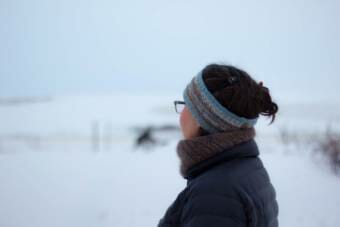
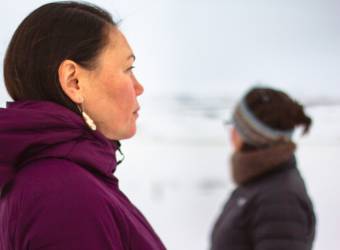
Two long-time residents of Nome gazing out towards the edges of Nome in the winter. (Brisa Alarcon/KNOM)

Content warning: This story features sensitive subject matter. If you need to talk with someone while reading this or need help, here are some resources.

  • Bering Sea Women’s Group: 907-443-5444; toll-free: 1-800-570-5444
  • Behavioral Health Services at the Norton Sound Health Corporation: 907-443-3344, emergency number: 907-443-3200.
  • STAR Alaska: 907-276-7273; toll-free 1-800-478-8999
  • Alaska Network on Domestic Violence and Sexual Assault: 907-586-3650

If you are outside of the Bering Strait region, visit the Alaska Network on Domestic Violence and Sexual Assault website for a list of resources.


Western Alaska has the highest sexual assault rate in the state, and those are just the cases that are actually reported to authorities. Even when everything in a sexual assault case is reported instantly and an investigation is done right away, statistics show most cases will not go to court. Cases can take years to go to trial, if they ever make it.

In Alaska, prosecutors and experts said the legal system requires a high burden of proof, and some said an outdated consent statute ensures most sexual assault cases won’t result in convictions. Advocates and survivors said it’s time for some of those laws to change.

Many Referrals, Few Charges

On a late November afternoon, sunlight streamed through the window in the Nome District’s Attorney’s office, illuminating boxes packed floor to ceiling filled with hundreds of old case files. Those files are being digitized, and some of the older, less-serious misdemeanors may even be disposed of forever.

“But like the sex cases, we always keep those no matter what happens,” said Nome District Attorney John Earthman.

He said the felony cases and more violent crimes will always be kept on file. And Earthman gets plenty of those. Over four years, from 2014-2017, police and troopers referred 102 cases of sexual assault and sexual abuse of a minor to the Nome DA, who is tasked with deciding which reports will lead to criminal charges. Data indicates that the number of sexual assaults being reported to Nome Police is increasing.

Nome’s District Attorney John Earthman in an interview with KNOM. (Emily Hofstaedter/KNOM)

Earthman, who has been at the Nome DA’s office since the late nineties, gets cases from the Alaska State Troopers, Nome Police, and law enforcement in the Kotzebue-area. But it’s the sexual assault cases he said that are most difficult for the people involved and the most difficult to charge.

“I’m not even supposed to charge something unless I have a reasonable belief that I can get a conviction that I can prove this case beyond a reasonable doubt,” Earthman said.

That’s a strict order from the Department of Law, said Earthman. In the span from 2014-2017, only 36% of the sexual assaults on adult victims were charged in Nome. Statewide that number from the same time period was barely higher, at 38%.

The burden is on the prosecutor to prove the elements of the crime beyond a reasonable doubt, like in every other criminal case. The most straightforward cases include DNA evidence and a confession from the assailant, but Earthman said those are rare. One of the most challenging things a prosecutor has to show is that the encounter wasn’t consensual as defined very strictly by state law.

“Without consent, by statute, by law is with or without resisting. This happens because of force or happens because of a threat of injury,” Earthman said.

A survivor has to prove they feared physical harm. Essentially, if they didn’t actively say “no” and weren’t physically forced into the act, the State of Alaska could interpret the sex as consensual.

Most referrals don’t have enough of that evidence and don’t meet the definition for assault, explained Earthman, “That’s where most cases get screened down. That’s what we call it.”

The law becomes a challenge for educators who want to teach what healthy sexual relationships should look like. L. Diane Casto is the executive director for the Alaska Council on Domestic Violence and Sexual Assault.

“In the work that we do, consent means it’s an ‘affirmative’ consent,” Casto said. “You say you give your consent or you don’t give your consent. If you don’t give your consent. The person doesn’t have it. But that’s not how the law necessarily works.”

Not A Law That Helps Survivors

It has been almost 40 years since the definition of “without consent” was updated by the State of Alaska.

Survivor advocates say these definitions are highly problematic for a number of reasons. Keely Olson is the executive director of Standing Against Rape, or STAR. She doesn’t think the law accounts for the way someone typically behaves after they’ve already survived sexual assault.

“Unfortunately, under the law unless they can express that they … they fought back, they pushed, they screamed — they made it very clearly known that this was not something that they wanted to do. But rather that they froze, and they just laid there. That doesn’t qualify under the statute as a sexual assault,” Olson said.

And that type of “freeze response” behavior can be especially common, Olson said, in previous sexual assault or child sex abuse survivors. A recent report from the state health department reported that over 13% of Alaskans experienced some type of childhood sexual abuse, while that number is closer to 20% for Alaska Native women. Almost all of the women who spoke with KNOM for this series reported experiencing some type of molestation or rape before they reached adulthood.

When an adult survivor of childhood sex abuse is assaulted, Olson said it’s common for their body to remember old trauma responses.

“You’re very likely to go back to the same kind of response that helped you survive as a child, which was to pretend you were asleep, to be very quiet, to not make any noise, to just kind of go away in your mind and wait for it to be over,” Olson said. “So we see that as a trauma response that isn’t really codified in the law.”

But then there are the cases involving alcohol. It is illegal under state law to have sex with someone who is “unaware,” and that includes someone too drunk to consent. But as Earthman said, he still has to prove the assailant knew the person was unaware.

“For example, one person reports, ‘Look, I was so drunk. I know that I wasn’t capable of making a valid consent.’ Pretty traumatic, right? So the cops go talk to the other person. ‘Yeah, I was there. I know. I had so much that if anything happened I know I could not have agreed to anything that happened between us. I couldn’t have done it.’ I’ve had that scenario, and who do you charge there?” Earthman said.

Prosecutors in both rural and urban Alaska said that alcohol is a common factor in sexual assault cases, and both assailant and survivor have often been drinking. Tom Hoffer serves as the DA in Bethel and formerly served at the DA’s office in Fairbanks too. In both places, he said alcohol is a complicating factor.

“The biggest impediment in prosecution is where alcohol in fact, influences someone’s body or impacts them, where they’re not able to remember what happened,” Hoffer said. “And that makes it harder. You know, that’s one of those factors if a witness doesn’t remember what they saw or what happened to them.”

Earthman faces a jury, gesturing as he makes his argument in defense of the State of Alaska. (Emily Hofstaedter/KNOM)

Both prosecutors said drunkenness can’t be used as a legal defense to get away with assault. Even if the assailant doesn’t recall the assault they can still be charged. But prosecution does need other evidence, like DNA, and strong accounts. Alcohol can compound an already narrow threshold prosecutors have to prove a case.

The Nome Police Department regularly reports that most of the incidents they respond to “involve alcohol” but that’s a designation left up to the individual, responding officer. Sergeant Wade “Gray” Harrison formerly worked as an investigator for the Nome Police and still assists the department with many investigations, particularly sexual assaults.

“Basically, at any point, during the forensic exam with the victim, if they disclosed that they were drinking, or the suspect was drinking… or if they were at a party where alcohol was involved, that was a factor,” Harrison said.” And it’s just a simple ‘alcohol involved’ — check it. And that’s probably 90% are obvious [alcohol involved].”

Survivors have said that NPD’s emphasis on drinking plays into racialized stereotypes about Alaska Native people.

Some survivors said they felt they were less likely to be taken seriously if they were drinking or drunk at the time of the assault. Most of them reported using alcohol as a way to cope with past trauma or sexual assault. Despite high rates of alcohol misuse, there are no in-patient substance misuse treatment facilities in Nome.

When alcohol becomes a complicating factor in why a survivor’s case can’t be prosecuted, it often adds to feelings of self-blame. Dr. Ingrid Johnson works as an associate professor at the University of Alaska Anchorage Justice Center. She studies different elements of the ways sexual assault survivors seek help. She says low prosecution rates are often one of the cited reasons a sexual assault goes unreported.

“You don’t want to have to go out, you know, essentially air your dirty laundry out and have your name dragged through the mud, because, you know, your substance abuse is going to be brought up and your mental health issues and your risky behaviors … the defense is going to try to essentially drag you through the mud,” Johnson said.

Woman standing on Front Street looking towards the former location of the Nome courthouse. (Brisa Alarcon/KNOM)

Looking for Laws That Keep People Safe

Earthman said he sees many cases of what he calls “sexual trauma” that can’t initially be charged in court.

“We don’t just dump these cases, I mean, we may not be able to charge them at that time,” Earthman said. “Some of these cases can be revived and can be charged if there’s another similar case later on. Tragically, that means someone else has been a victim.”

When a suspect is reported for a sexual assault, data shows that there’s a 17% chance they’ve already assaulted the survivor reporting them.

Those statistics are galvanizing for people like Geran Tarr, an Anchorage-based representative in the Alaska House.

“I just am constantly amazed at how spectacularly the laws fail to keep people safe,” Tarr said.

Tarr is trying to change the Alaska consent statute. Her legislation was one of dozens of pre-filed bills for the January 2021 legislative session. In her proposal, the individuals involved actually have to give each other permission to have sex.

Tarr points out that Alaska’s laws weren’t written by the people they’re primarily failing.

“A lot of these statutes weren’t written with women contributing to the language at all,” Tarr said. “I can’t believe a woman would have ever helped write a statute that created a legal loophole for sexual assault. Women weren’t involved in writing these laws because they weren’t members of the governing bodies at the time.”

As Tarr drafted that legislation, she spoke with groups from all over the state: including survivors, activists, prosecutors, and experts in other states. While Alaska’s consent laws are based on even older state laws, the paragraph defining “without consent” hasn’t been updated since 1982. Meanwhile, other states have adopted updated sexual assault laws based on more contemporary understandings of rape and consent. A state like Montana defines consent as “words or overt actions indicating a freely given agreement to have sexual intercourse or sexual contact.”

The most recent report from the Alaska Justice Commission shows that 46% of survivors are Alaska Native women, despite Alaska Native people making less than 20% of the state’s total population. Advocates said there are a lot of complicated reasons for why Native women are so overrepresented in those numbers; those reasons include a history of trauma from colonization which has led to increased vulnerability from poverty and homelessness, and a lack of resources for mental health and addiction.

But with so few cases going to court, some people like survivor advocate Lisa Ellanna of Nome see the statute as particularly failing Native women who try to hold their assailants accountable.

“The people that are most disproportionately affected by this issue are Alaska Native women,” Ellanna said. “So that is another protected class. This is a discriminatory policy.”

Revisiting the consent statute is a good step forward for someone like Casto of the CDVSA, but she pointed out that it will always be difficult to trial sexual assault in the courts.

“No matter what legal definition you have of it [consent], it becomes incumbent upon the victim to kind of prove that there wasn’t consent,” Casto said. “And it’s challenging she said to find legal phrasing that will make the definition of consent clear while still being able to hold up in court. I don’t think any of us believe the current statute meets the needs of Alaska, in terms of sexual assault and making sure that people are held accountable for their actions, it clearly needs to be changed.”

A woman in Nome at a crossroads with Norton Sound in the distance. (Brisa Alarcon/KNOM)

This story is part of the “Seeking Protection, Wanting Justice” series by  Alaska Public Media and KNOM, with funding in part provided by the Alaska Center for Excellence in Journalism.

This portion of the series was written by Emily Hofstaedter with reporting contributed by Jenna Kunze. The remaining parts of this series will examine how Nome Police have handled cases in the past, what they hope to do in the future, and explore what community members, survivors, and law enforcement see as a path forward.

Drone technology charts Arctic waters, makes way for safer exploration of Alaska seafloor

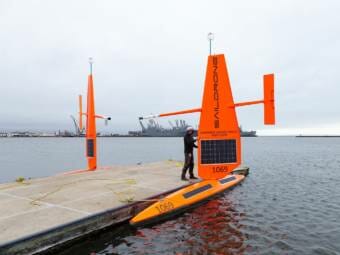
A Saildrone employee wearing a mask for COVID-19 inspects an uncrewed surface vehicle at the dock in Alameda before deploying it the Arctic. (Photo by Saildrone)

Seafloor mapping continues to utilize unmanned technologies. The data updates and charts areas of the Bering Sea and oceans where there is little to no information, potentially making nautical travel safer and more efficient in Western Alaska.

The National Oceanic and Atmospheric Administration’s Office of Coast Survey maps nautical charts to help with safe shipping, national defense and maritime boundaries. The coast survey office has contracted with TerraSond, a geospatial services company that specializes in seafloor mapping, since 1998 to chart Alaska waters.  However, ocean floor mapping dates back to 1807 when President Thomas Jefferson created the U.S. Coast Survey Office.

Andrew Orthman, a charting program manager at TerraSond references lead lines, one of the very first nautical survey technologies.

“Of course you got lead lines, lowering a weight on a rope and physically measuring how deep it is. What’s funny is we still do this, but not for charting anymore,” Orthman said. “We do it as a great quality control tool. We love to take a lead line and lower it next to our fancy multi-beam sounders and make sure we are getting the same thing.”

In recent history, there has been a shift to drone technology. During a recent Strait Science presentation, hosted by the University of Alaska Fairbanks Northwest Campus in Nome, Orthman noted many benefits from these innovations.

“They’re entirely wind-driven sailboats, no engine or props, they are entirely at the mercy of the wind and current. As a result, they’re slow, normally only 2 to 3 knots, but they are incessive. They go for 24/7, weeks or months at a time. It’s amazing what you can accomplish at 2 or 3 knots if you never stop. Solar panels to power their electronics, of course, zero emissions.”

Orthman also recognizes how unmanned vessels keep people safe. When one begins to chart the uncharted, there are many risks that go into navigating seas. However, no one is put in harm’s way when autonomous boats begin to collect the data in the risky areas. Recently, Orthman said drones returned from a five-month mission to map the 20 meter and 50-meter isobaths, or depth line, off Alaska’s North Slope. The drones also had some additional surveying in the Norton Sound and Kuskokwim Bay.

In late May 2020 TerraSond, working to chart more Arctic waters, had planned on using the drones for this project. The initial plan was to have the drones shipped up to Dutch Harbor, but COVID-19 travel restrictions made things difficult. The plan had to be changed.

“Saildrone released these things on May 28 from San Francisco Bay, they towed them out of the Bay and waved goodbye. Off they went,” Orthman said. “They took a little over two months to arrive off of Point Hope. They began to trickle in there in early August after about a 3,000 nautical mile transit. It was very successful, no major issues on the transit up.”

The journey back is still underway, three of the four boats made it back to Almeda, California, where Saildrone headquarters are located. The fourth drone was caught in a big storm in the North Pacific in late November. The boat’s sail was damaged but is still being tracked.

“And the last word is that that one is in Queen Charlotte Sound, in Canadian waters, north of Vancouver Island,” Orthman said. “So, we’re thinking we are going to get the data from that boat in the next couple weeks or so. Depending on who they can round up to pick that boat up.”

Looking ahead for the year to come, TerraSond is collaborating with NOAA to chart waters in Bristol Bay, but nothing has been confirmed yet.

Nome Native Youth Olympics team holds virtual event to promote traditional games

During an April NYO competition in Nome, local student Elden Cross participates in the two-foot high kick, in which athletes aim to touch with their feet a sealskin beanbag at increasing heights. In this photo series, Cross reaches a height of about eight feet. (Katie Kazmierski/KNOM)

Last week, the Nome Native Youth Olympics team hosted a virtual event to garner more interest region-wide in traditional games and to inspire kids to start practicing traditional games on their own.
During the Kawerak-hosted hour-long event, Vanessa Tahbone shared background information about each of the events while Nome athletes gave demonstrations.

“This game is used to strengthen leg muscles for jumping from ice floe to ice floe,” Tahbone said, explaining the traditional relevance of the kneel jump. “It’s for when you’re out hunting, and you need to get up and move fast.”

In addition to the kneel jump, the one-foot and two-foot high kicks serve a traditional purpose as “signaling kicks” for whaling communities to communicate, as Tahbone described for viewers.

“There’d be someone out on a tall lookout or a high point in the community, and they would use this to signal to the community that the crew was successful,” Tahbone said. “They would perform the one-foot high kick telling the community that they needed to get ready to help take care of and put away the food that was successfully hunted in the ocean.”

Other events, like the one-handed reach, require a considerable amount of athleticism and strength. Yet, Tahbone says of the young athletes, “they make it look easy – it’s not.”

The virtual event showcased eight out of the ten traditional events that encompass the Nome Native Youth Olympic Games.

Tahbone stressed the group’s desire to inspire other youth in the region to get involved with NYO. With the help of Kawerak, they will be sending out at-home kits for children and families to begin practicing on their own.

“The kit includes a ball, string, measuring tape, a hook to hang your ball from, and you’ll also have a log that tells you the starting heights for each event and then how you improve over time,” Tahbone said.

Without justice, Nome women seek path forward after sexual assault

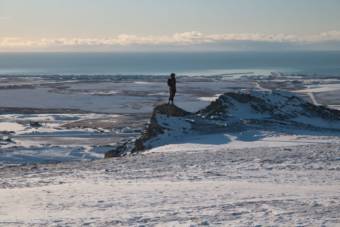
Woman overlooking Nome from Anvil Mountain. (Jenna Kunze/KNOM)

Content warning: This story features sensitive subject matter.  If you need to talk with someone while reading this or need help, here are some resources.

  • Bering Sea Women’s Group: 907-443-5444; toll-free: 1-800-570-5444
  • Behavioral Health Services at the Norton Sound Health Corporation: 907-443-3344, emergency number: 907-443-3200.
  • STAR Alaska: 907-276-7273; toll-free 1-800-478-8999
  • Alaska Network on Domestic Violence and Sexual Assault: 907-586-3650

If you are outside of the Bering Strait region, visit the Alaska Network on Domestic Violence and Sexual Assault website for a list of resources.


Over a 10-year period ending in 2018 in Nome, there were 432 reports of sexual assault. Of those, Nome Police made 45 arrests, and so far there have been even fewer convictions.

Some Alaska Native survivors say those statistics don’t surprise them and that law enforcement has prioritized other crimes, but not sexual assault — especially when survivors are Native.

Nome police have acknowledged problems with a backlog of investigations and community trust. They say they have changed how assaults are investigated and how survivors are treated. The region’s single district attorney said that the specifics of how consent is defined in Alaska law makes sexual assaults very difficult to prosecute, especially when alcohol is involved. But for women who have been assaulted and who see their attackers walking free in their small town, these facts bring little comfort.

KNOM interviewed eight sexual assault survivors as part of this series. A few themes emerged. Many are survivors of childhood abuse who were assaulted again as adults. Sometimes they were prosecuted for minor crimes while their attackers escaped prosecution. The lack of resolution in their sexual assault cases deepened a sense that law enforcement was untrustworthy and led survivors to grapple with their trauma for years —sometimes leading to depression, risk taking and self harm. Ultimately many found empowerment through sharing their stories, redefining what justice meant to them.

Brenda Qipqiña Evak is a 31-year-old Nome resident, justice advocate and survivor of childhood sexual abuse.

At 15, Evak felt angry and confused without knowing why, feelings she later recognized as a trauma response to the abuse she was exposed to as a child. As a teenager, she and friends began experimenting with alcohol. They turned to older community members in Nome to buy it. Sometimes, those older suppliers — always men — would drink with them. That’s what happened one night in 2005 before Evak woke up at the Norton Sound Regional Hospital.

“The nurse said I was sexually assaulted,” Evak said. “They told me what the police told them. The police told them they found me without my pants on.”

Brenda Evak on Nome’s Steadman Street in 2020 (Jenna Kunze/KNOM)

In interviews, survivors of sexual assault said they grew up hearing stories about local police — who were always white, always from out of town — harassing Alaska Natives.

They recounted stories about police slamming heads into the cop car doors, or stripping their clothes off in winter and sending people home on foot.

“I hear a bunch of stories about people who experience sexual abuse and they don’t get their justice. So people don’t really do anything,” Evak said.

When justice fails, then works against you

Evak’s assailant was never charged. She doesn’t know if police even looked for him. Nome police won’t release Evak’s case file, citing Alaska State Statute AS 40.25.120(a)(2), which exempts from public disclosure “records pertaining to juveniles unless disclosure is authorized by law.”

The only legal action that took place that night was against Evak. Nome Police issued her a citation for being a minor consuming alcohol, to which she pleaded guilty. It remains on her record.

She was assigned a counselor at Behavioral Health Services under Norton Sound Health Corporation. On her first visit, Evak remembers the male counselor asked if she was wearing her hospital bracelet from the incident, which happened just days before, to garner attention.

Keely Olson, director of Standing Together Against Rape, or STAR, in Anchorage, said that when sexual assault cases involving alcohol go unprosecuted, it leaves survivors to grapple with the trauma, feelings of guilt and the injustice that follows.

A lot of survivors blame themselves.

“A lot of folks will talk about how it was their fault because they were drinking,” Olson said. “It’s a very common response for us at STAR to say, you know, the natural consequence of drinking too much is to be hungover. It’s not rape.”

Who’s listening?

Another Nome woman, 25-year-old Andrea Ciuniq Irrigoo, said she also saw the justice system work against her. In April 2019, the days were getting long again, and Irrigoo had a new job and a new studio apartment downtown.

Irrigoo decided she would head down to Front Street and poke her head into the bars to find friends or even family who might be in town. At one bar, she was approached by a man she recognized as an acquaintance from around town.

He offered to buy her drinks, and she said she accepted. That was the last thing she remembers.

When she came to in what she recognized as her apartment, she was naked and the man from earlier was naked on top of her.

Irrigoo asked him to leave, but he refused.

“I was trying to hand him his clothes, and then he started to get rough. I was trying to push him away, then he punched me,” Irrigoo said.

Irrigoo fought back, but he got on top of her and strangled her until she lost consciousness.

“Then it goes black,” she said. Irrigoo remembers screaming out for her neighbor, who heard her pleas and called police. “Then, the officer broke down the door.”

EMTs took Irrigoo to the hospital for a forensic exam and rape kit swab. The police report from that night includes notes about a golf-ball sized bruise on Irrigoo’s cheekbone as well as red and raw patchy skin on her neck.

The man was charged with domestic violence — to which he pleaded not guilty — but the charges were dropped a year later by the Nome district attorney John Earthman. Earthman declined to speak with media about the specifics of why he chose to dismiss the case, but said that ultimately the available evidence would not have led to a conviction.

“I definitely made a decision not to charge that case. And I definitely talked to her about the reasons for that. But I did have to give her news and you know, it’s not good news. It’s bad news,” Earthman said.

But despite that, Irrigoo doesn’t understand why such a violent attack against her wasn’t charged.

Andrea Irrigoo in Nome in 2020. (Jenna Kunze/KNOM)

Irrigoo is a teacher, musician, and traditional Yup’ik grass weaver, but throughout various moments of life she’s also struggled with trauma responses. Those are behaviors like self-medicating or self-harm that professionals say can occur after a traumatic event like rape.

Trauma specialist Eden Lunsford works at the same advocacy group as Olsen, Standing Together Against Rape in Anchorage. She said substance use is a common coping mechanism in traumatic events.

“There are so many symptoms that come after a person has been through a sexual assault,” Lunsford said. “Panic attacks, or anxiety, or depression, all these different things can come up. So the substance use (gives) a person a way for them to avoid feeling some of those things. It’s a maladaptive way of kind of reclaiming their safety, their environment. But in all actuality, it’s putting them in harm’s way.”

When she was four, Irrigoo said she was raped by a relative in the village where she grew up.

She attempted suicide once in middle school, and again last spring after the charges against the man who assaulted her were dropped.

“I went through a phase of, you know, what do I have to do to get the court to see that he is not a good person and he deserves to be in jail? Do I need to slaughter my wrists in front of the courthouse and say, ‘you did this,’ with my blood on there? … I guess just to prosecute him, I’d have to be dead. Not actually be here talking about it. If we’re not even being listened to in the court or anywhere else, then who’s listening?” Irrigoo said.

Understanding Indigenous history as healing

According to a survey published by the Urban Indian Health Institute in 2018, the risk of rape or sexual assault is 2.5 times higher for Native women than the rest of the United States.

By sharing their stories, survivors like Evak hope to bring awareness and understanding as to how the community got here in the first place.

That is true, we do have high numbers,” Evak said. “[Sexual assault] does happen a lot amongst our people. They’re quick to point that out, but they’re not acknowledging why these high numbers are the way they are. Why do we have such high numbers of sexual assault? Why has this gone on so long? The answer is because it all stems from generational trauma stemming from colonization. Nobody wants to say that westernizing our people was the reason.”

Anvil City Square in Nome at sunset in 2020. (Jenna Kunze/KNOM)

Some residents say that despite Alaska Native settlement in Nome for thousands of years, European history has overwritten Indigenous history, as seen in the town’s square honoring the “Three Lucky Swedes” who found gold on Anvil Creek, thus attracting an extractive gold mining industry to Nome that still exists today.

A growing body of research connects Alaska’s extractive industries to the dehumanization of Native people — particularly women — dating back to first contact. Some say the legacy of that dehumanization is carried forward in government institutions, like the justice system. In 1741, Russian hunters invaded the Aleutian Islands in search of natural resources and took Alaska Native women and children as hostages to bribe the Native men to hunt for them.

“So they were using women, and they were using our land for their own ends and their own means, and it didn’t matter that we were human beings,” said tribal attorney, Nome resident and sexual assault survivor Meghan Siġvanna Topkok. “We were not viewed as equal. If you were not considered civilized — Christian — you had less rights, fundamentally, than a person who was. So that’s how European nations could come in and lay claim to our land and completely divest us of that.”

Topkok said it’s important for Natives to understand history to contextualize some of the inherited traumas that have resulted from colonization.

“For me, I didn’t learn about a lot of this stuff until I was in college, Topkok said. “The moment that I learned about this in college, it completely reframed my understanding of the issues, and my response. So all of a sudden, I started to understand why my family acted the way that they did, (and) why they made decisions the way that they did. For me, that brought a lot of healing.”

Not a new or exclusively ‘Native’ problem

Despite sexual assault rates being higher among Native community members, it’s not an exclusively Native problem.

Former Nome resident, 55-year old Karen McLane, is a childhood sexual assault survivor turned sexual assault nurse examiner who grew up in Nome. Her family moved into a trailer across from the armory on the seawall side in 1970, and she lived in town until leaving for Tucson, Arizona in 2011. McLane moved away because of severe medical issues that have inhibited her motor skills and thus her ability to defend herself. Ultimately, she didn’t want to be in Nome — a place she feels is dangerous to be a woman — without the ability to move around freely.

McLane, who is white, said she was sexually assaulted in the 1970s and 80s by a family member and various community members but didn’t report it to police until decades later when she fully understood her own abuse and became worried about the safety of another family member.

“We always called it ‘bothering us’,” McLane recounts in a phone interview from Arizona. “When we say, ‘is that person bothering you?’ Up there, they were sexually harassing you. That’s what we mean by that.”

When McLane called in to report the incidents in 2017, the statute of limitations had run out, and no evidence besides testimony could be garnered. Still, she said she felt it was important for the community to know that her family, like others, was plagued with similar issues.

“Maybe if other women in Nome knew that an Anglo person like myself … had those same kind of domestic violence issues as anybody else, and that sexual assault happens to … a large percentage of us … maybe other people would feel more comfortable saying something. Using your voice in the right circumstance and with the right tact can effect change, even if it’s scary,” McLane said.

Opening the door for other girls

Nome seen from Anvil Mountain in fall, 2020. (Jenna Kunze/KNOM)

Instead of vindication through the criminal justice system, many survivors in Nome are turning toward telling their story as a form of justice, empowerment, and healing.

Deidre Levi, 24, is one of them. Levi is the high school girls basketball coach in her hometown of St. Michael. She describes herself as a very active and social member of her community — attending open gym every night — before her assaults. Now, when she enters a room, the first thing she does is look for three things she could fight someone off with.

Between 2018 and 2019, Levi was assaulted twice during trips to Nome.

One summer night in 2018, Deidre was hanging out with her older sister and a few of her sister’s friends at one of the women’s trailers in Nome. They were all drinking when the perpetrator came by for a haircut from her sister’s friend. He stayed to drink with them.

The next time Deidre woke up, the man was on top of her, raping her. Afterwards she got up and left to her sister’s hotel room at the Aurora Inn, where a friend was called who took her to the hospital.

The case was forwarded to the District Attorney’s office, where it still is today — two and a half years later. Nome District Attorney John Earthman has not yet filed charges. Deidre has given up on formal resolution. After a certain point, she said she grew weary of the emotional toll of dealing with the case. She changed her number multiple times and made herself unavailable to the investigation. That made Earthman’s job harder.

Instead of focusing on prosecution, Levi said she’s directing her energy to mentoring the young in her community through coaching.

“I was just opening a door for other girls that were too scared to open the door,” Levi said. She wrote about one of her assaults on Facebook in a post that was shared hundreds of times, garnering the attention of survivors around the world. “A lot of girls messaged me, and they told me that they’re not going to let anything happen again. And they said this cycle is stopping now, and we’re not gonna be quiet about it anymore. The more you tell your story, the more it doesn’t hurt you.”

Four-wheeling down Front St. in Nome, fall 2020. (Jenna Kunze/KNOM).

This story is part of the “Seeking Protection, Wanting Justice” series by Alaska Public Media and KNOM, with funding in part provided by the Alaska Center for Excellence in Journalism.

This portion of the series was written by Jenna Kunze, co-reported by Alice Qannik Glenn and Emily Hofstaedter. The other parts to come outline community dynamics around sexual assault, deal with the difficulty in prosecuting a sexual assault crime, examine how Nome Police have handled cases in the past and hope to in the future, and explore what community members, survivors and law enforcement see as a path forward.

In Nome, few are prosecuted in sexual assault crimes against Native women

Content warning: This story features sensitive subject matter.  If you need to talk with someone while reading this or need help, here are some resources.

  • Bering Sea Women’s Group: 907-443-5444; toll-free: 1-800-570-5444
  • Behavioral Health Services at the Norton Sound Health Corporation: 907-443-3344, emergency number: 907-443-3200.
  • STAR Alaska: 907-276-7273; toll-free 1-800-478-8999
  • Alaska Network on Domestic Violence and Sexual Assault: 907-586-3650

If you are outside of the Bering Strait region, visit the Alaska Network on Domestic Violence and Sexual Assault website for a list of resources.


Hundreds of sexual assaults have been reported in Nome over the last 15 years, but few have brought arrests and even fewer convictions.

There are a number of factors that make it hard to investigate and prosecute sexual assault cases. Some survivors think law enforcement doesn’t prioritize these kinds of crimes, especially when the victims are Alaska Native.

A National Native News analysis of Nome’s 300 plus sexual assault cases reported between 2010 and 2017 shows that only 25 of them went to court.

After 2020 saw unusually high numbers of sexual assault reports, Nome police say they’re working to address this and arrest more suspects. They are also finishing an audit of 460 sexual assault cases going back to 2005.

Alaska Native women in Nome

Nearly 65% of Nome’s population of roughly 3,700 is Alaska Native. There were 372 sexual assaults reported to the Nome Police Department between 2008 and 2017. Thirty of them resulted in arrests. The majority of those sexual assault cases involved Alaska Native women.

Darlene Trigg, an advocate for Native women and longtime resident, said statistics like that don’t surprise her.

“As an Alaska Native woman, do I feel safe in this community? No, I do not feel like I can partake in all of the things that our community has to offer, safely,” Trigg said. “I limit my interactions in this community, I make sure that I don’t put myself in a situation where something unsafe might happen.”

Trigg said she doesn’t feel safe walking alone in town after dark and she limits her daily interactions in public. Trigg is a sexual assault survivor herself. She said her attacker was not prosecuted and still lives in Nome. Trigg said she didn’t report her assault and she “didn’t experience any justice.”

Bertha Koweluk runs Bering Sea Women’s Group, the regional shelter for victims of domestic violence who are sometimes also victims of sexual assault. Koweluk argues historical trauma creates a different reality for Alaska Natives in Nome.

Bertha Koweluk, leader of Bering Sea Women’s group, in Nome during late fall of 2020. (Photo from KNOM)

Historical trauma is defined by Dr. Maria Yellow Horse Brave Heart as the “cumulative emotional and psychological wounding over the lifespan and across generations, which emanates from massive group trauma.”

There’s a longstanding distrust of law enforcement within the Native community, rooted in unfair treatment, or the perception of unfair treatment, for generations. It leads people to be less likely to report crimes.

“I know that’s why there is such a disconnect of people understanding historic trauma and domestic violence, why it plays in the way we think about who we are, where we come from,” Koweluk said. “I just remember in grade school not wanting to admit that I ate Native food because the kids who came from the village were always put aside and treated differently, so you never claimed it (being Alaska Native).”

Chief Mike Heintzelman said there’s some indication that the department’s recent efforts to build trust with the community might be working; reports of sex crimes in Nome last year were particularly high. At the end of 2020, over 120 sexual assault cases had been reported. Heintzelman said almost all of those cases involved Alaska Native perpetrators and Alaska Native survivors.

“If the trend continues, we’ll be in excess of 130 cases for the year, where 88 were reported last year (2019), and that was a record high,” he said in October. “But I am really hoping that a lot of this has to do with people who are more comfortable with coming to the Nome Police Department, knowing that the case will… be given the due diligence that it should be. We have things in play right now that make us more efficient and checks and balances that will make sure that the case doesn’t go missing.”

Heintzelman said when an officer takes on a new case, a superior officer monitors progress and the superiors are in turn monitored by higher level officials like the deputy chief and chief. Now, Heintzelman said cases don’t go cold when an officer leaves town like they did in the past.

Officers and police leadership see frequent turnover in Nome, with many in recent years staying for 12 months or less. Further, Nome’s seven patrol officers have the option to work on a “two-week-on, two-week-off” schedule. This enables officers to spend their off-time away from Nome.

In a high-profile case from 2017 that garnered activists’ criticism and media attention, Clarice “Bun” Hardy, a former Nome police dispatcher, reported her sexual assault to officer and co-worker Nicholas Harvey.

Hardy claimed Harvey did not follow up on her case, nor did the Police Chief at the time, John Papasadora. Two years later, Hardy joined the American Civil Liberties Union in filing suit against the City of Nome, Lt. Harvey and Chief Papasadora alleging they mishandled her rape claim. That lawsuit is currently working its way to trial.

Data shows numerous sexual assault cases were unresolved and piling up at the department over the last few years until 2018. That fall, then-Police Chief Bob Estes started an audit of 460 cases dating back to 2005. Estes left the department a year later with the case-audit still in progress and to this day it is still not complete.

Court System and consent

In a region where sexual assault rates are the highest in the country, District Attorney John Earthman is the city’s lone prosecutor. He has one of the highest caseloads in the state. A report made two years ago to the Alaska Legislature by Alaska’s Criminal Justice Commission states that in 2017, the per capita rate of sexual violence incidents reported to law enforcement was 106% greater in Western Alaska than the statewide rate. Western Alaska’s rates were the highest of any geographic region in the state, including urban areas.

In the same report, a third of women in Alaska reported experiencing sexual violence in their lifetime. In 2015 alone, an estimated 7,136 women or 2.9% reported experiencing sexual violence that year. When looking at the Nome Census Area, the Bering Strait region, the number of women who reported experiencing sexual violence in their lifetime is similar. But the report emphasizes that the actual number of incidents involving sexual violence is most likely higher than what was reported.

Some survivors in Nome said they chose not to report their own trauma for many reasons, including lack of support or little accountability from law enforcement.

John Earthman, District Attorney of Nome, during an interview with KNOM in fall of 2020. (Photo from KNOM)

Earthman said rectifying past wrongs goes deeper than finishing NPD’s audit of Nome’s former cases. Sexual assault cases are complex and difficult to prove under existing statutes.

“What’s difficult, though, is when you’re dealing with a criminal statute of sexual assault, without consent has a very specific definition … without consent means with or without resisting. Basically, the victim was forced, or that this happened because they were threatened,” Earthman said.

According to state statute, the burden of proof is on Earthman to show the offender used force, implied or otherwise, to have sex with the victim and that the accused was mentally aware they didn’t have consent from the victim.

Screenshot from a 2015 report by the Alaska Criminal Justice Commission

Roughly 9% of all reported felony-level sex offenses in Alaska in 2015 ended in a conviction for a sex offense, according to the Alaska Criminal Justice Commission’s report. A total of 1,352 felony-level sex offenses were reported to law enforcement in Alaska in 2015. That year there were 225 arrests for a felony sex offense. Of those 225 arrests, 159 resulted in a conviction, 119 of which included one or more convictions for a felony sex offense.

For Nome, arrest rates for sex offenses since 2008 follow statewide trends, but the conviction rates have been a lot lower.

No audit, no acknowledgment

As Chief Estes departed Nome, a new city manager, Glenn Steckman assumed leadership in the fall of 2019. Concurrently, the City Council commissioned an outside management and evidence audit of the Nome Police Department to be conducted by Greg Russell Consulting.

Steckman told the public during a November City Council meeting to expect results of the audit from Russell Consulting, LLC in a couple of months. As of the publishing of this story, that audit of NPD has yet to be released by the consulting firm. Greg Russell said his workload and COVID-19 have delayed the finalization of this audit.

Regardless of the results of that audit, advocate Darlene Trigg said that the lack of action on scores of cases with Alaska Native victims by NPD needs to be acknowledged so the community can move forward.

“Well, it’s necessary. That’s the truth. You know? Some level of acknowledgment that harm has been done is probably not something that an attorney would want the city to do,” Trigg said. “However, there are people who are owed that in this community who are, you know, lost in their own trauma response because of the way that they were treated and their families, and their livelihoods and their … ability to walk in our town in a healthy, safe way is forever changed.”

The current city administration said they’re less interested in looking back in the “rearview mirror” and would rather make improvements for the future. Steckman said he, Chief Heintzelman and several of the newer Nome police officers were not part of the past mistakes. That said, the city manager said a rebranding of NPD is in the works.

“You know, from potentially what our uniforms look like, to what our badges look like. And, you know, how we initiate that … we’re still working on the details,” Steckman said. “And we mean a true rebranding, it’s not just doing a facade. And that’s why we are encouraging training.”

‘We need to fix our humanity’

Nome police officers currently receive training through the Alaska State Trooper Training Academy. Training includes topics like conducting forensic examinations, collecting better evidence and learning about culturally informed police response.

One of Nome’s newest officers, Scott Weaver, is undergoing this training. He is an investigator hired to finish the department’s audit of the cold cases going back to 2005. After only being here for two months, Weaver said he feels the community’s pain.

“I just took a sexual assault case, it’s an old case a couple days ago from a mom and dad who was reporting a child that was you know, abused,” Weaver said. “And you know, both of them, mom and dad in tears, thankful for me just taking it. And running with the case, and I think it’s just, they’ve had a bad experience.”

He added, “I can see some of it in the cases. You know, I can understand why. I have empathy for their hurt, and I want to fix any injustice. I can stand up and say, ‘I’m not responsible; I wasn’t here.’ Sure, I could take that cop-out, but I am here now and I can do something.”

Council member Jennifer Reader, one of two women on the local city council, said increasing Nome’s law enforcement is not the way to increase the arrest and conviction rate for sexual assaults.

“I wholeheartedly believe that our community has a humanity problem,” Reader said. “We don’t have a policing problem. We do not need police to tell us what to do, the right thing to do. We don’t need that; we need to do the right thing. And that’s not what’s occurring right now. No policeman on this earth is going to be able to change that. So, we need to fix that. We need to fix our humanity.”

This story is part of the “Seeking Protection, Wanting Justice” series by  Alaska Public Media and KNOM, with funding in part provided by the Alaska Center for Excellence in Journalism.

Site notifications
Update notification options
Subscribe to notifications