KYUK - Bethel

KYUK is our partner station in Bethel. KTOO collaborates with partners across the state to cover important news and to share stories with our audiences.

For the first time in nearly 2 decades, Mekoryuk has a high school basketball team

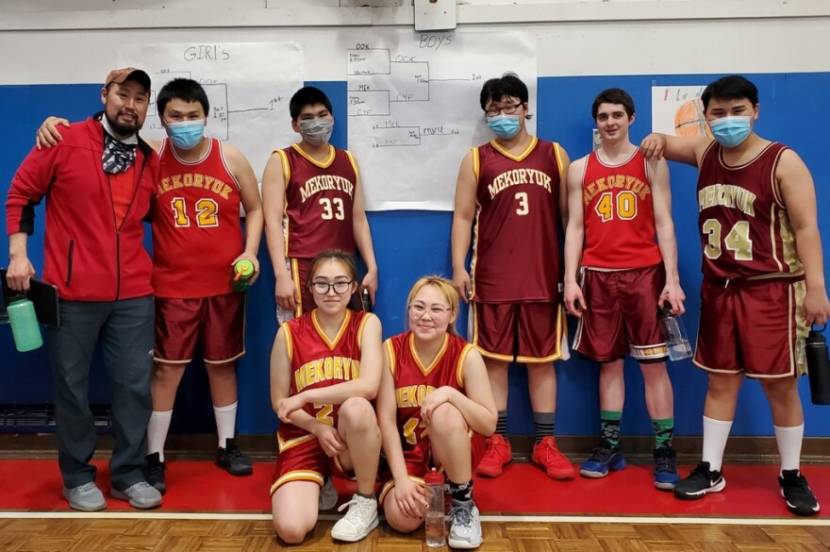
A 7-player coed basketball team poses for a photo in a gym
The Mekoryuk basketball team. (Courtesy of Edward Kiokun)

For the first time in nearly 20 years, the small island community of Mekoryuk has enough players to field a high school basketball team. Two girls and five boys play on a co-ed team in a season that has gone quite well.

In their first game this year, Mekoryuk played against Tununak, a nearby village. Fifteen-year-old power forward Harvey Wesley said that he had butterflies going into the game.

“I was super-very nervous,” Wesley said. “Because it was my first game, and I was nervous and I was scared.”

At the same time, he said that he was equally excited, “because every time I looked at that scoreboard I was like ‘oh my gosh I think we’re gonna win.’”

And they did. Mekoryuk won that first game and half of their games this season. That’s good enough to advance them to the small school district tournament, the 1A Coastal Conference Tournament, which begins on March 3 in Bethel. If they win that, they’ll advance to the state tournament.

Wesley said that this season hasn’t just been about winning, though. It’s also been about the relationships he’s built with his teammates.

“Me and my friends got more closer, and we’ve been talking to each other for basketball and saying ‘Hey, I think if we do this way, this would be more better,’” Wesley said.

Plus, he said that being part of the team has made him more engaged in school.

“Before I ever joined the basketball team, I always seen school as, like, ‘Oh, I got a long day at school.’ And then ever since I joined basketball, I’m like, ‘Oh, yes, I can get all my assignments done and then I can be in a basketball practice,’” Wesley said.

Wesley is one of just seven players on the team. The co-ed team plays against boys teams from other schools. Coach Edward Kiokun said that the two girls both start, which is unique to Mekoryuk.

“There’s no other co-ed team that I know of right now,” Kiokun said.

Kiokun said that the reason the girls and boys are on the same team, and the reason Mekoryuk hasn’t had a team in nearly 20 years, is that there just aren’t that many students there.

“We’re a small community. On a good day, it’s 200 people. And, you know, we have about 45 kids in the whole school, preschool through 12,” Kiokun said.

This year, there were finally enough high school students to field a basketball team. Wesley, the sophomore, said that he’d been waiting for this day for a long time.

“I was so excited, because I’ve been asking my principal ‘Hey do you think there will be a basketball season this year.’ Or ‘When can we get a basketball thing going?’” Wesley said.

Kiokun said that there are students who are from Mekoryuk attending boarding schools like Mt. Edgecumbe in Sitka this year. But he said that they’ve heard about the basketball team in Mekoryuk, and some are wanting to come back. He said that he’s hoping to have both a boys team and a girls team next year.
New to Alaska, Filipino teachers find their rhythm in Aniak

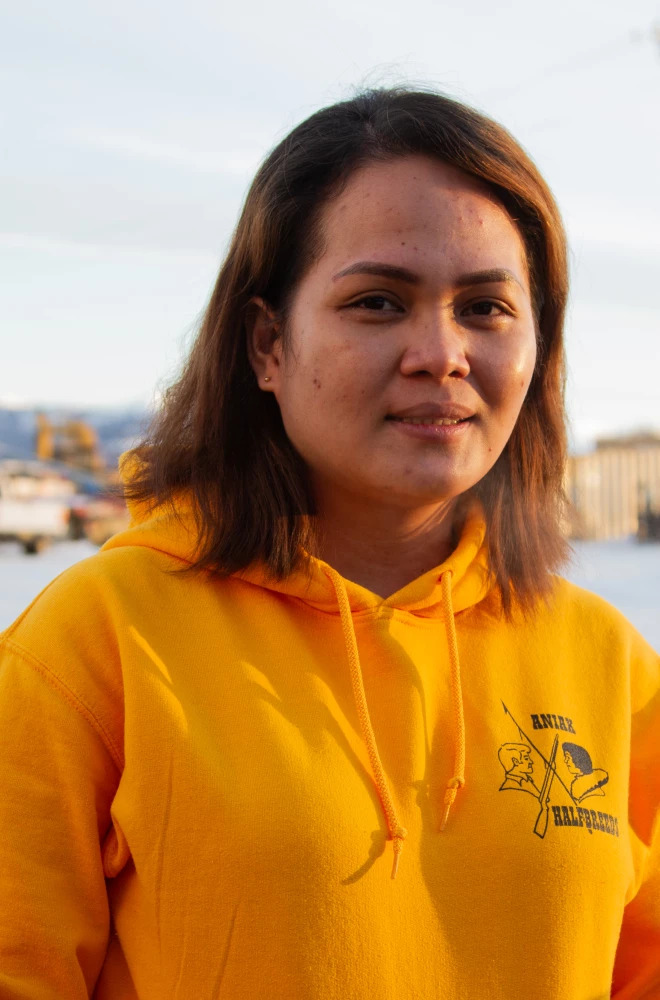
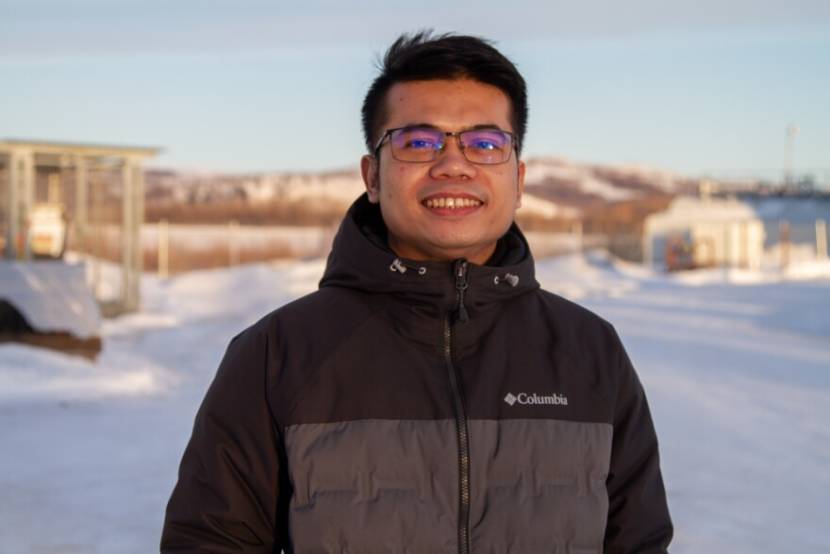
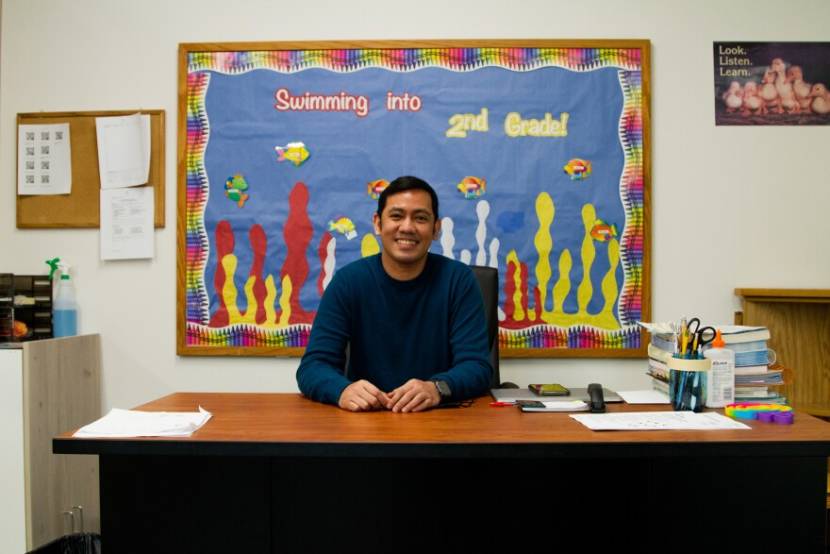
“It’s kind of a very shallow reason, but because of the snow. We don’t have snow there!” says Jay Mojello, of why he wanted to come to Alaska. Mojello is one of the many new teachers at the Kuspuk School District who are from the Philippines. (Photo by Olivia Ebertz/KYUK)

This school year, over half of the Kuspuk School District’s entire teaching staff is from the Philippines. And nearly all of them are new to the U.S.

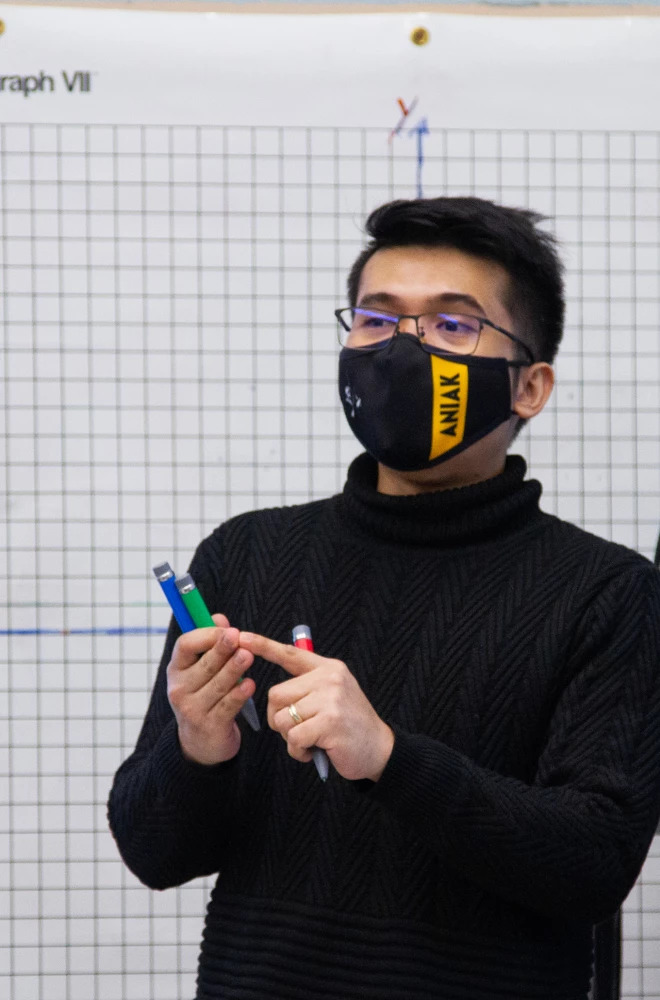
Rovan Agad teaches math and coaches junior varsity basketball at the Aniak high school. He’s happy to be here, finally connecting with his students in person. He arrived from the Philippines in October 2021.

Rovan Agad teaches complex numbers to his students at the Aniak High School. (Photo by Olivia Ebertz/KYUK)

Agad was supposed to have started at the school a couple of months earlier, but a minor injury delayed his trip. He had to wait for a cut on his finger to heal before he could give his fingerprints to get a visa. So for the first two months of classes, Agad taught over Zoom from 1 a.m. to 7 a.m. Philippine time.

“It was hard to establish the connection, especially when you’re on screen,” Agad said.

But now that Agad’s here in person, the students are attentive, and even more so when Agad uses American slang.

“So that’s why I-squared is equal to negative one. Gucci?” Agad asked his class during a lesson.

“Gucci,” the class agreed.

Agad applied for teaching jobs in Alaska because he had been let go by his former school when it shut down during the pandemic. Agad isn’t the only teacher from the Philippines in Aniak this year. There are four, and they’re all roommates.

The Lower Kuskokwim School District also hired teachers from the Philippines this school year, though a smaller share of its new teachers are Filipino. Out of 82 new teachers the school district hired this year, 10 are from the Philippines.

At the Kuspuk School District, 19 of the 21 new teachers are from the Philippines, and 20 out of 39 of the district’s total teachers are from the Philippines.

Both school districts used the Alaska Teacher Placement Agency to hire teachers last year. A spokesperson for the agency said that it does not advertise in the Philippines, but accepts applications from all over the world. The spokesperson said that she saw an increase in the number of Filipino applicants compared to the year prior.

Kuspuk School District Superintendent James Anderson said that he didn’t necessarily look for applicants from the Philippines. Anderson said that he simply hired the best and most experienced teachers. It just so happened that nearly all of them were from the southern Philippines and speak a Bisayan language as their native language.

The Filipino teachers in Aniak all mentioned one reason to come to Alaska.

“It’s kind of a very shallow reason, but because of the snow. We don’t have snow there!” Jay Mojello said.

Mojello is a second-grade teacher. He said, like the other teachers, had a more serious reason for coming to the U.S. — the salary, which the Aniak teachers say is about 10 times higher than in the Philippines. Mojello needed to pay off his debt and send money back to his family.

Kaycee Limod had to leave her husband and 2-year-old at home in the Philippines. (Photo by Olivia Ebertz/KYUK)

So did Kaycee Limod, a sixth-grade teacher. But for her, it was an extra difficult decision to come to the U.S. She had to leave her husband and young baby at home.

“He’s already two. I just, I just miss him,” Limod said. “I asked him, if you can, please give me this opportunity. Be with our son, and then I’ll get you.”

Limod said that either she’ll join her family back in the Philippines or she’ll bring them to Alaska. She said she’s enjoying learning a new culture and gaining professional experience. That experience, Limod and the other teachers said, has come with growing pains.

“Every time I give them instruction, they don’t listen to me. And the first week, first, second week there I was here, I was really crying. Every time I go home, I always cry because I feel like I’m not an effective teacher,” Limod said.

But she said now, about halfway through the school year, she and the students have found a good rhythm. 

There’s a good rhythm at home too. The four Filipino teachers share a four-bedroom, one-bathroom apartment across town. They said that it helps them save on costs.

The teachers haven’t decided yet whether they’ll stay in Aniak for another school year. They say that overall they like Aniak, but they dislike the nearly hour-long walk to school on cold, dark winter mornings, and the lack of emergency medical care available in the community.

But if they leave, they said they would miss their students and the camaraderie.

Rovan Agad has been blending Filipino and Alaskan flavors in the kitchen. (Photo by Olivia Ebertz/KYUK)

On Fridays, the four colleagues hang out and watch movies. 

Each day, the men cook and the women do the dishes. Mojello makes breakfast and Agad makes dinner. He’s been blending Alaskan and Filipino flavors in the kitchen. They say that the community has been generous with gifting them subsistence foods.

“We had moose adobo. We got moose tapa. We also had salmon,” Agad said.

The teachers have until Mar. 4 to let the school know if they’ll be returning for the 2022-2023 school year.

Juneau-based Yup’ik artist Qacung Blanchett receives two big national awards

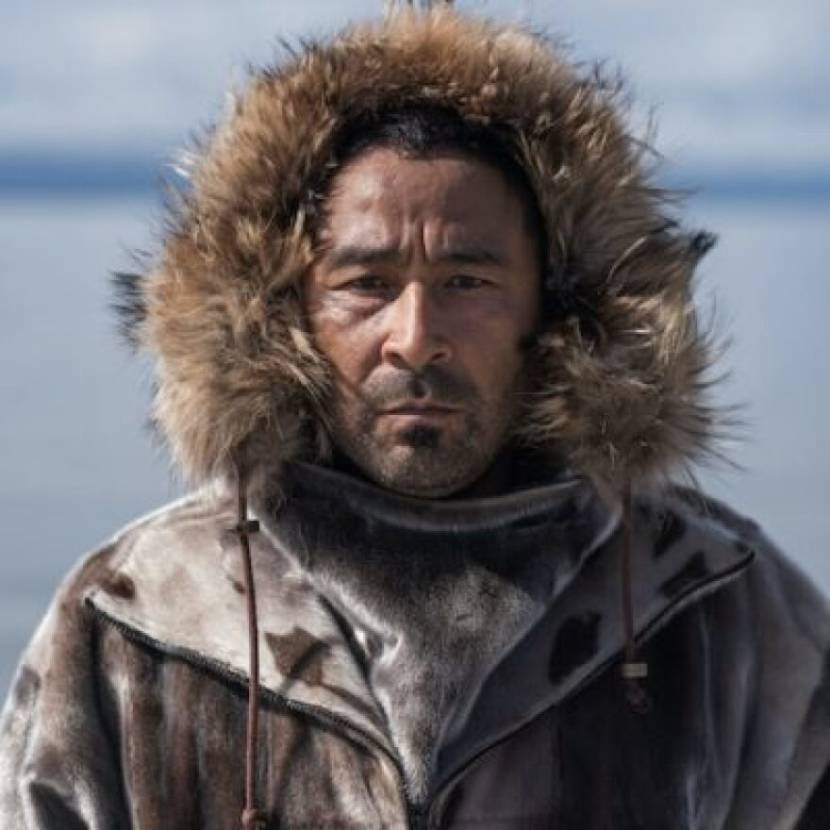
Portrait of a man in a parka, standing outside
Bethel-raised musician Qacung Stephen Blanchett was recently named a 2022 United States Artists Fellow, as well as one of the Kennedy Center’s 50 for the Next 50. (Photo by Konrad Frank/Courtesy of Qacung Blanchett)

Bethel-raised musician and Pamyua frontman Stephen Qacung Blanchett has been creating music for almost three decades, but 2022 may be his biggest year yet. The Yup’ik culture-bearer and multi-disciplinary artist has received two national honors. Last week, he was named a 2022 United States Artists Fellow.

“It’s a big honor for me,” said Blanchett, who now lives in Juneau. “Because we have folks that are just really doing amazing things for their communities. And for me to get this recognition, I’m so honored.”

Qacung was one of 63 artists selected for the fellowship. Each recipient is nominated anonymously by fellow artists, and Qacung said that he has nothing but gratitude for whoever nominated him. Each of the artists is awarded $50,000 to spend however they want, and they’ll get financial planning assistance to help them.

“Artists are really good at our craft and our practices, but we’re not really that good at finance. Finances are the one of the things you don’t want to deal with. And so for them to do this and support us artists with this type of money, it’s crazy,” Blanchett said.

This recognition comes after years of hard work. In 2021, Qacung released another album with his band Pamyua, headlined and organized a fully-Indigenous music festival, and still found time to put out his first solo album.

""
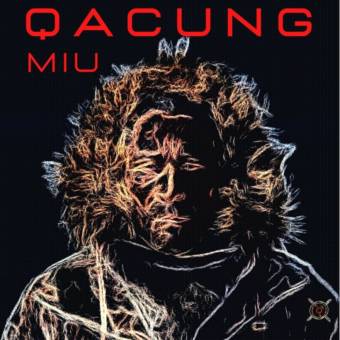
Qacung Blanchett’s first solo album, “Qacung Miu,” was released last summer.

“I did work on a solo project called ‘Qacung Miu,’ you know, place from which you come from, like Memterilluk-miu,” Blanchett explained.

On the album, Qacung collaborates with numerous Native artists to tell the stories of Alaska Natives. Like his song “Our Stories” featuring Toksook Bay’s Byron Nicholai.

His hard work over the past year has also gained Qacung another national honor. For its 50th anniversary, the Kennedy Center named 50 multi-disciplinary leaders in art, education and athletics. Qacung is on the list for his work as a performing artist, culture-bearer, educator, and advocate for equity and inclusion.

“So they named 50 artists across the nation who are just kind of doing community doers work, right?” said Blanchett. “So to be named in that cohort is, like, crazy. It’s like this whole wide range of artists.”

The 50 honorees will work with the Kennedy Center to lead discussions and educational programming. The goal is to ensure that artists and cultural leaders have a say in shaping the future.

For Qacung, the chance to be in the room with some of the country’s most influential and groundbreaking artists through his work with the Kennedy Center could mean the chance for some pretty cool collaborations.

“Sometimes when you get people together in a room, it’s amazing the type of things that can come out of it. So I’m really looking forward to seeing what works more with the Kennedy Center and seeing where that can go,” Qacung said.

Among the group are some familiar names, such as World Cup champion and co-captain of the U.S. Women’s Soccer team Megan Rapinoe and 2021 Inaugural Poet Amanda Gorman.

But before focusing on these national honors, Qacung will be wrapping up a project closer to home. This one, the Old Harbor Fellowship, is designed to keep Native music and dance alive in Alaska.

“I’m headed off to Kodiak to work with seven representatives from the seven villages on Kodiak to create music, create dance, compose and choreograph dances,” Qacung said.

Emmonak leader Martin B. Moore Sr. dies from COVID, remembered as a tireless fighter for Alaska Native people

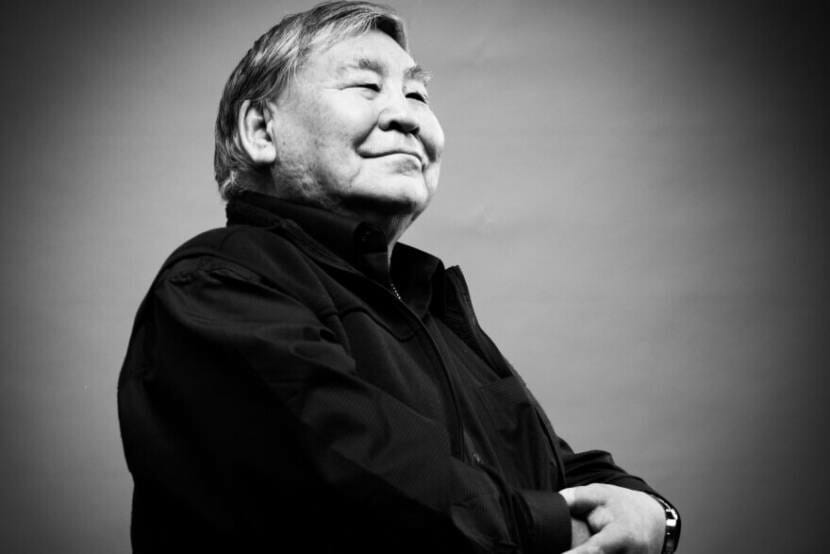
A formal, black-and-white portrait
Martin B. Moore, a former state legislator and Emmonak city manager, passed away at 84 years old on Feb. 3, 2022. (Photo courtesy of Calista Corp.)

Former state legislator and respected community leader Martin B. Moore Sr. from Emmonak died last week from COVID-19. He was 84 years old.

He’s remembered as a supportive and caring father who worked tirelessly to improve the lives of Alaska Native people in rural Alaska, his family says.

Born in a village without a school, Moore pushed for better educational opportunities for future generations — including advocating for more schools to be built so children could get educated in their own communities, preserving their cultural identity and family connections.

Virginia Moore-Kelly, one of Moore’s four living daughters, said her father was not only a champion for education as a state legislator, but also at home as a dad.

“Our school was very important to him,” she said. “I remember when it was time for our grades, he studied our grades with a magnifier.”

Later, when Moore-Kelly was struggling in college, she called her dad, telling him she was thinking about giving up on school.

“And he said, ‘Remember, everything good in life is always hard to get,’” Moore-Kelly said. She and each of her sisters went on to get college degrees.

Moore was speaking from his own challenges with education. He was born in the lower Yukon village of Emmonak in 1937, where there were no schools. He didn’t step into a classroom until the age of 10.

From the back of the St. Mary’s boarding school classroom, he squinted at the blackboard, unable to make anything out. One, he didn’t know how to read, and two, he was half-blind from a tuberculosis infection in his eyes.

But he overcame those challenges, had his eyes treated and graduated from high school at 24 years old.

“My grandfather, my uncles, my aunties that believed in me, that’s what make me go,” Moore said in a 2020 interview with Calista. “Those people that also didn’t have the education said, ‘Go, Martin, school.’ That’s where I learned to work.”

From then on, Moore fought to pass on better educational opportunities than those given to him.

He was a representative in the 7th state Legislature from 1971 to 1972 and also served as a special assistant to Gov. Wally Hickel. In his year as a state legislator, he fought to build schools in Alaska’s villages so Alaska Native children could get educated in their own communities.

“You could do the same thing better than me. You have a lot more opportunity than me,” Moore said in the 2020 interview, encouraging young people in rural Alaska to take advantage of being born in this time. “You have the future. Your future is brighter than ever.”

Moore also served as a board member for many regional organizations, like Calista and the Yukon-Kuskokwim Health Corporation. He was mayor of Emmonak and then served as its city manager for the last three decades.

“When I was 16, I started working. I’m 83 now. I’m still working,” Moore said in 2020. “I like to help people. That’s why I’m here: because I love the people.”

Moore’s youngest daughter, Natalia Moore, said that her father helped people in his personal life as well. When he saw two young people in Emmonak that needed his help, her father adopted them.

“That’s one of the things that I think I gained from him was just to help people, especially when they’re down,” said Natalia.

Natalia said that her dad also taught her to be proud to be Yup’ik. Any time they were eating Native food, he would say he was eating like a king. Once, while Natalia was fishing with her dad on the lower Yukon, he turned the motor off and held her arm.

“And then he told me, ‘Nat, your blood is rich and rare. And I don’t want you to forget that. And I love you,’” Natalia said.

About two months before he passed away, Moore gave his second youngest daughter, Dora Christine Moore, one of the final lessons he would teach her.

Dora said he told her this: “You’ve seen the hardships, you’ve seen the challenges, you’ve seen the obstacles. You’ve experienced the love, you’ve experienced the unconditional love, you’ve experienced forgiveness. You’ve experienced lessons. That’s what marriage is.”

A few weeks after her marriage, Moore was medevaced from Emmonak to Bethel for COVID-19 complications. He did not share his vaccination status with his daughters. Dora said that he fought until the end. On Feb. 3, at 5:46 a.m., Moore died at the Bethel hospital.

He is survived by four daughters, 23 grandchildren, and 23-great grandchildren. His youngest great-grandchild was born one day after he passed. That child was given his Yup’ik name: Caranaq.

COVID cases in the Yukon-Kuskokwim Delta are soaring as Alaska’s cases fall

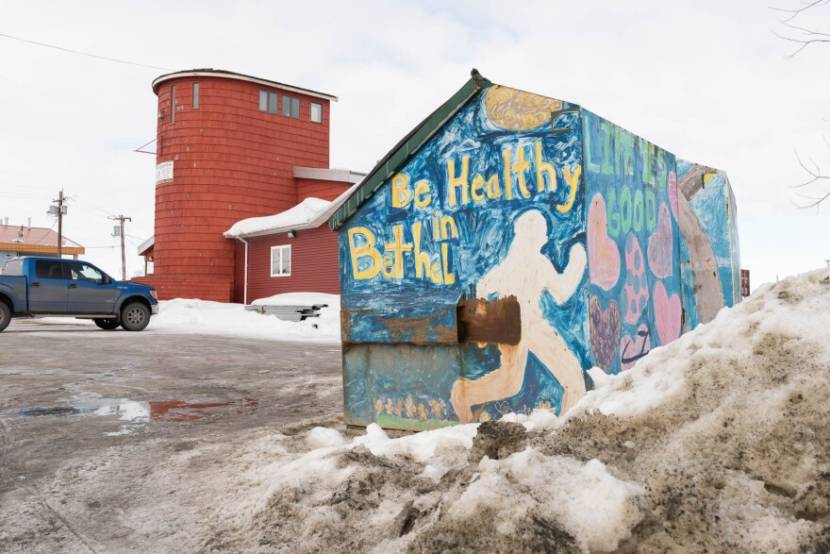
A colorful shed painted with the words "be healthy in Bethel"
(Photo by Katie Basile/KYUK)

COVID-19 cases in the Yukon-Kuskowkim Delta region are the highest they’ve ever been. The Yukon-Kuskokwim Health Corporation reported 817 new cases last week, almost 100 more cases than the week before. YKHC also reported one death and four hospitalizations over the same period of time.

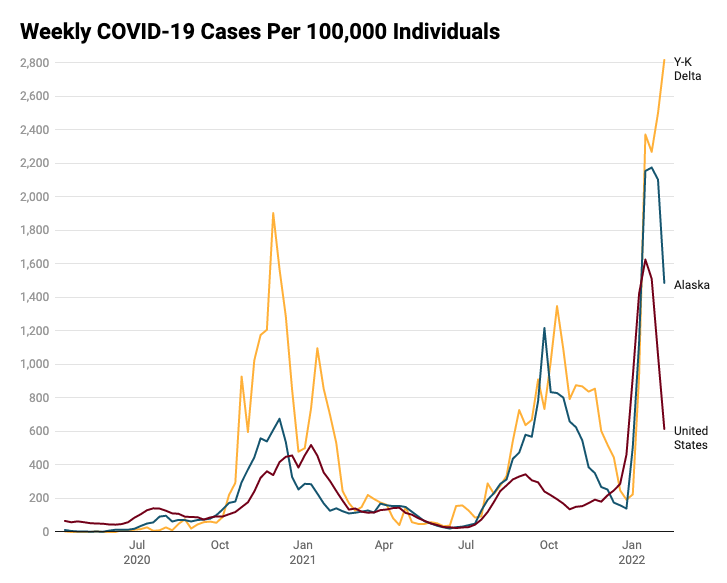
The region’s case has spiked as state and national infection rates have been falling.

The Y-K Delta’s COVID-19 case rate is currently two times higher than the state’s. Despite having one of the highest case rates in the country, the Bethel City Council voted not to renew the city’s mask mandate this week. That mandate will expire Feb. 18.

Last week, the Alaska Department of Health and Social Services announced 8,950 new COVID-19 cases across Alaska, a 35% drop from the week prior. During that time, the Yukon-Kuskokwim Delta made up 9% of the state’s new cases.

According to state data, over 75% of adult hospital beds are still occupied, and 13% of those occupying hospital beds are COVID-19-positive.

""
Datawrappper chart showing weekly COVID-19 cases per 100,000 since April 6, 2020, when YKHC announced the first COVID-19 case in the Y-K Delta. (Chart: Elyssa Loughlin Source: YKHC, Alaska DHSS and CDC)

Local health officials continue to urge wearing masks and getting vaccinated and boosted against the virus to protect your health, and to prevent the health care system from being overwhelmed by new cases. Anyone with questions about the virus is encouraged to visit the YKHC COVID-19 Dashboard or call the COVID-19 hotline at 543-6949.

The Yukon-Kuskokwim Delta case rate remains higher than both that of the state and the nation. Per 100,000 people over seven days, about 2,800 developed COVID-19 in-region. That’s compared to the national case rate of 615 cases per 100,000 and the state case rate of 1,487 per 100,000 over the same period of time.

YKHC reports that 65.9% of the eligible population is completely vaccinated against COVID-19, a 0.2% increase from last week. DHSS reports that 61.8% of all eligible Alaskans have completed a vaccine series. Nationwide, 67.9% of the population that is five or older is fully vaccinated, according to the Centers for Disease Control and Prevention (CDC).

Federal government denies tribal groups’ petition to limit salmon bycatch

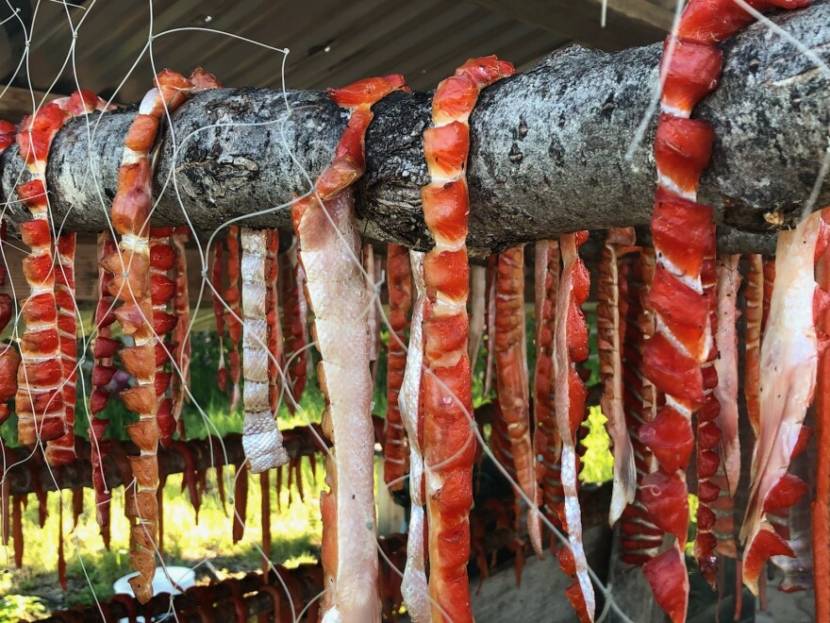
strips of salmon drying
Photo by Petra Harpak/KYUK

The federal government has denied a petition to eliminate chinook salmon bycatch and cap chum salmon bycatch in the Bering Sea pollock fishery. Tribal groups in Western Alaska submitted the petition following dismal chinook and chum salmon runs this summer.

In a letter denying the tribal groups’ petition request, the National Marine Fisheries Service wrote that the requested limits on bycatch would likely not make a big difference for Western Alaska salmon runs. The fisheries service estimates that less than 3% of chinook salmon bycatch and less than 1% of chum salmon bycatch in the Bering Sea Pollock Fishery are from Western Alaska rivers.

“I question that number. I think there needs to be more research on that,” said Mike Williams Sr., chair of the Kuskokwim River Inter-Tribal Fish Commission, one of the tribal groups that petitioned the federal government to add new salmon bycatch limits. Williams Sr.’s group has also asked the federal government to conduct up-to-date analysis to find what percentage of chinook and chum salmon bycatch is from Western Alaska.

In October 2021, the federal body that regulates the Bering Sea pollock fishery, the North Pacific Fisheries Management Council, asked the National Marine Fisheries Service to fulfill that request.

Williams Sr. said that he knew the petition was a long shot, but he’s still disappointed it got denied.

“Our relatives up in the Yukon are really suffering right now because of the zero fishing this summer. The pollock fishery, even they say 3%, they should knock it off for a while,” Williams Sr. said.

Williams Sr. said that he and the Kuskokwim River Inter-Tribal Fish Commission will continue to fight for lowered chinook and chum salmon bycatch limits in the Bering Sea.

Site notifications
Update notification options
Subscribe to notifications