KYUK - Bethel

KYUK is our partner station in Bethel. KTOO collaborates with partners across the state to cover important news and to share stories with our audiences.

Bethel Yup’ik immersion school will add 7th and 8th grade at new campus

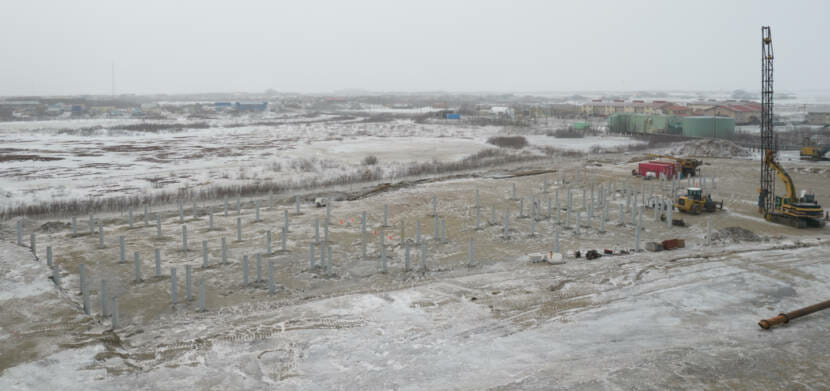
Ayaprun Elitnaurvik’s new campus is being built next to Bethel Regional High School and the Lower Kuskokwim School District office. (Photo by Gabby Salgado/KYUK)

The Ayaprun Elitnaurvik Yup’ik Immersion School in Bethel is expanding in more ways than one. The immersion school is adding two extra grade levels. At the same time, construction for a new school building is well underway.

This fall, Ayaprun Elitnaurvik will offer seventh grade for the first time. The following year, the school will add eighth grade.

On March 2, the state board of education approved the Lower Kuskokwim School District’s request to expand Ayaprun into the extra grade levels. The school district needed the state’s permission because Ayaprun is a charter school.

One of the school’s core missions is to develop students’ Yup’ik language proficiency.

“I think it gives a little longer for both languages to really flower, you know, bloom,” Clarence Daniel said about the immersion school’s expansion into junior high.

Daniel is a Lower Kuskokwim School District board chairman and a member of Ayaprun’s academic policy committee. All five of his children have gone through or are attending Ayaprun, which he says has helped them communicate with their family.

“We speak it at home, they speak it to their grandparents, they speak it when they visit our home village a lot,” Daniel said.

But Daniel said that Ayaprun is about more than just learning the Yup’ik language. It’s also about students learning Yup’ik culture. Daniel used lessons about fish as an example.

“The students can learn all of the components of the fish in the sciences and everything, the biology regarding the fish,” he said. “And then you just turn to another page and you learn about how the fish is spiritually connected to culture and what it means for providing the subsistence way.”

Ayaprun Elitnaurvik Yup’ik Immersion School opened in the ’90s as a charter school for kindergarten through sixth grade. Since then, district superintendent Kimberly Hankins says that Ayaprun has become a pioneer and leader among language immersion programs nationwide.

“So we do frequently hear from other school districts around the state, asking us questions such as ‘how did you get started?’ You know, can we share our curriculum materials?” Hankins said.

Ayaprun had to rewrite part of its curriculum after some of it burned in the fire that destroyed the former school campus in 2015. Ayaprun’s students moved into a building that used to be a grocery store and have stayed there.

Now, over six years later, the district is finally close to having a new school building after wrapping up a lengthy settlement dispute with its insurance companies. Earlier this month, the district’s contractors finished driving over 100 pilings into the ground for the new school’s foundation next to Bethel Regional High School.

It will still be a few more years before Ayaprun students can move into their new school. The district previously estimated it would be completed in 2023, but Hankins said that date was delayed.

“Contractors, you know, struggling to work with COVID delays, and then facing lack of materials or just availability of construction materials in general. So the new estimated completion date is summer of ’24,” Hankins said.

The pandemic has not only delayed the project, but it has also dramatically increased the cost as well.

“And it’s due primarily to increases in the costs and materials due to the pandemic,” Hankins said.

That new cost is around $8 million more than what the school district estimated it would cost a few years ago. Last month, the district’s board agreed to pay a contractor $50,888,250 for the project, whereas the district estimated it would cost around $42 to $43 million a few years ago.

Hankins said that the insurance settlement from the Kilbuck fire won’t cover that whole amount. Luckily, she said that the district has extra funds saved away.

Once it’s completed, the new Ayaprun campus will have enough room for seventh- and eighth-graders as there were extra classrooms in the design. Asked whether Ayaprun would eventually add a high school, Hankins said that was a fun idea to think about, and she added that the immersion school is looking into expanding into pre-K as well.


Underdog Toksook Bay wins state 1A basketball tournament

A high school basketball player stands on a stepladder to cut down a net
Toksook Bay Islanders center Colton Angaiak, a senior, scored 11 points and pulled down 16 rebounds in the 1A state basketball championship game to help his team win the tournament. (Photo by Shane Iverson/KYUK)

The Toksook Bay Islanders, huge underdogs going into their final games of the state tournament, are this year’s 1A state basketball champions.

By the time the Islanders upset the second-seeded Lumen Christi boys team in the March 18 semifinal match, sixth-seeded Toksook Bay had already exceeded expectations.

Then, in the March 19 championship game, the Islanders took down the top-seeded Tanana Wolves. The Islanders used their speed and ball handling to match up against Wolves’ size.

The final score was 51-47.

Tanana jumped out to an early 8-0 lead in the first quarter. But by halftime, Toksook Bay cut that lead down to two.

After several lead changes in the third quarter, Toksook Bay led by as many as 15 before weathering a Tanana comeback at the very end.

Tooksook Bay held on despite seeing their lead shrink to three in the final minute.

Toksook Bay point guard Abraham Julius, a senior, finished the game with 21 points, three steals, and six deflections. For his all around effort, he was awarded player of the game.

Julius said that it took the Islanders’ best game of the season to beat the formidable Wolves.

“They’re a complete squad. But I don’t know, their shots weren’t going in like the previous games. And our shots were,” Julius said.

Center Colton Angaiak, another senior, added another 11 points and pulled down 16 rebounds. That was especially impressive because Angaiak was the only big man on the Islanders, battling three bigs on the opposing Wolves.

“It was more challenging,” Angaiak said. “A lot of big guys around me. Taller than me.”

Toksook Bay coach Simeon Lincoln said his team tried to take advantage of the fact that Tanana only had seven players.

“We saw how good they were, and we wanted them to get into foul trouble cause they had a limited number of players,” Lincoln said.

After a storybook ending to their tournament, Lincoln said that he told his team to enjoy the moment.

“Let’s go home and celebrate. Let’s bring home the trophy. Let’s go have fun. Let’s be happy,” Lincoln said.

Another Lower Kuskokwim School District team, the Scammon Bay Eagles, finished fifth in the state tournament. They fell to Lumen Christi 74-59 in their last game of the season. Players and coaches said that they were hungry to come back stronger next year.

Alaska Senate bill seeks to address low graduation rates by allowing tribes to set curriculum

Graduating seniors line up to receive their high school diplomas at the Bethel Regional High School graduation ceremony on May 16, 2020 in Bethel, Alaska. A bill in the Alaska Senate would create a pilot program for Alaska Native tribes to begin running their own public schools through a compact agreement with the State of Alaska. Supporters say the bill could address low graduation rates and improve education for Alaska Native communities. (Photo by Katie Basile/KYUK)

A proposed bill seeks to address high school dropout rates by putting the education plans in the hands of tribes. 

Senate Bill 34 would create a pilot program for Alaska Native tribes to begin running their own public schools through a compact agreement with the State of Alaska. These agreements allow tribes to create K-12 curriculums.

Supporters of the bill say tribal education compacts could lead to a drastic improvement in education for Alaska Native communities. 

Alaska ranks among the bottom states for graduation rates. Within the state, Alaska Native students drop out of secondary school at higher rates than their peers. According to data from the past three decades, Yukon-Kuskokwim Delta schools consistently have the highest dropout rates in the state. 

The Alaska Federation of Natives collaborated with the state on the bill. AFN wants the state to allow five schools to be included in an initial demonstration project. After five years of funding, the state would reassess what’s working and what’s not. But right now, AFN president Julie Kitka says it’s clear that the Western-centric model isn’t working.

“The state and the commissioners are saying that the state is failing Native students right now,” Kitka said.

Hooper Bay Elder William Naneng also supports the bill.

“Our people and our parents want to learn, they want to see the students excel. They want to see our people are going to school, they're being very curious,” Naneng said.

Naneng serves on the board of a new charter school in Hooper Bay. The school’s curriculum is centered around Yup’ik values, called yuuyaraq. He hopes that the state will choose his school in the first round of demonstration projects.

Naneng said that years of imposed, colonial Western education in Hooper Bay has led to poor outcomes for students. He says he only attended school because his parents were afraid he’d get taken away. 

Naneng wasn’t allowed to speak Yup’ik in class. He says such practices have led to low graduation rates in the Lower Yukon School District. He worries this makes it look like Yup’ik people don’t care about education, but he said that couldn’t be further from the truth. 

Naneng said that Yup’ik people survive through education, but theirs is different from Western education.

“We're taught as, like, life-and-death situation. Things that we needed to know in order to survive and do very well in the environment that we live in,” Naneng said.

In order for students to succeed, Naneng said that they need to be taught in ways that are relevant to their lives. That’s why he says education should be placed in the hands of the tribe.

Kitka said that she hopes a culturally relevant education can lead to better outcomes for Native students.

“Greater attendance, greater life skills, greater community support, parent involvement, greater teacher recruitment and retention, all components that make a healthy school,” Kitka said.

Joel Isaak, the Alaska Department of Education & Early Development’s tribal liaison, has been advising the state on what the bill should look like for Alaska Native communities.

Isaak said that the bill was carefully crafted to allow schools to do just what Naneng is asking for — create curriculums and schedules that work for each individual tribe. 

“Alaska is not a monolith. And there's no one clear education model for all Alaska Native peoples, that's not the case,” Isaak said.

If this bill becomes law, tribes will be able to restructure their school years around subsistence activities and create their own curriculums.

In Hooper Bay, the charter school’s principal, Jamie Wollman, said that this bill could allow her more consistent funding to hire local elders to help the teachers plan their lessons. 

Right now, elders are helping plan an entire curriculum around eggs. Bird eggs in the spring and fish eggs in the summer help infuse local traditions into traditional Western teaching.

Wollman said the funds ensured by the bill will allow her to channel some of the school’s resources away from grant writing and back into the students. Plus, she said that the school will be able to contribute to the local economy.

The schools would still need to match education standards and classroom hours set by the state and have state-certified teachers, but other than that, the tribes could implement whatever they want.

Isaak said that this bill is modeled, in part, on the success of a similar program in the state of Washington. Washington has three tribal-compacted schools, and they’ve done well. 

According to a study done by Evergreen State University, the schools showed improvement in graduation and retention rates, reputation, enrollment, teacher recruitment and retention, and student connection to culture.

Kodiak Sen. Gary Stevens first introduced the bill in the Alaska Senate. Bethel Rep. Tiffany Zulkosky sponsored the House version. Zulkosky also chairs the House Tribal Affairs Committee and serves on the House Education Committee.

Zulkosky said that tribes have great infrastructure and ideas in place to help support compacting projects. She pointed out that there’s already a good model in place for education compacting: tribal health care.

“I think tribes are a quiet, but mighty, incredible resource to providing culturally relevant services across Alaska. I absolutely am excited about this bill,” Zulkosky said.

The bill must pass through the Senate Judiciary and Finance committees before it can be voted on the floor. If the bill is passed by both the Senate and House and signed by the governor, it will be sent to the next Legislature. If the next Legislature passes the bill, tribal-compacted schools could open their doors as soon as fall 2025.

Bethel man saves daughter from fast-moving house fire

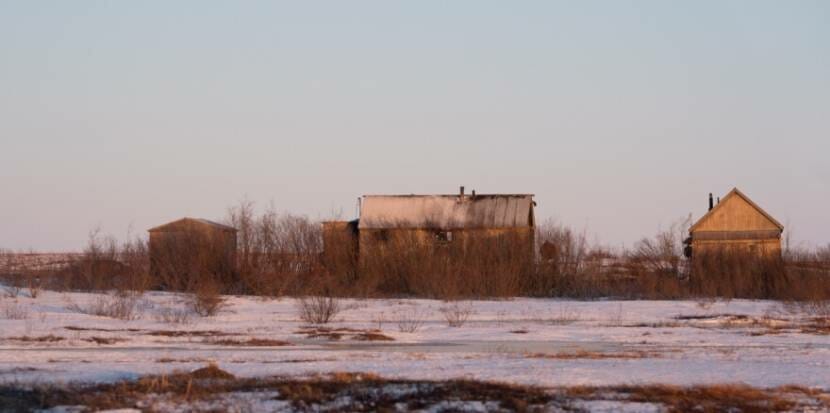
A burned-out home stands between two smaller structures on a snowy, tundra landscape
Earl Polk’s family home. (Photo by Gabby Salgado/KYUK)

On March 14 in Bethel, a fire burned a family’s house near H-Marker Lake. There were no fatalities and only minor injuries.

Earl Polk had just finished lighting his wood stove and stacked a load of wet wood close to the stove to dry. He was settling in for the night and getting ready to put his daughter to bed.

“I went to go to the bathroom, and was in there less than a minute, and I heard a weird noise,” said Polk. “Then I turned and looked, and my daughter was coming out [of the room].”

Polk said that he saw flames moving through the air, quickly spreading throughout his home.

“It moved so fast. To me it looked like it was alive,” Polk said about the fire. “I was totally awestruck. The thing looked to me like it was literally alive. It looked like it was almost trying to take us, but push us out.”

As the flames consumed his house, Polk and his daughter moved quickly. The extreme heat of the fire caused the light bulbs above their heads to explode.

“And one of them burned into the back of my head and melted into my hoodie,” he said.

He grabbed his daughter and started running toward the door, carrying her. The heat was so intense, he had to crouch down and crawl on the floor with her. He felt two hot blasts of air and heard propane bottles exploding around him. He was unable to gather any belongings as he rushed to vacate the house.

I would say in less than two minutes the whole place was engulfed,” Polk said.

Polk and his daughter escaped with few injuries. Polk suffered from burns on his hands and his daughter, who has Down Syndrome, had a minor burn on her head and some emotional trauma.

“I have to keep things at an even keel for her. This whole thing had her just really messed up there for a while. But she’s okay. She’s emotionally coming back to Earth,” said Polk.

Polk and his daughter were not dressed for the below-freezing weather outside. Polk said that he’s thankful to a man in a white Ford F-150 truck who let his daughter stay warm inside the man’s heated cab. Polk waited outside for emergency responders to arrive.

Polk is trying to find this man with the truck. Polk wants to personally thank him, and Polk believes that he lost the keys to his four-wheeler inside the truck. The four-wheeler is Polk’s only transportation, and is now one of his few possessions.

“Everything. We lost everything. They’re all gone. My clothes are all gone. My phones, everything. Literally everything was lost in the flames. So we’re in a rough spot right now. But, you know, but at the same time, very thankful that we got out,” Polk said.

Polk and his daughter are staying at his brother Warren’s house. Warren lost his home in a house fire nearly three years ago.

“And so this is our second family involved in fire,” said Polk. “And right now, I’m, you know, I’m trying to figure out what I got to do next.”

A new study gives many Alaska communities their first look at how fast erosion is approaching

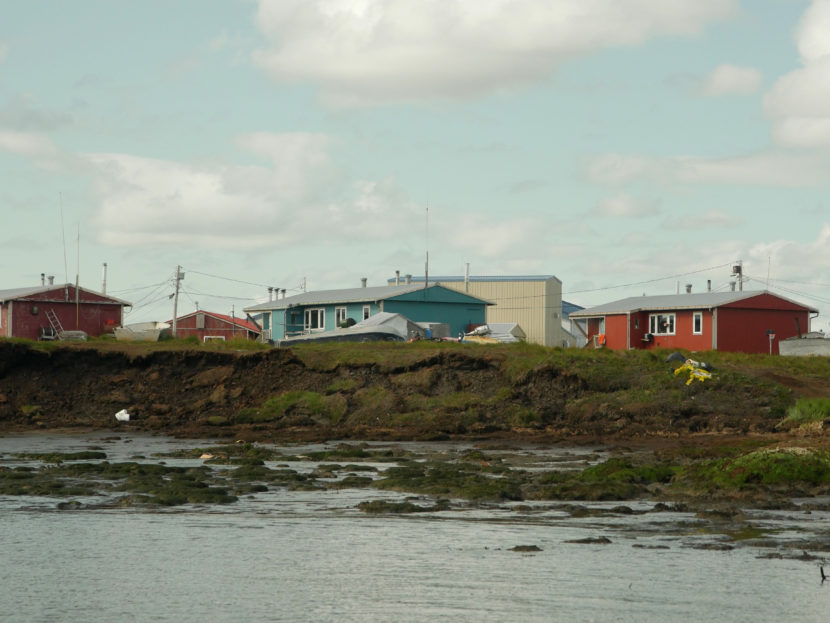
The village of Newtok in western Alaska, in August 2016. (Photo by Eric Keto/Alaska’s Energy Desk)

Erosion is threatening coastal communities around the state, but until now it hasn’t been clear to what extent. A study published in November 2021 by the state’s coastal hazards program forecasts how much land erosion could wipe away in 48 of Alaska’s coastal communities.

It’s the most comprehensive erosion assessment ever done in the state, and the results are both surprising communities and helping them receive funding to adapt.

On the lower Yukon River, Leo Mahaney leads the village of Nunam Iqua’s environmental department. Before Mahaney saw the state’s erosion forecast for Nunam Iqua, he said that he wasn’t that worried about erosion.

“I don’t think the community really looks at erosion being a big problem right now,” Mahaney said. “Because it’s barely noticeable.”

Mahaney said that the erosion was easy to ignore because Nunam Iqua does not have high, cut banks. In other communities that do, it’s noticeable when a chunk of the riverbank falls off into the water. In Nunam Iqua, it can seem like erosion is taking land more gradually.

But according to the state’s assessment, erosion is happening quickly in Nunam Iqua. The study predicts that in the next 40 years, 11 structures in the village will be threatened.

Looking at the state’s study, Mahaney was surprised to see how much land is projected to disappear.

“I had no idea that by 2039 to 2059 it would go that far,” Mahaney said. “Moving houses and all that water line infrastructure. I know it’s not going to be cheap.”

The study roughly estimates that replacing the threatened infrastructure in Nunam Iqua will cost over $4 million over the next 40 years.

Many communities in the Yukon-Kuskokwim Delta face much higher costs to adapt to the changing environment. Although Yukon-Kuskokwim Delta villages only make up a third of the communities included in this study, they made up 80% of the costs caused by erosion.

Mahaney said that he would share this study with community leaders, who he expects will start taking more action on erosion.

“I think it will start kicking off a long term plan,” Mahaney said.

For many communities, this is their first ever erosion forecast based on scientific data. Other reports that  looked at erosion in the past, like the Denali Commission’s 2019 statewide threat assessment, often relied on a community’s anecdotal record of erosion rates.

But anecdotal evidence of erosion can sometimes be insufficient proof when applying for grants.

“There have been plenty of issues with Alaska Native communities accessing agency resources to work on erosion issues because there was no scientific documentation,” said Jacquelyn Overbeck, manager of the state’s coastal hazards program, which conducted this study.

Several grants that help communities facing environmental threats, like the U.S. Department of Housing and Urban Development Imminent Threat Program and the Federal Emergency Management Agency’s Hazard Mitigation Assistance Program, require a third party to verify the threat exists. That’s what this new study helps to do.

The Denali Commission recognized this need for Alaskan communities to have a science-based erosion assessment and funded the state coastal hazards program’s study.

Jessica Lewis-Nicori is a tribal council member and a high school science teacher in Chefornak, another village in the Yukon-Kuskokwim Delta. She said that Chefornak used the state’s erosion assessment in a recent grant application to move five homes in the village that are in the most immediate danger due to erosion.

“It’s kind of like, ‘Oh look, the science does support our claim that these houses are falling and the river’s eroding,’” Lewis-Nicori said.

Chefornak received the funding and plans to move those homes by 2023.

One reason why this kind of comprehensive erosion assessment is only coming out now is that new technology just recently made it possible.

The erosion forecasts are created by measuring how much each community’s coastline has moved in the past to predict how much it will move in the future. That’s done by taking aerial images of each community, dating back from the 1950’s to present day. Those images are then mapped on top of each other and combined with data on where the community’s infrastructure is located.

Overbeck, one of the study’s authors, says that takes a lot of computing power.

“In the last five to 10 years has been the development of that technology to do it on a really large scale, which is what we needed for Alaska,” Overbeck said.

There is one key limitation of the state’s erosion assessment. It did not take climate change into account.

Scientists believe that climate change is accelerating erosion in many of Alaska’s coastal communities as sea ice protects shorelines for fewer months of the year. Studies predict that storms will also increase in frequency in Western Alaska.

However, Overbeck said that the state’s erosion study lacked the data to show how much that would affect erosion rates. There were not enough images of communities’ shorelines to calculate any change in erosion rates.

She said that means communities can likely expect more erosion than what these forecasts show.

Overbeck said that the state is involved in efforts to collect aerial images of communities more often, including high-resolution satellite images. That could help answer the question of how much climate change is accelerating erosion. Until then, this study is the best erosion estimate many communities have to help them plan for the future.

But for now, Overbeck said the state’s coastal hazards program is moving on from erosion to look at how much flooding Alaska’s coastal communities can expect to see in the future.

Coaches, officials and athletes denounce proposed ban on transgender students playing girls’ school sports

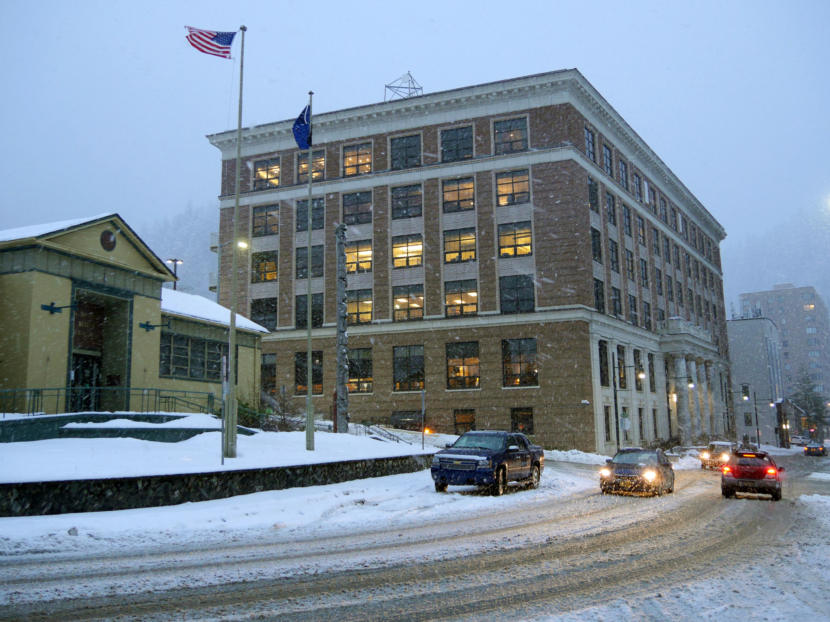
Snow falls on the Alaska State Capitol in Juneau on Feb. 18, 2019.
Snow falls on the Alaska State Capitol in Juneau on Feb. 18, 2019. (Photo by Skip Gray/360 North)

On Mar. 12, the state Senate Education Committee heard nearly 4 hours of public testimony on a bill that would prevent transgender girls from competing against cisgender girls in school sports. Those who showed up and called in to testify were overwhelmingly and vehemently opposed to the bill.

A transgender, or trans, person is a person who identifies with a gender other than the one they were assigned at birth. A cisgender, or cis, person does not.

This bill was written by Palmer Republican Sen. Shelley Hughes. 66 people called in or showed up in person to oppose it, while 23 called in to support it.

Opponents said the bill unfairly excludes trans girls from socializing with people of the gender they identify with. They said that can cause serious mental health outcomes for trans youth.

Jacob Bera is a cross-country running coach from Sen. Hughes’ district. He’s been a teacher and a coach for nearly 20 years.

“In the classroom and on the trails, I’ve worked hard to create an environment of inclusion. My coaching philosophy is: all abilities are welcome. Everybody races,” Bera said.

Bera says this bill will destroy that.

“I believe it will undo all those efforts. More importantly, it will further harm the mental health and well-being of those kids in schools,” Bera said.

Those who support the bill said cis girls could be prevented from winning scholarships to college. Like Alaska-born Kendall Kirby, a student at a college in Nebraska.

“If I had not had the opportunity to pursue and excel in my sport, specifically in my division as a female athlete, I would not have gained an athletic scholarship to college. Additionally, it would not have been financially feasible for me to attend college out of state,” Kirby said.

But that hasn’t happened in Alaska. As the executive director of the Alaska School Activities Association, Billy Strickland oversees high school sports in Alaska. He said a trans person has never taken away a scholarship from a cis female in Alaska. In fact, he said he only knows of one openly trans athlete in the high school sports history of the state.

Supporters and opponents of the bill also wrote the legislature via email to voice their opinions.

Some proponents of the bill also implied that they think it’s a sin to identify as trans.

“God created men and women differently. We will all one day be accountable to him and his court for our actions,” said Lisa Gentemann of Eagle River.

But Julie Smyth, who is Iñupiaq and from Fairbanks, said the bill goes against traditional Iñupiat culture.

“In my culture we choose our gender as we get older. Our names are genderless. This bill would impact people in my culture and people from around the state, as it is common in many cultures to be transgender,” Smyth said.

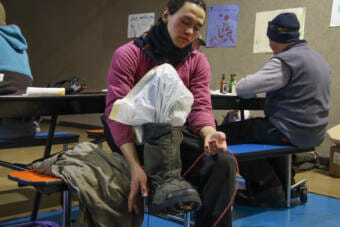
A woman in a purple outer layer ties a boot while sitting on a cafeteria bench
Apayauq Reitan ties her overboots after stuffing her feet in a garbage bag to protect them from overflow and other water. March 9, 2022 (Photo by Lex Treinen/Alaska Public Media)

Apayauq Reitan is Iñupiaq and Norwegian. She’s the first openly trans athlete competing in the Iditarod. As the senate education committee was listening to public testimony, Reitan was out on the trail, racing against the best mushers in the world, of multiple genders. She weighed in during her 24 hour rest in McGrath.

“Trans women are being excluded from an entire aspect of our society. On the chance that maybe some of them have some advantages. Which is very drastic. It seems like they’re just trying to ban us out of existence,” Reitan said.

The bill must pass the education committee before it hits the senate floor. With only Sen. Tom Begich openly stating his opposition, it seems likely to be moved out of committee.

Additional reporting help from Alaska Public Media’s Jeff Chen.

Site notifications
Update notification options
Subscribe to notifications