KYUK - Bethel

KYUK is our partner station in Bethel. KTOO collaborates with partners across the state to cover important news and to share stories with our audiences.

Kuskokwim mushers cope with extreme cold, rain and glare ice: ‘It’s been weird’

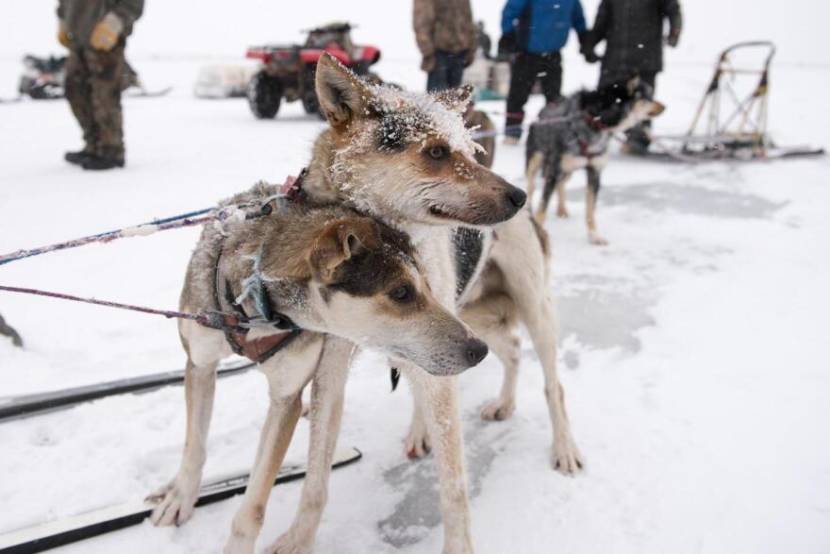
a pair of frost-covered sled dogs in harness
Kuskokwim mushers have been training in extreme weather conditions ahead of the 2022 K300 Sled Dog Race. (Photo by Katie Basile/KYUK)

Kuskokwim mushers have trained in all kinds of weather this past winter, starting with the coldest November on record in Bethel, rain in December 2021, and then glare ice in January 2022. Some Kuskokwim mushers competing in this weekend’s K300 race say that they’ve been contending with some of the most challenging training conditions of their careers.

Jason Pavila of Kwethluk is gearing up for his first K300, and he says he’s nervous. He’s been mushing for about 10 years, including winning the Bogus Creek 150 at the age of 15. But in all that time, he’s never trained in weather like this.

“It’s been weird,” Pavila said. “This is the first year I’ve actually trained dogs with a raincoat.”

In December 2021, an extended period of rain and warm weather melted the snow. During that time, Pavila trained his dogs using a four-wheeler, doing little 5-mile loops to Kwethluk’s airport.

“It was pretty boring going back and forth. Same things over and over,” Pavila said.

Pavila, an 18-year-old high school senior, is balancing schoolwork and playing basketball with training in difficult conditions.

Other Kuskokwim mushers, like five-time K300 Champion and former Iditarod Champion Pete Kaiser of Bethel, were completely sidelined in December due to weather.

“During that whole two weeks of just sitting around waiting, you’re just unsure how long it’s going to be before you get back on the runners,” Kaiser said.

“That two weeks was one of the harder two weeks in the middle of training that I’ve had to deal with,” said last year’s K300 Champion, Richie Diehl.

But Kaiser said that the break wasn’t too big of a setback for his team. In fact, he said that it could actually help.

“Definitely time off is not a bad thing, especially if it’s timed right. It can help, you know, refresh the team mentally, physically, all that stuff,” Kaiser said.

In 2019, bad weather in Bethel forced Kaiser’s team to take a 10-day training hiatus about a month before the Iditarod, which he ended up winning.

For some Y-K Delta mushers, the difficult training conditions caused them to withdraw from the K300. Four mushers dropped out of the race this month. Fr. Alexander Larson of Napakiak, who finished fourth in his first K300 last year, said that he was considering doing the same.

“I was planning to withdraw too, but I did one long run which made my dogs’ difference,” Larson said. “I think some of my dogs will do good. I think they learned a lot from last year.”

Last year, Larson and other Kuskokwim mushers were able to practice for the K300 by running the Bogus Creek two weeks before. The two races also shared the same route.

“Running the Bogus, it helped a lot. That’s what I was looking forward to this year, but didn’t happen,” Larson said.

The Bogus Creek 150, originally scheduled for earlier this month, was postponed until February due to weather conditions.

Other top K300 contenders from out of the region have been a bit luckier with the weather. Former Iditarod Champion Joar Leifseth Ulsom runs a kennel out of Willow. He said that the training conditions have been pretty good there this year. And even when it’s been bad, he’s been able to move his team around on the road system.

“That’s where we’re kind of lucky compared to the guys on the Kuskokwim. We can load them in the truck and drive 2[00] to 300 miles and find snow,” said Leifseth Ulsom.

This year, the K300 is back on the traditional race route, going from Bethel to Aniak and back. That’s a relief for 2019 K300 Champion Matt Failor, who got lost on last year’s course.

“I’m going to try to make sure I do not repeat that. I don’t want to get lost,” Failor said.

Diehl, last year’s K300 champion, is also happy for the race to return to its traditional course, which travels through his hometown.

“That’s one thing I missed last year was, definitely there was a part of me that was like, ‘Darn, I wish I would’ve got to take this winning team through Aniak.’ But I guess we’ll try this year,” Diehl said.

Diehl is looking to repeat his win, but he’ll have to beat a field of 15 other mushers who have each overcome their own set of challenges to compete in the 2022 Kuskokwim 300 Sled Dog Race. The race begins Friday, Jan. 28 at 6:30 p.m.
Tribal groups petition federal government to eliminate or limit Bering Sea salmon bycatch

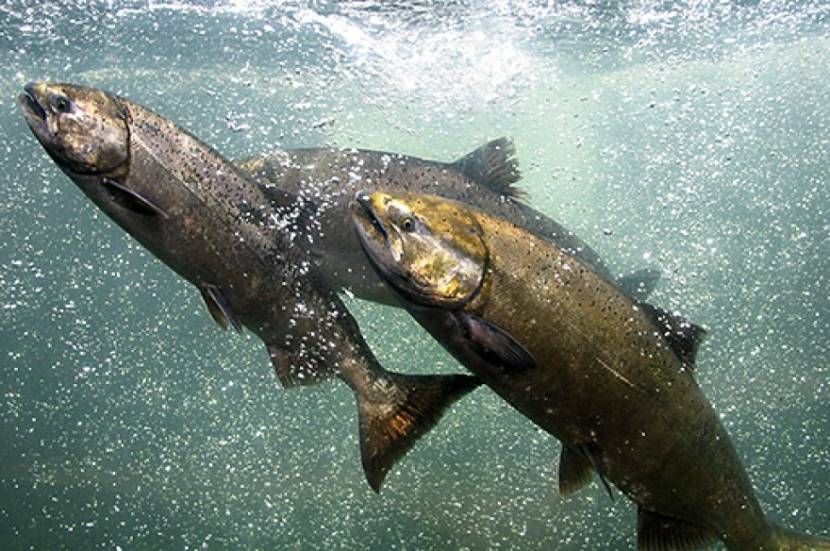
(U.S. Fish and Wildlife photo)

In their latest bid to halt or limit chinook and chum salmon bycatch in the Bering Sea, tribal organizations in Western Alaska have signed onto a petition calling on the federal government to take action.

The petition asks the U.S. Department of Commerce to eliminate chinook salmon bycatch in the Bering Sea completely and to put a cap on chum salmon bycatch. It does not specify an acceptable limit for chum bycatch.

The tribal groups signing the petition mostly represent areas of Alaska where salmon runs have crashed or declined dramatically in recent years. They include the Kuskokwim River Inter-tribal Fish Commission, the Yukon River Inter-Tribal Fish Commission, the Association of Village Council Presidents, Kawerak, Inc., the Bering Sea Elders Group and the Aleut Community of St. Paul Island.

“The recent crashes of Chinook. And now the chum on the Kuskokwim River is pretty evident that we need to take emergency action on this issue,” said Mike Williams Sr., chair of the Kuskokwim River Inter-Tribal Fish Commission. “I think we need to begin to take drastic measures.”

A spokesperson for the National Oceanic and Atmospheric Administration inside the U.S. Department of Commerce wrote in an email to KYUK that the agency does not comment on petitions. He did not answer whether the department was even aware of the petition.

The National Marine Fisheries Service estimates that more than 13,000 chinook salmon and more than 500,000 chum salmon were caught as bycatch in the Bering Sea in 2021. The groups petitioning the federal government to bring these numbers down say at least some portion of those fish would end up in Western Alaska rivers, where subsistence fishermen have not been able to meet their needs for quite some time now.

Subsistence fishermen and organizations from Western Alaska have intensified their pressure on both the state and federal government in the past year to reduce or eliminate salmon bycatch in the Bering Sea. This petition is the latest effort in that campaign.

Federal disasters declared for 14 Alaska fisheries

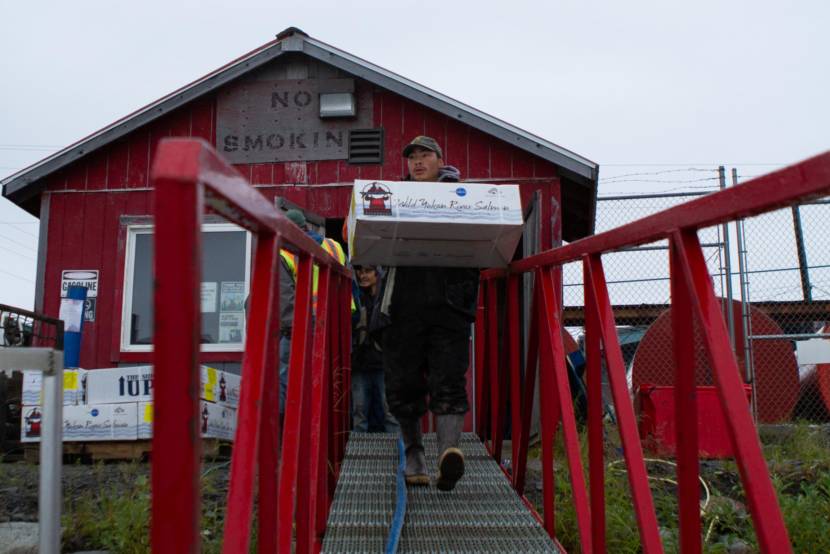
Daren Jennings loads up his skiff to deliver Bristol Bay salmon to Lower Yukon River communities. The Yukon salmon fisheries saw their lowest runs ever in the summer of 2021. Yukon River families were not allowed to fish for subsistence, and the commercial fishery remained closed. (Olivia Ebertz/KYUK)

Fourteen Alaska fisheries have been declared federal disasters by the U.S. Secretary of Commerce. Gina Raimondo issued the declarations last Friday, and the announcement could lead to federal funding for fishermen.

The disaster declarations include the 2020 Kuskokwim River salmon fishery and the 2020 and 2021 Yukon River salmon fisheries. These fisheries saw significant salmon declines both years, with the Yukon salmon fishery seeing its lowest runs ever in the summer of 2021. Yukon River families were not allowed to fish for subsistence, and the commercial fishery remained closed.

Executive director for the Yukon River Drainage Fisheries Association, Serena Fitka, helped lead a group of Yukon River tribal and fishing organizations to campaign for the Yukon disaster declarations.

“I give the credit to the Yukon River communities, everyone that pulled together to make their voices heard that we are in crisis mode right now,” Fitka said.

The groups issued a letter last fall that listed the impacts of the salmon collapse on residents, “which include cultural loss, food security, psychological impacts, and the overall wellness of the people along the river.”

With the disasters now declared, Congress could choose to allocate federal funding for assistance. It’s an action that both Alaska’s U.S. senators signaled that they are ready to push for in a statement celebrating Secretary Raimondo’s decision.

“Our great fisheries resources provide a pillar within Alaska’s economy and culture. Now that a fishery disaster has been declared, we can work to secure appropriations to fund these fishery disaster declarations,” Alaska Republican Sen. Dan Sullivan wrote in a statement.

On the Yukon River, Fitka is once again mobilizing the same groups that campaigned for the disaster declarations. This time they will campaign for federal funding.

“That’s really making sure that the fishermen get the assistance they need. Not only for commercial, but for subsistence users as well,” Fitka said.

On the Kuskokwim River, Mike Williams Sr. chairs the Kuskokwim River Inter-Tribal Fish Commission. He said that he hopes the disaster declarations will provide relief to Kuskokwim and Yukon River families. For years, these families have not met their subsistence needs through king salmon, and other species runs are also declining.

“I just hung two chums on my rack all summer, and our hearts go out to people on the Yukon, because they got zero,” Williams Sr. said.

He criticized how long it took the federal process to declare the fisheries as disasters. Some of the fisheries listed in other areas of Alaska are from as far back as 2018.

“Right now, the only thing I can say is better late than never,” Williams Sr. said.

He said that he hopes some federal funding will go toward researching why the salmon are declining.

Secretary Raimondo issued determinations that fisheries disasters occurred in:

  • 2018 Upper Cook Inlet east side set net
  • 2018 Copper River Chinook and sockeye salmon
  • 2019 Eastern Bering Sea Tanner crab
  • 2020 Prince William Sound salmon fisheries
  • 2020 Copper River Chinook, sockeye, and chum salmon fisheries
  • 2020 Eastern Bering Sea Tanner crab
  • 2020 Pacific cod in the Gulf of Alaska
  • 2020 Alaska Norton Sound salmon
  • 2020 Yukon River salmon
  • 2020 Chignik salmon
  • 2020 Kuskokwim River salmon
  • 2020 Southeast Alaska salmon fisheries
  • 2020 Upper Cook Inlet salmon fisheries
  • 2021 Yukon River salmon fishery

More tiny homes are coming to the Y-K Delta, thanks to pandemic relief funds. But are they a good idea?

Coastal Villages Region Fund constructing a tiny home in Eek in 2018. (Coastal Villages Region Fund photo)

A surge of new housing is coming to the Yukon-Kuskokwim Delta. Most of those new units are slated to be of the trendy, tiny home variety. But with households in the Yukon-Kuskokwim Delta generally much larger than the national average, some tribes are questioning whether tiny homes are a good fit for their communities.

The U.S. Department of Housing and Urban Development recently announced almost $7 million in funding for Aniak, Atmautluak, Napaimute, Newtok, Quinhagak, Toksook Bay, and Tununak to begin construction on 25 new homes this year. The funding stems from federal coronavirus relief funding, which has brought a huge influx of money into Alaska for tribes to build homes.

“An explosion is a good term for how much that has increased,” said Greg Stuckey, administrator for the Alaska Office of Native American Programs of HUD.

Because these grants are tied to coronavirus relief funding, tribes must use the homes as isolation or quarantine units, at least at first.

“And then, you know, later, when COVID is eventually over, that you can use those to lower overcrowding in your communities, because that is a major issue in rural Alaska,” Stuckey said.

About 40% of homes in the Y-K Delta are either overcrowded or severely overcrowded. According to a statewide housing assessment, over 2,400 homes need to be built to fix that.

Nearly all of the homes that will be built in the Y-K Delta using these HUD grants will be tiny homes. They will be smaller than 500 square feet, with the kitchen, bed, and living space all in the same room. There will be a separate bathroom, but no separate bedrooms.

Tiny homes have been all the rage in recent years, often billed as an answer to affordable housing. But are they a good fit for a region where households are, on average, 50-80% larger than the national average?

The Yukon-Kuskokwim Delta has experimented with tiny homes before. The non-profit organization, Coastal Villages Region Fund, built one in Eek in 2018. The organization says that it would not do it again.

“We found that people need more space than a tiny home with the number of people in the family,” said Oscar Evon, Regional Affairs Director at CVRF.

Evon said that there were other issues with tiny homes, such as how banks wouldn’t finance mortgages for them. CVRF had originally planned for homeowners to purchase tiny homes through mortgages, which would have opened another pathway to homeownership in Y-K Delta villages. Most are currently built and paid for by the regional housing authority or through grants. After pivoting away from tiny homes, CVRF now builds more traditional three- to four-bedroom homes, which Evon says banks finance mortgages for and fit families’ needs better.

“A bigger home gives a family more space to raise their families and sometimes even their extended families,” Evon said.

Some of the tribes that recently received a HUD grant to build tiny homes have come to the same conclusion. Toksook Bay was awarded $1,035,000 to build five tiny homes, but Tribal Administrator Robert Pitka Sr. said that Toksook Bay would rather build bigger homes.

“We would choose two-bedroom home instead of tiny home,” Pitka Sr. said.

However, Toksook Bay submitted a grant application and received funds to build tiny homes. Pitka Sr. said that he thought the grant was specifically for tiny homes.

“The ICDBG [Indian Community Development Block] grant already had wording in there where it’s for tiny homes,” Pitka Sr. said.

HUD’s ICDBG grant requirements suggest building tiny homes as one way to use grant funds, which may have been enough to convince tribes to include tiny homes in their grant application. Tununak, which also received a grant to build tiny homes, also said it would prefer to build homes with bedrooms.

Stuckey said that HUD does not require applicants to build tiny homes or any particular type of housing and did not favor applications that included tiny homes. For example, Newtok received the same grant award to build three three-bedroom homes.

“It’s self determination. The tribes decide, the tribes are going to tell me what they’re going to build,” Stuckey said.

If tribes like Toksook Bay decide that they would rather build larger homes, they will be able to do so. HUD spokesperson Vanessa Krueger said that tribes can submit an amendment to their grant application.

In Toksook Bay, Pitka Sr. said that the new homes, whether they’re tiny or not, will make a big difference to the families currently living in old, unsuitable homes.

“They’re moldy. They’re cold. They’re rotten. They don’t have water and sewer system. Some are even tinier than tiny homes. And at least a brand new tiny house would make it 100% better,” Pitka Sr. said.

Pitka Sr. said that those families could move into their new homes later this year.

More than 200 planes could have the same problem that caused the Yute Commuter Service fire, investigators say

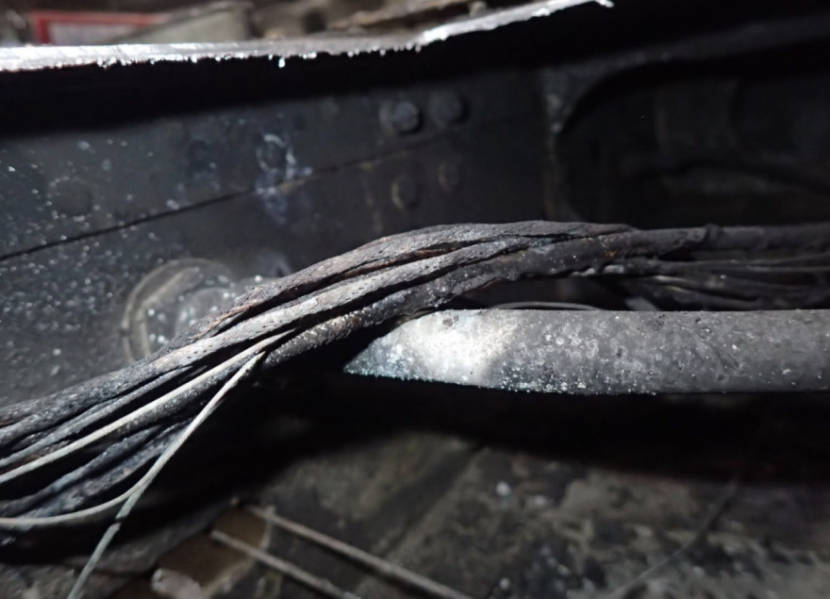
A bundle of wires passing over a fuel line
Electrical wiring that was touching a fuel line inside the Yute Commuter Service plane that caught fire on Nov. 20, 2021 was found to be the cause of the fire. (FAA photo)

An investigation into the Yute Commuter Service plane that caught fire on Nov. 20, 2021 has found that the fire was started by wiring in the aircraft that was installed incorrectly. The wiring was installed as part of a federally funded experimental safety program, and there could be over 200 other planes in the region that have the same problem.

The plane that caught fire was a Cessna 207. A week after the incident, two investigators from the National Transportation Safety Board and one from the airplane’s manufacturer arrived in Bethel to find out what started the fire. They started collecting the charred wreckage of the plane.

“We were able to harvest some parts that we suspect were the ignition source of the fire,” said NTSB Alaska chief Clint Johnson.

They sent those parts to Washington D.C. for forensic analysis, and what they found led them to suspect that the fire started with some wires that had been added to the plane around 20 years ago.

“Unfortunately, that wire bundle was routed over the top of an aluminum fuel line. And over the years, that finally chafed through. And we were able to determine that that was, in fact, the initiation point,” Johnson said.

These wires were not installed by the airplane manufacturer Cessna, nor were they installed by YCS. They were installed as part of the Capstone Project, a project sponsored by the Federal Aviation Administration in the late 90s to 2000s. The Capstone Project installed new, experimental surveillance systems in aircraft, and the Y-K Delta was its first testing ground. The Capstone Project had identified the region as one that was highly dependent on air travel, with difficult flying conditions that the experimental surveillance equipment could help with.

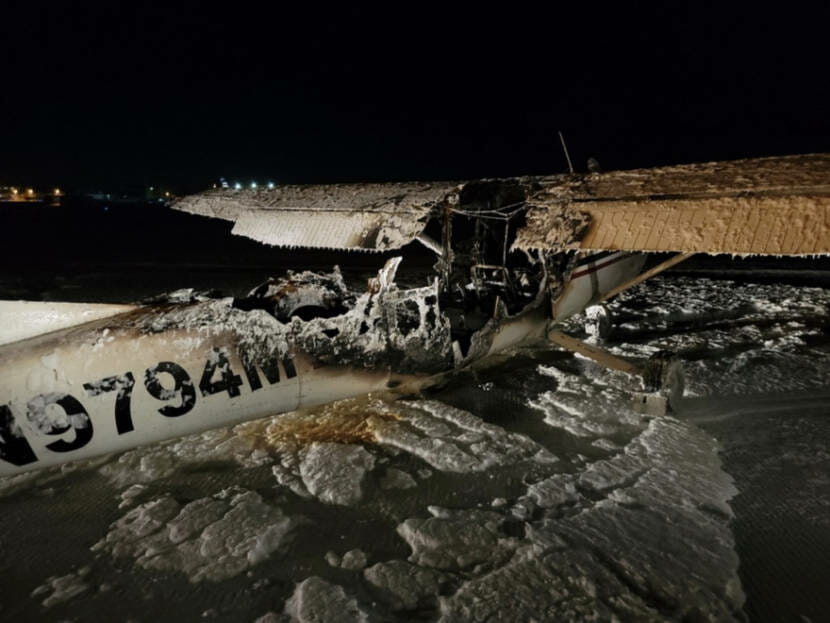
A night photo of an airplane with burnt-out fuselage
The Yute Commuter Service Cessna 207 that caught fire on Nov. 20, 2021. (NTSB photo)

The FAA states that over 200 airplanes in the Y-K Delta were part of the Capstone Project and could be affected by faulty wire installation. In December 2021, the agency sent a letter to all the airlines that it believes could own these planes. In that letter, the FAA tells aircraft owners to inspect the wiring underneath the planes’ floorboards to see if the wiring touches the fuel line. It suggests to complete this inspection “at the next maintenance function, 100 hour, or annual.”

Asked why the FAA is not treating these potential flight hazards with more urgency, a spokesperson for the administration wrote in an email that catching the issue within 100 hours would be a pretty quick turnaround. He said that the administration is working to identify all the owners and operators of planes that were part of the Capstone Project that could be affected.

YCS, owner of the plane that caught fire, said that the airline has already taken all the steps necessary to keep its passengers safe.

“Once we were made aware of what it was, we inspected every one of our aircraft, and we grounded them until we did, and we completed inspection. And the ones that were affected by it, we took corrective action and then returned the aircraft to service,” said Terry Cratty, YCS Director of Operations.

Cratty said that YCS operates 12 aircraft, nine of which are Cessna 207s. He said that five of those had the same faulty wiring installation that caused the fire in November 2021, and he said that all of those are now fixed.

Before commuter flight’s emergency landing, boots melted and the cabin filled with smoke

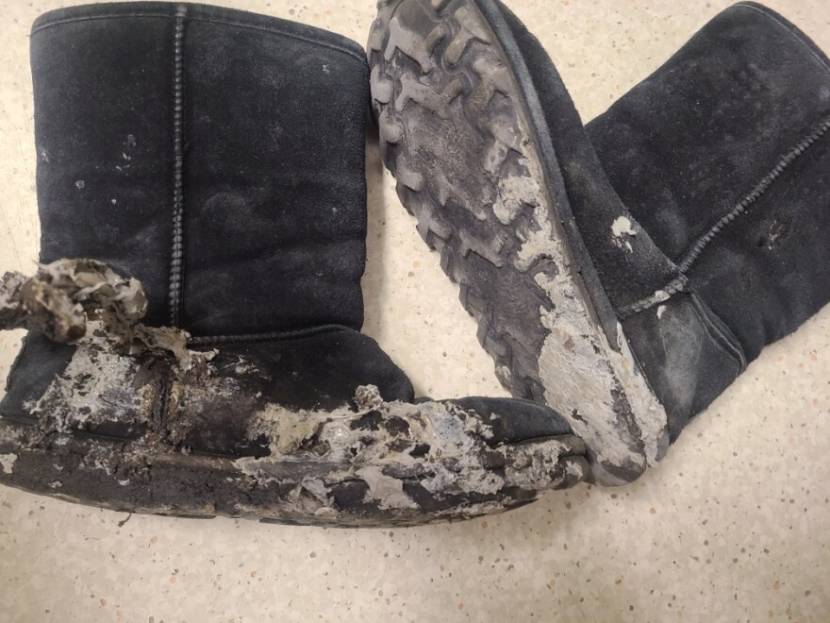
A pair of black winter boots with partially melted soles
Lubova “Lulu” Fisher’s shoes that partially melted when the Yute Commuter Service plane that she was on caught fire on Nov. 20, 2021. (Photo courtesy of Lubova Fisher)

In November 2021, flames engulfed and destroyed a Yute Commuter Service airplane. The pilot and five passengers escaped unharmed. Lubova “Lulu” Fisher was one of those passengers, and she reflected on her near-death experience.

Fisher, an aide at the school in Kwethluk, was returning home from a hospital appointment. Traveling with her were her 14-year-old granddaughter and 3-year-old grandson.

She said that they, along with two other women from Kwethluk, boarded the YCS plane around 5:30 p.m. on Nov. 20. The sun was setting. A few minutes into the flight, they were flying over Church Slough near Bethel when she said that the plane’s emergency locator transmitter started going off.

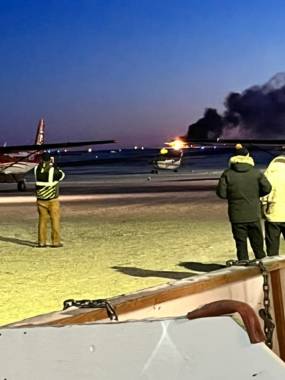
The Yute Commuter Service Cessna 207 burned on the runway after landing in Bethel on Nov. 20, 2021. (Photo courtesy of Leslie Hunter III)

“The red light went on, so the pilot turned around. When he turned around, the inside filled up with smoke. So he opened a window and he let my granddaughter open the other window,” Fisher said. “The pilot handed my granddaughter the fire extinguisher, and she didn’t know what to do with it.”

It was around then that Fisher noticed her right foot becoming extremely hot. She looked down and saw the soles of her boots melting. Still, she says that she didn’t panic.

“We’re just being calm, all of us in the plane. We were all calm even though we all love to scream and holler,” Fisher said. “I don’t know what I was thinking. Just God was with us and we felt his presence.”

She said that she believes that the passengers remaining calm and not panicking allowed the pilot to focus on the task of keeping everyone alive.

A few minutes later, the plane was back in Bethel on the runway. She said that it was then that she and another passenger started yelling at the pilot.

“‘Get us out! Get us out!’ And he opened the door and we all jumped out. Just when we go for about 10 feet away from the plane, the plane engulfed in flames,” Fisher said.

A fire truck arrived to put out the fire. Fisher and the other passengers walked off the tarmac in shock into the YCS terminal, where workers gave them blankets and warm water. Fisher thought about what would have happened if the plane had turned around a little later.

“We would have probably be engulfed in flames and probably we would have perished,” Fisher said. “Like they always say, it wasn’t our time. So we survived.”

YCS employees took Fisher, her grandkids and the other two passengers to the hospital in Bethel, where they were told that they had inhaled a mild amount of carbon monoxide from the smoke. YCS housed the passengers in Bethel and took them to Kwethluk the next day.

A night photo of an airplane with burnt-out fuselage
The Yute Commuter Service Cessna 207 that caught fire on Nov. 20, 2021. (NTSB photo)

Fisher had valuables in her luggage, including her iPod and jewelry that went up in flames. She said that YCS never reached out to her about replacing them, but she’s not too worried about it.

“Stuff are replaceable. Lives are not replaceable,” Fisher said.

YCS has said that passengers can call, and the company will reimburse them for everything they’ve lost.

Fisher said that the trauma of her near-death experience is still with her to this day.

“It happened during sunset. So make us not want to look at the sunset for a while,” Fisher said.

But she’s slowly moving on. She got on a plane again this past week, albeit a little reluctantly.

An investigation into the fire has found it was started by wiring in the aircraft that was installed incorrectly.

Site notifications
Update notification options
Subscribe to notifications