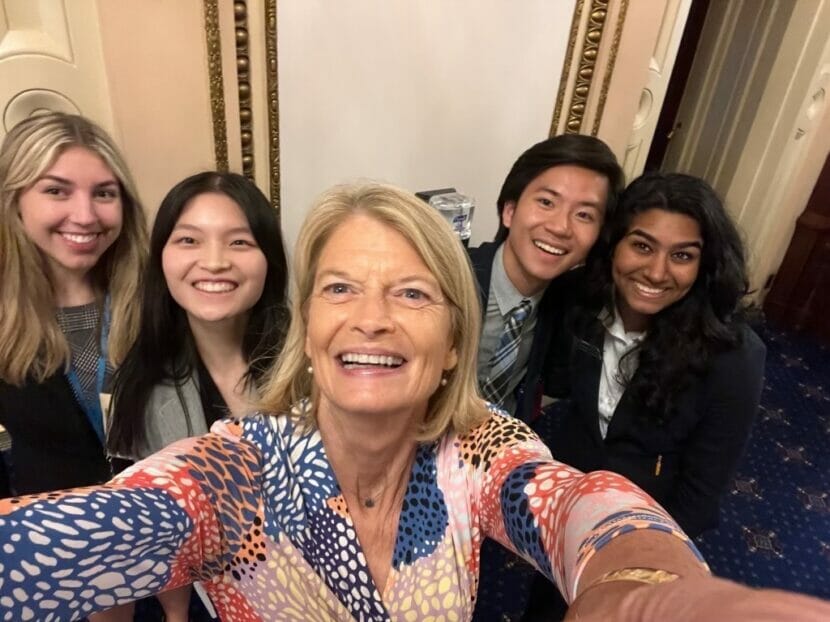
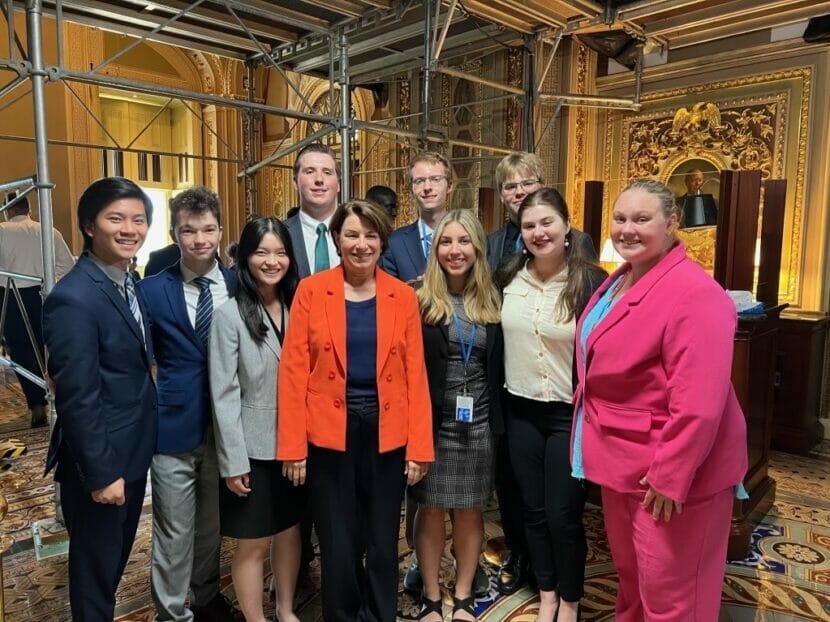
Alaska Senator Murkowski’s summer interns took photos with all 100 senators. (Office of Senator Murkowski)
What’s the difference between Bigfoot and elected representatives intent on avoiding the press?
One can be nearly impossible to find … the other is Bigfoot.
That is why we at NPR had to be impressed with what a group of eight interns in Alaska Senator Lisa Murkowski’s office have accomplished. In just three short weeks, these interns doggedly tracked down all 100 senators, and took a selfie with them.
We wanted to hear more about what those interns learned about the senators over the course of their adventure.
NPR’s Scott Detrow interviewed two of the interns, Lillian Yang and Claire Moreland. Here’s how they described some of the senators:
The most fun senator
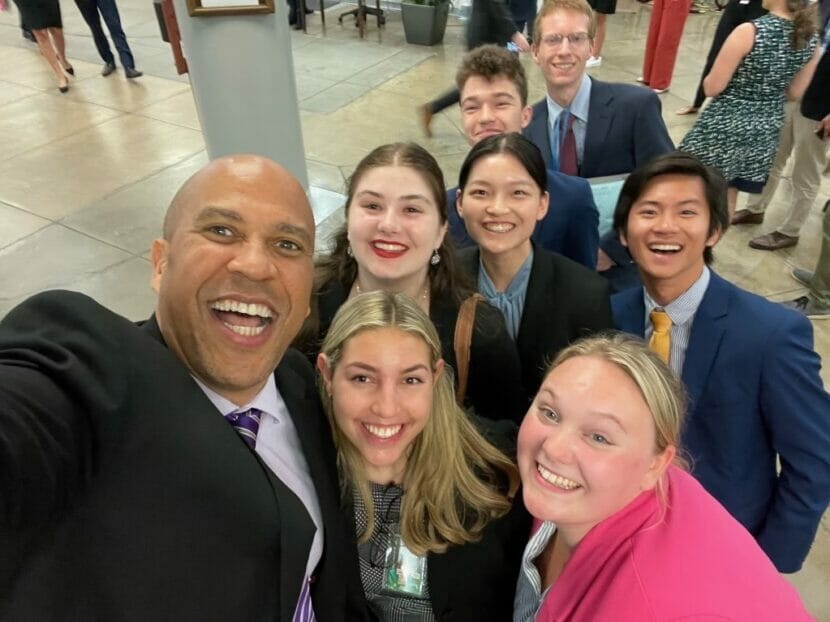
Now that’s how you take a group selfie. (Office of Senator Murkowski)
Yang and Moreland told NPR the most fun senator was New Jersey Senator Cory Booker, who has a reputation for his warm and personable demeanor.
“Senator Booker was just sincerely delightful,” Moreland said. “And he was so kind and respectful and genuine.”
He is also the ideal selfie candidate: Not only does he have a big smile, he also stands at 6’3″, giving him the needed wingspan to snap a selfie with everyone in it.
The most elusive senator
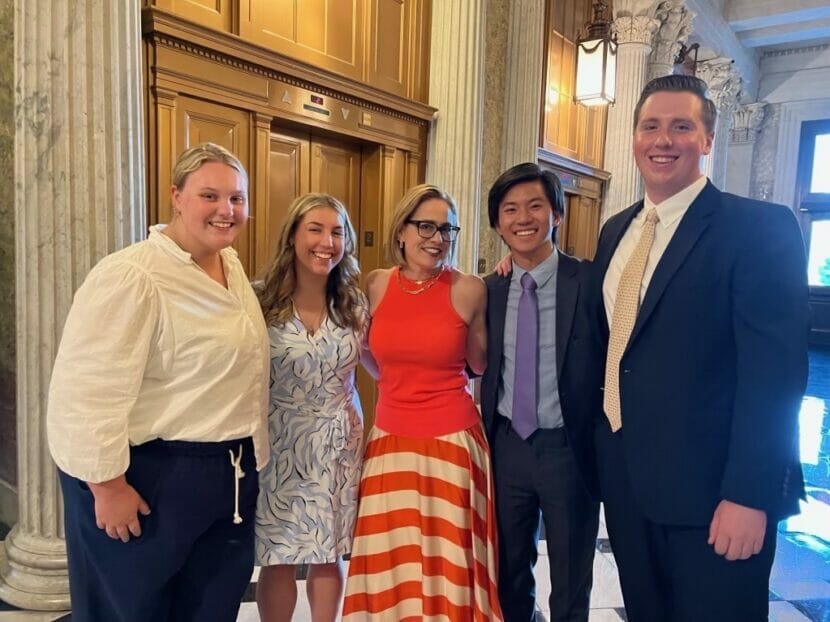
Senator Sinema is known to take her fitness seriously and is an avid marathon runner. (Office of Senator Murkowski)
Although she was not the last senator to be found, Arizona Senator Kyrsten Sinema was the hardest to track down, Moreland told us.
This should not be surprising. Senator Sinema is a known fitness enthusiast and, as legend has it, she can run a mile under 7 minutes.
Nevertheless, the independent senator from Arizona was not quick enough to escape the camera shutters of the Murkowski interns.
The dreamiest senator
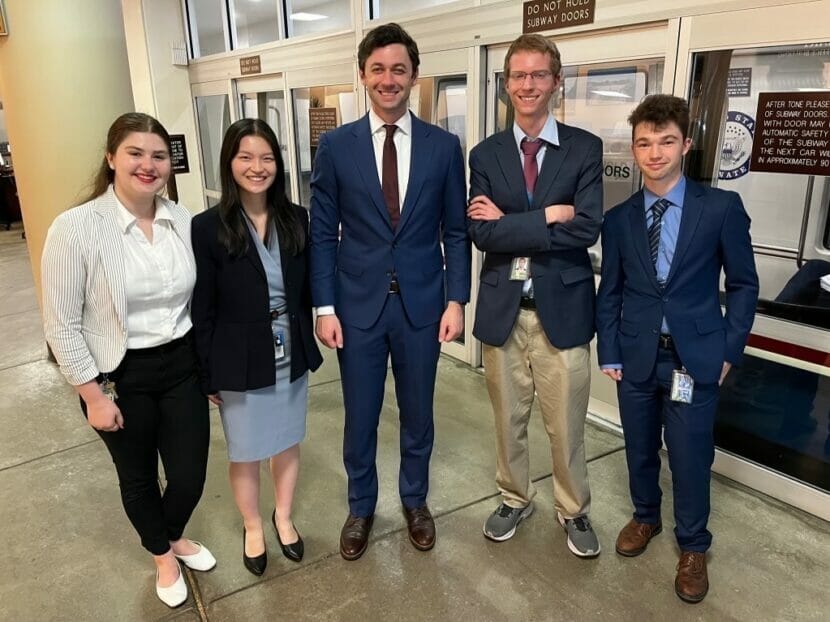
At just 36 years old, Jon Ossoff is the youngest senator in Congress. (Office of Senator Murkowski)
The interns said senator Booker was the most fun to snap a selfie with, but with a little prodding from Moreland and Detrow, Yang confessed to having another favorite.
MORELAND: Lillian, I think you had another favorite senator, didn’t you?
YANG: I had a personal favorite.
DETROW: Well, who was the personal favorite? You’re teasing it. You got to let us know.
YANG: Personal favorite was Senator Ossoff.
Yang did not detail exactly why Georgia Senator Jon Ossoff was her favorite; however, she is not alone in her affinity for him.
Senator Ossoff boasts a healthy following of smitten internet fans — a community that even crosses borders and includes an Instagram fan account.
While Senator Sinema might have been the hardest to pin down, Minnesota Senator Amy Klobuchar took the longest to track down, Moreland and Yang said.
“We actually were waiting outside the Senate floor for hours,” Yang said.
Murkowski’s previous cohort of interns were the first take up the senator selfies challenge, but only managed to get 75 of them. (Office of Senator Murkowski)
The Murkowski interns finally managed to nab their 100th senator selfie with some assistance from their colleagues in Klobuchar’s office.
“Eventually, [Klobuchar’s] interns heard about it because we were blowing up on Twitter and her interns helped us get Senator Klobuchar off the floor to take a picture of us.”
Now that’s true bipartisanship.
Copyright 2023 NPR. To see more, visit https://www.npr.org.
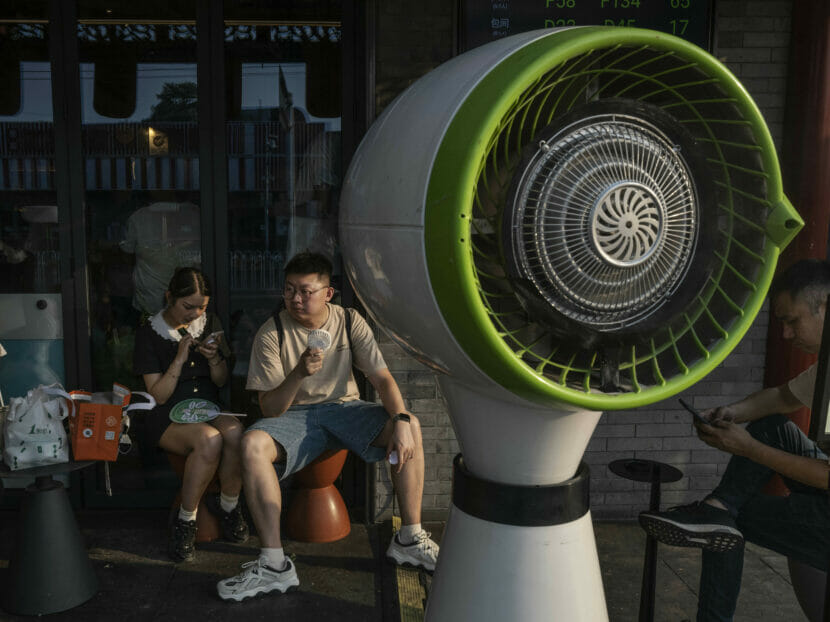
It was scorching hot across much of the planet this summer. Asia, Africa, and South America had their hottest July’s ever. Temperatures in Beijing and other parts of northern China hovered around 100 degrees Fahrenheit for weeks, with some cities topping 120 F on the worst days. (Kevin Frayer/Getty Images)
And it wasn’t even close: the month was a whopping 0.4 °F warmer than the previous record set in 2019, and well over 2.1 °F hotter than the 20th century average.
“Most records are set in terms of global temperature by a few hundredths of a degree,” says Russell Vose, a climate expert at NOAA’s National Centers for Environmental Information. But this one, nearly half a degree Fahrenheit, was “bigger than any other jump we’ve seen.”
That was not what Vose expected to see. “I am rarely surprised, that’s what my friends tell me. And I was surprised by this number.”
The intensity of July’s heat is certainly exceptional, says Sarah Kapnick, chief scientist and climate expert at NOAA who worked on the report. It’s also part of a long, clear pattern of planetary warming going back decades, driven primarily by humans burning fossil fuels. It’s only likely to get hotter. “The next few years will be the coolest of my life if the world continues to emit greenhouse gasses,” Kapnick says.
July’s record-breaking temperatures were not subtle. Intense heat waves gripped many regions of the world. In the U.S, Arizona, New Mexico, and Florida posted their hottest months ever since NOAA started taking records in 1880. Northwestern China experienced some of the hottest temperatures ever, topping 122°F. Unseasonably hot weather also settled in across the Southern Hemisphere; even in the depths of winter, temperatures exceeded 100°F in some parts of Chile and Argentina.
The oceans ran an equally high fever. Off the coast of Florida, temperatures at the sea surfacetopped 100°F. Alarmed scientists rushed to protect or move coral nurseries to deeper, cooler water. Some parts of the North Atlantic Ocean hovered 7 to 10°F above the long-term average. The central Atlantic, the birthing ground for hurricanes, also experienced off-the-charts heat, raising the risk of more intense storms this season.
“Oceans also are key factors for regulation of climate by soaking up heat,” says Rajiv Chowdhury, a global health and climate expert at Florida International University, but “these useful impacts on land temperature become far less impactful when the oceans heat.”
Many scientists were alarmed not only by the intensity of the heat but also how long it lasted. “That’s what kills, the duration of heat,” not just the heat itself, says Pope Moseley, an intensive care physician and heat expert at Arizona State University. When heat persists—especially if nights stay exceptionally warm as they did in many heat-stricken zones last month—people’s bodies don’t get a chance to cool down.
Phoenix strung together 31 days of daytime temperatures that exceeded 110° F. The heat index, which takes both air temperature and the dangerous effects of humidity into account, topped 100° F for 46 days in Miami.
This year is shaping up to be one of the hottest years—and possibly the hottest ever—in recorded history. Next year could be even worse, says Gavin Schmidt, a climate scientist at NASA. An El Nino event, which raises planetary temperatures, is intensifying right now. “Not only is 2023 going to be an exceptionally warm and possibly a record year, but we anticipate that 2024 will be warmer still,” he says.
Any one super-hot month, or even year, solidifies a clear pattern: a steady upward march of global temperatures over decades. The last nine years have been the hottest ever seen. Each of the last five decades has been hotter than the one before.
“A year like this gives us a glimpse at how rising temperatures and heavier rains can impact society and stress critical resources,” says Kapnick. “These years will be cool by comparison by the middle of the century if we continue to warm our planet as greenhouse emissions continue.”
There are glimmers of progress. Global demand for fossil fuels could be nearing its peak, according to a 2022 analysis from the International Energy Agency, while countries from the U.S. to China are adding renewable energy sources, like solar and wind, at an unprecedented clip.
Copyright 2023 NPR. To see more, visit https://www.npr.org.
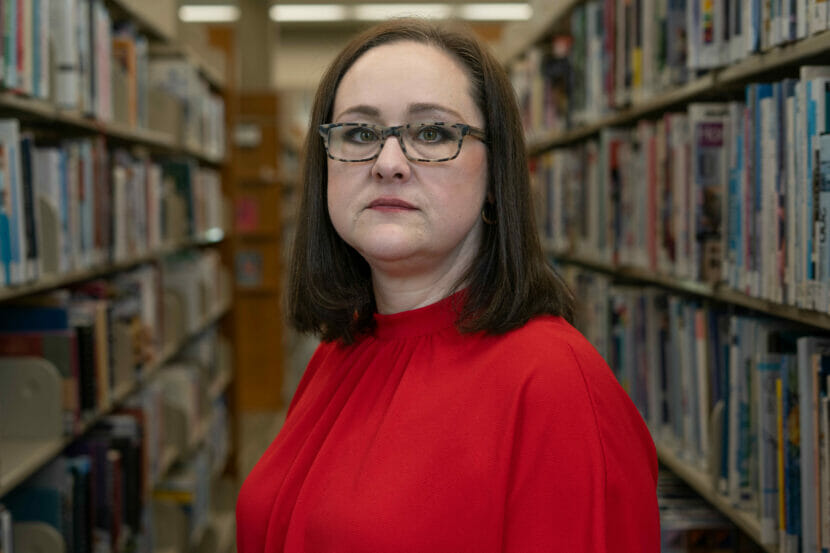
School librarian Amanda Jones endured harassment and threats after speaking out in defense of a diverse selection of books in the public libraries of Livingston Parish, La. (Abdul Aziz for NPR)
Be advised that this story contains references to sex acts involving children, and suicide.
LIVINGSTON PARISH, La. — It’s been a year since the start of what one librarian here calls “The Troubles.” That’s when once-boring meetings of the Livingston Parish Library Board of Control started devolving into bitter brawls over books that some consider to be too sexual and harmful to kids. Meetings have been laced with insults, interruptions and the kind of profanity that would probably get you kicked out of the library.
At the most recent meeting in July, it wasn’t quite as heated as the 100° temperatures outside, but tempers flared over plans to immediately remove challenged books under review from library shelves — even if that takes months, or more.
Board member Larry Davis likened it to removing a teacher accused of sexual harassment until an investigation is complete. Others shot back that it was hardly the same thing, and vehemently objected to a policy they say would effectively empower one person to ban a book from the entire community. “Just leave it on the shelf,” shouted one.
Tensions spilled over after the meeting when one board member confronted a conservative activist and implored him to stop insinuating online that she was a groomer.
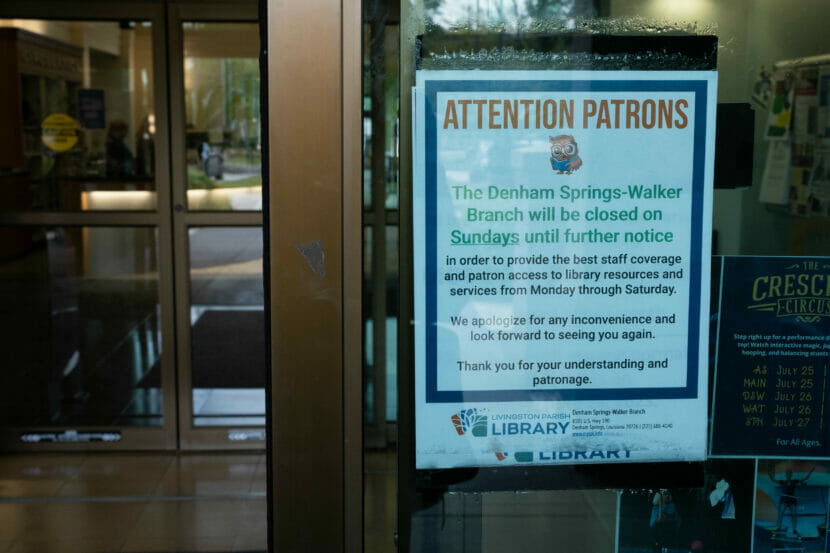
A sign on a door at the Denham Springs-Walker Branch library in Livingston Parish announces the elimination of Sunday hours due to staff shortages. (Abdul Aziz for NPR)
“Look, just stop posting about me on Facebook,” she demanded.
The activist snapped back that he never actually used the word “groomer,” but made clear that he sees her as fair game.
“You’re now a public person,” he said. “So I’m going to talk about what I’m going to talk about.”
Once-beloved librarians now vilified
It’s something of a “new normal” here — as it is around the nation. No longer are just books under fire, but also the library administrators, teachers and long-beloved librarians who are defending them. They’re being shouted down by parents, vilified on billboards, reported to the police, and trolled online, leaving many fearing for their safety.
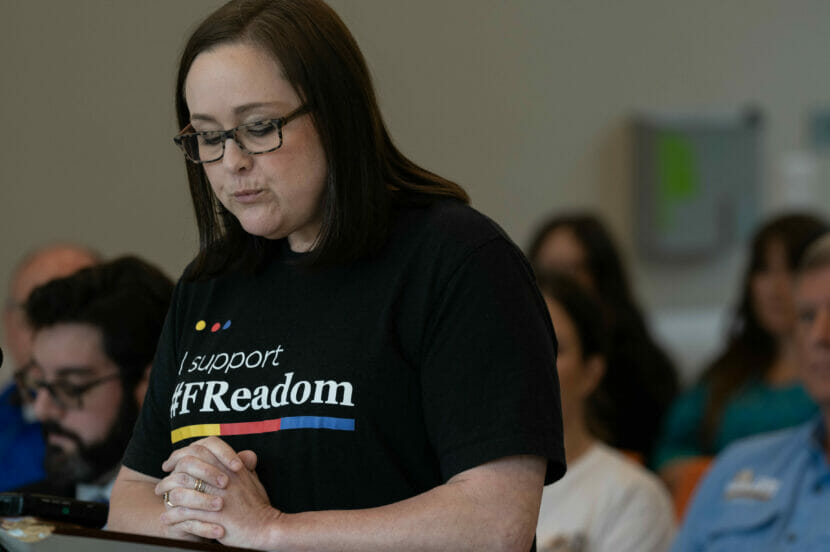
“I had an actual death threat,” says Livingston Parish school librarian Amanda Jones, her voice breaking as she recalls one particular post: “We know where you work + live….u have a LARGE target on ur back. Click… Click… See you soon.”
Jones says it started after she spoke out at a library board meeting against censorship and “book policing.” Without mentioning any specific book, Jones said that challenges “often done with the best intentions,” tend to target the Black and LGBTQ communities. Removing or relocating those books, she said, would be “extremely harmful to our most vulnerable — our children.”
“Just because you don’t want to read it or see it and does not give you the right to deny [it to] others,” she said that night.
Librarian Amanda Jones speaks out at a Livingston Parish Library Board of Control meeting on July 18, 2023, against a policy that would automatically remove challenged books from library shelves until a review is completed, even if that takes months or more. Jones said that would effectively be a book ban. (Abdul Aziz for NPR)
Then, she says, her comments were twisted online. She was accused of “advocating teaching anal sex to 11-year-olds,” and pushing “sexually erotic and pornographic materials,” to children “as young as six.” That prompted a barrage of insults and threats as relentless as they were vicious.
“We’re going to put ur fat evil commie PEDO azz in the dirt very soon b****” read one. Another pictured Jones with a red and while circle around her face.
She was terrified.
“I was hyperventilating,” Jones says through tears. I didn’t leave my room for days, and I cried so much that my eyes swelled shut. It was a mess, a real mess.”
Jones started having panic attacks, she lost 50 pounds and chunks of hair, and ended up on a medical leave for six months. She was so scared, she started carrying a gun.
Amid all the skirmishes over individual book titles and challenge policies, it’s easy to miss the toll it’s taking on librarians, kids, and the country. Jones’s case may be more extreme than most, but countless other librarians around the nation who are also feeling the heat are also quitting in droves, leaving libraries short-staffed. It’s all driving up the human, civic, and financial costs embroiled in the battle over books.
“It’s scary,” sighs one librarian in Livingston Parish. “This is the first time I have not felt entirely safe in my job.” She asked that her name not be used because, she says, she’d be fired “in a heartbeat.”
Librarians are making the hard choice to quit
In her decades of library work, she says, she’s never seen this kind of exodus, from low level workers all the way up to the library system’s director and assistant director, who both abruptly resigned within weeks of each other this spring.
“It was like rats escaping from a sinking ship,” says the librarian. “We have lost some excellent people.”
Livingston Parish library director Michelle Parrish says library staffing is currently down nearly 30 percent, and it’s been as challenging to attract candidates as it is to retain staff. Adding to the pressure, Louisiana’s attorney general has set up a tip-line for complaints about librarians or staff, and libraries are dealing with a strict new state law that restricts all minors’ access to library material that depicts or describes sexual conduct.
“When you’re in this environment, and you have a choice to go a place where [this level of rancor] hasn’t reached there, then why wouldn’t you do that? I would, if it were me,” she says.
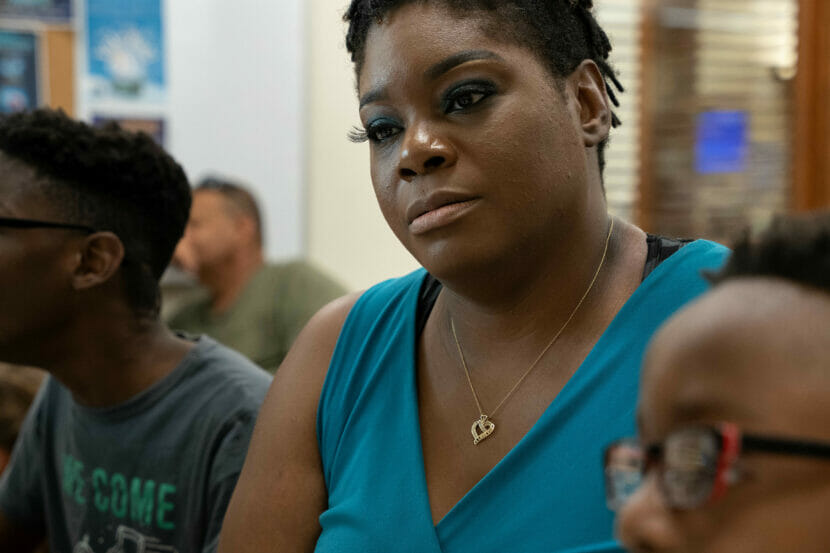
To get out of the heat, Milissia Cole, treated her two sons to an hour of video games at the Denham Springs-Walker Branch Library in Denham Springs, La. “The park was not an option,” she says. (Abdul Aziz for NPR)
Many who have fled for friendlier turf — or quit the field altogether — have done so at great personal cost, uprooting their families, for example, or forgoing benefits.
That was the case for one librarian in Texas who asked not to be identified, for fear of provoking exactly the kind of backlash she was trying to escape. She had always hoped to work until she was eligible for her maximum retirement package, but opted instead to leave significant money on the table, because, she says, she just couldn’t take it anymore.
“It was a dark cloud over me all the time,” she sighs. “To feel like an enemy, a groomer, and all these things, it just made me feel sick all the time.”
Giving up her job, and letting go of what she considered her calling, however, caused her a whole other level of pain.
“It’s making me tear up,” she says wiping her eyes, “because I just felt terrible grief. Tremendous grief. I did feel like that was my purpose as in my whole life and I didn’t want to stop.”
Another librarian, Latasha McKinney, also had a hard time leaving her school in Oklahoma that she found hostile to LGBTQ-themed and race-related books.
“I always thought that I would be the type of person who would stay and fight,” she says. “I wouldn’t be the type to run.”
But McKinney says staying just felt like too big of a compromise. She says her grandfather was kicked out of a public library in the fifties because he was Black. That was a big reason why she wanted to become a librarian in the first place. She says she wanted to help bolster “representation, and access. And now we’re going to remove some of that access to books and they’re saying they want [me] to be part of that. So I was like ‘no, I’m definitely not going to be the one to participate in this.'”
“Something has shifted, where you have a lot of people who are [saying] ‘OK, this is it. This is where I get off,'” says Sonia Alcántara-Antoine, President of the Public Library Association, (a division of the American Library Association.) “It’s extremely concerning. It has a ripple effect on communities.”
Library staffing has long been on a decline, and while the pandemic exacerbated the problem, the harsh climate librarians are now facing is another big blow. Hard data is hard to come by, but a 2022 national survey by the Public Library Association shows 73% of public libraries now cite staffing as the top reason for limiting services. That’s nearly double the second most common reason, which is funding.
“Libraries offer much more than books on the shelf,” says Alcántara-Antoine, “and when you attack libraries, you’re ultimately jeopardizing everything libraries do in service to and in support of their communities.”
This spring, Livingston Parish announced the closure of the last branch in the library system that was open Sundays. “We are down quite a few man hours,” Parrish explained at the time, “and we are also down man hours in all of our other branches also, so moving people from branch to branch is not an option.”
Short-staffing means cuts in library hours and services
Meagan Simmons and her family were among those surprised and disappointed this summer. The library is important to them, as one of the few places to take kids that are both free and air-conditioned, she says. Simmons and her 3-and-a-half-year-old daughter set out for a much-hyped trip to the library on a Sunday, so Dad could join too.
They all piled in the car, excited to get a book they’d been waiting for, Simmons recalls. “We made it all the way here, and I was like ‘Oh my gosh, the library is not even open on a Sunday anymore!’ So we had to turn around. I had a very upset child.”
A young girl checks out her selection of books at the Livingston Parish Library Main Branch in Livingston, La. She’s among those disappointed that all libraries in the parish are now closed on Sundays. (Abdul Aziz for NPR)
On one recent weekday, Simmons’s daughter spins around the children’s section, filling a cart with books. As usual, the Dedham-Walker Springs branch is bustling. In the back corner, a social worker is filing reports from home visits he’s just completed. Nearby, a young man who works the night shift at a fast food place is here for the Wi-Fi, he says, since he won’t have his back until his next paycheck.
In the children’s section, a homeschooling mom goes over the ABCs with her younger kids as her teenager takes a course down the hall on Microsoft Word. Another mom seeking an escape from the blistering heat, is treating her two boys to an hour of video games on library computers. At a help desk, a guy is asking a librarian for a book on Sacajawea for his wife. Another — who’s on first-name basis with most the librarians — is here to do genealogical research, and another man who was just laid off is filing for unemployment and looking for a new job at one of dozens of stations in the computer center.
Trying to keep up, the staff work extra hours and in a number of cases do multiple jobs. But patrons looking for help these days in any of the branches are likely to wait longer for it, says the librarian who asked not to be named. “One person cannot help ten people at one time,” she says. “You can’t make copies for this one, you can’t help this one format their Word document, you can’t get this one on Google all at the same time! It just doesn’t happen that way.”
She puts on her hushed librarian voice to reenact what she says has become her constant refrain. “I’ll be with you in a minute. I’ll be with you in a minute. I’ll be with you in a minute.”
The “Kids World” section of the Livingston Parish Library Main Branch, is dedicated to children’s literature and learning. (Abdul Aziz for NPR)
It’s a similar story in Broward County, Florida. It’s a liberal-leaning community that supports a diverse collection of books, but Library director Allison Grubbs says because it’s in Florida — a hot spot for book restrictions — few will even apply. That became abundantly clear at a recruiting table the library set up at a library convention this summer.
“Every single conversation, to a T, was tied around politics, the attacks on us and fear,” says Grubbs. “People are just staying away.”
As a result, Grubbs says she, too, is making cuts.
“We had to close an entire computer center because we just don’t have the staff,” she says. “And in terms of events and programming, computer classes, finance, literacy, health education — there’s so many we’re just not able to produce, and that is a tragic disservice to our communities.”
The financial and emotional toll
The ongoing brawl over books is also costing many libraries in real dollars, as they spend countless staff hours responding to book challenges that often come by the dozens — or hundreds — at a time. Lisa Varga, Executive Director of the Virginia Library Association, puts the price at millions of dollars.
“You’re talking about the admin who receives the request, you’re talking about the FOIA officer who has to answer anything, the school board attorney, the superintendent, the principals, and all the library media specialists who then have to be flagged,” Varga says. “This has a real cost. This is an abuse of the system and a waste of our time and money.”
Those challenging the books see that as the price of protecting children from harmful material.
But to others, the greater harm comes from removing books, which risks making marginalized kids feel more isolated or depressed.
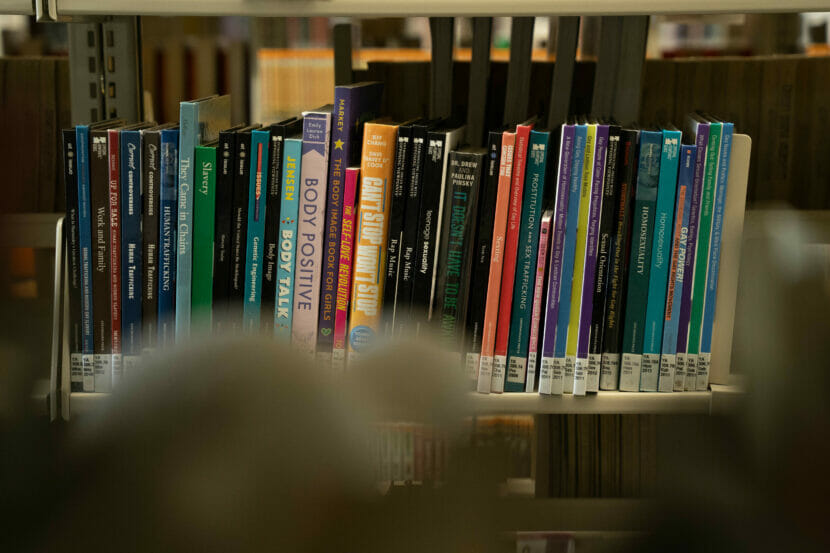
A collection of books, addressing sex and sexuality, sit in the young adult section of the Denham Springs-Walker Branch in Livingston Parish. (Abdul Aziz for NPR)
“It really felt kind of personal, and it really saddens me,” says Thomasina Brown, a high school senior in Nixa, Missouri, where an outspoken librarian who had pushed back against book challenges was abruptly transferred to a different job this spring.
Brown, who identifies as queer, says it was crushing to lose such a staunch advocate for LGBTQ-themed books, including one her favorites about a girl discovering her sexual identity.
“She very well could have been me,” says Brown. “And so when they called it inappropriate for children, it kind of felt like I was inappropriate as well.”
It’s one of the reasons Amanda Jones says she decided to return to her librarian job in Livingston Parish this school year. In the twenty-plus years she’s worked in the school, she says about a dozen former students of hers who identified as LGBTQ have died by suicide.
“I just think I have a responsibility to speak out,” she says, amid tears. “Your silence is compliance. So when they want me to be quiet, I always say ‘I’m going to roar. I’m not going to stop.'”
At the same time, Jones worries the ever-escalating vitriol swirling around books could lead to violence. Especially when she was caught up in the maelstrom, Jones says she was horrified to think what all the hate rhetoric might incite. “I was scared that someone mentally unstable was going to come up to the school to get me, and in the process, harm a child,” she says.
On yet another level, some say what’s ultimately at stake in the battle over books is nothing less than democracy itself.
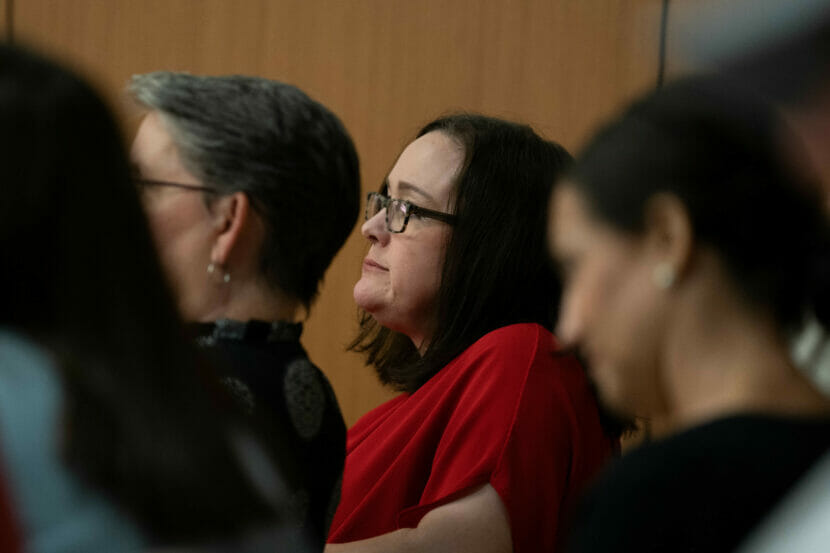
Despite being harassed and threatened, librarian Amanda Jones — seen here attending a Livingston Parish Council meeting on July 17, 2023 — says she will not cave to the pressure. After a long medical leave, she returns to her school librarian job this month. (Abdul Aziz for NPR)
“You know, Russia bans books. That’s not what America stands for,” says Carolyn Foote, a retired-librarian-turned-activist, who founded the Texas based FReadom Fighters in 2021. Foote says she worries about the slippery slope.
“When we start tinkering around the edges of the First Amendment, first maybe it’s books that have mature content, and then it’s a book about race, and then it’s a book about Billie Jean King because a parent didn’t like that she was gay, and then, it’s ‘Well I don’t like the way that book talks about the police.’ You know, it just completely ignores the fact that we’re a democracy with a first amendment.”
“We can’t have civil debates”
Polls suggest a majority of Americans oppose book restrictions, and want to protect intellectual freedom, as opposed to the smaller, but strident faction of conservatives who say they want protect kids from inappropriate content. They maintain they’re not trying to ban books, they just want to move certain ones out of the children’s and teen’s sections, to ensure parental control over what kids are reading , and to make sure libraries are not “promoting explicit content” to minors.
“That’s what’s wrong with the world right now; it’s indoctrination,” says Livingston Parish resident Benny Reinninger. “Somebody’s trying to push an agenda, and [kids] don’t need things causing confusion in [their] confused little minds.”
Still, Reinninger says he also believes that all the furor over cultural issues like book bans, is starting to pose an existential threat to the country.
“We are a nation divided, so [we] can’t have civil debates,” he says. “And we’re going to destroy ourselves.”
Civil discourse has certainly taken a hit in Livingston Parish, not only on the library board but also on the Parish council, where debate over library books has sunk into the morass of political stunts, personal attacks and even a physical run-in.
Livingston Parish Council member Garry Talbert says library books need to be age appropriate, and aligned with community standards. (Abdul Aziz for NPR)
Council member Garry Talbert has been at the center of some of the antics. In retrospect, he tells NPR, there are some instances he may not have “handled the best way.” He acknowledges all the rancor and demonization of the other side is taking a toll.
“We politicize crap that doesn’t need to be politicized. It’s like all one way or all another and there is no happy medium,” he says. “And so if we all listened, then I think we would realize people don’t eat their kids for supper.”
But in the next breath, Talbert steps right back in it.
“I’m digging myself a hole, but I can’t shut up either,” he says as he explains how he believes certain LGBTQ people are trying to “shock” the community, and are the ones instigating the divisions themselves.
“I really don’t think I’m that judgmental,” he says. “But there are times that I’ve been in New Orleans and the Decadence Parade was coming down the street, and I thought that s**t is just ridiculous. Some of the s**t they were wearing is not acceptable to be outside in any way. Community standards need to rule.”
Livingston Parish residents will have their say on whether they think library books are violating community standards, when library funding comes up for a vote this fall.
“Let’s see what the community really thinks about this,” says conservative activist Michael Lunsford who founded the group, Citizens For A New Louisiana.
“The most effective way to take care of issues is with purse strings,” Lunsford says. “You know, if you’re not seeing the light, it’s time to feel the heat.”
A meeting of the Livingston Parish Library Board of Control opens with the Pledge of Allegiance on July 18, 2023, at the Denham Springs-Walker Branch in Denham Springs, La. (Abdul Aziz for NPR)
Lunsford spent years raising the heat in nearby Lafayette Parish, leading a stealthy but steady campaign that replaced members of the library board who, from his perspective, were not quite on board. He’s now using the same playbook in Livingston Parish — and he’s vowing to expand his campaign to the entire state.
State approval was recently granted to expand the library board from seven to nine members, prompting fears that the Parish Council will pack the board with those who support stricter restrictions. Lunsford says he’s already identifying candidates who are “good conservatives who think the library’s moving in the wrong direction,” and he’s also keeping a close eye on how current library board members are voting. If that makes current members fearful, Lunsford says, that’s the point.
“Livingston Parish needs a reset,” he says.
As for librarians feeling the heat, Lunsford shrugs.
“I’ve gotten my fair share of death threats,” he says “That’s just kind of how it goes.”
Besides, Lunsford says, librarians really shouldn’t complain, because they started it.
“I just would like to remind you, shots were fired by the other side,” he says. “These books are new. They haven’t been there for 30 years. We haven’t had this book on how to perform sex acts on someone else. That’s just nasty stuff. And all of a sudden it’s become a problem, and you know, we say ‘This far, no further!'”
It may be the quintessential cost of polarization, that it begets even more polarization. The point is not lost on librarians who are quitting or relocating because of the current discord: all the self-sorting may leave the nation even more deeply divided into separate camps. And as one librarian put it, “it also leaves the fox guarding the henhouse.”
Copyright 2023 NPR. To see more, visit https://www.npr.org.
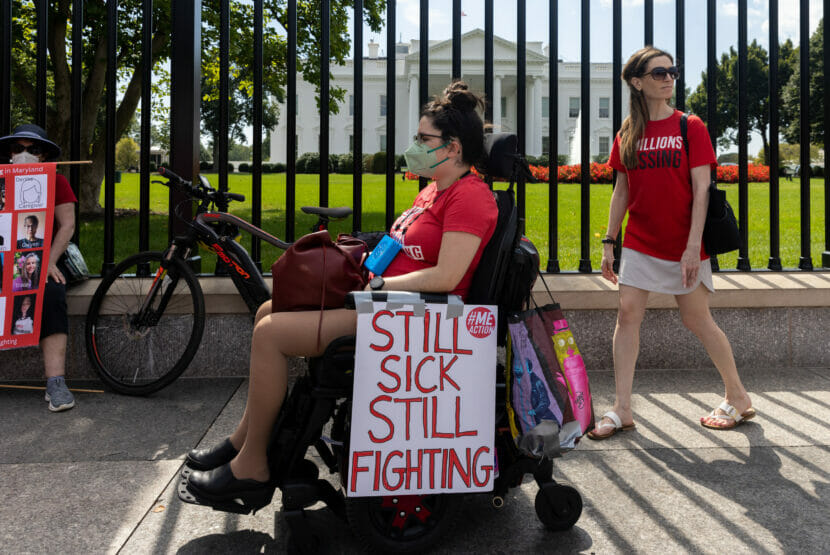
Protesters march outside the White House to call attention to those who have long COVID. (Nathan Posner/Anadolu Agency via Getty Images)
Stéphanie Longet is an immunologist and a COVID researcher at the University of Saint-Etienne in France, and just like 10-20% of adults who were infected with the virus, she continues to have symptoms well after her infection has resolved – a condition known colloquially as long COVID.
“I got COVID one year ago and I developed some persistent symptoms,” she says. “I cannot work too long. My legs are quickly exhausted. In the morning it feels like I had run a marathon during the night, and I didn’t do anything, I just slept.”
Longet and other scientists don’t exactly know why some people develop long COVID while others don’t, but preliminary research released in medRxiv in July suggests that genetics plays a role.
The new research, which was an international collaboration between dozens of scientists, describes how some people carry a version of a single gene, FOXP4, that is associated with developing long COVID. Longet calls the new research an “important element” in understanding why some people’s COVID symptoms seemingly never resolve.
A surprising finding about long COVID
Long COVID only affects a small percentage of people who are infected with SARS-CoV-2, but the scope of the pandemic means that many millions of people are suffering. Roughly 25 million people in the U.S. and over 17 million people in Europe have long COVID symptoms, with many more in other parts of the world.
There isn’t a universally agreed upon definition for what is considered long COVID – people experience a range of different symptoms including “fatigue, muscle pain, intestinal disorders and brain fog” and for different periods of time according to Longet, who was not involved in the new research. That’s made the disease difficult for scientists to fully understand.
But the new research adds to the growing body of work showing that genetics can influence COVID outcomes. It was only a few weeks ago when NPR reported that genetics might make some people resistant to developing any COVID symptoms at all.
Jill Hollenbach, an immunologist at the University of California, San Francisco, was one of the scientists who led the research on asymptomatic COVID. She says she was “surprised and excited” about the new long COVID findings.
“The fact that the authors were able to detect this association [between the FOXP4 gene and long COVID], I think, is spectacular,” Hollenbach says.
Hollenbach also thinks that the new research on long COVID is refreshing because “there’s a lot of frustration on the public’s part around progress” of understanding the disease and how to treat it. “There can be a perception out there amongst some people who are involved in advocacy for long COVID that it’s being dismissed [by the scientific community] and I don’t think that’s true.”
The gene that may be connected
The new study looked at DNA from 6,450 people who developed long COVID and compared it to the DNA of those who did not. Not everyone who reported long COVID symptoms in the study had a clinical diagnosis so the research team used a broad definition of long COVID as self-reported symptoms of COVID that affect day-to-day life three months after the initial infection.
When that data was analyzed, only one connection between a person’s genes and whether they developed long COVID stood out – the FOXP4 gene.
The FOXP4 gene is what biologists call a “transcription factor,” meaning that it helps regulate processes throughout the body but isn’t responsible for any one thing in particular. The new research shows that the gene is active in the lungs and mentions that other studies have found an association between FOXP4 and lung cancer.
However, the research does not point to FOXP4 as a smoking gun. “If you have the variant of FOXP4, in theory, you could have a higher probability to develop long COVID,” Longet says. “But it doesn’t mean if you have the variant that you will have long COVID.”
But Hollenbach is also quick to point out that the genetic effect of the FOXP4 gene is relatively small – though that’s not entirely surprising. “It’s uncommon to see extremely strong genetic effects,” she says. “What we find in studies like this gives us insights into what the underlying pathophysiology is.”
The new research hints at “some underlying immune dysregulation in the lung itself,” Hollenbach says, suggesting an abnormal immune response to COVID might be causing the long-term harm. “We need to just continue to follow these breadcrumbs and see where they lead us.”
That might partially explain why so many people with long COVID are having lung problems, but for other common long COVID symptoms, like brain fog and fatigue, the activity of FOXP4 doesn’t provide much of a clue, meaning there’s more work to be done in order to understand all facets of the disease.
Why your genes may not fully dictate your COVID destiny
The latest research shows that there are clear connections between a person’s genetics and how they respond to COVID. So does this mean that every individual’s COVID fate was set in stone from the day they were born?
Hollenbach doesn’t think so. “I don’t believe that we are unnecessarily subjected to some kind of pre-destiny according to our genes,” she says. “There’s going to be many genetic and non-genetic factors that are going to be in play here.”
One thing that Hollenbach says the scientific community agrees upon, and that this new research reinforces, is that, “you’re more likely to have long COVID If you’ve had a very severe bout of COVID.”
Which is why, according to Hollenbach, “vaccination is still our greatest tool” in the fight against COVID because it can prevent or reduce the severity of a COVID infection, reducing the chance someone develops long COVID.
In the meantime, however, there doesn’t seem to be any imminent relief for those who are already dealing with the effects of long COVID. Longet suggests that people, “find different ways to organize your life. It’s what I’ve done a little bit.”
Despite the lack of immediate help, Longet still believes that scientists will soon figure out a way to help resolve her symptoms and the symptoms of others with long COVID. “I’m hopeful because now there are quite a lot of studies and a lot of researchers who are working on this,” she says. “I believe in science, so I’m quite hopeful.”
Copyright 2023 NPR. To see more, visit https://www.npr.org.
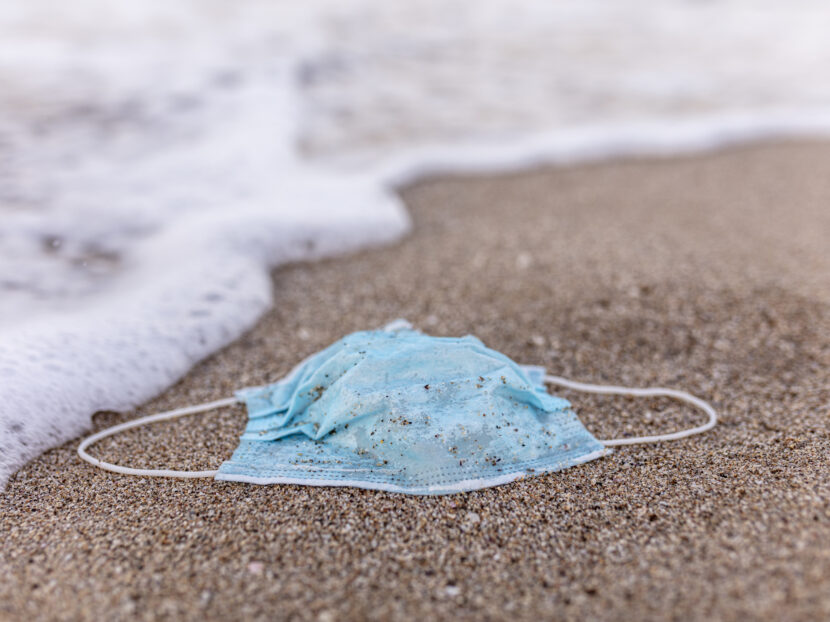
Hospitalizations for COVID-19 are ticking up. But even if illnesses keep rising, it appears unlikely that they will hit previous summer peaks. (EMS-Forster-Productions/Getty Images)
Yet another summer COVID-19 wave may have started in the U.S., according to the Centers for Disease Control and Prevention.
“After roughly six, seven months of steady declines, things are starting to tick back up again,” Dr. Brendan Jackson, the CDC’s COVID-19 incident manager, tells NPR.
The amount of coronavirus being detected in wastewater, the percentage of people testing positive for the virus and the number of people seeking care for COVID-19 at emergency rooms all started increasing in early July, Jackson says.
“We’ve seen the early indicators go up for the past several weeks, and just this week for the first time in a long time we’ve seen hospitalizations tick up as well,” Jackson says. “This could be the start of a late summer wave.”
Hospitalizations jumped 10% to 7,109 for the week ending July 15, from 6,444 the previous week, according to the latest CDC data.
The increases vary around the country, with the virus appearing to be spreading the most in the southeast and the least in the Midwest, Jackson says.
Rise in cases looks like a jump at the end of ski slope
But overall, the numbers remain very low — far lower than in the last three summers.
“If you sort of imagine the decline in cases looking like a ski slope — going down, down, down for the last six months — we’re just starting to see a little bit of an almost like a little ski jump at the bottom,” Jackson says.
Most of the hospitalizations are among older people. And deaths from COVID-19 are still falling — in fact, deaths have fallen to the lowest they’ve been since the CDC started tracking them, Jackson says. That could change in the coming weeks if hospitalizations keep increasing, but that’s not an inevitability, Jackson says.
So the CDC has no plans to change recommendations for what most people should do, like encourage widescale masking again.
“For most people, these early signs don’t need to mean much,” he says.
Others agree.
“It’s like when meteorologists are watching a storm forming offshore and they’re not sure if it will pick up steam yet or if it will even turn towards the mainland, but they see the conditions are there and are watching closely,” says Caitlin Rivers, an epidemiologist at the Johns Hopkins Bloomberg School of Public Health.
Immunity from vaccinations and previous infections helps
Even if infections, emergency room visits and hospitalizations continue to rise to produce another wave, most experts don’t expect a surge that would be anywhere as severe as those in previous summers, largely because of the immunity people have from previous infections and vaccinations.
Some are skeptical the country will see a summer wave of any significance.
“Right now I don’t see anything in the United States that supports that we’re going to see a big surge of cases over the summer,” says Michael Osterholm, who runs the Center for Infectious Disease Research and Policy at the University of Minnesota.
Right now the CDC says people should continue to make individual decisions about whether to mask up while doing things like traveling or going to crowded places.
Older people remain at higher risk
People at high risk for COVID-19 complications, such as older people and those with certain health problems, should keep protecting themselves. That means making sure they’re up to date on their vaccines, testing if they think they are sick and getting treated fast if they become infected, doctors say.
“It’s always a changing situation. People are becoming newly susceptible every day. People are aging into riskier age brackets. New people are being born,” says Jennifer Nuzzo, who runs the Pandemic Center at the Brown University School of Public Health. “The work of protecting people from this virus will continue for as long as this virus continues to circulate on this planet, and I don’t foresee it going away for the foreseeable future.”
Scientists and doctors think there will be another COVID-19 wave this fall and winter that could be significant. As a result, the Food and Drug Administration is expected to approve a new vaccine in September to bolster waning immunity and to try to blunt whatever happens this winter.
Some projections suggest COVID-19 could be worse than a really bad flu season this year and next, which would mean tens of thousands of people would die from COVID-19 annually.
“It will still be in the top 10 causes of death, and I suspect that COVID will remain in the top 10 or 15 causes of death in the United States,” says Justin Lessler, an epidemiologist at the University of North Carolina at Chapel Hill, who helps run the COVID-19 Scenario Modeling Hub.
Copyright 2023 NPR. To see more, visit https://www.npr.org.
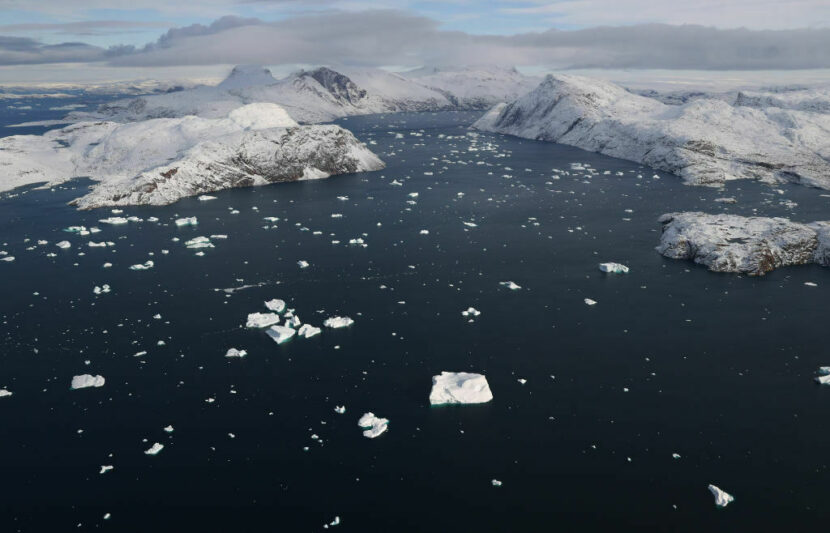
As the planet heats up, Greenland’s ice sheet is pouring more meltwater into the Atlantic. Scientists are tracking whether this could cause a collapse in a crucial ocean current. (Mario Tama/Getty Images)
Deep in the Atlantic Ocean, there’s a massive current the size of 8,000 Mississippi Rivers. Its role in the Earth’s climate is so powerful that it determines weather from the equator to Europe, crop production in Africa and sea level rise on the East Coast.
Scientists say there’s a risk this vital current could shut down as the climate gets hotter, a collapse that could have dire consequences worldwide.
Researchers have been trying to determine when the Atlantic might cross that tipping point. But answering that is no easy task.
Now, a new study finds the collapse of the current, which is known as the Atlantic meridional overturning circulation, or AMOC, could happen far sooner than scientists have previously thought, possibly within a few decades, as a result of human-caused global warming.
“It’s a worrisome result,” says Peter Ditlevsen, professor of climate physics at the University of Copenhagen in Denmark and an author of the study. “It calls for quite immediate actions. We need to reduce emissions. We need more brakes on the train.”
Other researchers caution that the timeline of such a collapse — or even whether the AMOC will collapse at all — remains unclear, given the sheer complexity of understanding an ocean system that stretches thousands of miles. Previous assessments have suggested a collapse is unlikely this century.
The new study adds to a growing body of research suggesting crucial tipping points in the climate system are incredibly hard to predict, and that humans are changing the fundamental processes of the Earth faster than we can understand them. Given the potential for catastrophic impacts, scientists say further research to understand the AMOC is more urgent than ever.
“The AMOC is a bedrock of our climate system,” says Nicholas Foukal, an assistant scientist at the Woods Hole Oceanographic Institution who was not involved in the study. “It redistributes heat globally and it’s something that we just take for granted.”
A conveyor belt for heat
When it comes to weather, Europe has a lot to thank the AMOC for. Cities like London and Paris are warmer than their counterparts at similar latitudes in North America.
“In Scandinavia, we have a sort of pleasant, mild climate,” Ditlevsen says. “And if you compare that with the U.S., we are at the latitude of Alaska, which is much colder than Scandinavia.”
Milder winters in Europe are largely thanks to an influx of heat from the AMOC. The current carries vast amounts of warm water from the equator, which travels north up the East Coast of the U.S. before crossing to Europe. That’s where the water cools off, releasing heat into the atmosphere.
The cold, salty water is denser and heavier, causing it to sink near Greenland. Like a massive ocean conveyor belt, the current then returns in the direction it came from, flowing south along the ocean floor.
Scientists know this conveyor belt has collapsed in the past. Around 12,000 years ago, temperatures around Greenland suddenly dropped by about 18 degrees Fahrenheit. That shift is attributed to a sudden shutdown of the AMOC — and demonstrates the potential impact of such a climate tipping point.
“A tipping point is a strong result to a small change,” Ditlevsen says. “It’s when you’re pushed over the cliff. When you reach the cliff, you drop.”
Looking for the tipping point
To determine how close that tipping point might be, Ditlevsen analyzed ocean temperature records near Greenland over the past 150 years and ran a statistical analysis to track the fluctuations in temperature. He and his co-author found increasing variability in temperatures, which they say is a sign the AMOC is weakening. Based on their analysis, they estimate the AMOC could collapse between 2025 and 2095. That’s decades earlier than other studies have found.
While researchers disagree on the timing of such a collapse, there is broad consensus on the potential consequences. A collapse in the AMOC could have ripple effects around the planet. Temperatures in Europe could fall, while heat in the tropics would rise, exacerbating climate change that’s already occurring.
Rainfall could decrease across the Sahel region of Africa, threatening crop production for millions of people. The summer monsoon could weaken across Asia and sea levels could rise even faster in the Eastern U.S. Scientists have already found that subtle shifts in Atlantic currents can have serious effects on marine life, like threatening endangered North Atlantic right whales.
“It’s going to affect agriculture,” Foukal says. “It’s going to affect disease, especially in the equatorial region. It’s going to affect mass migration.”
When is still a big question
Still, a midcentury collapse is at odds with what other research studies have found. A report from the Intergovernmental Panel on Climate Change found the AMOC is unlikely to collapse this century.
“Whether it will collapse is still a question,” Foukal says. “I think that there is still quite a bit of uncertainty.”
Foukal says this most recent study relies on temperature records from a small part of the system and doesn’t simulate what would happen to the entire current itself. He says it’s also crucial to understand the cause of a collapse to estimate the timing — something Ditlevsen’s study didn’t address.
The last time the AMOC shut down, the Earth was coming out of an ice age. Scientists believe a vast amount of fresh water from melting glaciers poured into the Atlantic, interfering with the conveyor belt. Fresh water is lighter than salt water and can inhibit the sinking motion that powers the entire current.
A similar thing could happen again, as humans continue to heat the atmosphere by burning fossil fuels. Ice in the Arctic and Greenland’s ice sheets are melting at an increasing pace, also adding fresh water to the Atlantic. But Foukal says researchers are still trying to determine whether that would be enough to cause a complete collapse.
What’s more likely, he says, is that the AMOC could weaken this century. That could still cause some of the same serious impacts as a collapse, though to a lesser extent. Some studies have shown a weakening is already happening, but other researchers say that given the normal fluctuations in the current, it will take more time to make that call.
Direct measurements of the Atlantic circulation have only been made since 2004. Given the depths and distances the AMOC covers, it’s challenging to keep tabs on it. But with the potential for such widespread impacts, scientific researchers say further research is more urgent than ever — as well as rapid action to limit how much the planet warms.
Copyright 2023 NPR. To see more, visit https://www.npr.org.
Close
Update notification options
Subscribe to notifications
Subscribe
Get notifications about news related to the topics you care about. You can unsubscribe anytime.

9(MDEwMjQ0ODM1MDEzNDk4MTEzNjU3NTRhYg004))
9(MDEwMjQ0ODM1MDEzNDk4MTEzNjU3NTRhYg004))



9(MDEwMjQ0ODM1MDEzNDk4MTEzNjU3NTRhYg004))
9(MDEwMjQ0ODM1MDEzNDk4MTEzNjU3NTRhYg004))
9(MDEwMjQ0ODM1MDEzNDk4MTEzNjU3NTRhYg004))
9(MDEwMjQ0ODM1MDEzNDk4MTEzNjU3NTRhYg004))