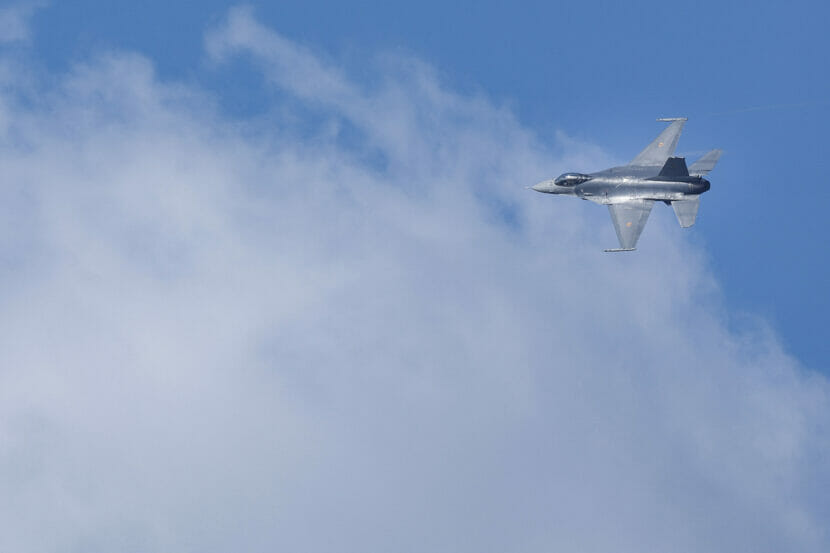
An F-16 fighter jet used a missile to take out an unidentified object over Michigan’s Lake Huron on Saturday. Here, a Belgian F-16 is pictured taking part in a NATO nuclear deterrence exercise in Belgium in October. (Kenzo Tribouillard/AFP via Getty Images)
A unidentified object has been shot down by U.S. forces over Lake Huron, according to the Department of Defense. The object appears to be the same object that had been detected over Montana a day earlier, said officials.
The airborne object — flying about 20,000 feet above the lake waters — was shot down by an F-16 fighter jet with a missile on Sunday afternoon, at the direction of President Biden and based on the recommendations of military leadership, Pentagon Press Secretary Brig. Gen. Pat Ryder said in a statement.
The path and altitude of object — which flew close to sensitive DOD sites and could have posed a risk to commercial aircraft — sparked concerns, the press secretary said.
“We did not assess it to be a kinetic military threat to anything on the ground, but assess it was a safety flight hazard and a threat due to its potential surveillance capabilities,” Ryder said.
On Saturday, the North American Aerospace Defense Command said it detected a “radar anomaly” over Havre, Mont., after an aircraft investigation of radar hits failed to locate an object matching the hits.
But on Sunday, Ryder said, officials could “reasonably” link the object downed that afternoon to the radar signal picked up over Montana based on its flight path and data.
“Our team will now work to recover the object in an effort to learn more,” Ryder said in the statement.
Earlier in the day, politicians from Michigan said they were in contact with the Defense Department about the object.
Rep. Jim Himes of Connecticut, the top Democrat on the House Intelligence Committee, told NPR’s All Things Considered on Sunday that he was “very confident” that none of the unidentified objects “represent a threat to the national security of the United States.”
“I’m confident that they are very unlikely to have the kinds of surveillance capabilities that the Chinese balloon that was shot down had,” Himes said. “And the reason I say that is that if they were a threat, if they were a military action, if they had dangerous capabilities, I’m quite certain I would have been briefed on that.”
Copyright 2023 NPR. To see more, visit https://www.npr.org.
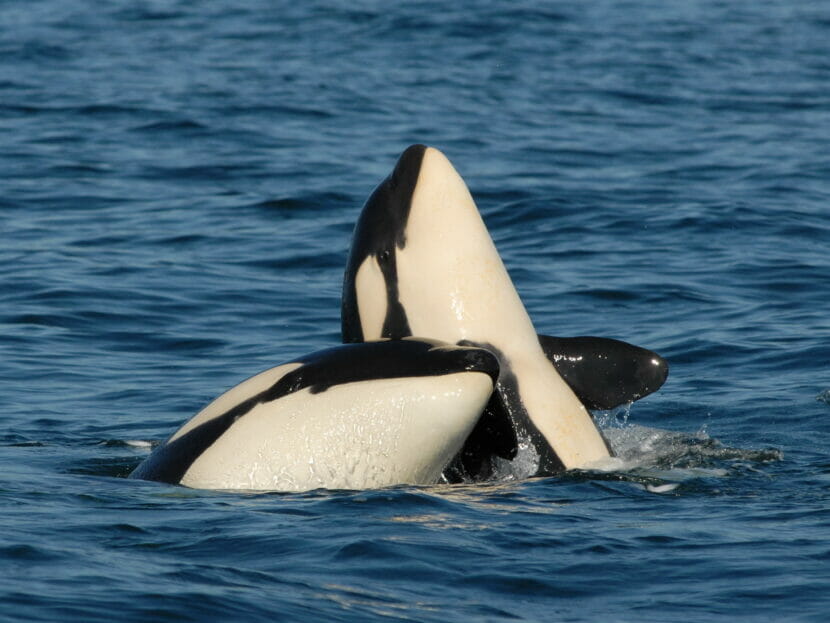
A new study finds that orca mothers still feed their adult sons. It’s a bond that may come with costs, researchers say. (David K. Ellifrit/Center for Whale Research / NMFS research permit #21238)
Twenty years ago, in the waters off the coast of Washington State and British Columbia, an adult female killer whale (dubbed K16 by those who know her well) gave birth to a son, K35.
“These two have an extremely close social relationship,” says Michael Weiss, the research director at the Center for Whale Research in Friday Harbor, Washington.
It’s hard for Weiss to think of a time when he didn’t catch the pair hanging out in the same group, and often immediately next to each other.
“[They’re] just this pair of whales that are basically each other’s best friend,” he said.
Weiss has observed the mom and son pair spending a lot of time close together, touching and floating at the surface — and sharing salmon.
Male orcas are massive, and so are their appetites. They’re also less maneuverable, which may make it harder for them to catch prey. All this means that a male like K35 needs help getting enough food.
So his mom will often dive down, says Weiss, “catch a salmon, and bring it up to the surface and actually bite half of the fish off and leave that half for her son. So she’s sharing a huge amount of food.”
And here’s the striking thing — since K35 was born two decades ago, his mom has never had another calf. Contrast that with other females in the population.
“Some whales started reproducing at the same age around the same time,” says Weiss, “and they had daughters. And they’ve produced three or four offspring.”
It’s not just K16. In a paper out this week in the journal Current Biology, Weiss and his colleagues looked back across four decades of life history records of Southern Resident killer whales in the Pacific Northwest. The trend was clear:
“Killer whale mothers pay a really huge cost to take care of their sons,” says Weiss. That cost is that they have fewer offspring. “And they do this throughout their son’s life and never really stop paying that cost to keep their sons alive.”
In fact, when a mom dies, her son usually perishes within a year or two. “We think that is largely because they’re seeing a huge reduction in the amount of food they get,” explains Weiss.
Weiss can’t think of another animal that makes this never-ending investment when it has the option of reproducing multiple times. So why would these orca moms sacrifice so much for their sons? Weiss argues the potential payoff is huge.
“K35 is now one of our biggest males in the population,” says Weiss. “He’s grown big and healthy and looks good.”
That means he’s ready to become a father.
“Honestly, I wouldn’t be surprised if some of the next few calves that get popped out in the population are his,” says Weiss.
The result is that his mom would become a grandmother multiple times over. Her genes would end up in a bunch of calves. And because they’ll be born into other pods, she wouldn’t have to spend any effort raising them.
“It’s an amazing piece of work,” says Eve Jourdain, the director of the Norwegian Orca Survey. Jourdain, who wasn’t involved in the study, is hoping to conduct a similar research project in Norway.
“There could be direct comparisons possible across populations,” says Jourdain. “And only then can we start getting a better understanding of how important it is for the conservation of those different populations.”
It’s worth mentioning that this strategy of moms investing so much in their sons has a dark side. Southern Resident killer whales like K16 and K35 are in trouble. In recent years, the population has cratered to just 73 animals. And what these orcas really need right now is more reproductive females.
“That’s how you keep a population of slow-breeding animals going,” says Weiss. “So investing in sons for a population like ours that is so stressed is really not ideal.”
Weiss worries that this maternal strategy, which served this population so well in the past, could raise their risk of extinction — that the kind of lifelong bonds he’s seen between K16 and her son may tether these creatures to an uncertain fate.
Copyright 2023 NPR. To see more, visit https://www.npr.org.
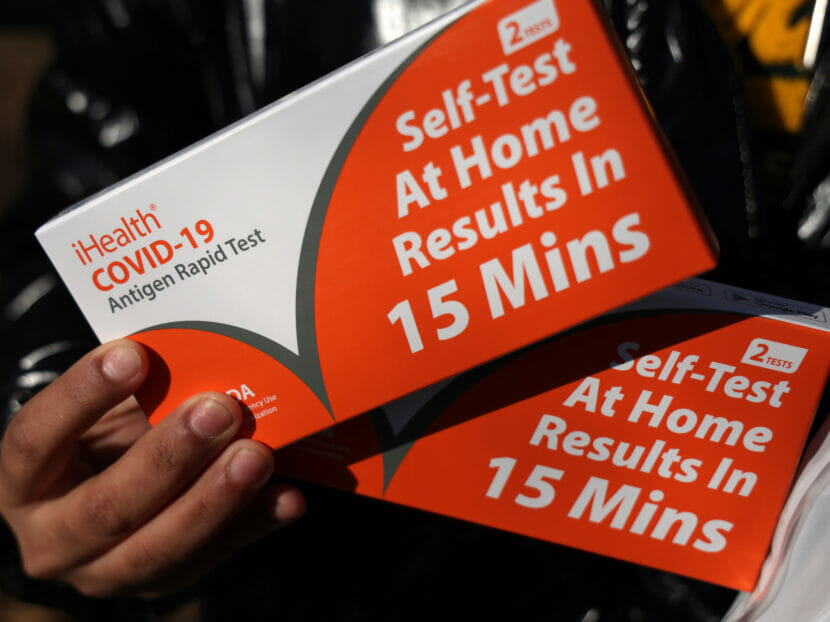
Starting May 11 most people will have to pay for those at-home test kits for COVID-19, as the federal government’s declaration of a COVID-19 public health emergency officially ends. (Alex Wong/Getty Images)
Time is running out for free-to-consumer COVID-19 vaccines, at-home test kits and even some treatments.
Take vaccines. Until now, the federal government has been purchasing COVID-19 shots. It recently bought 105 million doses of the Pfizer-BioNTech bivalent booster for about $30.48 a dose, and 66 million doses of Moderna’s version for $26.36 a dose. (These are among the companies that developed the first COVID vaccines sold in the United States.)
People will be able to get these vaccines at low or no cost as long as the government-purchased supplies last. But even before the end date for the public emergency was set, Congress opted not to provide more money to increase the government’s dwindling stockpile. As a result, Pfizer and Moderna were already planning their moves into the commercial market. Both have indicated that as soon as that happens, they will raise the price they charge, somewhere in the range of $110 to $130 per dose, though insurers and government health programs could negotiate lower rates.
“We see a double-digit billion[-dollar] market opportunity,” investors were told at a JPMorgan conference in San Francisco recently by Ryan Richardson, chief strategy officer for BioNTech. The company expects a gross price — the full price before any discounts — of $110 a dose, which, Richardson said, “is more than justified from a health economics perspective.”
That could translate to tens of billions of dollars in revenue for the manufacturers, even if uptake of the vaccines is slow. And consumers would foot the bill, either directly (in copays) or indirectly (through higher premiums and taxpayer-funded subsidies).
If half of adults — about the same percentage as those who opt for an annual flu shot — get a COVID shot at the new, higher prices, a recent KFF report estimated, insurers, employers and other payors would shell out $12.4 billion to $14.8 billion. That’s up to nearly twice as much as what it would have cost for every adult in the U.S. to get a bivalent booster at the average price paid by the federal government.
As for COVID treatments, an August blog post by the Department of Health and Human Services’ Administration for Strategic Preparedness and Response noted that government-purchased supplies of the drug Paxlovid are expected to last at least through midyear before the private sector takes over. The government’s bulk purchase price from manufacturer Pfizer was $530 for a course of treatment, and it isn’t yet known what the companies will charge once government supplies run out.
The type of health insurance you have will determine how much more you’ll pay
One thing is certain: How much, if any, of the boosted costs are passed on to consumers will depend on their health coverage.
Medicare beneficiaries, those enrolled in Medicaid — the state-federal health insurance program for people with low incomes — and people who have health plans via the Affordable Care Act exchanges will continue to get COVID-19 vaccines without charge, even when the public health emergency ends and the government-purchased vaccines run out. Many people with job-based insurance will also likely not face copayments for vaccines, unless they go out-of-network for their vaccinations.
Coming up with what could be $100 or more for vaccination will be especially hard “if you are uninsured or underinsured; that’s where these price hikes could drive additional disparities,” said Sean Robbins, executive vice president of external affairs for the Blue Cross Blue Shield Association. Those increases, he said, will also affect people with insurance, as the costs “flow through to premiums.”
COVID-19 treatments will cost more, too.
Meanwhile, public policy experts say many private insurers will continue to cover Paxlovid, although patients may face a copayment, at least until they meet their deductible, just as they do for other medications. Medicaid will continue to cover it without cost to patients until at least 2024.
Medicare beneficiaries will face cost-sharing for most COVID-19 treatments once the emergency officially ends and the government supply runs out. Meanwhile, the treatment will also need to go through the regular FDA approval process, which takes longer than the emergency use authorization under which it has been marketed
Another complication: The rolls of the uninsured are likely to climb in the next year, with states poised to reinstate the process of regularly determining Medicaid eligibility; that sort of review was halted during the pandemic. In April, states will begin reassessing whether Medicaid enrollees meet income and other qualifying factors.
“This is our No. 1 concern” right now, said John Baackes, CEO of L.A. Care, the nation’s largest publicly operated health plan with 2.7 million members.
“They may not realize they’ve lost coverage until they go to fill a prescription” or seek other medical care, including vaccinations, he said.
At-home COVID tests won’t be free for many people
Rules remain in place for insurers, including Medicare and Affordable Care Act plans, to cover the cost of up to eight in-home test kits a month for each person on the plan, until the public health emergency ends.
For consumers — including those without insurance — a government website is still offering up to four test kits per household, until they run out. The Biden administration shifted funding to purchase additional kits and made them available in late December.
Starting in May, though, beneficiaries in original Medicare and many people with private, job-based insurance will have to start paying out-of-pocket for the rapid antigen test kits. Some Medicare Advantage plans, which are an alternative to original Medicare, might opt to continue covering them without a copayment. Policies will vary, so check with your insurer. And Medicaid enrollees can continue to get the test kits without cost into mid-2024.
Overall, the future of COVID tests, vaccines and treatments will reflect the complicated mix of coverage consumers already navigate for most other types of care.
“From a consumer perspective, vaccines will still be free, but for treatments and test kits, a lot of people will face cost-sharing,” said Jen Kates, a senior vice president at KFF. “We’re taking what was universal access and now saying we’re going back to how it is in the regular U.S. health system.”
KHN correspondent Darius Tahir contributed to this report. KHN (Kaiser Health News) is a national, editorially independent program of KFF (Kaiser Family Foundation).
Copyright 2023 Kaiser Health News. To see more, visit Kaiser Health News.
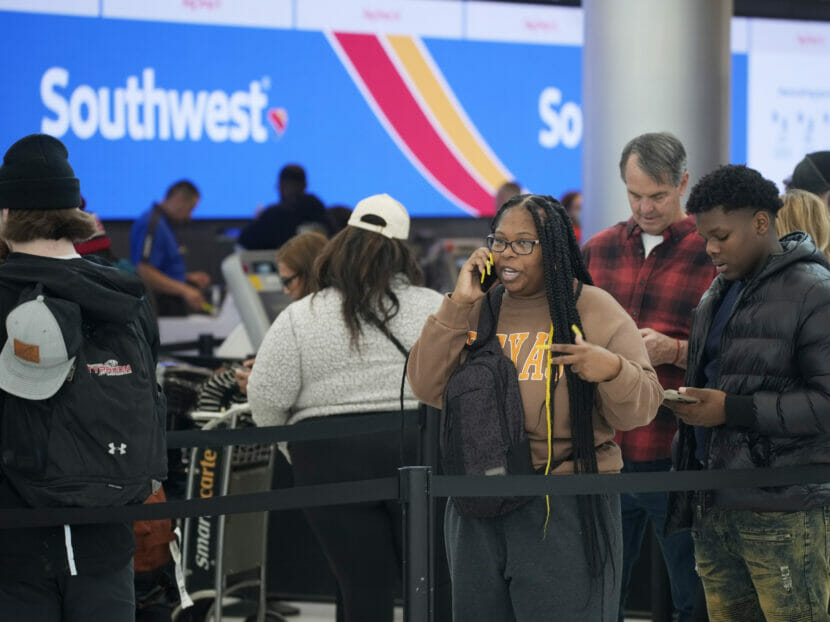
Southwest canceled more than 16,700 flights over several days in late December, leaving thousands of travelers stranded for days. Now lawmakers are attempting to hold airlines to account for disruptions and cancellations with a new Airline Passengers’ Bill of Rights. (David Zalubowski/AP)
After millions of Americans had their holiday plans — and even early January itineraries — ruined by airline computer glitches and severe weather disruptions, a group of senators are moving to pass legislation protecting passengers.
Democrat Sens. Edward Markey of Massachusetts and Richard Blumenthal of Connecticut have introduced an Airline Passengers’ Bill of Rights that would require airlines to refund tickets and compensate passengers for delays and cancellations caused by the airlines.
Companies would be on the hook for a minimum of $1,350 to passengers denied boarding as a result of an oversold flight. They would also be responsible for compensation and refunds in the event of airline-caused flight delays and cancellations. If or when bags are damaged or lost, the airlines would have to shell out immediate refunds on bag fees.
“This legislation will ensure fliers have the essential consumer protections they deserve,” Blumenthal said in a release announcing the bill. “This legislation will establish clear, enforceable rules for airlines to follow, putting consumers first and restoring sanity to the skies.
He added: “The Southwest Airlines debacle is just the latest example of why we urgently need stronger passenger protections, as air travel has become more stressful, unpredictable, and uncomfortable for fliers.”
Southwest Airlines canceled more than 16,000 flights between Christmas and the New Year.
If passed, the package could also mean the end of shrinking seat sizes, at least until the Department of Transportation implements a minimum seat size requirement. Additionally, parents wouldn’t be charged extra for choosing to sit next to their children on flights.
Other consumer protections seeking to make flying feel more “humane,” would require airlines to:
Provide ticket refunds and alternative transportation for flights delayed between one and four hours.
Provide ticket refunds, alternate transportation, compensation, and cover the cost of meals and lodging (as applicable) for flights delayed more than four hours.
Not use weather as an excuse for delays and cancellations that are actually the airlines’ fault.
Meanwhile, the DOT would be held to account for the following:
Explaining why it has failed to impose penalties on airlines for violations of passenger rights.
Instituting a joint study with consumer groups on the feasibility of system in which fines on airlines go directly to passengers.
Eliminating the cap on fines that it charges airlines for violating consumer protection laws, and preventing airlines from negotiating low, slap-on-the wrist fines for egregious conduct.
The U.S. Senate Commerce Committee plans to hold hearings in the coming weeks over the recent Southwest airline meltdown. Members of Congress also plan to investigate the computer outage that caused the FAA’s computer system to malfunction, causing more than 10,000 flights to be delayed or canceled.
As for the latest passengers’ Bill of Rights, industry leaders and groups are pushing back. Airlines for America, the trade group representing most of the nation’s carriers, called the proposals “short sighted,” saying it “would inevitably drive-up costs and reduce choices for the consumer.”
“The federal government should be focused on 21st century policies and procedures that drive our nation’s aviation system forward, rather than making efforts that threaten to reduce access and affordability for consumers,” the group said in a statement.
Copyright 2023 NPR. To see more, visit https://www.npr.org.
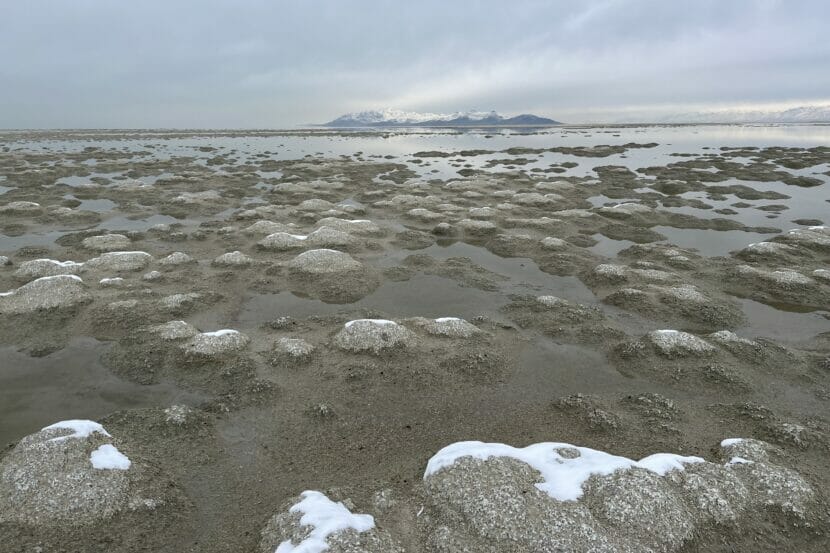
The Great Salt Lake is roughly 8-9 feet lower than it should be. A snowy winter recently has helped lake levels some. (Kirk Siegler/NPR)
Trekking along the shoreline of the Great Salt Lake — the largest remaining saltwater lake in the western hemisphere — can feel eerie and lonely.
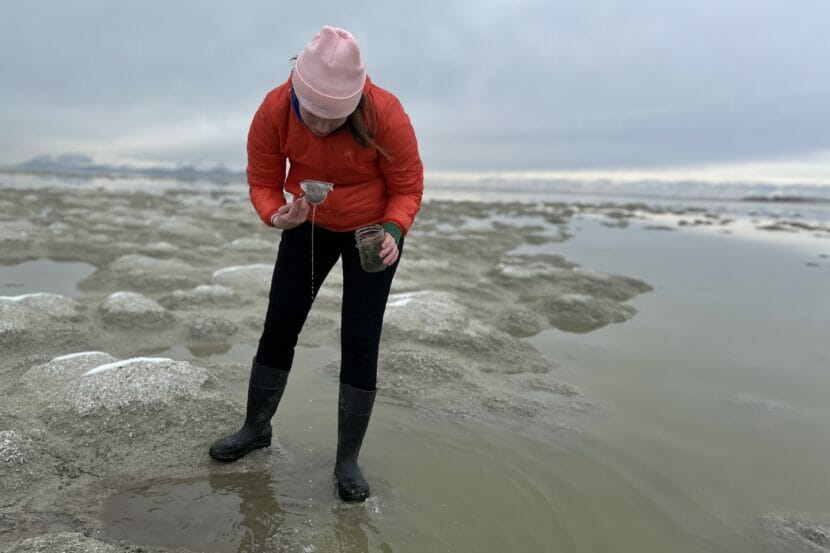
“These might even be my footprints from last week,” says Carly Biedul, pointing to indents in the mud. Biedul is a biologist with the Great Salt Lake Institute. She’s bundled up in an orange puffy jacket, gloves and hat. Most important she’s wearing thick, sturdy, rubber boots.
The mud with a frozen, slick layer of ice on top gets treacherous. One thing that’s hard to prepare for though, is the stench: a pungent odor like sulfur and dead fish. But it’s actually a good thing, a sign of a biologically healthy saline lake.
“People have been saying that they miss the lake stink because it just makes them feel like home,” Biedul says. “It’s just not here [much] anymore, so you’re lucky that it gets to smell so bad.”
Lucky? Maybe one small bright spot in an otherwise grim story of a looming ecological disaster. The lake doesn’t really stink anymore because it’s drying … and dying.
Scientists point to climate change and rapid population growth — Utah is one of the fastest growing states and also one of the driest — as the culprits. A recent scientific report from Brigham Young University warned that if no action is taken, the Great Salt Lake could go completely dry in five years.
Over two decades of the western megadrought, water diversions from rivers that feed the lake have increased in order to support farms and thirsty, growing cities.
Utah leaders and activists are springing into action.
A drying lake could lead to an environmental and economic collapse
Carly Biedul and her team of researchers and students from Westminster College are on the front lines of the crisis and the fight to save the state’s signature lake.
Once a week they hike out to try to collect brine fly larva samples, with the idea that they could keep some alive in their lab back in the city should more water re-enter the lake in the near future.
The larvae are harder and harder to find. On a recent cloudy, bitter cold morning, Biedul pointed out mounds or “lumps” of lake deposits called microbialites. They should be mostly submerged, but this day were protruding out along the receding shore. She dug out a refractometer to measure the water’s salinity. Researchers have been worried the current levels — upwards of 17% in places — are too salty to sustain life.
“We’re kind of at the threshold,” Biedul says. “If things get any saltier we’re super worried.”
Carly Biedul of the Great Salt Lake Institute is collecting lab samples on a recent chilly morning on the lake’s receding south shoreline. (Kirk Siegler/NPR)
Consider the disappearing brine flies as an indicator species. They’re at the bottom of the food chain, and feed the brine shrimp, which sustain the thousands of migrating birds and so on. The environmental consequences of a dried up lake are far reaching, and the economic fallout scenarios are dizzying — from the lake’s brine shrimp fishing industry to mineral harvesting, to Utah’s famous ski resorts that benefit from extra lake effect snow.
But the most pressing concern right now in the Salt Lake Valley as the lake dries is shaping up to be air pollution. Salt Lake City already has some of the dirtiest air in the country. In the winter its natural topography causes cold air inversions, and emissions from vehicles and industrial sources form a haze in its bowl-like valley.
The big unknown is how bad dust storms could get from a dried up lake bed. There is precedent. Along California’s Eastern Sierra Nevada mountains, years of water diversions from the Owens River by the city of Los Angeles caused downstream saline Owens Lake to dry up. Dust storms from that lake bed became the largest single source of dust pollution in the nation.
In Utah, the Great Salt Lake is more than seven times larger than the historic footprint of Owens Lake.
“This other piece of the dust coming in really scares people,” Biedul says.
Doctors sound the alarm about vulnerable populations
Scientists warn the Great Salt Lake has high concentrations of neurotoxins and cancer causing carcinogens — including arsenic and mercury.
“If the lake bed dries up, and we’re having winds blowing dust storms into our neighborhood, the heavy metals are going to land right on top of this neighborhood,” says Turner Bitton, a community activist in Glendale, a traditionally working class neighborhood in Salt Lake City’s west valley.
Much of the area is zoned for manufacturing, but it’s also one of the last bastions of affordability in the city. Bitton’s neighborhood is already hemmed in by two busy freeways, an international airport, and it’s close to Utah’s largest oil refinery.
He says many local families are alarmed at the prospect of the air getting even worse.
“We’re talking about something that could potentially make these neighborhoods, I don’t want to say uninhabitable, but for those that are vulnerable, for those that have lung issues, uninhabitable,” Bitton says.
Researchers have found higher rates of asthma and cardiovascular disease in neighborhoods like these. One University of Utah study even showed that students in schools here scored lower on tests during bad air days.
Moench says the state should have declared an emergency years ago.
“A lot of people think that dust is pretty benign because it’s quote — natural,” he adds. “Well that’s not the case, and in the case of dust from the Great Salt Lake, it is particularly toxic, because we know that it is laced with high concentrations of heavy metals.”
The majority of Utah’s 3.3 million population lives near the lake, just to the east along the Wasatch Mountains. The lake is about nine feet lower than normal. And locals are already complaining of dust storms. Moench counted more than a dozen in the past year — when a decade ago there were none.
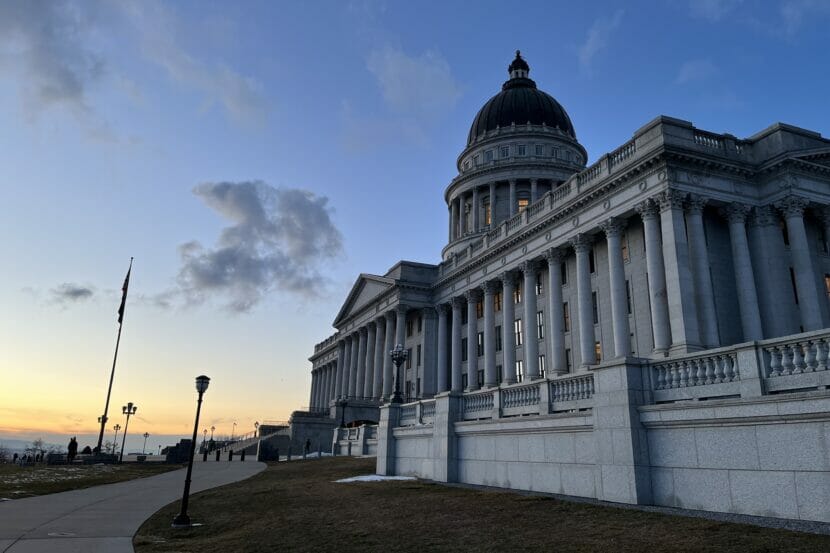
On Utah’s Capitol Hill, state lawmakers are debating a roughly $500 million spending package geared toward saving the lake. (Kirk Siegler/NPR)
Utah leaders insist they won’t let the lake dry up
At the state capitol, lawmakers this session are facing pressure to save the lake, and Gov. Spencer Cox is under the gun to call a state of emergency. In his state of the state address last month, Cox nodded to the BYU study which warns that in just “five short years,” the Great Salt Lake will completely disappear: “Let me be absolutely clear, we are not going to let that happen.” Cox said.
Earlier this week, a bipartisan group of state lawmakers unveiled bills ranging from expanding turf-reduction programs in cities, to providing more incentives to farmers to divert less water from rivers that feed the lake. Some pledged to spend upwards of a half billion dollars to save the lake.
“Even though the Great Salt Lake has risen a foot so far, we know that one wet winter is not going to wipe out two decades of very, very, very dry climate here in Utah,” said Brad Wilson, the Republican House Speaker.
Some ideas that have been floated sound like something out of a science fiction novel — including cloud seeding, and even a plan to build pipelines to pump in water from the Pacific Ocean.
“We are getting some really fantastical suggestions from some of our lawmakers as to how to solve this,” says Moench, of Physicians for a Healthy Environment.
Moench and environmental activists are arguing for buying out alfalfa farmers so more water will return to the Great Salt Lake. But some are encouraged that at the very least saving the lake is one of the top priorities of this legislative session.
From Utah’s Capitol Hill, there’s a sweeping view of the Salt Lake City skyline, and to the west, past the airport, the receding lake is visible, shimmering gray at dusk. It’s an ominous sight, but if nothing else, hard for state leaders to ignore.
Down at the lake, Carly Biedul of the Great Salt Lake Institute is doing her best to keep positive. She thinks there’s still time to save this lake, but not much.
“It’s really pretty right now, you can see the reflections of the mountains on the water,” she says. “And that’s kind of what we’re been trying to do is find these moments of beauty when it’s so … sad.”
Copyright 2023 NPR. To see more, visit https://www.npr.org.
Transcript :
STEVE INSKEEP, HOST:
A popular 19th-century book describes the Great Salt Lake. In the 1840s, that lake was well known to local people, but not on the East Coast. The Western mapmaker John Charles Fremont described boating on the lake to an island. He accidentally left the cover to a spyglass on that island and mused that some future explorer might find it. Unless something changes, future explorers of that island may be able to walk there because the lake is drying up. A report says climate change and population growth in Utah may destroy it in five years. NPR’s Kirk Siegler takes us there.
KIRK SIEGLER, BYLINE: The Great Salt Lake is the largest remaining saltwater lake in the Western Hemisphere.
(SOUNDBITE OF FOOTSTEPS SLOSHING IN WATER)
SIEGLER: Now, trekking along its receding shoreline, especially if it’s the dead of winter, can feel eerie and lonely.
CARLY BIEDUL: These might even be my footprints from last week.
SIEGLER: Carly Biedul is a biologist with the Great Salt Lake Institute. She’s bundled up in an orange, puffy jacket, gloves and hat. And most importantly, she’s wearing thick, sturdy rubber boots. The mud with the frozen, slick layer of ice on top – it’s treacherous.
(SOUNDBITE OF FOOTSTEPS SLOSHING IN WATER)
SIEGLER: Well, the only thing we’re not really prepared for is the stench.
This is pungent right here.
BIEDUL: (Laughter) Yeah.
SIEGLER: Smells like dead fish almost.
The stink is a sign of a biologically healthy saline lake.
BIEDUL: People have been saying that they miss the lake stink because it just makes them feel like home, and it’s just not here anymore. So you’re lucky that it gets to smell so bad.
SIEGLER: It doesn’t really stink anymore because it’s drying and dying. Biedul hikes out here weekly, trying to collect samples of brine fly larva, which are getting harder and harder to find.
BIEDUL: I’m going to get my jar out.
SIEGLER: Brine flies are at the bottom of the food chain, feed for the brine shrimp, which sustain the migrating birds and so on. Most of the water that’s left here is too salty now.
BIEDUL: The threshold is – we’re kind of at the threshold. So if things get any saltier, we’re super, super worried.
SIEGLER: So what brought us to this brink? Two decades of a Western megadrought and water diversions from rivers upstream for farms and suburbs.
BIEDUL: Yeah, sorry. This is our crossing point.
SIEGLER: Now, if this lake goes away, just the economic fallout alone is dizzying, from brine shrimp fishing to mining to Utah’s ski resorts that benefit from extra lake effect snow. And then there’s the pollution.
BIEDUL: The inversions here in the winter that we get just from being in the valley is already a big problem. And so having this other piece of the dust coming in really scares people.
SIEGLER: Partly because of those inversions, Salt Lake City already can have some of the dirtiest air in the U.S.
(SOUNDBITE OF CAR HORNS HONKING)
SIEGLER: And the lakebed has high concentrations of mercury and arsenic.
TURNER BITTON: If the lake bed dries up and we’re having winds blowing dust storms into our neighborhood, the heavy metals are going to land right on top of this neighborhood.
SIEGLER: Turner Bitton is a community activist in Salt Lake City’s West Valley. These more working-class neighborhoods are already hemmed in by busy freeways, an international airport and Utah’s largest oil refinery.
BITTON: I mean, we’re talking about something that could potentially make these neighborhoods – I don’t want to say uninhabitable – but for those that are vulnerable, for those that have lung issues, uninhabitable.
SIEGLER: He’s not being dramatic. Researchers have found higher rates of asthma and cardiovascular disease in neighborhoods like these. And one University of Utah study even showed that students in schools here scored lower on tests during bad air days. Dr. Brian Moench is president of Utah Physicians for a Healthy Environment. He says the state should’ve declared an emergency years ago.
BRIAN MOENCH: A lot of people think that dust is pretty benign because it’s, quote, “natural.” Well, that’s not the case. And in the case of dust from the Great Salt Lake, it is particularly toxic because we know that it’s laced with high concentrations of heavy metals.
SIEGLER: And most of Utah’s 3 million or so residents live just east of the lake along the Wasatch Mountains. The lake is about 9 feet lower than normal right now, and locals are already complaining of dust storms. The crisis is all over the mainstream news here.
(SOUNDBITE OF NEWS MONTAGE)
UNIDENTIFIED PERSON #1: And, you know, even with all of this snow, Utah still remains in a drought.
UNIDENTIFIED PERSON #2: Now to what some tonight are calling a looming environmental nuclear bomb in Utah. The mighty Great Salt Lake is drying up. And as…
UNIDENTIFIED PERSON #3: As the Great Salt Lake…
SIEGLER: At the state Capitol, lawmakers this session are under pressure to save the lake. Some ideas floated sound like sci-fi – cloud seeding, even a pipeline to pump Pacific Ocean water in. Right now, lawmakers are debating a half-billion-dollar package that would do things like pay farmers in cities to use less water. Here’s Republican Governor Spencer Cox in his recent State of the State address.
(SOUNDBITE OF SPEECH)
SPENCER COX: Earlier this month, a report predicted that in just five short years, the Great Salt Lake will completely disappear. Let me be absolutely clear. We are not going to let that happen.
SIEGLER: Now, from up here on Capitol Hill, there’s a sweeping view of the Salt Lake City skyline. And when you look to the west, past the airport, there’s the receding gray lake shimmering at dusk. It’s an ominous sight but hard for lawmakers to ignore.
(SOUNDBITE OF FOOTSTEPS SLOSHING IN WATER)
BIEDUL: We can see the reflection of the of the mountains on the water. It’s really pretty right now.
SIEGLER: Now, for her part, down at the lake, biologist Carly Biedul is keeping positive.
BIEDUL: And that’s kind of what we’ve been trying to do – is find these moments to see the beauty when it’s so sad.
SIEGLER: Sad because Biedul says there’s very little time left to save this lake.
Kirk Siegler, NPR News, Salt Lake City. Transcript provided by NPR, Copyright NPR.
A sign calling attention to drug overdoses is posted in a gas station on the White Earth reservation in Ogema, Minn.. A new study shows that early deaths due to addiction and suicide have impacted American Indian and Alaska Native communities far more than white communities. (David Goldman/AP)
For more than a decade, Americans have been dying younger than people in other developed countries. Researchers attribute much of this rise in mid-life deaths to what are called “deaths of despair” — that is suicides, drug overdoses and deaths from alcoholic liver disease — among middle-aged white Americans.
But a study published last week in The Lancet shows that these premature deaths have affected American Indian and Alaska Native communities far more than white communities.
“The whole sort of premise of the ‘death of despair’ idea that this is unique to white communities really didn’t stand up when we took a close look at the data,” says Dr. Joseph Friedman, a physician and researcher at the University of California Los Angeles.
“The Lancet article underscores a number of things that we’ve known for a substantial period of time, but have never articulated it in such a sharp fashion,” says Spero Manson, director of the University of Colorado’s Centers for American Indian and Alaska Native Health who wasn’t involved in the new study.
The idea that the rise in deaths of despair was the highest in middle aged white Americans was put forward by two Princeton economists in a study published in 2015. They had looked at death rates for 45-54 year-olds from 1999-2013, and compared the numbers by race and ethnicity.
“Ideally no one should die in that age group, certainly not of overdose, suicide and alcoholic liver disease,” says Friedman.
When he and his colleagues analyzed the mortality data more closely, they found that American Indians and Alaska Native people had been completely left out of the analysis in the original study. And the midlife mortality rates for these groups were far higher than among whites.
“In the same period that deaths among white Americans did go up by about 9%, deaths among Native Americans went up by 30%,” says Friedman.
“The entire narrative about deaths of despair among white Americans depended on the invisibility, or, we might say, the erasure of Indigenous presence, invisibility in those datasets,” says psychologist-anthropologist Joseph Gone of Harvard University, a member of the Aaniiih Gros Ventre tribal nation of Montana and a co-author of the Lancet study. “And that’s a problem from our vantage point.”
Data on Native communities are often missing from public health research, he adds, because “our numbers are small and we often get folded into a category like ‘Other’ instead of being reported distinctively for Indigenous peoples.”
While the recent rise in deaths among white Americans is, of course, alarming, Gone says, that the factors driving these deaths have affected Native communities for much longer.
“Indian country problems rise and fall with the economy like everyone else’s,” he says, “but we’re just used to a lack of resources and opportunities for a whole bunch of reasons that go way back.”
He adds that “colonial subjugation” by European settlers and historical attacks on the ways of life and livelihoods of Indigenous communities have shaped the health and lifespans of Native communities since the early days of this country.
“Part of what I think we’re seeing in these [rising rates of] deaths of despair are attacks on livelihoods,” he says, “and decline in the ability to have good livelihoods.”
“If you look at matters of poverty, education, decreased employment opportunities, restricted access to other kinds of resources that are typically associated with these kinds of health disparities,” says Manson, “they’re very powerful and widely present in American and Alaska Native communities.”
The new study also found that the disparities in midlife mortality have only worsened since 2013, especially exacerbated by the COVID pandemic. In 2020, the death rates among middle-aged Native people due to despair-related causes was twice that among white people.
“This is a sort of astronomical inequality, you know, that should be unthinkable in our society,” says Friedman.
But Manson believes that addressing these longstanding disparities in health and mortality will take more than just focusing on deaths of despair.
“The problem is if we only focus on deaths of despair, we ignore and do not have adequate attention paid to the sources that promote health and well-being in Native people,” he says.
For example, he says, Native people have one of the highest rates of COVID vaccination compared to other racial and ethnic groups. According to the CDC, as of Jan. 25, 2023, nearly 78% of American Indiana and Alaska Native people have received at least one dose of the vaccine — the highest rate compared to all other racial and ethnic groups. And 64% of this group had completed the primary series of vaccination, second only to Asian Americans.
As NPR reported before, this was in large part because of Native people wanting to protect their elders and being more willing to get vaccinated.
Manson has been studying COVID testing and vaccination in six large urban Indian health organizations and found their efforts to be very successful.
“It has been their coming together across their programs, working not only with their urban partners that are non-native, but also working with reservation-based communities adjacent to their catchment areas,” he says.
Reducing deaths of despair, Manson says, will require harnessing the strength and resilience of Native communities and supporting them with resources.
“There are possible solutions,” he adds. “Those solutions are often local. They have to do with self-determination and the ability to have access to the necessary resources to mobilize those solutions.”
Copyright 2023 NPR. To see more, visit https://www.npr.org.
Close
Update notification options
Subscribe to notifications
Subscribe
Get notifications about news related to the topics you care about. You can unsubscribe anytime.

9(MDEwMjQ0ODM1MDEzNDk4MTEzNjU3NTRhYg004))
9(MDEwMjQ0ODM1MDEzNDk4MTEzNjU3NTRhYg004))
9(MDEwMjQ0ODM1MDEzNDk4MTEzNjU3NTRhYg004))
9(MDEwMjQ0ODM1MDEzNDk4MTEzNjU3NTRhYg004))
9(MDEwMjQ0ODM1MDEzNDk4MTEzNjU3NTRhYg004))

9(MDEwMjQ0ODM1MDEzNDk4MTEzNjU3NTRhYg004))