NPR News

KTOO is the NPR member station in Juneau. NPR offers its members radio and digital stories.

FDA considers major shift in COVID vaccine strategy

""
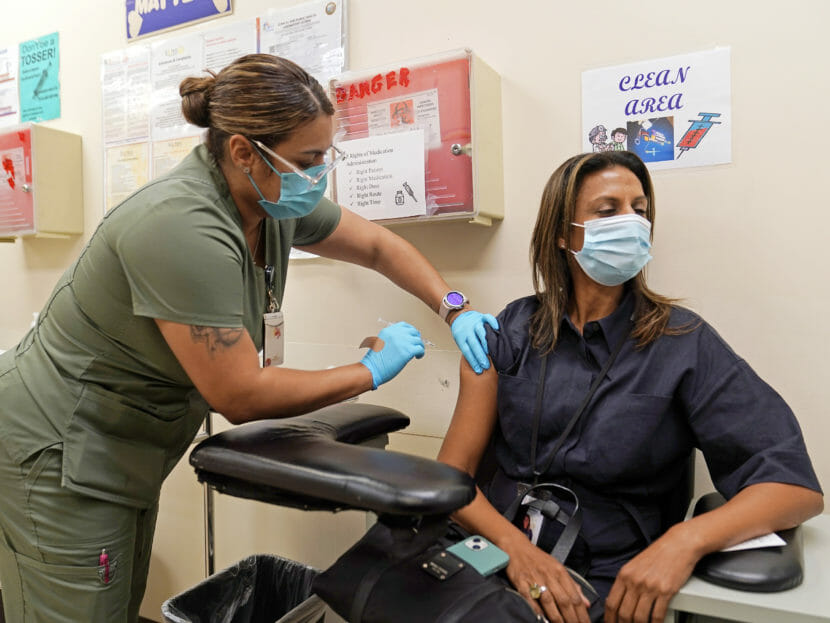
Licensed vocational nurse Denise Saldana vaccinates Pri DeSilva, associate director of Individual and Corporate Giving, with a fourth Pfizer COVID-19 vaccine booster at the Dr. Kenneth Williams Health Center in Los Angeles, Nov. 1, 2022. (Damian Dovarganes/AP)

The Food and Drug Administration is considering a major shift in the nation’s COVID-19 vaccine strategy.

The goal is to simplify vaccination against COVID and perhaps adopt an approach similar to what is used for the flu vaccine, with annual updates to match whatever strain of the virus is circulating. This is according to a federal official who spoke under the condition of anonymity because they were not authorized to speak publicly.

NPR reported the proposed shift early Monday morning, and later Monday the FDA outlined it publicly in a set of documents released in advance of a meeting Thursday of the agency’s Vaccine and Related Biological Products Advisory Committee (VRBPAC). The committee will vote on the agency’s proposal.

Currently, people who want to be fully vaccinated against COVID have to first get their primary vaccinations — two shots of the original vaccine spaced weeks apart. That’s followed at least two months later by a booster, currently the bivalent shot that’s tailored to protect against omicron.

Under the new approach, most people would be advised to simply get whatever the latest version of the vaccine is annually each fall like the flu vaccine. They wouldn’t have to worry about how many shots they’ve already gotten and which one they got when. Those who still need to receive two doses initially, such as young children and older people, would use the same formulation for all three shots.

Vaccine makers would update the annual shot through a process that would begin each spring to try a match the vaccine as closely as possible to whatever variant will likely be dominant in the coming winter. That’s how the flu vaccine is formulated each year.

“FDA anticipates conducting an assessment of SARS-CoV-2 strains at least annually and to engage VRBPAC in about early June of each year regarding strain selection for the fall season,” the FDA wrote in its briefing document, adding that updated vaccines would be readied for use by September each year.

The agency notes that if a more dangerous COVID variant were to emerge, it might reconsider the vaccine strain at other times of the year on an “as-needed and emergent basis.”

Some immunologists and vaccine researchers say simplifying the process along the lines of the flu vaccine is appropriate at this point in the pandemic. However, many questions remain about emerging booster strategy.

“As far as the tools that we have right now, I think it just makes the most sense to plan to update each year as close as we can to the currently circulating variant,” says Deepta Bhattacharya, an immunologist at the University of Arizona. “So I think all the things the FDA is considering make a lot of sense.”

Questions about efficacy of updated shots

There’s an intense debate about the wisdom of updating the COVID vaccines regularly to try to match new variants. Some researchers question whether that really makes the vaccines more effective. They also argue the low demand for the latest booster shows the public has little appetite for continued boosting with the vaccines, even if they’ve been updated with new strains.

“The public is voting with their arms if you will and said, ‘No. I’m not going to get this. This doesn’t make sense to us,'” says Dr. Gregory Poland, a vaccine researcher at the Mayo Clinic.

While endorsing continued boosters for those at high risk, such as the elderly, some question whether the current bivalent vaccines updated to target omicron have enhanced protection compared to the original vaccines. Most people are still well-protected against severe disease by the immunity they already have, they say.

“We have no solid data about the performance of the bivalent boosters,” says John Moore, an immunologist at Weill Cornell Medical College. “The hard evidence is lacking, and the evidence that is out there is at the very least inconclusive and to me trends towards saying the bivalent boosters were little if no better.”

Moore and others argue the virus is changing so fast that it’s pointless to constantly try to match the vaccines to the latest variants.

“We shouldn’t really be chasing these variants, which are evanescent and are often gone by the time you’ve created the vaccine,” says Dr. Paul Offit of the University of Pennsylvania, one of the FDA’s advisers.

Offit and others also question whether everyone will necessarily need to be boosted regularly, or just those at high risk, like the elderly.

Arguments for alternate vaccine strategies

Critics of the FDA’s proposed new strategy argue it would be better to invest in developing better vaccines that might be more appealing to people, and in campaigns to get more people vaccinated. Better vaccines could include those that could keep people from catching the virus in the first place not just from getting seriously ill — such as a nasal spray vaccine. Or perhaps vaccines that provide longer protection or are administered in pill form, to make them more acceptable to the needle-averse.

“Particularly now when Congress is not allocating new funds for COVID response, we have to be especially judicious in how we spend our money and what would be most cost-effective,” says Dr. Celine Gounder, a senior fellow at the Kaiser Family Foundation. “It’s unclear whether updating the booster formulations and repeatedly boosting people is the most effective approach to controlling COVID at this stage.”

Another concern some researchers have is that the FDA continues to rely on antibody levels to test vaccine efficacy.

“I think we need to raise the bar and require more evidence of clinical efficacy,” says Dr. Eric Rubin, a professor of immunology and infectious diseases at Harvard who is also a member of the advisory committee. For instance, Rubin says the FDA should require proof the updated vaccines are actually reducing the risk of getting infected, getting sick, hospitalized and dying.

Others say updating the vaccines make sense to make sure people are as well-protected as possible while researchers continue to try to develop new vaccines.

“Even if you don’t have a booster that matches 100% what’s circulating, you will have a booster that matches 75% to 80% to 90% of what’s circulating,” says David Martinez, an immunologist at the University of North Carolina, Chapel Hill. “And that will be good enough. It would probably benefit most people.”

The FDA looks ahead to endemic COVID

Some researchers think it’s too soon to rely on annual boosters. COVID hasn’t quite settled into a seasonal pattern like the flu, they note, and the SARS-CoV2 virus is changing more quickly than the flu virus. So people may need to be boosted more frequently, especially since protection against severe disease may only last about four to six months, they say.

“We’re going to be reaching that pretty soon with the early adopters of the bivalent boosters, like myself,” says Dr. Peter Hotez, co-director of the Center for Vaccine Development at Texas Children’s Hospital and dean of the National School of Tropical Medicine at Baylor College of Medicine. “I don’t know if an annual strategy is going to cut it.”

The FDA’s plan comes as COVID appears to be moving toward becoming an endemic disease. That doesn’t mean it’s going away or it’s not a threat anymore. The disease will continue to be a threat for the foreseeable future, making many people sick and even potentially killing hundreds a day, making it a major public health problem and a leading cause of death, health experts say.

But unless some more dangerous version of the virus suddenly emerges, the world might finally be settling into a more predictable co-existence with the virus. The federal official NPR spoke to says the goal of the new vaccine strategy is to make the vaccines, which are the major weapon for protecting ourselves, simpler and hopefully therefore more appealing. The latest boosters have found very few takers.

The thinking is that at this point in the pandemic the overwhelming majority of people have a significant levels of immunity, either from having gotten vaccinated and boosted, or infected one of more times, or both. And while that immunity appears to protect most people from severe disease, that protection does appear to fade with time.

The FDA is also considering making the shots interchangeable. That way people wouldn’t have to worry which brand they’re getting. Again, the change is aimed at making COVID shots more like the flu shots. People don’t typically worry about the brand of the flu vaccine they receive.

The vaccine would still be administered at different doses for different ages. And very young children and older people would still get two shots each year, much like the flu vaccine.

If the FDA advisory committee endorses the approach Thursday, the FDA would work with the vaccine companies and Centers for Disease Control and Prevention to finalize the details. And the FDA advisers would meet again in the spring to pick the specific strain or strains of the virus the new shots should target.

Copyright 2023 NPR. To see more, visit https://www.npr.org.

Is it time for a reality check on rapid COVID tests?

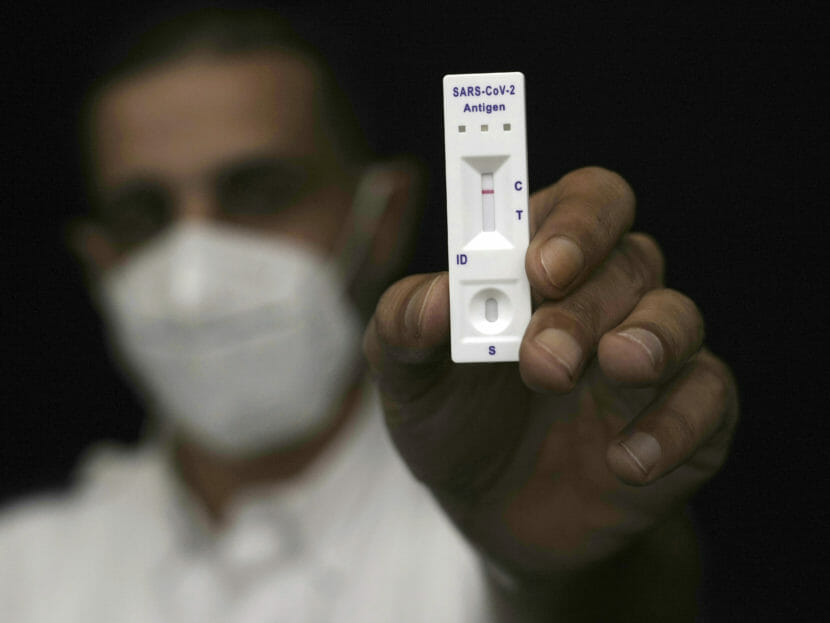
Rapid antigen tests are ubiquitous, but some Americans have learned the hard way that a negative test result isn’t necessarily the final word. (Mahmoud Illean/AP)

As the COVID-19 pandemic enters its fourth year, a negative result on a little plastic at-home test feels a bit less comforting than it once did.

Still, you dutifully swab your nostrils before dinner parties, wait 15 minutes for the all-clear and then text the host “negative!” before leaving your KN95 mask at home.

It feels like the right thing to do, right?

The virus has mutated and then mutated again, with the tests offering at least some sense of control as the Greek letters pile up. But some experts caution against putting too much faith in a negative result.

So it’s only fitting to do a reality check on what those rapid COVID-19 tests, also called antigen tests, can do — and what they can’t.

Is the latest omicron variant tripping up at-home tests?

For the most part, the answer is no.

That’s because as the virus evolves, scientists are mainly seeing changes in its spike protein, which is what the virus uses to attack and enter healthy cells. But the rapid antigen tests aren’t actually looking for that spike protein.

“[The tests] rely on detection of the nucleocapsid protein, which is the protein that is directly encapsulating the viral RNA,” says Dr. Robin Colgrove, a professor at Harvard Medical School and chair of the Diagnostics Committee of the Infectious Diseases Society of America.

He says this interior protein really hasn’t changed much as the virus has mutated over the years. So, at least for now, the rapid tests can detect it.

Federal health agencies are monitoring the situation in case that changes. The Food and Drug Administration is working with the National Institutes of Health to study just how well the at-home tests work as the virus continues to evolve.

So far, the agencies have identified only one test — the Luminostics Inc. Clip COVID Rapid Antigen Test — that has been rendered less reliable in the face of new variants. And even then, the FDA says “the impact does not appear to be significant.”

Are antigen tests taking longer to show a positive?

Some people report having negative antigen test results for days, despite having a known COVID-19 exposure and the telltale symptoms. Eventually, they test positive, but it can sometimes take as long as a week.

The phenomenon is somewhat mysterious, says Colgrove. He acknowledges that doctors are seeing it, but so far, it’s only anecdotal.

“What kind of an experiment would you have to do to answer that question?” he says, explaining that it would be difficult to study.

Many factors could make it seem as though home tests are taking longer to register a positive result, such as the virus multiplying faster somewhere other than the nostrils in some patients, says Dr. Geoffrey Baird, chair of the Department of Laboratory Medicine and Pathology at the University of Washington School of Medicine.

But Baird says perhaps the biggest factor is human error. After all, people doing these tests at home make mistakes and aren’t trained like those who are doing COVID-19 tests in a lab.

“There’s going to be some people who stick it in their mouth,” he says, explaining that not everyone follows the testing instructions as written. Some people even get mucus on the swab, mistakenly thinking mucus will have plenty of virus in it. “Actually you don’t want snot on the thing.”

And while, on average, people will get a positive antigen test result around the time they become infectious, Baird says it’s important to remember that there will always be plenty of people on either side of that average: those who test positive much earlier than most and those who test positive much later.

How well do these tests really work?

Antigen tests can be useful in certain situations (more on that in a minute), but Baird stresses that they have their limits. That was true even before the pandemic.

“Similar technology has existed for influenza for years and the recommendation was not to use them,” he says.

Antigen tests look for specific proteins inside the virus. Users typically swab their nostrils, and the tests take about 15 minutes to render a positive or negative result. But these at-home tests need much more virus to generate a positive result than a PCR test, which is done in a lab and involves letting trace amounts of viral genetic material “amplify” over time — usually a day or so. So even if very little virus is present, there should be enough to trigger a positive result (PCR tests may also keep turning up positive long after someone has cleared the infection).

Both kinds of tests have their advantages and disadvantages. And there are two measures of test performance to know about: specificity and sensitivity.

Specificity is how good the test is at avoiding false positives. And sensitivity is how good the test is at finding the virus.

According to the CDC, antigen and PCR tests are both good at avoiding false positives, but PCR tests are generally more sensitive than home tests. That means antigen tests aren’t all that useful for ruling out COVID-19, but they can be valuable for confirming that cold really is COVID-19.

If you don’t have any symptoms though, don’t count on antigen tests to give you a definitive answer on whether or not you’re in the clear. This is also what researchers found when they took a look at more than 100 studies of antigen tests and published their findings in the Cochrane Database of Systematic Reviews this past July.

“Rapid antigen tests are considerably less accurate when they are used in people with no signs or symptoms of infection, but do perform better in people who have been in contact with someone who has confirmed COVID‐19,” they wrote.

The same researchers also found that not all home tests were equally accurate. Their review included 49 different kinds of tests.

“We saw a lot of variation in the sensitivity of different brands of tests and our overall results combine findings from different studies that evaluated the same tests,” lead author Jacqueline Dinnes from the University of Birmingham said in a podcast about the report.

So what are these tests actually good for?

Even though it seems like a good idea to have everyone take a rapid COVID-19 test the day of a gathering to make sure they’re negative, experts say that’s not how the tests were meant to be used.

“A positive test is almost always true,” Colgrove says. “So in a person with an exposure or a person with suggestive symptoms, if they do a test and it’s positive, you’re done. You have your diagnosis.”

It’s a slightly different story if you are getting over COVID-19 and are testing to see whether you’re still positive.

But a negative “does not rule out” a COVID-19 infection, according to the Centers for Disease Control and Prevention. If someone tests negative, they’re supposed to take another antigen test 48 hours later to see if it turns positive. And if that person has a known COVID exposure or symptoms, the FDA recommends a third test 48 hours after that.

The best way to use the tests is to know their limits and follow instructions for retesting when you get a negative result.

“In a person who had suggestive symptoms now, in the middle of the epidemic where the prevalence of the infection is high, a single negative test is not enough to rule out infection,” Colgrove says.

If you have COVID-19 symptoms, even if your test is negative, it’s a good idea to be cautious and just stay home.

Copyright 2023 NPR. To see more, visit https://www.npr.org.

Here’s why a high-stakes debt ceiling fight looms on Capitol Hill

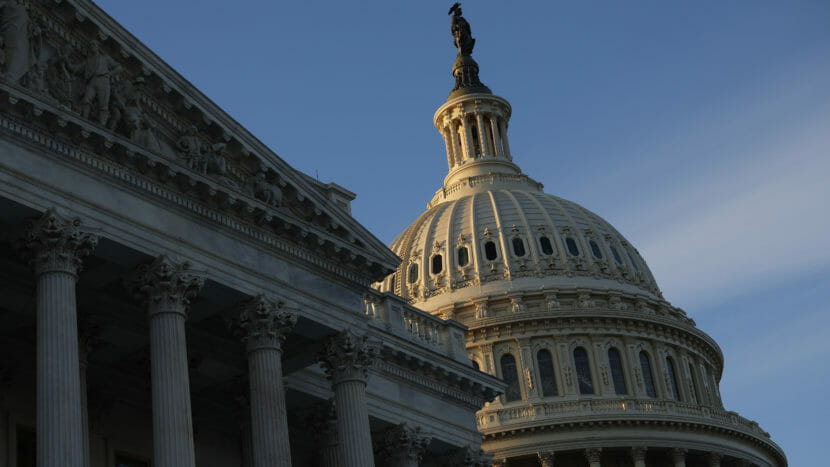
Some House Republicans want to leverage must-pass debt limit legislation to extract spending cuts, but President Biden and congressional Democrats aren’t interested in negotiating. (Anna Moneymaker/Getty Images)

The U.S. hit the debt limit — currently $31.4 trillion — on Thursday, intensifying a high-stakes political battle already underway in Washington.

Some House Republicans want to leverage must-pass legislation to raise the nation’s borrowing authority to extract federal spending cuts in an effort to balance the federal budget — but that could mean looking for cuts in some of the country’s most popular social programs.

“Look, you only have so many leverage and negotiating points. The debt ceiling is one of those. Nobody in America wants us to blindly just raise the debt ceiling again if we don’t get structural reforms around here. Nobody wants that,” Rep. Chip Roy, R-Texas, told reporters last week.

Roy was part of a group of hard-right conservatives who extracted handshake agreements from Rep. Kevin McCarthy, R-Calif., in order for him to get their votes to become House speaker. As part of that, McCarthy is pledging to fight for spending cuts at all turns in this Congress.

President Biden and congressional Democrats say they will not engage in negotiations on the nation’s borrowing authority. “Congress must deal with the debt limit and must do so without conditions,” White House press secretary Karine Jean-Pierre reiterated this week.

The Treasury Department says “extraordinary measures” to cover the debt will be exhausted by June. If Congress fails to raise the debt limit before then, it will result in an unprecedented debt default, which could have catastrophic economic consequences worldwide.

Even political brinkmanship around raising the debt limit can have consequences, as it did in 2011, when a standoff between congressional Republicans and the Obama administration roiled the stock market and led to the first ever credit rating downgrade for the U.S. government.

“After witnessing a month of wrangling over raising the debt ceiling, they doubted our political system’s ability to act,” President Barack Obama said at the time.

This time, Republicans are raising the stakes — and their demands

First, many Republicans want concessions in the form of steep cuts in annual discretionary spending bills that cover every aspect of the federal government, except for the Defense Department. Rep. Mark Amodei, R-Nev., sits on the House Appropriations Committee, which determines that annual spending, and he points out that nonmilitary discretionary spending is a tiny fraction of what drives the debt.

“But if you want to be honest about it and you’re saying the budget’s a big deal, it’s like, well, you got to go where the money is,” he says. And that money is in entitlements that make up the nation’s social safety net: Medicare, Medicaid, Social Security. If some Republicans want to try to change those, Amodei has a piece of advice for them: “Better have your helmet and your chin strap on.”

The Republican Party does not have a successful track record when it comes to trying to change the social safety net. Former President George W. Bush tried and failed to overhaul Social Security for future retirees. Then-Rep. Paul Ryan’s support for shifting Medicare from a guaranteed benefit to a voucher system was a core target of Democratic attack in the 2012 presidential race, when Ryan was Mitt Romney’s running mate. One liberal group ran a now-infamous wordless attack ad that depicted a Ryan look-alike pushing a granny off a cliff.

For deficit hawks like Maya MacGuineas, who runs the nonpartisan Committee for a Responsible Federal Budget, a new round of debating the nation’s fiscal future is — on the one hand — quite welcome. “We are getting to the point where you just can’t delay it much longer at all because both of the trust funds for those programs are heading toward insolvency in a very short amount of time,” she says.

But on the other hand, MacGuineas says, Congress should never flirt with a debt default to try to extract those budget reforms. “There should be no discussion of defaulting, anywhere. The most important thing is we lift this debt ceiling without drama.”

Leslie Dach worked in the Obama administration and now runs the liberal health care advocacy group Protect Our Care. He says Republicans are pushing for a political fight with no clear plan for a policy win, with Democrats unified in opposition and in control of the Senate and White House. “Lighting the fuse and thinking that you can stomp it down before it reaches the dynamite is not a very good strategy,” he says.

McCarthy faces a delicate balancing act of assuring the public that his party will not allow a debt default, as he did again last week.

“We don’t want to put any fiscal problems through our economy, and we won’t,” he told reporters, at the same time insisting that Republicans will cut spending. “We’ve got to change the way we are spending money wastefully in this country, and we’re going to make sure that happens.”

For now, McCarthy is the only leader at the negotiating table.

Copyright 2023 NPR. To see more, visit https://www.npr.org.

Transcript :

A MARTÍNEZ, HOST:

Treasury Secretary Janet Yellen says the nation is projected to hit its debt limit today, which raises the stakes of the partisan tug of war underway in Washington. Some House Republicans want to leverage must-pass legislation to raise the nation’s borrowing authority to extract spending cuts. Now, that could mean looking for those cuts in some of the country’s most popular social programs. NPR political correspondent Susan Davis previews the confrontation.

SUSAN DAVIS, BYLINE: In order to win the votes to become speaker, California Republican Kevin McCarthy had to make promises, a lot of promises. And one of them was a pledge to fight for federal spending cuts at all turns in this Congress. Here’s one of the conservatives who extracted that promise, Texas Republican Chip Roy.

(SOUNDBITE OF ARCHIVED RECORDING)

CHIP ROY: Look; you only have so many leverage and negotiating points. The debt ceiling is one of those. Nobody in America wants us to blindly just raise the debt ceiling again if we don’t get structural reforms around here. Nobody wants that.

DAVIS: But President Biden and congressional Democrats do want that, as White House Press Secretary Karine Jean-Pierre reiterated earlier this week.

(SOUNDBITE OF ARCHIVED RECORDING)

KARINE JEAN-PIERRE: Congress must deal with the debt limit and must do so without conditions.

DAVIS: The Treasury Department says extraordinary measures to cover the debt will be exhausted by June. If Congress fails to raise it before then, it would result in an unprecedented debt default, which could have catastrophic economic consequences worldwide. Even political brinksmanship around raising the debt limit can have consequences, as it did in 2011 when a standoff between congressional Republicans and the Obama administration roiled the stock market and led to the first-ever credit rating downgrade for the United States government. Here’s Obama.

(SOUNDBITE OF ARCHIVED RECORDING)

BARACK OBAMA: Because after witnessing a month of wrangling over raising the debt ceiling, they doubted our political system’s ability to act.

DAVIS: This time, Republicans are raising the stakes and the demands. First, many want concessions for steep cuts in annual discretionary spending bills that cover every aspect of the federal government, except the Pentagon. Nevada Republican Mark Amodei is on the Appropriations Committee, which determines that annual spending. And he points out that non-military discretionary spending is a tiny fraction of what drives the debt.

(SOUNDBITE OF ARCHIVED RECORDING)

MARK AMODEI: But if you want to be honest about it and you’re saying the budget’s a big deal, it’s like, well, you got to go where the money is.

DAVIS: And that money is in entitlements that make up the nation’s social safety net, Medicare, Medicaid, Social Security. And if some Republicans want to try to change those, Amodei has a piece of advice for them.

(SOUNDBITE OF ARCHIVED RECORDING)

AMODEI: Better have your helmet and your chin strap on.

DAVIS: The Republican Party does not have a successful track record when it comes to trying to change the social safety net. Former President Bush tried and failed to overhaul Social Security for future retirees. Former Speaker Paul Ryan’s support for shifting Medicare from a guaranteed benefit to a voucher system was a core Democratic attack in the 2012 presidential race when he was Mitt Romney’s running mate. One liberal group ran a now infamous wordless attack ad that depicted a Paul Ryan lookalike pushing a granny off a cliff as “America The Beautiful” plays in the background. For deficit hawks like Maya MacGuineas, who runs the nonpartisan Committee for a Responsible Federal Budget, a new round of debating the nation’s fiscal future is, on the one hand, quite welcome.

MAYA MACGUINEAS: We are getting to the point where you just can’t delay it much longer at all because both of the trust funds for those programs are headed towards insolvency in a very short amount of time.

DAVIS: But on the other hand, MacGuineas says, Congress should never flirt with a debt default to try to extract those budget reforms.

MACGUINEAS: There should be no discussion of defaulting anywhere. The most important thing is that we lift this debt ceiling without drama.

DAVIS: Leslie Dach worked in the Obama administration and now runs the liberal health care advocacy group Protect Our Care. He said Republicans are pushing for a political fight with no clear plan for a policy win with Democrats in control of the Senate and White House.

LESLIE DACH: Lighting the fuse and thinking that, you know, you can stomp it down before it reaches dynamite is not a very good strategy.

DAVIS: McCarthy faces a tricky balance of assuring the public his party will not allow a debt default, as he did just last week.

(SOUNDBITE OF ARCHIVED RECORDING)

KEVIN MCCARTHY: We don’t want to put any fiscal problems to our economy, and we won’t.

DAVIS: But equally insisting that Republicans will cut spending.

(SOUNDBITE OF ARCHIVED RECORDING)

MCCARTHY: We’ve got to change the way we are spending money wastefully in this country. And we’re going to make sure that happens.

DAVIS: Right now, he’s the only leader at the negotiating table.

Susan Davis, NPR News, Washington. Transcript provided by NPR, Copyright NPR.

Social isolation linked to an increased risk of dementia, new study finds

""
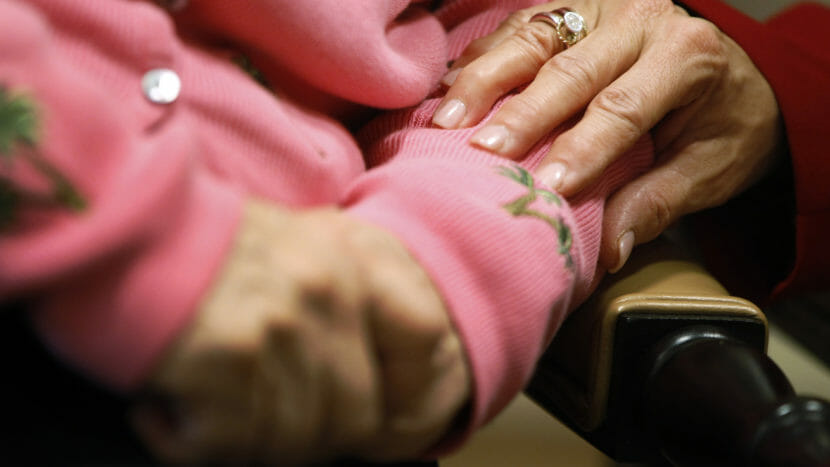
Older people who have few social connections and interactions are at a higher risk for developing dementia, a new study has found. (Charles Dharapak via AP)

Socially isolated older adults have a 27% higher chance of developing dementia than older adults who aren’t, a new study by Johns Hopkins researchers found.

“Social connections matter for our cognitive health, and it is potentially easily modifiable for older adults without the use of medication,” Dr. Thomas Cudjoe, an assistant professor of medicine at Johns Hopkins and a senior author of the study, said in a news release.

Published in the Journal of the American Geriatrics Society, the study tracked 5,022 dementia-free U.S. adults who were 65 or older – with an average age of 76 – and not living in a residential care facility. About 23% of participants were socially isolated.

Social isolation is defined as having few relationships and few people to interact with regularly. The study measured this based on whether or not participants lived alone, talked about “important matters” with two or more people in the past year, attended religious services or participated in social events. Participants were assigned one point for each item, and those who scored a zero or one were classified as socially isolated.

Over the course of nine years, researchers periodically administered cognitive tests. Overall, about 21% of the study participants developed dementia. But among those were who were socially isolated, about 26% developed dementia – compared to slightly less than 20% for those who were not socially isolated.

The study did not find significant differences by race or ethnicity. However, more than 70% of the participants in the study were white – with particularly small sample sizes of Hispanic, Asian and Native participants – and the authors call for further research on the topic.

Social isolation has previously been known as a dementia risk factor and is linked to other serious health conditions such as heart disease and depression, according to the Centers for Disease Control and Prevention.

About 5.8 million people in the U.S. have Alzheimer’s disease, which is the most common type of dementia, according to the CDC.

Social engagement can improve the quality of life for patients living with dementia and slow its progression.

A second study using related data found that access to technology such as cell phones can prevent social isolation among older adults.

“This is encouraging because it means simple interventions may be meaningful,” Mfon Umoh, a postdoctoral fellow in geriatric medicine at Johns Hopkins, said in a news release.

Copyright 2023 NPR. To see more, visit https://www.npr.org.

Anti-Defamation League survey finds a spike in antisemitic beliefs

A police car parked outside a synagogue
A police vehicle sits near the Congregation Beth Israel synagogue in Colleyville, Texas, on Jan. 16, 2022. Four people were held hostage at the synagogue for more than 10 hours by a gunman before being freed, one of a spate of antisemitic acts that took place last year. (Brandon Bell/Getty Images)

The percentage of Americans who believe in a number of antisemitic tropes has spiked in the past three years, according to the results of an Anti-Defamation League survey released Thursday.

ADL leaders say years of antisemitic rhetoric from former President Donald Trump, along with emboldened violent extremism and lax social media policies are to blame.

The survey, which asked respondents to rate the truthfulness of 14 different traditional negative stereotypes about Jews, found that about one in five American adults say they agree with at least six such sentiments. That’s compared to about one in nine in 2019, the last time this survey was conducted.

The 2022 survey, conducted last fall among 4,000 respondents, found roughly 70% agree with the statement “Jews stick together more than other Americans” and more than half agree with “Jews in business go out of their way to hire other Jews.” One in three respondents agreed that “Jews do not share my values” and about 26% agreed with “Jews have too much power in the business world.”

“What these findings represent, what they tell us, and what creates such urgency is the fact that large, huge numbers of Americans hold dangerous, false ideas about the Jewish people,” ADL CEO Jonathan Greenblatt said in a news conference. “While it is very encouraging that the vast majority of our country doesn’t hold these ideas, 50 plus million people is worrisome and it means we’ve got work to do.”

The organization has measured agreement with these anti-Jewish tropes since 1964. Findings from that initial survey represented the peak of antisemitic beliefs, showing nearly a third of American adults then agreed with six or more of the statements. The numbers in 2022 are the highest since 1992. The decades in between show relatively lower levels of belief in antisemitic tropes. The ADL expressed alarm over the sudden jump from roughly one in nine Americans’ belief in several antisemitic tropes in 2019 to one in five in 2022.

Separate data collection by the ADL has found the volume of documented reports of antisemitic harassment, vandalism and violence rising consistently since about 2015, in contrast to the more recent spike in anti-Jewish attitudes.

Matt Williams, vice president of the ADL’s Center for Antisemitism Research, said that researchers have found that people are being more honest about their biases compared to decades ago.

“So one of the things we could be seeing is people agreeing with these [tropes] more. Another thing that we could be saying is people willing to admit that they agree with these [tropes] more. Both of which are cause for different kinds of concern,” Williams said.

Copyright 2023 NPR. To see more, visit https://www.npr.org.

Exxon climate predictions were accurate decades ago. Still it sowed doubt

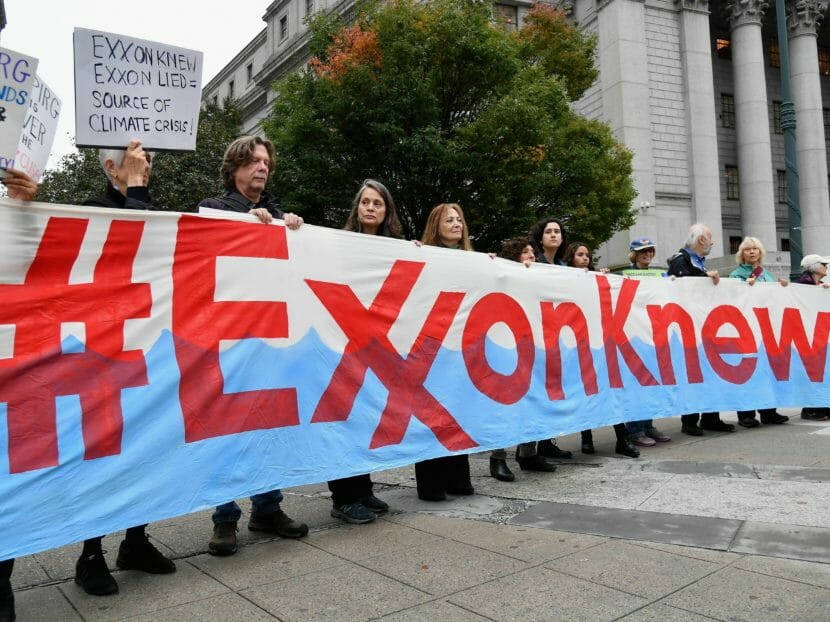
Climate activists protest on the first day of the Exxon Mobil trial outside the New York State Supreme Court building on October 22, 2019 in New York City. ExxonMobil was found not guilty of misleading investors about how climate change would affect its finances. (Angela Weiss/AFP via Getty Images)

Decades of research by scientists at Exxon accurately predicted how much global warming would occur from burning fossil fuels, according to a new study in the journal Science.

The findings clash with an enormously successful campaign that Exxon spearheaded and funded for more than 30 years which cast doubt on human-driven climate change and the science underpinning it. That narrative helped delay federal and international action on climate change, even as the impacts of climate change worsened.

Over the last few years, journalists and researchers revealed that Exxon did in-house research that showed it knew that human-caused climate change is real. The new study looked at Exxon’s research and compared it to the warming that has actually happened.

Researchers at Harvard University and the Potsdam Institute for Climate Impact Research analyzed Exxon’s climate studies from 1977 to 2003. The researchers show the company, now called ExxonMobil, produced climate research that was at least as accurate as work by independent academics and governments — and occasionally surpassed it.

That’s important because ExxonMobil and the broader fossil fuel industry face lawsuits nationwide claiming they misled the public on the harmful effects of their products.

“The bottom line is we found that they were modeling and predicting global warming with, frankly, shocking levels of skill and accuracy, especially for a company that then spent the next couple of decades denying that very climate science,” says lead author Geoffrey Supran, who now is an associate professor of environmental science and policy at the University of Miami.

The Earth already has warmed a little more than 1 degree Celsius (about 2 degrees Fahrenheit) compared to pre-industrial times of the late 1800s. That warming has led to extreme weather in recent years, including heat waves, droughts and floods. The researchers found, for example, that Exxon’s own modeling charted this kind of temperature increase.

“Specifically, what we’ve done is to actually put a number for the first time on what Exxon knew, which is that the burning of their fossil fuel products would heat the planet by something like 0.2 [degrees] Celsius every single decade,” Supran says.

ExxonMobil’s response

While ExxonMobil has not addressed the specifics in this paper, the company did respond before the research was published.

“This issue has come up several times in recent years and, in each case, our answer is the same: those who talk about how ‘Exxon Knew’ are wrong in their conclusions,” wrote ExxonMobil spokesman Todd Spitler in a statement.

The campaign to reveal what ExxonMobil knew and when has coalesced on social media under the hashtag #ExxonKnew.

“ExxonMobil’s understanding of climate science has developed along with that of the broader scientific community,” said Spitler. He said “well intended, internal policy debates” have been recast by some “as an attempted company disinformation campaign.”

Spitler pointed to a related 2019 case ExxonMobil won in New York and specifically highlighted a section on page 37 of the 55-page ruling, in which, Justice Barry Ostrager of the New York State Supreme Court wrote:

“What the evidence at trial revealed is that ExxonMobil executives and employees were uniformly committed to rigorously discharging their duties in the most comprehensive and meticulous manner possible….The testimony of these witnesses demonstrated that ExxonMobil has a culture of disciplined analysis, planning, accounting, and reporting.”

In that case the New York Attorney General’s Office failed to show the company broke state law and deceived investors by allegedly downplaying the effects climate change would have on ExxonMobil’s finances.

As NPR reported at the time, Ostrager also wrote, “Nothing in this opinion is intended to absolve ExxonMobil from responsibility for contributing to climate change through the emission of greenhouse gasses in the production of its fossil fuel products,” and Ostranger added, “this is a securities fraud case, not a climate change case.”

Research could aid climate lawsuits

ExxonMobil has a lot at stake in arguing that it did not mislead investors or the public about what it knew about the climate-warming effects of fossil fuels, and when.

The company faces more than 20 lawsuits brought by states and local governments for damages caused by climate change. Baltimore was among the first and last year, cities in Puerto Rico filed a racketeering lawsuit against fossil fuel companies, industry groups and others claiming they conspired to mislead the public about climate change.

This new research could provide more evidence for those cases as they progress through the courts, says Karen Sokol, a law professor at Loyola University in New Orleans.

“What Exxon scientists found and what they communicated to company executives was nothing short of horrifying,” says Sokol. Given how science works, she says that should have prompted the company to raise an alarm to the public and policy-makers.

“Imagine that world and the different trajectory that consumers, investors and policymakers would have taken when we still had time, versus now when we’re entrenched in a fossil fuel based economy that’s getting increasingly expensive and difficult to exit,” says Sokol.

She says that provides “significant evidence” of the kind of deception and law-breaking that many of the lawsuits are based on.

ExxonMobil and the broader fossil fuel industry have sought to stop lawsuits by getting states to pass laws to block municipalities from suing, according to the watchdog group Center for Climate Integrity.

The industry also has tried to move the cases to potentially-friendlier federal courts, arguing they’re of national significance. In August the U.S. Circuit Court of Appeals in Philadelphia declined to do that for a 2020 case brought by the state of Delaware and city of Hoboken, N.J. Delaware sought compensation for lost property value because of climate-induced sea level rise and flooding. Hoboken wants money to pay for current and future costs.

As the largest U.S. oil company, ExxonMobil often faces more scrutiny from activists. The company now says it’s “committed to being part of the solution to climate change and the risks it poses.” Climate activists are skeptical but one thing is clear: questions over the company’s history of stalling climate action will be the subject of legal battles for years.

Copyright 2023 NPR. To see more, visit https://www.npr.org.

Site notifications
Update notification options
Subscribe to notifications