ProPublica

ProPublica is an independent, non-profit newsroom that produces investigative journalism in the public interest.
Fatal crash renews concerns about safety of Alaska aviation

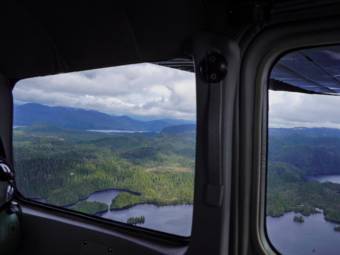
View of Misty Fjords National Monument from a float plane on Aug. 1. (Molly Lubbers/KRBD).

This story was originally published by ProPublica.

A fatal crash involving a sightseeing flight near Ketchikan, Alaska, last week renewed concerns about aviation safety in a state that accounts for more deaths in small commercial aircraft crashes than anywhere else in the nation.

Six people — a pilot and five passengers — died Thursday when a de Havilland Beaver float plane went down eight miles northeast of the Southeast Alaska city of 8,000 that is a cruise ship hot spot. The passengers had been aboard the Holland America Line cruise ship the Nieuw Amsterdam, which only recently resumed operations in the state after a pause related to the COVID-19 pandemic.

The National Transportation Safety Board has started an investigation. So far this year, 13 people have died in three fatal small commercial crashes, including the latest. The past year and a half has been particularly deadly for small commercial aviation despite COVID-19 limiting air travel. Last year, 15 people died in crashes involving such flights, the highest total since 2013, and this year has nearly equaled that figure with more than four months still left in the year.

The crashes are raising concerns.

“It’s very distressing to see yet another sightseeing accident occur,” said Robert Sumwalt, recently retired chairman of the NTSB, which released a final report this spring on a 2019 sightseeing plane crash in the same area. “I feel that this accident just shows there’s still a lot of work to be done.”

A KUCB and ProPublica investigation in June found that Alaska is home to a growing share of the country’s crashes involving small commercial aircraft. Over the past two decades, the number of deaths in crashes involving these operators has plummeted nationwide, while in Alaska deaths have held relatively steady. As a result, Alaska’s share of fatalities in such crashes has increased from 26% in the early 2000s to 42% since 2016. Our analysis included crashes involving at least one plane or helicopter flying under the Federal Aviation Administration’s typical rules for commuter, air taxi or charter service. (The flight safety record of large air carriers is strong both in Alaska and nationally.)

Experts, including Sumwalt, told the news organizations that the Federal Aviation Administration could be doing more to improve the safety of air travel in Alaska. The FAA said it has made the issue a top priority.

This is not the first crash near Ketchikan, where flightseeing tours of the Misty Fjords National Monument are popular for their glorious views of the area’s glacial valleys and steep cliffs.

In late July 2007, sisters Jeanne Eddy and Marianne McManus died alongside their husbands when their sightseeing plane crashed into mountains near Ketchikan while visiting Alaska on a cruise. “This crash is a little eerier since it seems to be in roughly the same spot,” said Bill Heuer, their brother.

Heuer and his family don’t live in Alaska, but since their family disaster, they have become aware of other commercial crashes in the state. “It brings back lots of unhappy thoughts,” he said.

In May 2019, a midair collision near Ketchikan killed six people. In June 2015, a plane returning from the Misty Fjords collided with a mountain, killing the pilot and eight passengers. In July 2007, a plane was destroyed, killing all five on board, when it crashed in mountainous tree-covered terrain about 40 miles northeast of Ketchikan. Passengers from cruise ships were aboard all three flights.

Thursday’s crash also isn’t the first involving its operator, Southeast Aviation LLC, which has a fleet of six-passenger float planes. Last month, a Southeast Aviation floatplane crashed during takeoff near the Prince of Wales Island community of Coffman Cove. The pilot was the only person on board and was not injured. The pilot in last month’s crash, Rolf Lanzendorfer, was also the pilot in Thursday’s crash, according to the NTSB. Lanzendorfer had worked as a pilot for Southeast Aviation since May 2015.

In 2012, a Southeast Aviation charter flight crashed into water on its way back to Ketchikan from a mine site on Prince of Wales Island. Shortly after departure, the weather deteriorated; the pilot later reported that heavy snow had reduced visibility to nearly zero. The pilot and passenger were both injured, but survived.

Southeast Aviation issued a statement Thursday that said, “All of us share in the anguish of this tragic incident, and our prayers go out to all affected.” The company did not return a call or email seeking further comment. It is one of 14 commercial operators that have worked together to establish safe operating procedures for flying in Ketchikan and the Misty Fjords National Monument Wilderness area.

Over the years, advances in technology have been developed to help prevent aviation accidents. Computer systems called Automatic Dependent Surveillance-Broadcast, or ADS-B, have been associated with a decrease in accidents and are required in nearly all of the lower 48 states. However, the rule only applies to controlled airspace, which the Federal Aviation Administration agency defines in a way that excludes most of Alaska, including Ketchikan and the Misty Fjords.

The Southeast Aviation plane was equipped with ADS-B, but it is too soon to know if the technology was working properly or whether it could have helped to prevent the accident.

Hours after the flight disappeared, the U.S. Coast Guard located the plane’s wreckage in a steep mountainous area near Misty Fjords. On Saturday, the Alaska State Troopers and Ketchikan Volunteer Rescue Squad recovered the bodies of the crash victims.

In addition to the pilot, state troopers have identified the five Holland America cruise ship passengers as: Mark Henderson and Jacquelyn Komplin of Napa, California; Andrea McArthur and Rachel McArthur of Woodstock, Georgia; and Janet Kroll of Mount Prospect, Illinois.

The NTSB sent a team to Ketchikan to investigate the accident. It can take years for the NTSB to finish an investigation and determine the probable cause of an accident.

On Saturday — two days after this accident — the Coast Guard rescued two people from another plane crash on a lake in the Misty Fjords National Monument. The private plane crashed during takeoff, and no injuries were reported.


Commercial aviation is essential to life here. It’s also home to a growing share of the country’s deadly crashes.

ProPublica is a Pulitzer Prize-winning investigative newsroom. Sign up for The Big Story newsletter to receive stories like this one in your inbox.

On a clear day in May 2019, the tourist season was just starting up in Ketchikan, Alaska, a southeastern city of 8,000 that had become a cruise ship hot spot. For Randy Sullivan, that meant another day — his fifth in a row — of flying sightseeing tours and charters. Sullivan and his wife, Julie, owned Mountain Air Service, a single-plane family business that had allowed Randy to realize his dream of becoming his own boss. Randy was born and raised in Alaska. He grew up in Ketchikan and had been flying in the area for more than 17 years. He, more than most, knew the dangers of commercial aviation in the state.

“When Randy first started flying up here in Alaska, he learned from some of the best pilots up here and he valued everything they taught him,” Julie said. “Safety was number one for Randy.”

For the 10 a.m. flight, his first of the day, he met his four passengers from the Royal Princess cruise ship at the dock. They boarded his single-engine, propeller-driven, red-and-white floatplane for a tour of Misty Fjords National Monument, 35 miles northeast of Ketchikan. This picturesque landscape, filled with glacial valleys and steep cliffs, is such a popular and crowded flightseeing destination that local operators banded together a decade earlier to create their own voluntary safety measures for flying in the area, including designating radio channels for communication and routes for the planes to follow.

After noon, Sullivan’s de Havilland DHC-2 Beaver was on its way back to town. Another commercial carrier, Taquan Air, was flying one of its own airplanes, also on a flightseeing tour, back to Ketchikan. The two planes collided at about 3,350 feet. The accident destroyed the Beaver and killed all five aboard, including Sullivan, as well as one passenger from the Taquan Air plane. All 10 survivors were injured.

Julie Sullivan’s husband, Randy, was killed in a plane crash in 2019. She has the tail number of the plane Randy flew tattooed on her wrist. (Credit: Ash Adams, special to ProPublica)

Shannon Wilk lost three family members in the midair collision, including her brother Ryan, who was on Sullivan’s plane.

“I didn’t think the next time I’d be in the same room with him, he would be in a casket,” Shannon said. The crash also claimed the lives of Ryan’s wife, Elsa, and Elsa’s brother, Louis Botha. “I thought he’d get home, we’d keep getting pictures, we’d talk about it and we’d just keep going.”

The National Transportation Safety Board, an independent governmental agency that investigates transportation accidents, eventually determined that the pilots of the aircraft saw each other too late to take evasive action, calling it an example of the limitations of avoiding midair collisions by relying only on what pilots can see through the window.

Fatal midair collisions involving commercial aircraft are practically unheard of in the rest of the country, but in Alaska, there have been five in the past five years alone. In each of them, at least one plane either lacked a key piece of optional safety equipment or wasn’t using it properly.

More broadly, in recent years Alaska has made up a growing share of the country’s crashes involving small commercial aircraft, according to an investigation by KUCB and ProPublica. In the past two decades, the number of deaths in crashes involving these operators has plummeted nationwide, while in Alaska, deaths have held relatively steady. As a result, Alaska’s share of fatalities in such crashes has increased from 26% in the early 2000s to 42% since 2016. Our analysis included crashes involving at least one plane or helicopter flying under the Federal Aviation Administration’s typical rules for commuter, air taxi or charter service. (The flight safety record of large air carriers is strong in both Alaska and nationally.)

Alaska’s Growing Share of Small Commercial Aircraft Fatalities

The state’s share of deaths from crashes involving commuter, air taxi and charter planes made up an increasing portion of the country’s total in the past decade.

Note: Each bar in the chart depicts the percentage from the preceding five years; the listed year is the last in the range (i.e. the bar labeled 2020 represents the share from 2016-2020). Crashes involved at least one aircraft that fell under Part 135 of the FAA’s regulations. (Credit: Agnel Philip/ProPublica; Source: National Transportation Safety Board)

Alaska’s increased share of aviation deaths can be attributed, at least in part, to its continued reliance on smaller operators, which have worse safety records than large airlines but appear to have waned in popularity outside the state, according to experts.

In interviews with KUCB and ProPublica, federal officials, lawyers and aviation safety experts said the FAA, which oversees air travel in the country, carries much of the responsibility for improving aviation safety in the state. Some say the agency has been slow to adopt rules and provide additional support for the unique conditions in Alaska, leaving pilots and customers to fend for themselves. Some critics also say the FAA has struggled to hold operators accountable for questionable safety track records.

While it has long been known that flying in Alaska is more dangerous than in the lower 48, there are fewer safeguards in the state than almost anywhere else in the country. Because much of Alaska is considered uncontrolled airspace, pilots flying in large areas of the state have limited access to weather and traffic information.

That leaves pilots, many of whom come to the state to get their first commercial flying experience, on their own to navigate rapidly changing weather, mountainous terrain and challenging landings at small rural airports with unpaved, poorly lit runways. Flights can turn deadly even in the hands of experienced pilots.

The NTSB has been among the most vocal entities pushing the FAA to change its approach in the state. The NTSB is responsible for making recommendations to prevent future accidents, but it lacks the authority to enact them. Following a roundtable meeting in 2019 focused on improving small-plane aviation, the NTSB issued a safety recommendation asking the FAA to review and prioritize Alaska’s aviation safety needs and ensure it’s making progress on implementing safety enhancements.

“I think the FAA has acknowledged that they can do something. They have indicated a willingness to make some improvements,” NTSB Chairman Robert Sumwalt said. “We want them to quit studying this issue. We want them to move forward and implement this.”

The FAA, however, hasn’t implemented many of the NTSB’s recent safety recommendations, including requiring small operators to collect and analyze their flight data in ways that many large commercial air carriers do voluntarily. The NTSB also has asked the FAA to install equipment throughout Alaska that would allow pilots to fly using navigation systems, which is safer than operating by sight, especially when pilots encounter poor weather and visibility.

The FAA declined an interview request but said in a written statement that it had created a new program, the Alaska Aviation Safety Initiative, to look at how the agency is providing resources to the state, their effectiveness, and what more can be done. This group is seeking feedback from the aviation community on the most pressing issues.

“Improving aviation safety in Alaska has long been and remains one of the FAA’s top priorities,” the agency said in its statement. “The FAA’s approach is based on the understanding that safety is a journey, not a destination, and our work will never be done.”

Some experts say additional regulations may not effectively address existing safety concerns and instead put the onus on individual operators to raise their standards.

“Additional rules are not necessarily the immediate answer,” said Jens Hennig, vice president of operations at the General Aviation Manufacturers Association and a member of several FAA rule-making committees. “In many cases, realizing that level of safety gets into many intangible things. What’s the safety culture in the operator? I can’t regulate that.”

Hennig and others say companies can adopt many tools and technologies to improve safety, although they acknowledge that the FAA could do a better job of outreach in Alaska.

One week after the May 2019 crash that killed Randy Sullivan and five others, another Taquan Air floatplane, a type of aircraft that allows for water landings and is popular in Alaska, flipped upon landing in Metlakatla’s harbor and killed 31-year-old epidemiologist Sarah Luna and pilot Ron Rash. It was Rash’s first commuter flight with Taquan.

Sarah Luna (Credit: Courtesy of Laura Luna)

The NTSB determined the probable cause of the accident was the pilot’s failure to compensate for an off-center tailwind while landing. New pilots, like Rash, were not expected to perform tailwind landings, so they were not taught how to do them during Taquan’s flight training, the NTSB said in its final investigation report. Also contributing to the crash, according to the NTSB, was Taquan’s decision to assign an inexperienced pilot to a destination prone to challenging downdrafts and changing wind conditions.

Taquan declined requests for an interview.

In a letter to the NTSB in 2020, Taquan’s chief pilot said the company had identified significant safety issues, including pilot competency and hazards in water takeoffs and landings. In response, it added pilot competency checks, created checklists to grade new hires on certain tasks, and requires each new pilot to get a minimum of 10 hours of initial operating experience.

Luna’s parents said she knew the risks inherent in commercial aviation in Alaska. But her dedication to her work at the Alaska Native Tribal Health Consortium and her commitment to improving the health of Alaska Native people were greater than her fear. Luna began working in Alaska in June 2018 as part of the consortium’s liver disease and hepatitis program. The flight to Metlakatla, where she’d be meeting patients in person, was her first floatplane ride and her first trip off the road system.

“What happened is not acceptable,” Sarah’s mother, Laura Luna, said in March. “Even though it’s almost two years, it’s like it happened yesterday.”

“Aviation Is Kind of a Lifeline”

Flying in the country’s largest state is unlike flying anywhere else. Because of the state’s small, spread-out population, commercial aviation is dominated by small planes. While larger planes fly to hub communities like Bethel, Nome or Unalaska, they cannot fly to smaller villages because there’s neither the passenger demand nor the infrastructure to support them.

About 80% of Alaska communities are not on the road system, and for the people who live in those places, flying is simply unavoidable. Planes serve as buses for kids traveling to sporting events and other school activities. They transport pregnant women to hospitals where they can safely deliver, and they carry residents to medical appointments not available in their hometowns. They take sexual assault victims to big cities for forensic examinations.

“In Alaska, aviation is kind of a lifeline,” said John Hallinan, a retired FAA flight standards officer who worked at the regional office in Anchorage. “If you shut down service for any particular reason, there’s an impact that’s felt within the community.”

But Alaska lacks infrastructure that is standard in the lower 48. For example, it has 235 state-owned rural airports, of which only 47 are paved. Plus, rural airports are not staffed at all hours of the day.

“What it means is you’re on your own more,” said Tom George, the Alaska regional manager for the Aircraft Owners and Pilots Association, a national nonprofit aviation group. “The weather you see out the window is the weather you have to consider and use as your basis for making decisions, as opposed to being able to call up on the radio and find out 50 to 60 miles ahead of you what conditions are like at the moment.”

Despite the state’s inherent dangers, there are limited safeguards in place.

When most people fly commercially in America, they travel on large jet planes from companies like Delta, United and American Airlines. These airlines face the strictest regulations because fatal crashes involving these planes have killed large numbers of people. For example, their pilots typically need to have at least 1,500 hours of flying experience.

While some large air carriers do operate in Alaska, particularly the eponymous Alaska Airlines, there are far more small, often piston or turboprop planes that are well-suited to the state’s unique terrain and limited infrastructure. Pilots for small operators, like Taquan Air, can have as little as 500 hours of experience. They can also fly more hours annually than pilots working for large carriers and are subject to different rest-time requirements.

Nationally, commuter, air-taxi and charter flights were involved in fatal crashes at a far higher rate than large air carrier flights in the past decade.

But it isn’t possible to calculate what the crash rate of small commercial flights was in Alaska compared to the rest of the country because such calculations require knowing the varying amounts of activity between different areas. But the FAA doesn’t release data on the number of flight hours for most of these operations by state or region, and it denied a Freedom of Information Act request from the news organizations because the data is collected and kept by a third-party contractor on behalf of the FAA. KUCB and ProPublica have appealed the denial.

Alaska’s dangerous flying conditions have claimed the lives of numerous high-profile figures, including several politicians.

In 1972, a plane crashed on its way to Juneau carrying then-U.S. House Majority Leader Hale Boggs and Rep. Nick Begich of Alaska. The plane has never been found.

On Aug. 9, 2010, a float-equipped 11-seat airplane carrying guests from a company lodge owned by telecom company GCI to a camp for an afternoon of fishing crashed into mountainous tree-covered terrain about 10 miles outside of Aleknagik, a small city in the Bristol Bay region. The crash killed the pilot and four passengers, including former U.S. Sen. Ted Stevens of Alaska, who had survived a 1978 plane crash that killed his first wife. The four surviving passengers were seriously injured.

The Stevens crash was strongly felt in the state’s aviation community, as he had been a champion for additional funding and Alaska-specific modifications to federal aviation regulations.

“Anybody that lives here knows somebody, it seems, that has died in an accident. People that are this close to a lack of safety are very invested in making it better,” Hallinan said. “Sen. Stevens was very invested in trying to get Alaska up to some kind of level of safety that was on par with the contiguous 48 states.”

Last July, the private plane of Alaska State Rep. Gary Knopp and a chartered plane carrying six people collided south of Anchorage, killing all seven.

And in March, five people — including the Czech Republic’s richest man, billionaire Petr Kellner — were killed on a heli-skiing trip when their helicopter crashed near Knik Glacier.

Combating “Bush Syndrome”

It’s been 41 years since the NTSB first issued a special report on air-taxi safety in Alaska. Data collected between 1974 and 1978 showed that the nonfatal air-taxi crash rate was almost five times higher than the rate in the rest of the nation, and the fatal crash rate was more than double.

The study found three main culprits for Alaska’s high crash rate: “bush syndrome,” defined as a pilot voluntarily taking on unnecessary risks to complete a flight; substandard airport facilities and poor communication of airfield and runway conditions; and inadequate weather information and navigational aids.

Fifteen years later, the NTSB published another safety study specifically about Alaska, which reiterated many of the same concerns, saying pilots and operators faced pressure to provide reliable air service in “an operating environment and aviation infrastructure that are often inconsistent with these demands.”

“I cannot tell you how many phone calls I’ve gotten over the years from people in Unalaska and other parts of the state, calling me personally on my cell phone, saying, ‘Why did you cancel the flight? The winds are not blowing now,’” said Danny Seybert, the former owner and chief executive of PenAir, once Alaska’s second-largest commuter airline, which offered scheduled passenger service as well as charters. PenAir closed in 2020 following a series of bankruptcies and a fatal 2019 plane crash in Unalaska while under the ownership of Ravn Air Group. “There’s a lot of pressure generated from people that live and work in these communities to travel on time and exactly when the flight is scheduled to go, no matter what.”

The FAA has embarked on numerous programs to improve safety in the state. For example, in 1999, the agency began a program to deploy weather cameras that would help provide a near-real-time view of conditions in sites across Alaska. Some 230 cameras have been installed.

One of its most significant efforts occurred between 1996 and 2006, when a joint industry and FAA research project called Capstone equipped aircraft in southeast Alaska and the Yukon-Kuskokwim Delta in the western part of the state with Automatic Dependent Surveillance-Broadcast systems. The ADS-B tech and its associated ground infrastructure was hailed as a marked improvement over traditional radar systems because it could provide information on weather and the location of nearby aircraft to pilots in areas radar didn’t reach before.

In the Yukon-Kuskokwim Delta, the aviation accident rate decreased by 47% between 2000 and 2004, after the Capstone project began.

The FAA deemed the project so successful that it moved to implement ADS-B nationwide. However, the rule only applies to most controlled airspace, which the agency defines in a way that excludes most of Hawaii and Alaska. According to Hennig, the GAMA vice president, Alaska lags far behind the rest of the country in terms of ADS-B-equipped planes.

The cost of ADS-B has gone down over the years. Today, Garmin sells full ADS-B devices for $5,295. The costs are relatively minor for even small operators, especially compared to the cost of their planes.

Some pilots, like Mountain Air’s Randy Sullivan, chose to install the technology because of its safety enhancements.

“[Randy] wanted to have the ADS-B in his plane because he knew how many floatplanes flew in the area and he wanted everybody to see him and to be able to see them,” Julie Sullivan said. “It was very important to have that device in his aircraft.”

Randy Sullivan’s son, Spencer, wears a hoodie with the tail number of his late father’s plane printed on the back. (Credit: Ash Adams, special to ProPublica)

Not Enough Deaths to Bring About Change

On Oct. 2, 2016, two pilots departed the Quinhagak Airport in the Yukon-Kuskokwim Delta with one passenger, headed for a 70-mile trip to Togiak. This was the pilots’ third of five scheduled flights that day, on a route that would ultimately bring them back to Bethel.

The captain, Timothy Cline, had worked for Hageland Aviation Services Inc. since 2015, while the second in command, Drew Welty, was in his first flying job, having finished flight training that spring at the University of Alaska Anchorage.

Just before noon, the turboprop Cessna 208B Grand Caravan collided with steep mountainous terrain, killing everyone on board.

Cline’s widow, Angela, told investigators that her husband was a fantastic pilot and that she didn’t believe this accident could have happened without some mechanical error, according to notes of the interviews included in the NTSB report. Cline had lost two friends in plane accidents in recent years — one had died two months before — and while he was a little worried, he didn’t have any specific concerns. “The accidents made him more safe and he did not take any chances. [Cline and his wife] had a fantastic life together and he did not ever want to lose that,” according to a summary of the interview. She could not be reached for this article.

The NTSB found the probable cause of the accident to be the pilots’ decision to continue flying into deteriorating weather and visibility. But the agency also cited Hageland’s policies, inadequate training and poor FAA oversight as contributing factors.

In May 2014 — two and a half years before the Togiak accident — the NTSB issued an urgent recommendation for the FAA to audit all aviation operations and training for operators owned by Hageland’s then-parent company HoTH Inc. This followed a 16-month period where the NTSB investigated five accidents involving Hageland aircraft and another incident in which one of its planes went off the runway. The audit resulted in at least 20 changes to company operations or policies, including flight training, aircraft maintenance and evaluating the riskiness of flights.

A number of associated entities — Ravn Air Group Inc., Ravn Air Group Holdings LLC, JJM Inc., HoTH, PenAir, Corvus Airlines Inc., Frontier Flying Service Inc., and Hageland Aviation Services — filed for Chapter 11 bankruptcy in April 2020. Many of the assets have since been sold and are now operated by new owners. Representatives for Hageland are winding down the estate of the former operating entity and declined to comment on this story.

The Togiak crash is one of Alaska’s most recent accidents that resulted in NTSB recommendations for improvement, including providing small commercial operators with access to better weather information. Nearly five years after the crash, none have been fully adopted by the FAA.

“The thing is the FAA has always been good at reacting to an accident and establishing a requirement after a major crash,” said Tom Anthony, director of the University of Southern California’s Aviation Safety and Security Program and a former FAA regional division manager for civil aviation security in the Western Pacific.

Experts noted that the nature of crashes in Alaska — typically involving small aircraft with few casualties — partly explains why those accidents get limited attention. When there are enough fatal accidents, said Hallinan, the retired Anchorage FAA flight standards officer, the issue gets more attention, which can help speed up changes in regulations and improve safety.

“Safety comes at a cost. It comes down to the flow of money. It’s awful to think about it like that,” he said. “What it comes down to [is] the expense that you can ask of a 737 operator versus what you can ask of somebody that is operating a couple of [small planes] — there’s just a different level of burden that’s associated with that.”

Sumwalt agreed. “I think perhaps from a policy point of view, once you have a large number of accidents, a large number of fatalities, that’s when it really gets the attention of the right people to make things happen,” he said. “I’m certainly not suggesting we need more fatalities, but I think oftentimes it is blood that gets things done in Washington.”

Unadopted Recommendations

The FAA doesn’t always move forward with the NTSB’s recommendations, and the agencies have disagreed more often in recent years.

A KUCB and ProPublica analysis of NTSB data found the safety board deemed that the FAA didn’t take adequate action on 37% of the recommendations it closed in the past decade, up from 20% in the 2000s and 15% in the 1990s. Other agencies within the Department of Transportation also saw increases over that time, but the FAA, which received far more recommendations than others, had among the highest overall percentages.

“I think it’s important to note that the NTSB doesn’t just pull safety recommendations out of thin air and say, ‘You need to do this,’” Sumwalt said. “These recommendations are written in blood. They’re a result of tragic, tragic accidents and crashes. And so therefore, we think it’s imperative that the regulator move forward with implementing these recommendations and implementing them in a timely fashion.”

Some of the unadopted recommendations relate to cost. The FAA is required by law to conduct a cost-benefit analysis before issuing new regulations; NTSB recommendations are not subject to that requirement. Sometimes the FAA opts to implement voluntary measures or guidance to improve safety rather than making the changes mandatory.

The FAA and NTSB often agree on the nature of a problem, but political forces get in the way of change, said Anthony, the former FAA regional division manager.

“In almost all cases, the FAA is in concordance with the NTSB on these recommendations, but there is frequently political pushback to say, ‘No, we don’t want that regulation. We shouldn’t have it. It’s too expensive. Can’t do it,’” he said. “I was actually shocked when different aviation organizations would say, ‘No, we don’t want to do that’ [to] ideas we felt in our division were obviously needed.”

The FAA said in its statement that it “has a close working relationship with the NTSB” and pointed to its progress on some of the NTSB’s recently released top priorities for 2021 and 2022. For example, the FAA has started drafting rules to mandate safety-management systems, which standardize how companies evaluate and manage risk, for charter and air-taxi operators.

These systems have been required for large air carriers since 2015 but have been voluntary for everyone else. The NTSB first proposed mandating them for small commercial operators in 2016. Currently only 20 of 1,940 small commercial operators nationwide have an FAA-approved system.

Mike Slack, a Texas-based aviation attorney who represents multiple clients involved in Alaska plane crashes, said the FAA has failed to adequately oversee individual companies. He sent a letter to the agency in April 2019 expressing concern that the Taquan Air pilot in a 2018 crash — when a plane carrying 10 passengers from a remote fishing lodge to Ketchikan flew into the side of a mountain — should have been sanctioned by the FAA. Seven months later, FAA officials responded saying the agency had “used appropriate mechanisms to address safety concerns with the pilot.”

In May 2019, the month after Slack’s letter was sent, Taquan Air had two fatal crashes.

“The FAA could have made a difference in preventing those two crashes,” said Slack, who represents Julie Sullivan and her family in their claims against Taquan Air, which he says have been settled. But he said in hindsight it is clear Taquan didn’t do anything meaningful to address safety concerns. “The FAA just looked the other way.”

The FAA said multiple offices examined the performance of the pilot in the 2018 crash and determined the evidence did not support revoking his credentials.

As a result of the collision between Sullivan’s plane and the Taquan plane, a group of 14 Ketchikan commercial operators — including Taquan — modified their voluntary safety measures and agreed to equip all of their aircraft with full ADS-B systems. Taquan also requires its pilots to sign a document agreeing to abide by the new guidelines.

Taquan declined to comment, stating that it is “referring all questions to the NTSB.” Six separate cases filed in federal court by crash victims against Mountain Air, Princess Cruises and Venture Travel, which does business as Taquan Air, were confidentially settled in April. This month, another wrongful death suit filed against Taquan in state court was settled. In that case, brought by the families of two Mountain Air passengers, Taquan denied claims that the company has a “significant, documented history of unsafe operations” and that it was liable for the deaths.

What the Future Holds

Randy and Julie Sullivan and their children. (Credit: Courtesy of Sullivan Family)

Nearly two years after the midair collision in Ketchikan that killed Randy Sullivan and five others, the NTSB board gathered virtually to vote on the findings, probable cause and safety recommendations stemming from their investigation.

Until COVID-19 hit, the NTSB, headquartered in Washington, D.C., had never held a virtual board meeting. But because of the pandemic, this was the agency’s 12th virtual board meeting in 51 weeks, and most staff had replaced their background with the official NTSB backdrop in varying shades of blue.

While both planes were outfitted with full ADS-B systems, the NTSB concluded, the Taquan plane wasn’t broadcasting its altitude because a piece of equipment was turned off. The NTSB was not able to determine who turned off the equipment, but the last time this plane broadcast its altitude was two weeks before the accident. Without this information, the iPad application Sullivan used to look at ADS-B data could not provide visual or spoken alerts of the impending collision. Sullivan’s tablet was destroyed during the accident, so the NTSB was unable to determine whether he was using it or how the application was configured. Taquan’s ADS-B was incapable of providing visual or spoken alerts even if it had been turned on.

Following this accident, the NTSB issued safety recommendations encouraging the FAA to identify high-traffic air tour areas — not only in Alaska, but also in Hawaii and the lower 48 — and require the use of ADS-B technology when flying in those areas. Furthermore, the NTSB asked for all commuter and charter operations, regardless of where they fly, to be fully equipped with ADS-B so that aircraft will be able to see each other’s locations.

“From the earliest days of powered flight, pilots have been taught to avoid other airplanes by watching out for them,” Sumwalt said in a post-board-meeting press release. “This accident clearly demonstrates why that’s just not enough. Our investigation revealed that it was unlikely that these two experienced pilots could have seen the other airplane in time to avoid this tragic outcome.”

Interested Alaskans had to wake up early to attend the meeting, which began at 5:30 a.m. local time. Julie Sullivan was one of those tuned in. She got up around 4 a.m for a pre-board-meeting call for survivors and family members of the victims. She had a friend come over to her house for support, and they watched the meeting together.

It was a relief to see the meeting held, but it was hard for her to watch animations of the crash. Though the NTSB doesn’t fault either pilot for the accident in their final report, Sullivan believes the report holds her husband responsible for a collision he couldn’t have seen coming due to the other plane’s location and technological problems, and that it does not factor in Taquan’s recent history of crashes.

Shannon Wilk — who lost three family members in the same midair collision that killed Randy Sullivan — often feels hopeless and helpless. She doesn’t live in Alaska, and while she doesn’t want anyone else to lose a loved one in an accident, she doesn’t feel like she has the power to change the state’s system, with its history of commercial crashes.

“When you see that these crashes continue to happen and you see that more well-known people have died in these kinds of crashes and still nothing is being done about it, little you is not going to be able to do anything about it,” Wilk said.

The Sullivan family has settled their claims against Ketchikan-based Taquan Air. (Credit: Ash Adams, special to ProPublica)

Inside the fall of the CDC

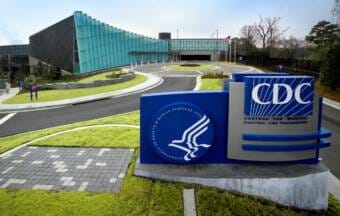
The Centers for Disease Control Roybal campus in Atlanta, GA (James Gathany, CDC) Captured by James Gathany, Centers for Disease Control's biomedical photographer, this 2006 image depicted the exterior of the new "Tom Harkin Global Communications Center", otherwise known as Building 19, located on the organization's Roybal Campus in Atlanta, Georgia. The facility houses the CDC's Information Center/Library, auditoria and meeting halls, which are used to accommodate in-house staff meetings, and national/international conferences hosted by the CDC, and the National Center for Health Marketing's, Division of Creative Services, which includes a full service television broadcast facility. The exhibit area currently features the <i>"Global Symphony"</i>, the first of several permanently installed exhibitions, and changing exhibitions that focus on a variety of public health topics. The exhibits in the Center are self-guided, and require no advance reservations. Additional curriculum-based exhibits and programming will be added in the future.<p><u>Tom Harkin Global Communications Center Exhibit Area Centers for Disease Control and Prevention</u><p>- 1600 Clifton Road, N.E., Atlanta, Georgia 30333<p>- Hours: Monday – Friday, 9 am – 5 pm, except for federal holidays Admission is free<p>- Government-issue photo ID is required for entry. Please note that CDC is a working federal facility and as such does not provide public tours of its campus and laboratories.<p>- For more information please call 404-639-0830.
The Centers for Disease Control Roybal campus in Atlanta, GA (James Gathany, CDC)

This story was originally published by ProPublica.

At 7:47 a.m. on the Sunday of Memorial Day weekend, Dr. Jay Butler pounded out a grim email to colleagues at the Centers for Disease Control and Prevention in Atlanta.

Butler, then the head of the agency’s coronavirus response, and his team had been trying to craft guidance to help Americans return safely to worship amid worries that two of its greatest comforts — the chanting of prayers and singing of hymns — could launch a deadly virus into the air with each breath.

The week before, the CDC had published its investigation of an outbreak at an Arkansas church that had resulted in four deaths. The agency’s scientific journal recently had detailed a superspreader event in which 52 of the 61 singers at a 2½-hour choir practice developed COVID-19. Two died.

Butler, an infectious disease specialist with more than three decades of experience, seemed the ideal person to lead the effort. Trained as one of the CDC’s elite disease detectives, he’d helped the FBI investigate the anthrax attacks, and he’d led the distribution of vaccines during the H1N1 flu pandemic when demand far outstripped supply.

But days earlier, Butler and his team had suddenly found themselves on President Donald Trump’s front burner when the president began publicly agitating for churches to reopen. That Thursday, Trump had announced that the CDC would release safety guidelines for them “very soon.” He accused Democratic governors of disrespecting churches, and deemed houses of worship “essential services.”

Butler’s team rushed to finalize the guidance for churches, synagogues and mosques that Trump’s aides had shelved in April after battling the CDC over the language. In reviewing a raft of last-minute edits from the White House, Butler’s team rejected those that conflicted with CDC research, including a worrisome suggestion to delete a line that urged congregations to “consider suspending or at least decreasing” the use of choirs.

Dr. Jay Butler (Alaska Public Media file photo)

On Friday, Trump’s aides called the CDC repeatedly about the guidance, according to emails. “Why is it not up?” they demanded until it was posted on the CDC website that afternoon.

The next day, a furious call came from the office of the vice president: The White House suggestions were not optional. The CDC’s failure to use them was insubordinate, according to emails at the time.

Fifteen minutes later, one of Butler’s deputies had the agency’s text replaced with the White House version, the emails show. The danger of singing wasn’t mentioned.

Early that Sunday morning, as Americans across the country prepared excitedly to return to houses of worship, Butler, a churchgoer himself, poured his anguish and anger into an email to a few colleagues.

“I am very troubled on this Sunday morning that there will be people who will get sick and perhaps die because of what we were forced to do,” he wrote.

When the next history of the CDC is written, 2020 will emerge as perhaps the darkest chapter in its 74 years, rivaled only by its involvement in the infamous Tuskegee experiment, in which federal doctors withheld medicine from poor Black men with syphilis, then tracked their descent into blindness, insanity and death.

With more than 216,000 people dead this year, most Americans know the low points of the current chapter already. A vaunted agency that was once the global gold standard of public health has, with breathtaking speed, become a target of anger, scorn and even pity.

How could an agency that eradicated smallpox globally and wiped out polio in the United States have fallen so far?

ProPublica obtained hundreds of emails and other internal government documents and interviewed more than 30 CDC employees, contractors, and Trump administration officials who witnessed or were involved in key moments of the crisis. Although news organizations around the world have chronicled the CDC’s stumbles in real-time, ProPublica’s reporting affords the most comprehensive inside look at the escalating tensions, paranoia, and pained discussions that unfolded behind the walls of CDC’s Atlanta headquarters. And it sheds new light on the botched COVID-19 tests, the unprecedented political interference in public health policy, and the capitulations of some of the world’s top public health leaders.

Senior CDC staff describe waging battles that are as much about protecting science from the White House as protecting the public from COVID-19. It is a war that they have, more often than not, lost.

Employees spoke openly about their “hill to die on” — the political interference that would prompt them to leave. Yet, again and again, they surrendered and did as they were told. It wasn’t just worries over paying mortgages or forfeiting the prestige of the job. Many feared that if they left and spoke out, the White House would stop consulting the CDC at all, and would push through even more dangerous policies.

To some veteran scientists, this acquiescence was the real sign that the CDC had lost its way. One scientist swore repeatedly in an interview and said, “The cowardice and the caving are disgusting to me.”

Collectively, the interviews and documents show an insular, rigorous agency colliding head-on with an administration desperate to preserve the impression that it had the pandemic under control.

Some of the key wounds were self-inflicted. Records obtained by ProPublica detail for the first time the cataclysmic chain of mistakes and disputes inside the CDC labs making the first U.S. test for COVID-19. A respected lab scientist made a fateful decision to use a process that risked contamination, saw signs of trouble, but sent the tests to public health labs anyway. Many of those tests didn’t work, and the scramble to fix them had serious consequences.

Even when the CDC was not to blame, the Trump administration exploited events to take control of the agency’s messaging. As a historically lethal pandemic raged, the White House turned the CDC into a political bludgeon to advance Trump’s agenda, alternately blocking the agency’s leaders from using their quarantine powers or forcing them to assert those powers over the objections of CDC scientists.

President Donald Trump talks with German Chancellor Angela Merkel, Friday, March 17, 2017, in the outer Oval Office, joined by Senior White House Advisor Jared Kushner and Ivanka Trump, at the White House in Washington, D.C. (Official White House Photo by Shealah Craighead)

Once seen as an apolitical bulwark, the CDC endured meddling on multiple fronts by officials with little or no public health experience, from Trump’s daughter Ivanka to Stephen Miller, the architect of the president’s immigration crackdown. A shifting and mysterious cast of political aides and private contractors — what one scientist described as young protégés of Trump’s son-in-law, Jared Kushner, “wearing blue suits with red ties and beards” — crowded into important meetings about key policy decisions.

Agency insiders lost faith that CDC director Dr. Robert Redfield, a Trump appointee who’d been at the agency only two years, would, or could, hold the line on science. One division leader refused to sign what he viewed as an ill-conceived and xenophobic Trump administration order. Redfield ultimately signed it himself.

Veteran CDC specialists with global reputations were marginalized, silenced or reassigned — often for simply doing what had always been their job. Some of the agency’s most revered scientists vanished from public view after speaking candidly about the virus.

The Trump administration is “appropriating a public enterprise and making it into an agent of propaganda for a political regime,” one CDC scientist said in an interview as events unfolded. “It’s mind-boggling in the totality of ambition to so deeply undermine what’s so vitally important to the public.”

The CDC repeatedly declined to make Butler, Redfield or any other employees mentioned in this story available for questions, and a CDC spokesperson declined to comment on behalf of the agency. The White House did not respond to an email seeking comment.

A spokesperson for the Department of Health and Human Services, which oversees the CDC, rejected accusations of political interference.

“Under President Trump, HHS has always provided public health information based on sound science,” the HHS spokesperson said. “Throughout the COVID-19 response, science and data have driven the decisions at HHS.”

People interviewed for this story asked to remain anonymous because they feared retaliation against themselves or their agency.

In interviews and internal correspondence, CDC employees recounted the stunning fall of the agency many of them had spent their careers building. Some had served on the front lines of the CDC’s most storied battles and had an earned confidence that they could swoop in and save the world from the latest plague, whether it was E. coli on a fast-food burger or Ebola in a distant land. Theirs was the model other nations copied. Their leaders were the public faces Americans turned to for the unvarnished truth. They’d served happily under Democrats and Republicans.

Now, 10 months into the crisis, many fear the CDC has lost the most important currency of public health: trust, the confidence in experts that persuades people to wear masks for the public good, to refrain from close-packed gatherings, to take a vaccine.

Dr. Martin Cetron (Photo courtesy CDC)

Dr. Martin Cetron, the agency’s veteran director of global migration and quarantine, coined a phrase years ago for what can happen when people lose confidence in the government and denial and falsehoods spread faster than disease. He called it the “bankruptcy of trust.” He’d seen it during the Ebola outbreak in Liberia in 2014, when soldiers cordoned off the frightened and angry residents of the West Point neighborhood in Monrovia, the capital. Control of a pandemic depended not just on technical expertise, he told colleagues then, but on faith in public institutions.

Today, some CDC veterans worry that it could take a generation or longer to regain that trust.

“Most of us who saw this could be retired or dead by the time that’s fully fixed,” one CDC official said.

Dr. Anne Schuchat, the CDC’s top career scientist, was one of the first to notice a brief report about four cases of “unexplained pneumonia” in Wuhan, China, in an emerging diseases bulletin. It followed a warning about a “red blotch disease” in the grape industry.

As a disease detective in 2003, Schuchat had been dispatched to China to investigate the outbreak of SARS, a respiratory disease that killed about 800 people and shut down parts of Asia. Her role in that outbreak and in later epidemics inspired the virus hunter played by Kate Winslet in the movie “Contagion.” Unflappable and regarded as brilliant, Schuchat eases the tension at meetings by singing ditties about the latest outbreak set to Broadway tunes. Nobody wants to disappoint her.

At 8:25 a.m. on Dec. 31, Schuchat emailed Butler and other colleagues asking if “any of your folks know more about the ‘unknown pneumonia’” in Wuhan.

Emails and calls bounced among the agency’s leaders, a handful of veterans with more than a century of experience among them. Dr. Dan Jernigan, the flu chief, and his boss, Dr. Nancy Messonnier, met at headquarters to plan. Within hours, they learned there were 27 cases — seven of them severe — with fever, difficulty breathing and a buildup of abnormal substances in the lungs. All the cases were believed to be connected to an outdoor seafood market. “Raises concern about SARS,” Messonnier wrote in an email.

The news reached Cetron in New Hampshire. While celebrating the holidays at a beer-and-tacos pub across the river in Vermont, he told family and friends about a new virus in China that he worried could affect the whole world. “We should be bracing ourselves,” he said.

If the outbreak had been a movie, this would have been the scene where the heroine mobilizes an all-star squad of specialists to save the planet. Schuchat’s team is seen as among the top infectious disease experts in the world. All of them had started out in the CDC’s Epidemic Intelligence Service, an elite corps of globetrotting disease fighters. They were a brain trust forged by decades of defending the country from outbreaks.

But in the 11 years since the H1N1 flu pandemic, the terrain had shifted. Politics and budget cuts had weakened the agency at home and abroad. Meanwhile, the regime in Beijing had grown increasingly aggressive and authoritarian. The Trump administration’s trade war had worsened tensions. And after a series of tough-minded leaders who were adept at protecting the agency and its mission, Trump’s first choice as director quit after Politico reported that she had purchased tobacco stocks while leading the CDC, which fights lung diseases.

Dr. Robert R. Redfield, director of the Centers for Disease Control and Prevention, joined by Vice President Mike Pence and members of the White House Coronavirus Taskforce, addresses his remarks at a coronavirus update briefing Friday, April 3, 2020, in the James S. Brady Press Briefing Room of the White House. (Official White House Photo by Tia Dufour)

Trump appointed Redfield in 2018. He was an HIV researcher who had treated AIDS patients since the earliest days of the disease. He’d wanted the CDC job for decades, and had been passed over for it twice. During his first all-hands meeting at the Atlanta campus, he’d choked up describing the honor of leading the agency.

In the fierce chaos of Trump’s Washington, the CDC needed a streetfighter. Instead, it got “the nicest grandfather you can imagine,” a senior health official said. A former colleague described how Redfield, a devout Catholic, prayed with the ailing Elijah Cummings, a Democratic congressman from Baltimore, during a visit to the Capitol.

Redfield took over an agency that, despite its $8.3 billion budget, was feeling the chronic funding woes of the American public health system, which has been quietly gutted since the Great Recession. As the coronavirus began its march through the United States, years of federal and state cuts had left about 26,000 fewer employees at state, county and municipal health agencies since 2009, according to the nonpartisan Trust for America’s Health.

With a mission of protecting America from diseases, the CDC was stretched thin. Over the decades, its portfolio had expanded to include almost every malady, chronic or acute.

The CDC’s global presence was suffering too. An infusion of hundreds of millions of dollars at the time of the Ebola epidemic in 2014 allowed the agency to increase its presence to as many as 65 countries, but a large chunk of those funds ran out in 2019. As funding expanded and contracted in recent years, the CDC had to cut over 300 posts overseas, including both Americans and foreigners. By the time Schuchat noticed the blurb about an outbreak in Wuhan, her agency no longer had an office inside the Chinese Center for Disease Control and Prevention, its counterpart in Beijing. While the U.S. agency once had more than a dozen Americans in China, by January only three remained.

A scanning electron micrograph shows a cell (green) heavily infected with particles (yellow) of SARS-COV-2, the virus that causes COVID-19. (National Institute of Allergy and Infectious Diseases)

On Jan. 3, Redfield phoned his agency’s closest ally in Beijing, George Gao, the director of China’s CDC, a microbiologist trained at Oxford and Harvard. Gao said his agency had sent a field investigation team to Wuhan. But during conversations in the next few days, many of Redfield’s questions about the mystery disease went unanswered. Gao, who was usually open and talkative, sounded guarded, according to several officials familiar with the conversations.

Nevertheless, Redfield assured federal health and national security officials that information was flowing from China thanks to his rapport with Gao, knowledgeable people said.

On Jan. 6, Redfield sent Gao a carefully worded letter offering the help of CDC experts. Expecting the Chinese to accept “very soon,” CDC leaders began preparing a team to go to China, emails show.

To Redfield’s chagrin, however, the conversations with Gao came to a sudden halt. Ominous news accumulated: the first recorded death, Jan. 9, the first case outside China, Jan. 13. In the secure, high-tech room where the CDC brain trust met, the mood turned dark as the scientists began to fear they were confronting a pandemic.

“We were slowly convincing folks: It doesn’t matter if you believe it or not, but this is the circumstantial evidence,” a senior lab official said. “And you have to prepare.”

Amid the scramble to find out what was happening in China, CDC officials began telling the public not to panic. But they conveyed the serious nature of the threat.

On Jan. 17, for example, Messonnier said that the CDC was “especially concerned about a novel coronavirus” because related viruses — SARS and Middle East Respiratory Syndrome — were “difficult outbreaks with many people getting ill and deaths.”

It appeared that the illness had been spreading since at least early December, but data on cases provided by Chinese authorities was woefully incomplete, listing only the dates patients were hospitalized, not what symptoms they had or for how long, the senior lab official said.

“We knew they were good enough epidemiologists to get that data,” the official said. “Why aren’t they announcing the results?”

The lab official tried to contact a chief virologist at the China CDC who was usually helpful, but got no response. Neither did colleagues who reached out to Chinese scientists with whom they had collaborated for years. The Americans concluded that the regime in Beijing was telling them to keep quiet.

Gao had also run up against a cover-up by authorities in Wuhan, health and national security officials said. Gao’s field investigators were “told there was no evidence of human-to-human transmission,” said Dr. Ray Yip, a former country director for the CDC in China. “They didn’t show them all the cases. They had a couple of cases of hospital workers infected by then, and that’s obviously human-to-human, how else did they get it?”

During the SARS epidemic in 2003, Time magazine reported that Chinese authorities had hidden 31 infected health workers from the world by pulling them from their hospital, loading them into ambulances, and driving them around Beijing until a visiting delegation from the World Health Organization left the hospital.

In January of 2020, the bond between the U.S. and Chinese health agencies became a double-edged sword. Chinese leaders were wary about Gao’s relationship with the Americans, who heard rumblings that he would be made the scapegoat for the outbreak. Meanwhile, Redfield’s reputation suffered in Washington because he didn’t deliver.

“The China CDC and the U.S. CDC were almost seen as one,” a senior U.S. health official said. “Dr. Redfield contributed to this by talking about how much he talked to Dr. Gao, the information exchange they had going. There was a sentiment blaming Dr. Redfield for the inability to get more information.”

In reality, the blame went beyond Redfield and his agency. China was a hard target. Even U.S. spy agencies struggled to gather intelligence on the evolution of the disease. Still, at the moment of truth, the CDC’s decades of investment in building a network in China did not pay off. That failure created an early and significant schism between the agency and the Trump administration.

“What the fuck are we paying for people to be in China if they can’t go where there’s an outbreak when there’s an outbreak,” Joe Grogan, then the head of the White House’s Domestic Policy Council, recalled saying repeatedly at the time.

Deputy National Security Advisor Matthew Pottinger was another influential critic of the CDC and one of the first senior White House officials to realize the magnitude of the coronavirus threat. Pottinger had served as a Marine intelligence officer and worked in China as a correspondent for The Wall Street Journal. His coverage of the SARS pandemic had helped shape his view of China as what he called “an expansionist totalitarian empire.”

Pottinger clashed with CDC officials when he pushed to limit travel from China. Many of the agency’s scientists held the traditional public health view that border closures interfere with the movement of medical personnel and goods. On Jan. 31, Trump issued an order restricting most foreigners from entering the United States if they had been in China within the 14 days before their arrival.

The CDC deployed personnel to airports to screen incoming passengers for symptoms, a measure that leaders now admit was futile, given the high number of asymptomatic cases. (Of the 754,124 travelers screened at U.S. airports by mid-September, only 24 cases of COVID were confirmed, according to CDC records.)

The CDC had gone from being the world’s finest disease SWAT team to batting back claims from the administration that it was doing a lousy job.

Another blow came on Feb. 25, after an ill-fated press conference about the steps Americans might need to take to protect themselves. Leading that briefing was Messonnier, the no-nonsense director of the CDC’s powerful immunization and respiratory diseases center, who’d come to prominence during the 2001 anthrax attacks.

Asked by the media team to add a personal touch, Messonnier said she’d told her children they needed to prepare for a significant disruption of their lives and had called their school to ask about plans for online learning. Afterward, she left to take her children to the dentist.

But her words had rocked Wall Street and the White House. Soon the staff in the Atlanta Emergency Operations Center saw a news alert with a photo of Messonnier pop up on their phones. A CDC veteran remembers thinking: “Oh, crap, the stock market dropped!”

The market’s fall infuriated the president. Trump had privately confessed to author Bob Woodward that he was publicly downplaying the virus to prevent panic. The CDC would pay the price for undercutting that narrative.

Vice President Mike Pence, joined by members of the White House Coronavirus Taskforce, gestures to a reporter as he takes questions during a coronavirus update briefing Monday, March 9, 2020, in the James S. Brady Press Briefing Room of the White House. (Official White House Photo by D. Myles Cullen)

The next day, Trump put Vice President Mike Pence in charge of his coronavirus task force and assumed the role of communicator-in-chief. The CDC, which had been the public face of the government during every health crisis in memory, soon became nearly invisible. After a few more briefings, a Pence aide told the agency’s media staff that this was the president’s stage, not theirs.

Even when Redfield was allowed to speak publicly, his sleepy eyes and soft, droning tone anesthetized listeners. The agency had been effectively muzzled.

“When it mattered the most, they shut us up,” a senior CDC official said. “The threat is clear. If we want to ever be able to talk tomorrow or next week or next month — or whatever is being dangled in front of us, you stay inside the lines.”

A friend of one CDC scientist ribbed him: “We keep waiting for the CDC to show up on a milk carton as a missing child.”

In the months that followed, CDC scientists watching the president’s news conferences on a wall of screens in the agency’s Emergency Operations Center were dumbfounded as Trump countermanded science in a flurry of inaccuracies and dangerous advice, saying the virus would soon go away, theorizing about injecting disinfectant as a treatment, and dismissing recommendations about wearing a mask.

As the agency stumbled in China and at home, a group of lab scientists was assigned a high-stakes mission: developing a test for the coronavirus.

Inside a small lab on the CDC’s Atlanta campus, microbiologist Stephen Lindstrom was put in charge. A Saskatchewan native who speaks at a breakneck clip, Lindstrom had studied in Tokyo and defended his Ph.D. dissertation in Japanese. During the H1N1 flu pandemic, his team had invented a test, jumped through regulatory hurdles and shipped it around the world in just two weeks’ time.

“Frankly, he kind of lives for the pressure,” said one of his colleagues.

But this time around, just about everything that could go wrong did. Calculated decisions went sideways, and Lindstrom couldn’t find a quick way to right them. Mystifying contamination appeared at every turn, relegating tests to the trash heap. Precious weeks were lost.

The CDC declined to make Lindstrom available for questions. But lab records obtained by ProPublica and interviews reveal for the first time the mounting pressure and the cascading troubles inside the lab.

As soon as Lindstrom’s team received the genetic sequence from scientists in China in January, they got to work. By the time German researchers on Jan. 13 announced the recipe for the test that would be adopted by the World Health Organization, Lindstrom’s team was almost done building its own.

Lindstrom had turned to the lab’s expert on coronaviruses to design the U.S. test. They chose one that looked for three targets on the same coronavirus gene. While the first and second targets were unique to the new virus spreading in China, the third would identify a broader family of coronaviruses, useful if the virus circulating in China mutated as it infected Americans.

Such a test works like this: Imagine three different pieces of velcro, each custom-made to stick to one of those three genetic targets. If any of them finds a perfect match in a patient’s sample, the test will cause that snippet of genetic material to duplicate over and over until there’s enough to light up a signal, alerting a technician that there is a positive test result.

To make sure the tests work properly, microbiologists prefer to validate a test using actual virus samples taken from people. Lindstrom didn’t have that, but he could use lab-made pieces of the virus to do the same thing. He also needed to make the velcro-like testing ingredients that find matches in patient samples.

Making both the testing ingredients and the snippets of the virus in the same location, though, goes against best practices. Even in world-class labs, manufacturing pieces of a virus can leave microscopic traces in the environment and on equipment for months. Those can later contaminate tests so that even water would give a positive result. That kind of false positive renders the tests useless.

Lindstrom’s lab didn’t have the equipment or expertise needed to make the raw materials for the test. But an underground corridor led to another CDC lab — the “core facility” — in a gleaming glass tower. Lindstrom had used it many times to quickly make testing materials. The facility could make what Lindstrom needed, but it was risky.

Hiring a private company to take on one of those tasks would add at least 10 days to production times, an eternity during an outbreak. So Lindstrom hedged his bets. He placed an order with a contractor for the genetic pieces he needed, but also asked the core facility to make those snippets along with the velcro-like ingredients.

“It’s a pretty dangerous procedure to make that in the same facility” due to contamination, said one CDC scientist. “Trying to fast-track it this way was risky.”

Years ago, low-level contamination ruined some CDC tests for Middle East Respiratory Syndrome, even though the core facility made the viral pieces on a different floor from the velcro-like ingredients, according to a person familiar with the matter.

Initially, it looked as if Lindstrom had made a good call. The core facility cranked out the parts needed for the tests and they passed quality checks, suggesting that making all of them in house wasn’t a problem. On Jan. 20, his lab was able to identify the first positive U.S. case. Still, Lindstrom showed a rare flash of anxiety, telling colleagues: “This is going to either make me or break me.”

Soon specimens were pouring in. At that point, Lindstrom’s lab was the only one in the country able to test samples to confirm whether patients had COVID-19. At the same time, his team was racing to get authorization from the Food and Drug Administration for test kits that could be distributed to state and local public health labs. Exhausted CDC scientists arrived at 7 a.m. and left after 11 p.m.

With that authorization in the works, Lindstrom asked the core facility to begin mass-producing the ingredients that stick to the three genetic targets in a human sample. Then Lindstrom made a second risky decision. He had his team produce the stand-in for the virus that labs would use to check that a positive sample would trigger a positive result, lab records show.

The ingredients made by Lindstrom’s lab and the core facility passed the quality checks, records show, so Lindstrom sent them to another CDC lab to process and put in vials for the test kits.

The first sign of trouble appeared on Feb. 3. Lindstrom’s team performed quality checks on two lots of tests. In one lot, the third target was showing up as present when testers were using only water — a false positive result. The other lot was fine, records show. Though the flawed lot was set aside, this was a red flag. Contamination can be difficult to eliminate once it occurs, and the batch that failed had gone through the same lab spaces as the one that passed. Nevertheless, Lindstrom released the good lot of tests to be sent to public health labs.

While those tests were in transit, his team performed one last round of quality checks. This time, one of the test kits that they believed was fine also came back with a false positive, records show. Confoundingly, the next day that same kit performed as it should when Lindstrom’s lab checked it, according to a lab record.

Complaints poured in as soon as the tests arrived at the public health labs. Before screening any samples from patients, scientists checked to ensure the tests worked, using water for a negative and the stand-in for the virus for a positive. They found the same problem with the third target: It registered as positive when just testing water.

“There is likely a widespread issue that will need to be addressed immediately,” a California public health official said in an email to the CDC on Feb. 8.

“Aw Shit!” Lindstrom muttered to his staff. His team rechecked bulk testing ingredients from that lot, and found no issues. Then they pulled a portion from the freezer that hadn’t been opened since they received it from the core facility. A few false positives turned up, records show. So Lindstrom’s lab ordered from the core facility a replacement for the ingredient that is supposed to stick to the third target. But he also had contractors make some too.

At first, it looked like the problem could be solved quickly. The core facility delivered test ingredients that passed quality checks on Feb. 11. But subsequent checks — after they had been put in vials again — showed problems, records show.

Lindstrom told colleagues he was convinced there was contamination, but some CDC leaders insisted that the problem was actually a faulty design akin to a software bug — that Lindstrom had chosen genetic sequences that could cause a glitch and show a false positive, according to emails and interviews. While they debated, public health labs with the faulty kits couldn’t process samples, and the FDA still hadn’t authorized any tests made by commercial labs. Instead of a network of labs around the country testing sick people, Lindstrom’s team remained one of the few that could do it, using kits they’d made before the problem arose.

The air was filled with tension. At one point, a manager on the CDC coronavirus response team banged on the door to Lindstrom’s lab and demanded test results from his staff rather than waiting for them to be entered in the agency’s database, according to a scientist who was present. During a meeting, Lindstrom yelled at his colleagues for going around him and browbeating his people, according to an official who was present.

When it seemed things couldn’t get any worse, they did. Public health labs began reporting on Feb. 12 that they also were having problems with the part of the test that was supposed to stick to the first target. Subsequent checks by Lindstrom’s lab found the same problem, records show. Lindstrom now had an issue with the ingredients that were supposed to match two of the three targets. And it wasn’t clear whether there was contamination in his lab, the core facility or the separate facility that put the material into vials. Two weeks after the first complaint, the CDC still didn’t have a solution.

The FDA’s head of lab diagnostics showed up to troubleshoot and found Lindstrom’s lab in disarray. The Wall Street Journal later reported that the FDA official’s boss told CDC leaders that if it had been any other lab, they would have shut it down.

Public health labs were clamoring for tests, and Lindstrom was running out of options. The replacement material that was supposed to stick to the third target was made incorrectly and had to be scrapped, records show. The test kits he had ordered from contractors hadn’t arrived yet.

It seemed like the virus’ fingerprints were everywhere. So when the core facility sent some test ingredients that passed quality checks, Lindstrom hired a contractor to put them in vials. Even those tests came back with problems, a lab record shows.

With the FDA’s blessing, Lindstrom cobbled together test ingredients from different batches that had all passed quality checks, and they dropped the troublesome third target.

By the end of February, three weeks after public health labs first reported problems, the CDC started to send new test kits.

In the aftermath, an investigation by HHS lawyers pointed to Lindstrom’s lab as a likely source of contamination and praised the core facility for following “extreme precautionary measures” that minimized risk. Lindstrom fumed to colleagues that the HHS report was inaccurate. He was adamant that evidence showed the contamination originated in the core facility, not his own lab, records show.

The CDC did its own review but never released it. Separately, the HHS inspector general has been investigating. And some CDC scientists remain convinced that the problem wasn’t contamination but faulty design.

Anger and mistrust caused by the shortage of tests fell on the CDC — even if the FDA shared the blame for sticking to a cumbersome regulatory process that delayed the rollout of more tests. The combination of delays and missteps by the nation’s two top health agencies put the United States dangerously behind in assessing the spread of the virus. In contrast, South Korean officials gave near instantaneous approval to commercial labs, and they quickly began testing 10,000 people a day.

In a written statement, FDA spokeswoman Lauren-Jei McCarthy said her agency “has demonstrated unprecedented regulatory flexibility in order to speed development and quickly authorize tests.” The FDA, she said, streamlined its process to allow “diagnostic tests to be developed, validated, and deployed within weeks rather than several months to over a year, as traditionally required.”

In July, the acting director of Lindstrom’s division summoned him. He was reassigned to a new job with no official title and few responsibilities.

The following month, a CDC journal published a study that showed that Lindstrom had not been the only one struggling with faulty tests. Commercial labs in Europe had similar problems that delayed testing in at least nine countries.

By then, though, the damage had been done. To the public and within the federal government, the CDC had failed catastrophically at a critical juncture.

The Diamond Princess cruise ship ties up in Juneau's Gastineau Channel. (KTOO file photo)
The Diamond Princess cruise ship ties up in Juneau’s Gastineau Channel in 2013. (KTOO file photo)

As the virus hopscotched across the globe, cruise ships became early symbols of the pandemic. Overnight, they morphed from bastions of leisure into pariahs of the sea, floating hotspots crammed with tourists, sick and well.

The Diamond Princess quickly became the most infamous. During excruciating weeks in February, the disease ripped through the massive ship, infecting hundreds of passengers off the port of Yokohama, Japan. Relatives of those stranded on board pleaded with the U.S. government to evacuate them, likening the recirculated air to a gas chamber.

At the CDC, the dilemma of what to do with the ships and their passengers, many of them Americans, fell to Cetron, who had led the agency’s quarantine division for more than two decades.

Cetron, 61, bore his responsibilities with a grim knowledge of the past. The CDC doesn’t have much statutory authority. Its influence lies in the ability to coax the public into acting in the nation’s collective interest. But the agency has one formidable power: the ability to control border movement during an outbreak and deprive people of their freedom to protect the public’s health.

Cetron had talked openly about how that power had been used in the past as a weapon to stigmatize. His academic research partner, the medical historian Howard Markel, had written a book about the mistreatment of Jewish immigrants in New York during cholera and typhoid outbreaks in 1892. Even a group sent to help called them “human maggots.” Authorities shunted them off to a quarantine island where they endured squalor and isolation. Some died.

But with the coronavirus, the agency’s singular authority would be undercut, abused and politicized — and Cetron would be unable to stop it.

As the Diamond Princess languished, U.S. diplomats assured passengers that nobody with the virus would board the evacuation flights. However, after packing the American passengers on buses headed for chartered planes, officials learned that 14 had tested positive. The State Department pushed for all of the passengers — uninfected and infected — to fly out together, according to CDC officials who were involved in the discussions.

Schuchat and Butler objected. Dr. Robert Kadlec, the HHS official in charge and a former Air Force colonel, sided with the State Department. Kadlec told colleagues the priority was bringing Americans home. On one of the planes, the only thing separating the infected from the non-infected was a flimsy plastic sheet.

The Washington Post reported that Schuchat demanded the removal of all references to the CDC from the State Department press release about the repatriation.

CDC officials involved told ProPublica that they were appalled by both the decision and its sloppy execution. “There’s a four-foot gap at the top of the shower curtain that you bought from Home Depot — and you’re calling this a quarantine area?” one said. “If I were to write a book, it would be called Operation Clusterfuck, and it would start with this chapter.”

Spokespeople for the State Department and HHS said diplomats and federal health experts took stringent precautions on the evacuation flights.

“Individuals who tested positive were moved in the most expeditious and safe manner to a specialized containment area on the evacuation aircraft,” a State Department spokesperson said in a written response. He added, “All passengers were closely monitored by medical professionals throughout the flight and were provided masks for additional protection.”

Robert Jackson, 84, and Karrold Jackson, 81, were passengers on the Grand Princess, the cruise ship held for days off the California coast after passengers tested positive for coronavirus. (Photo courtesy Erin Jackson)

Despite that very public ordeal, cruise lines kept packing more passengers on board and heading out to sea. Days after the Diamond Princess evacuation, a ship from the same company, the Grand Princess, set sail from San Francisco on another ill-fated voyage. On March 5, a military helicopter had to fly to the ship to deliver tests after passengers got sick.

The next day, with the Grand Princess floating off the coast of San Francisco, Trump flew to Atlanta for an impromptu tour of the CDC laboratories. Wearing a red “KEEP AMERICA GREAT” cap, Trump briefly praised the CDC’s tests as “perfect” and talked about the record high ratings for his recent appearance on Fox News. Asked by a reporter about cruise ships, the president said he preferred that the Grand Princess passengers remain on board because their arrival — even at a federal quarantine site — would cause a spike in U.S. case numbers.

“I don’t need to have the numbers double because of one ship,” Trump told reporters.

Cetron and his team mapped every cruise ship at sea with COVID patients, working feverishly to build support in the government for a no-sail order that could prevent more outbreaks. “These cruise ships are the equivalent of mass gatherings of hundreds if not thousands of the most vulnerable populations” at risk for severe illness or death from COVID, and any of these passengers could seed the virus in their communities when they returned home, he said in an email to Redfield.

The cruise industry resisted and put forth a plan that would allow companies to keep sailing with extra safety precautions. The day after Trump’s appearance in Atlanta, Pence and Redfield met in Florida with cruise executives. After Pence praised the industry’s “spirit of collaboration,” the chairman of the industry’s largest trade group said, “Given the significance of travel and tourism, it is critical that Americans keep traveling.”

Employees watching in the CDC’s command center in Atlanta let out an audible groan.

Cetron told colleagues in an email that the industry’s plan was inadequate, given the “sardine can density” of these ships, records show. Every day the federal government delayed shutting down this industry meant more illness and death. At a meeting in March, Cetron railed against the industry’s recalcitrance and his own government’s unwillingness to act, according to people who attended.

“This is unconscionable,” he told Schuchat and more than a dozen others around the conference table, his voice so anguished it alarmed some who were there.

Colleagues could see the toll the battle was taking on him. Raccoon-like rings deepened around his eyes. He looked like an unmade bed, often wearing the same shirt, pants and rumpled tweed jacket with elbow pads as the day before. At one point, the CDC’s chief of staff became so worried about Cetron’s health that he ordered him to surrender his phone to Butler, who answered the late-night calls. “Go home and get some sleep,” the chief of staff commanded, according to people who overheard the conversation.

When the CDC finally issued a 30-day no-sail order on March 14, it excluded the majority of cruise operators since their trade group, Cruise Lines International Association, voluntarily agreed the previous day to stop launching any new ships from U.S. ports during that time. The order praised the trade group’s actions, “and the commitment it demonstrates to protecting the health of both cruise ship passengers and the public at large.”

Outbreaks continued on ships that were already at sea. The trade group had drafted a plan to hire a global rescue team staffed by special-operations veterans who would extract infected passengers and take them to medical facilities contracted to care for them “without burden on the U.S. government,” records show. Yet by April 6, the group still hadn’t hired the rescue company, and public health authorities had to scramble to help evacuate critically ill people from ships, records show.

Cetron worked on a new no-sail order that exposed the industry’s failures and required cruise operators to care for the 79,800 crew members on ships in or near U.S. ports without further strain on public health workers, records show.

“Poor planning by the industry, failure to adhere to recommendations and unsafe transport operations used by ships to get passengers and crew home has posed significant risks to local, state, national and international spread of the virus,” Cetron told Redfield in an email. “Dozens of vessels are still at sea with active COVID infections on board,” he added, “heading toward US waters requesting arrival in our ports.”

Cetron told Redfield this tougher order was “urgently needed.” Yet, the Department of Homeland Security refused to sign off. Officials wrote that they disagreed with CDC’s “narrative describing the actions of the cruise line industry.”

After four days of wrangling, DHS agreed to keep the force of the order, but Cetron’s criticisms of the cruise industry were censored or softened. A section titled “Failure of Cruise Ship Industry to Develop and Implement a Response Plan” became “Critical Need for Further Cooperation and Response Planning.”

Representatives from Cruise Lines International Association did not return emails or a phone call.

In September, the CDC proposed extending the no-sail order into February 2021, but the White House Coronavirus Task Force instead sided with the cruise industry and picked an end date of Oct. 31.

At the same time as they were watering down Cetron’s criticism of the cruise industry, the White House and DHS were pushing him to invoke quarantine powers to stop a problem that barely existed: the spread of coronavirus by migrants trying to cross the U.S.-Mexico border.

Stephen Miller speaking with supporters of Donald Trump at a rally at Veterans Memorial Coliseum at the Arizona State Fairgrounds in Phoenix, Arizona. (Photo courtesy Gage Skidmore)

Two days after the no-sail order in March, Trump’s senior adviser Stephen Miller scheduled a meeting to discuss “Emergency Border Planning.” Like Cetron’s ancestors, Miller’s great-great-grandfather escaped anti-Semitism in Eastern Europe and found refuge in the United States. But Miller was a driving force behind Trump’s so-called Muslim ban, as well as the family-separation policy and efforts to build a wall spanning the 1,954-mile U.S.-Mexico border.

In a call on March 17, Miller urged the administration to use the CDC’s powers to close the border immediately because “the Southern Border is in crisis and will get worse as COVID-19 spreads in Mexico,” according to an email from a deputy general counsel at HHS.

Shortly after 7 a.m. the next day, an HHS lawyer sent Cetron’s team a proposed CDC order that largely closed the borders with Mexico and Canada. A deputy of Cetron’s lamented to the agency’s chief of staff that the order cited a “misrepresented and incomplete piece of data” to overstate the threat.

“I’m also not a fan of trying to make the case that Canada and Mexico represent a big risk on the land border based on what we ‘believe’ is occurring vs. what we know about the # of cases (which are far fewer than the # of cases in the US now due to community spread),” she wrote.

Cetron refused to sign off on the order, according to people who worked with him. “I will not be a part of this,” a furious Cetron told a colleague. “It’s just morally wrong to use a public authority that has never, ever, ever been used this way. It’s to keep Hispanics out of the country. And it’s wrong.”

With Cetron engaged in a personal act of civil disobedience, Redfield signed the order.

For the first time since the enactment of the Refugee Act of 1980, people who came to the border saying they feared persecution or torture in their home countries were turned away with no chance to plead their case for asylum.

Ken Cuccinelli, a senior Homeland Security official, later boasted to a congressional committee that border agents had expelled “90 percent of aliens crossing the Southern Border within two hours of encountering them — an incredible feat and of critical importance to the public health and the protection of our workforce in response to COVID.”

Ken_Cuccinelli (Photo courtesy Gage Skidmore)

The order signed by Redfield said the CDC had invoked its powers “to protect the public health from an increase in the serious danger of the introduction of Coronavirus Disease 2019.” Nevertheless, border officials tested unaccompanied children seeking asylum — and expelled them even if their results were negative.

An HHS spokesperson said the department does not discuss internal deliberations. A CDC spokesman declined to make Cetron available for interviews.

During an online talk in August hosted by Dartmouth College, he said that one of the lessons of this pandemic was the importance of “a full bank account of trust” in institutions.

“And if there’s a bankruptcy of trust,” he said, “it can be really tough.”

By April, the numbers were brutal. There were 608,000 cases of COVID nationwide. More than 26,000 people had died, about 10,000 of them in New York City, where the per capita death rate had surpassed Italy’s. Morgue trucks appeared outside hospitals.

Inside the CDC, scientists scrambled to gather and analyze data that could alert them to emerging hotspots. The data was their fuel, driving almost every decision they made. Early in the outbreak, the lack of widespread testing had caused a shortage of data, obscuring the agency’s vision as the virus spread in Washington state, New York and New Jersey. The CDC updated its well-regarded hospital tracking system to collect information about COVID.

But in a startling power play this spring, the Trump administration stripped the CDC of its lead role in handling this vital hospital data, bringing in a private contractor that would struggle to gather reliable information. The unprecedented move, CDC scientists and public health specialists said, struck at the heart of the agency’s mission.

Now, with fall pushing people indoors and threatening a new wave of infections, CDC scientists worry they will again have trouble tracking outbreaks and directing doctors, nurses, medicine and equipment to hotspots.

“When you don’t have quality data that is accurate and reliable, you miss out on signals,’’ a CDC data scientist said. “It can have a devastating impact.”

Like many of the agency’s travails, politics played a role in the battle over data. Powerful critics worked backstage to sideline an agency that they saw as unresponsive and ineffective.

In February, Pottinger, the deputy national security advisor, had lobbied hard for Dr. Deborah Birx, his wife’s friend and former boss, to be named the White House coordinator of the federal response. Pottinger was exasperated by the CDC’s testing debacle and its failures in China. But it was also personal. As a former CDC scientist, Pottinger’s wife had helped invent an HIV test, which was adopted overseas, but not in the United States due to what Pottinger believed was bureaucratic dispute within the CDC. Pottinger told White House colleagues that the agency had a “culture where petty rivalries between egos tend to subordinate the public good.”

Birx, too, was no fan of the agency, even though she’d once run its global AIDS program, according to officials who know her. Since 2014, she’d overseen the State Department’s international AIDS-fighting initiative, which is seen as one of the most effective federal health programs in U.S. history. Birx was a leader who sent emails at 3:45 a.m. A former CDC colleague praised her as brilliant and “data-driven.”

Others were less impressed. Senior officials claimed she amassed power by undermining colleagues, stoking upheaval and presenting herself as the lone savior in a crisis. In February, an audit of her AIDS program by the State Department’s inspector general found that 49 of 68 respondents were critical of the leadership, with some describing it as “dictatorial” or “autocratic.” Several employees complained about intense pressure to meet performance targets, with one saying, “You’re incentivizing data cooking.”

With the CDC now under her ambit, Birx made similar demands. During contentious meetings, she clashed with Schuchat and others over the coronavirus data the CDC collected from hospitals, according to people who were present. She wanted many more details, and she wanted them faster.

Birx expected “every hospital to report every piece of data every day, which is in complete defiance of statistics,” a CDC data scientist said. “We have 60% [of hospitals] reporting, which was certainly good enough for us to have reliable estimates. If we got to 80%, even better. A hundred percent is unnecessary, unrealistic, but that’s part of Birx’s dogma.”

In April, HHS hired TeleTracking Technologies Inc. to collect COVID data along with the CDC. But the Pittsburgh company had trouble getting accurate information, records and interviews show. A CDC analysis in May discovered that data about ventilator use was missing from 57% of hospitals that reported to TeleTracking, compared with 6% of hospitals reporting to the CDC system during the same week. Rather than acknowledge that data was missing, the company reported zeroes instead, according to the CDC analysis.

“It would be like reporting on race and assuming that everybody for whom that variable is missing is white,” a senior CDC official said.

Still, TeleTracking agreed to add many data fields to the forms that hospitals had to fill out every day. CDC data experts refused to do that, warning that hospitals confronted with a form with 91 categories would leave them blank or provide unreliable numbers.

At an impasse, the government in July told hospitals to stop reporting coronavirus data to the CDC.

“That’s really almost like the final blow to show CDC you are out of the game,” said Yip, the agency’s former country director in China. “We don’t even trust you to handle the basic data.”

A TeleTracking spokesperson defended the company’s performance.

“TeleTracking, under HHS’s direction, has developed a data collection system that has enabled more hospitals to report their data more quickly and reliably than ever before,” the spokesperson said. “Since the switchover in July, compliance has improved more than 25%.”

Spokespeople for TeleTracking and HHS also pointed out that Redfield has publicly praised the new system and said his agency’s experts still have access to the data.

The pandemic has required a different and more flexible approach, an HHS spokesperson said. “Rather than reject incorrect data outright, HHS allows it to flow into our system,” the spokesperson said. “The error is flagged and then resolved directly with the hospital.”

Birx did not respond to requests for comment. During a press briefing on Oct. 6, she said she had worked with hospitals to pare back some daily requests to weekly. But at the same briefing, she and other health officials announced that hospitals now would have to provide information about flu patients as well as COVID. If they didn’t, the officials said, they could lose their Medicare and Medicaid funding — a fatal blow for a hospital.

CDC experts fear hospitals may cut corners as they try to comply. A scientist predicted that the tough new policy would “convert a problem of incomplete data to a problem of invalid data.”

By the summer, communities were wracked with anxiety about how to safely reopen schools that had been shuttered since the spring. They looked to the CDC for advice.

From past experience, the CDC’s career scientists knew that schools were tricky political terrain. The last time a pandemic hit the U.S., in 2009, the CDC caused a political backlash when it suggested one- to two-week school closures. But the outcome of the inevitable tug of war between politics and science was much different.

Just months after President Barack Obama took office, a novel flu jumped from pigs to people, then spread across the nation. CDC scientists identified it as an H1N1 virus and initially feared it might be as deadly as the 1918 flu pandemic that had infected a third of the world’s population, killing more than 50 million people.

While Schuchat warned the public, Acting CDC Director Rich Besser flew to Washington. A telegenic pediatrician, Besser told the president and his cabinet that the CDC would be recommending brief school closures in areas where Besser’s disease detectives had identified cases. Obama was clear: All decisions had to be made quickly and grounded in the best available science.

Besser, who recalled the events in an oral history in 2010, said he was then called to another meeting by Rahm Emanuel, Obama’s intimidating chief of staff. Obama’s top political advisor, David Axelrod, and several cabinet secretaries told Besser that his school closure plan wasn’t “going to fly.” Among the many problems: kids who counted on schools for meals would go hungry.

“Let me take a stab at rewriting this,” Besser recalled Emanuel saying as he began scribbling on a pad.

Besser was flabbergasted. Hadn’t the president just said that science was going to drive policy? He looked around, thinking, “I’m the only scientist at this table.”

He turned to his new boss, HHS Secretary Kathleen Sebelius. “Madam Secretary, I’m not real comfortable with this,” he recalled saying. Sebelius hushed him, urging him to wait. Emanuel read his new version aloud. Then Axelrod spoke. “You know, Rahm,” Besser recalled him saying. “I don’t think it’s a good idea for you to be writing scientific guidance.”

Cursing, Emanuel crumpled the paper in his fist, threw it aside and began eating his lunch. At a crucial moment, science prevailed.

In 2020, time and again, the crumpled paper hurled into the corner was the work of the scientists.

In late June, the CDC posted a checklist for reopening schools, which included advice on social distancing and masks. Trump raged on Twitter that he disagreed with the CDC’s “very tough & expensive guidelines for opening schools.”

One CDC official recalls seeing the July 8 tweet and sighing in defeat. “Come on, man, this is your team! You don’t have to tweet it like that! You can just pick up the phone and call Redfield!”

That checklist was supposed to be just the beginning of the agency’s advice on school reopening. Everyone nitpicked the CDC’s subsequent proposals, records show — even Trump’s daughter Ivanka, who suggested granting paid sick leave to teachers and administrators at high risk for COVID-19 complications. In a section that described the higher proportion of cases among Hispanic children, the White House counsel’s office wanted the CDC to add a reference to one of the president’s favorite bugaboos, the Mexican border.

But the most heated disputes involved an HHS mental health office that emphasized the role of schools as integral to the psychological well-being of children. It chastised the CDC team for writing an overly negative “tome” that was a “recipe for schools to stay closed.” The HHS unit was even critical of the suggestion that schools might need to close in areas where the virus was raging uncontrolled. The mental health office scolded the CDC for its “lengthy list of cautions” and said it had written its own guide for parents that had the “opposite tone,” records show.

The White House insisted that the mental health office’s missive lead the CDC’s schools page when it was unveiled in late July. To the outside world, it looked as if the president had snapped his fingers and the CDC caved. Those who bothered to drill down into the real CDC guidance posted beneath were confused by the conflicting messages.

“We didn’t know at CDC that it was going to be forced upon us to post it on our website,” said an agency staffer involved in the discussions.

Scientists at the agency commiserated, calling it “propaganda.”

The HHS mental health office “strongly supports the reopening of schools with appropriate safety measures,” a spokesman said in a written statement. “Parents should be equipped with all perspectives to make an informed decision about the whole health of their child.”

In August, the White House crafted new guidance from Trump. Titled “SCHOOLS SHOULD SAFELY REOPEN,” it contradicted the CDC recommendations on social distancing and masks, and minimized the risks to teachers and students.

The CDC objected, but the White House published it anyway.

The months of defeats were taking a toll. Redfield looked beaten. When his boss, HHS Secretary Alex Azar, upbraided him, he could only mumble, “Yes sir” or “I understand, sir” or “I agree, sir,” according to people who heard these exchanges. (Asked about these exchanges, an HHS spokesperson said: “The American people are fortunate to have Dr. Redfield leading the CDC.”)

Even Kyle McGowan, Redfield’s main protector and an avid political chess player, was running out of moves.

The appointment of McGowan as CDC chief of staff had been a norm-busting move: The 34-year-old was the first political appointee in memory to hold the influential post. He told senior scientists, “I know you think I’m a spy, but I’m really not.”

McGowan had managed campaigns for Georgia Congressman Tom Price, who’d received a 100% rating from the American Conservative Union. When Trump appointed Price as HHS Secretary, McGowan followed him. Six months after Price resigned, McGowan was named to the CDC post. He soon won the trust of CDC career staff. “There was a sense that he’d gone native,” a senior scientist said.

Before getting on the phone with his fellow political appointees in Washington, he’d call CDC scientists. “What can you live with?” he’d ask, according to people familiar with these conversations.

But McGowan and the CDC were often on the losing side. One of their prime tormentors was Michael Caputo, a political fixer handpicked by Trump himself to oversee communications at HHS. A proud protégé of convicted Roger Stone, Caputo had served as an adviser for Russian politicians, worked for Trump’s campaign and promoted conspiracy theories. Soon after arriving at HHS in April, Caputo began riding herd over CDC communications seen as conflicting with Trump’s political message. He made it clear that anyone who dared talk to a journalist without approval could be fired.

McGowan warned his CDC colleagues to be careful what they put in writing. “They can read your email,” he told them.

McGowan became increasingly protective of the CDC’s senior scientists, particularly Schuchat, whose office was adjacent to his. She was viewed as the defender of the agency’s principles, the one immortalized as a disease-hunter on screen. With a close colleague McGowan shared worries that she had become a target of the administration’s wrath, a symbol of the “deep state” bureaucrats the Trump die-hards believed were bent on destroying the president. She attracted the administration’s ire with her blunt assessments in media interviews.

During a June 29 interview with the editor of the medical journal JAMA, Schuchat said that what used to keep her up at night was a fear of an influenza pandemic like the one that struck the U.S. in 1918.

The current pandemic, she said, is similar to “that 1918 transformational experience.” And when asked about the rising case numbers in the United States, she said, “I think there was a lot of wishful thinking around the country, that, ‘Hey, summer, everything’s gonna be fine. We’re over this,’ And we are not even beginning to be over this.”

Schuchat had contradicted Trump’s message that life was returning to normal. McGowan told a colleague that he was hearing rumbles that Caputo and others were trying to fire Schuchat. It had come to this: A world famous scientist was in jeopardy for telling the truth.

“Should I be worried, Kyle?” she asked McGowan, according to a person familiar with the conversation, who said McGowan replied: “Not yet.”

McGowan reached his breaking point when Redfield asked him to stop the deportation of a dog, according to people who worked closely with him.

In late June, a Peace Corps volunteer evacuated from West Africa was told that the rabies vaccine of her dog, a terrier mix named Socrates, was not valid. Rabies vaccines are marked with pink dye, and a photo of Socrates’ vaccination showed a clear liquid, a CDC email said. Border authorities said Socrates had to be sent back to Africa, revaccinated and quarantined there for 28 days before returning. The Peace Corps volunteer sparked a #SaveSocrates outcry on social media.

CDC experts told McGowan that the last foreign dog with rabies that slipped through had cost more than $500,000 in public health charges, including shots for 44 people who had been near the animal, an email shows. Making an exception threatened to render the policy unenforceable for the 500 animals that are deported every year.

At a time when the pandemic had killed nearly 130,000 Americans, McGowan spent an hour and a half on the phone with the HHS general counsel and other senior officials to figure out how to make an exception for a dog. All the while, he told colleagues, his mind kept returning to the fact that the same administration was using the CDC’s quarantine power to deport thousands of children at the border with Mexico.

Later that day, Brian Harrison, the HHS chief of staff and a former labradoodle breeder, announced the liberation of Socrates. Secretary Azar out the news with the hashtag #SaveSocrates.

Privately, McGowan fumed.

“He was sad, downtrodden and defeated,” a colleague said. “This was really the final straw for him: How we are going to let dogs in, but basically we’re going to require children to be carted off and out of the country? And all in the name of public health.”

McGowan resigned in August.

The following month, Caputo took a medical leave after he hosted a live video on his personal Facebook in which he accused “deep state scientists” of “sedition” and warned his followers to stock up on ammunition in anticipation of political upheaval. In that rant, which was reported by The New York Times, Caputo said CDC scientists had only changed out of their sweatpants to meet at coffee shops and plot “how they’re going to attack Donald Trump next.”

In Atlanta, lawn signs popped up: “I SUPPORT Sweatpants, Coffee Shops and the CDC.”

Longtime CDC employees confess that they have lost trust in what their own agency tells the public.

In August, the CDC stunned infectious disease doctors everywhere when it recommended that people who had close contact with a COVID patient didn’t necessarily need testing if they didn’t have symptoms. Even Butler, one of the highest ranking scientists at the agency, began signing his emails to state and local health departments, “Keep testing, Jay.”

Another dismayed veteran who works with local health officials did something he had never done before. He told them to ignore his own agency’s guidance. The agency reversed the much-criticized recommendation about testing a month later, but the damage was done. After more than a decade at the CDC, the veteran decided to quit.

“It’s just a disappointment,” he said. “People’s reaction now at other agencies, at state and local public health agencies, when the CDC comes out with a recommendation, they are going to ask: ‘Is that the truth? Or is that what you were told to say?’”

Some longtime senior scientists at the CDC are grappling with whether they are too tainted to lead the rebuilding of trust.

“Many of us who might be viewed as complicit need to decide whether we need to leave,” one of them said, “Or can we be part of the ‘never again’ so that the agency never gets this kind of political interference again?”

ProPublica is a nonprofit newsroom that investigates abuses of power. Sign up to receive our biggest stories as soon as they’re published.

In Bristol Bay, spring means salmon — and thousands of fishermen from coronavirus hot spots

Sockeye salmon delivered in Bristol Bay. (File photo by KDLG)

ProPublica is a Pulitzer Prize-winning investigative newsroom. Sign up for The Big Story newsletter to receive stories like this one in your inbox.

Later this spring, Alaska’s Bristol Bay will blossom into one of the largest annual salmon fisheries in the world.

The regional population of about 6,600 will triple in size with the arrival of fishermen, crews and seasonal workers on jets but also private planes and small boats, many traveling from out of state.

And yet the heart of the health care system in southwestern Alaska, in a corner of the state where the Spanish flu once orphaned a generation, is a 16-bed hospital in Dillingham operated by the Bristol Bay Area Health Corp. Only four beds are currently equipped for coronavirus patients. As of Wednesday, the hospital had a few dozen coronavirus tests for the entire Florida-sized region, tribal leaders said.

If those newly arrived workers need to quarantine for two weeks, as mandated by the state, residents said it’s unclear where everyone will hunker down. Local store shelves are already bare of Clorox, Lysol and rubber gloves.

Dillingham, the largest community in the Bristol Bay region with a population of 2,300, is 320 miles from Anchorage by air.

“We’re scared. … People come from all over the world for Bristol Bay fishing,” said Gayla Hoseth, second chief for the Dillingham-based Curyung Tribal Council. “There’s 7,000 of us who live here, and this hospital cannot handle the 7,000 of us if we get sick. Imagine (when) our population triples and quadruples in the summertime.”

Compounding matters, the hospital executive who ran daily operations for the health care system is out of a job after downplaying the coronavirus threat to colleagues.

A March 16 email from the executive — which repeated a conspiratorial meme suggesting the coronavirus is somehow a politically motivated phenomenon — set flame to a deep anxiety among some tribal leaders over the vulnerability of Alaska villages in a pandemic.

“Just a reminder that FLU kills many every year!” wrote Lecia Scotford, who was the chief operating officer. (The coronavirus is not like the flu. It appears to be more contagious and more lethal.)

The message soon began to circulate in the Bristol Bay region, drawing a blistering response from some tribal and local leaders.

Robert Clark, president and chief executive of Bristol Bay Area Health Corp., said Scotford’s last day was Monday. He would not say if she was fired, citing “personnel stuff,” but said “she was separated.”

Scotford did not respond to emails, phone calls and Facebook messages requesting comment. Her email to lists of “division managers” and “department managers” within the regional health organization also emphasized the need for calm, common sense and good hygiene, and for the hospital to be prepared to serve the public.

“That (email) was very concerning to me because that kind of lets people’s guard down,” Norman Van Vactor, president of the Bristol Bay Economic Development Corp., said in a phone interview.

Bristol Bay is a magnet for people in the summer, with a seasonal migration of about 13,000 workers for the lucrative fishing season. The commercial salmon fishery here is the largest in the state, but as of 2010, about 60% of earnings went to out-of-state permit holders.

Almost all the major Bristol Bay seafood processing companies are based in Seattle, an early hot spot for coronavirus, and two thirds of Bristol Bay processing workers live in West Coast states at other times of the year, according to the Institute of Social and Economic Research at the University of Alaska Anchorage.

The Alaska Department of Fish and Game forecasts some 34.6 million sockeye salmon will be harvested there this year.

“When it comes to wild salmon, we are over half the world’s sockeye and over half of the Alaska salmon value,” said Andy Wink, executive director for the Bristol Bay Regional Seafood Development Association.

The nonprofit industry group on Thursday issued an advisory urging the fleet to delay travel to Bristol Bay until May 1.

“Keep in mind, it is possible to carry this virus without symptoms and unknowingly infect others leading to overtaxed medical capacity and/or death(s),” the advisory said. “You do NOT want to be the outsider photographed or seen around town in public spaces if this situation turns for the worst,” the group warned its fishermen.

Wink said his nonprofit is working with local governments on a plan to avoid overcrowding Bristol Bay Area Health Corp. clinics and the Dillingham hospital with sick fishermen, processors and support workers.

“We are taking the stance that we don’t want to rely on the local clinics or if we do, the need to be bolstered substantially,” Wink said.

As the health care provider for the region, Bristol Bay Area Health Corp. operates the only regional hospital and the clinics in 21 surrounding villages. It employed 470 people and reported revenue of $76.7 million in 2017, according to a tax form that Scotford submitted to the IRS.

Clark, the health corporation chief executive, said the Dillingham hospital is seeking more equipment to meet the potential for coronavirus patients among the local and visiting fishing industry patients.

Chief nursing officer Lee Yale said the hospital had 37 tests on hand as of Wednesday, and that all tests performed had returned negative. The Dillingham facility has no ICU beds, four negative pressure rooms to treat COVID patients without infecting others, plus two ventilators for the region.

“We have staffing but if they get ill we will be in a tight spot,” she wrote in an email. “(The) fishing industry will devastate our surge plan and we can not support and cover our villages if this season opens.”

Meantime, for many in Bristol Bay, the looming COVID-19 threat recalls family histories of death and loss in the face of past epidemics.

“We are the survivors of the survivors of the orphans of the Spanish flu,” said Hoseth, the Dillingham tribe second chief.

Another member of the tribe, tribal administrator Courtenay Carty, said her great-grandmother was orphaned in Dillingham by the 1919 flu and raised by family members, and her grandfather was orphaned by tuberculosis in the 1940s.

“The fact that all of our contemporary families are descendants of those children and few adults that survived 1919 is one of (the) major reasons why we are so passionate about protecting ourselves from this pandemic,” she said. “What is history to others is our tribal and familial identities.”

Her tribe declared a state of emergency because of the coronavirus on March 24, calling for a stop to all but essential travel to the city.

Clarification, April 3, 2020: This story was updated to more accurately describe who raised tribal administrator Courtenay Carty’s great-grandmother.

Filed under:


Lawless: One in three Alaska villages have no local police

Kiana Village Police Officer Annie Reed, 49, is a grandmother and often the only cop in the Northwest Alaska village of 421 people.
Kiana Village Police Officer Annie Reed, 49, is a grandmother and often the only cop in the Northwest Alaska village of 421 people. (Photo by Loren Holmes/Anchorage Daily News)

KIANA, Alaska — Village Police Officer Annie Reed heard her VHF radio crackle to life in the spring of 2018 with the familiar voice of an elder. I need help at my house, the woman said.

Reed, who doesn’t wear a uniform because everyone in this Arctic Circle village of 421 can spot her ambling gait and bell of salt-and-pepper hair at a distance, steered her four-wheeler across town. There had been a home invasion, she learned. One of the local sex offenders, who outnumber Reed 7-to-1, had pried open a window and crawled inside, she said. The man then tore the clothes from the elder’s daughter, who had been sleeping, gripped her throat and raped her, according to the charges filed against him in state court.

Reed, a 49-year-old grandmother, was the only cop in the village. She carried no gun and, after five years on the job, had received a total of three weeks of law enforcement training. She had no backup. Even when the fitful weather allows, the Alaska State Troopers, the statewide police force that travels to villages to make felony arrests, are a half-hour flight away.

It’s moments like these when Reed thinks about quitting. If she does, Kiana could become the latest Alaska village asked to survive with no local police protection of any kind.

An investigation by the Anchorage Daily News and ProPublica has found one in three communities in Alaska has no local law enforcement. No state troopers to stop an active shooter, no village police officers to break up family fights, not even untrained city or tribal cops to patrol the streets. Almost all of the communities are primarily Alaska Native.

Seventy of these unprotected villages are large enough to have both a school and a post office. Many are in regions with some of the highest rates of poverty, sexual assault and suicide in the United States. Most can be reached only by plane, boat, all-terrain vehicle or snowmobile. That means, unlike most anywhere else in the United States, emergency help is hours or even days away.

When a village police officer helps in a sex crime investigation by documenting evidence, securing the crime scene and conducting interviews, the case is more likely to be prosecuted, the University of Alaska Anchorage Justice Center concluded in 2018. Yet communities with no first responders of any kind can be found along the salmon-filled rivers of Western Alaska, the pancake tundra of the northwest Arctic and the icy rainforests in the southeast panhandle.

The state recognizes that most villages can’t afford their own police force and has a special class of law enforcement, called village public safety officers, to help. But it’s not working. In the 60 years since Alaska became a state, some Alaska Native leaders say, a string of governors and Legislatures have failed to protect indigenous communities by creating an unconstitutional, two-tiered criminal justice system that leaves villagers unprotected compared with their mostly white counterparts in the cities and suburbs.

ProPublica and the Daily News asked more than 560 traditional councils, tribal corporations and city governments representing 233 communities if they employ peace officers of any sort. It is the most comprehensive investigation of its kind in Alaska.

Here is what we learned:

  • Tribal and city leaders in several villages said they lack jail space and police stations. At least five villages reported housing shortages that prevent them from providing potential police hires with a place to live, a practical necessity in some regions for obtaining state-funded VPSOs. In other villages, burnout and low pay, with some village police earning as little as $10 an hour, lead to constant turnover among law enforcement.
  • In villages that do have police, more than 20 have hired officers with criminal records that violate state standards for village police officers over the past two years. They say that’s better than no police at all. Our review identified at least two registered sex offenders working this year as Alaska policemen.
  • Alaska communities that have no cops and cannot be reached by road have nearly four times as many sex offenders, per capita, than the national average.

The lack of local police and public safety infrastructure routinely leaves residents to fend for themselves. The mayor of the Yukon River village of Russian Mission said that within the past couple years, residents duct-taped a man who had been firing a gun within the village and waited for troopers to arrive. In nearby Marshall, villagers locked their doors last year until a man who was threatening to shoot people had fallen asleep, then grabbed him and tied him up. In Kivalina, a February burglary closed the post office for a week because the village had no police officer to investigate. Elsewhere, tribes mete out banishment for serious crimes from meth dealing to arson.

Kiana in March. Four-wheelers and snowmachines are the most common form of motorized transportation in the village.
Kiana in March. Four-wheelers and snowmachines are the most common form of motorized transportation in the village. (Photo by Loren Holmes/Anchorage Daily News)

“There’s no one you can call and go, ‘Oh hey, my neighbor is going crazy right now,’” said Kristen George, tribal administrator for the Bristol Bay town of Clark’s Point, which balloons from 55 people to several hundred during the commercial fishing season.

If someone started shooting, George said, “they could probably wipe us out before troopers came.”

Many of the unprotected villages are in western Alaska, where sex crime rates are double the statewide average. (Alaska’s statewide rate, in turn, is nearly three times the U.S. average.) Rape survivors, as in the Kiana home invasion case, are told not to shower and must fly to hub cities or even hundreds of miles to Anchorage to undergo a sexual assault examination.

The problem is getting worse. Our investigation found the number of police provided through the state Village Public Safety Officer Program is at or near an all-time low; the few who remain are often unhappy and overextended.

When the lone VPSO in the northwest Arctic village of Ambler investigated a domestic violence call in April, for example, he said he was attacked by two people in the home who each grabbed one of his arms. In a subsequent report, he described it as one of the scariest moments of his life as he struggled to break free and grab a can of pepper spray.

“I was unable to get any assistance as I am the only law enforcement officer in this village within about a 100 square mile radius,” he wrote.

Rather than raise pay or boost recruitment, Gov. Mike Dunleavy this year proposed a state budget that would cut $3 million in funding for vacant village-based police officer jobs. The reductions are a small part of a proposed $1.8 billion reduction in state spending as cash-strapped Alaska struggles to live within its means while avoiding an income tax and continuing to pay annual Permanent Fund dividend checks to all eligible residents.

Dunleavy, a Republican, campaigned on promoting public safety, but he also promised Alaskans that they wouldn’t have to give up the annual oil wealth checks, and that those checks might increase. Under his proposed budget, each Alaskan would receive a more than $4,000 payment in October, the largest ever. (State lawmakers are working on a competing spending plan with fewer cuts, which would maintain VPSO funding at current levels and provide potentially smaller dividends.) Dunleavy has said growth in state spending is the problem, not annual checks to residents.

Whether each Alaskan also receives basic public safety protection — the ability to dial 911 and have a police officer or trooper show up at the door — depends largely on whether they live in cities like Anchorage and Fairbanks, or off the road system.

Martha Whitman-Kassock, who oversees self-governance programs for the Bethel-based Association of Village Council Presidents, grew up in rural Alaska and said the state appears to have no strategy for adding cops in villages.

“Public safety infrastructure and service in our region is a crisis,” she said.

The Kobuk River west of Kiana in March. The river is an important transportation route for five villages in Northwest Alaska.
The Kobuk River west of Kiana in March. The river is an important transportation route for five villages in Northwest Alaska. (Photo by Loren Holmes/Anchorage Daily News)

A Fight Over Public Safety Funding

Alaska is the size of Texas plus California plus both Carolinas, Florida and Maine. Purchased from Russia in 1867, the frontier attracted a flood of gold miners and church missionaries. The newcomers brought Western diseases — diphtheria and influenza, smallpox and tuberculosis — killing thousands of Alaska Natives. The missionaries built churches and, soon, boarding schools. So many village children were sexually abused by priests that a class-action lawsuit bankrupted the Fairbanks Diocese.

Lost in the talk of how best to spend Alaska’s dwindling revenue is an unanswered question: Did the state ever meet its public safety obligations to villagers?

Alaska’s state government settled a 1997 lawsuit demanding equitable funding for village schools after a judge called the state spending system “arbitrary, inadequate and racially discriminatory.” Alaska Native rights advocates contend that funding of public safety remains unfair.

In 1999, the Native American Rights Fund sued the state on behalf of 10 Alaska Native villages, including Kiana and Clark’s Point, calling the absence of police in remote communities racist and unconstitutional. The villages claimed that the state had violated Alaska Natives’ equal protection under the 14th Amendment of the U.S. Constitution by both opposing tribal courts’ authority to oversee criminal justice through traditional means while at the same time failing to provide armed police.

The Alaska Supreme Court upheld rulings against the villages in 2005, saying the lack of certified village cops could be explained by “financial and geographical constraints” rather than racial bias or purposeful neglect.

Early Alaska legislatures and state police saw the crisis coming.

In 1979, the state created the Village Public Safety Officer Program to place lifesaving peacekeepers in remote communities. The commander of the Alaska State Troopers at the time, Col. Tom Anderson, said the program was intended to “address some of the most serious, life-threatening problems of rural villages,” where accidental death rates are highest, by training officers to be firefighters and emergency medics as well as cops.

The number of these VPSOs, unarmed peace officers paid for with state funds but employed by regional nonprofits and boroughs, has plummeted from more than 100 in 2012 to 42 today. In some cases, promising VPSO recruits accept higher-paying offers in urban police departments or private security, leaving villages without their local officer.

Troopers’ ranks, too, have dwindled. Citing “critically low staffing levels,” the Alaska Department of Public Safety closed eight trooper posts between 2015 and 2018. Five years ago, the state employed 333 troopers statewide. At the end of last year, that number had shrunk to 293.

Law Enforcement on the Cheap

Outside Kiana City Hall, ravens pinwheeled above the trees on a weekday afternoon in March. A breeze carried snowmobile exhaust and wood smoke above newly built homes on stilts in the upper village down to old-town log cabins.

Inside the city building, council members in Carhartts and snow pants held their monthly meeting. For 90 minutes they shared powdered doughnuts and talked about utility rates, until it was time for Annie Reed to give a public safety report.

There had been several assaults over the past two weeks, said Reed, the village police officer who investigated the home invasion rape. “I was sick, so I didn’t do so much rounds. About 300 calls.”

When a village has no VPSO and no trooper, the only remaining option is an officer like Reed, hired by the local city government or tribe. Called village police officers or tribal police officers, they receive no benefits and are the lowest-paid and least-trained form of law enforcement in Alaska.

Reed makes about $20 an hour in a village where groceries cost twice Anchorage prices. These kinds of officers often find themselves performing tasks intended for armed, fully trained police. Reed thought she was going to be enforcing city ordinances like curfew and stopping underage drivers, not refereeing armed fights.

Katelynn Reed, 22, with her son Abram Reed-Jordan, then 7 months, in her family's home. Behind is her father, Jack Reed. Katelynn's mother, Annie Reed, is often the town's only cop.
Katelynn Reed, 22, with her son Abram Reed-Jordan, then 7 months, in her family’s home. Behind is her father, Jack Reed. Katelynn’s mother, Annie Reed, is often the town’s only cop. (Photo by Loren Holmes/Anchorage Daily News)

When people in Kiana need help they don’t dial 911, which would ring through to the Kotzebue Police Department nearly 60 miles away. They call Reed’s cellphone directly. The problems range from barking dogs to suicides to domestic brawls. She is never off duty.

“I have to drop my cooking and go. Or if my [grandkids] are getting ready to go to bed, I’m not there to say good night to them,” Reed said.

Suicides are worst. Calls involving domestic violence are common.

In Kiana, a series of trails and unpaved roads connect the neighborhoods, spilling onto the frozen rivers below. On one corner, a man with a mop of wild hair sat in his living room talking about the time he called Reed for help when his adult son began kicking him in the ribs. The man’s wife, left eye bruised, sat crying, saying she wished the local liquor store would close for the sake of Kiana’s children. The parents snapped at each other. As they argued, their daughter became angry. Why was everyone sharing family business, she asked?

The father leaped to his feet and pushed her across the living room. The young woman silently caught herself and slumped on the couch, her eyes returning to the TV.

“I don’t do meth,” her father said, although no one had asked.

A current VPSO, who asked not to be named and is not based in Kiana, said opening the door on one of these family fights is the most frightening task facing any solo Alaska peace officer.

Annie Reed at the Kiana city office building in March.
Reed at the Kiana city office building in March. (Photo by Loren Holmes/Anchorage Daily News)

“The No. 1 most dangerous call you could ever go to is a domestic violence call. Hands down,” the VPSO said. “So we are doing the most dangerous call that there is on a consistent basis, by ourselves with no backup [and] no communication with dispatch other than a cellphone and no way to defend yourself.”

While state law allows for communities to arm VPSOs and even city-hired village police officers like Reed, the director of the Alaska Police Standards Council said he is not aware of any employers that do so, partly because it could make insurance liability rates skyrocket for small communities.

In Savoonga, a Bering Sea island community closer to Russia than to mainland Alaska, the police chief, Michael Wongittilin, said that the first time he put on his uniform, a man aimed a shotgun at him. “About 92% of this community have high-powered rifles,” he said. “We don’t even have [bulletproof] vests. We don’t even have Tasers.”

Reed said she’s never been shot at and tries to talk her way out of any scary encounters. She began working as a cop about five years ago when a family member said the job would suit her. “She said I was a strong and outgoing person.”

Reed’s home is a warm cocoon in the upper village, where an ebony finger of baleen, the broom-length filtration system from the mouth of a bowhead whale, hangs on the wall above a tornado of small children and small dogs. The whale hunt souvenir is one of the only signs that Kiana, an upriver village, is Reed’s adopted hometown. She is originally from Utqiagvik, the northernmost city in the United States, where whaling is a seasonal rite.

From left, Amber Reed, Pauline Gooden and Clara Stein smoke outside the city office building in Kiana. Stein was taking a break from her job working at the city office.
From left, Amber Reed, Pauline Gooden and Clara Stein smoke outside the city office building in Kiana. Stein was taking a break from her job working at the city office. (Photo by Loren Holmes/Anchorage Daily News)

Family ties between police, crime victims and offenders are impossible to avoid in villages of a few hundred people. Many officers said those inherent conflicts make the job less appealing to potential applicants.

A quick walk from Reed’s house, Franswa Henry, 40, stepped into the blowing snow with his hands in his pockets. His breath steamed in the cold, his teeth clenched. Two bounding white puppies circled his feet.

Henry said he’s on probation and recently got out of jail in Nome, where someone broke his jaw. He was there serving time on an assault charge that Reed had investigated.

“I had a shotgun pulled on me. You know, I grabbed an ax,” Henry said. It was a messy family dispute between stepbrothers in January, with kids inside the home. Hours before a state trooper was able to get to the village, Reed arrived and took statements. Kotzebue prosecutors filed charges and Henry turned himself in a few days later, pleading guilty to fourth-degree assault. But he said Reed can’t possibly be impartial — the kids in the house were her grandchildren.

She said arresting neighbors is never easy.

“I still have a few friends out there and a few families that still talk to me,” she said. “It’s pretty hard when you have to arrest somebody and they’ll start hating you for a while.”

Henry noted that Reed, like many village police officers, has a rap sheet of her own. She pleaded guilty to a harassment charge in 2016 and to misdemeanor assault in 2012. Both cases involved fights with family members, a record that would prevent her from working as a police officer in Anchorage or other large departments. (Reed described the cases as minor events that do not interfere with her work. She otherwise declined to comment on them. “It’s the past,” she said.)

Under state law, village police officers are not supposed to have felony records but misdemeanors can be considered on a case-by-case basis. Alaska Police Standards Council Executive Director Bob Griffiths said domestic violence convictions of any kind usually disqualify someone from receiving state approval to be a village officer.

But village police officers with criminal records are routinely hired without a background check because village leaders do not inform the state of new hires, and the regulation requiring them to do so has no teeth, Griffiths said.

“There’s Not Anybody There Looking”

Not everyone wants more big-city style, badge-and-gun policing in Alaska villages. Often, city and tribal leaders seek a mix of traditional peacekeeping and modern law enforcement.

The lakeside fishing community of Igiugig has requested a VPSO for years, said AlexAnna Salmon, village council president, but it has not received one. “The tribe just takes matters into our own hands when there are issues.”

“Severe troublemakers are banished. We usually purchase them a ticket out of Igiugig and then ask airlines to put them on a no-fly list,” she said of the Alaska Peninsula community.

About 140 miles to the east, in the Alutiiq village of Nanwalek, the chief of the traditional council has kicked a meth dealer out of town for good, a form of banishment known in Alaska as a “blue ticket.” “Basically the council has been able to handle a lot on their own without support from law enforcement,” tribal administrator Gwen Kvasnikoff said.

In the meantime, Alaska’s congressional delegation has attempted to hand more federal money, and more authority, to tribal courts. A pilot program proposed by Rep. Don Young, a Republican, would give special criminal jurisdiction to five Alaska tribal governments under the Violence Against Women Act.

Franswa Henry recently got out of jail in Nome. He’d been arrested on, and later pleaded guilty to, a domestic violence assault charge. Reed investigated the incident, but Henry said she can’t be impartial — the kids in the house were her grandchildren.
Franswa Henry recently got out of jail in Nome. He’d been arrested on, and later pleaded guilty to, a domestic violence assault charge. Reed investigated the incident, but Henry said she can’t be impartial — the kids in the house were her grandchildren. (Photo by Loren Holmes/Anchorage Daily News)

Sen. Lisa Murkowski, a Republican who has pursued federal funding for village tribal courts, recently called on U.S. Attorney General William Barr to visit Alaska villages to see the public safety problems firsthand.

But there’s a big difference between the court system and on-the-ground police, Murkowski said when informed by the Anchorage Daily News of how many Alaska communities have no police whatsoever.

“If we don’t have the law enforcement in the first place, it’s really hard,” Murkowski said. “People know that there’s not anybody there looking. It makes it easier to be the perpetrator.”

Research suggests that factors such as self determination, the presence of prominent traditional elders and employment opportunities — rather than more police — are the key to reducing suicide, alcohol abuse and other problems that have troubled many Alaska villages. But dozens of village and tribal leaders told the Anchorage Daily News and ProPublica they want and need police protection.

“When I’m here by myself and somebody comes pounding on my door and wants to beat the living daylights out of me, it would have been nice to have a VPSO in that next office,” said Mary Willis, tribal president for the Kuskokwim River village of Stony River.

In Wales, where a judge recently ordered the school district to pay $12.6 million after an employee sexually abused multiple girls, City Clerk Gerald Oxereok said the village hasn’t had any law enforcement for 20 years. On the shores of the Bering Strait, the whaling town is the westernmost city in mainland North America.

“Nobody has been applying for it,” Oxereok said of the vacant VPSO job. Some locals who might want the work don’t meet minimum requirements such as a high school diploma. Or they smoke pot or have a felony record, both of which are disqualifying.

When a screaming man broke the door to the tribal office in Kokhanok, a village on the shores of Iliamna Lake with 168 people and no police, tribe employee Lysa Lacson said she was forced to evacuate the building.

Alaska struggles to provide a consistent local law enforcement presence in Kiana, which sits along the Kobuk River, left.
Alaska struggles to provide a consistent local law enforcement presence in Kiana, which sits along the Kobuk River, left. (Photo by Loren Holmes/Anchorage Daily News)

Troopers arrived three days later.

That was in December, Lacson said. The tribe told local airlines that the man was forbidden from flying back to Kokhanok. But that doesn’t always work. Sometimes the banished fly in to a different village and boat home, she said.

“We’re not trained in responding to those things,” Lacson said.

On the same day that Annie Reed investigated the home invasion rape case, a man attacked three people with a butcher knife in the Yup’ik fishing village of Kotlik some 280 miles to the south. Troopers say the suspect appeared at a schoolhouse vowing to kill the principal, who in turn warned villagers of the attack over VHF radios. The custodian locked the school doors and teachers herded students into the gymnasium and lunchroom, where adults stood guard at entrances.

Kotlik tribal administrator Pauline Okitkun said the town sometimes has village police officers, depending on funding. There was a young woman employed as one at the time, she said, but the call was too dangerous for her to handle unarmed and alone.

The man stabbed three people, including one who struck his arm with a piece of rebar to try and knock free the 8-inch knife, according to charges filed against him. The suspect also stabbed his sister in the stomach, but she was able to snatch the weapon away, according to the charges. Villagers held him in a cell until troopers arrived by plane more than two hours after the attack and school lockdown began. A Bethel judge ordered a competency evaluation for the suspect, who is awaiting trial and, according to the court clerk, has not entered a plea.

Airplanes at the Kiana airport in March. Only about 14% of Alaska villages and cities can be reached by road, leaving many Alaskans reliant on boats or single-engine planes, which are often grounded when the weather is bad.
Airplanes at the Kiana airport in March. Only about 14% of Alaska villages and cities can be reached by road, leaving many Alaskans reliant on boats or single-engine planes, which are often grounded when the weather is bad. (Photo by Loren Holmes/Anchorage Daily News)

Kotlik, near the mouth of the Yukon River, is in Western Alaska, an area with the highest rate of reported sex crimes in the state. Leaders from 56 tribes in the region have listed public safety as their top concern in each of the past two years, according to the regional nonprofit, the Association of Village Council Presidents.

The council visited 45 communities in Western Alaska in 2018 to photograph dilapidated public safety buildings and count police officers. The resulting report found that eight villages had no jail cells of any kind. In others, if there were local police, the officers worked in headquarters with boarded doors, broken windows or no indoor plumbing. In one of those buildings, two inmates burned to death on April 28 while locked in their cells. The council researchers had flagged problems with the window, door lock and stairs months earlier.

“The idea that there are places in the United States, a first-world country, that do not have public safety … a basic human right, was horrifying to me,” said Azara Mohammadi, a council employee who worked on the survey.

In one of the larger surveyed communities, Mountain Village, population 804, the nonprofit found only one village police officer remains after another officer had been charged with stealing from the scene of a homicide. The Yukon River village’s public safety problems continued on a Friday afternoon in March, when the Mountain Village officer arrested a man accused of raping two people and took him to a jail cell housed within the steepled city office.

When an Alaska state trooper arrived the next afternoon, he discovered the jail empty and no guard on duty. The 19-year-old suspect had escaped overnight. By the time the trooper found and arrested him, he’d been missing for 16 hours. He has pleaded not guilty on charges of sexual assault, giving alcohol to a minor and felony escape.

A building in Kiana's old town. Inupiat people have occupied the site at the confluence of the Kobuk and Squirrel rivers since at least the late 1700s, according to archaeological investigations conducted by Brown University.
A building in Kiana’s old town. Inupiat people have occupied the site at the confluence of the Kobuk and Squirrel rivers since at least the late 1700s, according to archaeological investigations conducted by Brown University. (Photo by Loren Holmes/Anchorage Daily News)

Two Classes of Alaskans

Oil taxes, and savings accounts that were built upon oil taxes, pay the bills in Alaska. But even in times of plenty, when 2 million barrels were flowing through the trans-Alaska oil pipeline every day or when North Slope crude prices skyrocketed, the state has struggled to provide core services to villages.

Today, thousands of rural homes in 29 villages still lack running water and flush toilets, according to the state Village Safe Water Program. The road system reaches only about one out of every five communities.

Unapologetic in directing billions in federal spending to Alaska, the late Sen. Ted Stevens argued the young state’s isolation and the unique needs of Alaska villages demanded heavy government investment. At the height of his funding powers as chair of the Senate Appropriations Committee, Stevens backfilled the VPSO program with $1.5 million in federal funding when the state cut spending on those officers in 2003.

Dunleavy, who was elected governor last year and subsequently declared a “war on criminals,” has proposed a spending plan that includes defunding vacant village police officer jobs while funding trooper recruitment. But troopers don’t just serve villages, they respond to crimes in highly populated areas on the road system — including much of the fast-growing Matanuska-Susitna Borough that Dunleavy and former Alaska Gov. Sarah Palin call home.

Dunleavy said the cuts to the VPSO program reflect the decreasing number of village officers. (Saying the program is now “plagued with high turnover and poor retention,” the Alaska Legislature this month announced the creation of a working group that will attempt to rebuild it.)

“The drop in VPSOs employed occurred despite pay increases, retention bonuses and approved funding for equipment and office improvements,” Dunleavy spokesman Matt Shuckerow said. “As a result, Gov. Dunleavy’s budget proposal aligns funding and historic expenditures within the VPSO program.”

Shuckerow said that starting pay for VPSOs has increased from $16.55 an hour in 2008 to $26.79 today. That amounts to about $56,000 a year, wages that VPSOs say is still woefully low given they receive nearly identical training to Kotzebue-based troopers who make three times as much.

Sen. Lyman Hoffman, D-Bethel, warned that the spending plan creates two classes of Alaskans when it comes to public safety protection.

“If you were living in that community for a year and we had someone going out and shooting up the place and you did not have an officer to go to talk to, I think you would feel as unsafe as they do,” Hoffman told the state budget director in January.

As rural Alaskans learned of the proposed cuts, Kiana city manager Ely Cyrus received an email from the head of the VPSO program in his region.

“Ely, just an FYI at this point in time we will not be hiring a new VPSO for Kiana,” it read, referring to the state-funded police officer job that offers higher pay and requires more training than Annie Reed’s role as a city cop. “The state is withdrawing funding for three positions in order to help provide the money to give the Alaska state troopers a 7.5 percent raise.”

Cyrus, who sometimes moonlights as a snowplow operator, gave a tour of the village public safety building with its two jail cells and a stack of paperbacks for the guards. Next door sat a mud-flecked home, housing for the VPSO, for the sporadic times there is one. Plywood covered the shattered living room windows.

“I’m Overwhelmed”

When a home invasion rape occurs in Alaska’s largest city, the Anchorage Police Department sends patrol cars with sirens blaring, Deputy Chief Ken McCoy said. One uniformed officer makes sure the victim is safe while others search for the suspect. Paramedics appear. A detective from one of two special sex crime units joins a victim’s advocate and a nurse to begin the investigation and rape kit exam. Back at the crime scene, an officer stands guard to preserve evidence.

Two plane rides and several hours away, above the Arctic Circle, all the village of Kiana had on the night of the home invasion rape was Annie Reed.

When she arrived at the scene, she said, it was too late to find an overnight safe house for the victim. The suspect, 42-year-old Edmond Morris, had a history of rape, pleading guilty to sexual assault in 2016. While in Kotzebue in 2017, he broke into the home of a legally blind woman who lives alone, according to charges filed against him. The woman hid in the bathroom to call police. Morris had spent the past 15 years in and out of jail before returning to Kiana.

Children play musical chairs during a celebration of life event at the Kiana school. The event was organized in response to two recent suicides in the region. Officials were worried that deaths might ignite one of the “clusters” of suicides that sometimes plague this part of the state.
Children play musical chairs during a celebration of life event at the Kiana school. The event was organized in response to two recent suicides in the region. Officials were worried that deaths might ignite one of the “clusters” of suicides that sometimes plague this part of the state. (Photo by Loren Holmes/Anchorage Daily News)

“Holy crap,” Trooper Anne Sears said she thought. Sears looked up Morris’ criminal record after learning of the alleged attack from Reed and investigated the case. “Everything he’s done. He’s done it before. Even his other cases were leading up to something similar.”

Reed said that when she asked the man to leave, he lingered around the home. With nowhere else to go and the midnight sun about to set, Reed took the woman to spend the night in her own home. (“Annie is freaking awesome,” said Sears, a longtime state trooper. “Kiana is lucky to have her.”)

One of Reed’s daughters fixed the woman a cot to sleep on in the living room, beneath the baleen and dreamcatchers. Another daughter traveled with the victim the next day to Kotzebue, but because there was no nurse available that day to begin a sexual assault exam, the victim flew another 550 miles to speak with city detectives in Anchorage. Her neck and wrists bruised, the young woman carried the gym shorts and ripped tank top she was wearing during the attack as evidence in a plastic bag.

A boarded-up window at a home in Kiana. Last year, according to charges filed in state court, a man broke through this window and raped a woman. The victim had to fly to Anchorage for testing, and it took three weeks before the suspect was arrested. During that time, he returned to the house multiple times asking if the family planned on pressing charges, according to troopers.
A boarded-up window at a home in Kiana. Last year, according to charges filed in state court, a man broke through this window and raped a woman. The victim had to fly to Anchorage for testing, and it took three weeks before the suspect was arrested. During that time, he returned to the house multiple times asking if the family planned on pressing charges, according to troopers. (Photo by Loren Holmes/Anchorage Daily News)

It took three weeks for troopers to complete an investigation and arrive in Kiana to arrest Morris. During that time, he returned to the home where the attack occurred several times to ask if the family planned to press charges, prosecutors allege. He faces charges of sexual assault, assault and criminal trespassing.

In a phone interview from the Nome jail, Morris said he did not attack the victim and said she let him in the window. When the victim’s mother told him to get out of the house, he did, he said.

Morris is awaiting trial with a hearing scheduled for July. The window that Morris is accused of breaking open in order to commit the sexual assault is now covered with plywood, adorned with smiling hunting photos torn from a calendar. Dents still tattoo the front door, but that happened later.

The young woman, after returning to Kiana, took an ax to the doorknob. She’d been drinking and tried to break down the door after an argument with her mom. When that didn’t work, she climbed through the same window that, according to troopers, her rapist had pried open. She was later found sitting in the living room, sobbing.

Her mother doesn’t know exactly where she is now. Probably Anchorage. They talk on the phone sometimes, but never about that night, the mother said. “She just keep it inside her.”

Reed, in the meantime, has a decision to make. A troopers sergeant in Kotzebue said she is among the most reliable of the village police officers in the region. But after fielding hundreds of calls in a recent month, and deaths in the family, she has started looking for a job with days off. Or at least benefits.

“I’m tired,” she said.

A long sigh.

“I’m overwhelmed.”

As the anniversary of the home invasion rape approached, something unexpected happened. The VPSO who said he was attacked during a domestic violence call in the village of Ambler, 70 miles upriver, was reassigned by the borough. On April 30, he showed up in Kiana, the city manager said. Backup for Annie Reed.

But the move had a downside: It made Ambler, population 287, the 70th village in Alaska to have no police of any kind at some point this year.

ProPublica and the Anchorage Daily News are spending the year investigating sexual violence in urban and rural Alaska. Here’s how you can stay in touch with us:

How the IRS was gutted

Court documents show the Internal Revenue Service's office in charge of vetting applications for tax-exempt status focused on conservative groups. Brendan Smialowski/AFP/Getty Images
The Internal Revenue Service. (Photo by Brendan Smialowski/AFP/Getty Images)

In the summer of 2008, William Pfeil made a startling discovery: Hundreds of foreign companies that operated in the U.S. weren’t paying U.S. taxes, and his employer, the Internal Revenue Service, had no idea. Under U.S. law, companies that do business in the Gulf of Mexico owe the American government a piece of what they make drilling for oil there or helping those that do. But the vast majority of the foreign companies weren’t paying anything, and taxpaying American companies were upset, arguing that it unfairly allowed the foreign rivals to underbid for contracts.

Pfeil and the IRS started pursuing the non-U.S. entities. Ultimately, he figures he brought in more than $50 million in previously unpaid taxes over the course of about five years. It was an example of how the tax-collecting agency is supposed to work.

But then Congress began regularly reducing the IRS budget. After 43 years with the agency, Pfeil — who had hoped to reach his 50th anniversary — was angry about the “steady decrease in budget and resources” the agency had seen. He retired in 2013 at 68.

After Pfeil left, he heard that his program was being shut down. “I don’t blame the IRS,” Pfeil said. “I blame the Congress for not giving us the budget to do the job.”

Had the billions in budget reductions occurred all at once, with tens of thousands of auditors, collectors and customer service representatives streaming out of government buildings in a single day, the collapse of the IRS might have gotten more attention. But there have been no mass layoffs or dramatic announcements. Instead, it’s taken eight years to bring the agency that funds the government this low. Over time, the IRS has slowly transformed, one employee departure at a time.

The result is a bureaucracy on life support and tens of billions in lost government revenue. ProPublica estimates a toll of at least $18 billion every year, but the true cost could easily run tens of billions of dollars higher.

The cuts are depleting the staff members who help ensure that taxpayers pay what they owe. As of last year, the IRS had 9,510 auditors. That’s down a third from 2010. The last time the IRS had fewer than 10,000 revenue agents was 1953, when the economy was a seventh of its current size. And the IRS is still shrinking. Almost a third of its remaining employees will be eligible to retire in the next year, and with morale plummeting, many of them will.

The IRS conducted 675,000 fewer audits in 2017 than it did in 2010, a drop in the audit rate of 42 percent. But even those stark numbers don’t tell the whole story, say current and former IRS employees: Auditors are stretched thin, and they’re often forced to limit their investigations and move on to the next audit as quickly as they can.

Without enough staff, the IRS has slashed even basic functions. It has drastically pulled back from pursuing people who don’t bother filing their tax returns. New investigations of “nonfilers,” as they’re called, dropped from 2.4 million in 2011 to 362,000 last year. According to the inspector general for the IRS, the reduction results in at least $3 billion in lost revenue each year. Meanwhile, collections from people who do file but don’t pay have plummeted. Tax obligations expire after 10 years if the IRS doesn’t pursue them. Such expirations were relatively infrequent before the budget cuts began. In 2010, $482 million in tax debts lapsed. By 2017, according to internal IRS collection reports, that figure had risen to $8.3 billion, 17 times as much as in 2010. The IRS’ ability to investigate criminals has atrophied as well.

Corporations and the wealthy are the biggest beneficiaries of the IRS’ decay. Most Americans’ interaction with the IRS is largely automated. But it takes specialized, well-trained personnel to audit a business or a billionaire or to unravel a tax scheme — and those employees are leaving in droves and taking their expertise with them. For the country’s largest corporations, the danger of being hit with a billion-dollar tax bill has greatly diminished. For the rich, who research shows evade taxes the most, the IRS has become less and less of a force to be feared.

The story has been different for poor taxpayers. The IRS oversees one of the government’s largest anti-poverty programs, the earned income tax credit, which provides cash to the working poor. Under continued pressure from Republicans, the IRS has long made a priority of auditing people who receive that money, and as the IRS has shrunk, those audits have consumed even more resources, accounting for 36 percent of audits last year. The credit’s recipients — whose annual income is typically less than $20,000 — are now examined at rates similar to those who make $500,000 to $1 million a year. Only people with incomes above $1 million are examined much more frequently.

We submitted a detailed list of questions to the IRS and asked about the budget cuts’ effects on the agency’s enforcement efforts. The agency replied with a brief statement. “The IRS has substantial resources to identify and audit noncompliant taxpayers and continues to deter those attempting to evade their legal obligations,” it said.

In ProPublica’s interviews with dozens of tax professionals and more than 50 former and current IRS employees — part of an ongoing series on the state of tax enforcement — many agency veterans wondered whether the damage of the past several years will ever be undone. And they had a greater worry: that the American public will inevitably realize how weak the IRS has become.

The effects of an explosion in tax cheating would be dire. The nation’s already soaring budget deficit would surge by hundreds of billions of dollars more, pushing it well past $1 trillion. Commissioners of the IRS, starting with President George W. Bush’s appointee, Douglas Shulman, have warned Congress about a crisis like this since the budget cuts began, in 2011. But after eight years, Republican lawmakers, who are chiefly responsible for the reductions, show no signs that they think the danger is urgent. By the time the danger becomes indisputable, immense harm will already have been done.

“In the last few years, it was really frustrating,” said Pam Reicks, a former manager at the IRS who, until she retired at the end of last year, oversaw a program to audit wealthy taxpayers with undeclared offshore bank accounts. “It’s like in the fall when you bob for apples,” she told us. “You’ve got a tub of apples and can’t use your hands to grab them. You can see all this abuse and fraud, and people not paying their taxes, but can’t use your hands to get it.”

The IRS has never been a popular cause on Capitol Hill. But Democrats and Republicans long shared a grudging consensus that the agency’s basic work of tax collection deserved protection.

That changed when the Republican Party came into power in 1994 and Newt Gingrich became the speaker of the House. The new majority’s main priority was tax cuts, and vilifying the IRS helped its case. Some conservatives favored a “fair tax,” a consumption tax based on purchases. Proponents said that this simplified approach to taxation would allow them to “abolish” the IRS.

The notion wasn’t a fringe position within the party. Former Sen. Richard Lugar of Indiana, a respected mainstream Republican, ran for president in 1996 on a platform of abolishing the IRS. A Republican congressman in 1998 introduced a bill to repeal the Internal Revenue Code by 2002. “Abolish the IRS” remains a potent talking point. Ted Cruz, the Republican senator from Texas, campaigned on the slogan when he ran for president in 2016.

In 1997 and 1998, the Republican-controlled Senate held a series of dramatic hearings on alleged abuses by the IRS. Agency employees testified behind black curtains with their voices disguised, like Mafia snitches, to protect their identity. The testimony depicted an organization run amok, with claims of biased examiners and lurid tales of agents in flak jackets storming establishments. One restaurant owner told of a raid to seize business records at the home of an employee, during which agents forced a teenage boy to the floor at gunpoint and made a group of teenage girls at a slumber party get dressed “under the watchful eyes of male agents.” A USA Today headline read: “Witnesses Accuse IRS Investigators of ‘Gestapo-like’ Raids.”

Congress followed the hearings with a sweeping overhaul of the agency, limiting the IRS’ collection powers and independence and giving taxpayers new protections. In the Senate, the reform bill passed 97–0, and President Bill Clinton signed it.

It was only afterward that the Government Accountability Office debunked the allegations of IRS abuses. “Generally, we found no corroborating evidence that the criminal investigations described at the hearing were retaliatory against the specific taxpayer,” the report stated. “In addition, we could not independently substantiate that IRS employees had vendettas against these taxpayers.”

By then it was too late. Reeling from the new law and the public attacks, IRS audits and collections tumbled to historic lows.

Recovery took years, but because the IRS wasn’t a locus of partisan warfare during the presidency of George W. Bush, it did happen. By 2010, under the administration of Barack Obama, the IRS’ budget hit its high point: $14 billion in today’s dollars, about $2.5 billion above where it is today. Collections rebounded.

But that spring, over unified Republican opposition, Democrats passed the Affordable Care Act. The sprawling health care bill was also, indirectly, a sprawling tax bill, since it relied on the IRS to help administer many of its provisions.

In the midterm elections that followed, Republicans took the House of Representatives in a wave similar to that of 1994. The first bill introduced by House Republicans in 2011 was a budget that slashed funding across the government and took special aim at the IRS. In addition to calling for a cut to its budget of $600 million, the bill prohibited the IRS from using any of its funding to carry out key parts of the Affordable Care Act. It didn’t pass.

Since then, Republicans have cited the ACA as a reason to withhold funding from the IRS. In 2013, in response to an IRS request for a budget increase, former Rep. Ander Crenshaw, a Florida Republican who then sat on the House Appropriations Committee, said: “Any kind of increase of this magnitude was going to be a challenge for some very basic reasons. There are a lot of objections to the Affordable Health Care Act, a lot of objections to Obamacare.”

The agency faces a structural political problem. On one side are anti-tax Republicans, while on the other are Democrats who fear publicly supporting the taxman. “This is an agency that doesn’t have any friends,” said James Dyer, a Republican who worked for years on the House Appropriations Committee staff. “There’s no advocacy on the Hill for them except what they do for themselves.”

In 2013, the IRS’ bulwarks collapsed. First, as part of a budget deal with Obama’s administration, Republicans got what they had previously sought: a $600 million cut, which came on top of cuts in the previous two years. Then things got even worse. In May, an IRS inspector general reported that the agency had targeted right-leaning nonprofits for scrutiny, igniting what came to be known as the Lois Lerner scandal, named for the manager who had overseen the effort. Shortly thereafter, another report criticized the IRS for loose spending on its conferences. Republicans seized on both scandals, calling hearings and launching investigations.

To head an agency that was now devastated by budget cuts and scandal, Obama appointed John Koskinen. He was a turnaround specialist, a Mr. Fix-It who, at 74, emerged from retirement for one last job. Most recently, he’d led Freddie Mac after the mortgage giant was taken over by the government during the 2008 financial crisis. Fifteen years before, the Clinton White House tapped him to oversee preparations to avert the Y2K crisis. He was a Washington version of Winston Wolfe from “Pulp Fiction,” if Wolfe were unfailingly polite and liked working with large bureaucracies.

A pragmatist, Koskinen is someone who, by his own description, almost never gets angry. To deal with the crisis, he embarked on a morale-boosting cross-country tour, starting in Cincinnati, the center of the nonprofit scandal. He toured two cities a week for three and a half months. Ultimately, he spoke with more than 22,000 IRS employees. They didn’t gripe, he told us; they were focused on getting the resources to do their job. “This was as good a workforce as I have ever worked with.”

Cutting the IRS budget didn’t make sense to him. It was one of the few areas of government that had a positive return on investment. Koskinen told the Senate, “I don’t know any organization in my 20 years of experience in the private sector that has said, ‘I think I’ll take my revenue operation and starve it for funds.’”

When that argument failed, Koskinen tried to ease the vitriol through a personal connection. In 2014, he contacted Hal Rogers, who was then the Republican chairman of the House Appropriations Committee. Koskinen had grown up in Ashland, Kentucky, not far from Rogers’ district. He requested a meeting, couldn’t get in and kept at it. After a few calls, he threatened Rogers’ staff that he would come and sit in their offices until Rogers met with him. They capitulated. When Koskinen and Rogers finally sat down together, sure enough, they knew folks in common. One of Koskinen’s good friends had gone to college with Rogers. The two had a friendly meeting.

The next time Koskinen went to the Hill to testify, Rogers welcomed him warmly: “It is always good to see someone with strong Kentucky roots in the hearing room, particularly during basketball season.” He added, “I think much of you personally, Mr. Commissioner.” Then Rogers launched into a litany of criticisms: The IRS was trying to implement the Affordable Care Act against Congress’ wishes; it was spending too much, wasting too much, resisting reforms and letting the poor commit too much fraud. By that time, the Republican narrative had taken hold: The IRS had to be “held accountable” for wasting millions on lavish conferences and persecuting conservative nonprofits for their political beliefs.

These charges ignored inconvenient facts. The IRS conference spending had already plummeted, from $38 million in 2010 to $5 million in 2012 — before the Republicans first criticized the agency for overspending. And inspector general reports later pointed out that the IRS division that oversaw tax-exempt organizations had also targeted progressive groups and concluded that the IRS had taken prompt action to address the previously identified problems in the nonprofit unit.

Nevertheless, the scandals provided the rationale for ongoing budget cuts. The IRS lacked the “moral authority” to appeal for a budget increase, said Republican Rep. Paul Ryan, then the chair of the House Budget Committee, in 2013.

The cuts also forced discipline, Republicans argued. “We deliberately lowered the IRS funding to a level that would make the IRS think twice about what you are doing and why you are doing it,” Crenshaw told Koskinen in a hearing, “because you don’t have a single dime to spare on anything frivolous or foolhardy or even mediocre.”

Neither Crenshaw nor any other current or former Republican member of Congress agreed to speak with ProPublica about the IRS. Some staffers talked on the condition of anonymity because they were not authorized to speak to the press on the record and acknowledged that the budget cuts were a mistake. Asked about the cuts, a Hill Republican staffer said, “It was punishment,” adding that the IRS clearly “needs more money and needs more people.”

The lowest point for Koskinen — and for the IRS — came when, a few weeks before Christmas in 2014, after four years of consistent cuts, Congress slashed an additional $350 million from the agency’s budget. Because the cut came three months into the fiscal year, and only a few months before filing season began, it sent the agency scrambling. Desperate, Koskinen even considered briefly shutting down the IRS. Koskinen’s deputy said that this was the only time he saw his boss angry. “That night, I had trouble getting to sleep,” Koskinen said. “Normally I go to sleep in about 22 seconds. It drives my wife crazy.”

The sudden cut meant that the IRS couldn’t hire enough seasonal employees to answer taxpayer questions. As a result, almost two-thirds of the tens of millions of taxpayer calls would go unanswered that year.

Koskinen was outspoken about the cause of the poor service. He liked to counter the constant urging to do “more with less” with a dose of realism. In fact, he said, the IRS would do “less with less”: answer fewer calls and do fewer audits.

That upset Republicans, who charged in a contentious 2015 hearing that IRS mismanagement, not the budget cuts, was causing the decline in service. Mike Kelly, a Republican representative from Pennsylvania, attacked Koskinen, the ever-optimistic turnaround specialist, for being too negative. “I would encourage you to be a little more upbeat,” Kelly told Koskinen. “It is spring! Let’s talk about the good side of it.” The congressman also didn’t like Koskinen’s frequent quip that the budget cuts were really a “tax cut for tax cheats.”

“I don’t think that I would want to be a cheerleader, telling those people that don’t want to pay their taxes: ‘Hey, you know what? We are not going to be able to come after you,’” said Kelly, adding that “those comments are better kept internally.”

Koskinen replied with a speech he’d given many times before and would give again. A collapse in tax compliance was really possible, he said. People will catch on. He worried about the U.S. becoming Italy or Greece. “What I don’t want to do is have somebody later on say, ‘You never warned us,’” he told Congress. “This is your warning.”

It’s a decision that everyone who works at the IRS has to make: How will you respond when someone asks, “So what do you do?” Answer forthrightly, and you’re bound to be met with either iciness or open hostility. Over her 30-year career, Pam Reicks, the former IRS manager, adopted a solution that’s common for IRS lifers. “I work for the government,” she’d say.

Not that she was the least bit embarrassed by what she did. She was proud to play a role in making sure that the tax system was fair and that the rich paid their share. The walls of her home office are covered with family pictures, awards from the IRS and an American flag. Get her started on the topic of auditing, and her large eyes will grow wide as she excitedly tells you why it’s such tricky, interesting detective work.

When Reicks joined the IRS in 1987, she saw it as an exciting way to expand her world. Born and raised in Red Cloud, Nebraska (population 1,000), she was curious and eager to learn. She began her career in Waterloo, Iowa, first auditing individuals and then working her way up to businesses. She preferred auditing businesses, because poring over the books of companies taught her how they really worked.

Reicks moved to Des Moines and climbed her way to management. She tried to inspire agents with her enthusiasm. “I’m, Go, IRS!, you know?” she said with a laugh. “Go team!

By 2011, she had shifted to a new job, one that offered plenty to satisfy her curiosity. At the time, the IRS was cracking down on Americans hiding money in tax havens. The Justice Department, with the help of whistleblowers, had pierced the veil of secrecy that shielded Switzerland’s bank accounts. Banks sent lists showing thousands of account holders — many of them probable tax cheats — to U.S. authorities. But the scope of the problem was too big. The IRS simply couldn’t audit everybody who had an offshore account.

One solution was to allow people to turn themselves in. The IRS launched programs that offered reduced penalties to those who came forward voluntarily, before an audit was opened. Tens of thousands did. But, of course, an unknown number of tax dodgers did not. Reicks’ new job, as a senior manager in the offshore program, was to help the IRS figure out how many of those people it could audit.

Auditing taxpayers with accounts in tax havens is hard. Revenue agents have to investigate the scope of any cheating and figure out whether it was intentional. Tracking down the necessary documents from foreign countries can add frustrating delays. The average time to complete an offshore audit, Reicks remembered, was close to three years.

Part of her task was to make sure that managers and revenue agents, who feel pressure to show productivity, did not cut these audits short. Some of the cases involved huge amounts of money. But IRS employees aren’t supposed to think about that. Since the IRS-reform bill in 1998, the agency is prohibited from evaluating agents based on how much money they bring in. Instead, they are evaluated on how efficiently they open and close audits. “You have to account for your time,” Reicks said, “and if you’re not churning out the exams, you have to explain why you’re not.”

The budget cuts meant agents had to trudge through these jungles without a map. Not only were there fewer agents every year to do these audits, but many of the ones who remained were less experienced. Training and travel budgets had been slashed along with everything else. The agents conducting these audits were scattered across the country, as was Reicks’ team of 11 experts, who were supposed to guide them. In-person training became a rare luxury. Instead, most instruction was done online: PowerPoint slides appeared on a screen while someone talked. “But this stuff is so complicated that without somebody sitting in front of you, you don’t know if they’re getting what you’re saying,” Reicks said.

The entire IRS has seen a similar shift. As a result, training has become less effective, IRS employees told ProPublica, and the thoroughness of audits has diminished. It’s also made the IRS a worse place to work.

“The last time I was aware of hiring,” said Marie Allen, who retired in 2016 after a 32-year career at the IRS that included time auditing wealthy taxpayers, “I saw the young, angel, baby-faced agents coming in. They were told to sit down in a cubicle, given a computer and told, ‘This is your training.’” A couple of trainees decided to quit rather than suffer through weeks more of this, she said. “So we lost young talent by basically boring them to death.”

Even established employees can feel themselves falling behind, making it harder to match up against sophisticated opponents. “We’re staying stagnant in what we know,” said an IRS employee who works on audits of corporations. Add to that the pressure to close audits as quickly as possible, and auditors often feel like they are rushing past signs of suspicious activity. “All I have time for is low-hanging fruit, basically,” the employee said. “It’s not only not fair to American taxpayers, it’s not very satisfying for me, either.”

As time went on, Reicks said, the IRS was able to undertake fewer and fewer audits of offshore accounts. Given a list of American accounts in a tax haven, the IRS would often be able to audit only 10 to 15 percent of them, she remembered. That meant the agency was not able to adequately pursue tens of thousands of people who had kept their bank accounts secret from the U.S. government.

In 2015, shortly after congressional Republicans forced the sudden $350 million cut that so upset Koskinen, Reicks began a new stage of her career. To prepare its managers for possible elevation to the executive level, the IRS puts them in temporary assignments. Over the course of a couple years, Reicks would get a different job every three to six months. But while the type of work changed at each assignment, the basic problem she faced did not: There weren’t enough people to do the work.

Her final assignment put her in charge of exam activities at two of the IRS’ “campuses” in the Northeast. At the campuses, in row upon row of cubicles, thousands of tax examiners and customer service reps review correspondence and answer phone calls from taxpayers.

Employees, Reicks said, constantly asked whether the IRS was going to hire more workers. With no good news to report, the best Reicks could do was assure them that they were responsible only for the work assigned to them, not for the work the IRS should be doing. “I get that the four desks around you are all empty,” she remembered saying. “This is what we have. We will adjust the workload accordingly.”

Lacking staff, the IRS has shrunk programs — even those that brought in billions. One such casualty: pursuing taxpayers who do not bother to file tax returns. Tracking those people and businesses down, determining what they owe and then reviewing what they submit in response is time-consuming. “Why generate new work when we don’t have the resources to do the work we have right now?” asked Shantelle Kitchen-Nelson, who managed a collections campus in Philadelphia in 2017 and recently retired.

As the IRS has fallen further and further behind on collecting the debts of those who filed a return but didn’t pay their taxes, many of those obligations have been allowed to surpass the 10-year statute of limitations. “For our customers,” said Jay Freeborne, a tax professional in Seattle who advises clients with tax debts, “those are touchdowns. When debts expire, we high-five them.”

“This is a great time for not being compliant with paying taxes,” said Richard Schickel, a former IRS collection agent who now counsels taxpayers. “I have 11 clients who owe more than $1 million who are not being worked at all.”

As Reicks toured different parts of the IRS, she was impressed by her colleagues. But she was working 80-hour weeks, often advising on offshore issues in addition to her current assignment, and living for chunks of time in hotels. On top of all that, her mother and brother had died in the same month.

She decided not to put herself up for promotion and moved back to Nebraska, to live in Omaha, near her sister. She returned to her old job of supervising offshore audits full time. But by then, in 2017, things had grown noticeably worse.

Reicks looked forward to the end of the year, when she’d reach 30 years of service and be eligible to retire with full retirement benefits. She’d always thought she’d stay longer than that. But she realized that she couldn’t.

“I got tired,” she said.

It’s unclear when — or whether — Congress might begin to reinvest in the IRS. The best that can be said is that it’s been a few years since the last deep cut.

In 2015, when the IRS ability to answer taxpayer phone calls hit a low point, the budget discussions on Capitol Hill took a turn. Republicans agreed to boost the agency’s funding — but only part of it. The “taxpayer services” portion, which goes toward hiring seasonal employees to answer the phones, got bumped up. The “enforcement” portion of the budget continued to be pared: Today, adjusting for inflation, it’s $1.5 billion lower than it was in 2010, a decrease of 23 percent.

This year, Republicans again selectively increased IRS funding. The massive new tax cut law has dumped loads of extra work on the IRS, which now has to write rules interpreting the legislation, reprogram aged computer systems and retrain its employees. Republicans understand that if the IRS fails to roll out their tax overhaul well, they might feel the political consequences. To help the agency cope, Congress handed it an extra $320 million, with the instruction that the money be used solely to implement the new law.

The budget for 2019 is likely to be more of the same. When asked whether lawmakers might eventually provide increased funds to hire auditors and collectors, Republican Hill staffers told ProPublica that the members of Congress they work for will follow the lead of the new IRS commissioner, Charles Rettig. If Rettig, who was confirmed in September, asks for more money for the 2020 budget, Congress might support it, they said.

Rettig, a tax lawyer with decades of experience defending wealthy clients against the IRS, has been publicly noncommittal so far. Pressed by Democratic senators at his confirmation hearing, all he would say was that “one of [his] top priorities would be to analyze the budget.” This was a stark contrast to Koskinen’s outspoken advocacy.

In the meantime, the IRS continues to shrink. Annual revenue from audits is down by about $10 billion, adjusted for inflation, since 2010, and billions more have been lost by not pursuing nonfilers and other sources of unpaid tax debts. If the IRS had maintained a level of enforcement similar to that of the years from 2004 to 2010, it would have collected about $18 billion more than it did last year, ProPublica estimates. The total shortfall since 2011 has been about $95 billion.

The true cost is likely much larger, since IRS enforcement has a magnifying effect. People who undergo audits are less likely to evade taxes in the future, just as nonfilers who are caught are more likely to file voluntarily, studies have shown. Take away enforcement, and evaders are emboldened and grow in number.

One factor that has helped obscure this deterioration is the growth of the U.S. economy, which has pushed up tax receipts since the Great Recession. The IRS took in $3 trillion in 2017, up from $2 trillion in 2011. Republicans have pointed to this as proof that nothing is amiss: “You could argue,” Crenshaw said to Koskinen in a 2016 hearing, “if you collect more revenue with less money, then maybe if you had even less money you would collect even more revenue.”

But the increase in receipts is misleading. During that period, for example, the top marginal tax rate went up, so the richest taxpayers were paying more. More important, in 2011, Americans had deep losses from the 2008 financial crisis that were still depressing tax obligations. In the following years, receipts outpaced economic growth, a typical phenomenon during recoveries. Still, that increase was weaker than government analysts expected. Even before last year’s tax cuts, tax receipts as a percentage of GDP never reached the levels of the late 1990s or mid-2000s.

It will be years before we know whether tax cheating has in fact increased. The last IRS report to assess what it calls the “tax gap,” issued in 2016, analyzed the period from 2008 to 2010. It found that taxpayers had paid about 82 percent of the taxes they truly owed. If the rate of compliance in 2017 was the same, that would translate to $667 billion in missing taxes.

Even the tiniest drop in compliance would cost billions more. But no one we spoke with who has worked at the IRS thinks the drop is likely to have been small. “One day it will be clear,” Koskinen said, “but by that time, you’re in deep yogurt.”


ProPublica is a Pulitzer Prize-winning investigative newsroom. Sign up for The Big Story newsletter to receive stories like this one in your inbox.

Site notifications
Update notification options
Subscribe to notifications