I help the newsroom establish daily news priorities and do hands-on editing to ensure a steady stream of breaking and enterprise news for a local and regional audience.
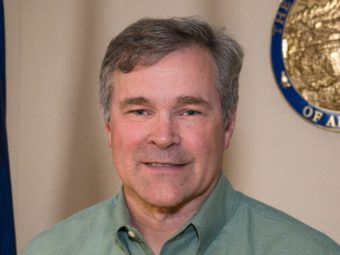
Jahna Lindemuth, Alaska’s new attorney general, has waded into a fight over ExxonMobil and how the company fights subpoenas for information about what the company knew about climate change. (Photo by Graelyn Brashear/Alaska Public Media)
ExxonMobil has been the target of a growing number of state attorneys general investigating whether the company lied about its climate change research since last November.
Alaska’s new Attorney General Jahna Lindemuth has jumped into that fight. Some lawmakers say it’s a flip-flop from the state’s original decision not to investigate the company.
Some also say the state shouldn’t waste money getting tangled up in a lawsuit.
While Alaska’s attorney general isn’t yet willing to weigh in on whether ExxonMobil lied about its climate change research, she is ready to battle the company in regards to its tactics in fighting the investigation.
Some states have subpoenaed financial and research records from the company. Exxon has fought back in court by suing to block those subpoenas.
Former Attorney General Craig Richards signed a memo in June cautioning attorneys general nationwide against aligning themselves with environmentalists and investigating the company.
Lindemuth, who took the top lawyer’s job earlier this month, signed onto a amici curiae, or friend of the court, brief arguing against Exxon’s move to blockone such investigation.
Exxon is asking a federal court in Texas to block a Massachusetts state subpoena and Lindemuth said this is an issue of federal overreach.
“The issue in that case is whether a large corporation — and it could be Exxon, it could be any large corporation — can go to a jurisdiction outside of the state where those investigations are happening and try to quash the investigation from a federal court in a different state,” she said.
States should have the right to protect consumers and investigate fraud cases in state courts rather than battling them out in federal courts, Lindemuth said.
Two House Republicans are criticizing her for what they say is a reversal of course for the state: House Speaker Mike Chenault and Judiciary Committee Chair Gabrielle LeDoux say the state shouldn’t have a role in the lawsuit.
LeDoux, a former attorney, said she has not read the brief Lindemuth’s signed, but she doesn’t think the state should get involved.
“I just don’t think that in our time of limited resources that we should be spending money going to war with our major industry,” LeDoux said.
The attorney general’s office said just because Lindemuth signed the brief, doesn’t mean state will be compelled to appear in court as the lawsuit plays out in other states.
No one from Exxon returned a phone call seeking comment.
Dean Westlake is challenging Barrow Rep. Bennie Nageak in the Democratic primary; in 2014, Westlake lost the race by 131 votes. (Photo by Rachel Waldholz/Alaska’s Energy Desk)
Only three votes now separate two northern Alaska House candidates.
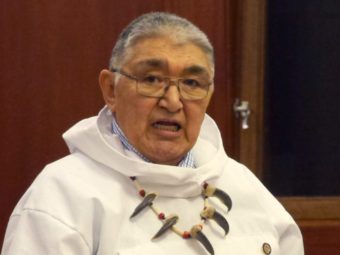
Dean Westlake of Kotzebue has 780 votes, ahead of 777 votes for incumbent Rep. Ben Nageak, who’s from Barrow.
Alaska’s Division of Elections is still counting votes from House District 40, which stretches from Kotzebue to Kaktovik.
Elections director Josie Bahnke said a review board met in Nome on Tuesday, Aug. 23, and certified 42 ballots in the race.
But, there are still more to count.
“I’ve been talking to staff about this being a marathon, not a sprint.”
Bahnke’s division has come under fire in recent days for voting irregularities in the Northwest Arctic village of Shungnak. Voters there were given ballots for both primaries, though they only were supposed to get one.
Bahnke’s division is working with the Department of Law to determine what to do if the added ballots in Shungnak appear to change the outcome of the race, she said.
There are at least 120 ballots left to count for House District 40, which includes questioned, special needs and absentee ballots.
The state deadline to count absentee ballots is Friday.
The election should be certified by September 2.
The race is one of two that State Democratic Party officials targeted in an attempt to unseat two Democrats who caucus with the Republican-led House majority.
The challengers, and party officials, say they’re hoping to build a bipartisan coalition in the House.
With no Republicans in either race, the candidate who wins won’t have a general election challenger.
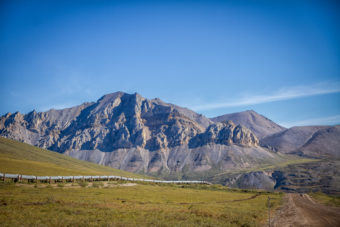
The Trans Alaska Pipeline System, or TAPS, carries oil from Alaska’s North Slope to the rest of the state, shown here running along the Dalton Highway. Oil prices have rebounded slightly in the last few weeks, analysts say that won’t mean much for Alaska’s bottom line. (Photo by Lindsay Ohlert/Creative Commons)
Oil prices were up for the third straight week last week.
In Alaska, North Slope crude rose to nearly $50 a barrel by the end of the week.
That’s much higher than the $40-a-barrel price the state based this year’s budget on. But, the price isn’t nearly high enough to fill the state’s massive $3.2 billion budget deficit.
Ken Alper, director of the state’s tax division, said each dollar increase in the price of oil works out to about $25-$30 million in revenue for the state. And while that’s helpful, it’s not going to balance the budget.
“I don’t think we’re expecting it to move very much and once again we’re anticipating over a $3 billion dollar deficit so a few hundred extra million is certainly helpful but it still means a large shortfall for the current year,” Alper said.
Alper said the rebound in prices is good for oil companies.
“The big difference that happens around $46 a barrel is, that is, per our estimates, around the break even point for the major producers on the North Slope,” he said.
That break even point is a big deal for the state. If oil stays at that price, the state is guaranteed a four percent tax on production. Any lower and the companies can claim credits that reduce the state’s tax revenue.
But the price of oil is still half of the $102-per-barrel needed to balance the state’s budget this year.
Alper said that it is technically possible oil prices could get back up to that level, but very unlikely.
“It’s a small likelihood. There’s certainly a possibility. We can’t discount it. But if I had to put a number out there, I’d put it in the less than 5% category,” he said.
There are several factors affecting the price of oil. A big one is that global inventories of crude oil are high and the market is oversupplied. Analysts say that isn’t likely to change soon.
Members of the Organization of Petroleum Exporting Countries, or OPEC, are set to meet with other producers in September to discuss freezing production. That fueled speculation that drove prices up last week.
Esa Ramasamy, is an analyst for S&P Global Platts. He said OPEC signalling that it would discuss capping production could drive prices up in the short term, but other factors have longer lasting impacts on the market, like the forecast.
“This year, they believe the winter is going to be much cooler than what it was last year,” he said.
Hurricane season can also drive oil prices up as storms hit the Gulf of Mexico and halt production at rigs there. But, Ramasay said there are other factors that could pull prices down. Of those, one of the most critical is investment.
As oil prices cratered, companies stopped investing. Ramasamy says there hasn’t been any measurable investment in the last two years.
In Alaska, low prices have caused the state to dip into its $8 billion constitutional budget reserve to close the deficit this year.
And, while more revenue from the bump in oil prices will cause the state to draw less on its savings, the problem is far from resolved.
By Monday, prices had fallen by 3 percent, making it seem even less likely that they’ll rebound to budget-balancing highs anytime soon.
Alaska Natural Resources Commissioner Andy Mack at a press conference in Anchorage on June 28, 2016. (Photo by Graelyn Brashear, Alaska Public Media – Anchorage)
The state’s newest Department of Natural Resources Commissioner, Andy Mack, is one of several new additions to Gov. Bill Walker’s cabinet. Here are a few questions that couldn’t be included in the Alaska’s Energy Desk profile of him that ran earlier this week. This interview has been edited for clarity and length.
Alaska’s Energy Desk: The Governor just appointed John Hendrix as the oil and gas advisor, which is a role historically played by the DNR commissioner. What’s the division of responsibility between you, Hendrix and Keith Meyer at the Alaska Gasline Development Corporation?
Mack: I wouldn’t necessarily agree with the fact that the role of oil and gas advisor is historically the DNR commissioner. Every governor has the prerogative and the ability to rearrange their staff how they feel will best suit the needs of the state of Alaska.
The DNR commissioner has very specific regulatory obligations. I think that people shouldn’t forget that there’s some history there and there’s a fairly long history of having people in the Governor’s office with specific oil and gas experience.
Now, with respect to John Hendrix I think, number one, he’s got some incredibly valuable experience that is very valuable to the Governor. He has more flexibility than I do though in the sense that he can talk very broadly about policy without worrying as much about the regulatory functions of DNR. So, the distinctions in the roles between myself and John Hendrix are that he doesn’t have a specific regulatory function.
Now, on important decisions, let’s be clear, everybody in the State of Alaska, I think would agree, that the DNR commissioner should be in full consultation with the folks in the Governor’s office.
The second part of the question was on the role and the relationship between the new head of AGDC. It has been discussed quite a bit in the press that the work in the pre-FEED process has been moving along and that that process is, people can see the finish line there and they can see the conclusion of that process. Then really the question is raised well what do we do next?
There was a stage-gate approach which basically said we’re going to walk through this process we’re going to try to work together in an aligned manner and after pre-FEED there are subsequent steps and decisions to be made by the participants in AKLNG.
It’s no secret that not only are there economic headwinds in the oil industry, but there’s significant economic headwinds in the gas industry too.
There’s been certainly pretty open statements by all of the parties involved and a fairly open discussion about the concerns with being able to move some of the future stages in the AKLNG process.
I think Keith Meyer has been tasked with is ensuring that timing wise the state’s interests are protected. And that we, to the extent possible, move that process along, that project along.
Alaska’s Energy Desk: You’re originally from Soldotna, can you tell me what that experience growing up in Cook Inlet has taught you about resource development there?
Mack: I was born in 1964 in Soldotna and, as a young kid, I had many friends whose families were engaged in the oil and gas industry either as direct employees or as service-side providers.
Nikiski and Kenai and Soldotna and the surrounding areas — it was this incredibly vibrant community and it really was full of hope and a big part of that hope was fueled by this engine, which was driving the local economy.
As I grew up and graduated from Soldotna High School and then went to college, things started to slow down as production waned in Cook Inlet and it got to the point in the 1990s where the economy and production levels were way down the price was was up and down in the 90s. It was actually, for me personally, hard to drive out past Kenai in a sense because there were lots of buildings that had been abandoned where businesses had once operated. People were very uncertain about their economic future and what has been kind of heartening is that a lot of that optimism and a lot of that economy has come back.
But again we’re now in a down-cycle on price so the ability and the willingness of folks to come in and invest in that region again is in question. And I think, I absolutely have personal experiences with that whole region, it’s a little personal to me and it’s very important that we simply understand that as a state what we do financially makes a huge difference.
Alaska’s Energy Desk: DNR identifies a lot of resources, like timber and oil, that the state has available to it for extraction. Are you having these discussions about resources that could be identified in the state that could be used specifically for environmental conservation and not necessarily for resource extraction purposes?
Mack: I think the question is, is there something that’s important enough for the state where they would say this is where we want to go on an issue like that?
So, that would probably have to be an organic conversation among Alaskans.
I think at the end of the day, the administration and the Governor’s going to say what’s in the best interests of Alaska and and that would be kind of the bedrock principle and there’d have to be a very, very forthright conversation about what Alaskans feel is best.
Do they want to extract resources or do they want to extract part of the resource and set aside some of it and that’s really a question for Alaskans.
Historically, the vast majority of Alaskans have come down on the side of – at this point we’d like to extract the resource — but that’s part of the ongoing discussion.
Alaska’s Energy Desk: What is your vision for oil and gas exploration in the state?
Mack: The ability of the state of Alaska to continue to generate income from oil and gas will be created by our ability to maximize access. We’ve had fairly good access to the areas that we own and we have the ability to lease. I think Alaskans should be very proud of the work we’ve done since oil production began.
As a general rule — it’s not a perfect record — but as a general rule I think we should be very proud of the work we’ve done and the standards we’ve insisted upon as a state in protecting the environment and also ensuring that we maximize production.
There’s tensions between pace and standards but generally speaking in the areas where we’ve had access, we’ve done a good job.
I think the challenge for Alaska is how to approach areas where we historically have not had access or the access is controlled by the federal government and I think part of my experience lends itself very well to ensuring that we can generate access.
I think access in federal areas is going to be driven by a number of factors. A big part and probably one of the principal facts is going to be whether or not local stakeholders, whether or not they support going into areas which are managed by the federal government. I think that there’s a number of things that you have to take into account. But certainly areas and local communities always have an interest in big development projects. Doesn’t matter whether it’s building a highway, whether it’s building a mine, whether it’s drilling for oil or gas.
Alaska’s Energy Desk: So when you say access to areas that are controlled by the federal government, Arctic National Wildlife Refuge? Are you thinking the petroleum reserve? What are those areas and what’s your strategy?
Mack: The answer is yes ANWR, the Outer Continental Shelf , and the National Petroleum Reserve – Alaska up in the Arctic area, certainly all oil plays that are very important.
Some of those areas are prolific and also economic in the sense that they’re companies that are willing to go out and do the work.
For example, there’s been lots and lots of discussion about what Shell has proposed and what they were doing in their exploration effort and that’s very expensive and very ambitious and very much a play where they were looking for a large field. That’s what their project required is that they find a large bunch of oil.
But, there’s other smaller plays along the North Slope there’s lots of activity. There’s a number of those more discreet probably lower profile plays/investments/projects that make sense.
My work both prior to Pt Capital and then at Pt Capital was really drilling down on, fundamentally what it would take to do those types of projects and do them in a matter which would result in a program that could actually lead to production but also in a manner that the stakeholders along the Arctic coast for instance could live with and support. I think those two are compatible concepts.
But, it doesn’t have to be that you have to go out and try to capture a basin, it can be a more graduated series of proposals which are smaller in nature but keep the economy of Alaska ticking along and ultimately do lead to production.
Dean Westlake is challenging Barrow Rep. Bennie Nageak in the Democratic primary; in 2014, Westlake lost the race by 131 votes. Westlake is winning by five votes, but that state election officials say they still have absentee and questioned ballots to count. (Photo by Rachel Waldholz/Alaska’s Energy Desk)
As votes continue to trickle in, a hotly contested race in the North Slope and Northwest Arctic Borough has two bush Democrats within five votes of each other.
Rep. Benjamin Nageak raises his fist in solidarity with the effort to reduce domestic violence in Alaska at the Choose Respect rally on the Capitol steps, March 27, 2014. (Photo by Skip Gray/KTOO)
Incumbent Rep. Ben Nageak is slightly behind in his race against newcomer Dean Westlake. All precincts in that district have been counted, but the state Division of Elections still has absentee and questioned ballots to count.
Westlake ran against Nageak two years ago and lost by 131 votes.
Nageak declined to comment and Westlake is out of reach at his fish camp.
Nageak is one of two rural Democrats targeted by members of their own party for caucusing with the Republican-led majority in the state House.
House Democrats are hoping to build a bipartisan coalition next year.
A challenger to Democrat Rep. Bob Herron is winning the race for House District 38. Zach Fansler has clinched his lead over Herron with nearly 57 percent of the vote. There is one district left to report in that race. It covers Bethel, the lower Kuskokwim River and several coastal villages.
Herron did not respond to multiple requests for comment, Fansler also has not responded. His campaign manager Mitchel Forbes said they won’t talk about results until every vote has been counted.
Zach Fansler and Bob Herron meet outside of KYUK for an August 2, 2016 campaign debate in Bethel. (Photo by Geraldine Brink/KYUK)
That district had the largest voter turnout in the state with 21 percent of the registered voters casting a ballot.
With no Republicans in either race, neither candidate will have a general election challenger.
Andy Mack is the state’s newest Department of Natural Resources Commissioner. (Photo courtesy State of Alaska)
From Soldotna to the North Slope to Anchorage, the state’s newest natural resources commissioner has spent his career weighing in on energy issues all over the state. Now, Andy Mack has been tapped by Gov. Bill Walker to help guide the state through the maze of federal regulations required to develop oil and gas resources.
He’s has worked as both a civil and criminal defense attorney. He was a legislative aide for a decade and, most recently, managed a private investment firm. But, he’s probably best known for his time spent working on the North Slope.
And the state’s newest DNR commissioner said that when it comes to the state’s future, people should be looking north.
“Without Arctic development the State of Alaska will probably struggle,” Mack said. “I think that we have a lot of tools that are not Arctic related, but I think that if we really want to thrive as a state, all eyes should be on the Arctic.”
But nothing in the Arctic is easy. And, the technical challenge for oil companies mirrors the tricky process of navigating tribal, state and federal land ownership.
Mack has plenty of experience wading through the complex regulatory process of opening up federal land for public and private use. He spent five years working as an adviser to the North Slope Borough during a renaissance/ in exploration and development in the Arctic Ocean.
Mack said he spent a lot of his time at the borough weighing-in on development on federal land like the National Petroleum Reserve-Alaska and the Outer Continental Shelf.
“I think the challenge for Alaska is how to approach areas where we historically have not had access or the access is controlled by the federal government and I think part of my experience lends itself very well to ensuring that we can generate access,” he said.
Key to that access, Mack said, is whether local communities – like Barrow- support going into areas that are managed by the federal government. He said the communities have to balance development and subsistence.
Mack’s experience gaining access to federal lands and building contacts across the state is one of the main reasons Walker hired him.
“It’s a maze that we need to get through that he has worked in his capacity as an attorney and as a consultant for a number of organizations in Alaska that have been in permitting processes with the federal government on oil and gas development and beyond,” Walker said.
Mack joined Walker’s oil and gas team at a contentious time.
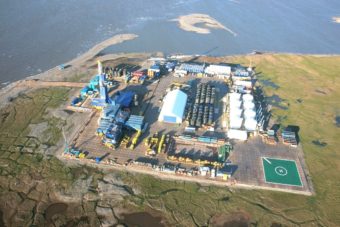
The state is battling with BP, ConocoPhillips and ExxonMobil over the details of how the companies will sell natural gas from Prudhoe Bay.
When the producers declined to turn over specific marketing information, Walker refused to sign the annual development plan for the field.
It’s unclear what will come of the state threatening the companies’ leases if they refuse to give in.
But Prudhoe Bay was responsible for nearly half of the state’s oil production last year.
The decision to pursue marketing information pre-dates Mack’s time at DNR. He said he supports the process, but wasn’t ready to weigh-in on whether the state would revoke the leases at Prudhoe Bay.
“We’re in a process, so I’m not going to answer,” he said.
Mack also said he supports another of Walker’s controversial decisions. This year, Walker vetoed about $430 million in tax credit payments owed to oil companies.
Looking ahead, Mack says he’s focused on protecting the state’s interests and encouraging investment in the state’s resources at a time when budget challenges make it seem risky.
“It’s very important that as Alaskans we appreciate what the world markets think of Alaska, that we’re able to attract investment capital and that we’re able to recycle some of the money that we have available here to us in Alaska,” he said.
Mack will also be spending a lot of time working on the state’s response to the Department of the Interior’s five-year plans for offshore oil and gas leases. Right now, those plans include three potential lease sales in Alaska – two in the Arctic and one in Cook Inlet.
Close
Update notification options
Subscribe to notifications
Subscribe
Get notifications about news related to the topics you care about. You can unsubscribe anytime.