Alaska coronavirus news

Live updates and information on COVID-19 in Juneau and Alaska
Closure of Juneau’s COVID-19 emergency operations center brings changes to testing, data reporting

Juneau’s COVID-19 testing site is moving from the Hagevig Regional Fire Training Center to Bartlett Regional Hospital on May 8, 2022. (Photo by Jennifer Pemberton/KTOO)

Juneau’s emergency operations center closed on April 30 after managing the city’s response to the pandemic for more than two years. City officials acknowledge that there are still high rates of COVID-19 in Juneau, but the change indicates that COVID-19 is no longer being treated as an emergency.

Robert Barr was in charge of the emergency operations center from the beginning of the pandemic in Juneau. He says now that people have the tools to calculate risk and have ways to combat the virus itself, it’s time to stop treating COVID-19 like an emergency.

Barr also says a lot of city staff have been doing two jobs for a long time. For instance, he was the head of the library system in addition to being the incident commander for about a year.

Now, public health officials and community healthcare providers will take on long term management of the pandemic.

For two years, people have been able to get tested for COVID-19 at the city’s testing facility at the Hagevig fire training center. On May 8, Bartlett Regional Hospital will be managing testing for the general public. The hospital will bill insurance for those who have it, but officials say they won’t charge anyone out of pocket.

The city has stopped updating its COVID-19 dashboard, but weekly COVID-19 case and hospitalization counts are available on the state’s dashboard. The local public health office is still tracking COVID-19 numbers as it has since the beginning of the pandemic and reporting that information to the state. It takes more work now to find local numbers, but it’s doable.

The city will still provide free high quality masks and at-home test kits as long as there’s state and federal resources to do so. Those are available at City Hall and Juneau libraries.

Masking in Juneau has been only a recommendation for months now. But with the emergency operations center closed, the city won’t be able to impose mask requirements unless the city manager makes a new public health emergency declaration.

The COVID-19 hotline is still available, but Bartlett Regional Hospital will manage it now instead of the city’s emergency operations. The number is still 907-586-6000. And Robert Barr says you can still reach him at the manager’s office if you have questions about how the pandemic is being managed in Juneau.

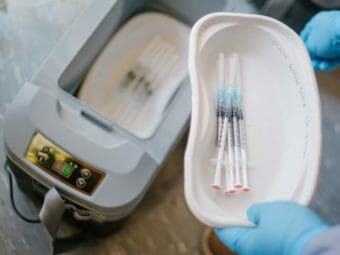
Moderna asks FDA to authorize first COVID-19 vaccine for very young children

""
Moderna says its vaccine appears to be about 51 percent effective for children ages 6 months to less than 2 years, and 37 percent effective for those ages 2 to less than 6 years. (Photo by Ole Spata/dpa picture alliance via Getty Images)

Moderna announced Thursday that the company has asked the Food and Drug Administration to authorize a low-dose version of its COVID-19 vaccine as the first vaccine for children younger than age 5.

In a study involving about 6,700 children, the company said two doses of the vaccine administered 28 days apart to children ages 6 months to less than 6 years triggered levels of antibodies equivalent to what has protected older children and adults.

“We are proud to share that we have submitted for authorization for our COVID-19 vaccine for young children,” said Stéphane Bancel, Moderna’s chief executive officer, in a statement. “We believe [the vaccine] will be able to safely protect these children against SARS-CoV-2, which is so important in our continued fight against COVID-19, and will be especially welcomed by parents and caregivers.”

The vaccine appears to be about 51 percent effective for children ages 6 months to less than 2 years, and 37 percent effective for those ages 2 to less than 6 years, the company says.

“That means that you’re going to reduce your chances of getting disease by about a half. That’s very important for these kids,” Dr. Paul Burton, Moderna’s chief medical officer, told NPR in an interview.

While that level of effectiveness is lower than many had hoped, it’s not surprising given the study was conducted when omicron was the dominant variant, company officials and others say. Omicron can evade immunity better than previous variants, resulting in more “breakthrough” infections among vaccinated older children and adults.

But “the levels of antibodies that we see clearly shows that we should have very good protection against severe disease and hospitalization, which obviously is what counts most,” Burton said.

The FDA will probably convene a committee of outside advisers to consider the request. The FDA is also awaiting data from Pfizer and BioNTech about the effectiveness of three doses of a low-dose version of their vaccine in children younger than age 5. Two doses proved ineffective, disappointing parents of young children eager to vaccinate their children.

While officials had hoped to make a vaccine available for this age group by the end of April, the FDA is now expecting to consider it in June once all the data have been submitted, according to an official familiar with the issue who is not authorized to speak publicly.

The possibility of a delay has angered many parents of young children, who are frustrated and anxious that they haven’t been able to vaccinate their children even as mask requirements have been dropped and infections are creeping up.

Some lawmakers have urged the FDA to act more quickly.

But it remains to be seen how much demand there will be for the vaccine. Only about a third of parents of children ages 5 to 11 have vaccinated their children even though they’ve been eligible for months.

“We have very reassuring data. This is an unmet need here for these young children. They have no other opportunity for protection right now. So I would be hopeful that the FDA will take the data, do their normal very thorough but excellent review, and approve this as soon as possible,” Burton said.

The Centers for Disease Control and Prevention and many independent infectious disease specialists have been urging more parents to vaccinate and boost their children. Even though the omicron surge has receded, and children are less likely to get severely ill, the virus can still pose a serious health risk, they say.

Copyright 2022 NPR. To see more, visit https://www.npr.org.

In some Southeast Alaska communities, COVID cases are rising as cruise season starts

A cruise ship approaches Juneau
The Norwegian Bliss, the first large cruise ship of the 2022 season, arrives in Juneau on April 25, 2022. (Photo by Paige Sparks/KTOO)

COVID cases are rising across the country as out-of-state travelers make their way to Alaska on cruise ships.

“There’s a lot of different people coming from a lot of different places,” state epidemiologist Dr. Louisa Castrodale said at a public health presentation on Wednesday. “There’s some really good measures that you should be taking, regardless of COVID, anytime you’re going on a cruise ship.”

Those measures recommended by the CDC include frequent hand-washing as well as staying up to date on flu shots, measles vaccines and other immunizations.

Nationally, COVID-19 case counts rose by 22% this week.

Overall, Alaska saw a 4% decrease this week, with 1,435 cases reported over the last seven days. But some of the highest case rates and sharpest increases were in communities — like Skagway, Petersburg, and Sitka — that will see a lot of visits from cruise ships. And their COVID cases have been rising just as cruise season is getting underway.
Skagway’s case rate was 959 per 100,000 residents over the last seven days. For Sitka, that number was 997, and for Petersburg it was 1,034. The case counts don’t include home tests.

The first big cruise ship to visit Southeast this year was the Norwegian Bliss, which arrived in Juneau on Monday with about 2,000 passengers on board.

State epidemiologist Dr. Eric Mooring said Alaskans living in more remote communities should pay attention to hospital capacity in their regions. He said travel within regions can contribute to community spread.

“When we see higher levels of COVID in one part of Southeast Alaska, we sometimes also see them in other areas around the same time as well,” he said. “Despite the lack of roads, people are clearly moving around.”

The CDC has an online dashboard tracking COVID outbreaks on cruise ships. Cruise lines on the dashboard opted into the CDC’s COVID program. So far, 76 of the 97 ships on the dashboard have reported cases.

State health officials are also watching for a subvariant of the BA.2 omicron variant, BA2.12.1. State epidemiologist Dr. Joe McLaughlin said that so far, that subvariant has not yet reached Alaska, though it makes up 9.9% of cases in the region that includes Alaska, Idaho, Oregon and Washington.

The subvariant accounts for more than half of all current cases in the region that includes New York and New Jersey, according to the CDC.

Can we trust rapid COVID tests against BA.2? This is what the experts say

""
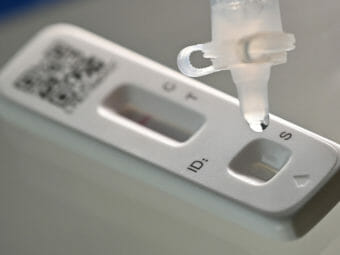
Rapid tests are effective in detecting BA.2, but the high infectivity of the subvariant means it could jump from person to person before a positive result is detected. (Photo by Justin Tallis /AFP via Getty Images)

COVID-19 cases have been slowly ticking up in the U.S., with the omicron BA.2 subvariant now the dominant strain in the country. At the same time, rapid at-home antigen tests have become the first choice diagnostic tool for many people who think they might be infected.
While these rapid tests are useful in detecting the spread of COVID-19, the high infectivity of BA.2 and concerns around self-reporting have given rise to a number of questions.

Here is what two health experts have to say.

Rapid antigen tests work against BA.2, but there are some caveats

Although we’ve long known that rapid tests have a lower degree of accuracy compared to the standard PCR test, there is no indication they are any less effective at detecting BA.2 than previous variants we’ve seen.

That said, rapid tests might take longer to yield a positive result, according to Dr. Celine Gounder, a senior fellow and editor-at-large for public health at Kaiser Health News.

“There’s usually a day or two delay between when you might test positive on a PCR versus when you might test positive on one of these at-home rapid antigen tests,” Gounder said. “But they do work to pick up an infection, and they should be used frequently.”

However, given the higher infectivity of BA.2, there is a chance that the virus might infect others before a positive result is seen on a rapid test, according to Dr. Wilbur Lam, a physician and biomedical engineer who works with the federal government in assessing COVID-19 diagnostic tests.

“One aspect about omicron [including the BA.2 subvariant] is biologically, it likely is more infective than the other previous variants,” Lam said. “So the test might not even have time to pick it up before it jumps from one person to another person.”

Nevertheless, rapid antigen tests have the advantage of being widely available and delivering a result within minutes, he said. The key to using them effectively against BA.2 is to test early and frequently.

“Because these things are more available than PCR testing, each person, if they’re able to get hold of them, can test themselves serially,” Lam said, adding that people should test multiple days after the onset of symptoms.

“That serial testing does end up mitigating the drawbacks of at least the accuracy of these types of tests compared to PCR tests.”

Have some symptoms but test is negative? Context is key

Some people may find they have symptoms consistent with a COVID-19 infection, but they are still testing negative on rapid tests. If you find yourself in a situation like this, Lam says context is key for determining what to do next.

A man swabbing his own nose
Experts say you should still be mindful of those who are immunocompromised. (Photo by Patrick T. Fallon /AFP via Getty Images)

If you continue to test negative, he said you might be fine to carry on with your daily life, as long as you aren’t planning on being around people who are immunocompromised.

However, if you plan on being around people who are at higher risk of severe illness, you should consider taking extra precautions for their sake.

“[If] you’re going to visit, for example, an elderly family member who is immunocompromised due to cancer and chemotherapy, that’s when I would say take some extra precautions, even if you’re negative,” Lam said. “So continue to mask, test again, maybe get a PCR test.”

If people aren’t reporting the results from their rapid tests, can we trust the data?

While at-home tests make it easier for people to detect a COVID infection, the current data might not reflect actual infection rates if there is a lack of self-reporting.

“This is an important question that the governmental, medical and public health communities are just now scratching the surface of,” Lam said. “In fact, the current BA.2 case numbers may be underestimating the true numbers because a significant number of positive cases are self-detected and unreported.”

And while some rapid tests offer smartphone apps to help people self-report a positive result, there isn’t any requirement to do so.

The Centers for Disease Control and Prevention encourages people to report any positive results to their health care providers, who can make sure they receive the appropriate medical care. That could include specific treatments if necessary.

According to the CDC: “The public health community, including CDC, is confident that situational awareness remains strong without receiving self-test results.”

New tests work best. But expired tests might still work for a time

Currently, every household in the U.S. is able to order two sets of four free at-home tests through covid.gov. However, these tests don’t last forever and additional tests are not free.

Both Gounder and Lam say it’s best to follow the manufacturer’s suggested expiration date. However, if you have an old rapid test on hand, they say it could be useful for a time, although there’s no consensus on exactly how long.

“The rapid tests are fundamentally biological and biochemical in nature and bear some similarities to food products, at least as far as the expiration date is concerned,” Lam said. “Therefore, a test will not go ‘bad’ immediately after the expiration date but will gradually degrade over time.”

Gounder suggests storing tests in order of expiration date so that you are using the oldest ones first.

Copyright 2022 NPR. To see more, visit https://www.npr.org.

Two days later, masks are optional again at Juneau schools

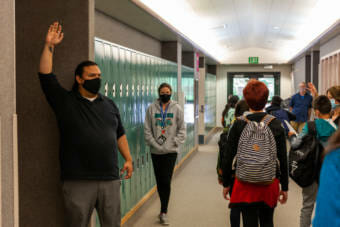
Frank Henry Kaash Katasse guides students to his classroom for a Tlingit class at Dzantik'i Heeni middle school on the first day of school on Monday, August 16, 2021, in Juneau, Alaska. (Photo by Rashah McChesney/KTOO)
Frank Henry Kaash Katasse guides students to his classroom for a Tlingit class at Dzantik’i Heeni middle school on the first day of school on Monday, August 16, 2021, in Juneau, Alaska. The school district got rid of its mask mandate in April 2022, then reinstated it for two days before making masks optional again on April 26. (Photo by Rashah McChesney/KTOO)

Masks are optional again at Juneau schools. The district’s board of education held a special meeting Tuesday night to address the issue.

The Juneau School District had gone back to requiring masks at the beginning of the week, after just a few weeks of loosening the mandate.

In the announcement on Saturday, the district said it was because the Centers for Disease Control and Prevention had increased Juneau’s community risk level.  

Families were sent emails and texts on Saturday, saying that the Centers for Disease Control and Prevention had increased Juneau’s community risk level. The CDC updates its metric once a week.

After a more careful examination, Superintendent Bridget Weiss said that might not have been the best way to make mask policy decisions in schools.

“We’ve learned a lot since Friday about that metric and what it means,” she said. “That CDC metric is really out of alignment with our local metric and health conditions.”

Weiss said the CDC metric actually includes other Southeast communities outside of Juneau.

The change caused fallout from the community and disrupted learning at the beginning of the week. Some students still chose not to wear face coverings. They sat in the commons instead of their classrooms on Monday and Tuesday.

At the special meeting Tuesday night, board president Elizabeth Siddon explained what caused the switch over the weekend.

“The current mask policy was adopted in March of 2022,” Siddon said. “Its implementation included a trigger that if the CDC community level went to high, that masks would be mandatory in Juneau School District facilities.”

Before taking action, the board heard more than an hour of public testimony from students, parents and educators. Some students were concerned that without the protection of masks, they might lose out on prom and graduation. They said they wouldn’t mind wearing masks for the rest of the year if it meant they could keep their end-of-year traditions.

Several parents wanted masking to be a personal choice, saying they had pulled their kids out of school when it became a requirement again. 

Teachers reported the disruptions in their classrooms early in the week and how they were still responsible for kids who were learning in the commons. Others were concerned about the health risks for certain educators and special needs students.

After more than an hour of public testimony from parents, students and educators, the board voted unanimously to bring back a mask-optional policy. 

The policy calls for masks to be optional in JSD buildings, with a few stipulations. People who are in contact with another person who is identified as “high risk” for severe disease can be required to mask up around those individuals indoors. The same goes for people who’ve been exposed to someone with COVID-19.

Superintendent Bridget Weiss has the authority to require masks in those situations. She says she’s sorry for all the confusion.

“It’s really frustrating and disappointing to all of us that we made it this far without having this kind of experience to then have it now,” Weiss said. “I am so apologetic to everyone. I’m sorry that our community, our kids, and our staff are experiencing this.”

The new mask-optional policy went into effect immediately following Tuesday’s vote. 

Editor’s note: This story has been updated with additional information from the board of education’s special meeting.

Most Americans have been infected with the COVID-19 virus, the CDC reports

""
People arrive at a COVID-19 testing station in Houston, Texas, on Jan. 7. Texans were rushing to get tested as the state experienced an unprecedented spike in infections from the omicron variant. (Photo by Francois Picard/AFP via Getty Images)

Most people in the United States, including most children, have now been infected with the coronavirus, according to a new study from the Centers for Disease Control and Prevention.

At a briefing for reporters on Tuesday, the CDC’s Dr. Kristie Clarke said so many people caught omicron over the winter that almost 60% of everyone in the U.S. now have antibodies to the virus in their blood.

That number is even higher for children — almost 75% of children 11 and younger have antibodies to the virus.

Clarke said the finding means many people have at least some immunity to the virus. But CDC officials stressed that people should still get vaccinated, because vaccination provides the strongest, broadest protection against getting seriously ill. Immunity provided by previous infection may or may not be as protective against severe disease.

The CDC also said that cases of COVID-19 continue to rise, going up 23% last week to 44,416 a day. Deaths continue a months-long decline to 314 a day, or 13% less than the week before. Hospitalizations are on the uptick at 1,629 a day, up 7% over the previous week, according to CDC Director Rochelle Walensky.

About 1.5% of the U.S. population lives in communities where there is a high prevalence of COVID at the present time, with 6.5% in medium prevalence areas and the rest (92%) in communities with low levels of COVID.

Copyright 2022 NPR. To see more, visit https://www.npr.org.

Site notifications
Update notification options
Subscribe to notifications