
Alaska coronavirus news

Live updates and information on COVID-19 in Juneau and Alaska

Early in the pandemic, a sick Juneau dance teacher scrambled to be tested for COVID-19

A row of ballet dancers' feet.
(Public domain photo)

Around the end of March, testing criteria for COVID-19 was expanded in Juneau so more people who suspect they have the virus can get test results easier. But before that, as news of the virus spread, some Alaskans scrambled to find a doctor to administer a test.

Mika Lynne Morford’s test results for COVID-19 came back negative.

But for weeks, she’s been living with the feeling that she has the virus. She was running a fever and having trouble breathing. Her doctor prescribed a machine called a nebulizer so she could fill her lungs with a soothing vapor.

Morford is a dance teacher and before the pandemic, many students would come to her home studio each week. She worried she’d unknowingly spread COVID-19 to them.

“You know, obviously I’m not teaching right now because I’m so sick,” Morford said. “But it’d be kind of nice to let our dance parents know, ‘Hey guys, we don’t have that scary virus going around.'”

In early March, Morford’s entire family fell ill. She says their symptoms seemed consistent with the coronavirus. At that time, no Juneau residents had tested positive for COVID-19. Still, Morford says she had a growing sense of dread. She wanted to be tested.

“Like, if I have this, we have to know now,” she said.

She first visited her primary care physician’s office in Juneau. But she says they told her, despite exhibiting symptoms, they couldn’t offer her a COVID-19 test. One of the criteria was having traveled and she hadn’t.

Morford met with two more doctors, including a pediatrician for her son, where she was told the same thing.

“So my husband and I spent some time brainstorming about how are we going to get me this test when three different doctors had shot it down?”

Nationally, there is a limited supply of coronavirus test kits, and that’s led to some tough conversations: When is a COVID-19 test medically necessary?

The Centers for Disease Control and Prevention expanded their recommendations at the beginning of March to include patients with fevers, coughs or difficulty breathing. Still, it depends on the doctor’s judgement if a test is administered.

And states, like Alaska, have been quickly catching up — implementing mostly free drive-through testing and expanding testing criteria. Much of that happened in late March.

But for Morford, the timing didn’t line up with her illness. Around March 15, she went to Bartlett Regional Hospital’s triage tent for a COVID-19 test. She remembers coughing so hard, saliva soaked through her protective mask. She had to keep swapping it out.

She was under the impression they were going to give her the test.

“Then when they took my temperature and I didn’t have a temperature above 100, they kind of stopped,” Morford said.

She says the hospital told her they couldn’t give her the test slated for the state lab because she didn’t have a fever.

“At that point I was just like, I’m not going to leave here unless you do that test,” she said.

In the end, hospital staff took a nasal swab to be sent to a private lab in the Lower 48. It could take up to a week to find out if she had the coronavirus.

While she waited for the results, she made a video for her dancers to let them know it was going to be OK.

“But also let them know that we are very sick and I need them to listen to their parents and to not complain about being at home and practice,” Morford said.

Finally, on March 25, after much anxiety, she got an answer. She didn’t test positive for the coronavirus. It seems like a reason to celebrate, but Morford says her emotions are mixed. She’s still processing the experience. But she says she thinks medical providers were trying to do their best in a rapidly escalating situation.

Juneau now has drive-through coronavirus testing. If you feel like you’re exhibiting symptoms or you’ve been exposed to the virus, you can call 586-6000 for a free test screening.

Editor’s note: The featured image for this story has been updated.

‘You’re number 10’: A Juneau COVID-19 patient recounts how she weathered the disease at home

Juneau woman Laura Jim snapped this selfie on March 27, 2020, her sixth day ill with COVID-19.
Juneau woman Laura Jim snapped this selfie on March 27, her sixth day ill with COVID-19. Over-the-counter medicines kept her symptoms in check for about a week, but her fever spiked and symptoms worsened a few days later. (Photo courtesy of Laura Jim)

Juneau woman Laura Jim woke up on March 22 feeling sick. She said she had painful sinus headaches, head congestion, body aches, sluggishness and a light fever.

Her initial symptoms didn’t fit COVID-19 testing criteria at the time. Her doctors recommended she take over-the-counter cold medicines. They kept her symptoms in check for about a week.

Eventually, she found out she was Juneau’s 10th confirmed case of COVID-19.

She shared her story with KTOO on Tuesday. We pick it up when she ran out of medicine on her eighth day ill. It was a Sunday.


“The fever spiked up. The highest I clocked it, it was late through the night, was 103.4. The sinus pain in my head was so extreme — it really just hurt to even move my eyes, blink, you know? I honestly cried, like, to myself, like really the whole night night off and on. Every time I tried to move. I was just really miserable. And then, same thing on Monday. … I tried to eat a few times and just really couldn’t. … At this point, I still didn’t know that I had the virus. I just, was like, this is the worst sinus infection I’ve ever had in my entire life and I’m dying.

“So Monday, I had my video doctor’s appointment with my regular doctor, and at that point, the requirements for being tested had been dramatically reduced. … So she said, ‘Yes, I’m going to recommend that you get tested.’ … I went through SEARHC. … You drive up … and they wave you to where they want you to park, and then they have a couple of workers come out in — they weren’t hazmat suits, but they had splash guards and face guards and they were all bundled up really well, gloves, everything. And they come right up to your window. They tell you it’s not going to feel good, and they stick the swab up your nose … till it can’t go back any further. … They gave me some information and sent me on my way.

“By Wednesday, that intenseness in my head and the pain and the pressure was even less. … So I really was like, ‘Yup, I’m getting better.’ And then that’s right when I got the call. … ‘Don’t panic, don’t freak out, but you’re number 10.’

“I cried. … My first reaction was, ‘Oh God, I’m gonna have to tell my kids.’ And you know, they’ve been seeing me going through this intense sickness and, you know, now it kind of makes sense. What really floored me is just how different my symptoms were from everyone else. You know, believe me, even through the whole time I was Google-doctoring myself: What are the symptoms again? Do I have it? And really questioning myself. … So I was devastated. … I felt awful.”

Jim said she worried about her kids, and if she was truly over the worst of her sickness.

“You know, I already felt isolated and lonely as it was, but I felt it even so much more just knowing — you’ve got it. You know, you got the cooties,” she said with a laugh. “You officially have got the cooties. … And I didn’t have a whole lot of time to think about it before the state called me. … And yeah, I was on the phone for almost two hours. … And so they had me tell them where I had been.”

Investigators had her start at three days before she felt sick. She put them in touch with everyone she’d been in contact with.

“You listen to the statistics, and they kind of give an update on, ‘This many of these confirmed cases traveled and this many of this’ — I’m like, one of the two that they have complete question marks on. We don’t know. You know, I haven’t traveled. I don’t know anybody else that was positive or that’s been sick. So, you know, I really have no idea.

“It is not a good feeling being told you’ve got this virus that the world is being shut down for right now. You’re the reason why, you’re sick, you have it. … It’s a very lonely feeling. … And if anybody is going through the testing process that are showing any signs of sickness, I just hope that knowing what to expect — even what the testing is like, what’s going to happen when they tell you? How does the interview process go? What emotions are you going to feel? Sharing that with anybody that might be going through the same thing, it might not be so scary for them.”

By day 15, her symptoms were just about gone. She still had a lingering, annoying cough, but no fever. State health authorities emailed her this letter.

She said she wasn’t retested. It seemed to be based on the timing and her symptoms going away.

“So I feel lucky. … I feel like I’ve got this like, new, ‘Yay!’ on life.”

She did have to give up one of her favorite condiments.

“I don’t know if I lost my entire sense of smell. I did have an altered sense of smell. I’m a Tabasco person. Tabasco usually goes on almost everything. And I had put some Tabasco on some food and it smelled like urine. I have not used Tabasco since, because I don’t want to smell that ever on my food.”

Jim said everyone she’d had close contact with before getting sick was in the clear. But one of her sons just developed a tickle in his throat and a mild fever. She took him for testing on Tuesday and is waiting on results.

ConocoPhillips shuts down North Slope drilling over coronavirus concerns

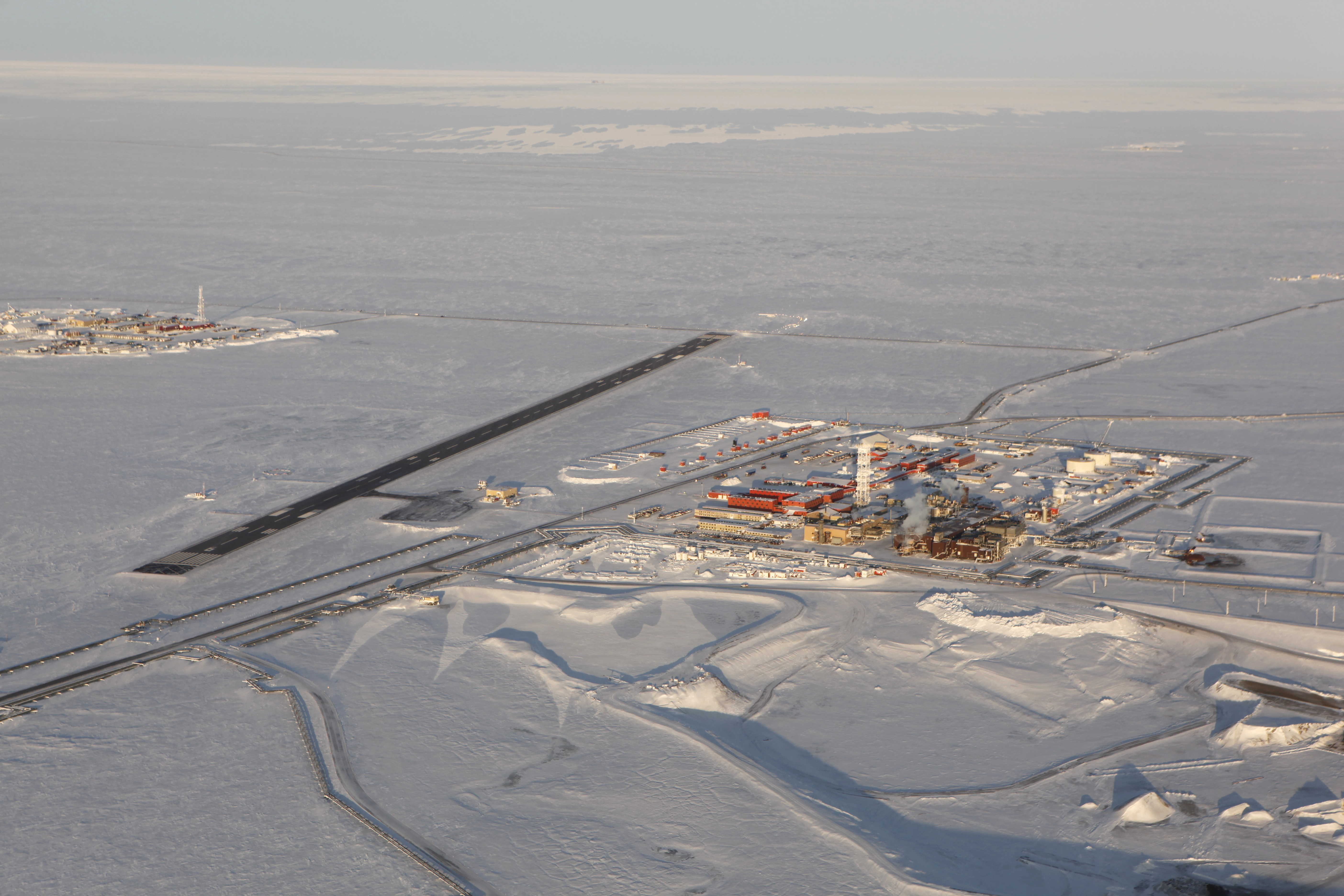
The main camp at the Kuparuk field. (Photo courtesy ConocoPhillips)

Oil giant ConocoPhillips announced Wednesday that it’s shutting down its drill rigs on the remote North Slope oil fields, and placing them into long-term storage, to protect its employees and contractors during the coronavirus pandemic.

This winter was supposed to be Conoco’s largest exploration and construction season ever in Alaska. In a statement, Conoco spokesperson Natalie Lowman said the company is significantly reducing its workforce on the Slope because of the heightened risk of COVID-19, the disease caused by the coronavirus.

“The health and wellbeing of our workforce, along with mitigating the spread of COVID-19 is our top priority,” Lowman said. “The preventative actions we’re taking in Alaska are primarily due to the remoteness and complexity of operating on the North Slope during the COVID pandemic.”

Lowman said she didn’t have additional information Wednesday on workforce impacts, including any layoffs and how many fewer employees and contractors will be on the Slope. In a letter, the president of Doyon Drilling, a subcontractor, said the impact of the decision will be “severely felt” by all of its employees and Alaskans, The Anchorage Daily News reported.

Wells in production will continue to produce oil, Lowman said. Development and exploration drill rigs will be demobilized. That includes its massive rig nicknamed “The Beast” that was expected to begin drilling this month.

“Given the high degree of uncertainty on how the situation plays out, we can’t say how long these measures will be in place,” Lowman said.

The oil industry is not only dealing with the coronavirus, but also a historic drop in oil prices. In early March, Alaska North Slope crude sold for roughly $50 a barrel. On Tuesday, the price fell below $20.

Conoco previously announced it was cutting its capital spending in Alaska by roughly $200 million due to low oil prices.

So far, there has been one confirmed case of COVID-19 on the Slope oil fields, where employees live and work in close quarters. BP announced last week that a Prudhoe Bay worker had tested positive for the disease.

In response, BP also said it would limit its activity at Prudhoe Bay “to safety critical and regulatory compliant activity.” It ended this year’s development drilling.

Asked if any Conoco workers on the Slope had tested positive, Lowman said in an email, “I can’t share information on workforce health matters.” The state is the primary source of information on COVID-19 cases, she said, and had only confirmed one case.

The number of cases across Alaska continues to grow, reaching 226 by the end of the day Tuesday.

Oil companies, including Conoco, have reported an array of efforts to keep the virus off the Slope including longer shifts, health screenings and increased sanitation.


Alaska’s request for medical supplies from the feds fell short, now it’s on the hunt for more

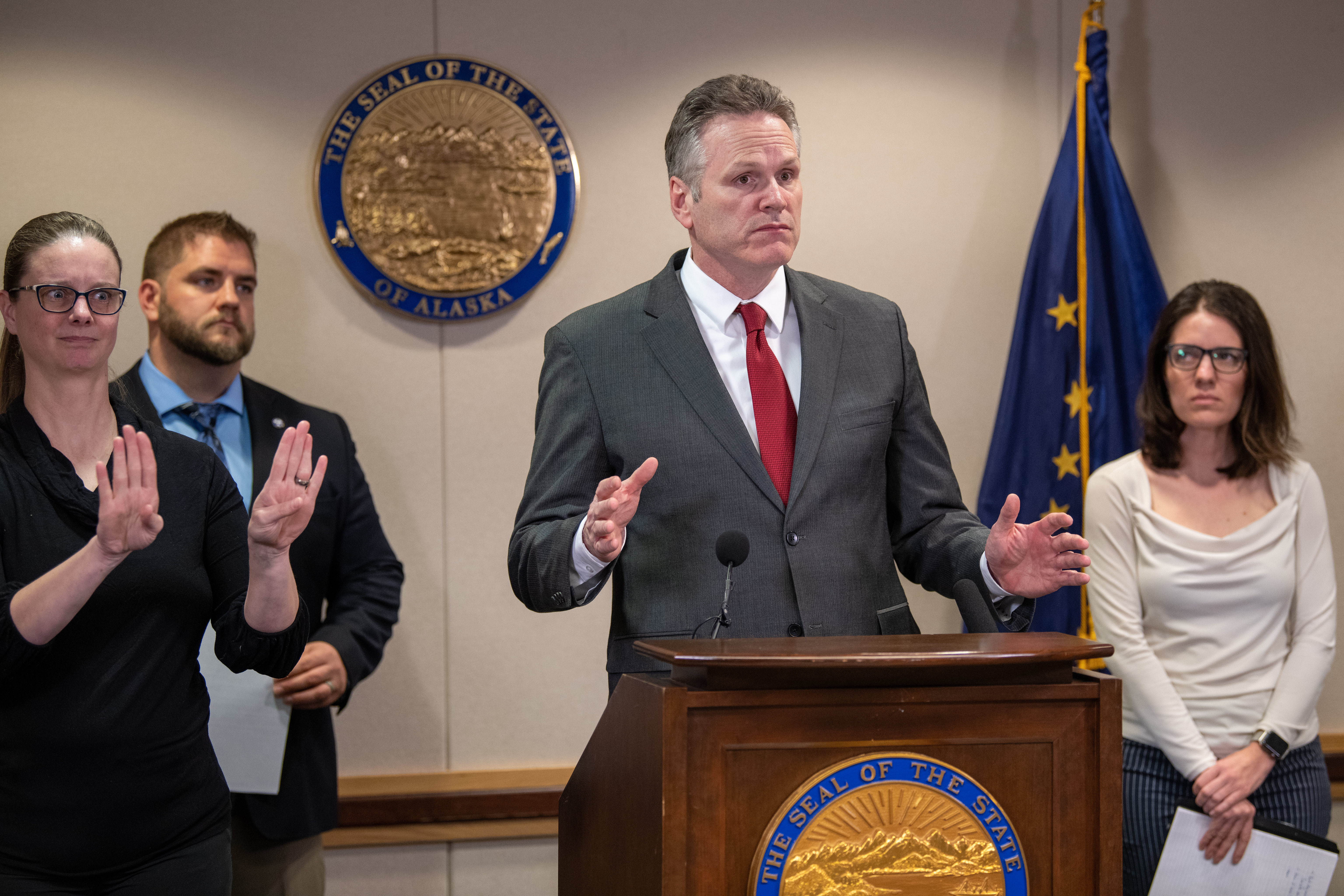
Alaska Gov. Mike Dunleavy speaks about the state's COVID-19 response from the Atwood Building in Anchorage on March 20, 2020.
Gov. Mike Dunleavy speaks about the state’s COVID-19 response from the Atwood Building in Anchorage on March 20. Also pictured: Health and Social Services Commissioner Adam Crum, Chief Medical Officer Dr. Anne Zink, and an unidentified sign language interpreter. (Creative Commons photo courtesy Alaska Governor’s Office)

Update – Andrew Kitchenman, KTOO and Alaska Public Media

Alaska’s state government hasn’t received all of the medical supplies from the federal government that it’s asked for, so it’s turning to sources both inside the state and around the world. 

The state requested more than 3 million N-95 masks from the federal government, and has received 165,000. It asked for 1 million medical gowns and received 9,400. It also has shortages of face shields, gloves and surgical masks.

Alaska Chief Medical Officer Dr. Anne Zink noted at the daily news conference on COVID-19 on Wednesday that there are global shortages. 

“And so we’re working with manufacturers in the state as well as federal and local and international partners to try to obtain more personal protective gear and, really, more testing so that we can make sure that people are being screened, quarantined, tested appropriately,” she said.

Alaska has received all of the ventilators it asked for. It also received all of the requested Abbott kits, which provide rapid testing for the virus. 

Zink said the shortage of personal protective equipment has led public health experts to think creatively about how to meet the state’s needs. 

“I feel like I’m becoming a manufacturing supply chain expert, trying to figure out how we get, you know, supplies from one place to another and how do we develop it and how much lag time those things need and how much raw materials,” Zink said.

She said the coronavirus may be present in many communities that haven’t had confirmed cases.

“I think we all need to assume at this time that this is amongst our communities for the most part,” she said.

Zink said the state is working to increase its testing capacity. She noted that the percent of tests that are coming back positive is going up, and the state would like to be doing enough testing that it’s dropping. 

The state also changed the guidelines for who should be tested. Patients at any facility where health care services are provided and household members of health care providers can now be tested at the state labs. 

The guidelines previously said that those at increased risk for serious illness could have tests sent to out-of-state commercial labs; now, the guidelines say their tests could be done at the state labs. And people working in critical infrastructure jobs like in grocery stores have been added to those who could have tests sent to out-of-state labs. 

People who don’t have symptoms are still not eligible for testing under the guidelines, though providers can use their discretion. 


Original story – Rashah McChesney – KTOO

Gov. Mike Dunleavy’s latest COVID-19 press conference is scheduled for 5 p.m.

The governor, members of his cabinet and the state’s Chief Medical Officer Dr. Anne Zink have been holding these briefings almost daily since March 10.

They’ve shared updates on the number of people in the state with confirmed cases, announced public health mandates, and explained the administration’s strategy and rationale.

As of Tuesday, the state reported 13 new cases of the virus, and a total of 226 positive cases throughout Alaska. They also report that 32 people have recovered.

One more person has died, bringing the state’s total number of deaths to seven.

The administration has imposed 12 public health mandates that have reshaped daily life across Alaska to combat the spread of the virus. Those mandates and other Alaska-specific COVID-19 resources and information are available at coronavirus.alaska.gov.

During the Tuesday press conference they talked about the state’s response to the pandemic in rural Alaska. They answered questions about the challenges facing villages and rural communities — and about the partnerships with tribal and private entities that are providing equipment and services to those communities.

Alaska joined at least five other states in banning elective abortions during the coronavirus outbreak. That procedure, along with dozens of others, is listed as an elective surgery — state officials suspended those in mid-March. But on Tuesday, Dunleavy issued clarification about exactly which surgeries to stop.

Health and Social Services Commissioner Adam Crum said the state followed guidance from the American College of Surgeons about which procedures should be delayed.

However, the guidance the state refers to doesn’t recommend delaying pregnancy terminations at all — either for medical reasons or if a patient requests it. According to the guidance, pregnancy termination is a procedure that “if significantly delayed, could cause significant harm.”

You can watch today’s press conference live on this post, the governor’s Facebook or Livestream pages, or on 360 North television.


Airlines work to fill gaps in Alaska flight service after RavnAir shutters

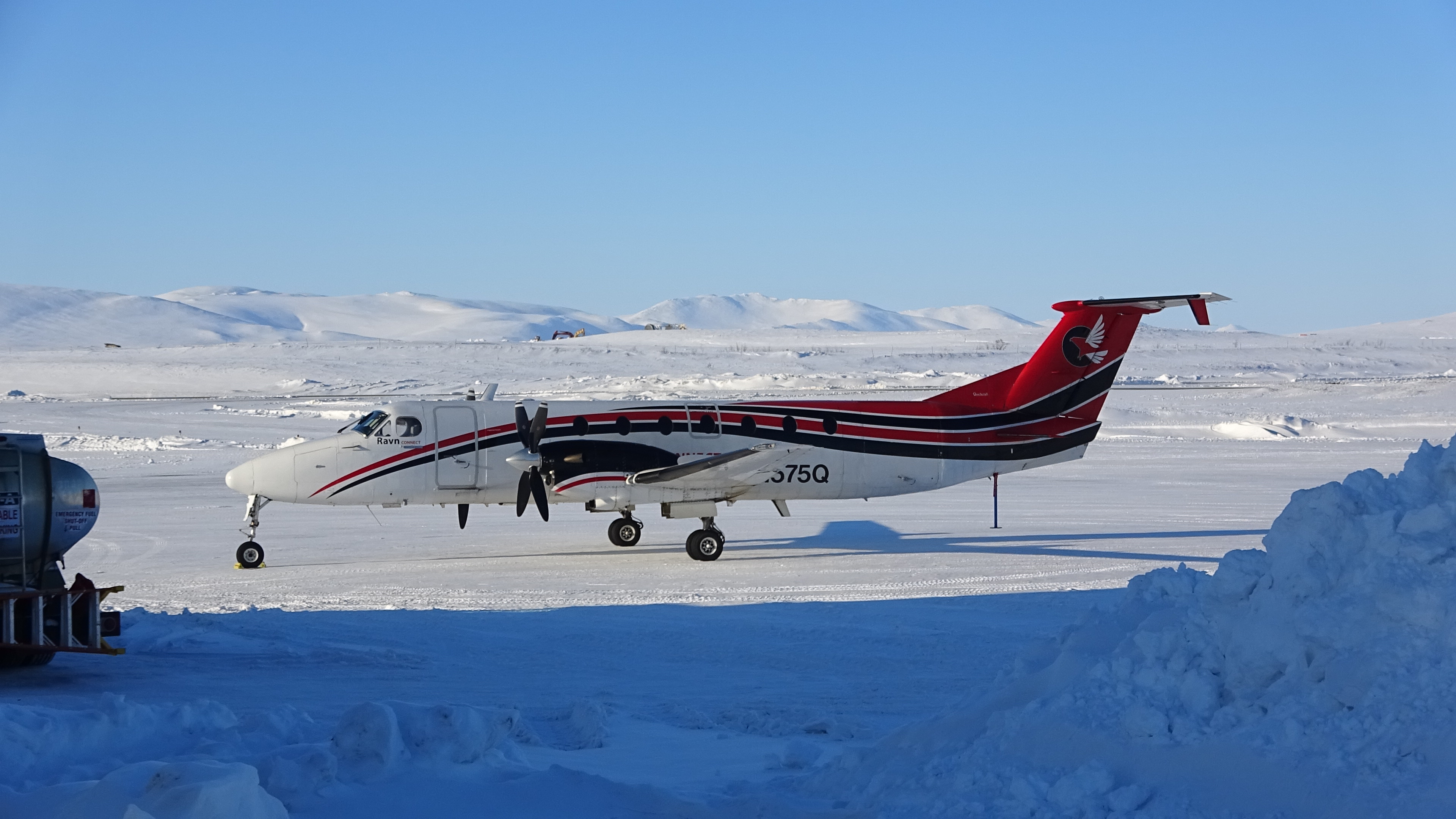
A Ravn Alaska Beechcraft airplane in Nome, March 21, 2016. (Creative Commons photo by Quintin Soloviev)

As all RavnAir Group operations grind to a halt, other air carriers around the state say they are looking at ways they can step in.

Alaska Airlines sent a statement Monday that promised, among other things, to maintain service to the 19 communities it currently serves; to start normal seasonal summer service to King Salmon and Dillingham earlier; and finally, despite a hiring freeze due to uncertainty in the industry surrounding COVID-19, to hold a job fair for Ravn employees.

Alaska Airlines does not have any planes in its fleet equipped to land at Unalaska’s Tom Madsen Airport. But spokesperson Tim Thompson said the Seattle-based airline is “looking to ramp up operations in Cold Bay at some point, and other carriers can provide flights between the airports.”

That flight will operate between Anchorage and Cold Bay. While Alaska Airlines does not have a specific start date for the route, they “are working quickly,” said Thompson.

RavnAir was the sole airline provider to two Essential Air Service, or EAS, communities: McGrath and Saint Paul. The federal Department of Transportation subsidizes air carriers under the EAS program.

“From my understanding, they should still be flying (the EAS) routes,” said Phillip Zavadil, city manager of Saint Paul.

Zavadil said he reached out to DOT and is waiting to hear back on whether the remote island will regain air service.

It is unclear how the DOT and Ravn will proceed. Though, in an unsigned agency statement, the department has confirmed that it is “working through the effects of Ravn’s public announcement.”

State leaders reacted to the news saying there was hope that other carriers would step in as quickly as possible.

“As everyone in the community knows so painfully well, the issues with Ravn have been around some time now,” said Bryce Edgmon, an independent state representative from Dillingham and speaker of the Alaska House of Representatives. “There’s a lot of concern and a lot of effort in the aviation industry in terms of coming in and picking up the slack.”

Unalaska was once a designated EAS community, though it last participated in the program in the late 1990s. After a fatal plane crash left the city without air service last year, the city began looking into joining the program again.

Despite losing its only commercial airline provider, the city still retains mail and cargo service through ACE Air Cargo.

Juneau’s Bartlett Regional Hospital implements ‘no visitor’ policy

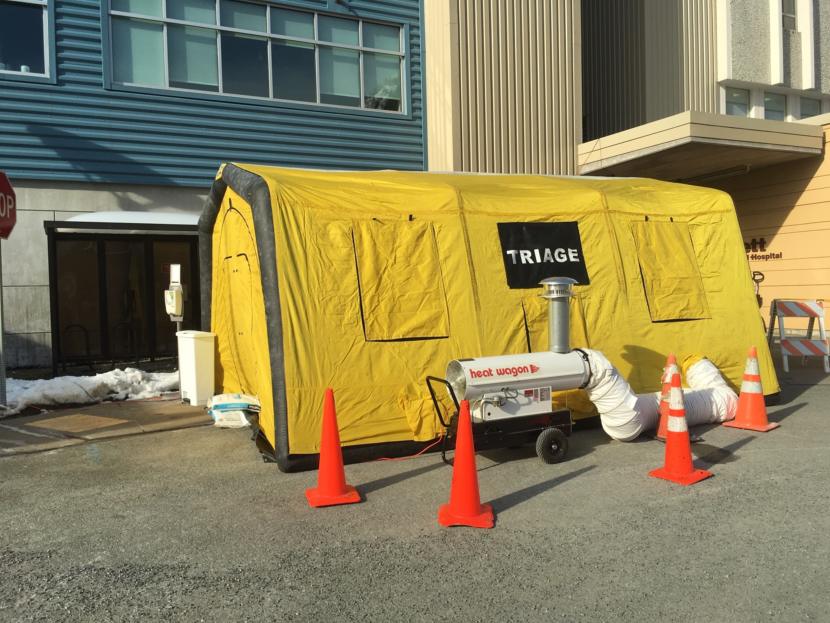
A triage tent sits outside the emergency department entrance to Bartlett Regional Hospital on March 13. (Photo courtesy of Katie Bausler)

To limit the spread of the COVID-19, Bartlett Regional Hospital has a “no visitor” policy in effect as of 3 p.m. on Wednesday.

But the hospital is making some exceptions for partners to laboring mothers, legally-authorized representatives of protected or high-risk patients, and law enforcement. One parent or guardian may visit a minor, and one person may be present for an impending death. Exclusions may be granted by the house supervisor or administrator on call.

Visitors should bring their own cloth face covering or a mask to the hospital. While there, the visitor must stay in the patient’s room at all times, and there will be no swapping out of caregivers. The hospital notes that a visitor cannot be in the room of a dying patient with coronavirus.

Senior care homes in Juneau have also implemented strict guidelines to protect residents: Wildflower Court and Juneau’s Pioneer Home haven’t had visitors since last month.

https://www.facebook.com/cbjuneau/posts/2260639044240316

Site notifications
Update notification options
Subscribe to notifications