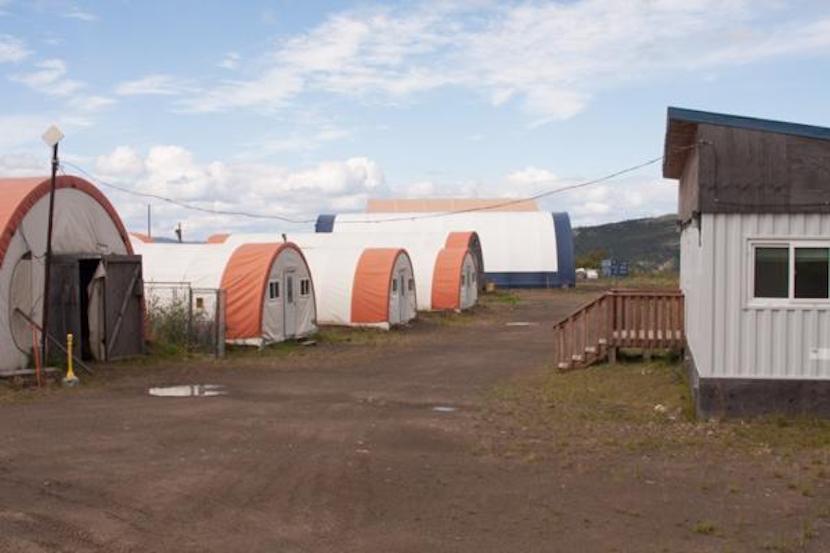
Donlin Gold workers will start leaving the work camp by April 9 as the company suspends its biggest drilling program in 12 years. (Photo by Dean Swope/KYUK)
Donlin Gold has suspended its drilling program and plans to remove most of its employees from its remote work camp in the Yukon-Kuskokwim Delta starting April 9.
This comes as the state ramps up health mandates to prevent the spread of the coronavirus.
It was supposed to be Donlin Gold’s biggest drilling program in 12 years.
The company wants to build one of the biggest gold mines in the world in a remote location in the Yukon-Kuskokwim Delta, but the coronavirus pandemic has disrupted its drilling plan. Like many companies, Donlin is packing up and shutting down.
“The situation has been incredibly dynamic with mandates, and restrictions, and requirements, and suggestions going out,” said Donlin Gold spokesperson Kristina Woolston. She said that the company plans to remove most of their employees, beginning at the end of the week.
Woolston said that eight of those employees came from Yukon-Kuskokwim Delta villages, but she won’t say how many came from Anchorage or from out of state.
Woolston said that they are working with villages to get the employees into the communities while adhering to travel restrictions.
“At this point, we are working directly with communities to have a direct charter flight into communities, so at this point there will be no intra-village travel or intra-region travel,” Woolston said.
Donlin Gold flew in its employees on charter flights, because the only way to get to the campsite is by plane. Woolston said that no one has entered or left the camp since March 26. She also said that Donlin screened employees daily for symptoms and instituted social distancing measures at the camp.
“So when folks got to camp, we have fairly large facilities so we could have shifts come in and out of dining, so we could rotate people in and out,” Woolston said.
Donlin also required only three people to one dining table and did not allow employees to share snowmachine helmets. Workers slept in small cabins that had more space between them.
Alaska state officials have classified mining as “essential infrastructure,” which gives companies permission to keep operating amid the pandemic. Companies are required to adhere to the state health mandates and provide lodging to quarantine out-of-state workers.
Meanwhile, Woolston said that Donlin Gold is continuing its community outreach in the region to help villages cope with the pandemic.
“We’re standing by, and we’ve reached out to every tribe, every community. We’ve sent emails and left voicemails to all of the nonprofits in the region to see what we can do to help and partner,” said Woolston.
That includes sending mask kits to villages in the Yukon-Kuskokwim Delta, and working with The Kuskokwim Corp. to send food and medical supplies to the 10 villages closest to the mine site, in response to Ravn suspending all of its operations.
Woolston said that they don’t know when they will restart the drilling program, but she said that the company is keeping a close eye on developments.
Nick Schlosstein with a stack of seed orders. (Claire Stremple/Alaska’s Energy Desk)
Nick Schlosstein opens a filing drawer, reaches into a file called “Basil” and pulls out a plastic baggie of small black seeds. He’s filling seed packets—a job he thought he finished weeks ago.
He and his wife Leah Wagner own and operate Foundroot, a small Alaska seed company. March is usually their busiest month, but this year is different. Seed orders are coming in at a rate the couple didn’t anticipate.
“We might be like, three to three and a half times more than we may then we sold all last year, with, you know, another month and a half of steady seed sales to go,” said Schlosstein.
As coronavirus disruptions stoke food security fears, seed sellers are inundated with orders. A thick stack of online orders sits next to their inventory of seed packets. Foundroot is experiencing the same phenomenon as other seed growers across the state and the country.
“We’ve seen a real shift with people essentially panic buying seeds,” said Wagner.
She said the couple works overtime hours and weekends to keep up with demand.
Foundroot is not the only seed company that’s taken off. Anchorage’s Denali Seed Company said sales are up 60% over last year. They’ve hired additional staff to fill the need. Seed and Soil in Palmer also reports an uptick that warrants working extra hours. Seed sellers report they’ve sold out of some items, but say they have enough seeds if everyone shops for what they need and can reasonably use.
For Wagner, the business success in a time of pandemic fear is a mixed blessing.
“Our goal was always to help relinquish those fears to make sure people felt secure and safe and fed,” she said.
She said she’s grateful for sales that mean he and her husband are self-employed full time while so many are out of work. But in some cases, she’s urging customers to buy fewer seeds.
“People are ordering, you know, honestly, like 10 times as many seeds as they’re ever going to be able to plant within the life of that seed. And so we’re seeing a kind of a depletion of our seed supply without people actually knowing how to plant those seeds or what to do with them. And seeds are a living thing too. And they won’t last forever,” said Wagner.
When consumers panic buy toilet paper, it’s something they already know how to use. But for many people, gardening is something new. So on top of filling an onslaught of orders, the couple is interacting with new growers as often as they can via Facebook question and answer sessions, phone calls and email.
“We want to try to cultivate as much success from new growers and people who went all in,” said Sclosstein. “There’s a lot of people that have had gardens before and are making it a much more serious investment this year. And so we want to make sure that they can all get as much food as they can out of it.”
He said business success isn’t how many packets of seeds the couple sells. It’s how many growers turn the seeds they have into food they can use.
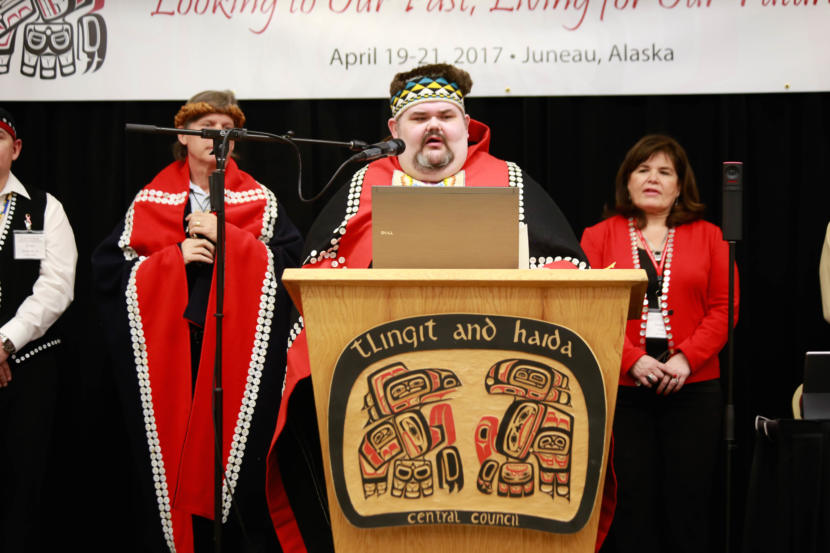
Tlingit and Haida President Richard Chalyee Éesh Peterson speaks at a meeting of Tribal Assembly Delegates in 2017. (Photo courtesy Central Council of the Tlingit and Haida Indian Tribes of Alaska)
The Central Council of the Tlingit and Haida Indian Tribes of Alaska recently created an emergency response center to keep tribal citizens updated about the pandemic in the state and across the country.
President Richard Chalyee Éesh Peterson and his team created the digital center as part of its emergency response coordination with federal, state and local governments.
The site features case counts in Alaska and in states with high populations of tribal citizens, prevention tips and other resources for citizens to stay up to date on the pandemic.
Peterson also appointed Public Safety Manager Jason Wilson to serve as the incident commander during the crisis, according to a press release.
Tlingit and Haida communications coordinator Raeanne Holmes told KTOO that the tribe is encouraging citizens who are struggling as a result of the pandemic to seek assistance on the Tlingit and Haida website.
“There are many tribal citizens in need right now and we must all work together especially to overcome this pandemic and the economic impact that it has had on our families and communities,” said Holmes in an email.
Those living outside of the Southeast Alaska service area can go to the Bureau of Indian Affairs directory and locate the nearest tribe to request assistance. More information on eligibility requirements can be found here.
-Call to Action for Alaska Tribal Leaders- Please make sure to participate in the tribal consultation process tomorrow to help determine how the $8 billion dollar set-aside in CARES Act relief funds for tribal governments and Alaska Native corporations is distributed. pic.twitter.com/wylpps59YL
Holmes also said one of the tribe’s most important values is to hold each other up.
“It is not our way to be disconnected from each other and many of our people are feeling isolated, emotional distress and even financial hardship related to COVID-19. Please take the time to reach out to your loved ones, check on them and lift them up. In this time of uncertainty, it is especially important that we take extra care in holding up our Elders to make sure they are safe,” said Holmes in the email.
Additionally, the tribe continues to operate the Community Drive for Food and Sundries to help the communities affected by the recent delay in ferry service before the pandemic. Donations are still being accepted at Super Bear IGA and Fred Meyer.
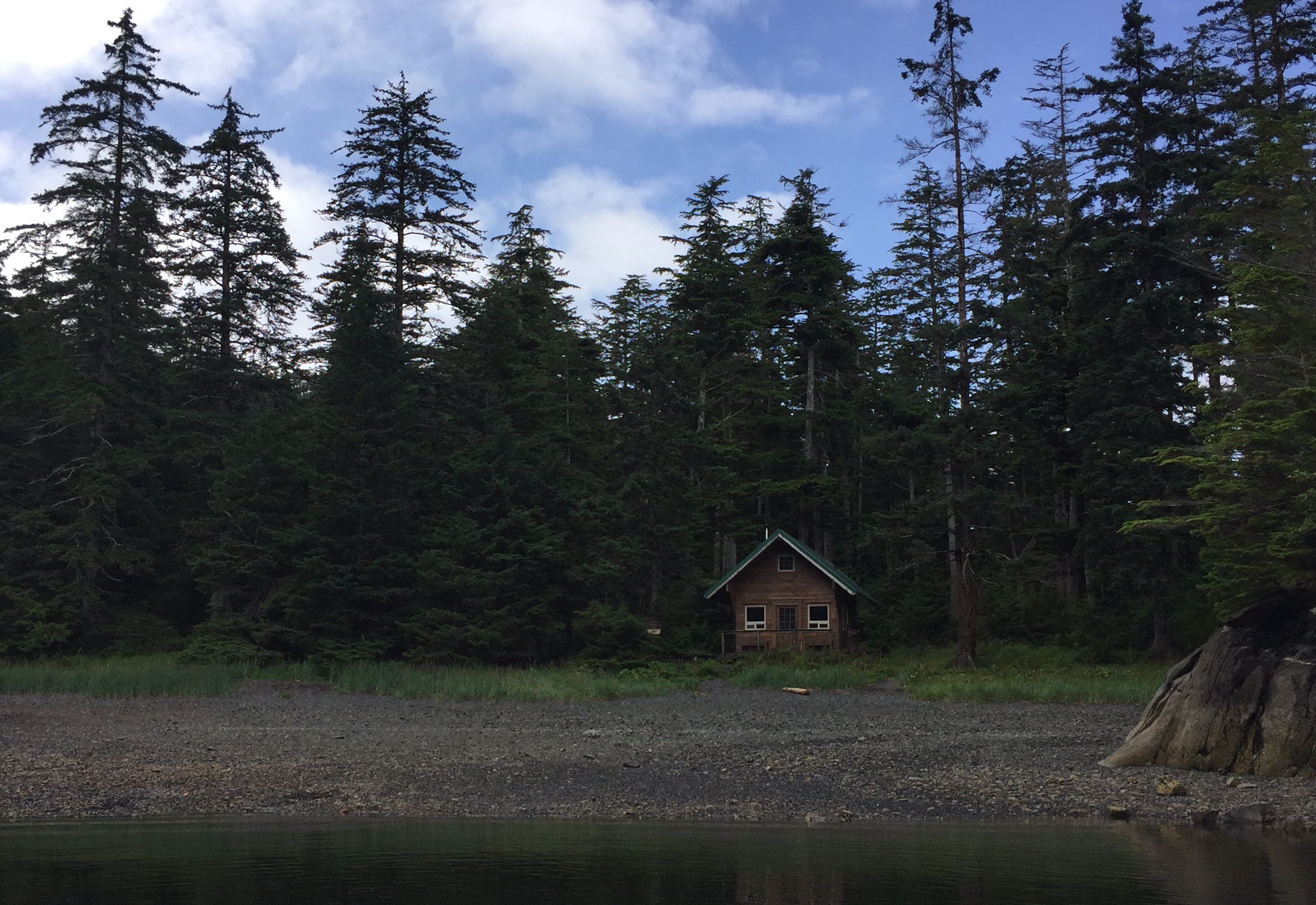
The Kanga Bay Cabin in the Tongass National Forest, about 12 miles away from Sitka. (Photo by Zachariah Hughes/Alaska Public Media)
Deantha Crockett is the first to admit that her place on Big Lake hardly counts as roughing it.
“We have a washer and dryer and internet, so probably can’t call it a cabin,” she said of the 1,200 square foot house with her fiancee and two teenage step-daughters.
Normally, Crockett lives in Anchorage, where she works for the Alaska Miners Association. But when Mayor Ethan Berkowitz announced that residents should hunker down, limit movement, and socially distance, Crockett and her family decided there was a better place to do that than in the city.
“There’s nothing that you can do in Anchorage right now anyway in terms of your appointments, going into work, all of that has been removed from life,” she said. “So there’s no reason to be in Anchorage now.”
Instead of riding out the coronavirus in towns or cities, some Alaskans are opting out: Relocating to cabins, second homes or remote camps. In the Lower 48 there’s been some backlash to urbanites fleeing to rural areas amid the pandemic. A recent essay in BuzzFeed titled “This Pandemic Is Not Your Vacation” collected instances of small towns and rural communities barring interlopers from population centers fleeing there to ride out the coronavirus. Local governments have even restricted short-term property rentals to cut down on the influx of nonresidents.
In a more extreme example, a Politico article detailed a Canadian couple traveling across the country, all the way north to the small Arctic community of Old Crow, where they were greeted, put into isolation, then flown back out. However, many parts of Alaska are set up for individuals and families to hunker down in relative solitude.
For Crockett, a large motivation to relocate was wanting to be in a comfortable, self-contained place if she fell ill, so she could limit exposure to anyone outside her family. Though their home on Big Lake is a bit small for four people, she said it’s easy to get outside for activities.
And they are far from the only ones who have decamped to a second home in the area.
“I probably know about a dozen of them out here,” Crockett said of other families now hunkering in lakeside homes. “We’ll go for walks on the lake, like 20 feet apart.”
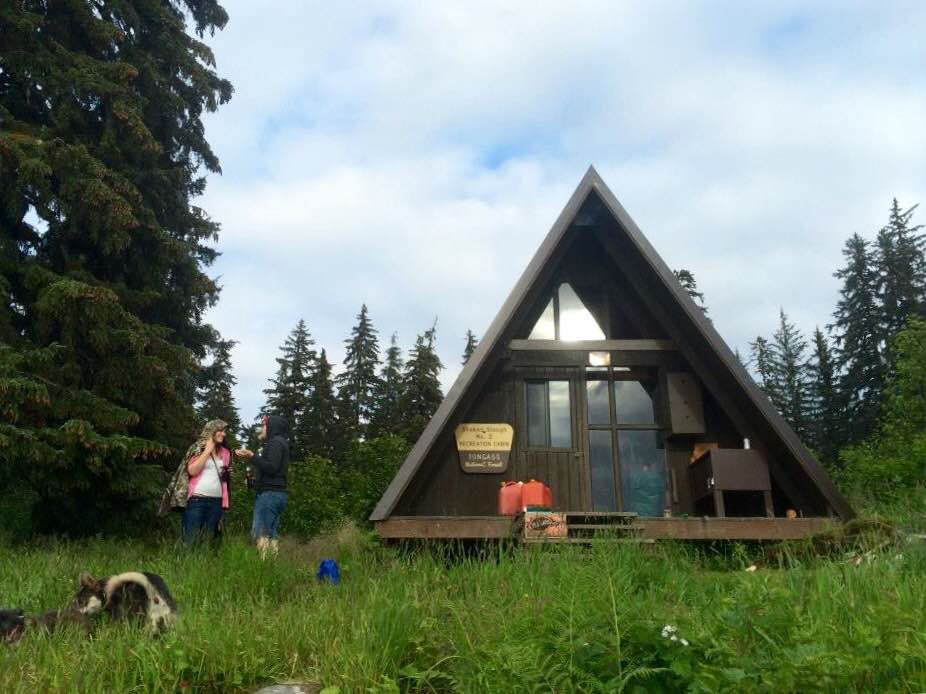
Campers arrive at the Shakes Slough U.S. Forest Service cabin on the Tongass National Forest. (Photo by Katarina Sostaric/KSTK)
Crockett said she hadn’t heard of any local ire from year-round residents in the town of Big Lake proper.
A lot of people in Anchorage have secondary dwellings scattered across more remote areas within a few hours’ drive. Under the state’s Health Mandate 12 limiting intrastate travel, residing at such a cabin during technically allowed, although inessential travel is highly discouraged, and people asked be considerate of potential health impacts on other Alaskans.
As of March 28, when that mandate went into effect, intrastate travel between communities is now prohibited, with the exceptions of critical personal or infrastructure needs. Local and tribal governments have varying degrees of jurisdictional power to limit visits by outsiders. But when it comes to hunkering at a secondary residence, especially along the road system, enforcement protocols are less clear.
If social media is any indication, plenty of residents across the state are opting to stay outside population centers to get through this phase of the pandemic: camps by the Kuzitrin River outside Nome, family homesteads on the Kenai Peninsula, extra long stays at cabins up the Unalakleet River.
“You basically can live out there not being worried about being cross infected by someone,” said James O’Malley, a retired Anchorage surgeon, of his dry cabin in the tiny Turnagain Arm town of Hope.
O’Malley and his wife are both seniors, which puts them at a higher risk of dying from COVID-19. They decided it was safer for them to be in Hope than Anchorage.
According to O’Malley, it’s an age-old tactic to get away from the cities when an illness sweeps through. He compared the contemporary flight to The Decameron, Giovanni Boccaccio’s 14th Century work premised on a group of Florentine refugees trading stories as they wait out the Black Plague in a country villa.
“We were doing a Decameron,” O’Malley said of he and his wife packing their car and driving the 90 miles down to Hope. “We were leaving town because whatever was coming up we didn’t want to be here and have a lot of different restrictions put on us.”
But unless you’re set up for total self-sufficiency, holing up is hard. The O’Malleys can spend about two weeks at their place before they need to come into Anchorage to re-supply and do laundry. When the guidance came down in late March that people should eliminate all non-essential travel, they decided it was better to stay in Anchorage than bank on long grocery runs every few weeks.
But according to O’Malley, the value of cabin-living amid a pandemic isn’t just about the physical distance, but also the welcome distraction of having simple chores that need doing everyday.
“It’s really a very bucolic, non-pressured lifestyle. Which would work in your favor if you were anxious at all about getting the coronavirus and dying,” he said.
For others, Anchorage might be a home-base, but that’s not the same as a home.
Liz Medicine Crow works in the city as president of the First Alaskans Institute, but once things started shutting down in mid-March, she quickly got herself to her hometown on an island in Southeast Alaska.
“Where’s the first place you would go if you needed to be safe?” Medicine Crow asked.
It was a rhetorical question. The easy answer is “home.”
For Medicine Crow, that’s her family house in Kake. After flying in, disinfecting all her luggage, and opening up the winterized residence, she put herself into a 14-day quarantine, relying on family to drop off supplies.
She said she’s been inspired by the quick thinking of tribal leaders across the state being proactive to limit the spread of the virus.
“Our communities know the implications of these things because of a couple hundred years of colonization,” she said.
Waves of pandemics decimated Alaska’s indigenous populations. Given that experience, coupled with long traditions of self-reliance, Medicine Crow said rural communities are in some ways better prepared than most to protect themselves in a situation like what’s now unfolding.
“We don’t have the same resources in our villages that our cities might,” she said. “It doesn’t take long to do the quick math to know what could happen if something bad comes through the doors.”
Medicine Crow’s quarantine ended last weekend. She was looking forward to harvesting subsistence foods. Hudson Bay tea is ready to be picked, and herring are spawning in coves across southeast coasts.
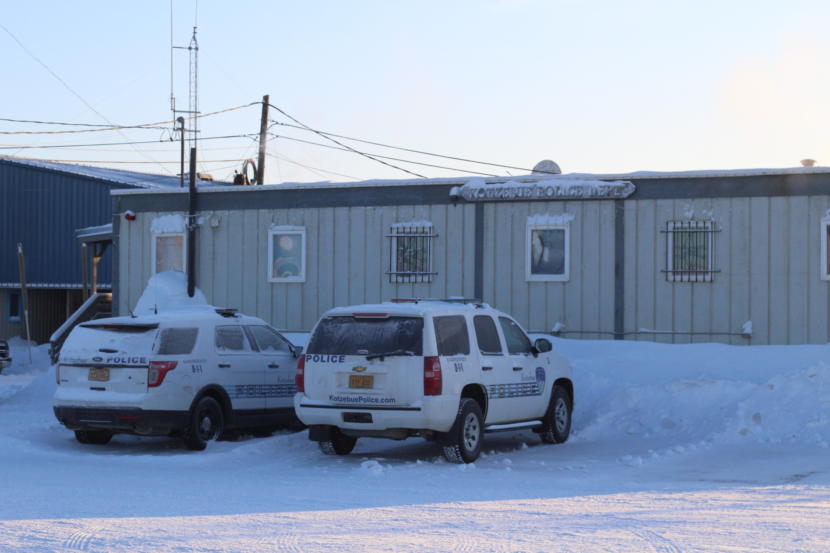
Police vehicles parked in front of the Kotzebue Police Department building. (Wesley Early/ KOTZ )
As the coronavirus creates health and travel concerns across the state, public safety is at the front of many Alaskans’ minds. In Kotzebue, however, they’ve actually seen a small boost in local law enforcement.
Kotzebue police work a little differently than in bigger cities in Alaska. For starters, most of them aren’t residents of the city, or even the state.
“They come to Kotzebue, work there two weeks, and then they are off for two weeks, and they fly back to whatever state they’re from,” said Kotzebue Police Chief Thomas Milliette, who lives in Kotzebue full-time.
Most of the officers in Kotzebue work a two week on, two week off schedule — something most Alaskans associate with oil and mining workers. Milliette says it’s been difficult to hire local police in a small town of around 3,000 people. They view the shift schedule as an incentive to recruit new hires.
With the outbreak of the coronavirus, travel has been restricted heavily. While one would think that would cause issues for the Kotzebue police who travel regularly to the village, Milliette says the opposite happened.
“We actually just reached out to them and asked them if they’d be willing to come to Kotzebue and stay here and weather the storm with us, and not travel back home,” Milliette said.
And they did. Milliette says the department currently has four officers in a mandatory 14-day quarantine, in keeping with the state health mandate.
“But when that’s done, and of course they’re still healthy, they’ll come to work and they will work here in Kotzebue until things get better for us,” Milliette said.
Milliette says that the department will have eight officers total, plus the additional correctional staff. Currently, there are two officers working at night, with one in the day. Milliette hopes that that will change with the additional officers.
“What I foresee is to continue to have two officers on at night, an officer working swing shift, and an officer on during the day,” Milliette said. “It’ll be a great benefit because we won’t have to respond to calls like what we’ve had to do for a really long time.”
Milliette says that he’s heard concerns from community members in the past about having a police force that operates in swing shift. The main concern is that officers don’t have an opportunity to become invested in the community since their off-time is spent elsewhere. While Milliette understands the concern, he maintains that even though these officers live elsewhere, they’re still committed to keeping Kotzebue safe.
“They were willing to leave their family members back in the Lower 48, some of which could be laid off. They have a hard time getting groceries back home,” Milliette said. “But our guys were still willing to come to Kotzebue and help our community out and stay here.”
Milliette says, pending any personal emergencies, the officers plan on staying in Kotzebue full-time for as long as they can.
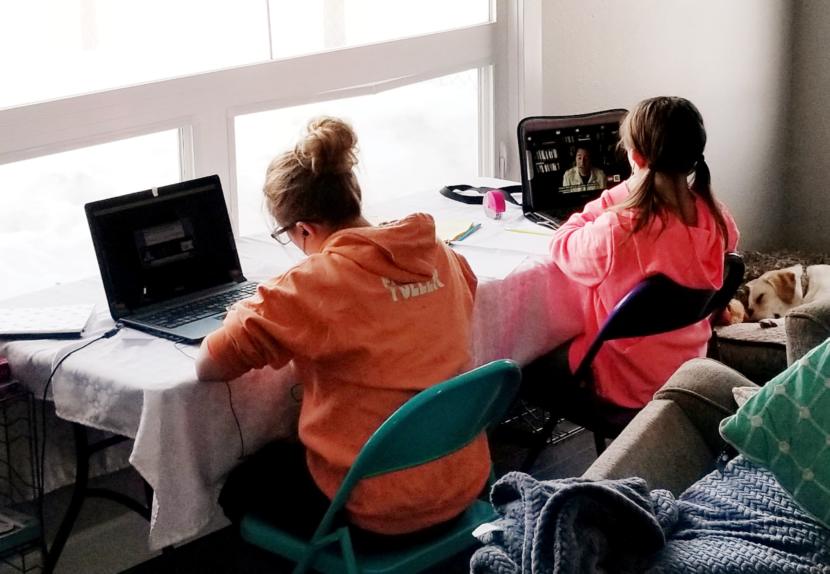
Bailey Fuller (left), 15, and Willow Fuller (right), 12, of Palmer work on online assignments in their family’s living room on March 31, 2020. (Courtesy of Andrea Fuller)
For many students in Alaska, Tuesday, March 31, marked the first day of school … all over again. In the state’s largest district, thousands of teachers and students logged on to give online learning a try.
And like any syllabus week or transition to something new, right now many are just focusing on getting on the right page – er, portal.
Sitting at a table in the living room with his headphones in and his teacher on the computer screen, Jeffery Hanson, who’s in the 7th grade, checked in for his first class of the day – math.
“Today, what’s going on is my son is learning how to use the two programs, with his math teacher,” said Tiffany Hanson, Jeffery’s mom. “They’re doing a Zoom kind of orientation today. So he is on, right now, learning how he’s going to be graded.”
According to the Anchorage School District’s website, middle school students’ official grade of record will be the final grades they received at the end of the third quarter, just before spring break. Although, students will receive grades on their assignments this quarter for the purpose of getting feedback from their teachers.
“Because we cannot ensure that all middle school students have the technology access and support they need we will not issue formal fourth-quarter grades for cumulative records,” according to the website.
High school students will receive grades on their assignments as they normally would, and at the elementary level the district’s website says grades are “not a factor.”
“It’s been a little strange for them,” Hanson said. “I’m definitely grateful that Anchorage School District is making the effort to try to get the kids on Zoom and start classes back up because I feel like they need that normalcy.”
For kindergartner Abigail Hanson, online classes can be live Zoom chats with her teacher and a few other students or a pre-recorded video like one she received from her Russian immersion teacher with songs to help her practice the alphabet.
“She was so happy to receive that video,” Hanson said. “It wasn’t a live feed, so she can actually watch the video over and over again. It was so adorable to see her light up and she was so happy to be connected with her teacher once again.”
Abigail Hanson, 5, completes her first homework assignment drawing letters and singing along with a pre-recorded video her kindergarten teacher sent her on March 30, 2020. Her mom isn’t concerned as much about her academic progression as she is about her older child and mainly just wants to take care of her mental and emotional health. (Courtesy of Tiffany Hanson)
Juggling her kids’ schedules is made a little bit more complicated because they share a computer right now. But, for the Hansons in Anchorage, this is the first day of what will be several weeks of online schooling designed to help keep students on track academically in the midst of a pandemic.
As COVID-19 continues to spread across the country, independent news organization EdWeek estimates over 50 million students have been impacted by school closures.
Some states like Virginia, Vermont and New Mexico have decided to close school buildings through the end of the academic year and move entirely to remote-learning. But others, like Alaska, are, transitioning to online and distance-learning models before making that decision.
During a special school board meeting held via Zoom, Mark Stock, the school district’s deputy superintendent, said some districts in other parts of the country chose not to move to try an alternative educational model because they were unable to ensure that they could provide an equal education to every student in the district. Other districts, he said, were able to provide every student with a device and wi-fi access. Anchorage School District falls somewhere in the middle.
“We staggered equity,” Stock said. “We wanted to guarantee that every senior and every high school student had a device [and] had access.”
From there, the goal was to ensure as much equity as possible downward through the different grade levels.
While Anchorage’s online learning initiative is just getting up and running, the Matanuska-Susitna Brough School District transitioned to online learning about a week ago.
Now that they’ve gone through the orientation period, Andrea Fuller and her family are settling in to a routine.
“Every morning we get up the kids eat breakfast, they have to be sitting at their table by 9:00,” Fuller said. “They have to tell us what assignments are due for that day, if they have any Zooms – they have to write everything down on a piece of paper for us. And then we kind of just let them go.”
Fuller’s kids are older: 15-year-old Bailey is a freshman and 12-year-old Willow is in 6th grade. And Fuller said they are pretty self-reliant. The family has set up a table in-front of the living room window and each child has their own computer. She said they access their assignments online through a platform called Google classroom and keep in touch with their teachers through email or Zoom video chats.
“Personally, I think it’s working very well. I honestly feel like we’re not getting as much push back from our kids because we’re here with them throughout the day,” Fuller said. “I feel like we’re a little bit more in touch with what’s going on with the online system.”
She said she expects to maintain this set up through the end of the school year.
All public schools in Alaska are physically closed until at least May 1st so families like the Fullers and Hansons will have to adjust to their living room and kitchen table classrooms.
Andrea Fuller, who owns a small business in Palmer, has been able to continue to work from home and watch the kids. But, Tiffany Hanson is a little more concerned about the future. She just got a job as an aid in an operating room and will be returning to full-time work soon. And with her husband also working full-time, albeit from home, she’s not sure how online schooling will go in the coming weeks.
“I think given the context, it’s gonna have to be sufficient. I’ve never wanted to be a homeschool mom. I never thought that I was qualified to be a teacher,” she said. “Unfortunately, in the near future, I will not be able to be very involved at all. But you know, we’ll power through it. And it’s what we got to do to keep our community safe, so that’s what we’ll do.”
Close
Update notification options
Subscribe to notifications
Subscribe
Get notifications about news related to the topics you care about. You can unsubscribe anytime.