Curious Juneau

Juneau is a windy city. So why don’t we have more wind turbines?

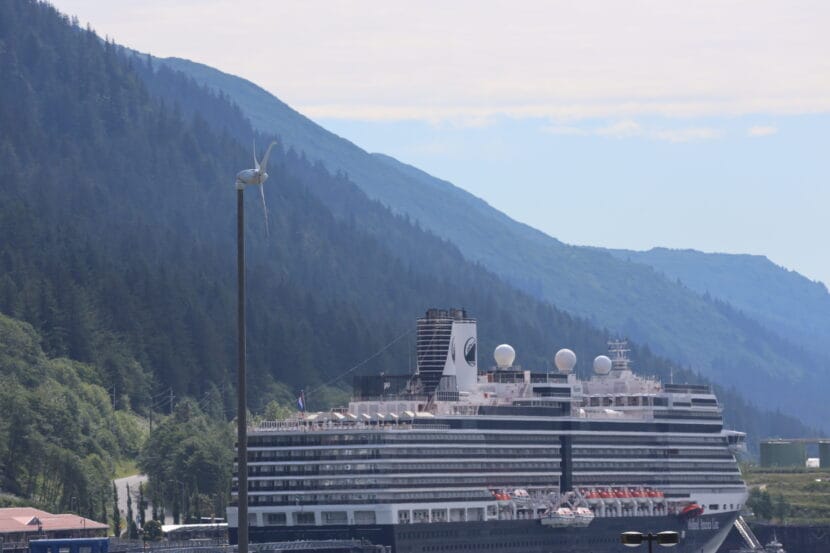
This wind turbine on Gastineau Channel generates just under 10% of the electricity needed to run Juneau’s Coast Guard station. (Photo by KTOO/Clarise Larson)

On a windy day in Juneau, you can see state flags fluttering along Egan Drive or a bald eagle coasting over Gastineau Channel. On the pier behind U.S. Coast Guard Station Juneau, you might catch the blur of a wind turbine’s blades. 

Do you have a Curious Juneau question? Submit it at the bottom of the page.

“It really spins in the wind and it makes a neat little whipping sound as it goes,” said energy educator Clay Good. He works for Renewable Energy Project Alaska. “So everybody notices it and wonders, ‘Hmm. Can we do more wind energy here?’”

For this Curious Juneau, a KTOO listener asked just that.

According to Lt. Kyle Hansen, the 60-foot miniature wind turbine at Coast Guard Station Juneau was installed back in 2010, following an executive order that called for more renewable energy at federal facilities. 

The turbine was also used as a teaching tool for high school students to learn about wind energy through a nationwide program called Wind for Schools. The same program brought a twin turbine to Sitka. 
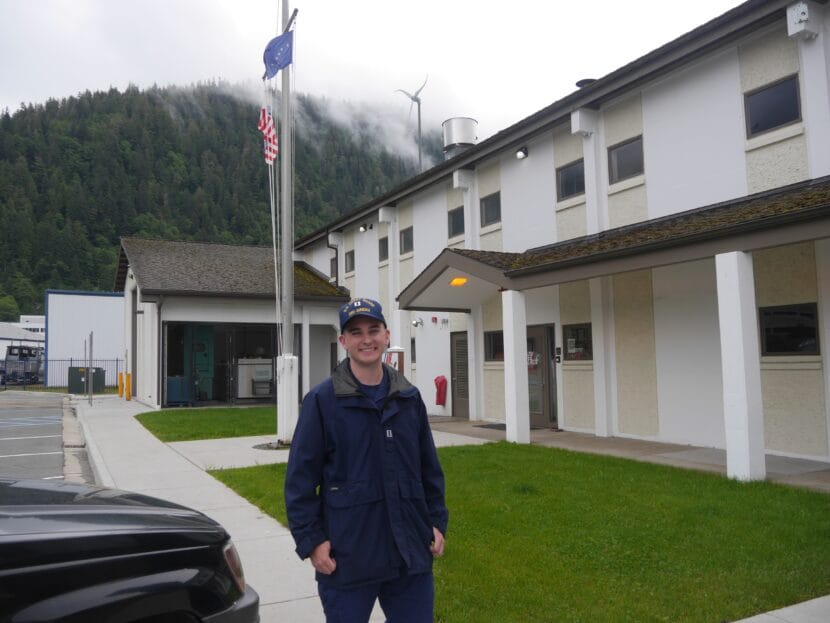
Lt. Kyle Hansen stands in front Coast Guard Station Juneau with the wind turbine in the background in June 2024. (Photo by Anna Canny)

The educational component is defunct now, but the turbine on Juneau’s waterfront is still producing electricity — about 1,500 kilowatt hours per month. 

“Which turns into about 7% of Station Juneau’s needs,” Hansen said. 

A turbine this size could also easily power the average U.S. household, which needs about 900 kilowatt hours of electricity per month. And Hansen said it’s saved the Coast Guard some money, too. 

“It’s produced about $25,000 worth of electricity for the station,” he said. 

This is just a mini-turbine. The ones you might see on a wind farm can usually power almost 1,000 homes, and the cost of wind-generated electricity is dropping

So why not build more wind turbines in Juneau?

It turns out, our rugged landscape is not quite right.

“Wind turbines are often seen in areas of more open space around them, where there’s a smooth laminar wind,” Good said. 

Laminar winds are streamlined and consistent — Juneau’s winds are anything but that. When a breeze hits steep mountains and drops into Gastineau Channel, it often becomes turbulent, irregular and chaotic. And like airplanes, wind turbines don’t like turbulence.
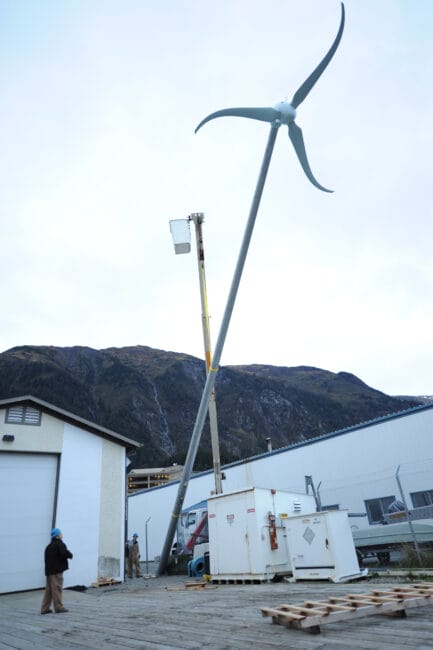
The Coast Guard installed a Skystream 3.7 wind turbine on Oct. 11, 2010. (U.S. Coast Guard photo by Petty Officer 3rd Class Walter Shinn)

In 2005, the Alaska Energy Authority did a study on wind resources for dozens of communities across the state. They rated the feasibility of wind power on a scale of one to seven. At sea level, Juneau scored one — a poor rating. 

On the mountaintops, it might be a different story. 

“That’s a lovely place to capture the wind,” Good said. “But it’s not a lovely place to build a turbine. It’s not a lovely place to maintain one.”

Wind on the ridges is great for wind power on average, but at the extremes — especially in the winter — it’s too strong for a turbine to withstand.  

So Juneau’s wind, though powerful, is not really the right kind of wind. Perhaps more importantly, wind power faces a big renewable power competitor here. 

The same mountains that create turbulent winds also create rushing creeks and streams, making for really reliable hydropower. Deep mountain basins can store that water throughout the rainy season, and it can be used to create energy later on, during drier times. Wind and solar power, on the other hand, require expensive batteries to store energy. 

“We just had that extraordinary good fortune of having these hydro resources,” Good said. “It’s hard to even think about anything else.”

When a community wants to generate large-scale renewable power, there’s often a high start-up cost to build the infrastructure. That’s especially true for hydropower projects. 

But Juneau got a head start with hydro. Back in the late 1890s, water was the easiest way to power a bustling mining industry. 

“It’s not like 125 years ago, a bunch of conservationists and greenies moved to Juneau and said, ‘We’re gonna have green power here,” Good said. “It was just the power that was available.”

The first hydro powerhouse at Gold Creek later evolved into Juneau’s sole utility, Alaska Electric Light and Power. Today, they provide Juneau with 100% renewable electricity for relatively cheap. But that doesn’t mean Juneau is a renewable utopia.

Hydroelectricity only covers about 20% of the total energy used by the city. A lot of transportation and home heating still relies on fossil fuel like heating oil, diesel and gasoline. 

So eventaully, Juneau might need more renewable power to keep cutting down greenhouse gas emissions.  But there’s a lot more hydropower potential to tap into.

“Southeast Alaska was made for hydro,” Good said. “I think rain was invented here.”


Curious Juneau

Are you curious about Juneau, its history, places and people? Or if you just like to ask questions, then ask away!

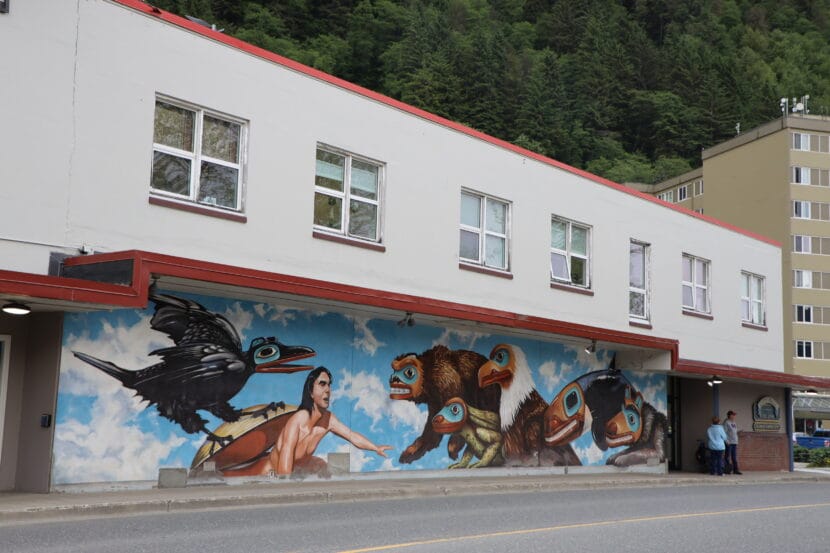
What will happen to Juneau’s City Hall mural if the city moves out?

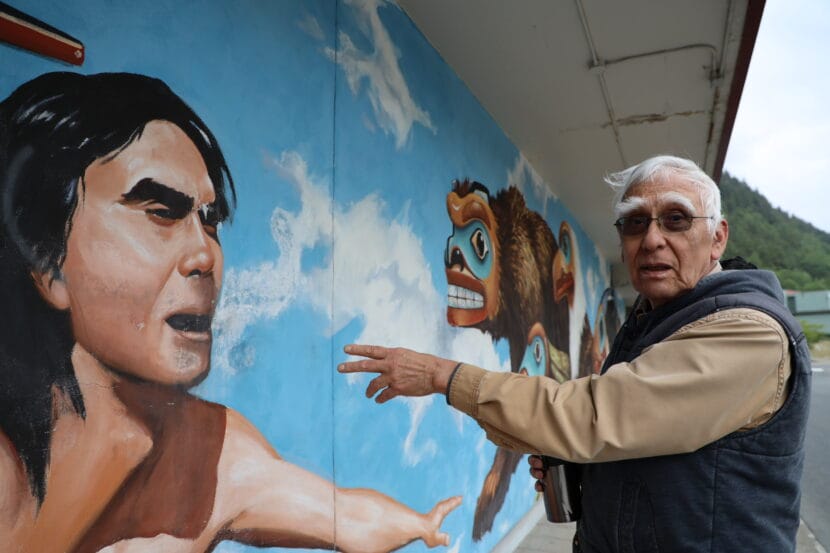
Gary Waid points to the man depicted on the “Raven discovering mankind in a clamshell” mural at City Hall on Monday, June 11, 2024. The man is modeled off of Waid in the ’80s. (Clarise Larson/KTOO)

Spanning an outside wall of City Hall in downtown Juneau, there’s a 10-and-a-half by 61-foot mural called “Raven discovering mankind in a clamshell.” 

Do you have a Curious Juneau question? Submit it at the bottom of the page.

It shows Raven opening a clam and releasing a man. Around it, there are Alaska Native clan symbols like the bear, the frog, the eagle, the orca and the wolf. A vibrant blue and cloudy sky fills the background.

It’s one of the first things cruise ship passengers see, and KTOO listener Shirley Dean said it’s one of her favorite pieces of art in Juneau.  

“It just brings me delight with the colors and the whole image of the beginning. and it just brings me peace and joy,” she said. “Because in the winters, as you know, when it’s really dark, and gray and rainy, those colors just make me happy.”

The “Raven discovering mankind in a clamshell” mural at City Hall on Monday, June 11, 2024. (Clarise Larson/KTOO)

During the local election last fall, Dean wondered what would happen to the mural if voters approved the city’s plan to build a new City Hall. That ballot measure failed, but the city still plans to move its staff to a new location one day.

Dean asked KTOO to find out what would happen to the building and mural if that happened. 

“I don’t know how they can do it. But if we can put people on the moon, I think we could preserve an art piece,” she said. 

 A familiar face

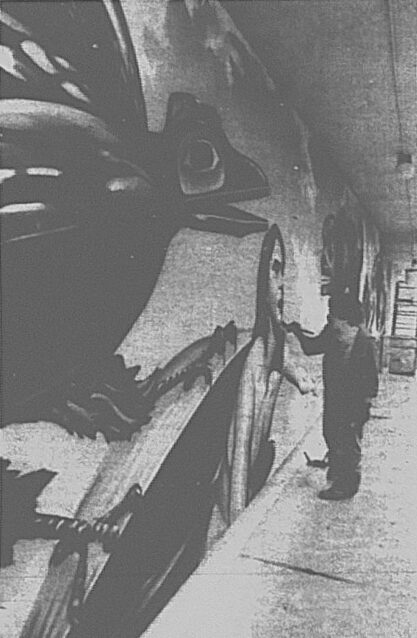
The mural was painted in 1986 by then-local artist Bill. C Ray. He’s the son of former state senator Bill Ray, who died in 2013. Now, nearly four decades later — it’s showing its age. The paint is chipping and colors are fading. 

When KTOO reached out to talk to him about the mural, he declined an interview. 

Bill C. Ray works on ‘Raven Discovering Mankind in a Clam Shell,’ as seen in the Juneau Empire on Oct. 3, 1986. (Mark Kelley/Alaska State Library Historical Collection)

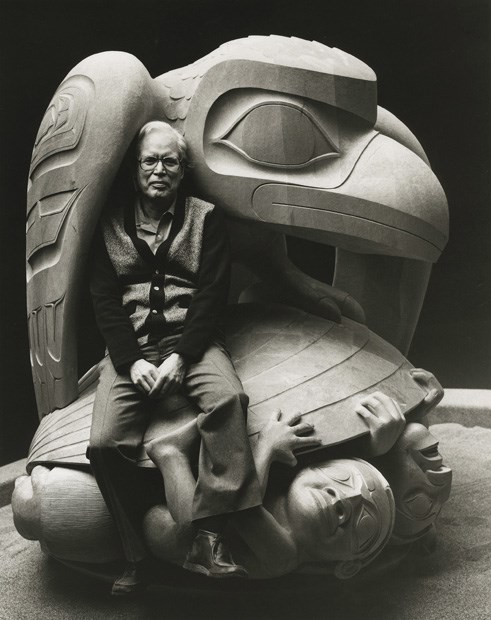
But, in an old newspaper article, Ray said the mural was inspired by a carving by the late Bill Reid, a renowned Haida artist from British Columbia. It tells the Haida legend of how man came to be. 

Bill Reid’s ‘The Raven and the First Men,’1980, at UBC’s Museum of Anthropology. (Bill McLennan/UBC Museum of Anthropology, Vancouver)

Ray is not Alaska Native, but in the article, he explained the legend like this: Raven was flying around and landed on a beach to dine on some shellfish. He had his fill, and was just about to take off when he saw a giant clam under the sand. He dug it out, popped it open and squirming inside … was man.

Gary Waid was the model for the man. He is Lingít and Haida and has lived in Juneau his whole life. He’s 78 now — so he was in his 30s when Ray painted him. 

Gary Waid points to the man depicted on the “Raven discovering mankind in a clamshell” mural at City Hall on Monday, June 11, 2024. The man is modeled off of Waid in the ’80s. (Clarise Larson/KTOO)

Standing next to the mural now, Waid looked different — his hair is short and white instead of black and flowing, and he looked like he’d seen some things since popping out of that clamshell. 

Waid said if he had known back then how iconic the piece would become in Juneau, he would have made a few requests. 

“I should have had residuals in some way or another on this stuff,” he said, laughing. 

Though he frequents downtown and drives past City Hall often enough, Waid has an interesting relationship with the mural  — he doesn’t like to look at it. 

“It’s like being in a movie, or in a play that gets recorded. You don’t really like watching oneself do the thing,” he said. 

But, he said the mural serves an important purpose. When he was young, public art depicting Alaska Native culture wasn’t common like it is today. He said he isn’t attached to the mural itself so much as its ability to share his culture through the story it tells. 

“We got the story from the elders,” he said. “‘Tell the story to as many people as you can and pass it on.’ Any which way that the story gets passed on, I’m all for it.”

Waid said he doesn’t care so much if the mural is preserved or destroyed — as long as something similar takes its place. 

A City Hall without the city?

City Manager Katie Koester said what will happen to City Hall and the mural is still unclear. 

“Where we are going to eventually end up moving downtown employees is a question that’s still up in the air,” she said. 

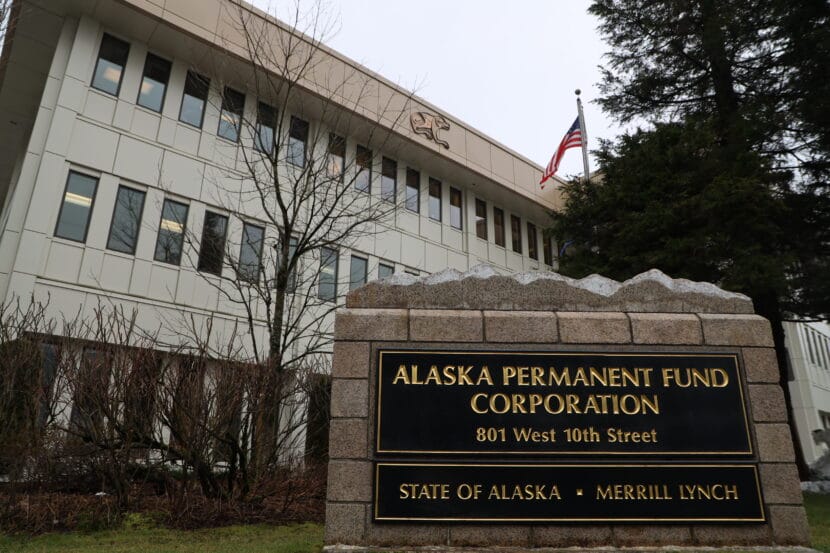
Koester said she’s in the middle of negotiating a lease for two floors of the Michael J. Burns Building downtown, which houses the Alaska Permanent Fund Corporation.

The Michael J. Burns Building, which houses the Permanent Fund offices on 10th Street, on Tuesday, Jan. 20, 2024. (Clarise Larson/KTOO)

The city has been trying to figure out a long-term office plan for staff after Juneau voters rejected two separate bond proposals for a new City Hall. 

Fewer than half of city employees now work at City Hall, which has issues like cracking walls, leaking ceilings and asbestos in the carpet. The rest of the employees work in rented office space in other buildings. 

If City Hall does get emptied out, the Juneau Assembly will decide what happens to the building.

Koester said the city had a photographer take high-quality photos of the mural in 2011. Potentially, those could help recreate the piece in the future. 

“I do think there’s a real desire to preserve that iconic piece of Juneau. In fact, I was walking over here, and people were taking pictures of that mural,” she said. “So it’s really come to represent Juneau and it’s just a beautiful story and a beautiful piece.”

So for now, the mural will continue to greet visitors of Juneau, and Waid will just keep having to drive past his big face downtown. 


Curious Juneau

Are you curious about Juneau, its history, places and people? Or if you just like to ask questions, then ask away!
What happened to the village, gardens and fish camp at Auke Rec?

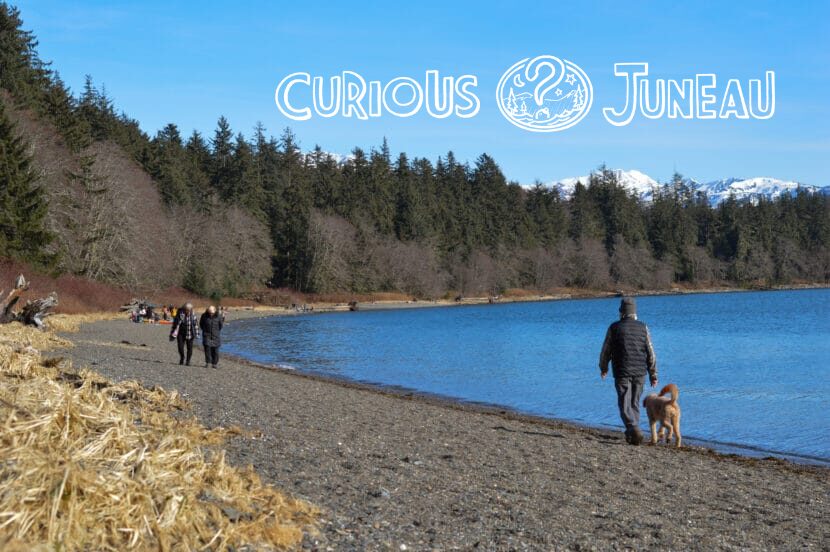
People walking at Aanchg̱altsóow, or Auke Recreation Area, on March 24, 2024. (Photo by Yvonne Krumrey/KTOO)

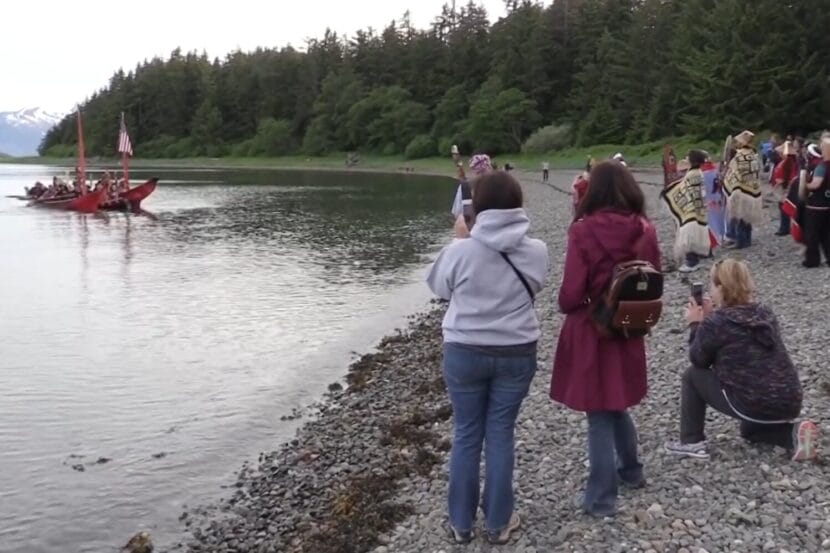
Every other June, canoes — or yaakw — arrive at a beach in Juneau. With carved formline paddles in hand, Southeast Alaska Native people row for days to get there. 

They come for Celebration, the gathering of Lingít, Haida and Tsimshian people honoring the survival of traditional dancing, art, language and community. 

Do you have a Curious Juneau question? Submit it at the bottom of the page.

Seikoonie Fran Houston is a spokesperson for the Áak’w Ḵwáan. She spoke in a 2022 Central Council of Tlingit and Haida Indian Tribes of Alaska video from the landing.

“The first one I saw that occurred — it brought tears to my eyes to witness this. And it also kind of gives you a little vision as to what our ancestors did,” Houston said. 

But yaakw have been landing at this beach for much longer than the 40 years that have passed since the first Celebration. It’s the site of an old Lingít village called Aanchg̱altsóow. That means “the town that moved.” 

A KTOO listener asked about the Áak’w Ḵwaan Village, fish camp, and garden that were once where Auke Recreation Area — or Auke Rec —  is now. 

Three yaakw built by Lingít carver Wayne Price arrive at the beach at Aanchg̱altsóow, also known as Auke Rec, on June 5, 2018 for Celebration. (Screenshot from KTOO video)

Aanchg̱altsóow:  ‘It’s a good place, it has plenty of what we need.’

Auke Rec is a park along a beach north of the rest of Juneau, with stone picnic shelters and fire pits. On clear days, the beach is dotted with couples on walks, dogs sniffing around, and families having picnics.

Thereʼs a section of the beach thatʼs sandier and smoother, down an unofficial trail in the middle of the beach. Oral tradition says it was cleared of boulders and large rocks for easier yaakw launches and landings. 

By the time Seikooni Fran Houston was growing up, Áak’w people weren’t living at the village site, but she knows the story of how they first got there. 

“When we migrated, that was the first area — so in other words, we were the first Indigenous people of the area,” she said. 

The oral history has it that the Áak’w people migrated from the south and deeper in the interior. From a distance, the clan leader saw Aanchg̱altsóow and sent scouts to it, Houston said.

“And they came back and they told the leader, ‘It’s a good place, it has plenty of what we need,’” she said. “So that’s the real short story of a long story.”

For hundreds of years, Áakʼw people lived at Aanchg̱altsóow.

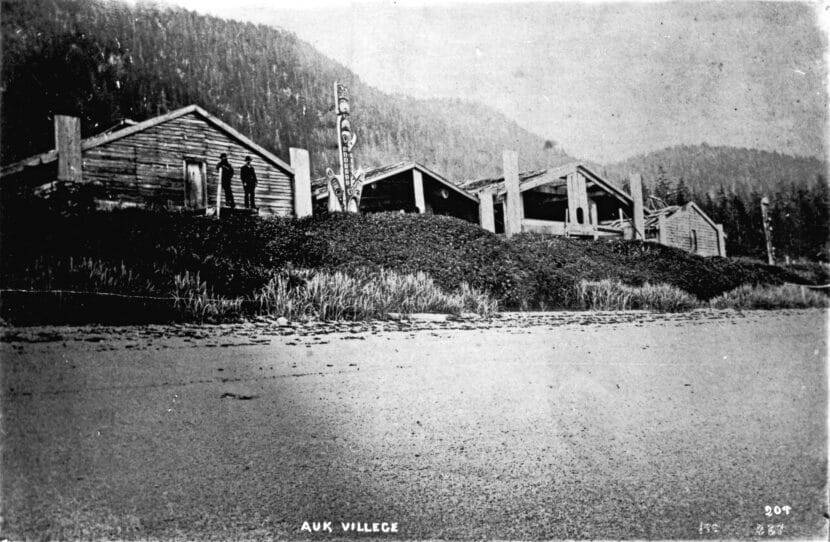
An 1890 photo of Aanchg̱altsóow, the village that stood where Auke Recreation Area is today. (Alaska State Library ASL-P39-1172 Case & Draper Photo Collection)

The Forest Service takes over

Houston said that around the turn of the 20th century, people had started moving away from the village to Douglas and downtown Juneau to work as miners, and so their children could attend school.

But she said the land at Aanchg̱altsóow was always in use.

“There was a time, too, that there were some people who stated that we abandoned Auke Rec,” she said. “We didn’t. We still use it. Not only do we use it — we take what we need in the area — we use it for ceremonies. We didn’t abandon it.” 

In the 1920s, the United States Forest Service claimed the land was unoccupied. They began to make campsites, trails and other infrastructure in the area. Then, in 1931, the Forest Service claimed full ownership. 

Juneau researcher Peter Metcalfe wrote “A Dangerous Idea: The Alaska Native Brotherhood and the Struggle for Indigenous Rights.” He said settlers claiming that land was “abandoned” was a common land-grab tactic. 

“That has been used in a legal sense against Native Americans from the beginning of contact in the Lower 48, as well as Alaska,” he said. “Most Native Americans would say ‘We never abandoned our land.’ And it’s true, in a moral sense. If we own something, and we haven’t sold it, we still own it. It doesn’t matter if we live there or not.”

During the same year when the Forest Service took control, over a dozen Áak’w Ḵwáan built cabins on the old village site to stake claim to the land. It didn’t work. In January 1932, a federal judge ruled that Lingít people had given up ownership by not occupying the land. 

The judge gave the families a month to remove their cabins. Afterward, the Forest Service expanded their construction at the site, and by the 1940s, it looked much like it does today. 

Metcalfe said the way the federal government claimed Auke Bay wouldn’t hold up today.

“The Forest Service was wrong about Auke Bay. When they thought they had won, they hadn’t really. They just put off a decision that was finally resolved in the Alaska Native Claims Settlement Act of 1971,” he said. 

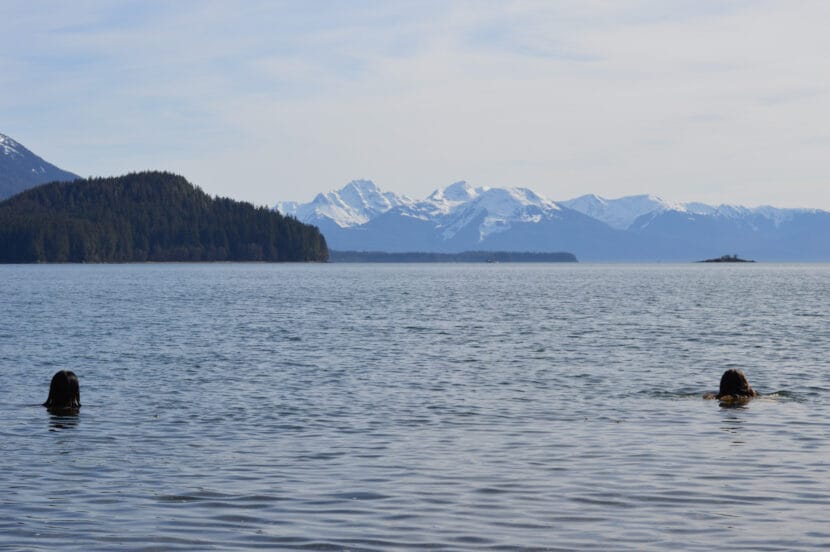
People dipping with Haa Tooch Lichéesh Coalition at Auke Recreation Area on March 24, 2024. (Photo by Yvonne Krumrey/KTOO)

‘Thereʼs no trace, except for those footprints’

Sitting on the beach on a sunny March day, Saan Jeen Jennifer Quinto was getting ready to lead a traditional ocean dip. After setting an intention and reflecting around a fire, Quinto guided participants into the water a little bit at a time. 

Quinto said that, to her, Aanchg̱altsóow is a direct connection to her identity as Alaska Native. 

“For me, thereʼs different layers of not only sacredness, but all the different emotions of life,” she said. “The way that this was also likely a place of joy for a lot of people, but also the heartache of the fact that weʼre not allowed to be connected in that way any longer to this place.”

She said the word “recreation” in “Auke Recreation Area” can cause people to treat the beach like itʼs a playground.

“I don’t think the way that itʼs currently used or represented just doesnʼt — people donʼt understand all of those layers that are happening here for those of us from the Native community,” Quinto said

Quinto said sheʼs often picking up trash from the sites of old longhouses. Indentations are still present in the trees along the shore. 

“It always crosses my mind that people are respectful of gravesites, and in a lot of ways this area has that same sort of sacredness,” she said. 

And Aanchg̱altsóow is a gravesite. In a 1987 Alaska Department of Natural Resources cultural resources survey, archeologists reported finding at least one set of human remains there.

Quinto said that if people could only see what it looked like when it was a lived-in village, they might treat it differently. 

“You would have seen the house fronts, you would have seen the kootéeyaa, you would have seen our people out here. And now thereʼs no trace, except for those footprints,” she said.

She said that erasure was the start of a long history of reducing the footprints of Lingít people in Juneau — including the gradual shrinking of Juneau Indian Village downtown in the middle of the last century and the burning of Douglas Indian Village in 1962.

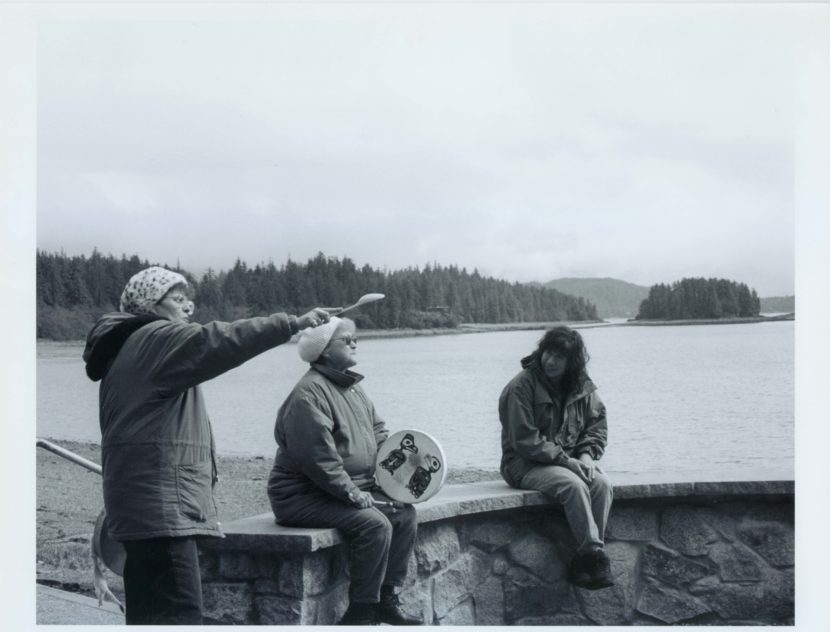
Rosa Miller (center), Fran Houston (left) and Angie Hunt (right) prepare to sing a traditional song to the spirits of the land at Auke Recreation Area, April 1997. (Photo courtesy of Dr. Thomas Thornton)

But events like traditional dips in the ocean and the canoe landings at Celebration bring Lingít traditions back to the land, and back to life, Quinto said. 

“For Lingít people, we believe that everything has its own spirit, and has its own life,” she said. “And so, to me, when weʼre able to gather here for cultural events, those are moments that we get to restore that life to this area, and I donʼt think it happens enough.” 

Seikoonie Fran Houston said that when she stands on the beach now, it fills her with gratitude for her ancestors. 

“I go out there and I talk to my ancestors and I thank them every time I go out there,” she said. “Saying thank you for choosing this area, because it’s so pretty and so peaceful.” 

Next week, paddlers will once again ask the Áak’w Ḵwáan for permission to come ashore, in recognition for the history and life of this piece of land.


Curious Juneau

Are you curious about Juneau, its history, places and people? Or if you just like to ask questions, then ask away!
Where do the Foodland ravens roost?

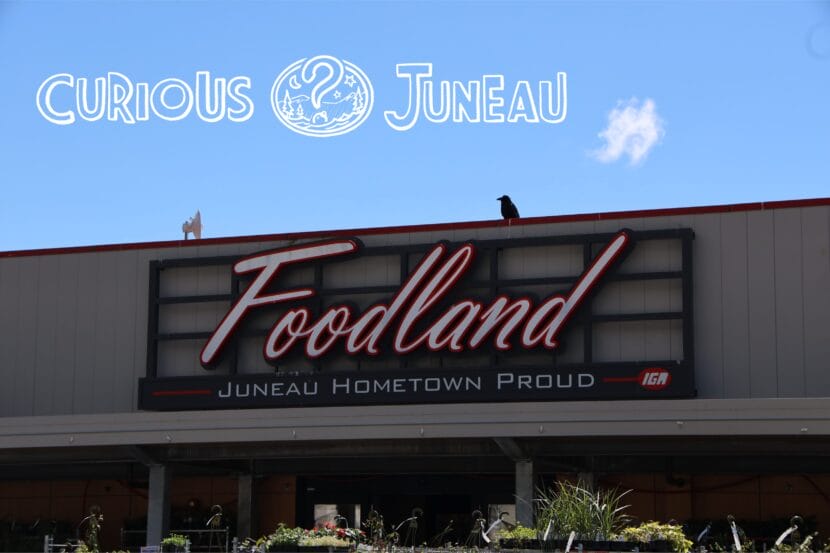
A raven sits on the roof of the Foodland grocery store on Thursday, May 16 2024. (Photo by Anna Canny/KTOO)

Marc Wheeler lives in downtown Juneau, close to the Foodland grocery store. He often stops there for lunch. That’s when he sees the parking lot’s resident ravens.

“I’ll be like walking while I eat it, and they’ll literally follow you like a gang of thugs,” Wheeler said. “Cause they’re just counting on you dropping something.”

Like many Juneauites, Wheeler has had a lot of fun watching the curious corvids that wander around town, but he noticed that most of them disappear at sundown. 

“Where’s the roost?,” Wheeler asked for this installment of Curious Juneau. It took some nighttime detective work to find out. 

The first lead came from Bob Armstrong, a naturalist and wildlife photographer who has been working in Juneau for more than 60 years. 

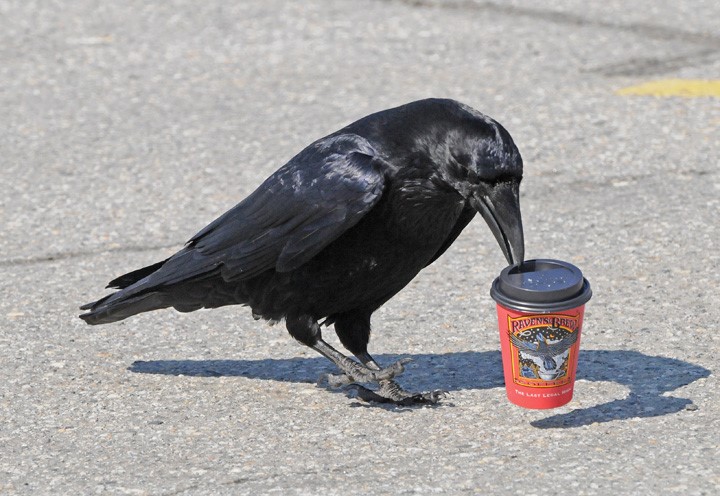
A raven holds a cup of Raven’s Brew coffee in the Foodland parking lot. (Photo courtesy of Bob Armstrong)

He’s photographed hundreds of ravens. One of his favorite shots from Foodland shows a bird with a bright red cup of Raven’s Brew coffee. The picture was carefully staged.

“I came into the parking lot and just put some latte in it and just set it up 20 feet away from the car and just sat there and waited,” Armstrong said.

Within a few minutes, a half dozen birds started circling it. Eventually, one took the lid in its beak and lifted the cup to show off an illustrated raven with its wings outstretched.

“But then what surprised me is it opened the lid of the cup – it had to snap it off – and then drank the latte that was in there,” he said. 

Ravens are scavengers, meaning they spend their days looking for something — anything — to eat. Insects, berries, eggs paired with trash from the landfill and lattes.  

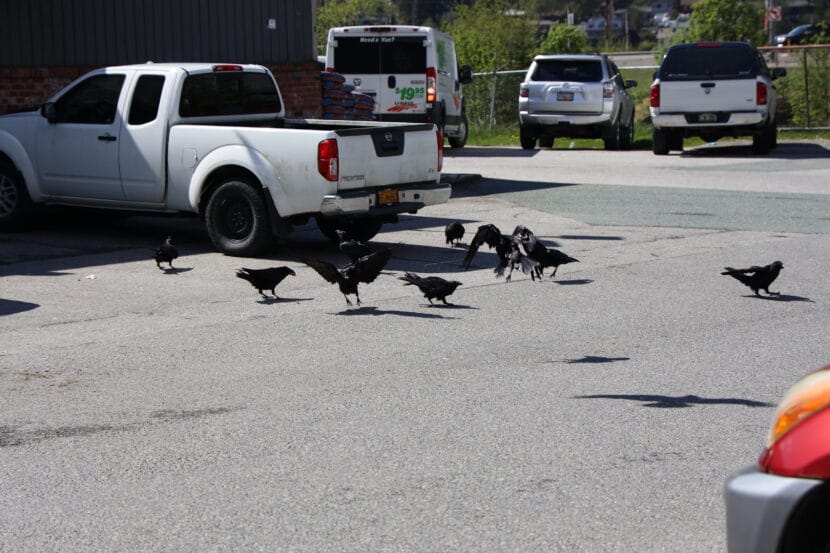
A feeding frenzy in the Foodland parking lot, where a passing shopper tossed some food to the birds. (Photo by Anna Canny/KTOO)

That explains why they hang out near Foodland looking for scraps. But their roosting habits are more mysterious. Despite decades of observation, Armstrong couldn’t tell me where ravens go at bedtime. Tracking them precisely would probably require tagging them.

Scientists in Fairbanks have used radio-transmitter tags to track urban ravens on a forty mile commute to their roosts in spruce trees outside the city.

KTOO doesn’t have the budget for radio transmitters. At least, not that kind of radio transmitter. So this study would need to be more low-tech. 

Armstrong did have one idea. He suggested the spruce trees on Willoughby Avenue. 

“Because if I go to Bullwinkle’s for pizza at night or something and come out at night, and then walk along that sidewalk there, I hear a lot of ravens talking from the trees in total darkness,” he said. 

A rainy Tuesday night stake-out revealed no ravens in the trees. But there was some evidence in the echoey, dimly lit parking garage of the State Office Building. 

The first sign of ravens were spikes along the railing, installed by people to keep birds out. Clearly, they didn’t work well, because the concrete railing on the garage’s third floor was covered in white bird poop, and there were a few black feathers left behind in the parking spaces. 

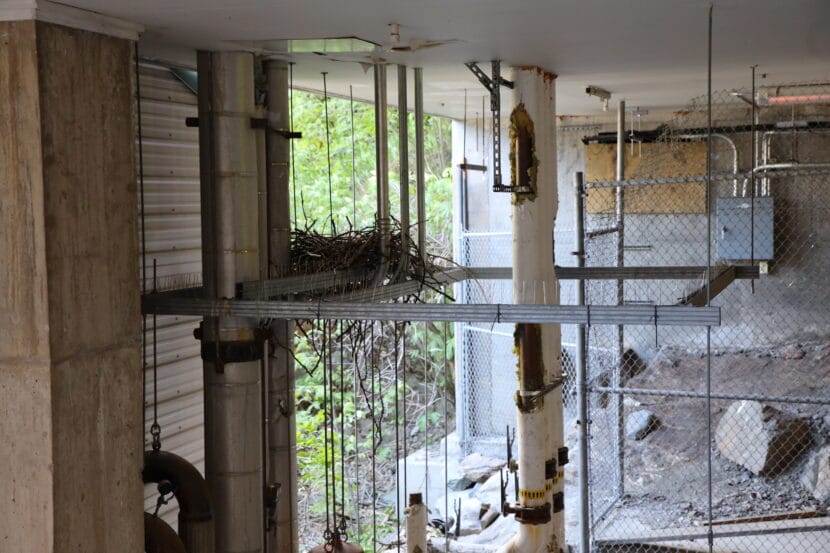
The most significant clue was a nest, about a foot across, that was nestled in a few U-shaped pipes in a corner of the garage. It appeared empty, but it was a sure sign of raven residency. 

An abandoned raven’s nest in the parking garage of the state building. (Photo by Anna Canny/KTOO)

To find a raven roost, one must get inside the mind of the bird. John Marzluff, a retired professor of wildlife science at the University of Washington, has spent his career doing just that. He’s a corvid expert who has studied crows, jays and ravens.

“There are kind of two strategies in a raven society,” Marzluff said. 

The first is for the older breeding pairs. Mates roost together.

“Those birds typically roost in a pretty consistent place on their territory, night after night after night,” Marzluff. 

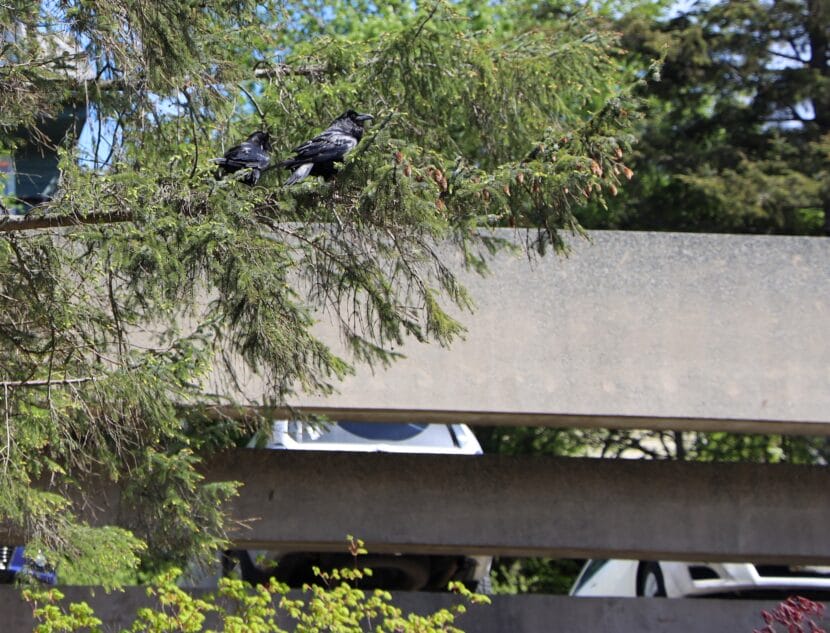
A pair of ravens in the trees on Willoughby Avenue, in front of the state building. (Photo by Anna Canny/KTOO)

They’re fiercely protective of that territory, especially when they’re tending to a nest like the one in the parking garage. 

“The rest of raven world are what we call vagrant non-breeders,” Marzluff said.

Those ravens are the most low-ranking in the bunch. They aren’t tied to a particular spot that they’re defending or returning to every day. 

“They may aggregate at rich food sources like Foodland,” Marzluff said. “But it’s not the same birds every day, you know, day in and day out. To say that there’s a flock or a group that’s the “Foodland ravens” — probably not the case.”

They’re just ravens that happen to be at Foodland. 

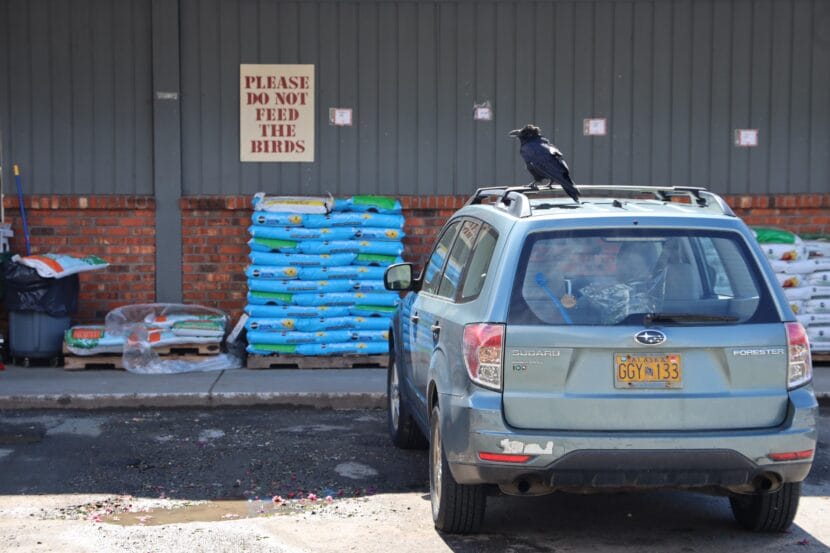
The ravens would like you ignore this sign posted at the Foodland grocery store. (Photo by Anna Canny/KTOO)

And that makes sense because ravens move around a lot to follow food. Marzluff’s research has shown that they travel thousands of square miles for their next meal. They’re flexible based on the changing seasons and the surprise delicacies that might appear. 

“If all sudden there’s a big spill of a bag of dog food at Foodland, that word is gonna get out,” Marzluff. “Because the birds that are there will be very active and other birds will hear or see them and come in.”

Marzluff research has revealed that ravens, especially the vagrant non-breeders, use their roost as an “information center.” They’ll meet up with dozens or even hundreds of ravens to “talk” about food sources or predator threats that they encountered during the day.

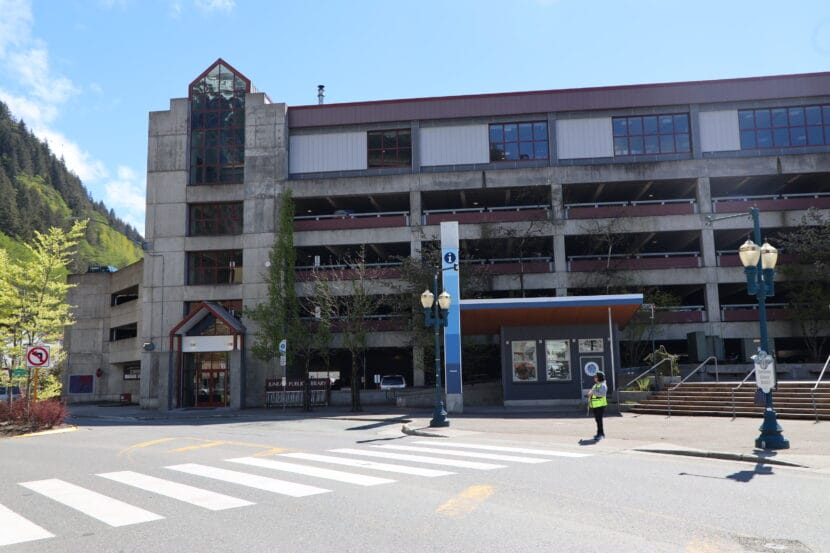
The parking garage at the downtown Juneau library, where ravens roost. (Photo by Anna Canny/KTOO)

These roosts are typically found in tree stands or on cliffs, but in an urban environment that might change. A parking garage, for instance, is usually close to easy food. 

“It’s also warm, and it’s also sheltered from the elements, and maybe even a little bit lighter so they can see any oncoming potential predator,” Marzluff said. “It might just be the perfect place.”

Ravens catch some shut eye in the eaves of the parking garage. (Photo by Anna Canny/KTOO)

While the State Office Building’s parking garage was empty, the parking garage of the downtown library turned out to be a jackpot just past 10 p.m. on a Thursday night.

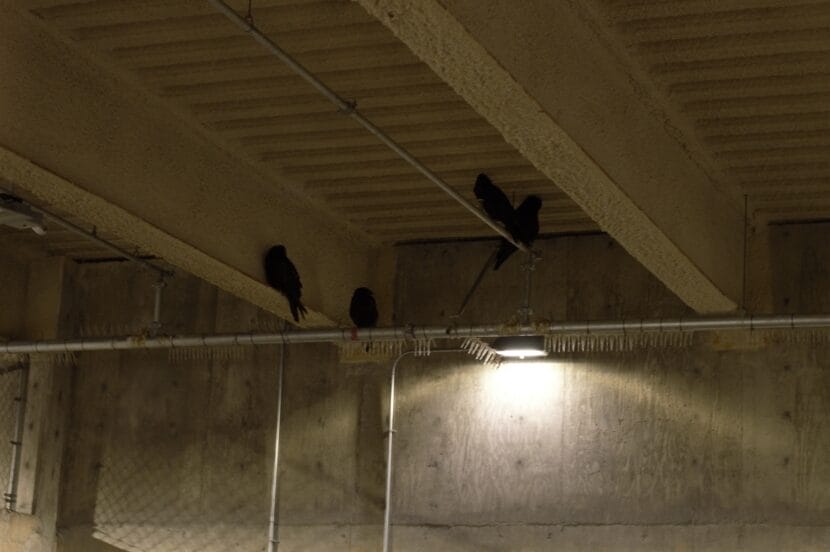
One the top level, 13 ravens – a superstitious grouping – perched on the lamps, pipes and crevices in the ceiling. 

They declined an interview, which makes sense. It’s pretty rude for a reporter to break into their home while they’re sleeping.

Why is gas cheaper in Auke Bay? And why is it cheaper to fly to Seattle than Ketchikan?

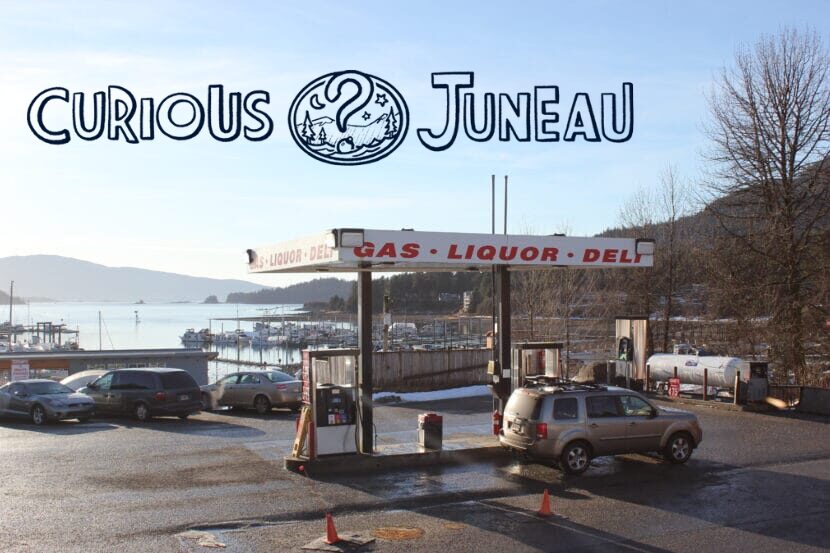
The De Hart’s gas station in Auke Bay charged $3.49 per gallon on Feb. 15, 2024. (Katie Anastas/KTOO)

On a sunny Saturday at the Fisherman’s Bend gas station back in February, Juneau resident Joyce Sepel was filling up her tank. She said the Auke Bay gas station is her favorite.

“I’ve been going to Fred Meyer because it was cheaper,” she said. “But now I’ll just watch. I like coming here. It’s convenient, and I love watching the water here while I do it. But they’ve been the most competitive during the winter.”

Do you have a Curious Juneau question? Submit it at the bottom of the page.

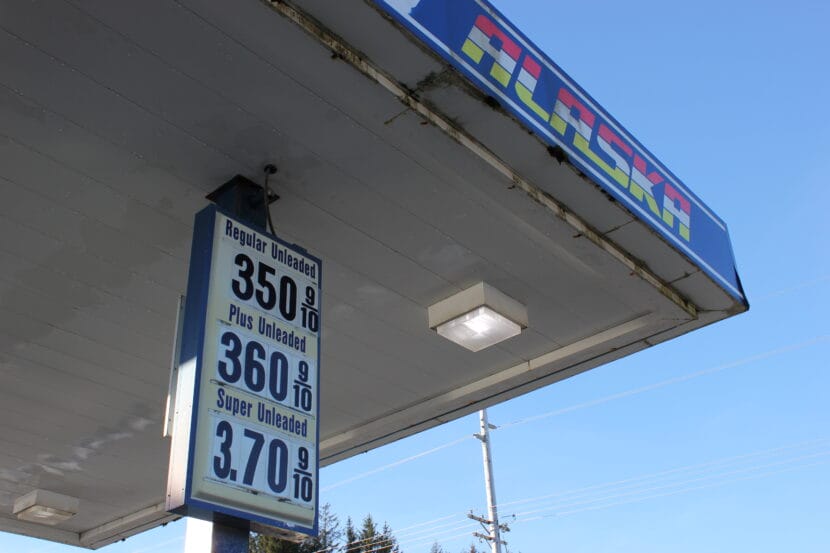
On Valentine’s Day, prices at Auke Bay stations were cheaper than elsewhere in Juneau — as much as 40 cents cheaper. De Hart’s charged $3.50 per gallon, and the Fisherman’s Bend station charged $3.51. 

Meanwhile, Mike’s Airport Express was charging $3.70 per gallon. Petro One was charging $3.58 at its Lemon Creek station. Downtown, the Delta Western station was charging $3.90.

Some listeners have asked us why gas tends to be cheaper in Auke Bay. For her last Curious Juneau, erstwhile KTOO reporter Katie Anastas decided to find out. And as a bonus, she took on another reader question: Why does it cost more to fly to Ketchikan than to fly all the way to Seattle?

Catching drivers before they head south

Matthew Lewis is an economics professor at Clemson University. He studies how gas stations compete with each other, and how consumers respond to that competition.

“If consumers are driving or commuting a fair distance, they’re probably passing more gas station options along the way,” he said. “So that gives much more flexibility in where consumers might purchase.”

If someone lives in Auke Bay and drives to Lemon Creek or downtown for work every day, that driver passes by a lot of gas stations. Lewis said the Auke Bay stations need to keep prices low to try to catch those drivers before they go south.

“It is on the outskirts of where people are,” he said. “It’s not a convenient location for a lot of people, and so they need to have a relatively low price to stay competitive. Stations on a prominent, convenient part of a heavily traveled road or downtown can charge a high price and many consumers will still go.”

But gas stations do compete within neighborhoods

More broadly, four things affect the cost of gas, according to the U.S. Energy Information Administration. The biggest is the cost of crude oil, which makes up more than half of the retail price of gasoline. Lower oil production drives up crude oil’s cost per barrel. 

Taxes and the costs of refining and distribution make up the rest.

As those costs change, so do the prices at the pump. But ultimately, Lewis said, stations decide how much they think they can charge.

The Fisherman’s Bend gas station charged $3.50 per gallon of unleaded gas on Feb. 15, 2024. (Katie Anastas/KTOO)

When the crude oil and refined gasoline prices go up, the stations have to raise their prices and they do so fairly rapidly,” he said. “But when oil and wholesale costs go down, the stations tend to be a little bit slower to lower their price.”

Lewis said competition drives stations’ prices, even within the same neighborhood. Back in October, the Juneau Empire reported an 80-cent per gallon difference between the two Auke Bay stations.

“Prices do change regularly, so consumers really often aren’t all that well informed about what different stations are charging at different points in time,” Lewis said.

So next time you need to fill up, call around to a few stations. The lowest price could be closer than you think.

Along those same lines…

An Alaska Airlines flight comes in for a landing at the Juneau International Airport.
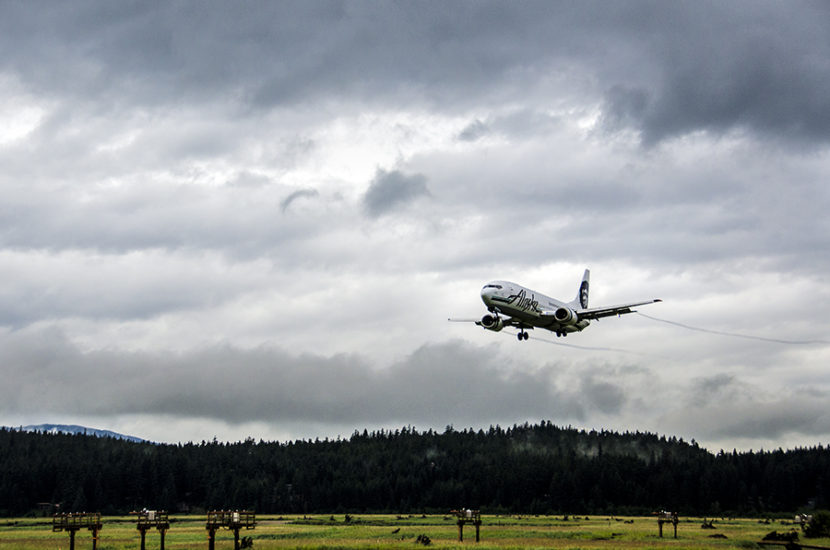
An Alaska Airlines flight comes in for a landing at the Juneau International Airport. (Heather Bryant/KTOO)

Have you ever wondered why it’s sometimes cheaper to fly from Juneau to Seattle than to Ketchikan? Some of our listeners have.

Alaska Travelgram writer Scott McMurren answered us with a question: “How many airlines fly between Juneau and Seattle?”

There are two.

“So Alaska and Delta compete on that route, particularly in the summer,” McMurren said. “The next question is, how many airlines offer jet service between Juneau and Ketchikan?”

For jet service, there’s just one.

Like gas prices, it comes down to competition. Multiple airlines will compete for customers. But if one airline has a monopoly on a route, like Alaska Airlines does from Juneau to Ketchikan, it’s up to them to set the price. 


Curious Juneau

Are you curious about Juneau, its history, places and people? Or if you just like to ask questions, then ask away!
How well does Juneau recycle, and where does it all end up?

Signs tell Juneau residents where to deposit their recyclables at the city Recycling Center in Lemon Creek. (Photo by Adelyn Baxter/KTOO)

Editor’s Note: After we finished this story, a power outage forced the city’s recycling center to close for repairs. The city’s public works department says the recycling facility is full right now and won’t be able to receive any new materials for at least a few days.

It’s a nearly universal experience in Juneau. 

It’s Saturday. You pull up to the city recycling center in Lemon Creek and methodically separate the Number 1 and 2 plastics, tin, glass, aluminum and cardboard you’ve used over the past week into their separate piles. Then you get back in your car to finish your weekend errands, which probably include Costco. 

Do you have a Curious Juneau question? Submit it at the bottom of the page.

But do you ever stop to wonder what happens to all of that material after you drop it off?

 Over the years, several Curious Juneau listeners have asked where Juneau’s recycling ends up. A few even wonder if it’s really getting reused, or if some of it ends up in a landfill. 

And what about contamination – can incorrectly separating recyclables cause Juneau’s shipments to be rejected?

“Our stuff is considered the gold standard,” said Juneau Recycleworks Operations Manager Stuart Ashton. “They will actually take it and if they’ve got a tour coming up, they’ll bring that stuff out and for observation because it’s so good. It’s that good.”

Where does it all go?

Ashton is talking about the staff of a big recycling facility in Tacoma, Washington. That’s the short answer. Your recycling goes to Tacoma.

Separated recycling gets condensed into cubes by a baler, then it’s shipped by barge to Waste Management’s JMK Fibers recycling facility. 

They process about 180,000 tons of material per year. Ashton said Juneau makes up about 1,400 tons of that. 

Jackie Lang with Waste Management’s Northwest region said while there’s always room for improvement, Juneau’s reputation for good recycling outshines many of the other communities they serve. 

“They are pretty darn good at it,” Lang said. “We see that in the material that we receive from Juneau. We see that residents and businesses are working hard to put the right material in the right container.”

In Tacoma, industrial-scale machines sort Juneau’s recycling before it gets shipped to end markets. 

“Plastics sorted at this particular recycling facility end up in fleece-type clothing and backpacks,” Lang said. “Some plastics are made into rigid plastic products like plastic buckets or maybe laundry baskets or storage bins. Tin cans are recycled into rebar, aluminum cans become new aluminum cans. And cardboard boxes become new boxes, water bottles become new water bottles.”

Does recycling make a difference?

National headlines in recent years have bemoaned the unsavory realities of recycling, like the fact that only a tiny portion of what gets put in recycling bins worldwide actually ends up being reused. 

Lang said the commodity market for recycled materials fluctuates constantly based on global supply and demand. She acknowledged that the market had dipped in recent months, but said that Waste Management has recently invested millions into improving equipment at its Tacoma facility to make sure more of what they receive does get recycled. 

“Recyclables that arrive at our recycling center are sorted and shipped to manufacturers who are waiting for that material,” she said. “So the demand is reliable and steady for the products that we recycle every day.”

More and more, headlines and studies warn us about the threat of microplastics in our environment, even here in Alaska

Recycling has long been touted as the way to avoid plastics pollution. But a recent report from the Center for Climate Integrity investigates how the oil and plastics industries used recycling as a public relations tool for decades, despite privately acknowledging that recycling often costs more than producing new plastics. 

The report accuses corporations of suppressing this information, leading to the rise in global plastic pollution. 

How can Juneau resident be better recyclers?

Back in Juneau, there’s still the question of what to do with those pesky items that don’t have a proper bin. 

Juneau’s curbside recycling program is done through Alaska Waste, which accepts plastics 1 through 7. 

Ashton says the city’s recycling facility only accepts #1 and #2 plastics. He noted that #5 has become more valuable on the market, but it’s not as simple as suddenly deciding to accept it. 

“It really is more about sustainable practices,” he said. “Trying to retrain an entire population of 30,000 people, you can only take number one and two plastics for two decades and then switch. If it gets more expensive, we have to stop it in a couple of years.”

Another thing to keep in mind is that if the plastic caps and lids don’t have a recycling stamp with a 1 or 2 on them, they’re not allowed. And plastic bags? They’re never recyclable, although Fred Meyer sometimes collects used bags. 

Nearly all of the recycling collected curbside and at the city facility eventually leaves town. But not all of it. Waste Management actually grinds up glass at the dump. Ashton says the landfill uses it in place of gravel.

“It is our best reuse material in this town, from my perspective,” Ashton said. 

So where could Juneauites improve their recycling habits? Ashton says the curbside recycling program sees the most contamination. That’s probably because there’s less oversight — and less social pressure to get it right. 


Curious Juneau

Are you curious about Juneau, its history, places and people? Or if you just like to ask questions, then ask away!
Site notifications
Update notification options
Subscribe to notifications