Kaiser Health News

With bison herds and ancestral seeds, Indigenous communities embrace food sovereignty

Sophia Moreno (Apsáalooke/Laguna Pueblo/Ojibwe-Cree) plants crops in the Indigenous gardens outside American Indian Hall on the Montana State University campus in Bozeman, Montana. (Adrian Sanchez-Gonzalez/Montana State University)

BOZEMAN, Mont. — Behind American Indian Hall on the Montana State University campus, ancient life is growing.

Six-foot-tall corn plants tower over large green squash and black-and-yellow sunflowers. Around the perimeter, stalks of sweetgrass grow. The seeds for some of these plants grew for millennia in Native Americans’ gardens along the upper Missouri River.

It’s one of several Native American ancestral gardens growing in the Bozeman area, totaling about an acre. Though small, the garden is part of a larger, multifaceted effort around the country to promote “food sovereignty” for reservations and tribal members off reservation, and to reclaim aspects of Native American food and culture that flourished in North America for thousands of years before the arrival of European settlers.

Restoring bison to reservations, developing community food gardens with ancestral seeds, understanding and collecting wild fruits and vegetables, and learning how to cook tasty meals with traditional ingredients are all part of the movement.

“We are learning to care for plant knowledge, growing Indigenous gardens, cultivating ancestral seeds, really old seeds from our relatives the Mandan, Hidatsa, and Arikara: corn, beans, squash, and sunflowers,” said Jill Falcon Ramaker, an assistant professor of community nutrition and sustainable food systems at Montana State. She is a member of the Turtle Mountain Band of Anishinaabe.

“A lot of what we are doing here at the university is cultural knowledge regeneration,” she said.

But it also has a very practical application: to provide healthier, cheaper, and more reliable food supplies for reservations, which are often a long way from supermarkets, and where processed foods have helped produce an epidemic of diabetes and heart disease.

Many reservations are food deserts where prices are high and processed food is often easier to come by than fresh food. The Montana Food Distribution Study, a 2020 paper funded by the U.S. Department of Agriculture, found that the median cost in the state of a collection of items typically purchased at a grocery store is 23% higher on a reservation than off.

“With food sovereignty we are looking at the ability to put that healthy food and ancestral foods which we used to survive for thousands of years, putting those foods back on the table,” Ramaker said. What that means exactly can vary by region, depending on the traditional food sources, from wild rice in the Midwest to salmon on the Pacific coast.

Central to the effort, especially in Montana, are bison, also referred to as buffalo. In 2014, 13 Native nations from eight reservations in the U.S. and Canada came together to sign the Buffalo Treaty, an agreement to return bison to 6.3 million acres that sought “to welcome BUFFALO to once again live among us as CREATOR intended by doing everything within our means so WE and BUFFALO will once again live together to nurture each other culturally and spiritually.”

Nearly a decade later, dozens of tribes have buffalo herds, including all seven reservations in Montana.

The buffalo-centered food system was a success for thousands of years, according to Ramaker. It wasn’t a hand-to-mouth existence, she wrote in an article for Montana State, but a “knowledge of a vast landscape, including an intimate understanding of animals, plants, season, and climate, passed down for millennia and retained as a matter of life and death.”

Ramaker directs both the Montana Indigenous Food Sovereignty Initiative and a regional program, the Buffalo Nations Food Systems Initiative, or BNFSI — a collaboration with the Native American Studies Department and College of Education, Health and Human Development at Montana State.

With bison meat at the center of the efforts, the BNFSI is working to bring other foods from the northern Plains Native American diet in line with modern palates.

The BNFSI has received a $5 million grant from the U.S. Department of Agriculture to carry out that work, in partnership with Nueta Hidatsa Sahnish College in New Town, N.D.

Life on reservations is partly to blame for many Native people eating processed foods, Ramaker said. Food aid from the federal government, known as the Commodity Supplemental Food Program, has long been shipped to reservations in the form of boxes full of packaged foods.

“We were forced onto the reservations, where there was replacement food sent by the government — white flour, white sugar, canned meat, salt, and baking powder,” she said.

From left to right, James Vallie (Apsáalooke/Anishinaabe), Angela Bear Claw (Apsáalooke), and Jill Falcon Ramaker (Anishinaabe) plant Native seeds in the Indigenous gardens at Montana State University on June 4, 2021. (Adrian Sanchez-Gonzalez/Montana State University)

Processed foods contribute to chronic inflammation, which in turn leads to heart disease, cancer, and diabetes, which occurs at three times the rate in Native Americans as it does in white people.

Studies show that people’s mental and physical health declines when they consume a processed food diet. “In the last decade there’s a growing amount of research on the impact of good nutrition on suicide ideation, attempts, and completion,” said KayAnn Miller, co-executive director of the Montana Partnership to End Childhood Hunger in Bozeman, who is also involved with the BNFSI.

All Native American reservations in Montana now have community gardens, and there are at least eight different gardens on the Flathead Reservation north of Missoula, home to the Confederated Salish and Kootenai Tribes. The tribe is teaching members to raise vegetables, some of it made into soup that is delivered to tribal elders. This year members grew 5 tons of produce to be given away.

Ancestral seeds are part of the effort. Each year the BNFSI sends out 200 packets of seeds for ancestral crops to Indigenous people in Montana.

Creating foods that appeal to contemporary tastes is critical to the project. The BNFSI is working with Sean Sherman, the “Sioux Chef,” to turn corn, meat, and other Native foods into appealing dishes.

Sherman founded the award-winning Owamni restaurant in Minneapolis and in 2020 opened the Indigenous Food Lab, through his nonprofit, North American Traditional Indigenous Food Systems. The lab, in downtown Minneapolis, is also a restaurant and an education and training center that creates dishes using only Indigenous foods from across the country — no dairy, cane sugar, wheat flour, beef, chicken, or other ingredients from what he calls the colonizers.

“We’re not cooking like it’s 1491,” Sherman said last year on “Fresh Air,” referring to the period before European colonization. “We’re not a museum piece or something like that. We’re trying to evolve the food into the future, using as much of the knowledge from our ancestors that we can understand and just applying it to the modern world.”

Among his signature dishes are bison pot roast with hominy and roast turkey with a berry-mint sauce and black walnuts.

In consultation with Sherman, Montana State University is building the country’s second Indigenous food lab, which will be housed in a new $29 million building with a state-of-the-art kitchen, Ramaker said. It will open next year and expand the ongoing work creating recipes, holding cooking workshops, feeding MSU’s more than 800 Native students, and preparing cooking videos.

Angelina Toineeta, who is Crow, is studying the BNFSI at Montana State as part of her major in agriculture. “Growing these gardens really stuck out to me,” she said. “Native American agriculture is something we’ve lost over the years, and I want to help bring that back.”

KFF Health News, formerly known as Kaiser Health News (KHN), is a national newsroom that produces in-depth journalism about health issues and is one of the core operating programs at KFF — the independent source for health policy research, polling, and journalism.

Copyright 2023 KFF Health News. To see more, visit KFF Health News.

She received chemo in two states. Why did it cost so much more in Alaska?

Emily Gebel was diagnosed with breast cancer in early 2022. After Gebel moved her treatment from Seattle to Alaska, where she lived, she discovered it was priced much higher in her home state. (Ash Adams/KFF Health News)

Emily Gebel was trying to figure out why she was having trouble breastfeeding. That’s when she felt a lump.

Gebel, a mother of two children, went to her primary care doctor in Juneau, Alaska, who referred her for testing, she said.

Her 9-month-old was asleep in her arms when she got the results.

“I got the call from my primary care nurse telling me it was cancer. And I remember I just sat there for probably at least another half an hour or so and cried,” Gebel said.

Juneau, the state capital, has about 31,700 residents, who are served by the city-owned Bartlett Regional Hospital. But Gebel said she has several friends who have also had cancer, all of whom recommended she seek treatment out of town because they felt bigger cities would have better care.

She opted for treatment in Seattle, the closest major American city to Alaska. She underwent surgery at Virginia Mason Medical Center in September 2022. In January, she began chemotherapy at Lifespring Cancer Treatment Center, a stand-alone clinic that she said she selected because it offers a lower-dose chemotherapy.

During chemo, she learned she had stage 4 breast cancer, she said.

Commuting to Seattle for chemo every week — nonstop flights last as long as two hours and 45 minutes — became tiring. So Gebel began treatment at Bartlett Regional Hospital after her Seattle doctor taught hospital staffers there how to administer her chemo regimen.

Then the bill came.

The patient: Emily Gebel, 37, insured through her husband’s employer by Premera Blue Cross. She was previously covered by Moda Health.

Medical service: One round of metronomic chemotherapy, which involves regular infusions at lower but more frequent doses and over a longer period than traditional chemotherapy.

Service provider: Bartlett Regional Hospital and Lifespring Cancer Treatment Center. The hospital is a tax-exempt facility owned by the city and borough of Juneau, though most of its revenue comes from the services it provides, according to hospital officials. Lifespring is a stand-alone, doctor-owned cancer clinic in Seattle.

Total bill: The prices for Emily’s chemo infusions at Bartlett Regional Hospital varied week to week. A hospital bill showed one infusion in July was listed at $5,077.28 — more than three times the price for a similar mix of drugs at the Seattle clinic, $1,611.24.

What gives: In the United States, the price for the same medical service can vary based on where it is received. And for those living in remote areas like Alaska, the price difference can put care further out of reach.

Emily’s firsthand experience with this disparity began after her husband, Jered, requested a cost estimate from Bartlett Regional Hospital. It said Emily’s chemo would cost around $7,500 per weekly infusion, more than 4½ times what she had been charged in Seattle.

“The email came through with the bill estimate, and it’s like, ‘Oh my goodness, this has to be wrong,'” Jered said.

Jered said Emily had met her annual out-of-pocket maximum, meaning her insurance would cover the costs of her treatment, but from the start, the disparity just bothered him.

When Emily received a bill for a few rounds of her weekly chemo treatments, it showed that the hospital charged more than triple what the Seattle clinic did for a round of chemo, asking higher prices for every related service and medication she received that week.

The hospital charged about $1,000 for the first hour of chemo infusion, which is more than twice the rate at the Seattle clinic. One of Emily’s drugs cost $714, more than three times the price at the clinic.

It was even the tiniest things: The hospital charged $19.15 for Benadryl, about 22 times the clinic’s price of 87 cents.

Staff at Lifespring Cancer Treatment Center, the Seattle clinic, did not reply to requests for comment.

Sam Muse, the hospital’s former chief financial officer who no longer works there, said Bartlett Regional Hospital officials determined prices by looking at average wholesale prices and what other facilities in the region charge. Muse said the hospital had to account for high operating costs.

“Anything that we charge certainly has to take into consideration … the cost of just supplying healthcare in a rural setting like Juneau,” Muse said. “We’re not accessible by road at all, only ferry or plane.”

Juneau’s isolated geography makes reaching many resources a challenge. The city is part of the Alaska Panhandle, a narrow, island-speckled sliver of the state wedged between Canada, the Pacific Ocean, and Glacier Bay National Park & Preserve. Neither Anchorage nor Vancouver, its nearest major cities, is close by.

The hospital — the only one in the city and largest in the panhandle — treats a small number of cancer patients, at least a few hundred last year, Muse said. Its two oncologists live outside the city and fly into Juneau six times a month, said Erin Hardin, a hospital spokesperson.

Bartlett spent nearly $11 million last year to pay and fly in nurses, doctors, and other staffers who live outside the city, Muse said.

We’re “trying to find that happy medium between keeping care here and keeping costs down and how do we do that in a sustainable way for the long term,” Muse said.

Even though research shows Alaskans seek emergency care and are admitted to the hospital less often than many Americans, they had the third-highest health care expenditures per capita in 2020.

“Alaska is special in that it’s small, it’s remote, therefore it’s more expensive,” said Mouhcine Guettabi, an associate professor of economics at the University of North Carolina-Wilmington who studied health care costs in Alaska when he taught there.

Guettabi said hospitals often need to offer higher wages to recruit doctors and nurses willing to live in Alaska, which has a higher cost of living than most states.

Towns or entire regions may have few specialists and only one hospital, creating a dearth of competition that may drive up costs, Guettabi said. It’s also more expensive to ship items there, including medical supplies.

But Alaska’s costs are higher even when taking all those factors into account, Guettabi said. In Anchorage, for instance, prices for medical items increased nearly three times faster from 1991 through 2017 than prices overall.

Alaska also has a unique policy that may be increasing prices. Its “80th percentile rule” was enacted in 2004 to limit the amount of money patients pay when treated by providers outside their health insurers’ network. But like many experiments meant to rein in costs, the rule has instead been increasing health care spending, according to a study by Guettabi.

“Critics think the rule may be adding to that soaring spending, partly because over time providers could increase their charges — and insurance payments would have to keep pace,” the study noted.

The resolution: Emily received a bill from the hospital in September, more than five months after beginning treatment there.

It said Emily owed about $3,100 even though a previous explanation of benefits said she’d met her out-of-pocket limit.

Jered said he contacted hospital billing officials, who discovered that a medicine had been incorrectly coded and told Jered that Emily’s charge was zero.

“We know how hard it is to pay these ridiculous medical bills,” Jered said. “If I’m able to push back a little bit against this massive system, well, hey, maybe other people can, too. And who knows, maybe eventually health care prices can come down.”

Emily said she’s glad Jered knows how to handle the financial aspects of her care. Like many Americans, she could have just paid or ignored the incorrect bills, risking being sent to collections.

“I can’t imagine the amount of time I would have to spend on it while juggling parenting and also dealing with completing treatment, going through the sickness that goes along with that, and just generally feeling very run down,” she said.

The takeaway: Alaska government officials, nonprofits, and experts have suggested methods to lower the cost of health care. The state is considering repealing the 80th percentile rule and implementing value-based care, which emphasizes paying providers based on health outcomes.

But what should Alaskans and other patients do in the meantime? If you live in a high-cost state, you might check out prices at a health care system in a state next door.

In any case, get ready to advocate for yourself.

Jered learned about medical billing by following the Bill of the Month series and reading “Never Pay the First Bill,” a book by Marshall Allen, a former ProPublica reporter.

Request itemized bills and make sure the codes match the services you received, Jered said. Note any prices that seem outrageous. If you have concerns, arrange an in-person meeting with an official in the provider’s finance department. If that’s not possible, a phone call is better than email. Make sure to document all conversations, so you have a record.

Come prepared with your documents and evidence, including the rate paid by Medicare, the federal insurance system for those 65 and older. Ask the official to explain the reasons for the codes and pricing before contesting anything. You can sometimes negotiate high-priced services down. And remember that the person you’re speaking with isn’t to blame for your health care costs.

“Don’t come at them angry, don’t come at them as viewing them as the enemy — because they’re not,” Jered said. “They are working within the same broken system.”

Emmarie Huetteman of KFF Health News edited the digital story, and Taunya English of KFF Health News edited the audio story. NPR’s Will Stone edited the audio and digital story.

KFF Health News, formerly known as Kaiser Health News (KHN), is a national newsroom that produces in-depth journalism about health issues and is one of the core operating programs at KFF — the independent source for health policy research, polling, and journalism.

Copyright 2023 KFF Health News. To see more, visit KFF Health News.

Pioneering Study Links Testicular Cancer Among Military Personnel to ‘Forever Chemicals’

John Sherman, a 60th Engineer Squadron firefighter, is hit by fire-retardant foam after it was “unintentionally released” in an aircraft hangar at Travis Air Force Base in California on Sept. 24, 2013. Firefighters with the 60th Air Mobility Wing helped control the foam’s dispersion using powerful fans and covering drains. (KEN WRIGHT / U.S. AIR FORCE)

Gary Flook served in the Air Force for 37 years, as a firefighter at the now-closed Chanute Air Force Base in Illinois and the former Grissom Air Force Base in Indiana, where he regularly trained with aqueous film forming foam, or AFFF — a frothy white fire retardant that is highly effective but now known to be toxic.

Flook volunteered at his local fire department, where he also used the foam, unaware of the health risks it posed. In 2000, at age 45, he received devastating news: He had testicular cancer, which would require an orchiectomy followed by chemotherapy.

Hundreds of lawsuits, including one by Flook, have been filed against companies that make firefighting products and the chemicals used in them.

And multiple studies show that firefighters, both military and civilian, have been diagnosed with testicular cancer at higher rates than people in most other occupations, often pointing to the presence of perfluoroalkyl and polyfluoroalkyl substances, or PFAS, in the foam.

But the link between PFAS and testicular cancer among service members was never directly proven — until now.

A new federal study for the first time shows a direct association between PFOS, a PFAS chemical, found in the blood of thousands of military personnel and testicular cancer.

Using banked blood drawn from Air Force servicemen, researchers at the National Cancer Institute and Uniformed Services University of the Health Sciences found strong evidence that airmen who were firefighters had elevated levels of PFAS in their bloodstreams and weaker evidence for those who lived on installations with high levels of PFAS in the drinking water. And the airmen with testicular cancer had higher serum levels of PFOS than those who had not been diagnosed with cancer, said study co-author Mark Purdue, a senior investigator at NCI.

“To my knowledge,” Purdue said, “this is the first study to measure PFAS levels in the U.S. military population and to investigate associations with a cancer endpoint in this population, so that brings new evidence to the table.”

In a commentary in the journal Environmental Health Perspectives, Kyle Steenland, a professor at Emory University’s Rollins School of Public Health, said the research “provides a valuable contribution to the literature,” which he described as “rather sparse” in demonstrating a link between PFAS and testicular cancer.

More studies are needed, he said, “as is always the case for environmental chemicals.”

Not ‘Just Soap and Water’

Old stocks of AFFF that contained PFOS were replaced in the past few decades by foam that contains newer-generation PFAS, which now also are known to be toxic. By congressional order, the Department of Defense must stop using all PFAS-containing foams by October 2024, though it can keep buying them until this October. That’s decades after the military first documented the chemicals’ potential health concerns.

A DoD study in 1974 found that PFAS was fatal to fish. By 1983, an Air Force technical report showed its deadly effects on mice.

But given its effectiveness in fighting extremely hot fires, like aircraft crashes and shipboard blazes, the Defense Department still uses it in operations. Rarely, if ever, had the military warned of its dangers, according to Kevin Ferrara, a retired Air Force firefighter, as well as several military firefighters who contacted KFF Health News.

“We were told that it was just soap and water, completely harmless,” Ferrara said. “We were completely slathered in the foam — hands, mouth, eyes. It looked just like if you were going to fill up your sink with dish soap.”

Fire-retardant foam was “unintentionally released” in an aircraft hangar at Travis Air Force Base in California on Sept. 24, 2013. “The non-hazardous foam is similar to dish soap,” says the Defense Visual Information Distribution Service. “No people or aircraft were harmed in the incident.” (KEN WRIGHT / U.S. AIR FORCE)

Photos released by the Defense Visual Information Distribution Service in 2013 show personnel working in the foam without protective gear. The description calls the “small sea of fire retardant foam” at Travis Air Force Base in California “non-hazardous” and “similar to soap.”

“No people or aircraft were harmed in the incident,” it reads.

There are thousands of PFAS chemicals, invented in the 1940s to ward off stains and prevent sticking in industrial and household goods. Along with foam used for decades by firefighters and the military, the chemicals are in makeup, nonstick cookware, water-repellent clothing, rugs, food wrappers, and a myriad of other consumer goods.

Known as “forever chemicals,” they do not break down in the environment and do accumulate in the human body. Researchers estimate that nearly all Americans have PFAS in their blood, exposed primarily by groundwater, drinking water, soil, and foods. A recent U.S. Geological Survey study estimated that at least 45% of U.S. tap water has at least one type of forever chemical from both private wells and public water supplies.

Health and environmental concerns associated with the chemicals have spurred a cascade of lawsuits, plus state and federal legislation that targets the manufacturers and sellers of PFAS-laden products. Gary Flook is suing 3M and associated companies that manufactured PFAS and the firefighting foam, including DuPont and Kidde-Fenwal.

Congress has prodded the Department of Defense to clean up military sites and take related health concerns more seriously, funding site inspections for PFAS and mandating blood testing for military firefighters. Advocates argue those actions are not enough.

“How long has [DoD] spent on this issue without any real results except for putting some filters on drinking water?” said Jared Hayes, a senior policy analyst at the Environmental Working Group. “When it comes to cleaning up the problem, we are in the same place we were years ago.”

On a Mission to Get Screening

The Department of Veterans Affairs does not recommend blood testing for PFAS, stating on its website that “blood tests cannot be linked to current or future health conditions or guide medical treatment decisions.”

But that could change soon. Rep. Dan Kildee (D-Mich.), co-chair of the congressional PFAS Task Force, in June introduced the Veterans Exposed to Toxic PFAS Act, which would require the VA to treat conditions linked to exposure and provide disability benefits for those affected, including for testicular cancer.

“The last thing [veterans] and their families need to go through is to fight with VA to get access to benefits we promised them when they put that uniform on,” Kildee said.

Evidence is strong that exposure to PFAS is associated with health effects such as decreased response to vaccines, kidney cancer, and low birth weight, according to an expansive, federally funded report published last year by the National Academies of Sciences, Engineering, and Medicine. The nonprofit institution recommended blood testing for communities with high exposure to PFAS, followed by health screenings for those above certain levels.

It also said that, based on limited evidence, there is “moderate confidence” of an association between exposure and thyroid dysfunction, preeclampsia in pregnant women, and breast and testicular cancers.

The new study of Air Force servicemen published July 17 goes further, linking PFAS exposure directly to testicular germ cell tumors, which make up roughly 95% of testicular cancer cases.

Testicular cancer is the most commonly diagnosed cancer among young adult men. It is also the type of cancer diagnosed at the highest rate among active military personnel, most of whom are male, ages 18 to 40, and in peak physical condition.

That age distribution and knowing AFFF was a source of PFAS contamination drove Purdue and USUHS researcher Jennifer Rusiecki to investigate a possible connection.

Using samples from the Department of Defense Serum Repository, a biobank of more than 62 million blood serum specimens from service members, the researchers examined samples from 530 troops who later developed testicular cancer and those of 530 members of a control group. The blood had been collected between 1988 and 2017.

A second sampling collected four years after the first samples were taken showed the higher PFOS concentrations positively associated with testicular cancer.

Ferrara does not have testicular cancer, though he does have other health concerns he attributes to PFAS, and he worries for himself and his fellow firefighters. He recalled working at Air Combat Command headquarters at Joint Base Langley-Eustis in Virginia in the early 2010s and seeing emails mentioning two types of PFAS chemicals: PFOS and perfluorooctanoic acid, or PFOA.

But employees on the base remained largely unfamiliar with the jumble of acronyms, Ferrara said.

Even as the evidence grew that the chemicals in AFFF were toxic, “we were still led to believe that it’s perfectly safe,” Ferrara said. “They kept putting out vague and cryptic messages, citing environmental concerns.”

When Ferrara was working a desk job at Air Combat Command and no longer fighting fires, his exposure likely continued: Joint Base Langley-Eustis is among the top five most PFAS-contaminated military sites, according to the EWG, with groundwater at the former Langley Air Force Base registering 2.2 million parts per trillion for PFOS and PFOA.

According to the EPA, just 40 parts per trillion would “warrant further attention,” such as testing and amelioration.

The Defense Department did not provide comment on the new study.

Air Force officials told KFF Health News that the service has swapped products and no longer allows uncontrolled discharges of firefighting foam for maintenance, testing, or training.

“The Department of the Air Force has replaced Aqueous Film Forming Foam, which contained PFAS, with a foam that meets Environmental Protection Agency recommendations at all installations,” the Air Force said in a statement provided to KFF Health News.

Both older-generation forever chemicals are no longer made in the U.S. 3M, the main manufacturer of PFOS, agreed to start phasing it out in 2000. In June, the industrial giant announced it would pay at least $10.3 billion to settle a class-action suit.

Alarmed over what it perceived as the Defense Department’s unwillingness to address PFAS contamination or stop using AFFF, Congress in 2019 ordered DoD to offer annual testing for all active-duty military firefighters and banned the use of PFAS foam by 2024.

According to data provided by DoD, among more than 9,000 firefighters who requested the tests in fiscal year 2021, 96% had at least one of two types of PFAS in their blood serum, with PFOS being the most commonly detected at an average level of 3.1 nanograms per milliliter.

Readings between 2 and 20 ng/mL carry concern for adverse effects, according to the national academies. In that range, it recommends people limit additional exposure and screen for high cholesterol, breast cancer, and, if pregnant, high blood pressure.

According to DoD, 707 active and former defense sites are contaminated with PFAS or have had suspected PFAS discharges. The department is in the early stages of a decades-long testing and cleaning process.

More than 3,300 lawsuits have been filed over AFFF and PFAS contamination; beyond 3M’s massive settlement, DuPont and other manufacturers reached a $1.185 billion agreement with water utility companies in June.

Attorneys general from 22 states have urged the court to reject the 3M settlement, saying in a filing July 26 it would not adequately cover the damage caused.

For now, many firefighters, like Ferrara, live with anxiety that their blood PFAS levels may lead to cancer. Flook declined to speak to KFF Health News because he is part of the 3M class-action lawsuit. The cancer wreaked havoc on his marriage, robbing him and his wife, Linda, of “affection, assistance, and conjugal fellowship,” according to the lawsuit.

Congress is again trying to push the Pentagon. This year, Sen. Jeanne Shaheen (D-N.H.) reintroduced the PFAS Exposure Assessment and Documentation Act, which would require DoD to test all service members — not just firefighters — stationed at installations with known or suspected contamination as part of their annual health checkups as well as family members and veterans.

The tests, which aren’t covered by the military health program or most insurers, typically cost from $400 to $600.

In June, Kildee said veterans have been stymied in getting assistance with exposure-related illnesses that include PFAS.

“For too long, the federal government has been too slow to act to deal with the threat posed by PFAS exposure,” Kildee said. “This situation is completely unacceptable.”

Fire-retardant foam temporarily covered a small portion of the flight line at Travis Air Force Base in California after it was released inside a hangar on Sept. 24, 2013.(KEN WRIGHT / U.S. AIR FORCE)

KFF Health News is a national newsroom that produces in-depth journalism about health issues and is one of the core operating programs at KFF—an independent source of health policy research, polling, and journalism. Learn more about KFF.

Subscribe to KFF Health News' free Morning Briefing.

Abortion bans drive off doctors and close clinics, putting other health care at risk

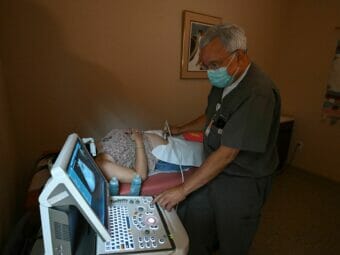
Dr. Franz Theard performs a sonogram on a patient seeking abortion services at the Women’s Reproductive Clinic in Santa Teresa, New Mexico, a state that has not banned abortions. (Robyn Beck/AFP via Getty Images)

The rush in conservative states to ban abortion after the overturn of Roe v. Wade is resulting in a startling consequence that abortion opponents may not have considered: fewer medical services available for all women living in those states.

Doctors are showing — through their words and actions — that they are reluctant to practice in places where making the best decision for a patient could result in huge fines or even a prison sentence. And when clinics that provide abortions close their doors, all the other services offered there also shut down, including regular exams, breast cancer screenings, and contraception.

The concern about repercussions for women’s health is being raised not just by abortion rights advocates. One recent warning comes from Jerome Adams, who served as surgeon general in the Trump administration and is now working on health equity issues at Purdue University in Indiana.

In a recent tweet thread, Adams wrote that “the tradeoff of a restricted access (and criminalizing doctors) only approach to decreasing abortions could end up being that you actually make pregnancy less safe for everyone, and increase infant and maternal mortality.”

Medical ‘brain drain’

An early indication of that impending medical “brain drain” came in February, when 76% of respondents in a survey of more than 2,000 current and future physicians say they would not even apply to work or train in states with abortion restrictions. “In other words,” wrote the study’s authors in an accompanying article, “many qualified candidates would no longer even consider working or training in more than half of U.S. states.”

Indeed, states with abortion bans saw a larger decline in medical school seniors applying for residency in 2023 compared with states without bans, according to a study from the Association of American Medical Colleges. While applications for OB-GYN residencies are down nationwide, the decrease in states with complete abortion bans was more than twice as large as those with no restrictions (10.5% vs. 5.2%).

That means fewer doctors to perform critical preventive care like Pap smears and screenings for sexually transmitted diseases, which can lead to infertility.

Care for pregnant women specifically is at risk, as hospitals in rural areas close maternity wards because they can’t find enough professionals to staff them — a problem that predated the abortion ruling but has only gotten worse since.

In March, Bonner General Health, the only hospital in Sandpoint, Idaho, announced it would discontinue its labor and delivery services, in part because of “Idaho’s legal and political climate” that includes state legislators continuing to “introduce and pass bills that criminalize physicians for medical care nationally recognized as the standard of care.”

Amplified risks

Heart-wrenching reporting from around the country shows that abortion bans are also imperiling the health of some patients who experience miscarriage and other nonviable pregnancies. Earlier this year, a pregnant woman with a nonviable fetus in Oklahoma was told to wait in the parking lot until she got sicker after being informed that doctors “can’t touch you unless you are crashing in front of us.”

A study from University of Buffalo researchers in the Women’s Health Issues journal finds that doctors practicing in states that restrict abortion are less likely than those in states that allow abortion to have been trained to perform the same early abortion procedures that are used for women experiencing miscarriages early in pregnancy.

But it’s more than a lack of doctors that could complicate pregnancies and births. States with the toughest abortion restrictions are also the least likely to offer support services for low-income mothers and babies. Even before the overturn of Roe, a report from the Commonwealth Fund, a nonpartisan research group, found that maternal death rates in states with abortion restrictions or bans were 62% higher than in states where abortion was more readily available.

Women who know their pregnancies could become high-risk are thinking twice about getting or being pregnant in states with abortion restrictions. Carmen Broesder, an Idaho woman who chronicled her difficulties getting care for a miscarriage in a series of viral videos on TikTok, told ABC News she does not plan to try to get pregnant again.

“Why would I want to go through my daughter almost losing her mom again to have another child?” she said. “That seems selfish and wrong.”

Make birth free?

The anti-abortion movement once appeared more sensitive to arguments that its policies neglect the needs of women and children. An icon of the anti-abortion movement — Rep. Henry Hyde (R-Ill.), who died in 2007 — made a point of partnering with liberal Rep. Henry Waxman (D-Calif.) on legislation to expand Medicaid coverage and provide more benefits to address infant mortality in the late 1980s.

Few anti-abortion groups are following that example by pushing policies to make it easier for people to get pregnant, give birth, and raise children. Most of those efforts are flying under the radar.

This year, Americans United for Life and Democrats for Life of America put out a joint position paper urging policymakers to “make birth free.” Among their suggestions are automatic insurance coverage, without deductibles or copays, for pregnancy and childbirth; eliminating payment incentives for cesarean sections and in-hospital deliveries; and a “monthly maternal stipend” for the first two years of a child’s life.

“Making birth free to American mothers can and should be a national unifier in a particularly divided time,” says the paper. Such a policy could not only make it easier for people to start families, but it could address the nation’s dismal record on maternal mortality.

But a make-birth-free policy seems unlikely to advance very far or very quickly in a year when the same Republican lawmakers who support a national abortion ban are even more vehemently pushing for large federal budget cuts in the debt ceiling fight.

That leaves abortion opponents at something of a crossroads: Will they follow Hyde’s example and champion policies that expand and protect access to care? Or will women’s health suffer under the movement’s victory?

KFF Health News, formerly known as Kaiser Health News (KHN), is a national newsroom that produces in-depth journalism about health issues and is one of the core operating programs at KFF — the independent source for health policy research, polling, and journalism.

Copyright 2023 KFF Health News. To see more, visit KFF Health News.

When a prison sentence becomes a death sentence

Larry Jordan, 74, served 38 years in an Alabama prison and is in poor health now. One reason the U.S. trails other developed countries in life expectancy, experts say, is that it has more people behind bars and keeps them there far longer. (Charity Rachelle/KFF Health News)

After spending 38 years in the Alabama prison system, one of the most violent and crowded in the nation, Larry Jordan feels lucky to live long enough to regain his freedom.

The decorated Vietnam War veteran had survived prostate cancer and hepatitis C behind bars when a judge granted him early release late last year.

“I never gave up hope,” says Jordan, 74, who lives in Alabama. “I know a lot of people in prison who did.”

At least 6,182 people died in state and federal prisons in 2020, a 46% jump from the previous year, according to data recently released by researchers from the UCLA Law Behind Bars Data Project.

“During the pandemic, a lot of prison sentences became death sentences,” says Wanda Bertram, a spokesperson for the Prison Policy Initiative, a nonprofit that conducts research and data analysis on the criminal justice system.

Now, Jordan worries about his longevity. He struggles with pain in his legs and feet caused by a potentially life-threatening vascular blockage, and research suggests prison accelerates the aging process.

2 million Americans in jail or prison

Life expectancy fell in the United States in 2021 for the second year in a row, according to the Centers for Disease Control and Prevention. That decline is linked to the devastating effect of covid-19 and a spike in drug overdoses.

Some academic experts and activists say the trend also underscores the lasting health consequences of mass incarceration in a nation with roughly 2 million imprisoned or jailed people, one of the highest rates in the developed world.

A Senate report last year found the U.S. Department of Justice failed to identify more than 900 deaths in prisons and local jails in fiscal year 2021. The report said the DOJ’s poor data collection and reporting undermined transparency and congressional oversight of deaths in custody.

Thousands of people like Jordan are released from prisons and jails every year with conditions such as cancer, heart disease, and infectious diseases they developed while incarcerated. The issue hits hard in Alabama, Louisiana, and other Southeastern states, which have some of the highest incarceration rates in the nation.

Behind bars far longer

A major reason the U.S. trails other developed countries in life expectancy is because it has more people behind bars and keeps them there far longer, says Chris Wildeman, a Duke University sociology professor who has researched the link between criminal justice and life expectancy.

“It’s a health strain on the population,” Wildeman says. “The worse the prison conditions, the more likely it is incarceration can be tied to excess mortality.”

Mass incarceration has a ripple effect across society.

Incarcerated people may be more susceptible than the general population to infectious diseases such as covid and HIV that can spread to loved ones and other community members once they are released. The federal government has also failed to collect or release enough information about deaths in custody that could be used to identify disease patterns and prevent fatalities and illness inside and outside of institutions, researchers says.

Over a 40-year span starting in the 1980s, the number of people in the nation’s prisons and jails more than quadrupled, fueled by tough-on-crime policies and the war on drugs.

Federal lawmakers and states such as Alabama have passed reforms in recent years amid bipartisan agreement that prison costs have grown too high and that some people could be released without posing a risk to public safety.

The changes have come too late and not gone far enough to curb the worst effects on health, some researchers and activists for reform say.

Still, no one has proven that incarceration alone shortens life expectancy. But research from the early 2000s did show the death rate for people leaving prison was 3.5 times higher than for the rest of the population in the first few years after release. Experts found deaths from drug use, violence, and lapses in access to health care were especially high in the first two weeks after release.

Another study found that currently or formerly incarcerated Black people suffered a 65% higher mortality rate than their non-Black peers. Black people also make up a disproportionately high percentage of state prison populations.

“Operating in the dark”

The enactment in 2000 of the Death in Custody Reporting Act, and its reauthorization in 2014, required the DOJ to collect information about deaths in state and local jails and prisons.

The information is supposed to include details on the time and location of a death, demographic data on the deceased, the agency involved, and the manner of death.

But a recent report from the Government Accountability Office found that 70% of the records the DOJ received were missing at least one required data point. Federal officials also lacked a plan to take corrective action against states that didn’t meet reporting requirements, the GAO found.

The deficiency in data means the federal government can’t definitively say how many people have died in prisons and jails since the covid-19 pandemic began, researchers say.

“Without data, we are operating in the dark,” says Andrea Armstrong, a professor at the Loyola University New Orleans College of Law, who has testified before Congress on the issue.

Armstrong says federal and state officials need the data to identify institutions failing to provide proper health care, nutritious food, or other services that can save lives.

The DOJ did not make officials available for interviews to answer questions about the GAO report.

In a written statement, agency officials said they were working with law enforcement and state officials to overcome barriers to full and accurate reporting.

“The Justice Department recognizes the profound importance of reducing deaths in custody,” the statement said. “Complete and accurate data are essential for drawing meaningful conclusions about factors that may contribute to unnecessary or premature deaths, and promising practices and policies that can reduce the number of deaths.”

Department officials said the agency is committed to enhancing its implementation of the Death in Custody Reporting Act and that it has ramped up its efforts to improve the quality and quantity of data that it collects.

The DOJ has accused Alabama, where Jordan was incarcerated, of failing to adequately protect incarcerated people from violence, sexual abuse, and excessive force by prison staff, and of holding prisoners in unsanitary and unsafe conditions.

One of the longest sentences in Alabama history

Larry Jordan, a Vietnam War veteran, survived prostate cancer, hepatitis C, and a potentially life-threatening vascular blockage while incarcerated in Alabama. (Charity Rachelle /KFF Health News)

Jordan served 38 years of a 40-year sentence for reckless murder stemming from a car accident, which his lawyer argued in his petition for early release was one of the longest sentences in Alabama history for the crime. A jury had found him guilty of being drunk while driving a vehicle that crashed with another, killing a man. If he were convicted today instead, he would be eligible to receive a sentence as short as 13 years behind bars, because he has no prior felony history, wrote Alabama Circuit Judge Stephen Wallace, who reviewed Jordan’s petition for early release.

With legal help from Redemption Earned, an Alabama nonprofit headed by a former state Supreme Court chief justice, Jordan petitioned the court for early release.

On Sept. 26, 2022, Wallace signed an order releasing Jordan from prison under a rule that allows Alabama courts to reconsider sentences.

A few months later, Jordan says, he had surgery to treat a vascular blockage that was reducing blood flow to his left leg and left foot. A picture shows a long surgical scar stretching from his thigh to near his ankle.

The Alabama Department of Corrections refused an interview request to answer questions about conditions in the state’s prisons.

Jordan says his vascular condition was excruciating. He said he did not receive adequate treatment for it in prison: “You could see my foot dying.”

KFF Health News, formerly known as Kaiser Health News (KHN), is a national newsroom that produces in-depth journalism about health issues and is one of the core operating programs at KFF — the independent source for health policy research, polling, and journalism.

Copyright 2023 Kaiser Health News. To see more, visit Kaiser Health News.

COVID test kits, treatments and vaccines won’t be free to many consumers much longer

Starting May 11 most people will have to pay for those at-home test kits for COVID-19, as the federal government’s declaration of a COVID-19 public health emergency officially ends. (Alex Wong/Getty Images)

Time is running out for free-to-consumer COVID-19 vaccines, at-home test kits and even some treatments.

The White House announced this month that the national public health emergency, first declared in early 2020 in response to the pandemic, is set to expire May 11. When it ends, so will many of the policies designed to combat the virus’s spread.

COVID vaccine makers are poised to raise prices

Take vaccines. Until now, the federal government has been purchasing COVID-19 shots. It recently bought 105 million doses of the Pfizer-BioNTech bivalent booster for about $30.48 a dose, and 66 million doses of Moderna’s version for $26.36 a dose. (These are among the companies that developed the first COVID vaccines sold in the United States.)

People will be able to get these vaccines at low or no cost as long as the government-purchased supplies last. But even before the end date for the public emergency was set, Congress opted not to provide more money to increase the government’s dwindling stockpile. As a result, Pfizer and Moderna were already planning their moves into the commercial market. Both have indicated that as soon as that happens, they will raise the price they charge, somewhere in the range of $110 to $130 per dose, though insurers and government health programs could negotiate lower rates.

“We see a double-digit billion[-dollar] market opportunity,” investors were told at a JPMorgan conference in San Francisco recently by Ryan Richardson, chief strategy officer for BioNTech. The company expects a gross price — the full price before any discounts — of $110 a dose, which, Richardson said, “is more than justified from a health economics perspective.”

That could translate to tens of billions of dollars in revenue for the manufacturers, even if uptake of the vaccines is slow. And consumers would foot the bill, either directly (in copays) or indirectly (through higher premiums and taxpayer-funded subsidies).

If half of adults — about the same percentage as those who opt for an annual flu shot — get a COVID shot at the new, higher prices, a recent KFF report estimated, insurers, employers and other payors would shell out $12.4 billion to $14.8 billion. That’s up to nearly twice as much as what it would have cost for every adult in the U.S. to get a bivalent booster at the average price paid by the federal government.

As for COVID treatments, an August blog post by the Department of Health and Human Services’ Administration for Strategic Preparedness and Response noted that government-purchased supplies of the drug Paxlovid are expected to last at least through midyear before the private sector takes over. The government’s bulk purchase price from manufacturer Pfizer was $530 for a course of treatment, and it isn’t yet known what the companies will charge once government supplies run out.

The type of health insurance you have will determine how much more you’ll pay

One thing is certain: How much, if any, of the boosted costs are passed on to consumers will depend on their health coverage.

Medicare beneficiaries, those enrolled in Medicaid — the state-federal health insurance program for people with low incomes — and people who have health plans via the Affordable Care Act exchanges will continue to get COVID-19 vaccines without charge, even when the public health emergency ends and the government-purchased vaccines run out. Many people with job-based insurance will also likely not face copayments for vaccines, unless they go out-of-network for their vaccinations.

People with limited-benefit or short-term insurance policies might have to pay for all or part of their vaccinations. And people who don’t have insurance will need to either pay full cost out-of-pocket or seek no- or low-cost vaccinations from community clinics or other providers. If they cannot find a free or low-cost option, some uninsured patients may feel forced to skip vaccinations or testing.

Coming up with what could be $100 or more for vaccination will be especially hard “if you are uninsured or underinsured; that’s where these price hikes could drive additional disparities,” said Sean Robbins, executive vice president of external affairs for the Blue Cross Blue Shield Association. Those increases, he said, will also affect people with insurance, as the costs “flow through to premiums.”

COVID-19 treatments will cost more, too.

Meanwhile, public policy experts say many private insurers will continue to cover Paxlovid, although patients may face a copayment, at least until they meet their deductible, just as they do for other medications. Medicaid will continue to cover it without cost to patients until at least 2024.

Medicare beneficiaries will face cost-sharing for most COVID-19 treatments once the emergency officially ends and the government supply runs out. Meanwhile, the treatment will also need to go through the regular FDA approval process, which takes longer than the emergency use authorization under which it has been marketed

Another complication: The rolls of the uninsured are likely to climb in the next year, with states poised to reinstate the process of regularly determining Medicaid eligibility; that sort of review was halted during the pandemic. In April, states will begin reassessing whether Medicaid enrollees meet income and other qualifying factors.

An estimated 5 million to 14 million people nationwide might lose coverage.

“This is our No. 1 concern” right now, said John Baackes, CEO of L.A. Care, the nation’s largest publicly operated health plan with 2.7 million members.

“They may not realize they’ve lost coverage until they go to fill a prescription” or seek other medical care, including vaccinations, he said.

At-home COVID tests won’t be free for many people

Rules remain in place for insurers, including Medicare and Affordable Care Act plans, to cover the cost of up to eight in-home test kits a month for each person on the plan, until the public health emergency ends.

For consumers — including those without insurance — a government website is still offering up to four test kits per household, until they run out. The Biden administration shifted funding to purchase additional kits and made them available in late December.

Starting in May, though, beneficiaries in original Medicare and many people with private, job-based insurance will have to start paying out-of-pocket for the rapid antigen test kits. Some Medicare Advantage plans, which are an alternative to original Medicare, might opt to continue covering them without a copayment. Policies will vary, so check with your insurer. And Medicaid enrollees can continue to get the test kits without cost into mid-2024.

Overall, the future of COVID tests, vaccines and treatments will reflect the complicated mix of coverage consumers already navigate for most other types of care.

“From a consumer perspective, vaccines will still be free, but for treatments and test kits, a lot of people will face cost-sharing,” said Jen Kates, a senior vice president at KFF. “We’re taking what was universal access and now saying we’re going back to how it is in the regular U.S. health system.”

KHN correspondent Darius Tahir contributed to this report. KHN (Kaiser Health News) is a national, editorially independent program of KFF (Kaiser Family Foundation).

Copyright 2023 Kaiser Health News. To see more, visit Kaiser Health News.

Site notifications
Update notification options
Subscribe to notifications