Kaiser Health News

Americans conflicted over GOP plans to dump Obamacare

Last year, when presidential candidate Donald Trump hammered the Affordable Care Act as “a fraud,” “a total disaster” and “very bad health insurance,” many Americans seemed to agree with him.

Now that President Trump and fellow Republicans are attempting to keep their promise to get rid of the law, voters increasingly seem to be having second thoughts.

Multiple polls show rising support for the ACA, including one from the Pew Research Center and one from the Wall Street Journal/NBC News indicating Americans feel more positively about it than ever.

True, many still dislike the law known as Obamacare, but as the national conversation swells on the fate of a law that affects millions of people in multifaceted ways — and the issue takes center stage at raucous town hall meetings — it’s increasingly clear that many don’t see the ACA as an either-or proposition.

“At first it was a good deal — that was three or four years ago,” says Mark Bunkosky, 56, an independent contractor in Michigan who buys coverage through one of the law’s online portals. “Every year it’s gone up. From where it started, the premium has doubled, and now my deductible has also doubled. And my income has not doubled.”

Bunkosky, a Republican, views the ACA unfavorably but believes Washington should fix it, not toss it. He supports keeping some of the law’s Medicaid coverage for low-income people and its prohibition on discriminating against those with pre-existing conditions.

This week, Trump acknowledged that health care is “so complicated.” So are voter opinions on what to do next with the ACA, which expanded coverage to some 20 million people.

“I didn’t like that it mandated people to carry health insurance. And I thought it was just a lie” when it promised affordability, says Amber Alexander, 27, a Pennsylvania independent whose seasonal income puts her on Medicaid in winter and a commercial plan the rest of the year.

However, she adds, “I don’t think it should be thrown out altogether. There are people that do benefit from it, but there are also a lot of people that get screwed.”

Carol Friendly, 67, an Oregon Republican, voted for Hillary Clinton for president and favors the Medicaid expansion. She objects to the ACA’s reproductive health coverage, though, saying consumers opposed to birth control and abortion shouldn’t have to pay for them.

On the other hand, she says, “I know it put 22 million [people] in the health care system that weren’t there before. So that’s a plus.”

Mixed signals from Republicans add to the political fog.

For weeks, Trump has been promising — but not yet producing — a blueprint detailing his plan to repeal and replace the ACA with “insurance for everybody.” In his address to Congress on Tuesday, he said a new law “should ensure that Americans with pre-existing conditions have access to coverage.”

Meanwhile, a leaked GOP congressional draft replacement bill would shrink coverage subsidies, and House conservatives complained even those were still too expensive. On Tuesday, congressional Republicans told reporters they were still working on “the best way to build a consensus to pass a bill to gut Obamacare.”

For many helped by the health law, such a prospect has focused minds and aroused fears and may account for its rising popularity, says Simon Haeder, a political science professor and specialist on health policy at West Virginia University.

“Now that we have this whole debate on replacing, repealing, repairing — whatever you want to call it — more and more of this information is coming out on what the ACA does and how it’s benefited people,” he says.

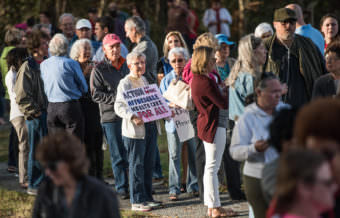
ACA beneficiaries and activists flooded town halls held by Republican congressmen last week, urging them not to repeal the law.

“My story thus far has been [of] one who has benefited from the system,” says Michael Bilodeau, 39, who attended two town halls held by California Republican Rep. Tom McClintock. “We are able to see our local doctor, who we like. And our premiums have been, I would say, stable.”

He co-owns a small business with his wife and is on a plan from Covered California, the state’s online marketplace. He fears a big change if the ACA goes away.

“One of the Republicans’ major arguments is that the ACA brought disruption to people’s health care,” Bilodeau says. “It feels like we’re headed toward another disruption.”

Also, many middle- and lower-income Republicans benefit from the health law’s Medicaid expansion and marketplace subsidies. That’s a political hazard for Republicans who would abolish it, says Mark Peterson, a political science professor at UCLA.

“A lot of that base would be most adversely affected by repealing the ACA and replacing it with something that left enormous holes for the working class,” he says.

And while many national Republican policymakers have excoriated it, the Medicaid expansion is supported by some GOP governors.

Some Republican voters object to the ACA because it’s just so complex.

“It would have been better if the federal government had said, ‘Look, to get these 20 million insured let’s just expand Medicaid nationwide and let’s leave everybody else alone,” says Rickey Mathis, 56, a Georgian who voted for Trump and hasn’t had insurance since the factory employing him closed in 2012. “Why did they have to screw up the whole country’s health insurance?”

Michigan contractor Bunkosky urges Republicans to think hard about any Obamacare replacement.

“Everybody’s in a hurry for it, but they need to sit down and do it right,” he says. “Some of it is still a good idea.”


Kaiser Health News is an editorially independent news service that is part of the nonpartisan Henry J. Kaiser Family Foundation.

Copyright 2017 Kaiser Health News. To see more, visit Kaiser Health News.

Dentists work to ease patients’ pain with fewer opioids

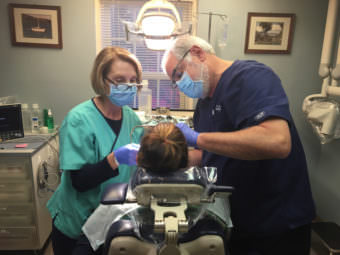
Dr. Joel Funari performs some 300 tooth extractions annually at his private practice in Devon, Pa.. He's part of a group of dentists reassessing opioid prescribing guidelines in the state.
Dr. Joel Funari performs some 300 tooth extractions annually at his private practice in Devon, Pa.. He’s part of a group of dentists reassessing opioid prescribing guidelines in the state.
Elana Gordon / WHYY

Firsts can be life changing — think about your first kiss, your first time behind the wheel of a car. But what about the first time you got a prescription for a narcotic?

James Hatzell, from Collingswood, NJ, is now a technology officer for a college addiction treatment program. He didn’t realize it at the time, but that spring day of his junior year of high school — seven years ago — was a pivotal moment in his life.

“We’re in our 2001 Honda Odyssey minivan, driving to the dentist,” Hatzell recalls. “And we get there, and I’m just pumped. I was very excited to get my wisdom teeth out.”

The prospect of pain didn’t thrill the teen, but he’d heard from friends that when the dentist took out his teeth, he’d get his very own bottle of pain pills.

Those pain pills, Hatzell now says, eventually derailed his life.

Dentists have long been frequent prescribers of immediate-release opioids like Vicodin and Percocet for the pain from tooth extractions. That’s a lot of pills and teeth; annually more than 3.5 million people, mainly young adults, have their wisdom teeth removed.

For many patients, these drugs never pose a problem. But deaths of some 165,000 people in the U.S. in the last 15 years involved an overdose of heroin or opioids, and many other people are struggling with addiction. Health officials say the nation’s major epidemic of drug use has been fueled by the misuse of prescription painkillers.

So dentistry is at a crossroads. Many in the field are now reassessing their prescribing habits, with state dental boards and associations issuing new guidelines for patients and practitioners. As of this year, Pennsylvania requires new dentists and those renewing their clinical license to get training in the best practices of opioid prescribing.

Hatzell says he was always a little afraid of narcotics in high school, until that day he had dental surgery. He’d tried Vicodin recreationally before that, he says, but with caution. Friends would find an extra pill in a medicine cabinet at home; they’d crush it, mix it with pot, and share it.

But getting his own prescription from a health professional felt different, Hatzell recalls. It seemed legitimate — like maybe it wasn’t as dangerous as he’d feared.

On the way home from the dentist’s office that day, Hatzell was still high from the drugs he was given during the procedure and could not wait to pop his first pill.

His mom noticed.

At 17, James Hatzell received his first prescription of opioids after undergoing surgery to have his wisdom teeth removed. He soon started abusing the drugs, and became addicted, he says. Now 23, he's been in recovery for three years.
At 17, James Hatzell received his first prescription of opioids after undergoing surgery to have his wisdom teeth removed. He soon started abusing the drugs, and became addicted, he says. Now 23, he’s been in recovery for three years.
Elana Gordon / WHYY

“We got home, and my mom took the pills and was like, ‘You can’t have these,’ ” he says.

But he knew where she’d hid the bottle. When she wasn’t watching, he sneaked into her room, emptied out the pills, and replaced them with Advil.

“I definitely was every parent’s worst nightmare,” Hatzell now says, and laughs.

He can joke about that day now, he says, but what opioids did to him and his family wasn’t funny. A few years later he was arrested for dealing drugs in college.

A 2011 study in the Journal of the American Dental Association estimates that dentists are responsible for 12 percent of prescriptions for fast-acting opioid pain relievers — just below general practitioners and internal medicine doctors as top prescribers of common opioids. Roughly 23 percent of opioids in the U.S. are used non-medically, according to the study.

Dr. Joel Funari, a dentist who specializes in oral and maxillofacial surgery in Devon, Penn., says that when he started out as a dentist more than three decades ago it was common to prescribe a bottle of 30 or more narcotic pills after procedures such as a wisdom tooth extraction. He now calls that excessive prescribing.

“Dentists don’t like to see patients in pain,” Funari explains. “We tend to be compassionate people and I think we were falling into a trap we were creating ourselves.”

In 2014, Funari joined a group tasked by the Pennsylvania department of health to develop prescribing guidelines for dentists. In reviewing the science, he and his colleagues realized there’s a better way to address standard dental pain.

“Non-steroidal anti-inflammatory drugs — the Motrins, the Advils, the Aleves — when used in a certain way, are very effective,” Funari says. “More effective than the narcotics.”

NSAIDs reduce inflammation, which is a main source of the pain, he says. And because wisdom tooth removal is so common, it has actually been an ideal procedure to study the benefits from this alternative in treating pain.

The 2014 guidelines that Funari and his colleagues came up with are the state’s first to tackle how to best use a combination of opioids and other drugs to manage pain in dental patients. National discussions have been expanding, too.

Dr. Paul Moore, a dentist and pharmacologist at the University of Pittsburgh’s School of Dental Medicine, studies the relative usefulness of ibuprofen and other NSAIDs in acute pain management, and worked on a recent update of the American Dental Association’s prescribing guidelines for opioids. It was the national group’s first update on the topic in a decade, Moore says.

The effort to get dentists and dental students to be wiser prescribers recently became personal for Moore. Among the more than 3,000 overdose deaths in Pennsylvania last year, one young man was Moore’s nephew. The growing abuse of opioids by adolescents particularly concerns him.

“I’m very sensitive to the issue,” he says.

Prescribing more pills than are needed to mitigate pain, Moore says, leaves extra pills or an unused prescription that can be sold or abused.

Dr. Elliot Hersh, a professor of pharmacology and oral surgery at the University of Pennsylvania School of Dental Medicine and a research collaborator of Moore’s, says he regularly brings in a retired narcotics officer to address his class of dental students.

“I’ve been teaching my students that you have to be really, really careful with these drugs,” he says. “That if you write too many of these prescriptions, for either good or bad intentions, either the state dental board and/or the DEA [Drug Enforcement Agency] is going to come down on you.”

Hersh says one of the biggest hurdles in improving prescribing habits is countering — among his students, practicing dentists and patients — long-held misunderstandings about the pain-relieving power of less addictive drugs.

NSAIDs work at least as well as opioids, he says; they just haven’t received as much hype, because they’re available over the counter.

“A lot of the lay public believes if they’re available over the counter, they’re weak and they don’t work,” Hersh says.

Hatzell is 23 and has been in recovery for his opioid addiction for three years now. He says one of the most terrifying thoughts he faces as he navigates his recovery is that he might need surgery one day, and again need pain medication.

These days, whenever he goes to a dentist or doctor, he makes it a point to say right up front that he cannot take opioids.

This story is part of NPR’s reporting partnership with WHYY’s The Pulse and Kaiser Health News.

Copyright 2017 WHYY, Inc.. To see more, visit WHYY, Inc..

GOP leaders urge return to ‘high-risk insurance pools’ that critics call costly

Craig Britton once paid $18,000 a year in premiums for health insurance he bought through Minnesota's "high risk pool." He calls the argument that these pools can bring down the cost of monthly premiums "a lot of baloney."
Craig Britton once paid $18,000 a year in premiums for health insurance he bought through Minnesota’s “high risk pool.” He calls the argument that these pools can bring down the cost of monthly premiums “a lot of baloney.” Mark Zdehchlik / MPR News

Some Republicans looking to scrap the Affordable Care Act say monthly health insurance premiums need to be lower for the individuals who have to buy insurance on their own. One way to do that, GOP leaders say, would be to return to the use of what are called high-risk insurance pools.

But critics say even some of the most successful high-risk pools that operated before the advent of Obamacare were very expensive for patients enrolled in the plans, and for the people who subsidized them — which included state taxpayers and people with employer-based health insurance.

The argument in favor of high-risk pools goes like this: Separate the healthy people, who don’t cost very much to insure, from people who have pre-existing medical conditions, such as a past serious illness or a chronic condition. Under GOP proposals, this second group, which insurers fear might be expected to use more medical care, would be encouraged to buy health insurance through high-risk insurance pools that are subsidized by states and the federal government.

Republican Speaker of the House Paul Ryan made the case for high-risk pools on public television’s Charlie Rose show in January.

“By having taxpayers, I think, step up and focus on, through risk pools, subsidizing care for people with catastrophic illnesses, those losses don’t have to be covered by everybody else [buying insurance], and we stabilize their plans,” Ryan told the TV host.

Minnesota’s newest congressman Jason Lewis (R-Minnesota) recently endorsed high-risk pools on CNN.

“Minnesota had one of the best … high-risk insurance pools in the country,” Lewis said. “And it was undone by the ACA.”

It’s true that the Affordable Care Act banned states’ use of high-risk pools, including the Minnesota Comprehensive Health Association, or MCHA. But that’s because the MCHA was no longer needed, the association’s website explains; the federal health law requires insurers to sell health plans to everybody, regardless of their health status.

Supporters of the MCHA approach tout a return to it as a smart way to bring down the cost of monthly premiums. But MCHA had detractors, too.

Craig Britton of Plymouth, Minn., once had a plan through the state’s high-risk pool. It cost him $18,000 a year in premiums.

Britton was forced to buy the expensive MCHA coverage because of a pancreatitis diagnosis. He calls the idea that high-risk pools are good for consumers “a lot of baloney.”

“That is catastrophic cost,” Britton says. “You have to have a good living just to pay for insurance.”

And that’s the problem with high-risk pools, says Stefan Gildemeister, an economist with Minnesota’s health department.

“It’s not cheap coverage to the individual, and it’s not cheap coverage to the system,” Gildemeister says.

MCHA’s monthly premiums cost policy holders 25 percent more than conventional coverage, Gildemeister points out, and that left many people uninsured in Minnesota.

“There were people out there who had a chronic disease or had a pre-existing condition who couldn’t get a policy,” Gildemeister says.

And for the MCHA, even the higher premiums fell far short of covering the full cost of care for the roughly 25,000 people who were insured by the program. It needed more than $173 million in subsidies in its final year of normal operation.

That money came from fees collected from private insurance plans –- which essentially shifted a big chunk of the cost of insuring people in MCHA program to people who get their health insurance through work.

Gildemeister ran the numbers on what a return to MCHA would cost. Annual high-risk pool coverage for a 40-year-old would cost more than $15,000, he says. The policy holder would pay about $6,000 of that, and subsidies would cover the more than $9,000 remaining.

University of Minnesota health policy professor Lynn Blewett says there is a better alternative than a return to high-risk pools. It’s called “reinsurance.” In that approach, insurers pay into a pool that the federal government administers, using the funds to compensate health plans that incur unexpectedly high medical costs. It’s basically an insurance program for insurers.

The big question is whether lawmakers will balk at the cost of keeping premiums down for consumers — whatever the approach, Blewett says.

“The rub is, where that funding is going to come from?” she says. “And is the federal government or the state government willing to put up the funding needed to make some of these fixes?”

The national plan Ryan proposes would subsidize high-risk pools with $25 billion of federal money over 10 years. The nonpartisan Commonwealth Fund estimates the approach could cost U.S. taxpayers much more than that — almost $178 billion a year.

Researchers at the consulting firm McKinsey & Company say reinsurance would likely cost about a third of what the high-risk pool option would.

This story is part of NPR’s reporting partnership with Minnesota Public Radio and Kaiser Health News.

Copyright 2017 Minnesota Public Radio. To see more, visit Minnesota Public Radio.

Trump travel ban spotlights U.S. dependence on foreign-born doctors

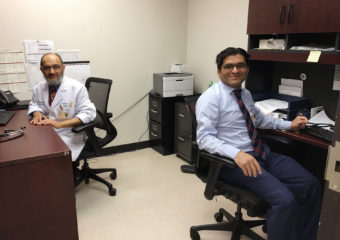
Dr. Farooq Habib (left) and Dr. Muhammad Tauseef share an office at Los Barrios Unidos Community Clinic in Dallas. They're both from Pakistan and have both worked as pediatricians in medically underserved areas in the U.S. Lauren Silverman/KERA
Dr. Farooq Habib (left) and Dr. Muhammad Tauseef share an office at Los Barrios Unidos Community Clinic in Dallas. They’re both from Pakistan and have both worked as pediatricians in medically underserved areas in the U.S.
Lauren Silverman/KERA

Patients in Alexandria, La., were the friendliest people Dr. Muhammad Tauseef ever worked with. They’d drive long distances to see him, and often bring gifts.

“It’s a small town, so they will sometimes bring you chickens, bring you eggs, bring you homemade cakes,” he says.

One woman even brought him a puppy.

“That was really nice,” he says.

Tauseef was born and raised in Pakistan. After going to medical school there, he applied to come to the U.S. to train as a pediatrician.

It’s a path thousands of foreign-born medical students follow every year — a path that’s been around for more than half a century. And, like most foreign-born physicians, Tauseef came on a J1 visa. That meant after training he had two options: return to Pakistan or work for three years in an area the U.S. government has identified as having a provider shortage.

He chose to work with mostly uninsured kids at a pediatric practice in Alexandria. “That was a challenge,” he says. “But it was rewarding as well because you are taking care of people who there aren’t many to take care for.”

And the U.S. medical system depends on doctors like Tauseef, says Dr. Andrew Gurman, president of the American Medical Association. He worries that if President Trump’s executive order on immigration takes effect, it will mean parts of the country that desperately need medical care may not have a doctor.

“International medical graduates have been a resource to provide medical care to areas that don’t otherwise have access to physicians,” he says. “With the current uncertainty about those physicians’ immigration status, we don’t know whether or not these areas are going to receive care.”

According to the AMA, today there are about 280,000 international medical graduates in the U.S. That’s about 1 in 4 doctors practicing here. Some are U.S. citizens who’ve gone abroad for medical school, but most aren’t.

“They don’t all have permanent visas, and so a lot of them are concerned about what their status is going to be, whether they can stay, whether they can go home to visit family and still come back, and the communities they serve have similar questions,” he says.

And the care provided by the graduates of foreign medical schools is, by and large, top notch. A study published Feb. 3 in the journal The BMJ, formerly The British Medical Journal, shows Medicare patients treated by doctors with degrees from non-U.S. medical schools get just as good care — and sometimes better — than those treated by graduates of American medical schools.

The immigration uncertainty is hitting medical schools at a tough time. Dr. Salahuddin Kazi is in charge of recruiting top students from across the world for the University of Texas Southwestern residency program.

“Typically we have 3,000 people applying for our 61 positions — of those 3,000, at least half of them are international medical graduates,” he says.

Applicants find out their program match in March and usually start working in June. That gives them about 90 days to get a visa. Kazi worries this year that won’t be long enough and that students from countries included in the travel ban won’t be admitted.

“That would create hardship for the hospital, for us and for our remaining residents,” he says. “They’ll have to pick up more shifts or give up vacation.”

Pediatrician Tauseef left Louisiana two years ago but continues to care for low-income patients at Los Barrios Unidos Community Clinic in Dallas. Six of the 30 physicians who work at this clinic are from other countries.

Tauseef says they’re all educated to do the same thing. “As a physician, being a foreign medical graduate, U.S. medical graduate, a Muslim doctor, a non-Muslim, we are trained to look for signs and symptoms,” he says. “We do not look at anybody’s color; we are not trained to look at anybody’s religion or ethnicity.”

Tauseef, who has been in America for 13 years, says he will apply for U.S. citizenship in March.

This story is part of a reporting partnership with NPR, KERA and Kaiser Health News.

Copyright 2017 KERA. To see more, visit KERA.

Montana May Be Model For Future Medicaid Work Requirement

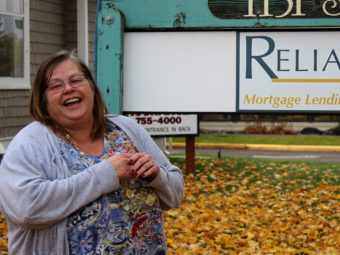
Ruth McCafferty, who works in Kalispell, Mont., credits the training she got through the state's Medicaid expansion with helping her get a good job. Eric Whitney / MTPR
Ruth McCafferty, who works in Kalispell, Mont., credits the training she got through the state’s Medicaid expansion with helping her get a good job. Eric Whitney / MTPR

Montana State Senator Ed Buttrey is a no-nonsense businessman from the central part of the state. Like a lot of Republicans, he’s not a fan of the Affordable Care Act and its expansion of Medicaid, health insurance for the poor and disabled.

“We didn’t want to implement a plan that was another entitlement that just had a bunch of people signing up to get free or cheap or subsidized health care,” says Buttrey, who represents Great Falls. “We wanted a plan that said, ‘We’re going to get you on. We’re going to get you healthy. We’re going to identify your barriers to employment or better employment, and then we’re going to move you off the plan.’ ”

So Buttrey wrote a Medicaid expansion bill for Montana that linked health coverage to job training. He wanted everyone getting benefits to have to meet with a labor specialist who would help them figure out how to get a job or to get a job that paid better.

The goal is to “make them healthier, get them off social programs, get them off dependence on government, get them into higher wage jobs that have a future that possibly pay benefits, that’s a great benefit for the state,” he says.

But so far, federal officials said states can’t make participation in a work program mandatory for Medicaid recipients. Montana, instead, had to make its job training component voluntary.

Republican leaders across the country have long angled for more state control over Medicaid. The funding comes from both states and the federal government, with the Department of Health and Human Services scrutinizing states’ use of the money.

In Montana and many other states, most Medicaid funding comes from the federal government. President-elect Trump’s administration may let states have more leeway – in fact, Seema Verma, Trump’s pick to run the part of HHS that oversees Medicaid, advocated for more state control when she helped expand Medicaid in Indiana.

A new administration could open the door for more Medicaid experiments, like the one Buttrey has been pushing for.

The feds’ rejection of mandatory job training meant Buttrey was barely able to win enough votes in Montana’s Republican majority legislature to pass Medicaid expansion last April.

How is the Medicaid expansion working in Montana?

“I think it’s a success story. I love this.” says Ruth McCafferty. “I’m the poster child.” She is a 53-year-old single mom from Kalispell, with three kids at home. She lost her job with a lending company last spring, and she had no idea there was job training available when she signed up for Medicaid.

She was just focused on finding a way to afford the drugs she needs to control her diabetes and asthma. “One inhaler that I do is $647,” she says, bringing her medication costs to about $1,000 a month.

After McCafferty got Medicaid, she filled her prescriptions and got free online training to become a mortgage broker. The state even paid for her 400-mile round-trip to Helena to take the broker certification exam. Now the state is paying part of her salary as an apprentice at a local business to make it easier to hire her.

“It’s awesome!” she says.

Of the 53,000 Montanans who’ve signed up for expanded Medicaid, only about 3,000 have signed up for help getting a job. That’s in part because the federal government won’t allow states to use Medicaid money for it. To set it up here, Buttrey had to cobble together funding from other jobs programs and squeeze $1 million out of a reluctant state legislature.

Giving states the flexibility to tie their Medicaid programs to work requirements is an idea that’s likely to be popular with the new Congress and Trump administration.

But health policy researcher Joan Alker, who runs the Center for Children and Families at Georgetown University, warns that it could backfire. “I think it’s great and well worth doing — to link people who might not be aware of existing job training programs or other kinds of work supports that can help them work. What I think is problematic is when this becomes a stick and not a support,” she says.

Alker says many people on Medicaid already have jobs, often low-paying ones that don’t offer health insurance. These people often have little time for new training. In Montana, about two-thirds of people on Medicaid are employed. Alker says if people fail to meet a work requirement and then lose health benefits as a result, they’ll likely just get sicker and become less able to work.

This story is part of a reporting partnership with NPR, Montana Public Radio and Kaiser Health News. You can follow Eric Whitney on Twitter: @EricReporter.

Copyright 2016 Montana Public Radio. To see more, visit Montana Public Radio.

Will Legal Marijuana Lead To More People Smoking Tobacco?


Is marijuana a gateway drug to smoking cigarettes? PhotoAlto/Katarina Sundelin/Getty Images
Is marijuana a gateway drug to smoking cigarettes?
PhotoAlto/Katarina Sundelin/Getty Images

California’s decision to legalize marijuana was touted as a victory for those who had argued that the state needed a system to decriminalize, regulate and tax it.

But the new law, approved by voters on Nov. 8, also could be a boon to the tobacco industry at a time when cigarette smoking is down and cigarette companies are looking for ways to expand their market, according to researchers in Los Angeles County and around the state.

They warn that unless the state proceeds carefully, the legalization of marijuana for recreational use could roll back some of the gains California has made in reducing the use of tobacco.

“There is a concern that there could be a potential renormalization of smoking,” says Michael Ong, an associate professor at UCLA’s David Geffen School of Medicine.

Ong says it will depend on how the initiative is implemented, whether officials follow through on the regulation, and how involved public health officials are with it. “It will be important to make sure that we don’t have a setback in terms of what we have done for clean air in California … and what we have done to reduce tobacco’s harms,” he says.

Ethan Nadelmann, executive director of the Drug Policy Alliance, which supports marijuana legalization, defended the measure, saying there is no evidence that legalization leads to increased cannabis consumption — or tobacco smoking.

California’s adult smoking rate is the second-lowest in the country, at 11.6 percent, according to the California Department of Public Health. The smoking rate dropped by more than 50 percent between 1988 and 2014, cutting health care costs and reducing tobacco-related diseases, according to the department.

The headway against smoking over the past few decades is due to a combination of factors, including tobacco taxes, laws restricting where people can smoke, and broad-based media campaigns and programs to help people quit. Despite the decline in smoking, the use of e-cigarettes has increased dramatically over the past few years, with nearly 10 percent of adults ages 18 through 24 now using them, according to the department.

Another ballot initiative passed by voters last week could push the smoking rate even lower. Prop. 56 will add $2 per pack to the tax on cigarettes and increases taxes on electronic cigarettes that contain nicotine and other tobacco products. The money will help pay for health care and increase funding for tobacco control and prevention.

The marijuana initiative, Prop. 64, allows adults ages 21 and over to grow, buy and possess small amounts of marijuana for personal use. It also regulates recreational marijuana businesses and imposes taxes that will help pay for drug education and prevention programs.

Bonnie Halpern-Felsher, a pediatrics professor at the Stanford University School of Medicine, says she is concerned that there may not be enough education and prevention written into the proposition, especially targeted at youth.

Marijuana is already the most widely used illegal drug among adolescents. Many young people consider marijuana and blunts, which are marijuana rolled with a tobacco leaf wrapper, to be more socially acceptable and less risky than cigarettes, according to a recent study co-authored by Halpern-Felsher. The study also found that youths who saw messages about the benefits of marijuana were more likely to use it.

Blunts are particularly worrisome because they contain nicotine as well as marijuana, Halpern-Felsher says. Many young people may not understand the risk of blunts or marijuana, she notes, and once they start thinking that smoking one product is acceptable, they may believe it’s OK to smoke other things as well. “That’s my concern,” she says. “I do think people are going to generalize.”

From the tobacco industry’s point of view, marijuana could serve as a “smoke inhalation trainer,” and thus become a gateway to tobacco use, says Robert K. Jackler, a professor at the Stanford School of Medicine who researches tobacco advertising. He says tobacco and marijuana are marketed in similar ways — as products to help people relax and ease their stress. “There is tremendous overlap potential,” he says.

Tobacco companies could easily try to exploit that similarity to enter the marijuana market, Jackler says. They already have enormous influence on state laws and regulations, and could try to set up small dispensaries and make marijuana another one of their products.

“The tobacco industry is always looking for replacement products because, at least in America, smoking is down,” he says. “This will give them a new entry into the market. They are best equipped to exploit this market opportunity.”

In fact, the tobacco industry considered getting into the marijuana market in the 1960s and 70s and could easily do so, says Stanton Glantz, a professor at University of California, San Francisco School of Medicine. Glantz believes that even as the newly approved tobacco tax reduces California’s smoking rate further, legalized marijuana will help sustain the tobacco market. He says he expected to see mass marketing and branding of marijuana over time.

Along with some therapeutic benefits of marijuana, there are also health risks, Glantz says. “The likely costs that are going to be incurred by all the marijuana-induced diseases don’t come close to being covered by the taxes that are written into Prop. 64,” he warns.

The initiative should have included higher taxes, graphic warning labels, provisions to keep demand low and a broad-based education campaign like there is on tobacco, Glantz argues. “The ideal situation is where it’s legal so nobody is thrown in jail, but nobody wants to buy it.”

Legalization supporters said they don’t believe the tobacco industry will get involved in the marijuana market until and unless federal prohibition ends. Marijuana is still illegal under federal law.

Nadelmann, of the pro-marijuana Drug Policy Alliance, says it is misguided to conflate the two products. Young people can distinguish between the effects of cigarettes and marijuana, he says.

“Teenagers are actually smarter than most of the adult propaganda,” Nadelmann says. “They know smoking cigarettes is really stupid and that smoking marijuana is not such a major issue.”

This story was produced by Kaiser Health News, which publishes California Healthline, an editorially independent service of the California Health Care Foundation.

Copyright 2016 Kaiser Health News. To see more, visit Kaiser Health News.
Site notifications
Update notification options
Subscribe to notifications