ProPublica

How Do Congressional Representatives Vote, Anyway?

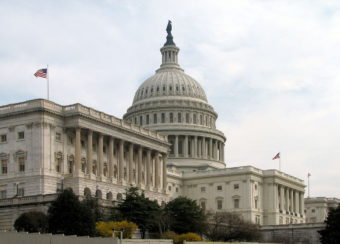
Voting in the House has not changed much since an electronic voting system was first used on Jan. 23, 1973, with the goal of making voting periods shorter. The latest version of the EVS system was installed in 2004. There are 47 voting stations around the House chamber, according to a 2012 document on House practices, and members can use any of them to vote using a card they carry. The member inserts the card into the machine and pushes the button with the voting position she wants to record: “Yea,” “Nay” or “Present.”

Few votes are held in the format that existed decades ago, when individual names were read aloud, but electronic voting isn’t mandatory. Lawmakers can come down to the well of the chamber, in front of the clerks, and use a system of color-coded cards to write their votes and hand them to a tally clerk. In the final minutes of a vote, lawmakers have the opportunity to change their votes if necessary, though to do this they’re sometimes required to vote using the well-card system instead of the EVS machines.

Once the time period allotted to a vote has expired and the voting is closed, the results and individual positions cannot be changed. In the House, it’s customary for Representatives to file “Personal Explanations” explaining missed votes, or votes they entered incorrectly. These don’t permit lawmakers to actually change a vote or record one after the fact. They are statements of intent that lawmakers can point to and say, “Here’s how I would have voted.”

Voting attendance has improved over the years: a 1991 Los Angeles Times story reported that 33 representatives had missed more than 10 percent of votes that year. The number of current lawmakers meeting that threshold is down to 21 this year (the House has 435 members, but by tradition the Speaker of the House rarely votes). At the same time, the number of explanations inserted into the Congressional Record also has gone up, from 441 during 1991–1992 to 1,353 in 2009–2010. It has since dropped off: the number of explanations filed in the last congress (2013–2014) was 740, the lowest in 20 years.

ProPublica is a Pulitzer Prize-winning investigative newsroom. Sign up for their newsletter.

Read Original Article – Published Nov. 10, 2015, 11 a.m.
How Do Congressional Representatives Vote, Anyway?

What’s the Evidence Mass Surveillance Works? Not Much

Current and former government officials have been pointing to the terror attacks in Paris as justification for mass surveillance programs. CIA Director John Brennan accused privacy advocates of “hand-wringing” that has made “our ability collectively internationally to find these terrorists much more challenging.” Former National Security Agency and CIA director Michael Hayden said, “In the wake of Paris, a big stack of metadata doesn’t seem to be the scariest thing in the room.”

Ultimately, it’s impossible to know just how successful sweeping surveillance has been, since much of the work is secret. But what has been disclosed so far suggests the programs have been of limited value. Here’s a roundup of what we know.
An internal review of the Bush administration’s warrantless program – called Stellarwind – found it resulted in few useful leads from 2001–2004, and none after that. New York Times reporter Charlie Savage obtained the findings through a Freedom of Information Act lawsuit and published them in his new book, Power Wars: Inside Obama’s Post–9/11 Presidency:

[The FBI general counsel] defined as useful those [leads] that made a substantive contribution to identifying a terrorist, or identifying a potential confidential informant. Just 1.2 percent of them fit that category. In 2006, she conducted a comprehensive study of all the leads generated from the content basket of Stellarwind between March 2004 and January 2006 and discovered that zero of those had been useful.

In an endnote, Savage then added:

The program was generating numerous tips to the FBI about suspicious phone numbers and e-mail addresses, and it was the job of the FBI field offices to pursue those leads and scrutinize the people behind them. (The tips were so frequent and such a waste of time that the field offices reported back, in frustration, “You’re sending us garbage.”)

In 2013, the President’s Review Group on Intelligence and Communications Technologies analyzed terrorism cases from 2001 on, and determined that the NSA’s bulk collection of phone records “was not essential to preventing attacks.” According to the group’s report,

In at least 48 instances, traditional surveillance warrants obtained from the Foreign Intelligence Surveillance Court were used to obtain evidence through intercepts of phone calls and e-mails, said the researchers, whose results are in an online database.

More than half of the cases were initiated as a result of traditional investigative tools. The most common was a community or family tip to the authorities. Other methods included the use of informants, a suspicious-activity report filed by a business or community member to the FBI, or information turned up in investigations of non-terrorism cases.

Another 2014 report by the nonprofit New America Foundation echoed those conclusions. It described the government claims about the success of surveillance programs in the wake of the 9/11 attacks as “overblown and even misleading.”

An in-depth analysis of 225 individuals recruited by al-Qaeda or a like-minded group or inspired by al-Qaeda’s ideology, and charged in the United States with an act of terrorism since 9/11, demonstrates that traditional investigative methods, such as the use of informants, tips from local communities, and targeted intelligence operations, provided the initial impetus for investigations in the majority of cases, while the contribution of NSA’s bulk surveillance programs to these cases was minimal.

Edward Snowden’s leaks about the scope of the NSA’s surveillance system in the summer of 2013 put government officials on the defensive. Many politicians and media outlets echoed the agency’s claim that it had successfully thwarted more than 50 terror attacks. ProPublica examined the claim and found “no evidence that the oft-cited figure is accurate.”

It’s impossible to assess the role NSA surveillance played in the 54 cases because, while the agency has provided a full list to Congress, it remains classified.

The NSA has publicly discussed four cases, and just one in which surveillance made a significant difference. That case involved a San Diego taxi driver named Basaaly Moalin, who sent $8,500 to the Somali terrorist group al-Shabab. But even the details of that case are murky. From the Washington Post:

In 2009, an FBI field intelligence group assessed that Moalin’s support for al-Shabab was not ideological. Rather, according to an FBI document provided to his defense team, Moalin probably sent money to an al-Shabab leader out of “tribal affiliation” and to “promote his own status” with tribal elders.

Also in the months after the Snowden revelations, the Justice Department said publicly that it had used warrantless wiretapping to gather evidence in a criminal case against another terrorist sympathizer, which fueled ongoing debates over the constitutionality of those methods. From the New York Times:

Prosecutors filed such a notice late Friday in the case of Jamshid Muhtorov, who was charged in Colorado in January 2012 with providing material support to the Islamic Jihad Union, a designated terrorist organization based in Uzbekistan.

Mr. Muhtorov is accused of planning to travel abroad to join the militants and has pleaded not guilty. A criminal complaint against him showed that much of the government’s case was based on intercepted e-mails and phone calls.

Local police departments have also acknowledged the limitations of mass surveillance, as Boston Police Commissioner Ed Davis did after the Boston Marathon bombings in 2013. Federal authorities had received Russian intelligence reports about bomber Tamerlan Tsarnaev, but had not shared this information with authorities in Massachusetts or Boston. During a House Homeland Security Committee hearing, Davis said,

“There’s no computer that’s going to spit out a terrorist’s name. It’s the community being involved in the conversation and being appropriately open to communicating with law enforcement when something awry is identified. That really needs to happen and should be our first step.”

Correction, Nov. 18, 2015: An earlier version of this story incorrectly stated that the President’s Review Group on Intelligence and Communications Technology’s report about the effectiveness of the NSA’s bulk collection of phone records was issued in 2014. The report came out at the end of 2013.

ProPublica is a Pulitzer Prize-winning investigative newsroom. Sign up for their newsletter.

Read original article – Published Nov. 18, 2015, 1:21 p.m.
What’s the Evidence Mass Surveillance Works? Not Much


The Dog Ate My Vote: How Congress Explains Its Absences

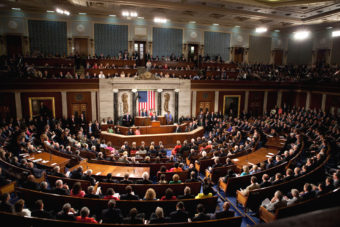
President Barack Obama delivers a health care address to a joint session of Congress at the United States Capitol in Washington, D.C., Sept. 9, 2009. (Photo by Lawrence Jackson/White House)

On a Monday afternoon in October 2011, West Virginia Democrat Nick J. Rahall II waited at the Charleston airport for a 4:50 p.m. U.S. Airways Express flight to Washington. If the plane left on schedule, the roughly 80-minute flight would allow him to get to the Capitol in time for votes in the House of Representatives that evening.

Things did not go according to plan. The flight didn’t leave Charleston for another four hours, giving Rahall, then the top Democrat on the House Transportation & Infrastructure Committee, plenty of time to “boil over,” as he later wrote. When he finally arrived in Washington, having missed three votes, he lambasted the airline’s handling of the delay in a statement in the Congressional Record:

“At moments, the arrival/departure information was so confused that the airplane would have had to violate the laws of physics in order to abide by the airline schedule,” Rahall’s statement read. “Needless to say, all passengers were inconvenienced and the airline’s explanations were wholly unsatisfactory. This flight delay prevented me from carrying out my Constitutional duty to represent the people of southern West Virginia: I feel I owe them and this body an explanation about why that was not possible last night.”

Voting is one of the most important duties of a lawmaker, and most miss very few votes. Yet voting attendance has become a topic of discussion in the Republican presidential primary, as Florida Sen. Marco Rubio has missed about a third of all votes this year, by far the most in that chamber.

In the House, unlike the Senate, lawmakers are given a chance to provide “Personal Explanations” to explain missed votes. These entries filed in the Congressional Record say not only how a Representative came to be absent, but also how they would have voted though they don’t have the effect of adding or changing a vote.

The custom has been in place since at least 1845, according to a 2008 Congressional Research Service report.

In a telephone interview, Rahall said he wanted it on the record that he would have voted in support of the three bills the House considered that day — a measure to convey federal land in Utah to the state, another changing the rules for granting ski area permits on national forest land and a third granting submerged land surrounding the Northern Mariana Islands to the American territory — if only to prevent political opponents from using the missed votes against him.

“They could end up as a 30-second sound bite in a campaign,” he said. (Rahall was defeated in 2014 by Evan Jenkins, a Republican).

ProPublica has collected all of the Personal Explanations filed since 2007 — some 5,058 in all, covering 21,176 votes — and created a database that lets readers look up their representatives’ missed votes, as well as their explanations. These statements are by no means required — only one in six absences are explained — but they document a little-discussed aspect of the lives and work of lawmakers, and provide hints at the competing priorities and difficulties of a system that, to many, seems chronically dysfunctional.

The reasons lawmakers cite most for missing votes range from the mundane (travel delays, often due to weather, or remaining in their districts for job fairs) to more personal (the birth of a child or a graduation ceremony or illness). Lawmakers have missed more than 2,000 votes for medical reasons, and thousands more for personal and family reasons.

The record is full of stories documenting the working lives of Representatives: Marcy Kaptur, a Democratic congresswoman from Ohio, missed a 2008 House vote because she was searching the Capitol for high school students visiting from her district. Jeff Landry, a Louisiana Republican, “completely lost track of time” and missed two votes in 2011. For Ben Ray Lujan, Democrat of New Mexico, an “operational issue” with a House voting machine meant that a 2012 vote wasn’t recorded.

For some, avoiding a vote is a sign of defiance. In 2012, Jan Schakowsky of Illinois was one of 108 Democrats who declined even to vote on a resolution holding then-Attorney General Eric Holder in contempt of Congress. She was the only one, though, to insert a statement in the Record saying she would have voted no: “I would not participate in what I strongly believe was an abuse of power by the majority.”

Although many explanations are short, lawmakers can be more expansive when a key issue is at stake. When J. Randy Forbes, a Virginia Republican who has missed less than 3 percent of votes since 2007, was absent for a January 2015 vote on a bill to ban federal funding for abortion, his explanation provided no reason, but emphasized his stance on the issue: “I am and always have been pro-life, and throughout my tenure in Congress will continue to be a strong advocate for the unborn.”

The Rules of the House say that “Every Member shall be present within the Hall of the House during its sittings, unless excused or necessarily prevented, and shall vote on each question put, unless having a direct personal or pecuniary interest in the event of such question.” Lawmakers routinely say that they take their voting responsibilities seriously, and in general attendance records bear that out: most lawmakers participate in the overwhelming majority of votes held.

Democrats have missed more votes than Republicans since the beginning of 2007, but they account for an even greater share of the explained missed votes: two of every three since the beginning of 2013.

Luis Gutierrez, an Illinois Democrat, has missed nearly one in six votes this year, according to voting records, one of the highest rates among current members of the House. He has been absent for 15 percent of all votes since the beginning of 2007, often due to his work on immigration policy, which frequently has him on the road.

“Congressman Gutierrez prioritizes constituent case work and spending time in the District in Chicago,” said Douglas G. Rivlin, a spokesman for Gutierrez, in a statement emailed to ProPublica. “He also devotes a great deal of time to traveling all over the country to build support for immigration reform. As a national figure, his time is in great demand. He rarely misses substantive votes and when he does, it is because he cannot be in two places at once.”

Gutierrez sporadically explains his absences — a statement for the Record in July gave a clear reason for one: He was attending oral arguments in a federal court case over immigration policy. He also missed votes due to a family medical issue, meetings at the White House and, in 2011, “my participation in a peaceful rally and protest against the current Administration’s enforcement policies against immigrant students and the families of U.S. citizens.”

Representatives’ schedules are hardly overstuffed with days spent in the House chamber. In 2014, the members of the House spent only 29 weeks in session, each of which was bookended by long weekends spent doing district work, fundraising or running for re-election. The House is not scheduled to be in session for a five-day week this year.

As lawmakers balance their duties, not every vote is created equal. Both ProPublica’s analysis and research by Eleanor Neff Powell, a political scientist at the University of Wisconsin, found that lawmakers miss more lopsided votes than ones that are important to either political party.

There have been 20 times when the number of explained missed votes exceeded the final margin of approval or defeat. Half were on amendments. One, a 2011 amendment to a spending bill about labor agreements on federal construction projects was approved by a single vote and had eight explanations from the 25 House members who did not vote, including three Republicans opposed to the amendment.

Bills that have widespread bipartisan support often are considered “under suspension of the rules,” which means they are debated fairly quickly, sometimes in a few minutes, and must have the support of two-thirds of those voting. About four in 10 personal explanations occur on these so-called suspension votes, which often are scheduled on the first day of the week that the House is in session, when travel delays could make it more likely for a member to miss votes. Absences (explained or not) on suspension votes account for 36 percent of all House votes missed between 2007 and October 2015.

If personal explanations are optional, why do representatives use them at all? Often, to indicate to constituents that just because they didn’t vote doesn’t mean they don’t have an opinion.

“It shows that you care about what they’re asking about,” said Powell.

For lawmakers facing tight re-election contests, missed votes can be part of a political balancing act. Opponents are quick to make use of a poor voting record. Missing a vote can be a graceful way to dodge votes designed to put lawmakers on the spot. Explanations, in turn, can provide a way to miss the actual vote and still claim that they would have voted the way constituents might have preferred.

In 2013, Brad Schneider, an Illinois Democrat, voted against a Republican spending bill that also delayed the individual health insurance mandate created by the Affordable Care Act. The next year, he missed a vote on a bill to delay the individual mandate but explained that, had he been there, he would have voted in favor of delaying the mandate, as he did on a similar bill in July 2013. Schneider lost his seat in 2014 to Bob Dold, a Republican former congressman who voted against the health care law while in the House, in a race where the health insurance law figured prominently. He is running against Dold again in 2016; Schneider’s campaign did not respond to a request for comment.

Missing potentially controversial votes, then submitting explanations is an example of what researcher Powell calls “strategic abstention”: when a member skips a vote on which her party’s position is incompatible with her constituents’ views. Rather than disappoint either, the Representative can simply miss the vote, later explaining that she would have voted the way her constituents would have wanted, without actually doing so and creating a rift with her party.

The ProPublica analysis, which covers a different time period than Powell’s, found some evidence of this: there were 128 votes on bill passage in which a member who missed the vote later registered opposition to his or her party’s majority position. Fifty-six of those contained no clear reason for the absence.

Lawmakers’ explanations cover not only missed votes, but mistaken ones as well. It’s not common — explanations attempting to correct a wrong vote or saying that a member tried to vote but could not — number about 320 during the past eight years. But more than one in five current lawmakers has done it at least once since the beginning of 2007, with John Conyers, a Michigan Democrat and the chamber’s longest-serving member, claiming 12 incorrect votes. The official record of a 2011 vote on an bill to expand offshore oil and gas leases shows Conyers voting in favor, when he meant to vote against the bill. Conyers, who at 86 is also the House’s oldest member, did not respond to several requests for comment made through his office.

A handful of other lawmakers have reported voting incorrectly at least four times, including Adam Smith, a Washington Democrat who is the ranking member on the House Armed Services Committee. On at least one of those occasions, on a vote that occurred at 1:53 a.m. on Feb. 18, 2011, Smith voted for an amendment and later explained that he should have voted no. Rebecca Bryant, a spokeswoman for Smith, said that in that case the congressman “had some misinformation” on the nature of the amendment that was only clarified the next morning.

“The key thing is transparency,” said Bryant of the vote explanations. “We wanted to articulate how the congressman felt.”

Occasionally, lawmakers change their minds after a vote and submit a personal explanation about it. In 2008, the House voted to censure Charlie Rangel, a New York Democrat, over ethics violations, and Texas Republican Lamar Smith voted in favor of doing so. Later, in a statement in the Record, Smith reconsidered his vote: “Members had no advance notice of the vote, and I did not familiarize myself with the substance of the motion as much as I would have liked. If the vote were taken again, I would vote present rather than ‘aye’.”

ProPublica is a Pulitzer Prize-winning investigative newsroom. Sign up for their newsletter.

Read Original Article – Published Nov. 10, 2015, 11 a.m
The Dog Ate My Vote: How Congress Explains Its Absences

Hillary Clinton’s Mixed Record on Wall Street Belies Her Tough ‘Cut it Out’ Talk

Hillary Clinton in Coralville, Iowa
Hillary Clinton in Coralville, Iowa, Nov. 3, 2015. (Creative Commons photo by Barbara Kinney/Hillary for America)

This story was co-published with The Daily Beast.

During the Democratic debate last month, Hillary Clinton assured viewers she would be a president at least as tough on Wall Street as her main opponent for the nomination, Sen. Bernie Sanders. She cited her history as “a progressive who likes to gets things done.” Sanders and others, she added, might be “missing the forest for the trees” by aiming at big banks alone and not the more risky shadow banking system.

Clinton also proudly recalled that while serving as U.S. senator from New York she warned bankers early in the financial crisis about their dangerous practices.

“I went to Wall Street in December of 2007 — before the big crash that we had,” Clinton said. “I basically said, ‘Cut it out! Quit foreclosing on homes! Quit engaging in these kinds of speculative behaviors.’ ”

An examination of her remarks to Wall Street in December 2007 and Clinton’s actions as a senator — a period when she had the best opportunity to translate her words into deeds — presents a more mixed picture of her record on the banking industry.

Clinton steered a middle ground in a 28-minute address to business executives gathered at an office of the Nasdaq stock exchange in New York’s Times Square on Dec. 5, 2007. In the event, she presented a detailed analysis of the burgeoning dangers in the housing market and its threat to the economy. (ProPublica obtained a video of the speech, which hasn’t previously been posted.)

Clinton gave a shout-out to her “wonderful donors” in the audience, and asked the bankers to voluntarily suspend foreclosures and freeze interest rates on adjustable subprime mortgages. She praised Wall Street for its role in creating the nation’s wealth, then added that “too many American families are not sharing” in that prosperity.

She said the brewing economic troubles weren’t mainly the fault of banks, “not by a long shot,” but added they needed to shoulder responsibility for their role. While there was plenty of blame to go around for the spate of reckless lending, and while Wall Street may not have created the foreclosure crisis, it “certainly had a hand in making it worse” and “needs to help us solve it.”

Finally, Clinton said, if the banks didn’t take the voluntary steps she proposed, “I will consider legislation to address the problem.”

The lenders did not adopt Clinton’s proposals. During 2007 and 2008, when the housing market collapsed and while she was also running for president, the Democrats controlled the Senate. Of the 140 bills Clinton introduced during that period, five were related to housing finance or foreclosures, according to congressional records. Only one of those five secured any co-sponsors. No Senate committee took action on any of them and they died without any further discussion.When a broad housing bill finally became law in 2008, Clinton was not among the more than dozen senators credited by party leaders as playing a key role.Clinton also introduced a bill in 2008 to curb compensation of corporate executives. It too died without any co-sponsors.

In dealing with Wall Street, Clinton faced the same challenge as any lawmaker representing New York, where the financial industry includes not only constituents but campaign donors. Wall Street executives were the largest donors to both her 2006 Senate re-election bid and her 2008 presidential race; employees of just eight banking firms gave $2.67 million to those campaigns, according to data compiled by the Center for Responsive Politics, a non-profit research group.Clinton in 2007 publicly decried a tax break for hedge-fund and private-equity executives — and continues to do so in her current campaign. But she didn’t sign on as a supporter of a Senate bill that would have curbed the break.

As a senator, Clinton also had a brush with the shadow-banking world that she now describes as a continuing threat to the financial system. When AIG, the giant insurance company and poster child for lightly regulated finance, began to implode in September 2008, Clinton reached out to Treasury Secretary Henry Paulson, who was involved in talks to rescue the firm with government funds. Her little-noticed overture came on behalf of some wealthy investors who stood to lose millions and had hired two longtime associates of the Clintons to represent them.

Brian Fallon, a spokesman for the Clinton campaign, declined to comment for this story. The Clinton campaign has issued a fact sheet detailing her record with Wall Street as a senator.

‘Doesn’t Run Amok’

In Iowa last month, Clinton underscored the difference between fiery speeches and results when she told Democrats, “It’s not enough to just rail against Republicans or the billionaires.”

During the debate she had called for stronger regulatory oversight of the financial system and addressed the theme of income inequality that has powered the campaign of Sanders, who identifies himself a democratic socialist. “It’s our job to rein in the excesses of capitalism so it doesn’t run amok and doesn’t cause the kind of inequities that we’re seeing in our economic system,” she said.

Clinton’s campaign referenced her Senate record in the fact sheet issued a few days before the debate titled, “Wall Street Should Work for Main Street.” It cited one bill — the executive compensation legislation that died. It also mentioned four press releases or speeches from 2007 and 2008 — including a March 15, 2007, talk in which she proposed a series of housing initiatives and her call later that year for higher taxes on hedge fund executives.

Clinton had already hit the tax break in her new campaign. In April, during her first official appearance as a presidential candidate, she told students in a classroom for auto technology at an Iowa community college: “There’s something wrong when hedge fund managers pay lower taxes than the nurses or the truckers that I saw on I-80 as I was driving here.”

Her aides then told reporters she was referring to the so-called carried-interest loophole, which taxes compensation earned by private equity partners and hedge fund managers at a lower rate than ordinary earned income.

What they didn’t say was that Clinton never signed onto the bipartisan June 2007 bill that would have curbed the break. Her rival for the nomination, then-Sen. Barack Obama, became a co-sponsor on July 12. The next day Clinton gave a campaign speech criticizing the tax provision. Yet she still didn’t put her name to the legislation, according to records.

During Clinton’s first presidential campaign, her official campaign website gave short shrift to financial or housing matters. In April 2008, the section of the website called “Hillary on the Issues” listed 14 topics; none involved housing, mortgages or Wall Street.

The bills she introduced dealt with some of the issues she raised in her speeches — including one aimed at making it easier for homeowners facing foreclosure to get their loans modified — but none of them advanced, records show. The only co-sponsor who joined any of them was fellow New York Sen. Charles Schumer, who signed onto a bill that would have helped veterans refinance their mortgages. That bill also died in committee without any action taken.

Meanwhile the Senate moved forward on other bills with wider support. They eventually led to a sweeping housing and mortgage law signed by President Bush in July 2008. That legislation was voted on three times in the Senate in 2008, in addition to a few procedural votes related to the bill. Clinton missed votes in February and April, when she was running for president, but also missed votes in late June, after she had dropped out of the contest. On July 26, when the bill passed, Clinton was there to vote in support.

The bill’s main sponsor, Sen. Christopher Dodd, a Connecticut Democrat, summarized the bill’s journey and, in a floor speech, praised 13 other Senators for their help. Clinton’s name wasn’t among them.

‘Closed Door Meetings’

At the debate last month, Clinton said her campaign plan for Wall Street oversight was tougher than the one proposed by Sanders, in part because it would go beyond making sure banks aren’t too big to fail. “We also have to worry about some of the other players — AIG, a big insurance company; Lehman Brothers, an investment bank. There’s this whole area called shadow banking. That’s where the experts tell me the next potential problem could come from,” she said.

Clinton didn’t need an expert to tell her about AIG.

On Sept. 18, 2008, as the government grappled with collapsing markets, Clinton took to the Senate floor. “After years of laissez-faire policies for the middle class, the Bush administration has acted on behalf of Wall Street, with the largest and most significant Federal interventions in the history of our modern financial system,” she said. “The largest banks in the world could have closed-door meetings with the White House and the Federal Reserve and Treasury Department to discuss their bailout options, but millions of homeowners with mortgages worth more than their homes, or who are facing default and foreclosure, don’t have the same opportunity.”

A day before that speech, Clinton had quietly reached out to Paulson, Bush’s Treasury secretary, on behalf of some wealthy investors in AIG. The giant insurer had made bad bets on the mortgage market, couldn’t pay its debts and faced imminent collapse. Shareholders were poised to lose billions if the company went bankrupt or was taken over by the government.

A review of Paulson’s calendars shows that he and Clinton talked on Sept. 17 and 20. In his book about the financial crisis, Paulson mentions just the first conversation, saying that Clinton called on behalf of Mickey Kantor, a lawyer, who represented a group interested in staving off AIG’s imminent collapse. The group’s investment banker, according to news accounts at the time, was Roger Altman. Kantor and Altman are long-time friends of Hillary Clinton and served as senior officials in her husband’s administration. Altman headed a secret energy task force for Clinton when she was in the Senate.

In Paulson’s account of his conversation with Clinton, Kantor represented a group of Middle East investors who were considering a bid for the insurer.

Paulson quoted Clinton as saying the investors hoped to save the government from having to “do anything,” but Paulson said he told her any private solution would have to guarantee AIG’s billions of dollars in liabilities, a huge, if not impossible, hurdle.

But in an interview with ProPublica, Kantor said Paulson didn’t have it quite right in the book. Kantor said he was working on behalf of “major shareholders” in AIG, not Middle East investors. The shareholders he represented owned about 30 percent of AIG’s shares — one of them was Eli Broad, a Los Angeles billionaire, philanthropist and friend of the Clintons. Kantor said he couldn’t remember whether he had sought Clinton’s help but said it was possible given their 40-year friendship. Kantor said he hoped to persuade Treasury his clients could raise enough money to “put the ship in order” but by the time Paulson and Clinton talked the Federal Reserve had concluded a private rescue, at a cost of at least $75 billion, was not feasible.

With its stock in free fall, there was no private solution to AIG. The Treasury and the Fed feared that if AIG defaulted, the ripples might bring down the international banking system.

By Sept. 22, the Federal Reserve Bank of New York was completing a rescue package that gave the government almost 80 percent of the company in return for a loan of $85 billion. As a result, private shareholders, including Kantor’s clients, lost most of the value of their stock holdings. The U.S. eventually earned a profit of almost $23 billion on its investment.

Paulson declined to comment, Altman did not return a phone call and a spokesperson for Broad and his foundation didn’t respond to emails or phone calls.

More Bailouts

The most important action Clinton took related to the financial crisis may have been her vote in favor of the $700 billion bank stabilization plan, essentially a bailout of Wall Street. After a short but tumultuous debate the Senate approved the Bush administration’s plan, known as TARP, on Oct. 1, 2008. Nine Democratic senators, 15 Republicans and one independent (Sanders) voted no.

Clinton told the Senate during the debate:

“For two years, I and others have called for action as wave after wave of defaults and foreclosures crashed against communities and the broader economy.” She called for an end to the “culture of recklessness in our financial markets endorsed by an ideology of indifference in Washington.”

The next day Clinton spoke to a New York City radio host and expanded on her support for TARP.

“I think that the banks of New York and our other financial institutions are probably the biggest winners in this,” she said, “which is one of the reasons why, at the end, despite my serious questions about it, I supported it.”

Related stories: For more coverage of politics and lobbying, read ProPublica’s previous reporting on how Congress explains its absences, the insurance lobby’s pivot to Democrats and an FDA fix that may cure the drug industry more than the patients.

Like this story? Sign up for our daily newsletter to get more of our best work.

Read Original Article – Published Nov. 13, 2015, 5 a.m.
Hillary Clinton’s Mixed Record on Wall Street Belies Her Tough ‘Cut it Out’ Talk

After Sexual Assault, Woman Says University Lawyers Accessed Her Counseling Records

"I don't blame the University of Oregon for a rape," Laura Hanson said. "It's not their fault. I blame them for how they responded to it." (Photo by Leah Nash/ProPublica)
“I don’t blame the University of Oregon for a rape,” Laura Hanson said. “It’s not their fault. I blame them for how they responded to it.” (Photo by Leah Nash/ProPublica)

When University of Oregon senior Laura Hanson was sexually assaulted by a fellow student a couple of days after New Year’s 2013, she said she felt violated and later shunned by her friends and sorority sisters.
The university’s drawn-out investigation of the incident—which substantiated her allegation — only added to her trauma.

University students have less privacy for their campus health records than they would have if they sought care off campus. Schools say they are trying to seek the right balance between privacy and safety.

Hanson’s ordeal wasn’t over. Last year, as she pressed forward with a claim against the university, Hanson learned that the school’s attorneys had obtained her confidential counseling records — her most intimate thoughts about what happened — without her permission.

“They were faster to mount their opposition to me than they were to support me,” she said in an interview. “That’s the part that I still can’t grasp.”

Hanson said she was nearing graduation from the Honors College of the University of Oregon when she was raped on the night of Jan. 3, 2013. At first, she said, she didn’t know what to do and didn’t report what happened. Within two weeks, she went to the University Health Center, where she was tested for sexually transmitted diseases and pregnancy, and a nurse discussed counseling with her.

Over the next four months, she told others, including professors and sorority sisters, about what happened. She officially reported the assault to the Office of the Dean of Students in May 2013, prompting the university to begin contacting other students to ask about the matter.

Months passed with no outcome — until the university informed her in January 2014 that it had concluded that the student who she accused of the assault was responsible for sexual misconduct. It placed him on probation, instructed him to have no contact with her, and required him to complete a “Sexual Misconduct Journal,” a five-part process that “encourages education and reflection.”

Hanson’s lawyer, Jennifer Middleton, requested her medical records in March 2014 and received what “we thought was everything.”

“Then we were talking more to the university lawyers and they said, ‘We have some information that you don’t have,'” she said, alluding to the counseling records.

The university settled Hanson’s claim for $30,000.

Doug Park, the university’s deputy general counsel, said that he could not discuss Hanson’s case. He said the university may review a student’s counseling records to defend itself against an allegation of wrongdoing or if a student alleges a violation of Title IX, the federal regulation that outlines how universities should respond to accusations of sexual assault.

“I am unaware of any records that were ever reviewed by any lawyer [for the University] prior to that record being sent to an outside lawyer,” Park said in an interview. “I’m unaware of that ever happening, not just in this case but in any case.”

The University of Oregon has since issued a new, interim policy that restricts its lawyers’ ability to review students’ counseling records. Specifically, the university said it will use a subpoena “whenever possible” to access records in the event of a legal action against it. Otherwise, the university said it will notify students of its intent to review the records and give them an opportunity to object.

Hanson said the experience left her feeling that “nothing I do is private anymore.”

“I don’t blame the University of Oregon for a rape,” she said. “It’s not their fault. I blame them for how they responded to it. I found out months later that every single meeting I had with a therapist, she took detailed notes on, and the University of Oregon had read these notes before I had even seen them.”

ProPublica is a Pulitzer Prize-winning investigative newsroom. Sign up for their newsletter.
Read original article – Published  Oct. 23, 2015, 5 a.m.
After Sexual Assault, Woman Says University Lawyers Accessed Her Counseling Records

The Prominence and Plight Of Girls in the Juvenile Justice System

The number of juveniles in the nation’s criminal justice system has been in decline for years. California and New York have closed some of their largest and most troubled juvenile detention facilities. Missouri has recently been credited with doing a better job of caring for its most troubled children, further limiting the state’s population of teens in punitive settings.

But a recent report by researchers has highlighted what they call a disturbing trend: the prominence and plight of girls in the juvenile justice system.

In 1992, according to the report, Gender Injustice, girls made up 20 percent of the children arrested in the U.S. In 2012, girls accounted for 29 percent of children arrested, a near 50 percent increase. The percentage of girls in the population of children sent to formal detention facilities grew similarly over those years.

The authors of the report, Francine Sherman, a professor at Boston College Law School, and Annie Balck, a lawyer formerly with the Children’s Law Center in Washington, D.C., explain the trend by citing the unintended consequences of a crackdown on domestic violence as well as the failures of reform efforts to address the specific needs of girls.

Girls in the juvenile justice system, they argue, are far more likely to have suffered a range of trauma at home before they wind up arrested. Indeed, girls are 4.4 times more likely than boys to have been sexually abused prior to their brushes with the law.

“In every category, girls in the juvenile justice system find themselves there having experienced more adversity than boys,” said Sherman, whose report was done in partnership with The National Crittenton Foundation. The foundation says that it is dedicated to the health and security of girls and young women across the country.

The authors found that girls are over-represented in certain categories of arrests — crimes they said could often be handled without the need for placement in detention. For instance, girls accounted for 76 percent of arrests for prostitution and 40 percent of arrests for liquor law violations.

ProPublica this year has reported on the history and variety of troubles in California’s group homes for troubled children. Many of the children who wind up in the homes arrive via the state’s juvenile justice system. The homes are typically not secure detention facilities, but have been beset by problems that long plagued the state’s locked facilities: physical and sexual abuse, mixed populations of children that make supervision more difficult, and inadequate or inconsistent medical care.

In New York City, ProPublica found that the latest wave of group homes created to better care for children convicted of minor crimes had also been hit by surges in the disappearances or re-arrests of children in their care.

The problems in California’s homes have been compounded by the shortage of facilities exclusively for girls. As a result, there have been instances where girls have been introduced to homes that had formerly housed only boys. At one of the state’s largest homes, in Davis, the introduction of girls overwhelmed inexperienced staff members and accelerated the eventual collapse and closing of the residence in 2013.

The Gender Injustice report issued last week sought to call attention to what it presented as something of a counter-intuitive finding: Efforts by local police departments to act aggressively and make arrests while responding to reported cases of domestic violence had led to a striking number of girls being sent to detention facilities.

Sherman said officers often believed “someone had to be arrested” in such cases, and that girls who might have been violent in defending themselves against assault had been swept up as a consequence. In 2013, girls accounted for 38 percent of the children arrested for “domestic battery.”

The authors offer an array of proposed reforms to better address girls in detention. They suggest ending the detention of girls for violations that pose no meaningful public threat and more effectively providing services to traumatized girls before they themselves wind up in the justice system.

ProPublica is a Pulitzer Prize-winning investigative newsroom. Sign up for their newsletter.

Read Original Article – Published Oct. 2, 2015, 12:57 p.m.
The Prominence and Plight Of Girls in the Juvenile Justice System

Site notifications
Update notification options
Subscribe to notifications