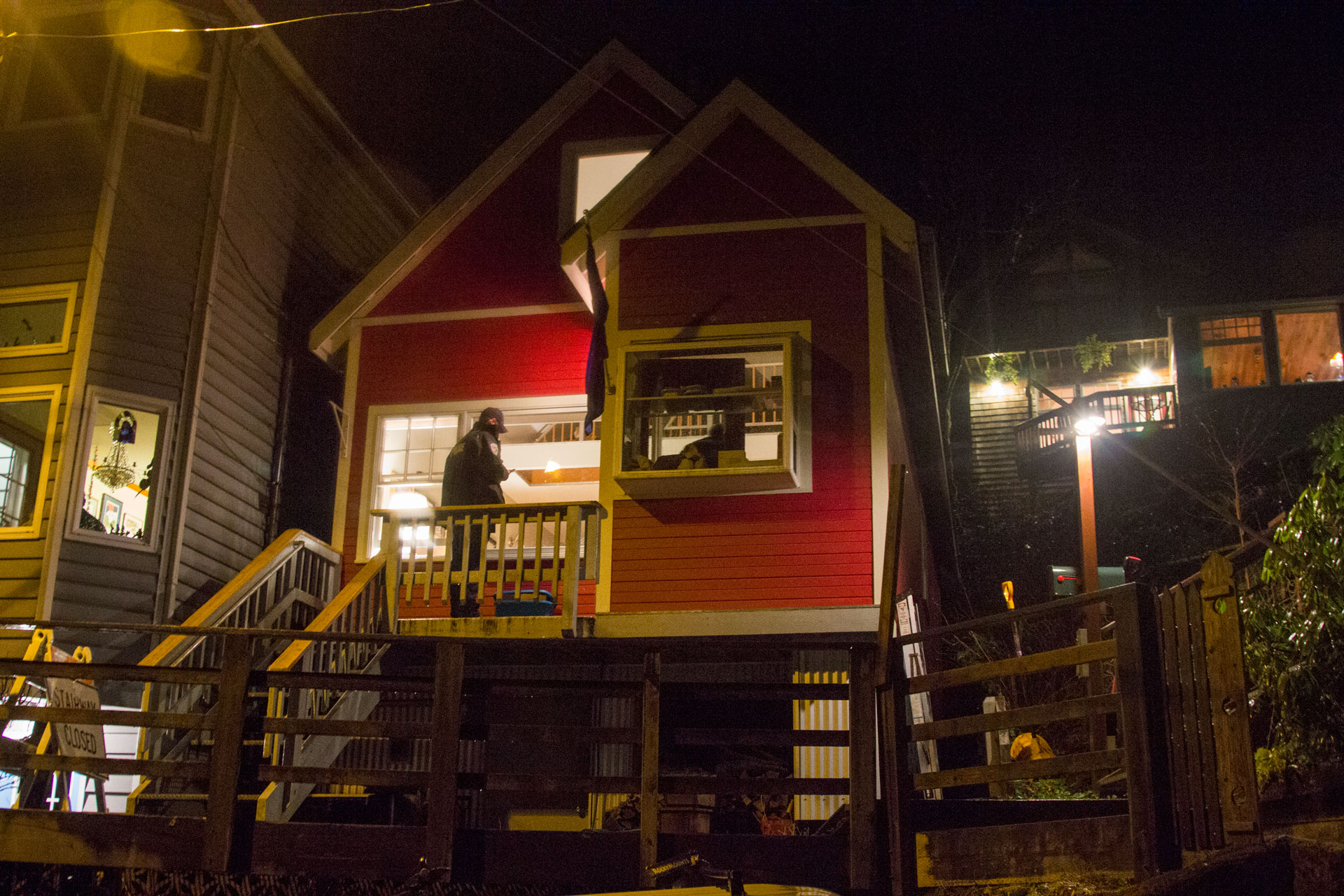
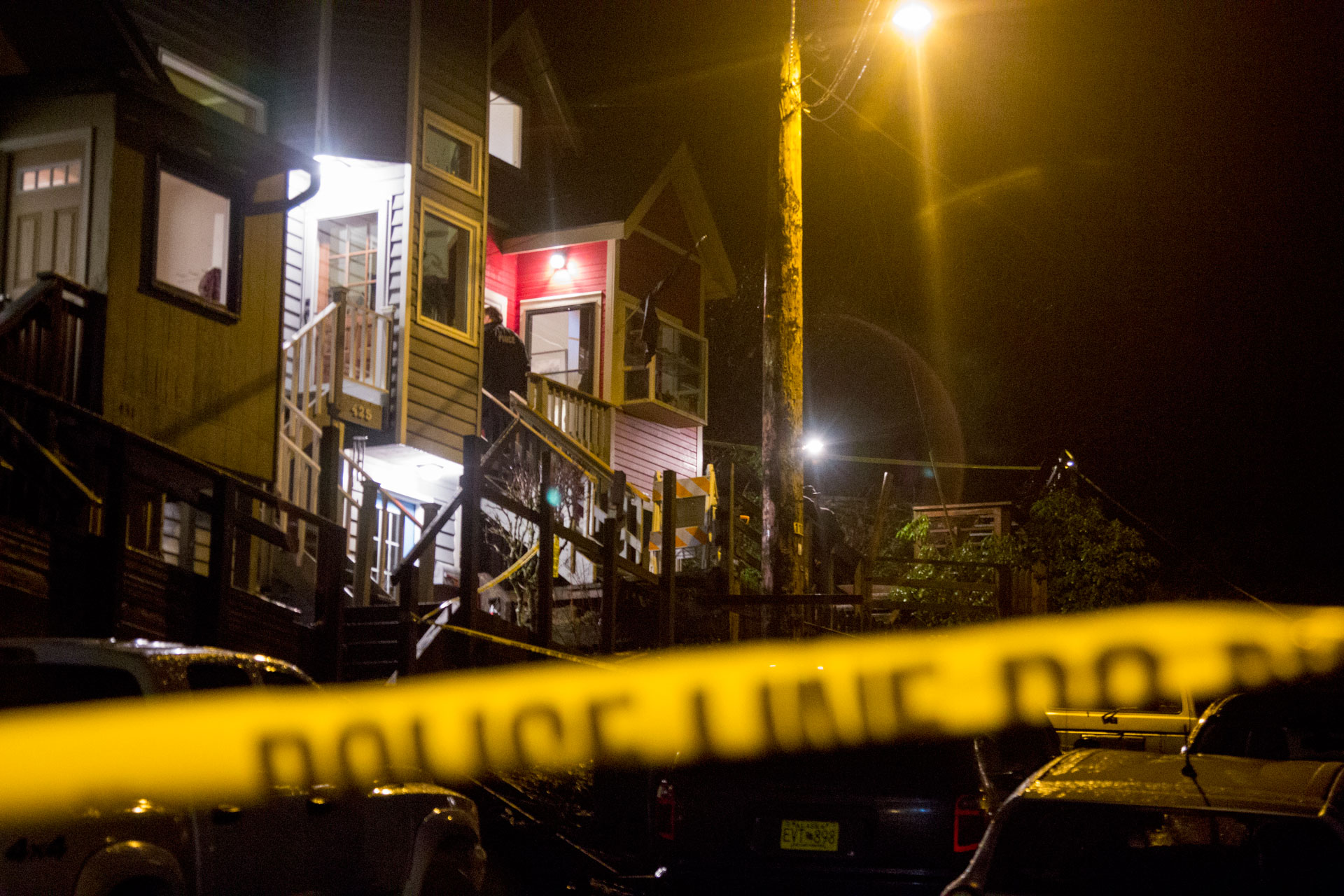
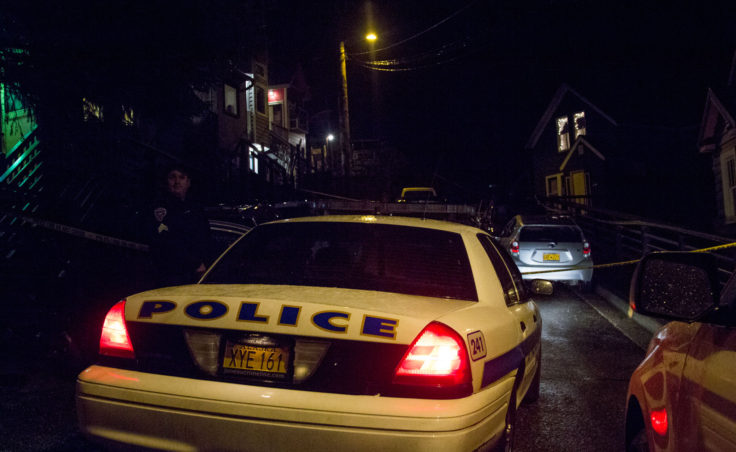
Juneau Police investigated the house of Juneau Mayor Greg Fisk on the evening of Monday November 30. The investigation continued through Tuesday. (Photo by Mikko Wilson/KTOO)
Update | 12:26 p.m.
Juneau Police could receive information from today’s autopsy of late Juneau mayor Greg Fisk as early as this afternoon.
“The medical examiner’s office has said they would be communicating with the Juneau Police today with some preliminary results,” said Dawnell Smith, spokesperson for the Alaska Department of Health and Social Services.
The state medical examiner’s office will also release some of its findings to family members. A final autopsy report will not be finalized for another couple of weeks.
A Juneau Police spokesperson says the department will have an update on its investigation into Fisk’s death at 3 p.m. Wednesday.
Original story
An autopsy for the late Juneau mayor is scheduled for Wednesday. Juneau Police have said they can’t determine a cause of death for 70-year-old Greg Fisk without those results.
Fisk was discovered dead inside his Kennedy Street home Monday afternoon.
Juneau police spokesperson Erann Kalwara said the mayor’s son, Ian Fisk, had gone to the house because Fisk had missed several appointments that day. He saw his father’s body through a window.
“Ian approached the residence and noticed from the outside of the residence what had happened. And his father, the mayor, was in the front room,” Kalwara said.
Kalwara said Fisk sustained injuries. Juneau police do not know if the injuries were a result of an accident or other trauma.
Soon after Fisk was found, rumors about how he died started to circulate.
“We’re unable to share a lot of information about where those injuries were or what they involved,” Kalwara said. “However, they were not consistent with a gunshot wound or anything of that nature. It’s not out of question that the injuries could’ve been caused by a natural event or an accident. We don’t know that it’s definitely criminal in nature.”
Kalwara said Fisk’s home is still an active investigation scene. Police plan on again keeping an officer there overnight.
After the autopsy is conducted, Kalwara said police will know more about the cause of death. Preliminary information is expected later this week. Kalwara said Juneau Police Department remains the sole investigator on the death despite offers for assistance.
City meetings scheduled for Monday night were canceled. Deputy Mayor Mary Becker has assumed the mayor’s role and added the missed agenda items to the assembly’s Dec. 21 meeting.
Prior to his death, Fisk was scheduled to be out of the office from Nov. 30 until Dec. 4.
Juneau Police Department communications manager Erann Kalwara confirmed that injuries were discovered on Mayor Greg Fisk’s body. She couldn’t share the details about the nature of the injuries.
“We haven’t ruled anything out or confirmed anything about the injuries or cause of death yet. We are waiting on those autopsy results,” Kalwara said.
The police expect those results back in a couple of days. Kalwara said there was no sign of forced entry into Fisk’s house. -Elizabeth Jenkins
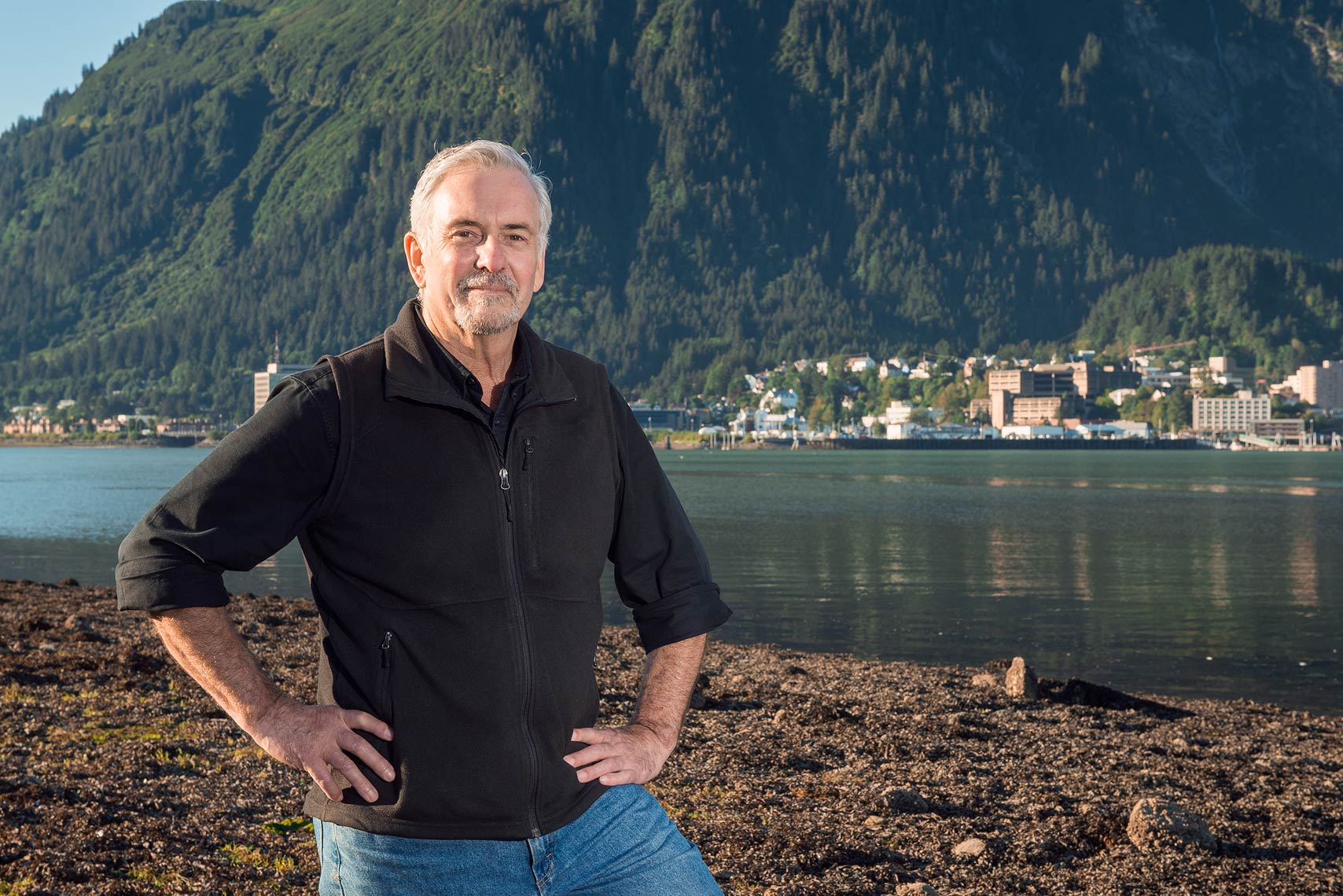
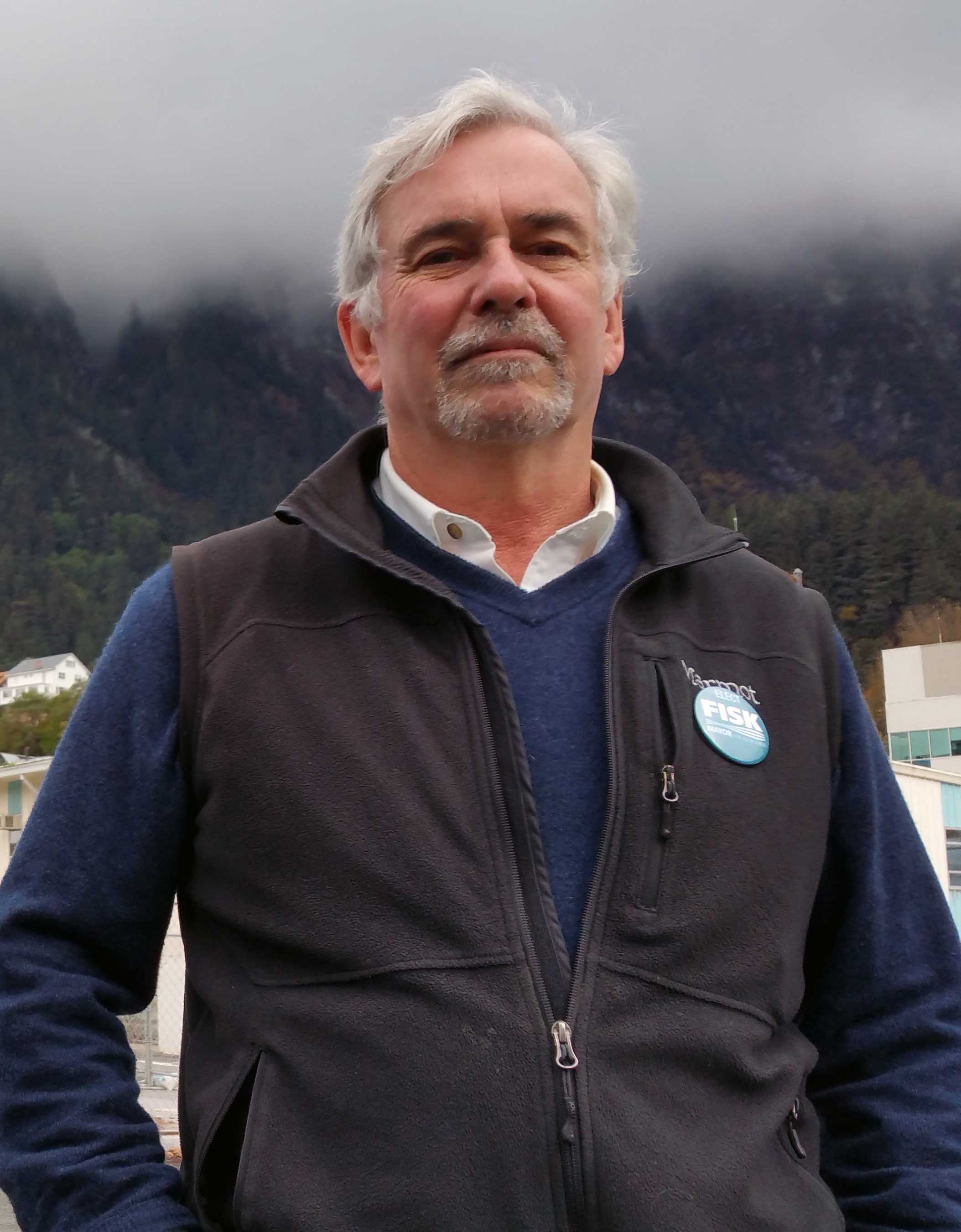
Juneau Mayor Greg Fisk was found dead in his home on the afternoon of Monday, Nov. 30, 2015. (Photo courtesy Greg Smith)
Original story
The mayor of Juneau was found dead in his home Monday afternoon. Greg Fisk, 70, was elected to the city’s top office in October and was sworn in only five weeks ago. His cause of death is still unknown. City meetings scheduled for last night were canceled.
Fisk’s adult son, Ian Fisk, called 911 around 3:30 p.m. after discovering his father’s body.
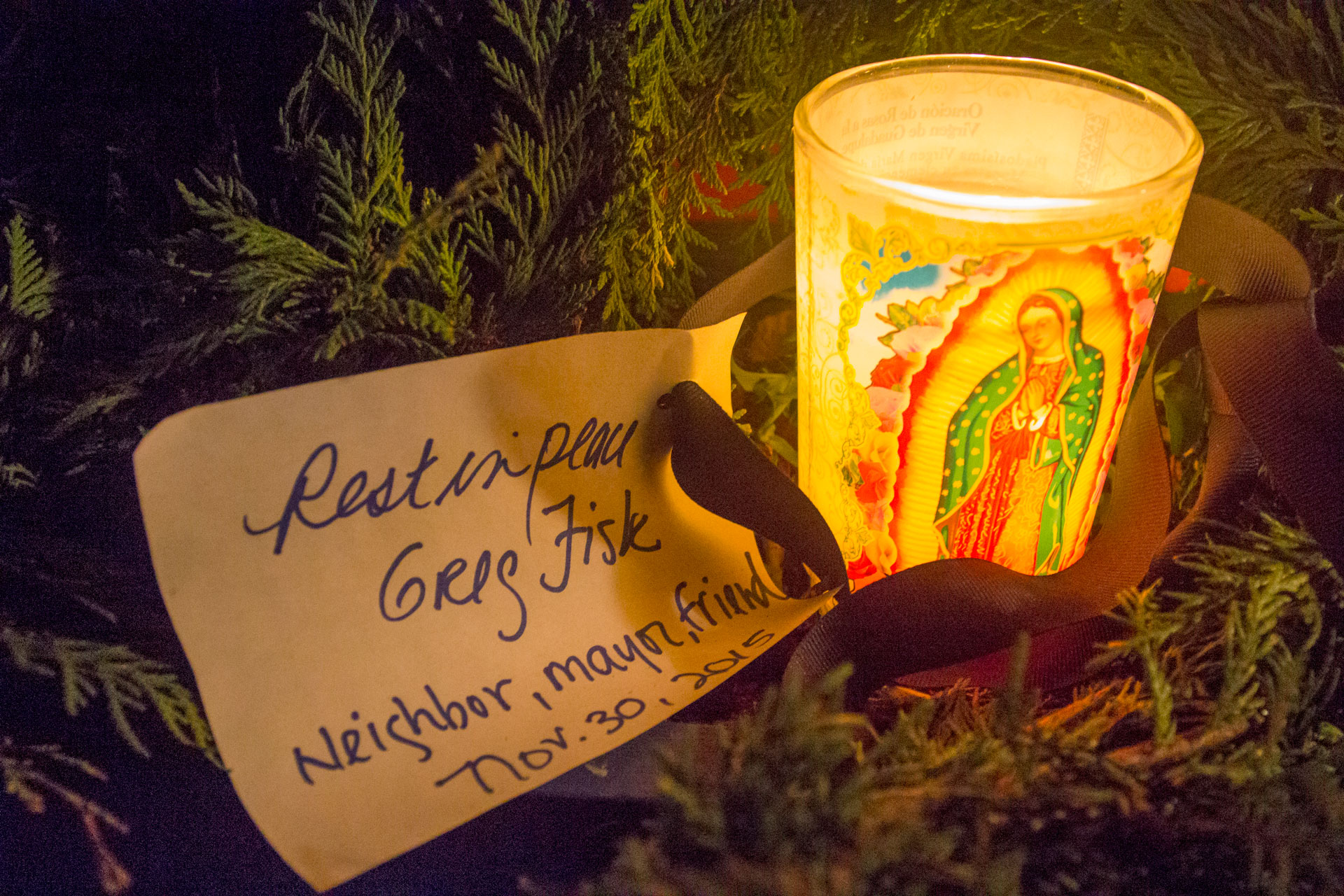
As police investigated in and around Fisk’s home, residents in Juneau’s Starr Hill neighborhood lit candles in his honor.
A candle and a note reading “Rest in peace Greg Fisk. Neighbor, mayor, friend. Nov. 30, 2015” outside a neighbor’s house on Kennedy St. Monday evening. (Photo by Mikko Wilson/KTOO)
Juneau Police Department Chief Bryce Johnson said the investigation will continue Tuesday morning.
“Our job is to make sure we preserve everything exactly in its condition, collect all the evidence, so when we get a cause of death we’re prepared to move forward from there,” Johnson said.
Johnson said rumors that Fisk may have died from an assault were only speculation and that other plausible, less sinister theories exist. Johnson said there was no evidence of a break-in and no suspicion of suicide.
Police don’t know how long Fisk was dead before he was found. Johnson said people were unable to contact Fisk that morning, prompting his son Ian to check on him.
“I think the community deserves to know what happened and to have it investigated properly. … As soon as we know, we’ll let everyone else know.”
Fisk’s body will be sent to the State Medical Examiner’s Office in Anchorage for an autopsy. Johnson said he expects results in the next several days.
Assemblymember Mary Becker said she was about to leave home to attend meetings at City Hall when she received a call that Fisk had died.
Becker, who also serves as the city’s deputy mayor, said she last spoke with Fisk by phone on Sunday. Fisk had asked her to lead Monday night’s meetings. Becker said they talked briefly about what was on the assembly’s agenda.
“He was very upbeat and sounded just like Greg,” Becker said.
Becker said Fisk was an easy person to work with and he’d been building a cohesive team within the assembly. She said the mayor was a great man and that the news has been devastating to the assembly.
“We’re all in this sadness together and we will make it through and the city will continue to run,” Becker said. “We have a wonderful staff, an assembly that works well together and we’ll continue to do what we need to do, we’re just sad right now.
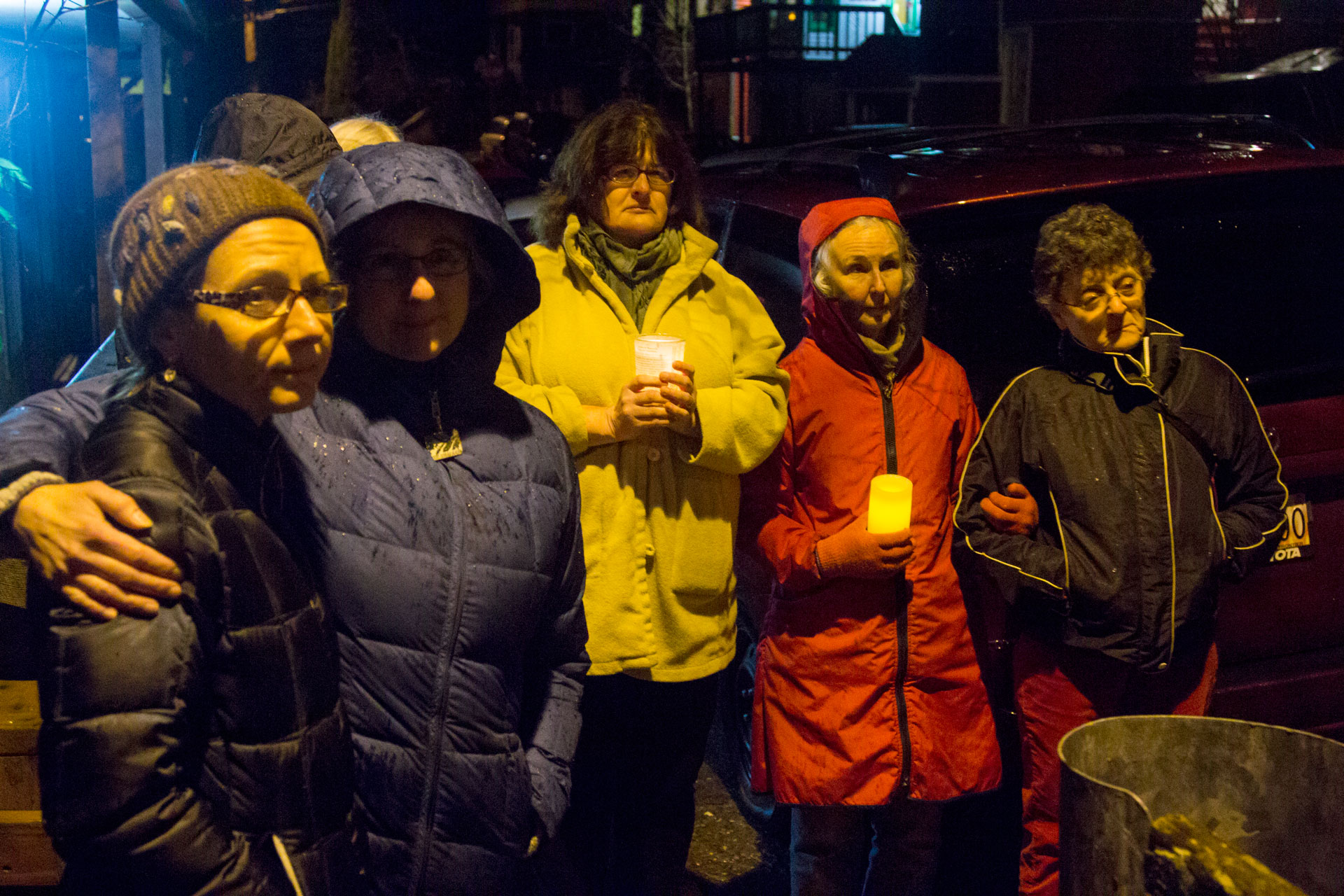
Neighbors gathered to remember Mayor Greg Fisk on Monday evening. They stood in silent respect, holding candles, as Fisk’s body was removed from his home on Kennedy Street. (Photo by Mikko Wilson/KTOO)
Becker is now responsible for mayoral duties. City attorney Amy Meade will determine what happens next.
Becker, along with assemblymembers Jesse Kiehl and Maria Gladziszewski, remember Fisk as someone who cared about everyone’s opinions and was eager to learn from others. He was admired for being a limitless source of ideas.
Kiehl said that when Fisk found something to agree with you on he’d “grab hold with tremendous energy.”
“It was inspiring, and the way he jumped in to work on things made you want to work on them harder than you were before and really inspired you to go after it,” Kiehl said. “That was just such an exciting thing about working with him.”
Gladziszewski, like others, was shocked by the news of Fisk’s death and didn’t believe it at first.
“It’s just a huge loss for the community. He was only newly elected, and he had so many ideas and a lot of energy. He was on his way to becoming a great mayor.”
Fisk had a long history of working on land claims settlements for Alaska Natives and First Nations communities in Canada.
He graduated from Indiana University in 1971 with a degree in economic and cultural geography. A year later he was at the University of Alaska Anchorage working on the Alaska Native Claims Settlement Act.
His experience eventually landed him in Montreal working as the senior negotiator on Canada’s first aboriginal land claims settlement since the 1920s.
In 1981, Fisk returned to Alaska to work for the state on land management policy. He eventually transitioned into consulting on fisheries policy in Alaska and Quebec.
“It feels very, very odd to welcome you because it’s really you who are welcoming me. I’ve been here half my life, but that’s just a twinkling in the eye in the long arc of time that people have lived on this land and navigated these waters. So really I have to thank you for having me here to speak to you.”
Late Monday night, Fisk’s neighbors gathered outside to remember him.
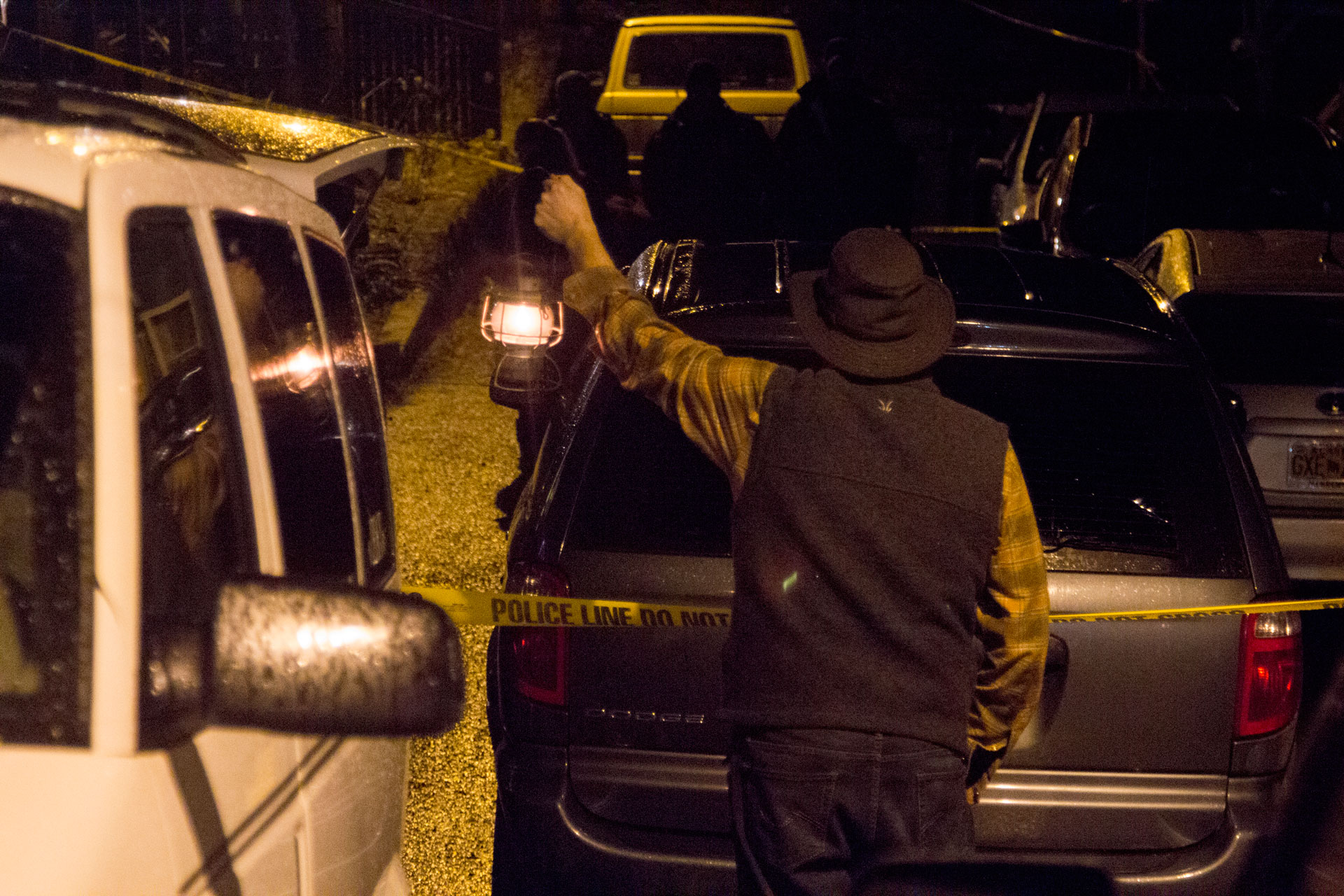
Bob King, friend and neighbor of Mayor Greg Fisk, holds a lantern to guide and remember Fisk on his final journey as his body is carried from his home by Juneau Police on Monday evening. (Photo by Mikko Wilson/KTOO)
“It’s just so sad that a person with so much promise, so many great ideas, would be snuffed so soon,” King said.
Fisk owned Seafisk Consulting and Management and was a commercial fisherman. He’d served on the Docks and Harbors Board, the Fisheries Development Committee, the Juneau Economic Development Council board and the Downtown Business Association board.
King said his friend often spoke about fish and fisheries management over dinner conversations.
“Fish was very important to him, and the responsible management of that natural resource, which is incredibly controversial,” King said. “But he would jump into that fray and always be involved.”
As Fisk’s next door neighbor, King said he’ll miss interacting with him on a regular basis.
“That image of him sitting at his window in his office — and he was always sitting there working — It’s just very, very sad that I won’t be seeing that face in that window again.”
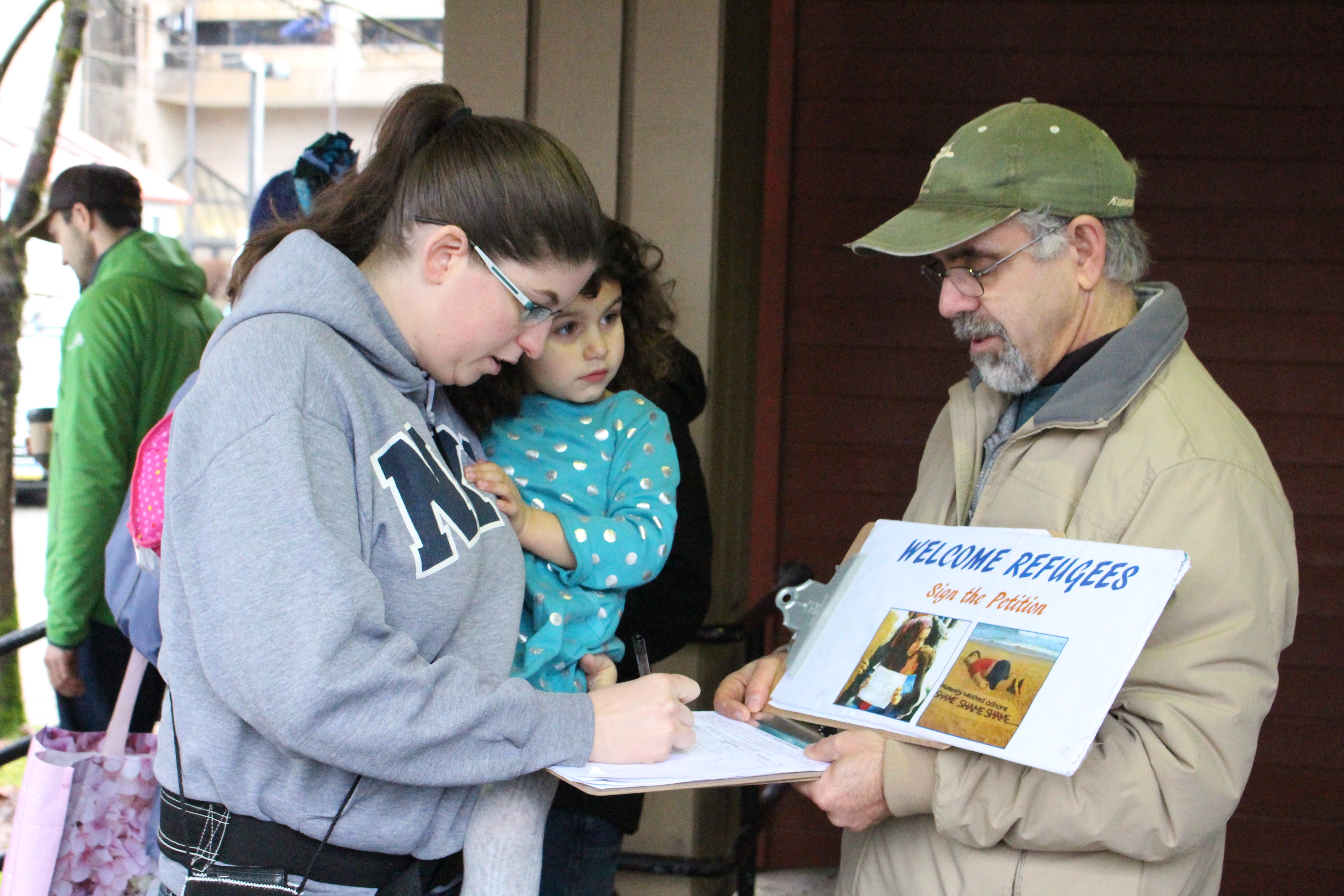
The petition is addressed, “To Alaska’s Elected Officials” and will be sent to the state’s congressional delegation in Washington, D.C. It reads:
“We, the undersigned, will not allow fear-mongering to drown out our compassion for those seeking refuge from war or violent conflict or our humanitarian obligation to ease their circumstances. Therefore, we urge our elected representatives to work toward resettlement of refugees to Alaska in a manner that is inclusive, humane, and expeditious.”
Volunteer Sarah Niecko said gathering signatures means talking to people of all opinions on the issue.
“We’ve had a lot of support which is nice to see and, more importantly, getting the dialogue started for even those people that maybe don’t support it. Just hearing their side, because we have to bring them all to the discussion table if we’re ever going to come up with creative solutions,” Niecko said.
About 120 refugees from around the world settle in Alaska every year. Catholic Social Services, which oversees the state’s refugee resettlement program, says there are no current plans to receive Syrian refugees.
Following the attacks in Paris a few weeks ago, Alaska congressman Don Young and U.S. Senators Lisa Murkowski and Dan Sullivan joined many other political leaders in calling on the president to suspend his plan to admit 10,000 Syrian refugees. Gov. Bill Walker did not take that stance.
Volunteers in Juneau will continue to gather signatures this week. Veterans for Peace and Juneau People for Peace and Justice plan to place an ad in the Juneau Empire that lists as many names of people who signed the petition as can fit.
Juneau Mayor Greg Fisk’s body has been removed from his home and will be sent to Anchorage for an autopsy.
#Juneau Mayor Fisk's body has just been removed from his home. He will go to Anchorage for autopsy, as is standard for situations like this.
— Mikko Wilson – @mikkowilson@mstdn.social (@mikkowilson) December 1, 2015
According to a news release from the Juneau Police Department, autopsy results are expected “within several days.” The news release also says that it was Fisk’s son, Ian Fisk, who discovered the body.
JPD called rumors of an assault “speculation” and said detectives are “actively investigating facts of the incident and all evidence is being preserved and documented.”
Update | 6:51 p.m.
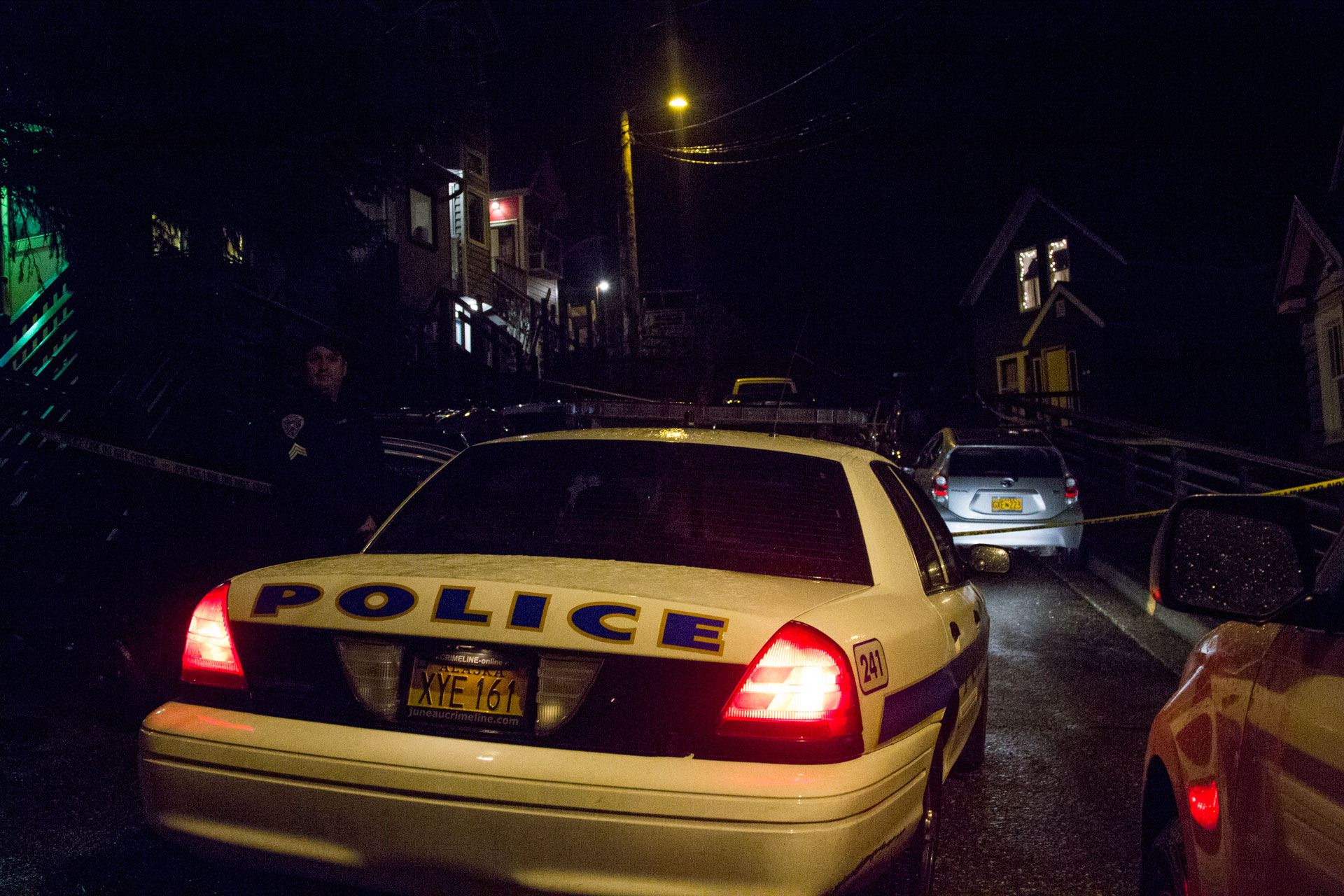
Juneau Police closed Kennedy Street between 5th and 4th Streets as they investigated the death of Juneau Mayor Greg Fisk on the evening of Monday November 30th. Photo by: Mikko Wilson / KTOO
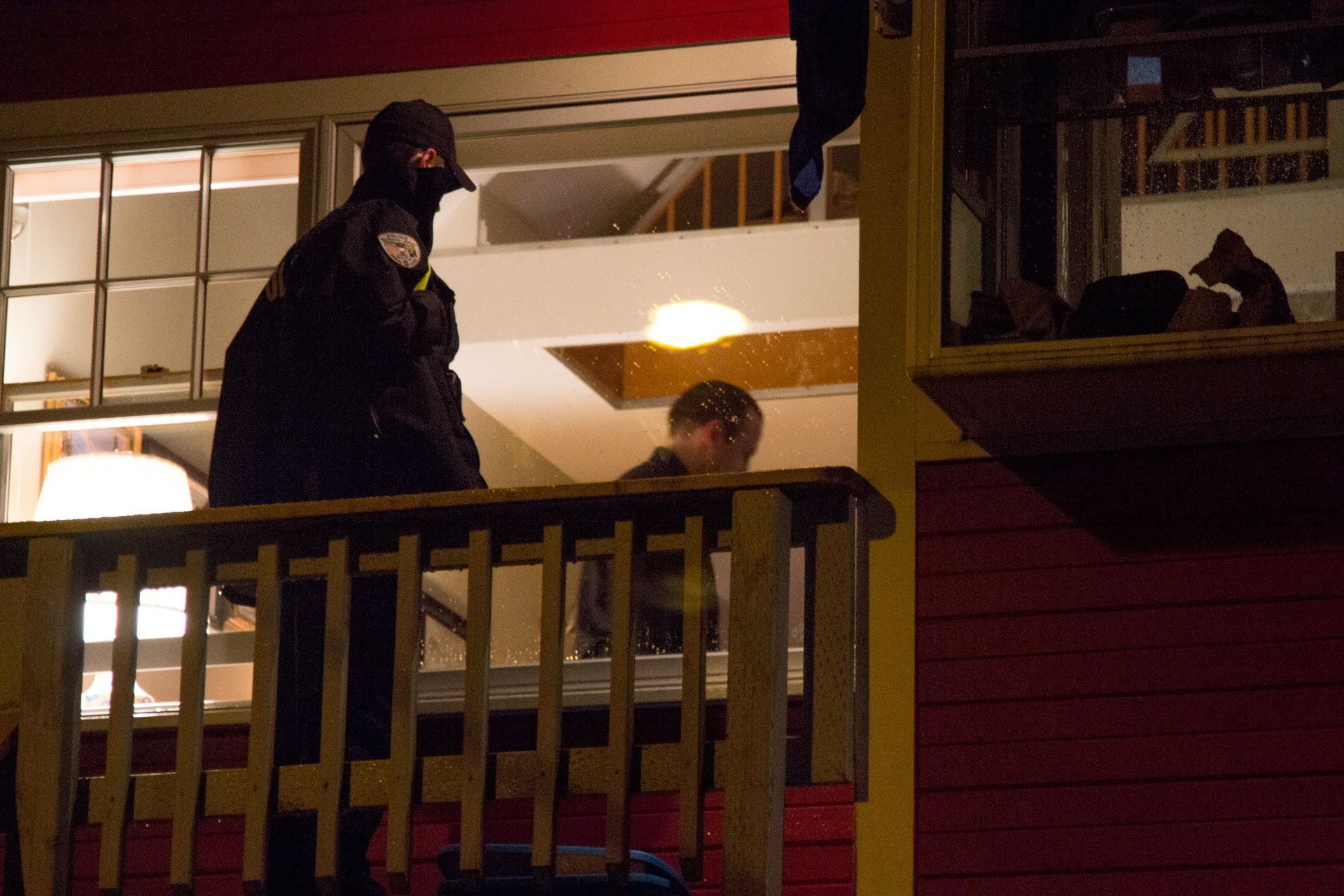
Juneau Police investigate the house of Juneau Mayor Greg Fisk on the evening of Monday November 30th. Photo by: Mikko Wilson / KTOO
Juneau Police investigate the house of Juneau Mayor Greg Fisk on the evening of Monday November 30th. Photo by: Mikko Wilson / KTOO
Juneau Police investigate the house of Juneau Mayor Greg Fisk on the evening of Monday November 30th. Photo by: Mikko Wilson / KTOO
Update | 6:30 p.m.
Juneau police have confirmed that Mayor Greg Fisk was found dead at his home on Kennedy Street earlier this afternoon. JPD said in a news release that they received a 911 call at 3:34 p.m. from a male reporting the discovery of a dead body inside Fisk’s home. Fisk is identified as Stephen “Greg” Fisk in the release. Police are investigating.
City and Borough of Juneau clerk Laurie Sica said the city will issue a press release tomorrow with details on how city government will operate. The city’s deputy mayor is assemblymember Mary Becker.
CBJ meetings scheduled for tonight have been canceled.
Update | 6:16 p.m.
Mayor Greg Fisk was found dead at his home on Kennedy Street earlier this afternoon. Fisk was elected to the seat last month.
In a profile published by KTOO, Fisk detailed his personal opinions on numerous issues facing the City and Borough of Juneau.
Fisk was 70-years-old. He leaves behind his son Ian and grandson Kai.
Original story
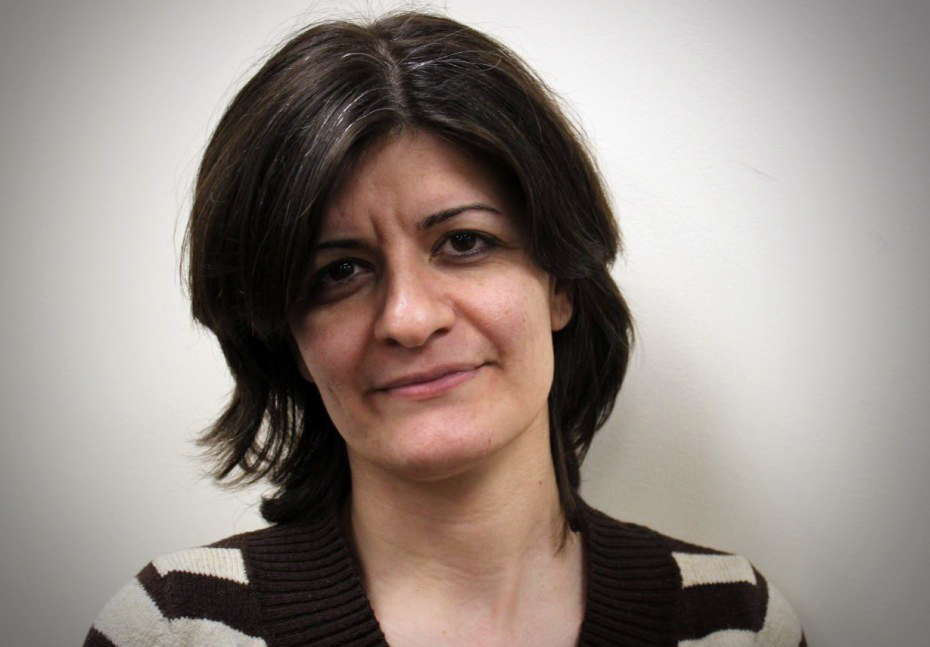
Juneau Mayor Greg Fisk was found dead at his home Monday afternoon. (Photo by Jennifer Canfield/KTOO)
Emergency responders are currently at the home of Juneau Mayor Greg Fisk.
According to bystanders, an ambulance left the scene earlier. Police are currently on the scene. Kennedy Street is closed between 4th Street and 5th Street.
A reporter on the scene says Juneau police were seen in the home with flashlights.
This is a breaking news story. Please check back later for updates.
Persecuted her whole life as a Bahá’í in Iran, Parisa Elahian came to Juneau as a refugee in 2005. (Photo by Lisa Phu/KTOO)
Alaska receives about 120 refugees from all over the world each year.
About 10,000 Syrian refugees will come to the United States. While none are expected to end up in Alaska, the state still has a significant refugee population based mostly in Anchorage. However, some have made Juneau their home.
As a child in Iran, Parisa Elahian was told by school officials she wasn’t equal with other children.
“They called us dirty, so they had to separate us from the other kids, so I was in the corner of the class,” Elahian said. “Imagine: I was a 7-year-old and going home crying most of the time because other students would say bad words to us.”
Her classmates were scolded for speaking to her. Neighbors told her to stay away from their homes.
Elahian, now 34, is a Bahá’í. In Iran, Bahá’ís have long been persecuted by the government. They aren’t allowed to practice their faith, are denied government jobs and admission to universities, and experience other forms of discrimination. Many have been arbitrarily arrested.
Elahian left her home country when she was 24.
“I had nothing to do professionally, getting higher education, so that’s why I decided, ‘OK, it’s time for me to go,'” Elahian said.
Many Bahá’ís leave Iran as refugees via Turkey. Elahian was there for 10 months while she waited for a visa. She says she had a choice between Texas and Alaska. She chose Alaska and was sponsored in 2005 by a Bahá’í in Juneau. Today, about 20 Iranian Bahá’ís live in the capital city.
Back home, Elahian said she used to worship in people’s homes in groups no bigger than 15. In Juneau, Bahá’ís still practice their faith in houses, “but of course, there is no fear here,” Elahian said. “Back home, even though when we get together in very small group of people, still you would think as soon as you hear the doorbell — you would say, ‘Uh-oh, they could be here to get us.'”
Vũ Schroeder left his home country of Vietnam in 1983. He was 11 and had never gone to school.
“After the war, things got crazy and lots of political issues going on, lots of violence. People kind of get confused and a lot (were) struggling to survive,” Schroeder said.
He witnessed bombings, public beatings and executions.
Like hundreds of thousands of other Southeast Asians of that era, Schroeder escaped Vietnam in the middle of the night by boat.
“When it’s dark, you gotta go,” Schroeder said. “It’s not easy to leave the country because if you get caught, you either end up in jail or you’re gonna get killed.”
Schroeder spent about two weeks going across the South China Sea on a small wooden boat with about 20 others, half of them children.
“There was some rain – we could get rain water – but I didn’t eat for, like, five or six days. I was skinny. And then when we got to the land, we barely could walk because you’re so weak,” Schroeder said.
Vũ Schroeder holds daughter Katelyn. His wife, Myle, stands next to their two sons, Erik and Robbie. They live in Renton, Wash. (Photo courtesy Vũ Schroeder)
Somehow, everyone on his boat survived the journey.
He spent three years in a refugee camp in Indonesia. Schroeder said people were given food once a week and slept in rows on a long wooden bench where you couldn’t move.
Finally, in 1986, Schroeder and some relatives were sponsored by a group in Juneau. He was scared when he arrived, but his sponsor parents – Elaine and Bob Schroeder – were there.
“I remember they took me to the salmon bake and we had some really nice salmon, like the best meal ever,” Schroeder said.
His relatives moved to California within a year of arriving in Juneau. Schroeder, 13 at the time, didn’t want to start over again. The Schroeders let him stay in their home and eventually adopted him. He got a bachelor’s degree from the University of Alaska Southeast and worked for the Alaska Marine Highway system for years.
In 2007, Schroeder moved to the Seattle area. He’s earned his captain’s license and works for the Washington State Ferries. He’s married with three kids.
Parisa Elahian is still in Juneau. She’s married and works for the state. She says if she could have the same rights in Iran as she does in the U.S., she’d go back.
“But I’m so happy here, don’t get me wrong. I am so blessed. I’ve been here for 10 years. I just get emotional thinking about it. Even at the beginning when I didn’t speak English that well and people probably didn’t understand me that well, I never faced any kind of racism toward me,” Elahian said.
When she arrived in Juneau as a refugee, Elahian never wanted to be a burden, and she was never treated as one.
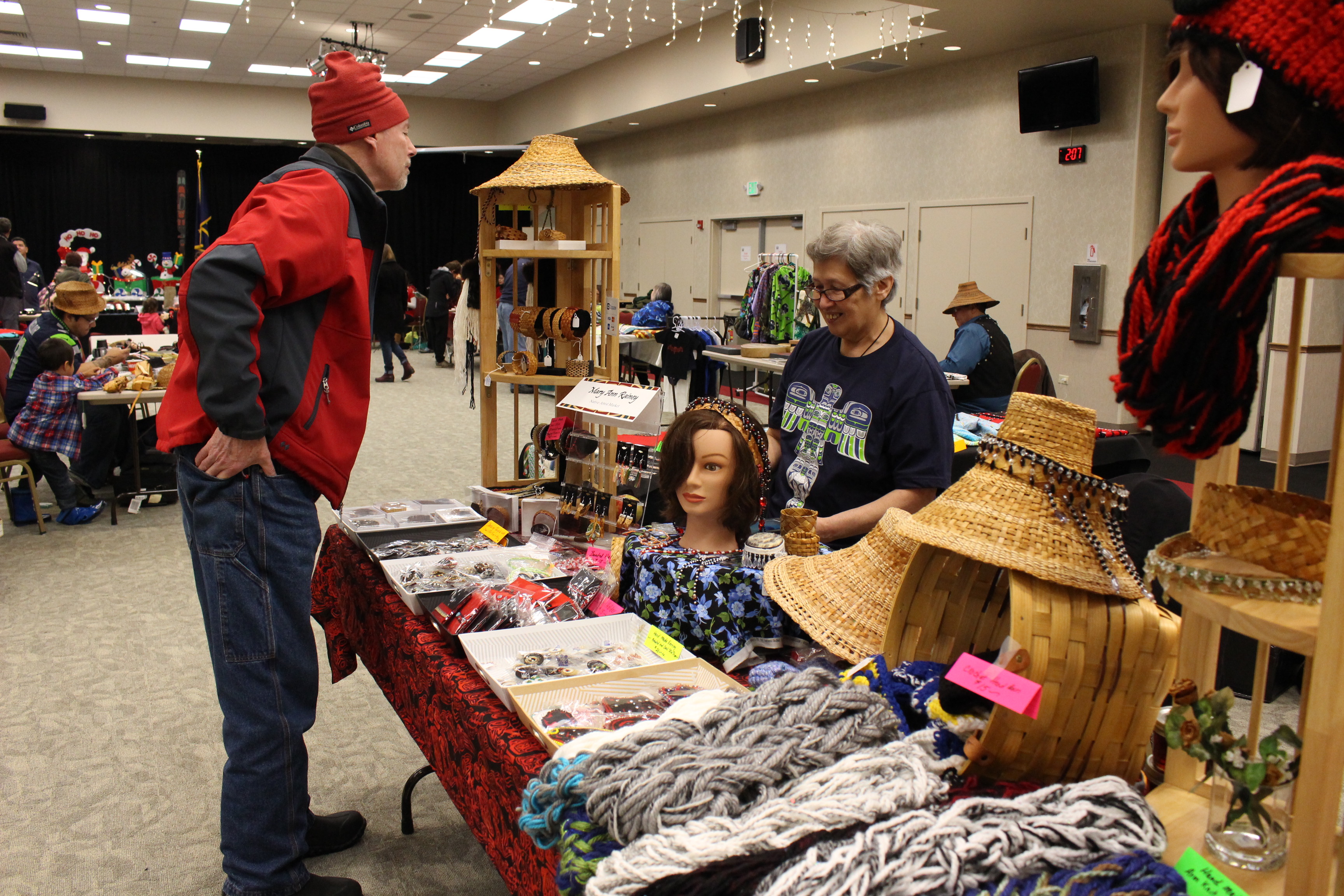
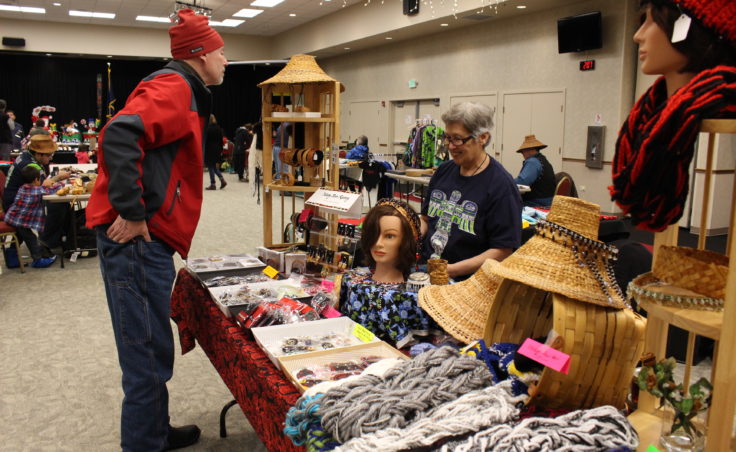
Mary Ann Rainey sells a variety of items: woven bracelets and hats, seal skin accessories and hand-knit scarves. (Photo by Elizabeth Jenkins/KTOO)
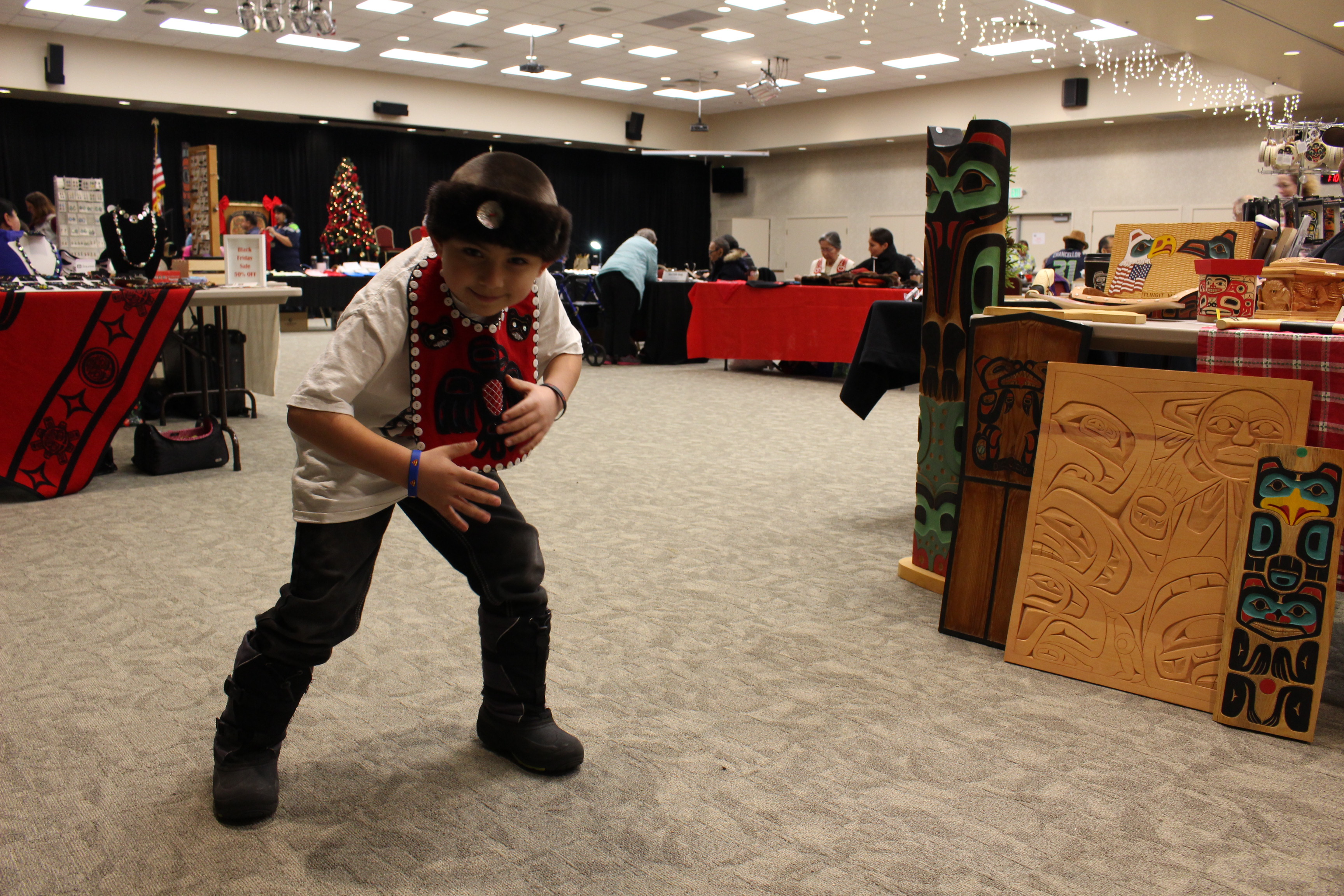
Seven-year-old Alex Marx-Beierly dances in his regalia. (Photo by Elizabeth Jenkins/KTOO)
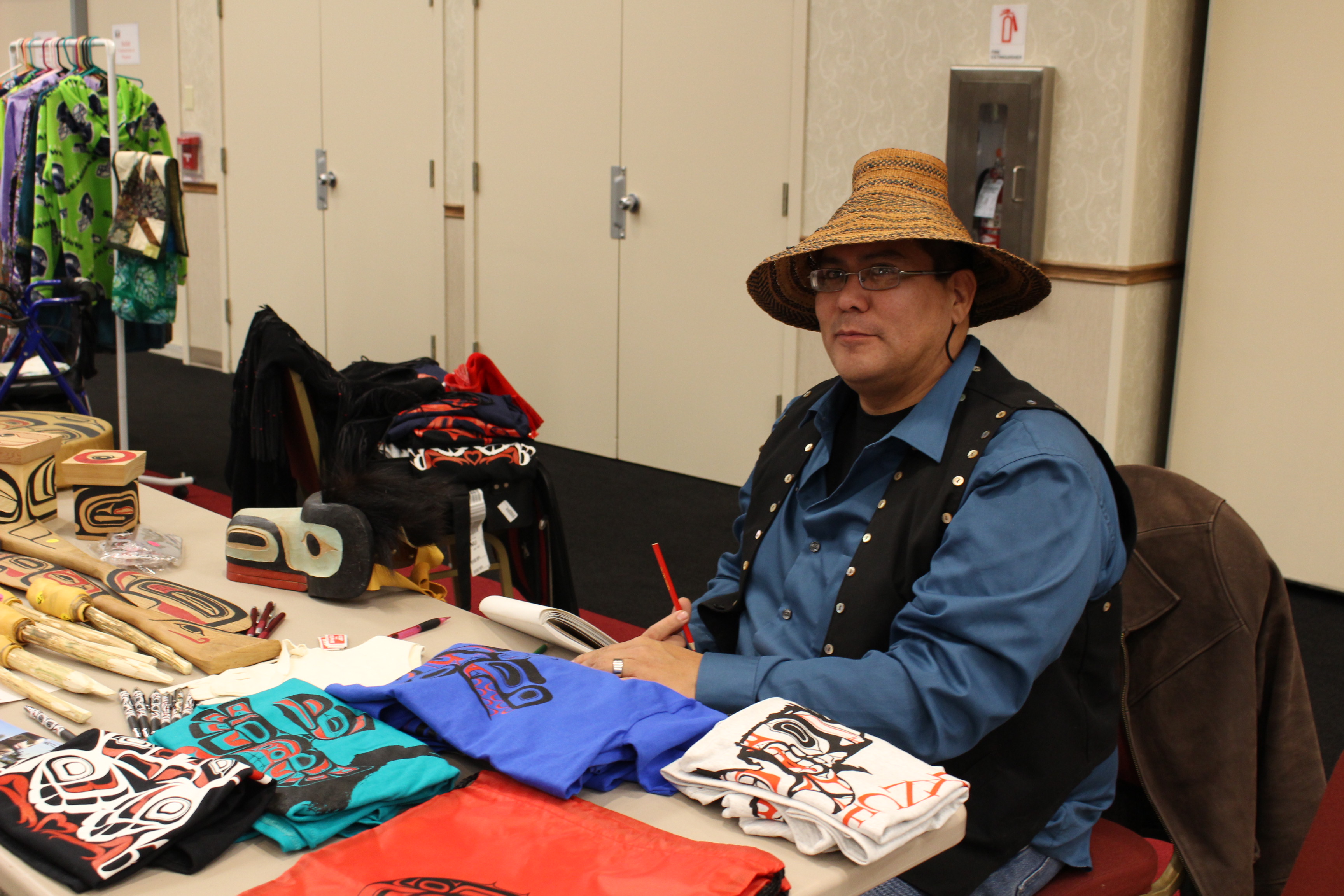
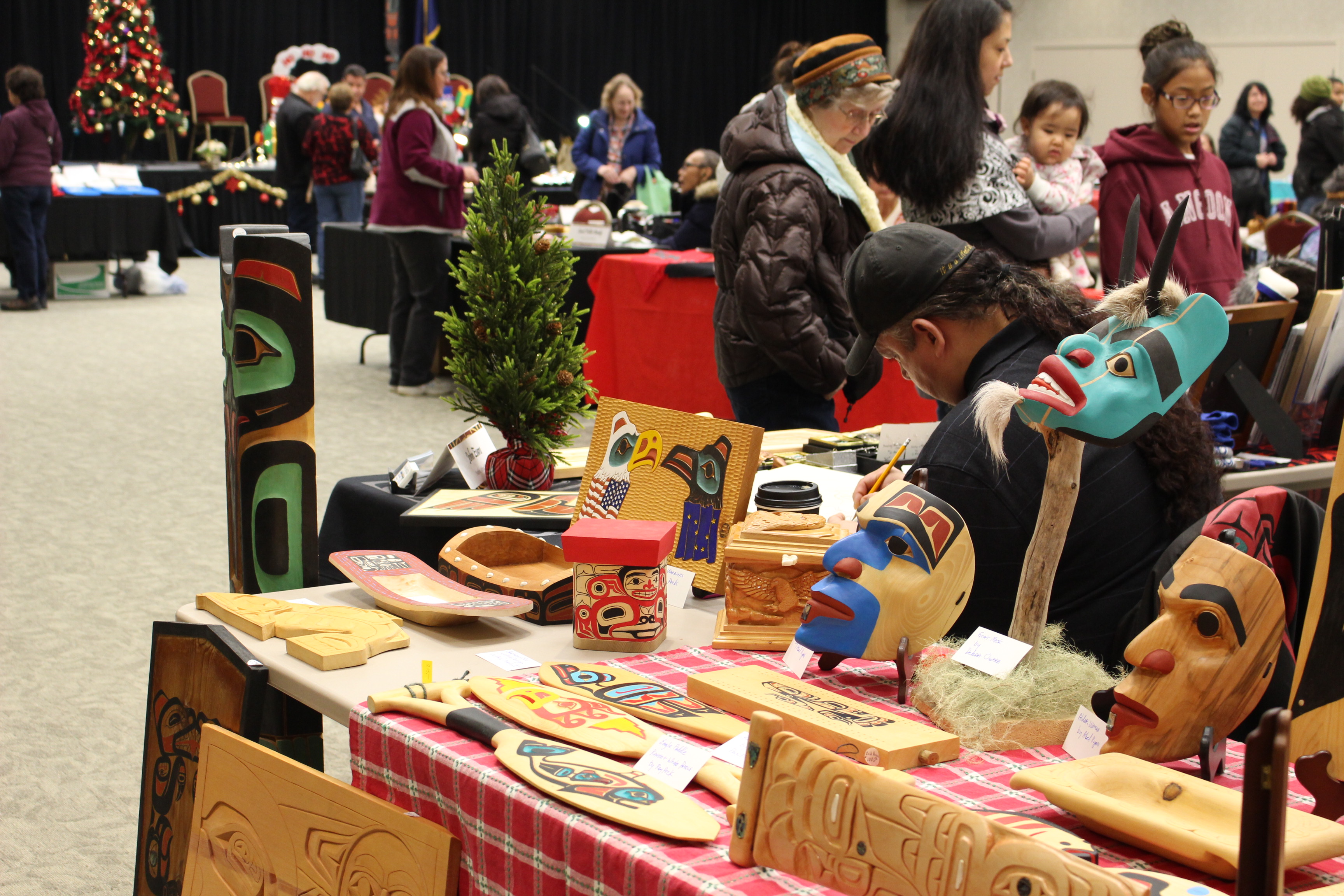
Carver William Bolton traveled to Juneau from Metlakatla for the Native Artist Market. (Photo by Elizabeth Jenkins/KTOO)
(Photo by Elizabeth Jenkins/KTOO)
This weekend, crowds showed up in the pouring rain to do their holiday shopping at Juneau’s Public Market, but it wasn’t the only place in town to buy local goods. This year’s second annual Native Artist Market was also happening at Elizabeth Peratrovich Hall. Vendors from Petersburg to Metlakatla sold otter skin apparel, devil’s club salve, and accessories woven from yellow cedar.
Listen to an audio postcard of that event:
Close
Update notification options
Subscribe to notifications
Subscribe
Get notifications about news related to the topics you care about. You can unsubscribe anytime.