North Slope

Alaska’s state development corporation approved to spend up to $20M on ANWR oil leases

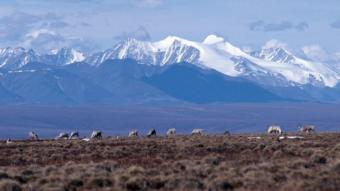
Research biologists pause among the wetlands of the coastal plain, with the Brooks Range in the background. (Lisa Hupp/USFWS)

Alaska’s state-owned development corporation can now spend up to $20 million to buy oil leases in the coastal plain of the Arctic National Wildlife Refuge.

The board of the Alaska Industrial Development and Export Authority unanimously approved the spending Wednesday night.

“I believe resource development is our future,” said AIDEA board member Albert Fogle. “A stronger resource development industry will trickle down into the other industries.”

The idea is that AIDEA could buy the drilling rights to tracts of land offered in the Trump administration’s lease sale on Jan. 6. And then, at some point, partner with companies to do the actual drilling.

It’s a way for the state to secure the rights to drill in the coastal plain in case no one else bids on the leases.
It’s a controversial move.

‘A ticket to decades of litigation’

Public comment at Wednesday’s meeting was dominated by people who opposed AIDEA bidding on the federal oil leases.

Some cited concerns about drilling’s impact on the global climate, and on wildlife in the coastal plain, including polar bears and caribou.

“The Arctic refuge is a majestic landscape on which people and animals alike depend,” said Karlin Itchoak, state director for The Wilderness Society. “The Alaska Native communities like the Gwich’in and the Inupiaq have relied on and protected the refuge for millennia.”

Some asked: Why not put the $20 million toward diversifying Alaska’s economy instead?

“You are trying to patch a declining industry that the state of Alaska is already way too heavily invested in,” said Julian Dan, a graduate student at the University of Alaska Fairbanks.

Matthew Jackson, from Ketchikan, described AIDEA buying leases as “a ticket to decades of litigation.” It’d bring the state a lot of risk, some said.

Others said if oil companies really want to drill in the refuge, they’ll buy the leases themselves.

Diane Preston, from Fairbanks, was among many who blasted AIDEA for not providing more time for Alaskans to weigh in on whether it should spend money on oil leases.

The agency posted the text of the resolution approved Wednesday just two days before the meeting.

“I think it’s pretty unconscionable to have a short few days’ process for public comments on such an important issue, particularly during the pandemic and holiday week,” Preston said.

“I don’t think that speaks well for you … those of you who thought you could do this kind of under the radar.”

The board accepted emailed comments this week, and said it got more than 300.

It set aside 90 minutes for public comments by phone on Wednesday. Then it went into a two-hour, private executive session.

‘You need more production. You need more leases.’

Shortly before 8 p.m., the public meeting resumed.

Board member Anna MacKinnon, a former state legislator, defended AIDEA’s timeline.

She said the federal Bureau of Land Management didn’t post the details of the coastal plain lease sale until early December.

And in the days following, she said, conversations ramped up about AIDEA bidding on the leases because of opinion columns written by former Alaska Govs. Bill Walker and Frank Murkowski.

At Wednesday’s meeting, Murkowski told board members the state has an “extraordinary opportunity” to buy the leases because, he argued, they’d basically be 50% off. The state gets half of the lease-sale revenue.

“The future of the state, from the standpoint of oil production, is more production,” he said. “You need more production. You need more leases.”

Murkowski has long supported opening the coastal plain to oil development, and his daughter, U.S. Sen. Lisa Murkowski, spearheaded the provision in a 2017 tax act to allow drilling there, reversing decades of protections.

Board members said ensuring oil development happens is good for the economy.

Board Chair Dana Pruhs said approving the money for the leases is also a way to protect “the sovereign rights of the state” and “40 years of everybody’s efforts to open up the coastal plain in ANWR.”

That’s because if a tract doesn’t get any bids in next month’s lease sale, then the federal government maintains control of it.

And two weeks after the lease sale, President-elect Joe Biden takes office. Biden has said he opposes drilling in the refuge, and that he’ll take steps to permanently protect the land.

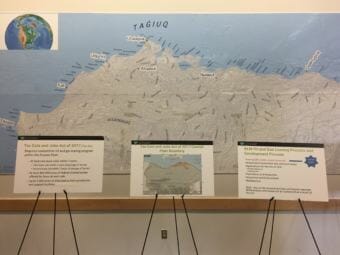
A map shows the Arctic National Wildlife Refuge coastal plain broken into numbered tracts, with some of them shaded gray in the southeast corner to show which pieces of land have been removed from the upcoming lease sale.
A map of the Arctic National Wildlife Refuge coastal plain shows the tracts of land that will be included in an oil and gas lease sale on Jan. 6. The Bureau of Land Management has removed the numbered tracts shaded gray. 

Wednesday’s vote means AIDEA’s director, Alan Weitzner, now has the authority to evaluate the land available to lease and decide on bidding.

He has until 4 p.m. next Thursday to submit any sealed bids to the Bureau of Land Management.

The federal government will open all of the offers on Jan. 6 and award the leases to the highest qualified bidders.

But two major uncertainties still loom.

Groups opposed to drilling have asked a federal judge to step in and block the upcoming sale. A ruling is expected by Jan. 6.

Also, the Anchorage Daily News reported, Wednesday’s vote by the board could be challenged because of unconfirmed appointees.

The lease sale is set, but how much oil actually is under ANWR’s coastal plain?

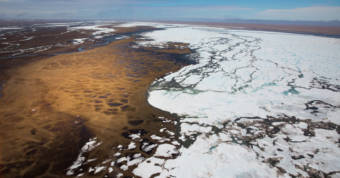
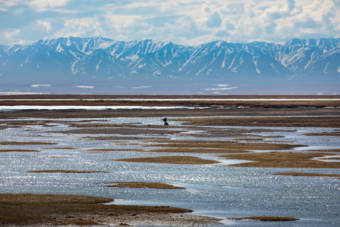
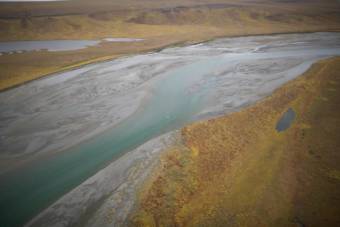
The Canning River in the Arctic National Wildlife Refuge. (Randy Brown/USFWS)

Supporters of drilling in the northernmost slice of the Arctic National Wildlife Refuge often point to its oil potential as a reason to develop the remote stretch of land.

But what does the federal government actually know about how much oil sits under the refuge’s coastal plain, which will be put up for sale on Jan. 6?

While geologists say the rock formations, oil seeps and old seismic results seem promising, big questions remain about where the oil is trapped, and exactly how much of it there is.

“We don’t know very much about this area,” said David Houseknecht, senior research geologist for the U.S. Geological Survey and expert on the coastal plain.

“There are a lot of uncertainties that are difficult to quantify in the absence of better quality data,” he said.

What the government does know about the amount of oil in the coastal plain dates back decades.

In 1998, the USGS calculated there’s anywhere from 4 to 12 billion barrels of recoverable oil under the federal lands, which cover an area roughly the size of Delaware.

A map of the Arctic National Wildlife Refuge coastal plain shows the tracts of land that will be included in an oil and gas lease sale on Jan. 6. The Bureau of Land Management has removed the numbered tracts shaded gray. (Screenshot BLM document)

That’s a whole lot of oil, said Houseknecht, but also — a wide range.

“That range is so big because there’s been no wells drilled on federal land and because the seismic data is pretty old and low resolution and erratic,” he said.

Companies use seismic technology to map underground rock formations, and hunt for oil. The seismic data for the coastal plain is from the mid-1980s.

Technology has come a long way since then, Houseknecht said.

“Going into a lease sale in the coastal plain, with the only data being 35-year-old, 2-D data is quite unusual,” he said.

A worker stands in front of a vibe truck being used as part of BP’s 3-D seismic program at Prudhoe Bay this winter, to the west of the Arctic National Wildlife Refuge’s coastal plain. (Elizabeth Harball/Alaska’s Energy Desk)

An Alaska Native village corporation is trying to get approval to conduct 3-D seismic exploration, using massive trucks that roll over the tundra and vibrate the ground. Conservation groups argue the work will cause too much harm, including to the tundra and to polar bears that den there.

Another key piece missing from the USGS assessment is any data from actual wells drilled in the coastal plain in search of oil, Houseknecht said.

That’s because there’s just one, drilled back in the 1980s, on Alaska Native land. And the results are a closely-guarded secret.

“I signed a confidentiality agreement, and it didn’t have an end date on it,” said Mark Myers, a geologist and former commissioner of the Alaska Department of Natural Resources.

Myers is one of the few people who have seen the results from the test well, outside of the big oil companies that paid for it.

“I can’t comment on it, in terms of what I saw,” he said. “Even though it was a lot of years ago.”

A New York Times investigation based on legal documents suggested the results were not promising.

But Houseknecht said companies with that well data still have critical knowledge.

USGS interpreted the old seismic data to show most of the oil is likely in the western part of the coastal plain and said the other side didn’t appear to have the right conditions to hold a lot of petroleum.

Houseknecht said those companies with the well results, however, would know a lot more about the rocks underground on the eastern side of the refuge, and their potential.

“Whether that source rock is present or absent, whether that reservoir rock is present or absent, is huge,” he said.

Houseknecht said more is not known about the oil potential of the coastal plain because it wasn’t until late 2017 that Congress decided to open the land to drilling, after decades of protections.

An application in 2018 for new seismic work stalled.

The USGS also had the 1980s seismic data commercially reprocessed a couple years ago, Houseknecht said, which resulted “in a much better resolution than we do internally.”

The agency had planned to conduct a new oil assessment using the reprocessed data, he said, but after the 2017 tax act was passed, the Interior Department called off the work.

Houseknecht said the department did not give a reason why.

Myers, the former commissioner, said even without updated seismic data, he thinks one big selling point for oil companies is the fact that the coastal plain is onshore, making it cheaper to access than offshore prospects.

And, he said, there just aren’t a lot of opportunities for companies to get in early on a potentially massive oil find.

“I would say ANWR falls in that high risk, high potential — not high risk of oil, but high risk of execution,” he said. “When you put it all together, will that attract somebody? I think it will.”

When Myers says high-risk of execution, he means there’s opposition that could derail a company’s project.

Critics of drilling in the refuge say the land should be protected, and they’ve raised concerns about oil development’s effects on ecosystems and the global climate. The coastal plain is home to polar bears, migrating caribou and other wildlife.

Conservation and some tribal groups have already filed several lawsuits that aim to stop the lease sale.

While oil potential will likely be the first thing companies weigh when deciding whether to bid in the sale, Myers said, they’ll also take into account a string of other factors, including the lawsuits, costs and the changing administration.

President-elect Joe Biden has said he opposes drilling in the Arctic refuge.

Alaska state-owned agency to weigh bidding in ANWR lease sale

The coastal plain is the northernmost piece of the Arctic National Wildlife Refuge. It covers about 1.5 million acres, or about 8% of the vast refuge. (Lisa Hupp/USFWS)

Alaska’s state-owned development corporation may bid in the upcoming oil and gas lease sale in the coastal plain of the Arctic National Wildlife Refuge.

The Alaska Industrial Development and Export Authority is asking its board to allow it to spend up to $20 million on the sale.

The board will consider the request at its meeting late Wednesday afternoon.

The proposed resolution was first reported Monday by the Anchorage Daily News.

AIDEA’s director, Alan Weitzner, said if the corporation acquired a lease — or multiple leases — it would then partner with companies that would do the drilling. The goal is to develop the land, he said.

“There’s an opportunity here to really establish some economic growth for the state of Alaska,” Weitzner said in a phone interview Tuesday.

AIDEA’s request comes as speculation looms over whether the oil industry has much interest in bidding in the Jan. 6 lease sale.

A map of the Arctic National Wildlife Refuge coastal plain shows the tracts that will be included in an oil and gas lease sale on Jan. 6. The Bureau of Land Management has removed the numbered tracts shaded gray. (Screenshot BLM document)

The sale is surrounded by controversy and lawsuits and will be held two weeks before President-elect Joe Biden takes office. Biden has said he opposes drilling in the refuge and will take steps to permanently protect the land.

Former Alaska Govs. Bill Walker and Frank Murkowski recently urged the state to submit at least the minimum bid on the oil leases so it can secure the drilling rights in case no one else puts in an offer.

If no one bids, the federal government will maintain control of the land “that we have fought long and hard to responsibly develop,” Walker wrote in an opinion column published in the Daily News.

The AIDEA board is scheduled to meet at 3:30 p.m. Wednesday and will take public comment by phone for 90 minutes, the agenda says.

Critics say the corporation did not give enough notice of its proposal to bid.

“AIDEA’s disregard for the public process is evident when providing public notice of meetings only three working days before meeting to discuss and vote on this important and far-reaching resolution,” Veri di Suvero, executive director of the Alaska Public Interest Research Group, wrote in comments to the board Tuesday.

The upcoming lease sale stems from a tax act passed by Congress in late 2017. The bill included a provision that opened the coastal plain to drilling after decades of protections.

The federal Bureau of Land Management posted the details of the sale earlier this month, and on Friday announced it was taking about 30% of the acreage off the table.

Weitzner said if the board approves AIDEA’s proposal, he would then evaluate the remaining 1 million acres and decide on bidding.

He would have until just 4 p.m. on Dec. 31 to submit any offers to the Bureau of Land Management, which will open the sealed bids on Jan. 6.

Weitzner said he was not aware of the corporation submitting bids for federal oil and gas leases in the past.

The $20 million he’s proposing to use to pay for the leases in the refuge would come from the corporation’s Arctic Infrastructure Development Fund, created by the state Legislature.

In last-minute move, Trump administration removes nearly 475k acres from ANWR oil lease sale

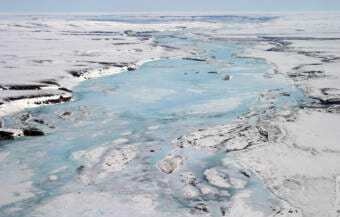
The Canning River in the Arctic National Wildlife Refuge. (Lisa Hupp/USFWS)

The Bureau of Land Management has eliminated close to 475,000 acres of federal land from its upcoming oil and gas lease sale in the coastal plain of the Arctic National Wildlife Refuge.

BLM’s announcement Friday evening shrinks by about 30% the acreage companies can buy drilling rights to.

The agency started accepting bids for the remaining roughly 1.1 million acres on Monday and plans to hold the first-ever lease sale for the coastal plain on Jan. 6.

https://www.facebook.com/BLMAlaska/photos/a.293261867399962/4049600611766050

The 10 tracts removed from the sale are in the southeastern corner of the coastal plain.

BLM says it decided to cut that land from the sale based on comments it got during a 30-day call for nominations period that ended last Thursday, including concerns about caribou, polar bear and bird habitat.

According to the U.S. Geological Survey, the removed land does not have a high potential for oil.

“Most of the tracts removed from the sale are gas prone and have negligible oil potential,” David Houseknecht, USGS senior research geologist, said in an email.

Those opposed to the lease sale have launched criticism at the government’s timeline.

More than a dozen groups, including the Gwich’in Steering Committee, are trying to block the sale and the government’s approval of any seismic work in the coastal plain. They’ve filed motions for a preliminary injunction, and a federal judge says she’ll make a ruling on the requests by Jan. 6.

The groups argue that the government’s plan to open the coastal plain to drilling is rushed and flawed. They say development in the area will cause irreparable harm to wildlife, the tundra and the climate.

But those who support the sale argue it’s good for the economy, jobs and will create more revenue for the state and federal government.

BLM says it’s accepting sealed bids for the oil and gas leases until Dec. 31. The government plans to open those bids on Jan. 6 and will stream the event online.

President-elect Joe Biden will take office two weeks later, and says he opposes drilling in the refuge.

Biden’s pick for Interior secretary is a passionate foe of drilling in Arctic Refuge

Rep. Deb Haaland, at podium, spoke at a rally in Washington, D.C. to oppose drilling in the Arctic National Wildlife Refuge in 2018, a few weeks before she was sworn in. (Liz Ruskin/Alaska Public Media)

President-elect Joe Biden has chosen Congresswoman Deb Haaland to be the next secretary of Interior.

The New Mexico Democrat is a member of the Pueblo of Laguna tribe. If confirmed by the Senate, she would be the first Indigenous American to serve as a cabinet secretary.

Indian Country Today Editor Mark Trahant said the news made a big splash in Native communities.

“Everyone’s working at home yet we could still hear the reaction going across the country, so that gives you a pretty good idea,” said Trahant, a former UAA professor who is a member of the Shoshone-Bannock. “If you think about the history of the country, it’s so rare to have real representation, as in secretaries of agencies. Zero. So this is a big moment.”

The Interior Department employs about 70,000 people and encompasses vastly divergent sub-agencies. One is the Bureau of Indian Affairs.

La quen náay Liz Medicine Crow, president of the First Alaskans Institute, said the Department of Interior is still repairing its relationship with tribes after eras of contempt and abuse.

“So to have a Native person, who has lived that life, who understands what it means to be a Native person in this country, to come from a small community, to be a steward for thousands of years for our homelands — that’s what we have in Congresswoman Deb Halaand,” Medicine Crow said.

Interior is hugely important in Alaska and other Western states for the 500 million acres of land it manages. Interior is the parent of the National Park Service and the U.S. Fish and Wildlife Service. Its mission is to preserve nature. It also includes the Bureau of Land Management, which leases land for mining and drilling. BLM is scheduled to auction off drilling rights in the Arctic National Wildlife Refuge just two weeks before Biden becomes president.

Haaland has voiced passionate opposition to drilling in the Arctic National Wildlife Refuge. As a congresswoman-elect in 2018, she spoke at an anti-drilling rally in front of the U.S. Capitol.

“I’m here to support my family in Alaska. To protect the Arctic Refuge. To protect the animals and the trees and everything that lives there,” Haaland said then. “Because not everything should be based on how much money we can make.”

She meant “family” in a broad sense. The rally was organized by Gwich’in opponents of drilling.

Last year, Haaland co-sponsored a bill that would have blocked the BLM from holding a lease sale in the Arctic Refuge.

“Oil and gas drilling puts at risk the Porcupine caribou herd, which has sustained tribes for centuries and centuries,” Haaland argued on the House floor. “It also threatens wolves, polar bears and migratory birds that live in the refuge, and will release carbon dioxide into the atmosphere, exacerbating the effects of global warming, which have affected Alaska far more than any state in this country.”

Alaska Native groups are on both sides of development in ANWR. Some, particularly on the Arctic Slope, say they need the jobs, and they say drilling and caribou can co-exist.

Despite Haaland’s opposition to one of his long-held goals, Alaska Congressman Don Young has praised her and called her a friend. They worked together on bills to provide contracting opportunities for tribes and to restore buffalo herds.

Young’s office did not respond to an interview request Thursday.

State regulatory commission gives final approval for BP-Hilcorp deal

The Trans-Alaska Pipeline runs alongside the Dalton Highway near the Toolik Field Station on June 9, 2017, in the North Slope Borough. (Photo by Rashah McChesney/Alaska's Energy Desk)
The Trans-Alaska Pipeline runs alongside the Dalton Highway near the Toolik Field Station on June 9, 2017, in the North Slope Borough. (Photo by Rashah McChesney/Alaska’s Energy Desk)

Oil company Hilcorp has received the last regulatory approval in its deal to buy the Alaska assets once owned by BP.

The Regulatory Commission of Alaska issued its long-awaited decision Monday night. It allows a Hilcorp affiliate company to take possession of BP’s ownership stake of just under half of the trans-Alaska oil pipeline system, plus its interest in the Milne Point and Point Thomson pipelines.

The first big chunk of the $5.6 billion Hilcorp-BP deal has already closed.

This summer, Hilcorp took over BP’s interest in the massive Prudhoe Bay, Milne Point and Point Thompson fields on Alaska’s North Slope. The sale launched Hilcorp into the position of Alaska’s second-largest oil producer.

Site notifications
Update notification options
Subscribe to notifications