North Slope

Biden immediately slams brakes on oil drilling in Arctic refuge

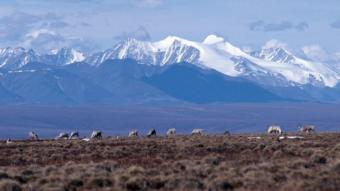
Caribou graze on the coastal plain of the Arctic National Wildlife Refuge, with the Brooks Range as a backdrop in October 2010. (Public domain photo by U.S. Fish and Wildlife Service)

President Joe Biden imposed a “temporary moratorium” on all oil and gas leasing activities in the Arctic National Wildlife Refuge shortly after taking office on Wednesday, citing the “alleged legal deficiencies underlying the program” and the inadequacy of a required environmental review.
Biden’s move to slam the brakes on drilling in the northeast Alaska refuge is among a list of executive orders the newly-inaugurated president swiftly signed to undo actions by his predecessor.

The new moratorium comes a day after the Trump administration announced, in its final moments, that it had finalized nine 10-year leases for oil drilling in the northernmost slice of the refuge, known as the coastal plain.

The leases are held by two small companies and the Alaska Industrial Development and Export Authority, a state-owned corporation.

The Trump administration had faced criticism that it rushed the controversial deals.

Biden’s executive order directs the Interior Department to review the oil-leasing program for the refuge, and “as appropriate and consistent with applicable law” to do a new analysis of its potential environmental impacts.

Biden campaigned on “permanently protecting” the Arctic refuge, and “reversing Trump’s attacks” on the area, but had not released any specifics about his intentions before Wednesday.

Larry Persily, a longtime observer of the oil and gas industry in Alaska, said he didn’t expect a moratorium to have immediate, sweeping impacts because there’s no near-term work to stop.

“The leaseholders don’t have the financial wherewithal to pay for activity,” Persily said in an interview Wednesday. “They’ve got to find partners, they’ve got to come up with plans, they’ve got to go for permits, there’s got to be environmental reviews.”

‘A very good day’

Still, environmental groups and Indigenous Gwich’in leaders said the news gave them an overwhelming sense of relief.

“I thanked the creator,”  said Bernadette Demientieff, executive director of the Gwich’in Steering Committee and a longtime drilling opponent. “And I just sat on my couch and looked at my grandson and just cried. Everything I do is for our future generations.”

The Gwich’in live just outside the refuge, and depend on the caribou that commonly give birth in the coastal plain.

The Porcupine Caribou Herd in the Arctic National Wildlife Refuge on July 3, 2019. The Gwich’in live outside of the refuge but harvest caribou from the Porcupine Herd, which breeds in the refuge. (Danielle Brigida via Creative Commons)

They have long worked with environmental groups on an aggressive opposition campaign to oil drilling on the coastal plain, arguing that development would harm wildlife and the land — and exacerbate climate change in a place that’s already warming fast.

Demientieff described Wednesday as “a very good day,” but said “the fight goes on.” The Gwich’in Steering Committee is behind one of four lawsuits that call on a federal judge to cancel the oil leases issued by the Trump administration.

“Permanent protection is what we are looking for,” Demientieff said.

Adam Kolton, executive director of the Alaska Wilderness League, summed up opponents’ feelings another way, saying in a statement: “Our long national nightmare of environmental carnage ends today.”

‘I’m prepared to use every resource available to fight for Alaskans right to have a job’

Drilling booster Gov. Mike Dunleavy, however, was not pleased with Wednesday’s news. He blasted Biden for “making good on his promise to turn Alaska into a large national park.”

“I’m prepared to use every resource available to fight for Alaskans’ right to have a job, and have a future by taking advantage of every opportunity available to us,” Dunleavy said in a statement.

Gov. Mike Dunleavy speaks in a promotional video about resource development. Dunleavy quickly slammed the Biden drilling moratorium, saying it is treating Alaska like a national park. (Screenshot from Office of Gov. Dunleavy)

Alaska’s congressional delegation also slammed the move by Biden to block oil development in the refuge, saying they were “disappointed” and “astounded” by his day-one announcement.

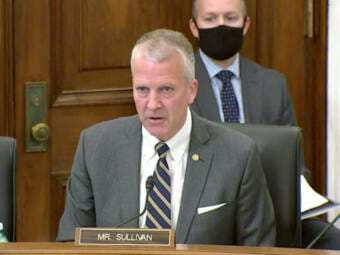
“Well that was fast,” U.S. Sen. Dan Sullivan said in a statement. “Today, in his inaugural address, President Biden called for national unity and healing. However, just hours earlier, his administration took their cues from radical environmentalists in issuing punitive and divisive actions against Alaska, many other resource development states, and whole sectors of our economy,”

Even before Biden’s action, though, the refuge’s future as a source of oil and jobs was far from secure.

The Trump administration held the refuge’s first oil sale Jan. 6, following a 2017 decision by Congress to open the area to leasing.

But the sale drew little interest. No major oil companies bid on the leases. Instead, two smaller companies each picked up a single lease, and the state-owned Alaska Industrial Development and Export Authority picked up seven.

‘We will be at the table for whatever they do’

Former Alaska Gov. Bill Walker had pushed the state to bid on the leases, concerned that the oil industry wouldn’t show up to the sale.

Biden’s moratorium, Walker said Wednesday, came as “no surprise at all.”

He said he’s pleased the state now holds the leases, and believes that will give it more power in talks with the Biden administration about the refuge’s future.

“We will be at the table for whatever they do, which we would not be, had we done nothing,” Walker said.

Andy Mack, a former natural resources commissioner under Walker, described the leases as “legally binding.”

If the Biden administration decides to ban oil drilling in the coastal plain, Mack said, it needs to figure out a way to compensate those that would have financially benefited from development, including the state of Alaska, and two Alaska Native corporations, Kaktovik Iñupiat Corp. and Arctic Slope Regional Corp.

“This needs to be a value exchange,” Mack said. “There has to be something really, really significant placed on the table that we, as a state, can rely on.”

This story has been updated.

After a year of dramatic lows, Alaska sees modest climb in oil prices

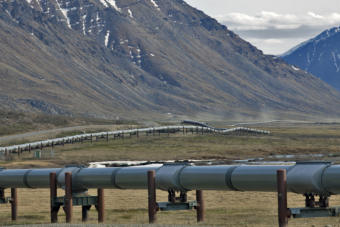
An above-ground section of the Trans-Alaska Pipeline System near the Toolik Lake Research Station in the North Slope Borough. (Photo by Rashah McChesney/Alaska's Energy Desk)
An above-ground section of the Trans-Alaska Pipeline System near the Toolik Field Station in the North Slope Borough. (Photo by Rashah McChesney/Alaska’s Energy Desk)

The price of oil has inched higher over the last few months. This week, West Texas Intermediate, Brent and Alaska North Slope crude are all selling for over $50 per barrel.

Longtime industry observer Larry Persily said the increase this month is based on a few things. Mainly, at a recent meeting of OPEC+, Saudi Arabia said it would cut production by 1 million barrels per day in February and March.

“The market says there is sanity today,” said Persily. “Prices went a little higher.”

Persily said markets may also be responding to some countries beginning to reopen from pandemic lockdowns this winter. But Persily also said there is still great uncertainty surrounding the pandemic and oil demand, making it impossible to predict what prices will look like in the months ahead.

Prices in the $50 per barrel range look really good compared to the lows the industry saw in the last year. But Persily said it still doesn’t solve Alaska’s budget problems — not even close.

“It takes us from a miserable budget to a less than miserable, but far from rosy [one],” said Persily. “If Alaskans are going to receive a Permanent Fund dividend sometime in 2021, it’s going to come from overdrawing the permanent fund earnings reserve more than the 5% maximum annual withdrawal in state law.”

If Alaska North Slope crude were to average $60 per barrel for the coming fiscal year, Persily said, the state could mostly balance the budget — if it paid no Permanent Fund dividends.

The prices we’re seeing now do help oil companies build confidence in future investments, Persily said, but oil prices would have to reach $100 per barrel to fully fund the budget and dividends. No one is forecasting that.

Drilling boosters, opponents consider next steps after first Arctic refuge lease sale

Arctic National Wildlife Refuge (U.S. Fish & Wildlife Service-Alaska)

Just two companies and a state corporation showed up to the first-ever oil and gas lease sale in the Arctic National Wildlife Refuge last week, after 40 years of debate.

But still, about half a million acres of land did get picked up — nearly all of it by the state of Alaska itself.

So, what happens next?

Here’s what we know.

State agency focused on getting leases finalized

The Alaska Industrial Development and Export Authority entered the lease sale at the last minute as a backstop, in case no one else showed up to secure the rights to the land.

It wound up as the most aggressive of just three bidders.

That means the state won 10-year oil leases for nine pieces of land by submitting the minimum offer that the federal government would accept: $25 an acre.

“We are very happy that we were able to win some of the tracts in this case,” Alan Weitzner, AIDEA’s executive director, said in an interview Thursday.

“We would have preferred to see a more competitive bid put in place,” he said. “But I do think that there was a lot of uncertainty related to it.”

Drilling for oil in the refuge faces an aggressive opposition campaign. It’s also expensive, and uncertainty surrounds the future of oil demand — as well as just how much crude is actually trapped under the land.

Weitzner said he hopes the state’s decision to step in removes at least some of the uncertainty the oil industry might have about drilling in the coastal plain.

AIDEA has never held a federal oil lease before, and it doesn’t own drilling equipment, so it will likely have to depend on partnering with the industry to explore for oil and develop the land.

Weitzner didn’t have specifics on Thursday about who AIDEA might partner with, what the partnerships might look like or when it might start that work.

“It’s too early to say and give that information of what our definitive plan is going forward,” he said.

“We do have a very strong interest in ensuring that the state has tangible benefits that come from this development. And we have have distinct interest to ensure that it is done in a responsible manner.”

For now, Weitzner said he’s working with the federal Bureau of Land Management to get the paperwork done to finalize the leases.

Usually, the process takes about two months, but it’s expected that the Trump administration will rush to get it done before leaving office Jan. 20.

A map from the Bureau of Land Management shows the results of the first-ever oil lease sale in Alaska’s Arctic National Wildlife Refuge. Half of the tracts received no bids at all. (BLM Screenshot)

At last week’s sale, AIDEA spent about $12 million on oil leases that cover about 480,000 acres of federal land.

Half of that cash will go back to the state, because it splits the revenues with the federal government.

Two smaller companies see opportunity to enter Arctic refuge early

Knik Arm Services is one of two tiny companies that each picked up a single oil lease.

Mark Graber manages Knik Arm Services, and in an interview from Texas, he said the payoff is potentially huge if the U.S. Geological Survey’s estimates of the amount of oil beneath the refuge are correct.

“I’m an investor,” said Graber, who described himself as a “snowbird” who splits his time between Texas and Alaska.

“I go where I think a fair investment might offer a decent return for the risk,” he said.

Graber said he’s putting up a “good deal” of his own money to purchase the lease, along with other “funders” who he declined to name. He said he thinks he understands why major oil companies didn’t show up to the lease sale.

“Because it’s controversial,” he said. “They knew Alaska was going to bid on it. So, they knew that they’d have a chance to pick it up later.”

He argues that it won’t be a problem to develop the land without harming wildlife. Knik Arm Services wouldn’t drill itself, but would work with other companies to explore for oil “when the time is ripe,” he said.

Graber said this isn’t the first time he has made investments during a down market.

“We always bought real estate during the real estate crash of ‘89,” he said. “We’ve always tried to facilitate a weak market by taking the gamble and taking a risk. Sometimes it works. Sometimes it doesn’t.”

The other small company that won a lease is Regenerate Alaska, a subsidiary of Australia-based 88 Energy.

The slice of land it picked, on the refuge’s western edge, is near a state-owned parcel that the company already leases, and next to ExxonMobil’s Point Thompson field.

David Wall, chief executive of 88 Energy, told the Anchorage Daily News that he saw it as a “soft entry” into the refuge. He said he doesn’t want to upset anyone, but wants to “make money for ourselves, and the state and its people.”

Drilling opponents say they’re not done fighting

Meanwhile, Indigenous and environmental groups that have long fought drilling in the refuge say they’re not giving up.

“We are going to do everything in our power to prevent the leases from being issued before Inauguration Day,” said Karlin Itchoak, Alaska state director for The Wilderness Society. “And we’re going to do everything we can to prevent oil and gas development from ever happening on the coastal plain of the Arctic Refuge.”

Itchoak said he couldn’t talk specifics about how the groups could block leases from getting issued, “because we don’t want to show our hand.”

Defend the Sacred AK, a group opposed to oil development in the Arctic National Wildlife Refuge, stands in front of the Anchorage BLM office on Jan. 6, 2021, the day of the first-ever oil lease sale for the Refuge. (Jeff Chen/Alaska Public Media)

Some have raised questions about the legality of the state of Alaska jumping into the lease sale. The Bureau of Land Management said Wednesday that it doesn’t see any legal issues.

Leaders of the Gwich’in Steering Committee say they met Friday with Weitzner, the AIDEA director, and urged him to reconsider leasing the refuge. The Gwich’in subsist on caribou that give birth in the Arctic refuge’s coastal plain, which was the area that the Trump administration put up for sale.

“We let them know that our way of life is not negotiable, and that we wanted to know how they intend to include Indigenous voices, and protect Indigenous ways of life and values,” Bernadette Demientieff, the Gwich’in Steering Committee’s executive director, said in a prepared statement.

Itchoak said drilling opponents just need to halt any progress until Inauguration Day, because they expect support from the next administration.

President-elect Joe Biden and his appointee to lead the Interior Department, U.S. Rep. Deb Haaland, D-New Mexico, have both said they oppose drilling in the refuge.

“We’re hopeful that if we can hold off the issuance of the leases by or before the inauguration, that will be a positive outcome for protecting the refuge for the long term,” said Itchoak.

Biden has not said what his exact plans are for the coastal plain, but it’s possible he could try to buy back the oil leases or hold up the permits that companies need to search for oil and develop the land.

The Wilderness Society and other groups are also in court fighting against the oil leasing program for the refuge.

There are four lawsuits working their way through the federal court system that, effectively, ask a judge to cancel the oil leases, arguing that they’re based on a rushed and legally-flawed plan.

The federal government disagrees, and says it followed the law.

Alaska Public Media’s Nat Herz contributed to this story. 

Arctic Refuge lease sale goes bust, with no bids from major oil companies

Caribou graze on the coastal plain of the Arctic National Wildlife Refuge, with the Brooks Range as a backdrop in October 2010. (Public domain photo by U.S. Fish and Wildlife Service)

One of the Trump administration’s biggest energy initiatives suffered a stunning setback Wednesday, as a decades-long push to drill for oil in Alaska’s Arctic National Wildlife Refuge ended with a lease sale that attracted just three bidders — one of which was the state of Alaska itself.

Alaska’s state-owned economic development corporation was the only bidder on nine of the parcels offered for lease in the northernmost swath of the refuge, known as the coastal plain. Two small companies also each picked up a single parcel.

Half of the offered leases drew no bids at all.

“They held the lease in ANWR — that is history-making. That will be recorded in the history books and people will talk about it,” said Larry Persily, a longtime observer of the oil and gas industry in Alaska. “But no one showed up.”

The sale generated a tiny fraction of the revenue it was projected to raise.

It was a striking moment in a 40-year fight over drilling in the coastal plain, an area that’s home to migrating caribou, polar bears, birds and other wildlife. It also potentially sits atop billions of barrels of oil, according to federal estimates.

But amid a global recession, low oil prices and an aggressive pressure campaign against leasing by drilling opponents, oil analysts have for months been predicting little interest in the sale, and their forecasts were confirmed Wednesday.

Read all of the bids received here.

Persily took the sale as evidence that while drilling in the refuge remains a long-held dream of some politicians, it is no longer treasured by oil companies.

“It was, in the oil industry terms, a dry hole. A bust,” he said. “They had the lease sale, the administration can feel good about it, but no one’s going to see any oil coming out of ANWR.”

Kate MacGregor, Deputy Secretary of the Department of Interior, announces bids at the BLM’s lease sale of tracts within the Arctic Coastal Plain of the Arctic National Wildlife Refuge on Jan. 6, 2021 (Screenshot from BLM)

Even Kara Moriarty, head of the Alaska Oil and Gas Association, acknowledged that the sale results weren’t as “robust” as expected. But she said the industry still supports future access to the coastal plain.

“Today’s sale reflects the brutal economic realities the oil and gas industry continues to face after the unprecedented events of 2020, coupled with ongoing regulatory uncertainty,” she said in a statement.

The lease sale raised a total of $14.4 million in bids, according to the Bureau of Land Management, the federal agency that held the sale. Nearly all of that came from Alaska’s state-owned economic development corporation, the Alaska Industrial Development and Export Authority.

Half of the cash will go to the federal government, and half will go back to the state of Alaska.

The amount raised is nowhere near what was projected when a Republican-led Congress officially opened the coastal plain to drilling in 2017 as part of the Tax Cuts and Jobs Act.

The bill ordered two lease sales, the first by the end of this year, with the revenue aimed at offsetting massive tax cuts.

Despite the low interest, Alaska’s Congressional delegation applauded the sale on Wednesday, and so did officials with the Bureau of Land Management, describing it as historic and a success.

Opponents blasted the sale.

Defend the Sacred AK, a group opposed to oil development in the Arctic National Wildlife Refuge, stands in front of the Anchorage BLM office on Jan. 6, 2021, the day of the first-ever oil lease sale for the Refuge. (Jeff Chen/Alaska Public Media)

“I laughed out loud. It was a joke. A joke to the American people,” said Desirée Sorenson-Groves, director of the Arctic Refuge Defense Campaign. “I’ll tell you, I have a message to those who bid today, there were only three. But here’s the message: ‘You will never ever drill in the Arctic Refuge. We’ll stop you.’”

The land that received no bids on Wednesday will not be leased in this sale.

Of the two small companies that did win leases, one is Regenerate Alaska, a subsidiary of Australia-based 88 Energy. The other is Knik Arm Services, a small Alaska company managed by an investor named Mark Graber.

The state-owned Alaska Industrial Development and Export Authority, which dominated the sale, has never held federal oil leases before.

But Alaska politicians, including former Republican Gov. Frank Murkowski, recently pushed the corporation to bid, citing the lack of industry interest. Murkowski, in an interview Wednesday, said he expects the corporation to eventually partner with companies to do the actual drilling.

“We’ll see how good an investment it is when we see what the interest is from some companies to negotiate,” he said.

The oil leases are still not finalized.

That process, which includes an antitrust review by the U.S. Department of Justice, typically takes about two months. But the Trump administration is expected to rush to issue the leases formally before the president leaves office in two weeks.

Even if it succeeds, additional oil leasing and drilling in the refuge will face headwinds, said U.S. Rep. Jared Huffman, D-Calif., a longtime drilling opponent.

He said his next step will be pushing for “permanent protection” for the Arctic refuge. He’s likely to have support from a Biden administration. The president-elect and his appointee to lead the Interior Department have both said they oppose drilling there.

Huffman said he‘s open to a compromise with drilling boosters — from the state of Alaska to Indigenous Iñupiaq leaders in Kaktovik, the only community inside the refuge’s boundaries —  that would provide them with alternative paths toward economic development.

“We’re not hostile to taking care of the interests here, and helping put folks on a path of economic development that makes sense and that’s sustainable,” Huffman said.

“But whether it’s the climate crisis or the market factors or the extreme logistic and environmental impropriety of drilling in this place, it’s not going to happen,” he said. “It’s just not. And so I think the state of Alaska and the folks in Kaktovik should cut a deal.”

Roger Herrera, a retired BP executive and longtime lobbyist for an Alaska group that pushed Congress to open the refuge, said he was “hugely disappointed” in the results of the sale.

“Alaska is a natural resource state. You take away its natural resources and it has basically nothing,” he said in a phone interview. “Alaska’s motto of ‘North to the Future’ should be re-examined, because I don’t think it has much meaning now.”

Federal judge denies requests to block Arctic refuge oil leasing

Slides from the BLM at the Utqiaġvik scoping meeting on drilling in the Arctic National Wildlife Refuge, May 31st, 2018. Public meetings are being held around Alaska to solicit comments on an oil and gas lease program in the 1002 area of the Refuge. (Ravenna Koenig/ Alaska’s Energy Desk.)

A federal judge Tuesday denied requests that she block the Trump administration from issuing oil leases in the Arctic National Wildlife Refuge.

U.S. District Court Judge Sharon Gleason’s ruling means the federal government can continue with its plans to hold the refuge’s first-ever oil lease sale Wednesday.

It’s a win for the Trump administration, which has pushed to lock in drilling in the refuge in its final weeks, before President-elect Joe Biden takes office and can try to stop it.

The administration is offering 10-year leases to 22 tracts of land that cover about 1 million acres in the northernmost slice of the refuge, known as the coastal plain.

Gleason’s decisions Tuesday came in three lawsuits filed by an array of groups, including environmental organizations and the Gwich’in Steering Committee.

Read Judge Gleason’s decision here.

In court documents, the groups argue that the federal government failed to follow numerous laws meant to protect wildlife, land, water and people when it crafted its oil-leasing program for the refuge.

They then requested preliminary injunctions.

That means they basically asked Gleason to stop the Trump administration from issuing any oil leases in the refuge — and from authorizing any seismic work to explore for oil there — until their broader lawsuits are decided.

On Tuesday, Gleason denied those requests.

It’s a high legal bar to get an injunction.

Gleason said the groups that filed the lawsuits failed to show that they’d suffer “irreparable harm” if leases were issued, since the oil companies would still have to get additional permits before drilling wells or searching for oil.

Also, Gleason said she could not halt seismic exploration because the government hasn’t yet approved a proposal to do the work. She said the groups could try again for an injunction once the proposal is approved.

Gleason’s decision Tuesday is not a ruling on the merits of the broader lawsuits.

Those court cases will continue.

Earthjustice attorney Erik Grafe, who represents environmental groups in one of the lawsuits, said he was disappointed with Tuesday’s ruling, but the fight is not over.

“We will continue to press our case that the agency approved the program unlawfully and that its decision should be overturned,” Grafe said in a written statement.

In a statement from the U.S. Interior Department, spokesperson Nicholas Goodwin described Gleason’s ruling as “expected and unsurprising.”

“The Department of the Interior looks forward to proceeding with appropriate dispatch to achieve the clear direction it received from Congress in 2017,” Goodwin said.

After a decades-long debate, a Republican-led Congress opened the coastal plain to drilling in 2017. It also ordered the government to hold the first lease sale there by the end of this year.

Gleason was appointed to the federal bench by Democratic former President Barack Obama, and she has ruled against several of the Trump administration’s pro-development initiatives in Alaska.

Editor’s note: This story has been updated.

Federal judge will weigh request to block oil leasing in Arctic refuge

The Canning River and Arctic coastal plain. (Lisa Hupp/USFWS)

With the first-ever oil lease sale in the Arctic National Wildlife Refuge just two days away, a federal judge in Anchorage will consider a request Monday to stop the Trump administration from issuing the oil leases.

U.S. District Court Judge Sharon Gleason will hear oral arguments by videoconference at 1 p.m., in a case brought by the National Audubon Society and three other environmental groups.

The groups argued in a lawsuit filed in August that the federal government failed to follow numerous laws meant to protect wildlife, land, water and people when it crafted its oil-leasing program for the Arctic refuge in northeast Alaska.

The Trump administration is now set to open bids Wednesday in the first-ever lease sale in the refuge. It’s offering drilling rights to 22 tracts of land that cover about 1 million acres in the northernmost slice of the refuge, called the coastal plain.

But whether the oil leases actually go to the highest bidders could be up to Gleason.

The environmental groups are asking her to block the government from issuing the leases until the broader lawsuit is resolved. They’re asking for a decision by Wednesday, and Gleason has said she’ll try to enter a ruling by then.

There are two other similar requests also working their way through the court system.

The groups say the Trump administration is rushing to lock-in oil drilling in the refuge in the president’s final weeks, before the court can determine the legality of its plan.

“Its haste threatens permanent harm by locking in government decision-making and scarring the Refuge in ways that cannot be undone,” wrote lawyers for the National Audubon Society and other environmental groups in their request for a judge to intervene.

The federal Bureau of Land Management is the agency handling the lease sale. It has defended its process, saying it’s following the 2017 tax law, which opened the refuge to drilling after decades of debate. The law says the government must hold the first lease sale in the refuge by the end of 2021.

Each side will have 20 minutes Monday to argue their points in federal court. People can listen to the hearing at 877-402-9757, with access code 1461160#.

Site notifications
Update notification options
Subscribe to notifications