North Slope

Alaska superior court judge orders state to correct its summary of the oil-tax initiative

Anchorage attorney Robin Brena sits at a meeting of the citizens initiative campaign to raise taxes on Alaska’s largest oil producers on Thursday, January 16, 2020. (Photo by Nat Herz / Alaska’s Energy Desk)

An Alaska superior court judge has ruled this week that the state must correct part of its summary for a ballot initiative that would raise taxes on the state’s largest oil fields.

Judge William Morse sided with the backers of the initiative and wrote in an 18-page order that the summary provided by Lt. Gov. Kevin Meyer was not impartial, as required by state law. Morse ordered that Meyer delete the problematic sentence from the summary.
That sentence had to do with oil producers’ tax filings for the state’s three largest oil fields: Prudhoe Bay, Kuparuk and Alpine.

The group backing the initiative, often referred to as Ballot Measure 1, says it wants tax filings made public so Alaskans can see producers’ profits, revenues and costs for the fields.

Meyer’s summary of the initiative says — if it became law — the filings would be subject to the state’s normal public records act process. The initiative’s backers objected to that description. They say it’s not the same because the state could decide to keep some of the information confidential through the process.

In his order, Morse said that for now the most important goal is to allow the initiative’s backers to present their vision of transparency and taxation to the voters. He said Meyer placed “his finger on the scales” when he stated the provision did not mean what its backers say they intended.

“By siding with the possibility of confidentiality Meyer has engaged in partisan suasion,” Morse said. “That is improper.”

In a statement Wednesday, the Alaska Department of Law said it was disappointed the court “failed to see the straightforward accuracy” of the sentence.

“It is the State’s position that whether any information would ultimately be withheld under another existing exception or under the privacy clause of the Alaska Constitution are questions for implementation and not addressed in the summary one way or the other,” the statement said.

Initiative chair Robin Brena said in a statement that it was unfortunate the group had to bring a lawsuit to get Meyer “to fulfill his duty to provide a true and impartial summary” of the initiative.

The initiative will appear on the Nov. 3 general election ballot. The initiative group is also facing a lawsuit from industry trade groups.

BP has a new online platform to track out-of-state workers’ health. And it wants to share it with other companies.

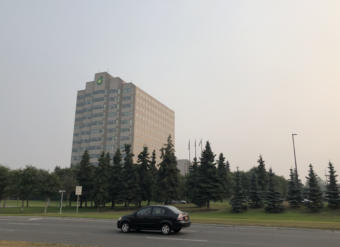
BP’s office building in Anchorage. (Photo by Elizabeth Harball/Alaska’s Energy Desk)

Oil and gas company BP is using a new online platform to track its out-of-state workers’ health. And now, it’s offering the code to the program to other organizations for free.

“It could be applicable to any other industry,” said Jerome Leveque, a data manager at BP Alaska. “It’s not really limited to oil and gas. So, you know, fisheries or tourism or anybody who’s traveling in state or coming from out of state could use this.”

The coronavirus pandemic has forced companies to do business differently and, in some cases, monitor their employees’ health closer than ever.

BP brings hundreds of workers from out of state to Alaska’s North Slope for their shifts at the remote oil fields. But first, the workers must quarantine for two weeks at Anchorage hotels, said BP Alaska spokeswoman Megan Baldino.

That started about two months ago, and prompted the question: What’s the best way to monitor those workers for illness?

Jeremy Zidek, a spokesman for the state Department of Homeland Security and Emergency Management, said companies bringing out-of-state workers to Alaska need to document their plan for screening employees, but they’re given latitude about what measures to use.

BP’s process started with a lot of paper. At first, Leveque said, “everybody was using paper and our medical provider, Beacon, was going door-to-door and filling out papers and taking temperatures twice a day.”

Leveque said BP wanted to find a more efficient way that included less human interaction. So it hired a software company called Resource Data to create a digital hub for its workers. The new platform launched earlier this month.

Now, Leveque said, workers can log in to the program on their cell phones, computers or tablets. Twice a day, while in quarantine, they take their temperatures and type in the results. They check the boxes of any symptoms they’re experiencing.

The platform relies on honesty and the Internet. Leveque said it has sped up the workflow. The program also automatically alerts the company’s medical provider of fevers and other health concerns like a cough or muscle aches.

“We send an immediate text message and alert emails to the medical support teams,” Leveque said. “So we can really deal with any symptoms as rapidly as one can.”

Using the program, BP workers also record their quarantine locations and contact information. The company posts coronavirus-related messages and news. There’s another portal for the screening questions they have to answer before they fly to Prudhoe Bay.

According to Baldino, roughly 50 BP workers are in quarantine on any given day before flying north. BP’s Prudhoe Bay workforce totals about 1,000 employees, and nearly 40% live out of state. So far, BP has reported one of its employees at Prudhoe Bay testing positive for the coronavirus. That happened in late March.

Baldino said employees can still opt to use paper forms to fill out their health information instead of the software. As of last week, workers had filled out more than 700 online quarantine logs, Leveque said.

Baldino said BP expects to use the new program “for the foreseeable future.” BP, however, is also in the process of selling its entire Alaska business to Hilcorp and exiting the state. The company has said it plans to close the deal by the end of next month.

Leveque said he hopes other companies, big and small, can adapt the online program to monitor for illness as the pandemic continues.

Alaska reports 13 new coronavirus cases, largest new case count for several weeks

Screenshot from the Alaska Department of Health and Social Services COVID-19 dashboard, taken on May 28, 2020, showing a spike in confirmed cases in Alaska on May 27. (Data from https://coronavirus-response-alaska-dhss.hub.arcgis.com/)

There were 13 new confirmed cases of the coronavirus on Wednesday. That’s the most new cases for one day since mid-April, according to the state Department of Health and Social Services.

The increase was driven by seven new cases in the Kenai Peninsula Borough. There also were four in Anchorage, one in Juneau and the first case in the North Slope Borough.

All of the cases announced today, including the Kenai cases, are still under investigation, a department spokesperson said.

The state began easing health mandates on April 24, with businesses allowed to return to full capacity on  May 22.

There were no changes in the 10 deaths, 46 hospitalizations and 17 cases from people who live outside of the state. The number of recoveries increased by four, to 366. And the number of test results reported increased by 1,607, to 47,970.

The last day with a larger increase in confirmed cases was April 11, when 15 cases were reported. The largest single reported increase was 22, on April 6.

Note: This story has been corrected to reflect the fact that the highest number of cases reported in one day was 22, on April 6.

First positive case of COVID-19 reported in North Slope Borough

The North Slope Borough’s main building in Utqiaġvik. (Ravenna Koenig/ Alaska’s Energy Desk)

A resident from the North Slope Borough has tested positive for COVID-19. This is the first positive case in the region.

According to a release from the Arctic Slope Native Association, the patient had been tested at the Samuel Simmonds Memorial Hospital in Utqiagvik on May 22. The patient had been in Anchorage, before traveling to Utqiagvik and then on to their home community. For the patient’s privacy, the name of the community was withheld.

Samuel Simmonds Hospital is preparing a team of medical officials to go to the patient’s community to provide testing to anyone who may have come in contact with the individual.

While this is the first case for a resident of the North Slope, a BP worker at Prudhoe Bay tested positive for the virus in March.

The case is one of more than 400 positive cases of COVID-19 across Alaska.

This is a developing story and may be updated when new information becomes available.

More oil can flow from Alaska’s North Slope as global demand creeps back

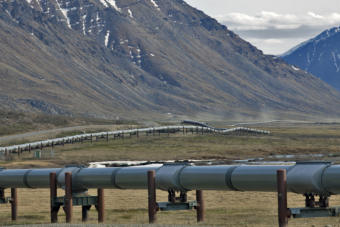
An above-ground section of the Trans-Alaska Pipeline System near the Toolik Lake Research Station in the North Slope Borough. (Photo by Rashah McChesney/Alaska's Energy Desk)
An above-ground section of the Trans-Alaska Pipeline System near the Toolik Field Station in the North Slope Borough. (Photo by Rashah McChesney/Alaska’s Energy Desk)

The operator of the trans-Alaska pipeline is allowing oil companies to send more crude from the North Slope to Valdez as demand creeps back and economies reopen.

Alyeska Pipeline Service Co. had previously imposed a 15% cut to North Slope production as the coronavirus hammered demand for oil and that, paired with an international oil price war, led to a glut of oil on the market. On Friday, Alyeska trimmed the reduction to 5%, or roughly 25,000 barrels of crude a day spread across all fields.

“It is a big deal to be able to adjust a proration and get back to business, where every barrel that producers intend to move, we can move,” said Michelle Egan, a spokeswoman for Alyeska. “That’s what we’re here for.”

In late April, Alyeska had cut oil flow by 10% to avert a storage crunch in Valdez, the town where tankers pick up the crude and deliver it to West Coast refineries. It raised that to the 15% cut on May 8.

Now, oil prices are crawling back after taking a historic plunge into the negatives last month. That’s as global demand for oil begins to return, the oil price war ends and companies shut down wells.

Larry Persily, who has long tracked oil and gas markets, described the reduced cut from Alyeska as “the first sliver of good news for Alaska North Slope oil producers.” It indicates there’s a place for the crude to go after it’s pumped from the oil fields at the top of Alaska, he said.

“It’s more of an indication that there’s capacity on the West Coast, at the refineries, and in storage,” he said. “So they’re going to up production because there’s a place to put it. There’s someone who wants it. And prices are higher.”

But, Persily said, there’s still a backlog of bad news for Alaska’s oil industry: Oil producers have recently slashed spending and reduced drilling. Oil field service companies have laid off hundreds of workers. The state’s largest oil producer, ConocoPhillips, also still plans to cut its oil production in half in Alaska for the month of June.

“The decision to curtail production by 100,000 barrels a day in June has been made, and that won’t change,” Conoco Alaska spokeswoman Natalie Lowman wrote in an email.

Alyeska operates the pipeline on behalf of its owners: Conoco, BP and ExxonMobil.

Alyeska reported 450,299 barrels of North Slope crude flowing down the pipeline on Monday. The value of a barrel reached almost $30 by last week — a significant climb from a low of -$2.68 on April 20. It’s still far below the $70 value from early January.

Egan said there’s no timeline for when Alyeska will remove the 5% cut. She said that’s the ultimate goal.

“We’ll make every effort to get back to 100%,” she said. “That’s absolutely where we want to be.”

Pilot dead, passenger survives after North Slope charter plane crash

Teshekpuk Lake. (Photo courtesy Bureau of Land Management)

The pilot of a charter plane is dead after crashing near Teshekpuk Lake southeast of Utqiagvik Thursday night.

The North Slope Borough Search and Rescue Department received a distress signal between 9 p.m. and midnight, says spokesperson D.J. Fauske. Fauske says pilot Jim Webster of Fairbanks charter company Webster’s Flying Service died in the crash.

Fauske says Search and Rescue found one passenger alive: Ben Jones, a researcher with the University of Alaska Fairbanks Institute of Northern Engineering. A rescue helicopter brought Jones to Utqiagvik.

“Ben is recovering in Utqiagvik at our hospital there, with multiple fractures,” Fauske said. “(He’s) expected to recover, but obviously severely injured.”

Fauske says Jones and Webster were the only two on the plane. UAF spokeswoman Marmian Grimes says Jones was conducting research at the Teshekpuk Lake Observatory. Jones’s research primarily deals with permafrost and arctic water systems. Grimes didn’t know if Jones was heading towards or away from the research site when the crash occurred.

Fauske says the National Transportation Safety Board is coordinating an investigation into the crash with the North Slope Borough. And he says flying conditions were very bad and foggy when the distress beacon was received.

Fauske says it was important that Webster had a special international beacon that was compatible with the borough’s search and rescue equipment.

“They were able to locate them because of that device,” Fauske said. “Without that device, it was still bright out since it’s that time of year, but it would be very difficult.”

North Slope Borough Mayor Harry Brower thanked search and rescue for recovering Jones, and he sent prayers to Webster’s family.

Site notifications
Update notification options
Subscribe to notifications