North Slope

Alaska’s majority-Native districts had uneven voter turnout in 2020, analysis finds

Campaign signs in Nome, seen on Oct. 2, 2020, urge votes for a slate of Democratic candidates. The Nome Census Area had a 50% turnout in the 2020 election, close to average for majority-Native districts around the nation but lagging the overall U.S. turnout of 67 percent, according to an analysis by the National Congress of American Indians’ Policy Research Center. (Photo by Yereth Rosen/Alaska Beacon)

Among all the nation’s majority-Native voting districts, one in Alaska had the highest turnout in the last presidential election, while others in Alaska had some of the lowest turnouts, according to an analysis by the National Congress of American Indians Policy Research Center.

The majority Yup’ik Yukon-Kuskokwim Census Area of southwestern Alaska posted a 75% turnout rate in 2020, topping those of all county or county equivalents where Indigenous residents comprise at least half of the voting-age population, according to the analysis.

In contrast, the Northwest Arctic Borough, where 83.8% of voting-age residents are Indigenous, had a turnout of only 38% in the 2020 election, near the bottom among the nation’s majority-Native counties or county equivalents. The Lake and Peninsula Borough, with 43% turnout, and Kusilvak Census Area, with 44% turnout, were also near the bottom.

The average voter turnout for the 28 analyzed majority-Native regions across the nation was 53%, according to the Policy Research Center’s findings, which were presented at the NCAI midyear convention held this week in Anchorage.

That average lagged the 67% national voter turnout, the analysis noted. The majority-Native region with the second-highest 2020 voter turnout was Arizona’s Apache County, at 72%, according to the analysis, while the lowest voter turnout was in South Dakota’s Oglala Lakota County, at 37%

The percentages are only estimates that rely on multiple sources of data, as states and local governments “do not collect voter data by race and ethnicity,” the analysis cautioned. Still, “these rates may better inform voter mobilization rates in these regions of the country, as well as provide evidence to continues barriers to voting on reservations and in locations with high numbers of AI/ANs,” it said, referring to American Indians and Alaska Natives.

To Mike Williams Sr., chief of the Akiak Native Community and a longtime Yup’ik leader, the biggest impediment to boosting voting in Alaska’s rural, majority-Native areas is skepticism about whether those votes matter since “urban centers are where the most people are.”

“I think the major issue that I notice is, ‘Does my vote count? Because urban areas have the biggest population, why should I vote?’” he said Thursday, at the close of the National Congress of American Indians midyear conference in Anchorage.

Another issue is ensuring that voting information and instructions are readily accessible to rural voters, including those for whom Yup’ik is the primary language. “I think we need to continuously educate the poll workers,” he said.

The advancement of Yup’ik candidate Mary Peltola as one of the top candidates in Alaska’s ranked-choice U.S. House election, Williams said, should stimulate more Native voting interest. Peltola, a former state legislator, has valuable political experience, he said. “I think she knows how to do the campaigns and how to get the votes,” he said.

Nationally, increased Native voting participation is a priority of the Biden administration, Interior Secretary Deb Haaland said in her address to the conference.

“This administration believes that voting is the most fundamental American right, and we are doing everything in our power to ensure that every American, whether you agree with us or disagree with us, who wants to vote is able to vote,” Haaland said Wednesday by teleconference.

Only oil company that bid for ANWR tract gives up its lease

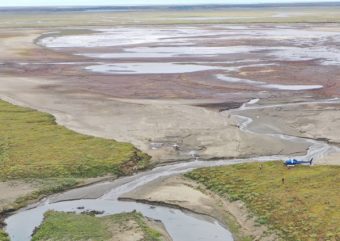
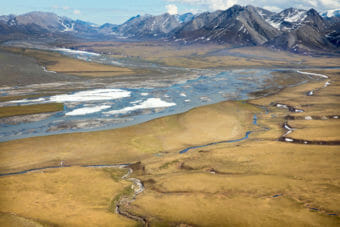
An aerial view of ANWR's coastal plane and the Canning River
The Canning River, seen here in 2018, flows from the Brooks Range into the Beaufort Sea along the western edge of the Arctic National Wildlife Refuge. The sole tract that Regenerate Alaska acquired in the 2021 lease sale — and has now relinquished, lies along the Canning River. (Photo by Lisa Hupp/U.S. Fish and Wildlife Service)

The only oil company that bid in last year’s controversial Arctic National Wildlife Refuge lease sale has dropped the sole tract acquired in that auction.

Regenerate Alaska, a unit of Australia-based 88 Energy Ltd., relinquished the tract it acquired for over $770,000, federal officials said.

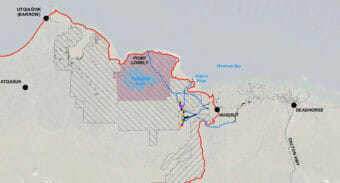
The tract was the narrowest of the 22 offered in the lease sale. It is located on the northwestern edge of the refuge coastal plain. It borders an 88 Energy prospect on state land called Yukon, which itself borders the Point Thomson unit that has been producing natural gas condensate since 2016. On its website, 88 Energy said the acquisition of the ANWR lease “increased our position” at the Yukon prospect, but that any further development would depend on working jointly with other companies that hold leases and possibly farming out the work to others.

The Interior Department confirmed the cancellation and refund.

“Regenerate Alaska, Inc (RAI) purchased a 23,446-acre lease in the Coastal Plain of the Arctic National Wildlife Refuge on January 6, 2021, as part of the Arctic National Wildlife Refuge Coastal Plain lease sale,” Interior said in an emailed statement. “RAI requested to have the lease rescinded and its bonus bid and lease rental payments refunded. The Bureau of Land Management has a well-established procedure to do this, and last month rescinded and cancelled the lease, as requested.”

The Trump administration’s Bureau of Land Management offered leases covering about 1.1 million acres in the Jan. 6, 2021, lease sale. Thirteen bids were received and ultimately nine leases were issued.

Of all the tracts offered, the Regenerate Alaska-acquired tract was the one for which development was the most economically feasible, according to an analysis conducted last year by the World Wildlife Fund of the United States. The analysis found that it would break even at an oil price of $62.50 a barrel in 2021 dollars compared to other tracts’ break-even prices that ranged up to $83.60. However, no production could start until around 2040, and none of the tracts were found to be economically feasible, according to the analysis.

The Regenerate Alaska-acquired tract was also on land where the state disputes federal ownership. The state has claimed it owns that slice of land next to the Canning River. The state is appealing a 2020 Interior Board of Land Appeals decision rejecting the claim.

A caribou climbing a treeless hill
A caribou walks through cottongrass on a hillside in the Arctic National Wildlife Refuge. The debate over oil development has focused on potential impacts to caribou. (Photo by Danielle Brigida/U.S. Fish and Wildlife Service)

Regenerate Alaska’s exit leaves just the Alaska Industrial Development and Export Authority and an Anchorage real estate investor, Knik Arm Services, as the only ANWR leaseholders. AIDEA, a state-owned economic development corporation, has seven leases and Knik Arm Services has a single lease.

Environmentalists said the Regenerate Alaska move, following industry disinterest in the lease sale, shows the futility of attempts to drill in the refuge.

“Last year’s lease sale—which was hurriedly held just weeks before President Biden was inaugurated–was a dismal failure for Donald Trump’s Interior Department when no major oil companies submitted bids because they know the public opposes drilling in the refuge and leases there are a terrible investment,” Karlin Itchoak, Alaska state director of The Wilderness Society, said in a statement. “Only the state of Alaska, which acquired most of the leases through the state-owned Alaska Industrial Development and Export Authority, is still clinging to outdated thinking.”

Last year, Chevron and Hilcorp Energy Co., the successor company to BP Alaska, gave up their claims to leases held on Native land within the refuge boundaries, the Anchorage Daily News reported. Chevron and BP had drilled a well there in the late 1980s, called the KIC-1 well after the Kaktovik Inupiat Corp., but the site was never developed. Chevron and Hilcorp paid the Arctic Slope Regional Corp. a $10 million “breakage fee” to cancel the leases, as reported in a footnote in ASRC’s 2021 annual report.

“While it is disappointing that the leases were relinquished, ASRC remains supportive of other future opportunities for development in ANWR,” the annual report’s footnote said.

The oil companies’ lease relinquishments do not change AIDEA’s plans to develop its seven ANWR leases, the head of that organization said  Thursday.

“We are still actively pursuing pre-development planning and permitting for seismic surveys. While allowed under the leasing program approved by Congress, federal agencies have been actively delaying permitting and access,” Alan Weitzner, AIDEA’s executive director, said by email. “While these investors in Alaska could be creating jobs and opportunity here in the state, they are unfortunately being persuaded by these federal agencies to look outside the US.

Biden administration reverses Trump-era plan to open most of NPR-A to drilling

NPR-A_BLMphoto
Northeast National Petroleum Reserve-Alaska. (Photo by Bob Wick, courtesy of BLM)

The Bureau of Land Management announced Monday that it is ditching a Trump administration plan for the National Petroleum Reserve-Alaska and instead will return to managing the area according to a 2013 plan crafted by the Obama administration.

The move closes millions of acres in the NPR-A to potential oil drilling. The 2013 plan is especially protective of Teshekpuk Lake, a large wetlands important to shorebirds, loons and caribou.

But the BLM says the decision still leaves nearly 12 million acres available for oil and gas leasing. That’s slightly more than 50% of the NPR-A. The Trump administration had wanted closer to 80% open to drilling. There was never a lease sale under Trump’s plan.

The Biden administration indicated in January it was considering reversing the Trump-era policy, drawing outrage from Alaska’s congressional delegation.

“Sweeping restrictions like this — which are being imposed even as the Biden administration implores OPEC+ to produce more oil — demonstrate everything that is wrong with its energy policies,” Sen. Lisa Murkowski said in a news release in January.

The NPR-A is roughly the size of Indiana and is the country’s largest unit of public land. Environmental groups prefer to call it the Western Arctic.

Several environmental groups quickly issued statements praising the decision. But the Arizona-based Center for Biological Diversity said the decision doesn’t go far enough because it still allows new Arctic drilling.

“Addressing the climate emergency means ending new fossil fuel extraction, and we can’t keep going in the opposite direction,” Kristen Monsell, a senior attorney at the Center for Biological Diversity, said in an emailed statement.

While the Trump administration’s plan called for allowing oil development in most of the NPR-A, it also had leasing restrictions aimed at, among other things, reducing the impact on the land surface and limiting activity during certain seasons.

The “record of decision” announced Monday employs some of those lease restrictions.

Will Alaska oil production get a boost from high prices? Not likely, says this industry observer.

ConocoPhillips’ CD5 drill site in January 2017 (Photo by Elizabeth Harball/Alaska’s Energy Desk)

As global oil prices have soared following Russia’s invasion of Ukraine, there’s been cause for a lot of optimism in projections for Alaska’s mostly oil-driven state revenue.

But prices and production are at play in the revenue equation. So with oil above $100 a barrel, some Alaskans have wondered: Will oil companies now be drilling for more oil here?

Not likely, says longtime oil industry observer Larry Persily, who’s worked and reported on oil and gas issues in Alaska for decades.

Persily says the two main Alaska projects under development — Oil Search’s Pikka field and ConocoPhillips’ Willow project — were already in the works, and he hasn’t seen any other large projects that would go forward because of recent high oil prices.

Listen here:

The following transcript has been lightly edited for clarity.

Larry Persily: I don’t see where today’s high prices, last month’s high prices, next month’s high prices are really going to change anything for Alaska production. There’s such a long lead time in Alaska to bring a project to production, it costs so much money, there’s so much risk. You can’t drill up here 365 days a year, like you can in Texas or offshore Gulf of Mexico. You’re also restricted in that it’s very expensive to develop up here, as opposed to hooking up your drilling rig to the back of a pickup truck and driving somewhere in North Dakota or Texas. So you need more oil. You need a bigger oil find here to pay the cost. You need more time to develop it.

And the other thing working against Alaska, which has nothing to do with Ukraine or high prices, is more and more shareholders, companies, investors, lenders, financial firms, insurance companies are distancing themselves from investing in fossil fuel, coal, but particularly Arctic oil and gas. They just don’t want the push back on the headlines that say, “Oil major puts money into Arctic.” It’s not an attractive headline these days.

Casey Grove: I guess I understand there are the projects in the works. But in general, if a producer is making more money, do they then have more money to explore and potentially develop things in the future?

Larry Persily: Right, because a company’s capital budget, their spending on long-term projects, is going to be dependent on how much cash they have. But also it’s going to depend on the outlook for the future and what other prospects they have. I was just in Calgary last week for an oil and gas conference, and people were talking about this a lot, that the question for investors, for oil and gas companies is, “OK, high prices today, a lot of demand today, but do I put a lot of money, billions of dollars, into something that may not be producing till 2026, 2027, ’28? And something that’s going to have to produce for a long time to pay back my investment in my profits? Is the demand going to be there? Or will the world, because of high energy prices, accelerate the transition to renewables?” If you think that acceleration, that energy transition, is going to come sooner because of high prices, maybe you’re a little skittish in investing money in long-term projects, you look for smaller projects, more easily developable projects, such as in Texas, for example, where you can get in and get your money out before the world changes on you.

Casey Grove: And then one other thing I need to ask you about is President Biden’s order last week to release oil from the Strategic Petroleum Reserve. Does that decision have any relevance to Alaska, either on production or I guess the the price of oil?

Larry Persily: No, it has no impact on Alaska’s production. Oil Search and Conoco are going to make their decisions, their corporate investment decisions, on their projects, regardless of Biden drawing this down. I guess what Alaskans may see from the drawdown of a million barrels a day from the U.S. Strategic Petroleum Reserves starting next month for six months, if it succeeds in lowering prices at the pump for gasoline and diesel, Alaskans will — I don’t know if the word is “enjoy” — but Alaskans will benefit from that just like everyone else in the country, and that’s really why the president did it. If you put that much more oil into the U.S. market, maybe it will help hold down or drive down gasoline prices a bit, but we don’t know that yet.

ConocoPhillips says it’s still trying to find the source of North Slope gas leak

Alpine
ConocoPhillips’ Alpine facility on the North Slope. (Photo by Elizabeth Harball/AED)

Officials with ConocoPhillips are still trying to determine the source of an ongoing natural gas leak reported at a North Slope oil drill site earlier this month.

The company says a subsurface gas leak was first observed at the Alpine site early in the morning on Friday, March 4. By March 7, the company relocated 300 of the site’s roughly 400 workers. The site is currently not producing oil.

ConocoPhillips External Affairs Vice President Ben Stevens says there have so far been zero injuries or impacts to the local tundra and wildlife from the leak.

“We continue to assess the cause of the release, and we will continue to keep regulatory agencies informed of our progress,” Stevens said

Stevens spoke during a short community update for the village Nuiqsut Monday afternoon, where he did not take any questions.

The Iñupiaq community is roughly eight miles south of the Alpine CD1 site where the leak occurred. Officials with the city did not immediately respond to requests for comment.

Stevens says no gas has been detected outside of the site area. He says while the amount of gas released is not known at this time, the rate of release has been reduced.

“Our mitigation effort to reduce the gas release volumes to very small amounts has been successful, as evaluated by aircraft and UAV floor assessment of the surface gas monitoring,” Stevens said.

The Alaska Oil and Gas Conservation Commission is currently investigating the leak. Officials with the commission say they won’t comment on the leak during their investigation.

Hilcorp fined for its response to Cook Inlet and North Slope leaks

Cook Inlet oil platforms are visible from shore near Kenai, Alaska. (Photo by Rashah McChesney/Alaska’s Energy Desk)

Oil and gas company Hilcorp paid federal regulators $180,500 for taking too long to inspect and repair dozens of leaks in Cook Inlet and on the North Slope.

The Environmental Protection Agency said the oil and gas company took twice as long as it was allowed to monitor potential gas and chemical leaks from its Beaver Creek Unit facility near Nikiski. That’s among nearly 50 counts of violations outlined in a Feb. 7 docket from the EPA.

Bill Dunbar is a spokesperson for the EPA. He said the primary emission the agency is concerned about is methane, a potent greenhouse gas.

“Methane was really the predominant pollutant that we flagged,” Dunbar said.

He said the EPA requires timely reporting so that methane and other pollutants, known collectively as “fugitive emissions,” won’t escape into the atmosphere.

For example, Hilcorp is required to repair oilfield equipment within 30 days if it discovers that equipment is leaking fugitive emissions. But in 2019 and 2020, the EPA said Hilcorp was late making 18 different repairs or replacements in Prudhoe Bay — in some instances, more than 100 days after they were discovered.

“We believe, and the regulations were written to reflect this, that 30 days is plenty of time for a big outfit to be able to use much of their resources to fix the leak,” Dunbar said. “When the company takes longer than that, they’re going to get penalized. That’s what the law says.”

In addition, the EPA has requirements about how long a company can go before inspecting newly replaced or repaired machinery. The agency said Hilcorp failed to do many of those inspections on time, too.

The EPA also said in 2018, Hilcorp submitted reports that said an inspector was taking a look at two different sites at once — one unit on the North Slope and one near Kenai.

“It was noted by our experts that you can’t be in two places at the same time,” Dunbar said.

Liz Mering, advocacy director for Cook Inletkeeper, said she finds the flagged falsified reports troubling.

“Are there other inspection reports that are also falsified or wildly inaccurate? Are they being missed because it’s not as obvious as this issue? I think that’s a concern for everybody living in the area,” she said.

Hilcorp has a history of environmental violations in Cook Inlet, where it’s Southcentral’s primary natural gas producer.

The company was fined nearly $75,000 by a state of Alaska agency for violations late last year related to well testing in Cook Inlet. It was also ordered by a federal agency to replace a pipeline in Cook Inlet that leaked several times, most recently in 2021.

The Houston-based company was asked to pay $1.62 million in civil penalties by regulators in New Mexico for compliance failures there. Hilcorp later reached a settlement agreement with the state’s Oil Conservation Division and paid $932,000, according to the Santa Fe Reporter.

Mering said Inletkeeper is concerned about that history.

“And these small fines seem to have no impact on Hilcorp’s behaviors as far as fixing the circumstances that are causing these violations,” Mering said. “Which are set up for important environmental and human health safety standards.”

In a statement, Hilcorp spokesperson Luke Miller said the company has made efforts to improve its inspection reporting process and its air emissions monitoring.

This article was updated to reflect that Hilcorp reached a settlement with New Mexico’s Oil Conservation Division this winter.

Site notifications
Update notification options
Subscribe to notifications